Menu
A+ A A-

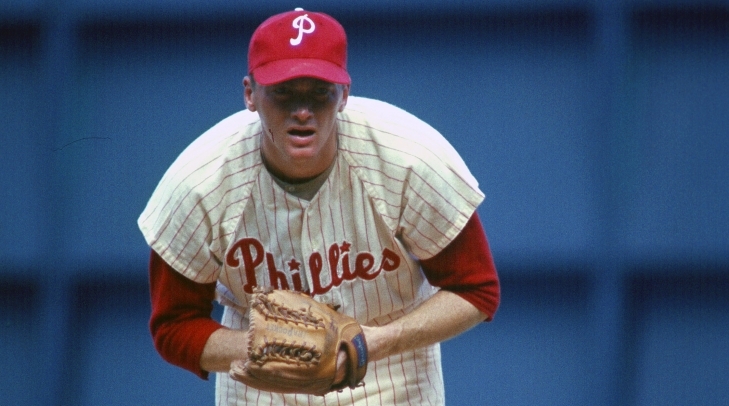
33. Curt Simmons

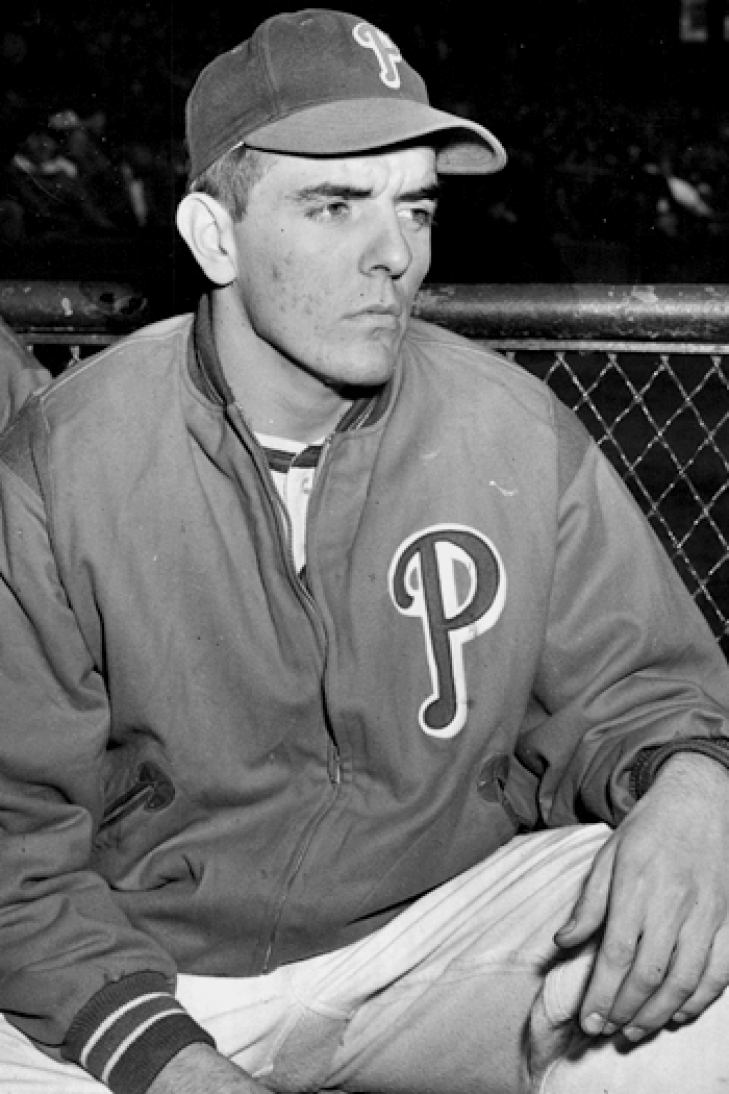
The story of the 1950 "Whiz Kids" often focuses on Robin Roberts's legendary achievements, but a closer look at that iconic era shows that Curtis Thomas Simmons was a crucial and consistent part of the rotation. Coming from a widely publicized amateur bidding war as a local star from Eastern Pennsylvania, this smooth left-hander skipped the typical minor league route to bring fast, reliable pitching directly to Broad Street. For more than ten years, his fluid pitching style and strategic mastery made him a key, high-volume contributor during one of the most celebrated periods in franchise history.

His early-season performance peaked dramatically during the 1950 pennant race. At only 21, Simmons demonstrated exceptional mound skill, finishing with a 17-8 record and a 3.40 ERA, leading the young team toward the National League title. Just as his career was on the rise, a year-long military deployment to Korea abruptly halted his progress, causing him to miss the 1951 schedule entirely, and the 1950 World Series, since his National Guard unit was activated in September just before the Fall Classic.

When he resumed active duty in 1952, he appeared completely refreshed by his time away, delivering arguably the best personal performance of his career. Simmons finished with a 14-8 record, posted an impressive 2.82 ERA, led Major League Baseball with six shutouts, and topped the National League with an outstanding 2.76 FIP.

While Roberts dominated national headlines as the team's leading workhorse, Simmons was a dependable, steady presence alongside him. He made winning a consistent achievement, reaching 14 or more victories five times with the team and earning three National League All-Star selections in 1952, 1953, and 1957. He was also chosen as the starting pitcher for the Senior Circuit in both the 1952 and 1957 Midsummer Classics. His command on the mound helped him protect the score, and he maintained a high level of efficiency, finishing in the National League's top ten for ERA seven times during his tenure with Philadelphia.

After a difficult period marked by injuries and a disappointing 1960 slump, the Phillies’ management decided to release the veteran southpaw in late May. Instead of ending his career there, Simmons made a remarkable comeback, joining the St. Louis Cardinals. He reinvented his pitching style and played another seven seasons in the major leagues, including a standout 1964 season with 18 wins that finally earned him the World Series ring he missed out on as a young player.

With the Phils, Simmons had a 115-110 record, 109 complete games, and 1,052 strikeouts across 1,939.2 grueling frames in Philadelphia, trailing only Steve Carlton and Chris Short for the most wins by a left-hander in organizational history. The Phillies selected Simmons for the Philadelphia Baseball Wall of Fame in 1992.
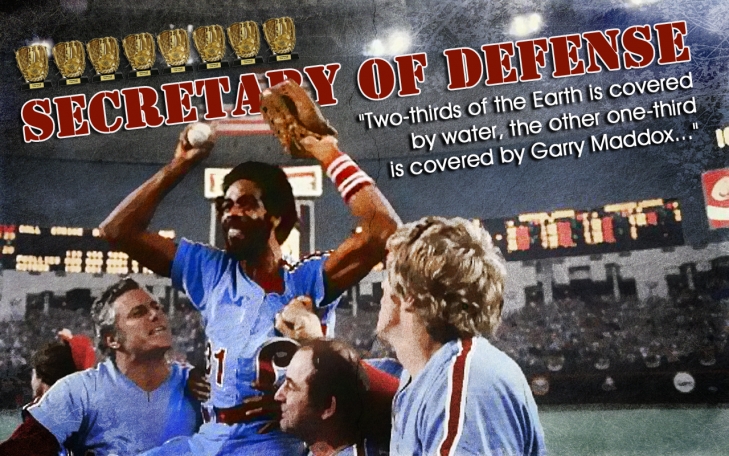
29. Garry Maddox

The outfield grass at Veterans Stadium had an unforgiving, low-friction artificial turf that often challenged defenders. However, in the late 1970s, Garry Maddox turned this difficult environment into his own stage for athletic control. Traded from the San Francisco Giants early in the 1975 season, the agile center fielder earned the nickname "The Secretary of Defense" from local media. His smooth, effortless ability to track high-speed line drives into the gaps contributed to a famous piece of baseball lore: “Two-thirds of the Earth is covered by water, the other one-third by Garry Maddox.”

From the perspective of contemporary spatial metrics, Maddox represented an unequivocal pioneer of his era. He secured eight consecutive National League Gold Glove Awards from 1975 to 1982, thereby effectively neutralizing the extra-base aspirations of opposing lineups.

Beyond being just a regional favorite, his advanced efficiency metrics were extremely elite; he led Major League Baseball in defensive bWAR twice, thanks to his quick first step and excellent positioning, which alone kept his pitching staff safe from costly big innings.

However, labeling Maddox solely as a brilliant yet one-dimensional gloveman overlooks his significant contributions at the plate. He was a capable hitter, amassing 1,333 hits and maintaining a steady .284 batting average over his lengthy career in eastern Pennsylvania.

His ultimate peak occurred in the historic 1976 season, where he led the lineup with an impressive career-high .330 batting average. That season, he also recorded 37 extra-base hits and stole 29 bases, earning a fifth-place finish in the National League MVP voting. This achievement cemented his reputation as a true, elite catalyst.

While his regular-season efficiency slightly declined with age by the early 1980s, his reputation in big games stayed strong during the team's remarkable 1980 championship season. He contributed by driving in the winning run in the tenth inning of Game 5 of the NLCS against Houston, and he also offered outstanding defensive support in the outfield during the World Series, helping the franchise achieve its first world title.

By the mid-1985 campaign, time and the relentless pounding of the Vet's artificial turf finally caught up with the veteran speedster, triggering a sharp decline in his overall physical volume. Rather than seeking a twilight change of scenery or hanging on as a bench compiler elsewhere, Maddox chose to walk away on his own terms. 

In 2000, Maddox was chosen for the Philadelphia Baseball Wall of Fame.

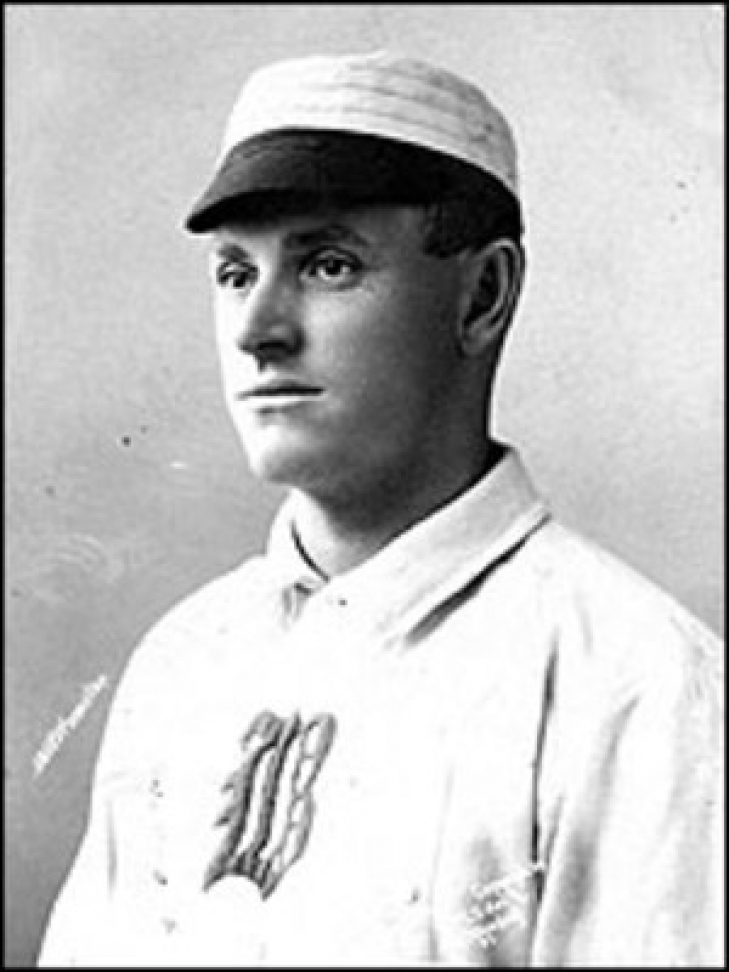
35. Jack Clements

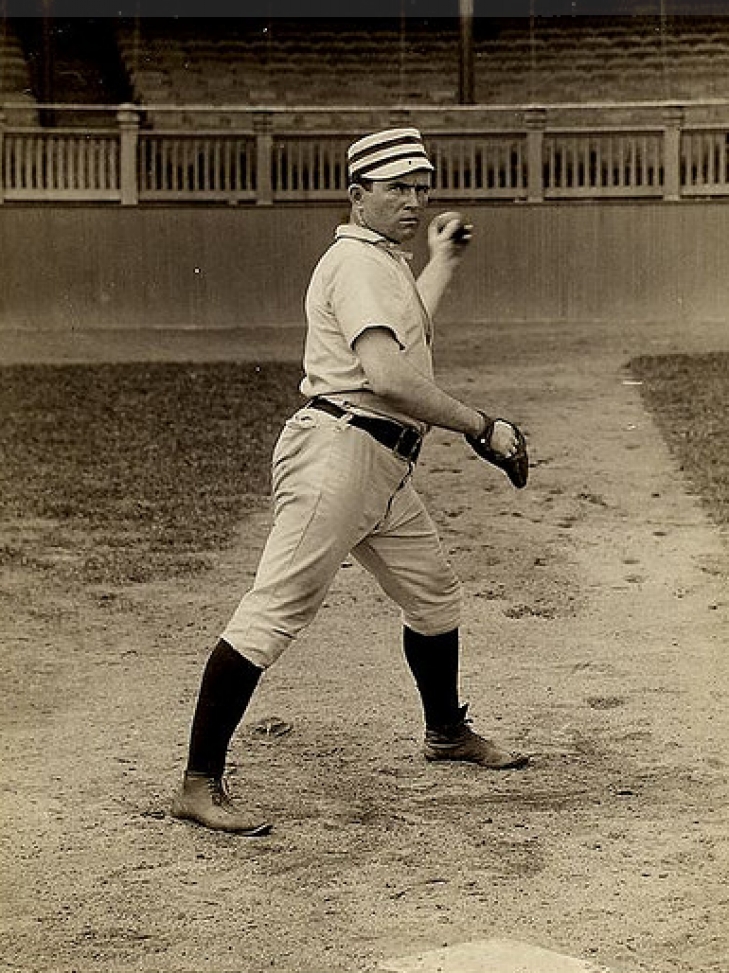
In the tough environment of 19th-century baseball, the catcher’s box was like a collision zone. Jack Clements, known as “Bones," was a striking figure due to his notoriously surly attitude, his thick, low-slung build, and his refusal to follow conventional rules in his career. The Pennsylvania native was a trailblazer behind home plate, among the first catchers to systematically wear a sheepskin chest protector. Even more remarkable for modern fans, Clements is one of the few true left-handed catchers in Major League Baseball history, a rare position that has disappeared in today’s game.

His extensive and high-volume residency in Philadelphia lasted exactly 1,000 games from 1884 to 1897. Although catching without modern equipment was physically demanding and worn down most players of his era, Clements flourished, becoming one of the most outstanding, run-producing hitters of his time.

He didn't just survive at the plate; he excelled. Clements surpassed the elite .300 batting average five times while wearing a Philadelphia uniform, and achieved the impressive .400 on-base percentage three times, solidifying his role at the core of the lineup. The peak of his contact-hitting was during a 1895 offensive clinic, where Clements hit .394 over 85 games, the highest season batting average for a catcher in major league history.

Bones was more than just a singles hitter; he had a powerful, advanced swing that was uncommon for his time. In 1893, a high-scoring year, he hit 13 home runs, and in 1895, he reached a career-best with 17 homers. To put this into perspective, hitting double digits in homers during the 1890s was similar to anchoring a modern team with 40-plus home runs.

When he finally left the organization after fourteen dedicated summers, he left a remarkable localized slash line of .289/.352/426, supported by 1,079 hits and 70 home runs, a substantial offensive contribution that drastically changed team expectations for the catching position.

Although his grumpy attitude and intense exchanges with umpires sometimes annoyed league officials, local fans highly admired the relentless effort needed to pitch thousands of innings as a southpaw. He was a pioneering workhorse whose distinctive playing style and remarkable offensive achievements secure his status as a key figure in Philadelphia baseball history.

34. Charlie Ferguson

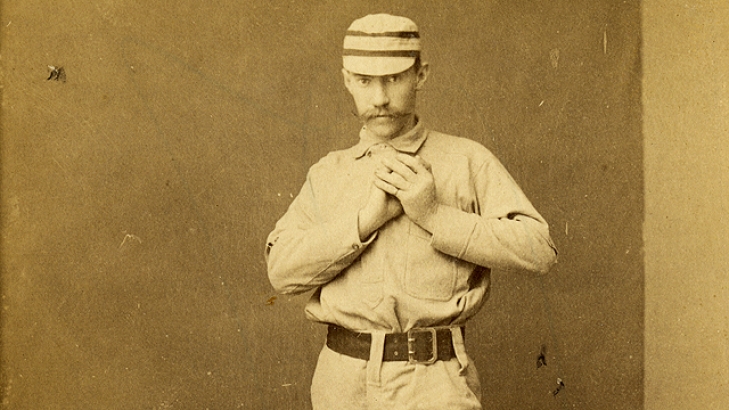
The history of professional baseball is rich with legendary figures whose contributions are etched in history, yet some, like Charlie Ferguson, occupy a more bittersweet, frozen-in-time place. Ferguson, a Charlottesville native, was a standout for the 19th-century Philadelphia Quakers, long before the team officially became the Phillies. He quickly proved himself as a versatile and exceptional Player, not only participating in the game but also excelling at it from the pitcher’s mound and the middle of the batting order. Ferguson exemplified qualities of a modern elite athlete well before baseball fully evolved.

His debut in the National League in 1884 marked the emergence of a reliable workhorse. Ferguson took on the demanding physical role of the era, pitching 416.2 innings as a 21-year-old rookie and earning 21 wins. By the 1985 season, his control improved significantly, culminating in a memorable August afternoon when he pitched a perfect 1-0 no-hitter against the Providence Grays, the first no-hit game in franchise history.

His peak pitching achievement occurred in a remarkable 1886 showcase. Ferguson delivered a historic regular season, finishing with a 30-9 record, a tiny 1.98 ERA, and a stellar 0.976 WHIP. With a blazing fastball and a consistent, low-variance delivery, he led the pitching staff and cemented his reputation as one of the top right-handed pitchers in the nation.

What set Ferguson apart as a true unicorn of the Deadball Era was his remarkable versatility. Recognizing his exceptional bat speed and soft hands, legendary manager Harry Wright consistently used him as a key position player on days when he wasn't pitching. Ferguson mastered both patrolling center field and playing second base in the infield, turning both into a refined skill. During his four years with Philadelphia, he achieved an impressive career batting average of .288.

His multi-dimensional peak culminated dramatically during the 1887 pennant race, when he delivered an exceptional individual performance. While securing 22 wins as a pitcher to help the Quakers achieve a strong second-place finish, he also became the regular second baseman late in the season. He posted an impressive .337/.417/470 slash line and led the team with 85 RBIs in only 264 at-bats.

The reason there was no fifth season is that in April 1888, Ferguson contracted typhoid fever and died within a month, depriving the game of what many regarded as the best all-around player at the time. It is only speculation to imagine that Charlie Ferguson could have been a Hall of Famer if tragedy had not intervened.

Tragically, the baseball world would never see a fifth season of his groundbreaking career. During spring training before the 1888 season, Ferguson suddenly contracted a severe case of typhoid fever. The illness quickly worsened, taking a heavy toll on his young body, and he died on April 29, 1888, just twelve days after turning 25. This devastating news plunged the baseball community into deep mourning; in his memory, the Quakers and several rival teams wore black crepe on their left sleeves throughout the summer.

He ended his career prematurely, winning nearly 61% of his decisions with a remarkable 99-64 record, 165 complete games, and a 2.67 ERA, all while delivering elite offensive performance.

18. Cy Williams

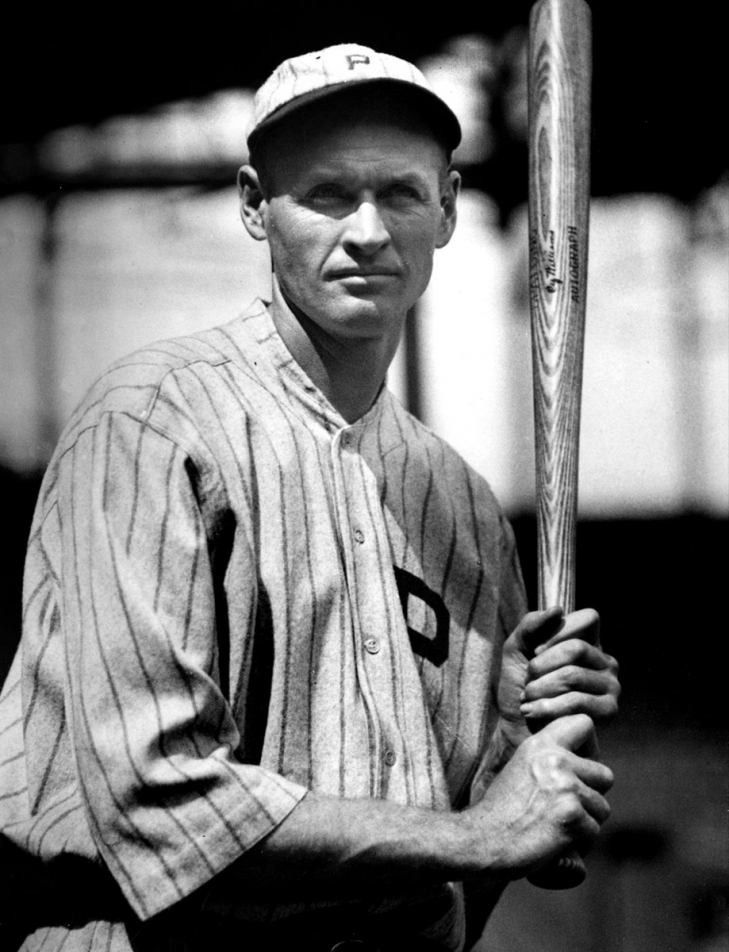
Within the extensive archives of baseball trades, some exchanges become increasingly imbalanced with each winter. Before the 1918 season, the Chicago Cubs executed a veteran trade, sending 30-year-old outfielder Fred "Cy" Williams to the Philadelphia Phillies in return for Dode Paskert. Paskert immediately experienced a sharp decline in performance at age 36 in Chicago, while Williams was only beginning to enter the most important phases of his career. He had already demonstrated his ability to excel during the dead-ball era, winning a National League home run title with 12 homers in 1916. Moving to the hitter-friendly Baker Bowl helped the left-handed batter develop his skills further and lay the foundation for his future success.

The offensive evolution didn’t happen overnight. As the sport shifted its tactical focus to the longball in the early 1920s, Williams adapted his approach to fit the new pace. During the 1920 season, he earned his second career home run title by hitting 15 home runs.

Most importantly, that summer was his first time batting over .300 in an individual season. This achievement was not a one-time feat; Williams surpassed that elite contact-hitting mark five more times while playing for Philadelphia, disproving the idea that he was only a power hitter.

As his physical prime aligned with the live-ball era, Williams posted impressive modern power stats. He earned two more senior circuit home run titles, hitting a league-high 41 home runs in 1923 and adding 30 in 1927 to secure his fourth career crown. Between 1922 and 1926, he became a consistent force of extra-base hits, recording five straight summers with a slugging percentage well above .500.

When he ultimately left the diamond after the 1930 schedule, he held the esteemed title of the National League's all-time career home run leader. This achievement, a significant milestone in baseball history, cemented his status as an elite pioneer of the modern power game, even though it was eventually surpassed by future players.

He accumulated 1,553 hits, 280 doubles, 217 home runs, and a superb .306 career batting average as a Phillie, and the club enshrined Williams into their Baseball Wall of Fame in 1985.

21. Jim Bunning

To truly determine the official geographic home of an elite pitcher's legacy, one must look beyond the win-loss record and examine the physical artifacts left behind. According to standard box-score logic, James Paul David Bunning might appear to be tied to Michigan, where he secured more regular-season wins and earned five of his seven All-Star selections with the Detroit Tigers. However, when considering the pinnacle of his historical significance, there is no debate: Bunning is fundamentally tied to the City of Brotherly Love. It is the city where his most legendary achievements were made, the city that permanently elevated his jersey into the rafters, and, most notably, the city whose iconic red script is forever engraved on the cap of his Cooperstown plaque.

Bunning officially joined the team through a blockbuster trade before the 1964 season, quickly becoming the Phillies' dominant, high-speed pitcher. With a deceptive sidearm delivery and a relentless, highly competitive attitude, he made the mound a showcase of athletic control.

Although he had previously pitched a no-hitter in Detroit, Bunning created a legendary moment on Father’s Day in 1964 by defeating the New York Mets at Shea Stadium and throwing the first regular-season perfect game in the National League in 84 years.

Far from being just a fleeting success, his core efficiency stats during his four-year prime on Broad Street were outstanding. He achieved an exceptional individual peak, highlighted by a historic 1967 season where he posted a 17-15 record, an impressive 2.29 ERA, and led the league with six shutouts and 302.1 innings pitched. He narrowly missed winning the National League Cy Young Award, finishing as a highly regarded runner-up.

Advanced metric purists often point out that, despite pitching fewer innings in Philadelphia than in Detroit, his exceptional dominance was so intense that he ended up with a higher career bWAR during his time with the Phillies. After an extended period in Pittsburgh and Los Angeles, Bunning returned to Broad Street for a two-year farewell, providing experience and stability to a rebuilding team before retiring after the 1971 season.

Bunning entered the Baseball Hall of Fame through the Veterans Committee in 1996, though he never should have had to wait so long to enter Cooperstown.  As for the Phillies, his name was added to the Philadelphia Baseball Wall of Fame in 1982, and his number 14 was retired in 2001.

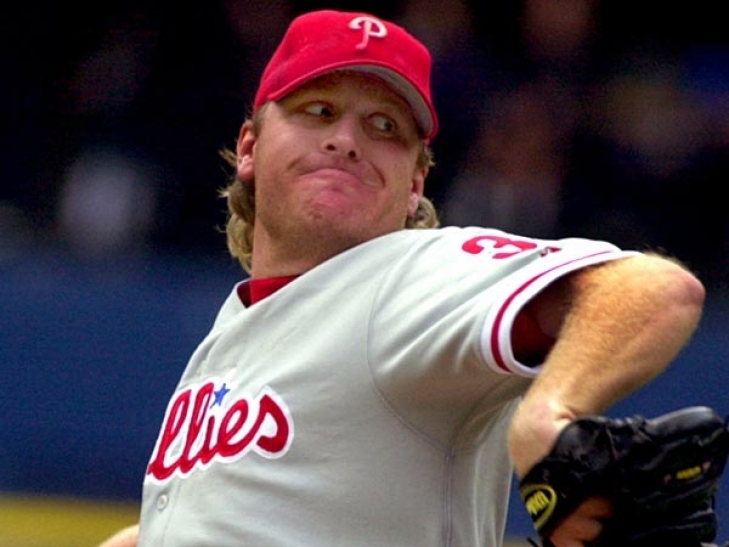
15. Curt Schilling

Long before Curt Schilling became famous for leading historic World Series victories in the desert and New England, he spent almost ten years building his reputation in eastern Pennsylvania. Although many remember him nationally for his later championship successes, his regular-season performance and overwhelming statistical achievements with the Philadelphia Phillies are fundamental to his career. In fact, his personal statistics during his time with the Phillies closely match his combined achievements in Arizona and Boston.

Schilling officially joined the team through a discreet trade with the Houston Astros in 1992 and quickly demonstrated a remarkable individual breakthrough. Transitioning into a permanent spot in the starting rotation, he baffled National League hitters with a powerful, explosive four-seam fastball combined with a sharp splitting finger. He finished the season with a 14-11 record, a stellar 2.35 ERA, and led the entire senior circuit with an impressive 0.996 WHIP.

During the renowned 1993 pennant race, his fundamental efficiency metrics naturally exhibited a low-variance regression, recording a 4.02 ERA despite securing 16 victories. Notwithstanding, Schilling reserved his most significant contributions for the most prestigious stage. He led the pitching rotation with remarkable determination in October, receiving the 1993 NLCS Most Valuable Player award for his performance against the Atlanta Braves. Subsequently, he delivered a remarkable, five-hit complete-game shutout in Game 5 of the Fall Classic against the Toronto Blue Jays, thereby preserving the Phillies' postseason prospects.

A series of challenging bone spur surgeries and shoulder problems considerably constrained his physical capacity over the following three years. However, Schilling emerged from this injury-ridden period as a formidable force. Between 1997 and 1999, he achieved a remarkable individual peak, earning three consecutive All-Star selections and recording 47 victories.

He emerged as the premier high-leverage strikeout artist, securing consecutive National League strikeout titles in 1997 and 1998 by surpassing the distinguished 300-strikeout threshold in successive summers. Despite his notable individual achievements, the front office consistently struggled to assemble a competent supporting roster around their ace. Significantly disillusioned by the organization's ongoing losing streak, Schilling ultimately requested a change of environment, which led to a trade to the Arizona Diamondbacks midway through the 2000 season.

With Philadelphia, Schilling posted a record of 101-78 with 1,554 Strikeouts and a 3.35 ERA.  The Phillies added Schilling to the Philadelphia Baseball Wall of Fame in 2013.

11. Billy Hamilton

In the hyper-competitive landscape of 1890s baseball, “Sliding" Billy Hamilton was universally recognized as a human hurricane on the basepaths. He didn't just break the existing rules of baserunning; he completely rewrote the operational blueprint of the sport, popularizing the head-first slide, the drag bunt, and the daring art of advancing from first to third on a single. Decades after he hung up his heavy woolen uniform, an objective evaluation of his statistical fingerprints confirms that he remains firmly among the most elite, high-efficiency weapons ever to play the game.

To genuinely acknowledge Hamilton’s remarkable dominance, it is essential to consider the extraordinary volume of his stolen base statistics. During his six-year tenure with the Philadelphia Phillies, he regarded the basepaths as his personal domain, leading the National League in stolen bases four times within that period. Three of these seasons saw him surpass the remarkable three-hundred mark.

Certainly, to influence a defensive play on the basepaths, a runner must initially secure a position on base—and Hamilton mastered the art of creating such traffic with exceptional proficiency. He earned two National League batting titles while playing for Philadelphia, combining a formidable line-drive swing with a highly disciplined, precise eye that resulted in three individual on-base percentage titles in the senior circuit.

The pinnacle of this offensive discipline was reached during the historic 1894 season. That summer, Hamilton showcased extraordinary offensive skill, achieving a remarkable .521 on-base percentage and setting a major league record with 192 runs scored—a unique single-season achievement that has stood untouched for more than a century.

Contemporary metric purists and roster analysts occasionally observe that his tenure on Broad Street was relatively brief, encompassing only six summers before his trade to the Boston Beaneaters prior to the 1896 season. However, attempting to diminish his ranking based solely on traditional longevity overlooks the unparalleled intensity of his peak performance. In merely 702 games wearing a Philadelphia uniform, Hamilton dominated opposing pitching staffs with an extraordinary .360 batting average, 1,084 hits, and an impressive 510 stolen bases. Working alongside future legends Ed Delahanty and Sam Thompson, he constituted the core of arguably the most exceptional scoring outfield ever assembled.

The Veteran’s Committee for the Baseball Hall of Fame chose Hamilton in 1961 for the Baseball Hall of Fame, but an overall look at what he accomplished as a baseball player will easily tell you that this was decades too late.  The Phillies inducted Hamilton into the Philadelphia Baseball Wall of Fame in 2004.

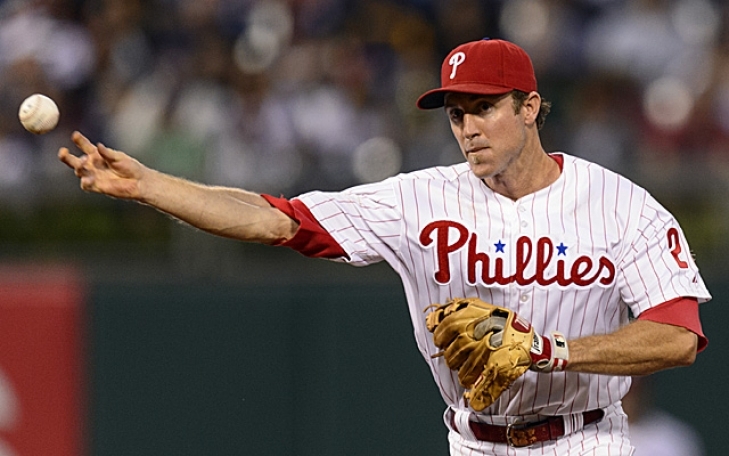
7. Chase Utley

During the early 2000s, Chase Utley was discreetly progressing through the minor league ranks of the Philadelphia Phillies organization. Few anticipated that the reserved and diligent second baseman would become the driving force of the franchise's most prosperous period. Utley's initial notable achievement occurred in 2003 when he hit a grand slam for his first major league hit. He formally secured the regular second baseman position in 2005, subsequently initiating a multi-year period of peak performance. His playstyle became so remarkably dominant that it fundamentally influenced sabermetricians’ valuation of the position.

Between 2005 and 2009, Utley demonstrated consistent elite performance that matched that of the league's top stars. Despite often being overlooked by traditional MVP voters due to his lack of flashy, league-leading single-category stats, finishing no higher than seventh in MVP voting, advanced metrics proved his true dominance as a top-tier player. He ranked second or third in position player bWAR in the National League for five straight seasons, showcasing a rare blend of strong power, disciplined zone control, and an 87.5% success rate on stolen bases, making him one of the most efficient baserunners in baseball history. With seasons of 28, 32, 22, 33, and 31 home runs, he posted an impressive .282/.366/481 slash line, elevating the second base position to a position of power.

However, his statistical efficiency only captures part of his impact. Utley was an exceptional defender, often overlooked by traditional Gold Glove voters. With highly advanced positioning skills and a bold, fearless approach on the field, he ranked in the top ten for defensive bWAR six times during his career. He approached each play as if it were critical, famously advancing from second base on a simple infield grounder or executing a precise throw to home plate to maintain his team's lead.

That unwavering, blue-collar attitude was the key factor that propelled the Phillies into a dominant five-year division-winning team. In their victorious 2008 championship run, Utley was the reliable presence that kept the lineup steady, inspiring a resilient clubhouse that fought hard and refused to give up. He then delivered an exceptional performance in the 2009 World Series against the New York Yankees. Although Philadelphia lost the series in six games, Utley was a formidable force, hitting five home runs and tying Reggie Jackson’s record for most home runs in a single Fall Classic.

As the 2010s progressed, chronic knee problems started to diminish his elite physical condition, reducing his playing time but never diminishing his legendary reputation locally. When the franchise traded him to the Los Angeles Dodgers in August 2015 to rebuild the roster, he left with 1,623 hits, 233 home runs, and a lasting reputation as the consummate professional. In March 2026, the team officially announced Chase Utley as the 51st inductee into the Phillies Wall of Fame.

14. Dick Allen

Dissecting Dick Allen's historical impact requires confronting the turbulent, racially charged controversy of his era in eastern Pennsylvania. As the first Black superstar in a conservative Philadelphia Phillies organization, Allen carried an overwhelming psychological weight. The franchise was among the last in the National League to integrate, and Allen had already faced severe systemic racism as the sole Black player on their minor league team in Little Rock. When he reached the major leagues, he entered a highly volatile environment, often targeted by parts of the local fanbase and a hostile media that refused to see him as a person or an elite athlete.

Nevertheless, solely concerning the diamond, Allen was an immediate and extraordinary force that defied logic. He distinguished himself by receiving the 1964 National League Rookie of the Year award in an impressive manner, wielding a swiftly swinging, 40-ounce bat that decisively penetrated the pitching-dominated landscape of the 1960s.

He was a leading offensive player, achieving three seasons with at least 30 home runs—a remarkable feat at the time, and hitting a career-high 40 home runs in 1966. More than just a power hitter, he excelled at contact hitting, with four straight seasons batting over .300 from 1964 to 1967, ending with a league-best .404 on-base percentage in 1967.

While his exceptional offensive performance captivated purists, his defensive shortcomings at third base offered ample opportunity for his detractors to criticize. Allen twice led the National League in errors, demonstrating an inconsistent glove that significantly fell below the major league average.

The fractures escalated into a full-scale mutiny in 1965 following a pre-game altercation with white teammate Frank Thomas, who reportedly struck Allen in the shoulder with a baseball bat. When management subsequently dismissed Thomas, the local press portrayed Allen as a destructive influence within the club. Refusing to assume the submissive role expected by reporters, Allen defiantly inscribed messages in the infield dirt with his cleats, ultimately demanding a trade to escape the toxic environment.

After a highly successful decade, including a standout 1972 American League MVP season with the Chicago White Sox, time eventually mended old wounds. In a fitting turn of history, veteran Allen was traded back to Philadelphia in 1975. While he was no longer the explosive, high-speed superstar of his earlier years, the city had transformed itself and embraced him with great warmth and respect.

With Philadelphia, Allen blasted 204 Home Runs, batted .290, and had 1,143 Hits.  The Phillies added Allen to their Philadelphia Baseball Wall of Fame in 1993.  The team retired his number 15 in 2020, shortly before he died.  His eternal standing in baseball history was cemented soon after, when the Golden Days Era Committee posthumously elected Allen into the National Baseball Hall of Fame as part of the Class of 2022.

12. Gavvy Cravath

Prior to Babe Ruth fundamentally altering the landscape of professional baseball with his formidable power hitting to the upper deck, the unparalleled home run king during the dead-ball era was Gavvy Cravath. Nonetheless, in accordance with the prevailing baseball rationale of the early 20th century, Cravath was expected to be entirely phased out of the sport. Making his Major League debut at the age of 27 with the Boston Red Sox, he was widely criticized by teammates, fans, and front offices for his painfully slow on-field foot speed. He remained within the minor league system for several years, seemingly relegated to the lower levels on organizational depth charts, until a highly unconventional clerical error in a telegram, at the age of 31, afforded him a second opportunity with the Philadelphia Phillies, an opportunity he capitalized on to completely rewrite the record books.

Arriving at Shibe Park in 1912, Cravath promptly established himself as a formidable force at the plate. During an era characterized by scuffed baseballs, heavy bats, and low-scoring tactical contests, his right-handed power-hitting was remarkably exceptional. He secured the National League home run title an impressive six times within a seven-year period.

Although his 24 home runs in 1915 was a modest total by today's standards, it was a remarkable and extraordinary feat for its era, surpassing the combined power of entire opposing teams. He skillfully used his strong pull-hitting ability to take advantage of the small size of Philadelphia’s Baker Bowl, making the right-field wall his own personal launching pad.

However, labeling Cravath just as a powerful hitter ignores his impressive offensive efficiency. He wasn't a free swinger; instead, he had a keen, disciplined eye at the plate, leading the National League in on-base percentage twice, including an outstanding .412 in 1915. He was a highly effective run scorer, leading the senior circuit in RBIs twice, most notably with 128 RBIs in 1913, and was a league leader in slugging percentage and OPS twice, helping build the franchise's historic 1915 pennant-winning team.

The sheer density of his production during his nine-year stay on Broad Street yielded an exceptional .291/.391/.489 slash line—a statistical fingerprint that commands immense respect across any generation of baseball history. He even stepped up to serve the organization as a player-manager during his final two summers, providing a steady, respected hand through a difficult transitional era before officially retiring after the 1920 season.

He was chosen for the Philadelphia Baseball Wall of Fame in 2000.

10. Jimmy Rollins

Achieving the distinction of being the sole top-ranked player on a franchise's all-time hits leaderboard is an extraordinary accomplishment for any baseball athlete. Doing so within an organization established in professional hits since 1883, an era that includes legendary figures such as Mike Schmidt, Richie Ashburn, and Ed Delahanty, approaches the realm of the surreal. Nonetheless, this is precisely the position held by James Calvin "Jimmy" Rollins. For nearly fifteen years, the dynamic shortstop has served as the rapid, passionate force behind the most enduringly successful period in the history of the Philadelphia Phillies.

Having been raised on the concrete playgrounds of Northern California, Rollins admired the esteemed Rickey Henderson. Throughout his career, he consistently incorporated that same style of intense, unrestrained chaos into the leading position of the Philadelphia Phillies' batting order. He transformed the contemporary leadoff role by integrating exceptional speed with an unexpectedly potent power-hitting capability.

Rollins transformed the basepaths into his personal laboratory, utilizing exceptional internal timing to steal 20 or more bases in 13 of his 14 complete seasons with Philadelphia, three times surpassing the notable 40-steal milestone. He was particularly effective when driving the ball into the gaps, consistently circling the bases to lead the National League in triples on four separate occasions. Similar to his childhood hero, he had the ability to shift the momentum of a game with a single swing, aggressively punishing pitchers by hitting 216 home runs while playing for the Phillies—an all-time franchise record for a switch-hitter.

Nevertheless, constraining "J-Roll" to an offensive catalyst alone underestimates his full genius. On the baseball field, he transformed the shortstop position into a demonstration of athletic mastery. Equipped with a remarkably swift initial movement, exceptional spatial awareness, and a powerful arm, Rollins proficiently deflected hits with ease, earning four National League Gold Glove Awards and establishing a franchise-record defensive standard that contributed to the stability of a championship-caliber pitching staff.

His career reached its peak during a landmark, award-winning 2007 season. In spring, Rollins confidently called the Phillies the "team to beat" in the National League East—and then spent the following six months proving his confidence true. He delivered an extraordinary regular season, playing all 162 games and achieving a rare 20-20-20-20 season (doubles, triples, home runs, and steals). He topped the senior circuit with 139 runs, hit a career-high 30 home runs, and amassed 212 hits with a solid .296 batting average, earning the 2007 National League Most Valuable Player award.

More than just an accumulator of individual hardware, Rollins was a ruthless winner. He was the vocal catalyst that drove the franchise to five consecutive division titles, back-to-back pennants, and the unforgettable 2008 World Series championship.

Advanced metric purists sometimes criticize his .324 on-base percentage as a drawback for a traditional leadoff hitter, a focus on efficiency that fuels ongoing debate over his Hall of Fame credentials. However, solely emphasizing his walk rate ignores his durability and performance in big games. He concluded his notable 15-year career with the Phillies, holding franchise records in hits (2,306) and doubles (479), and also stole 453 bases. His legacy was definitively secured with his induction into the Philadelphia Phillies Wall of Fame in 2025.

9. Chuck Klein

Throughout baseball's extensive history, there have been instances in which a franchise's fortunes have been significantly influenced by a fortunate administrative decision. Conventionally, Chuck Klein's prime years were characterized by his dominance over National League pitchers while representing the St. Louis Cardinals. During his prolific tenure with Fort Wayne in the Central League, Klein was firmly integrated within the Redbirds' developmental system. Nevertheless, the Cardinals simultaneously maintained ownership of the rival Dayton club, an evident violation of Major League Baseball regulations. Upon discovering this infringement, the vigilant Commissioner Kenesaw Mountain Landis mandated the liquidation of the St. Louis franchise and its player assets. Subsequently, the financially constrained Philadelphia Phillies front office submitted the highest bid, thereby markedly altering the franchise’s future trajectory.

Klein’s breakout campaign in 1929—his inaugural full season in the major leagues—remains an exemplary display of offensive prowess. He engaged the supporters at Baker Bowl with an extraordinary career-high of 43 home runs, earning the National League title. His formidable right-handed batting continued to pose a significant threat, as he further contributed by hitting an additional 40 home runs in the subsequent summer.

While his home run totals naturally fluctuated to 31, 38, and 28 over the subsequent three summers, Klein's raw output was so overwhelming that he captured three more home run titles, bringing his total to an incredible four crowns over a five-year span.

However, categorizing Klein exclusively as a one-dimensional, over-the-fence slugger entirely overlooks the true brilliance of his historical peak. Between 1929 and 1933, he demonstrated exceptional contact-hitting prowess, consistently maintaining a seasonal batting average above .330. The apogee of his multifaceted dominance was achieved during his 1933 Triple Crown pursuit, wherein he secured the National League batting title with an impressive .368 average, while also leading the circuit in on-base percentage (.422) and slugging percentage (.602). Throughout this distinguished five-year period, he recorded four seasons with an on-base percentage exceeding .400 and four campaigns with an OPS exceeding 1.000. This regular-season performance was characterized by an array of statistical outliers of historical significance, culminating in a well-deserved National League Most Valuable Player award in 1932, framed by two narrowly missed runner-up finishes.

Regrettably, Klein’s pioneering offensive clinic took place in almost complete isolation. The Philadelphia Phillies were notoriously financially struggling and consistently occupied the lower end of the standings. Acknowledging that his trade value was their sole liquid asset, the financially constrained organization transferred their franchise icon to the Chicago Cubs prior to the commencement of the 1934 season.

A severe mid-career injury in Chicago permanently sapped his explosive lower-body mechanics, leaving him a mere fraction of his former self. He eventually returned to Broad Street for a nostalgic second stint, followed by brief late-career roles in the early 1940s before finally hanging up his spikes.

Klein would enter the Baseball Hall of Fame in 1980 as a Veterans Committee Selection.  With the Phillies, Klein smacked 243 Home Runs, batted .326 with 1,705 Hits. Klein's name was placed on the Philadelphia Baseball Wall of Fame in 1979.

25. Ryan Howard

Few figures in modern baseball inspire such a clear divide between traditional fans and data-driven analysts as Ryan Howard. When measuring greatness by raw power and high-pressure performances that unsettle opposing teams, the left-handed slugger appears as an undeniable franchise icon, ranking high on any leaderboard. However, focusing on advanced efficiency stats, defensive skills, and strikeout rates presents a very different view. This internal tension explains why"The Big Piece"'s legacy remains rooted in a complex, highly analyzed middle ground.

Let’s begin on the positive side of the ledger, where Howard’s absolute peak was as explosive as any hitting stretch the sport has ever witnessed. Locked behind Jim Thome on the organizational depth chart early on, Howard burst onto the big-league stage like a runaway freight train, capturing the 2005 National League Rookie of the Year award despite playing in just 88 games.

The following summer, he delivered a showcase of pure power, establishing himself as a force of destruction. Howard won the 2006 National League Most Valuable Player award after smashing a jaw-dropping, franchise-record 58 home runs, overwhelming Senior Circuit pitching staffs. This was not just a one-year feat; he continued to surpass the 40-home run mark in each of the following three seasons. His ability to drive in runs turned into a relentless production line; from 2006 to 2009, he consistently crossed the 135-RBI mark each summer, leading the National League three times. He remained a constant presence in the national spotlight, finishing as MVP runner-up in 2008 and placing fifth and third in 2007 and 2009.

The main reason sabermetricians heavily discount his overall value is due to the significant structural challenges inherent in his approach. Howard’s powerful, wide swing resulted in a high number of missed pitches, as he twice topped the National League in strikeouts and became the fastest player to reach both 100 home runs and 1,000 career strikeouts.

Moreover, his spatial awareness and movement around the first-base bag consistently proved to be a persistent, low-efficiency weakness. Over ten different campaigns, he finished with a defensive bWAR of -1.0 or worse, repeatedly highlighting a significant defensive flaw that required his managers to frequently adjust late-game strategies for better coverage.

Evaluating Howard solely by single-season WAR overlooks the emotional and big-game qualities he brought. He was the powerful, unifying middle-of-the-order hitter that fueled the team's most successful period in franchise history. The Phillies wouldn't have won the 2008 World Series without his clutch, high-pressure performances, highlighted by his three home runs in that unforgettable Fall Classic.

A catastrophic Achilles tendon tear on the final play of the 2011 NLDS permanently stripped away his lower-half explosiveness, leading to a long, low-variance decline phase that clouded the back half of his career. He ultimately played his entire 13-year journey exclusively in Philadelphia, retiring with 1,475 hits, 1,194 RBIs, and 382 home runs—the second-most in franchise history behind only Mike Schmidt. 

In 2024, the Phillies chose Howard for their Wall of Fame.

28. Chris Short

Though post-war baseball history often highlights legendary right-handers, Chris Short stood out in the mid-1960s as one of the top left-handed pitchers. Signed by the Philadelphia Phillies as an amateur free agent in 1957, this lanky Delaware native spent several summers developing before securing a spot in the starting rotation in 1963. Following this, he enjoyed a remarkable peak, where his sharp slider and deceptive delivery established him as a leading force on the mound.

Between 1964 and 1968, Short led the pitching staff alongside Jim Bunning, establishing a five-year period marked by exceptional individual performances. He made success a consistent achievement, recording a minimum of 17 victories in four separate seasons. The peak of his workload occurred during the 1966 schedule, demonstrating remarkable resilience by completing 272 innings and achieving an impressive 20-10 record. Not merely a compiler, his underlying efficiency metrics were extraordinarily elite; Short received two National League All-Star selections in 1964 and 1967, posting a minuscule 2.20 ERA in 1964 and a stellar 2.39 ERA in 1967, ranking third in the Senior Circuit's ERA standings during both summers.

Any historical review of Short’s career inevitably centers on the infamous, heartbreaking pennant race of 1964. With a seemingly unbeatable six-and-a-half-game lead and only twelve games left, the Phillies experienced a disastrous and highly unpredictable collapse. In a desperate and controversial move to stop the decline, manager Gene Mauch overused his two key pitchers, forcing Bunning and Short to start eight of the last twelve games on short rest. Despite Short’s brave pitching and minimal earned damage, the depleted team around him collapsed, creating a tragic story that has overshadowed his impressive summer performance.

Yet, allowing that autumn collapse to diminish his legacy completely miscalculates the immense regular-season volume he generated for the franchise across fourteen dedicated winters. A recurring back injury in 1969 permanently compromised his high-velocity edge, but he departed Philadelphia following the 1972 campaign, holding an exceptional club baseline of 132 victories, 24 shutouts, and 1,585 strikeouts over 459 appearances in red pinstripes.

He was chosen for the Philadelphia Baseball Wall of Fame in 1991.

23. Roy Thomas

During the early, gritty years of the modern game, Roy Thomas stood out as a player who skillfully pushed the boundaries of the rulebook. Well before today's front offices obsess over on-base percentages to the tiniest detail, Thomas was a dedicated and disciplined center fielder for the Philadelphia Phillies, often serving as a strategic table-setter. He didn't just see drawing walks as a simple skill—he turned it into a mental game, creating psychological pressure on the opposing team. His persistent habit of fouling off high-velocity pitches by intentionally spoiling them annoyed opponents so much that it led Major League Baseball to change its rules in 1901, making foul balls count as strikes early in the at-bat.

Even after the league tried to set rules to limit his annoying tendencies, Thomas kept finding a way to get on base. He led the National League in walks an impressive seven times during his nine full summers in Philadelphia. His disciplined approach at the plate created a reliable presence at the top of the lineup, helping him lead the Senior Circuit in on-base percentage twice. Over an unforgettable seven-year stretch from 1899 to 1905, Thomas maintained an OBP comfortably above the impressive .400 mark every summer.

Although he crossed the .300 batting average threshold four times, he did so by embodying what many consider the most genuine form of a "slap hitter" in baseball history. Thomas disliked swinging for power, choosing instead to leverage his tall, slender build to drive line drives into gaps or execute well-placed bunts into open spaces.

This innovative, highly efficient method resulted in one of the most unusually charming and low-variance statistical signatures in professional baseball history. At retirement, Thomas uniquely stood out as the sole everyday player in major league history to have scored over three times the runs (1,011) he batted in (299). Additionally, he created an entirely novel pattern between his situational metrics, ending his career with a .413 on-base percentage supported by a mere .334 slugging percentage—marking the greatest gap ever between getting on base and total bases for a regular player.

While traditionalists of the Deadball Era occasionally clamored for more extra-base power, modern advanced analysts view his extreme on-base volume with immense reverence. Across his lengthy, split-tenure stay with the Phillies, he accumulated 1,364 hits and 235 stolen bases while serving as a premier, high-volume defender out on the grass.

24. Del Ennis

The relationship between the Philadelphia fans and Del Ennis was particularly complex, especially given the city's fiercely protective nature. Born in the city and excelling at Olney High School, Ennis had all the qualities of a hometown hero. He was also a key part of the iconic "Whiz Kids" team that transformed the city at the beginning of the 1950s. Despite his impressive regular-season stats, Ennis often became a target for harsh criticism and boos from the Shibe Park crowd.

His debut on Broad Street in 1946 is a true standout achievement. After completing a three-year stint with the United States Navy, Ennis excelled against National League pitchers, achieving an impressive .313 batting average. He made history as the first rookie in franchise history to be selected as an All-Star and was named The Sporting News Rookie of the Year.

This marked the beginning of a decade of display of powerful middle-of-the-order batting. Ennis mastered driving in runs, achieving seven seasons with at least 20 home runs and seven seasons surpassing 100 RBIs. He had a deadly right-handed swing capable of making high-quality contact, hitting over .300 for three seasons in red pinstripes.

His peak performance occurred during the memorable 1950 pennant race, where Ennis delivered an outstanding regular season by hitting 31 home runs and leading the Senior Circuit with a career-high 126 RBIs, helping the young "Whiz Kids" secure their first National League pennant in 35 years. This achievement earned him a career-high fourth-place MVP finish, one of seven seasons where he was a serious MVP contender.

The main reason "Ennis the Menace" was sometimes heavily criticized by local fans was because of his defensive skills. Although he had a strong, high-velocity throwing arm that occasionally led the league in outfield assists, his footwork and defensive positioning were consistently problematic. He was known for making errors and had significant difficulty with spatial awareness, never recording a positive defensive bWAR season throughout his career.

Trying to downplay his historical impact solely because of his defensive weaknesses ignores his remarkable ability to produce runs over a long career. When he was traded to the St. Louis Cardinals before the 1957 season, he left as the Phillies' all-time home run leader, with impressive career totals of 1,812 hits, 259 home runs, and 1,124 RBIs in 1,601 games with Philadelphia.

The Phillies chose Ennis for their Philadelphia Baseball Wall of Fame in 1981.

20. Johnny Callison

When John Callison joined the Philadelphia Phillies through a trade with the Chicago White Sox before the 1960 season, he quickly faced an almost unfair comparison. Known for his incredibly fast left-handed swing and a powerful arm, scouts and the national press eagerly compared him to Mickey Mantle. While matching such a lofty standard was impossible, Callison established a unique, star-quality legacy of his own, becoming the regular and reliable presence in the Phillies' outfield for ten years.

Operating mainly from right field, with a short, tactical two-year stint in left field, Callison rapidly became one of the most well-rounded and versatile players in the Senior Circuit. He delivered powerful over-the-fence hitting during a pitching-heavy era, achieving four seasons with at least 20 home runs. His standout period included consecutive summers where he surpassed 30 home runs.

However, focusing solely on his offensive performance overlooks a major part of his talent. On the field, Callison exemplified athletic mastery in containment, earning recognition as one of the top defensive right fielders of his era. With exceptional spatial awareness and an impressively precise, powerful throwing arm, he consistently topped the National League’s outfield assist charts, significantly influencing how opposing third-base coaches planned their strategies.

The peak of his career and national fame occurred during the famous 1964 pennant race. Callison delivered an impressive, year-long offensive display, hitting 31 home runs, with 104 RBIs, and leading the league with 40 doubles. He capped off that memorable summer by hitting a walk-off, three-run homer in the 1964 Midsummer Classic, earning All-Star Game MVP honors. He finished as a close and highly regarded runner-up for the National League Most Valuable Player Award.

While he may never have reached those specific statistical heights again, Callison continued to be a reliable, top-tier contributor. He received MVP votes in three different seasons and earned three All-Star selections in his career with the team. He maintained a steady, level-headed presence at the top of the order throughout the 1969 season before ending his career with periods in Chicago and New York.

With Philadelphia, Callison had 1,438 Hits, 185 Home Runs, and batted .271.  He was added to the Philadelphia Baseball Wall of Fame in 1996.

13. Cole Hamels

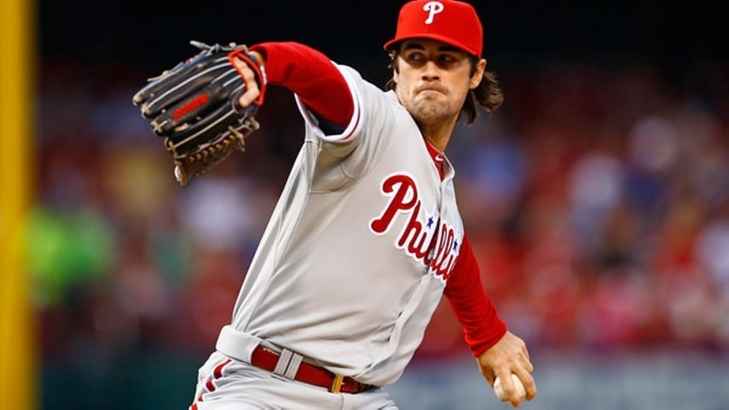
Every championship team has an iconic image, and for the 2008 Philadelphia Phillies, that’s Cole Hamels. With a smooth delivery that defied physics, the slender left-hander dismantled hitters using a devastating circle changeup and a crisp fastball. While the roster had power hitters and leaders, Hamels was the cool, clinical staff ace when the stakes increased in October.

Drafted by the Phillies in the first round in 2002, Hamels entered the majors with high expectations, which his performance quickly confirmed. He quickly developed into a top-tier, front-of-the-rotation pitcher known for his consistent durability during the regular season and his exceptional skill at generating swings-and-misses.

Throughout his ten years with Philadelphia, Hamels achieved a notable 114-90 record, ranking among the top ten in strikeouts in the National League seven times. He amassed an impressive 1,844 strikeouts with the Phillies. His exceptional control of the strike zone was particularly clear in the historic 2008 season, when he led the National League with a remarkable 1.082 WHIP (walks plus hits per inning pitched).

Although Hamels never won a regular-season Cy Young Award, he was consistently recognized as a top pitcher. He earned three All-Star nods wearing his red pinstripes and ranked in the top ten for Cy Young voting four times. His best finish was fifth in 2011, a year when he played a key role in the famous "Four Aces" rotation with Roy Halladay, Cliff Lee, and Roy Oswalt.

His lasting legacy was cemented during the intense pressure of the 2008 postseason. In a showcase of exceptional big-game pitching, Hamels delivered one of the most remarkable individual playoff performances in baseball history. He started five games that fall, finishing with a perfect 4-0 record and striking out 30 batters across 35 outstanding innings. He completely dominated the Los Angeles Dodgers to earn the NLCS Most Valuable Player award, then carried that momentum into the Fall Classic, overpowering the Tampa Bay Rays to win the World Series MVP award, solidifying his role as the key architect of the franchise's first global championship in 28 years.

In July 2015, he concluded his time with Philadelphia with a poetic flourish by pitching a brilliant no-hitter at Wrigley Field against the Chicago Cubs in his last game before being traded to the Texas Rangers.

Hamels was welcomed back in 2024 when the Phillies added his name to the Wall of Fame.

26. Lenny Dykstra

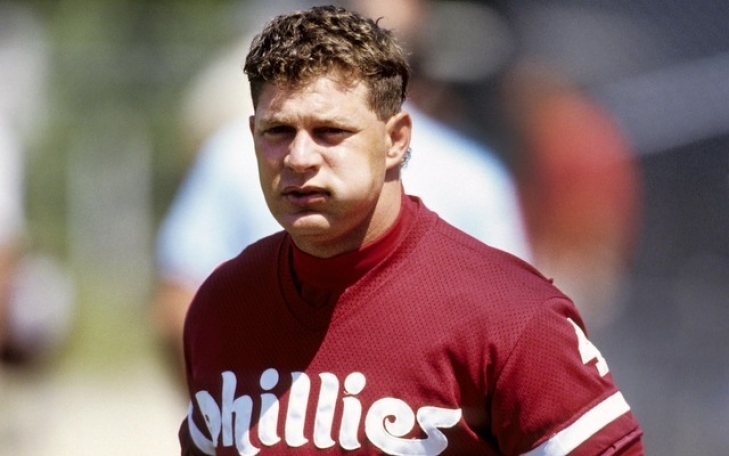
Few players in franchise history have ever matched the raw, dirt-caked intensity that Lenny Dykstra brought to the diamond. He had already established himself as a highly popular postseason catalyst with the New York Mets, helping secure the 1986 World Series title, but that outer-borough fame completely paled in comparison to the absolute obsession he generated in eastern Pennsylvania. Known universally as "Nails" for his fearless, wall-crashing style of play, the stocky center fielder personified the exact blue-collar, unyielding identity of the city he represented. When he was on the field, his hyper-aggressive energy dictated the club’s entire operational pace.

His eight-year tenure with the Phillies was marked by a tumultuous series of intense physical peaks and injury-ridden lows. When he was in the training room, his absence created a significant, noticeable gap at the top of the lineup; however, when healthy, Dykstra was an exceptional, game-changing presence.

During his first full summer in Philadelphia in 1990, he showcased his high-volume batting skills by leading the National League with 192 hits and a remarkable .418 on-base percentage. However, his true standout moment came during the 1993 pennant race, when he became the heart of a team of clubhouse rebels. That season, Dykstra delivered an extraordinary individual performance, leading all of baseball with 143 runs scored, 194 hits, and 129 walks, and achieving a career-best .902 OPS. He was a close runner-up to Barry Bonds for the National League Most Valuable Player award, acting as the driving force that propelled the franchise to the World Series.

Although the enchanting autumn ultimately ended with a devastating defeat at the hands of the Toronto Blue Jays, no blame could be attributed to Dykstra. In an exemplary postseason performance, he systematically overwhelmed Toronto’s pitching staff, hitting four home runs and demonstrating an exceptional .348/.500/913 slugging average throughout the six-game series, nearly leading the team to victory single-handedly.

Tragically, the legacy he left on the grass has been significantly overshadowed by a prolonged series of severe personal crises following his career. Dykstra was extensively involved in the use of performance-enhancing drugs during his playing days, and his post-baseball business pursuits encountered substantial legal difficulties, ultimately leading to a three-year federal incarceration for financial fraud.

For a generation of local fans who saw him dive into the turf at Veterans Stadium with a tobacco-stained jersey, the raw connection remains distinct from his later struggles. During his 734 games with the Phillies, he achieved 821 hits, 381 walks, and 149 stolen bases, a burst of energetic brilliance that cemented his status as one of Philadelphia's most cherished folk heroes.

Subscribe to this RSS feed