Menu
A+ A A-

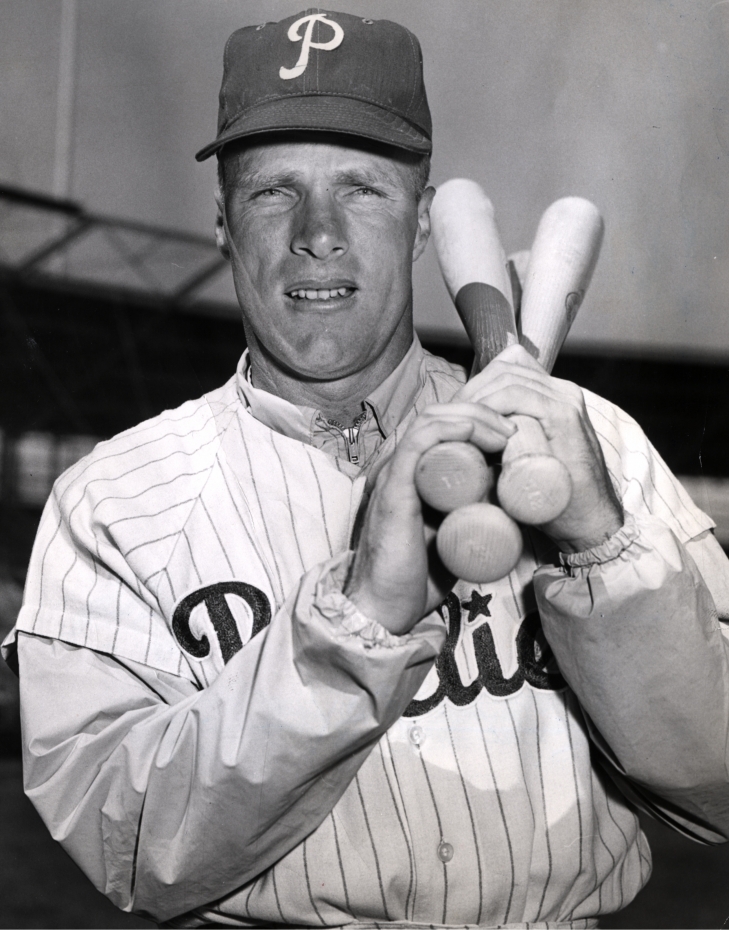
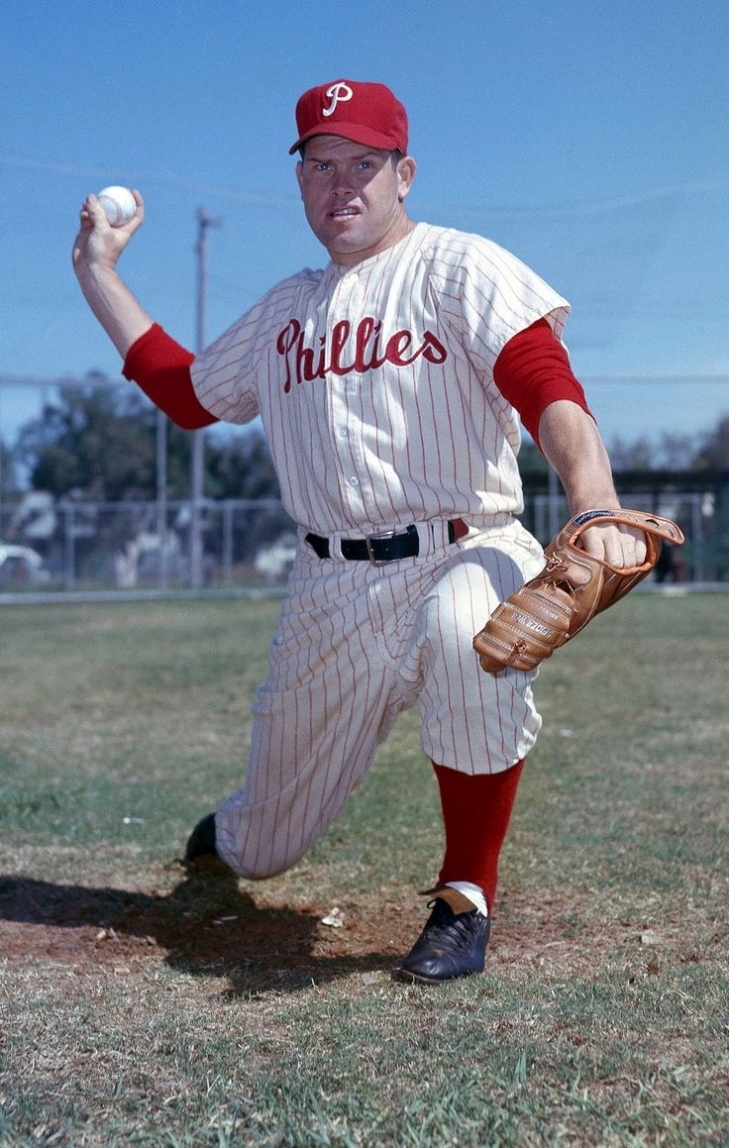
6. Richie Ashburn

When the 21-year-old blonde kid from the small town of Tilden, Nebraska, stepped onto the grass at Shibe Park on Opening Day in 1948, he was experiencing his very first major league baseball game. Richie "Whitey" Ashburn instantly made a strong impression, setting the tone for a whole generation of Philadelphia baseball fans. Playing as the leadoff hitter, this speedy center fielder had an incredible debut summer, leading the National League with 32 stolen bases and batting an impressive .333. His performance earned him his first All-Star selection and established him as the spark for the cherished "Whiz Kids.”

Ashburn served as the quintessential example of a premium, traditional table-setter. Although he played during an era characterized by the substantial home run achievements of renowned contemporary center fielders such as Willie Mays, Mickey Mantle, and Duke Snider, he discreetly surpassed them in both total hits and on-base efficiency. He employed an exceptionally disciplined eye and a compact, line-drive swing to deplete opposing pitching staffs, recording eight seasons with a batting average exceeding .300. He secured three National League hit titles and attained two individual batting championships, with a batting average of .338 in 1955 and a league-leading .350 in 1958.

Getting on base was Ashburn’s main professional focus. He led the National League in on-base percentage three times, reaching a peak of .449 in 1955, and led the league in walks four times. Over his 12 successful seasons with Philadelphia, he posted a .311 batting average and a .394 on-base percentage, often ranking high in franchise records. His remarkable speed on the field enabled him to chase down fly balls with great ease, frequently leading in outfield putouts and assists as the key defensive player.

He concluded his impressive career with the Phillies, amassing 2,217 hits—an all-time franchise record that stood for exactly 41 years until Mike Schmidt broke it. After brief periods with the Cubs and Mets, Ashburn returned to Philadelphia in 1963, shifting directly to a career in broadcasting. Over the next 35 years, his dry humor, exceptional storytelling, and perfect rapport with Harry Kalas made "His Whiteness" a legendary and enduring presence in the homes of many across the Delaware Valley.

The organization retired his number 1 jersey in August 1979 and enshrined him on the Philadelphia Baseball Wall of Fame that summer as part of the second class. The national landscape recognized his worth in 1995 when the Veterans Committee inducted Ashburn into the National Baseball Hall of Fame.
1. Mike Schmidt

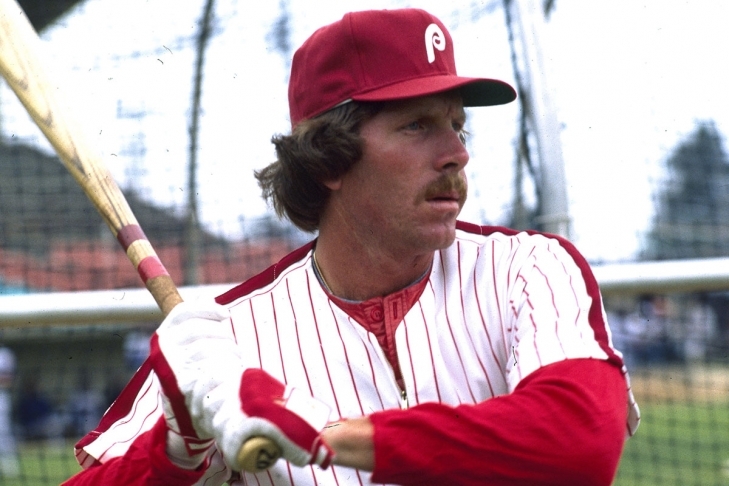
Mike Schmidt first stepped onto the Veterans Stadium turf in September 1972, a second-round draft choice out of Ohio University tasked with manning the hot corner for a struggling franchise. Initially, he appeared thoroughly overmatched by big-league pitching, struggling to a meager .196 batting average during his first full year. Yet, beneath those early growing pains lived a fiercely determined, flawlessly balanced athlete who would systematically revolutionize his position and define a franchise.

After initial struggles as a rookie, Schmidt improved significantly, leading the NL with 36 home runs, along with 116 RBIs, 108 runs, and 106 walks, earning a 9.7 bWAR. He maintained this level of performance for the next two years, hitting 38 homers in both 1975 and 1976. The 1976 season marked a turning point: Schmidt won his first Gold Glove, helped the Phillies reach 101 wins, and ended a 26-year postseason drought. He continued his success in 1977, with 38 homers, 101 RBIs, and a career-high 114 runs, as the Phillies secured the division title again.

After a slight decline in 1978, Schmidt reached a peak in 1980 both individually and as a team. That summer, he delivered an outstanding performance, hitting a career-high 48 home runs and driving in 121 runs to lead the league in both categories, while maintaining a 1.004 OPS. This earned him his first National League MVP Award through a unanimous vote. Significantly, he carried that success into October, hitting two home runs and driving in seven runs, helping the Phillies win the World Series and secure their first franchise championship.

During the strike-shortened 1981 season, he achieved a level of raw efficiency that many consider his peak structural campaign. In just 102 games, Schmidt hit 31 home runs—seven more than any other player in the league, and led the National League in runs (78), RBI (91), walks (73), on-base percentage (.435), and slugging (.644), securing his second straight NL MVP Award. Over the next three years, he continued to dominate the Senior Circuit, winning consecutive home run titles in 1983 (40) and 1984 (36), and regularly leading the league in walks to maintain a high on-base percentage.

His final great season was in 1986, a late-career resurgence when he moved back to third base after a brief stint at first. At 36, Schmidt won his eighth home run crown with 37 homers and led the league with 119 RBI, striking out just 84 times, the fewest in a full season. This high-leverage performance earned him his third National League MVP Award, joining an elite group of icons.

Declining afterward, Schmidt elected to call it a career in May of 1989 at a very emotional press conference.  He walked away as one of the rare legends to exceed 100 career bWAR (106.9) entirely with one franchise, leaving behind 2,234 hits, 1,595 RBI, and 548 home runs.

To no surprise, Schmidt was a first ballot Baseball Hall of Fame inductee in 1995.  The Phillies inducted Schmidt to their Wall of Fame in 1989, and the franchise retired his number 20 the year after.

8. Sherry Magee

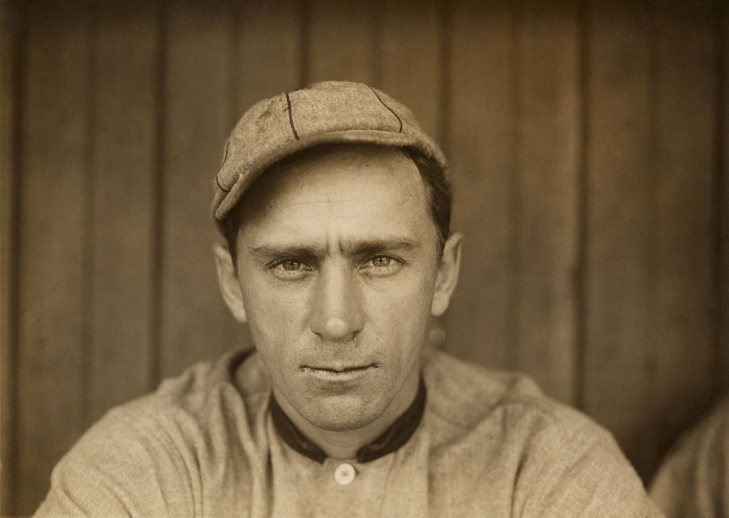
When Sherry Magee emerged as a 19-year-old rookie during the summer of 1904, the Philadelphia Phillies quickly recognized they had discovered a rare, energetic talent. Coming directly from the minor leagues, the right-handed outfielder made an immediate impact, establishing himself as a leading offensive powerhouse of the dead-ball era. In an era when offense was suppressed by heavily scuffed baseballs and large ballparks, Magee leveraged a unique combination of sharp line-drive hitting and exceptional speed on the bases.

Magee was a mainstay in Philadelphia for over ten years, consistently near the top of the National League leaderboards. During his eleven seasons with the team, he surpassed a .300 batting average five times, demonstrating both excellent contact skills and a talent for accumulating numerous extra-base hits. Six times, he ranked in the league’s top five for total hits, often frustrating pitchers at Baker Bowl by hitting doubles and triples into the gaps. In 1914, he led the National League in doubles and recorded five straight second-place finishes from 1906 to 1910. He also finished second three times in triples. Once on base, Magee was a formidable threat, finishing in the top five for stolen bases six times, including consecutive second-place finishes in 1906 and 1907.

Magee’s offensive peak was demonstrated in a historic 1910 showcase, where he would have easily won the modern MVP award. He dominated the senior circuit by leading in slash line categories and winning the National League batting title with a .331 average. Additionally, he led the league in runs scored (110) and RBIs (123), making him a formidable force for the Philadelphia offense.

All of this is impressive but it wasn’t all roses for Sherry Magee.

Yet, for all his undeniable brilliance on the diamond, Magee’s legacy carries some of the darkest, most volatile chapters in early baseball lore. He was a notoriously miserable, hot-tempered individual who seemed perpetually trapped under a dark cloud, entirely incapable of finding joy in his own success. That explosive fuse detonated permanently on July 10, 1911. Furious over a called third strike, Magee turned on umpire Bill Finneran and leveled him with a single, vicious punch, knocking the official completely unconscious on the field. The league initially handed down a severe season-ending suspension, though it was eventually scaled back to just over a month following a frantic appeal. In an era predating 24-hour media scrutiny, his toxic reputation was a constant headache for management; under modern social media floodlights, it would have been an absolute firestorm.

The organization traded the volatile star to the Boston Braves before the 1915 season, just a summer before Grover Cleveland Alexander led the team to the pennant. He left Philadelphia with 2,068 hits, 75 home runs, 430 stolen bases, 886 RBIs, and a .299 batting average.

Regardless of that, Magee was one of the greatest Philadelphia Phillies of all time.  Not that he would have smiled about it.  The organization placed Magee's name on the Philadelphia Baseball Wall of Fame in 2002.

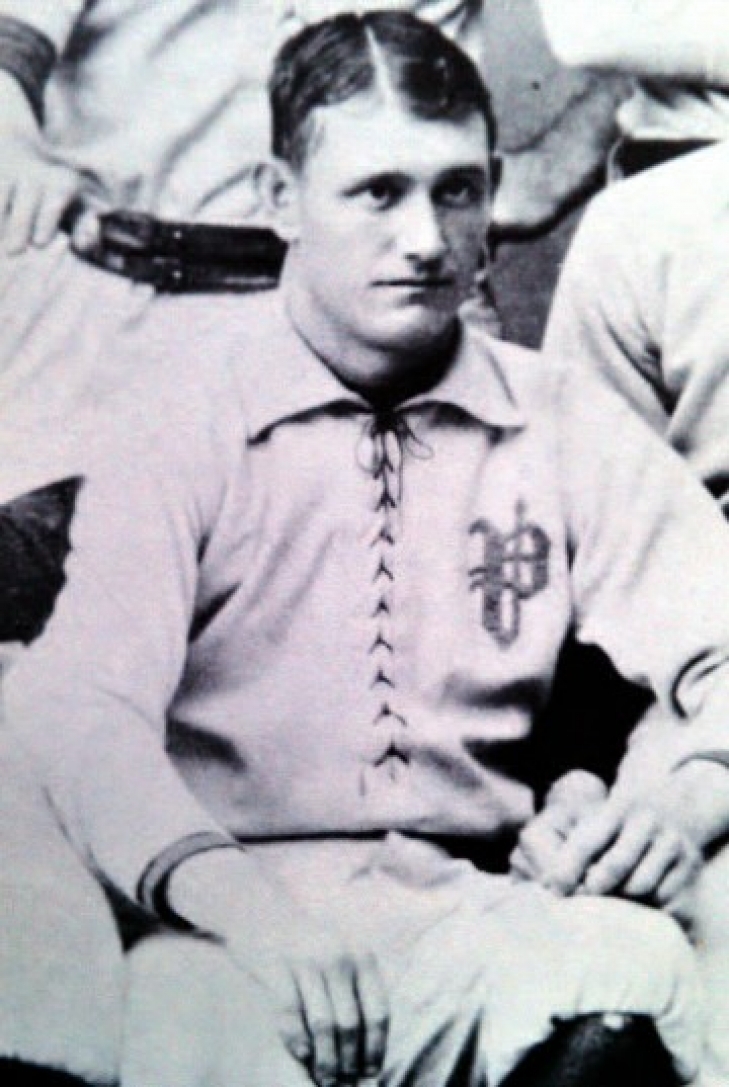
4. Ed Delahanty

In May 1888, local observers quickly recognized that Ed Delahanty, who arrived as a member of the Phillies, possessed exceptional physical attributes; however, his initial performance fell significantly short of his potential. A robust and muscular presence at the plate, the young outfielder initially encountered difficulties against major league pitching, managing only a modest .228 batting average during his debut summer. He demonstrated improvements the following year, prior to briefly joining the renegade Players’ League in 1890, a decision that provided a glimpse of his developing batting ability but temporarily hindered his progression toward becoming the dominant offensive player of the decade.

Returning to the Phillies permanently in 1891, a renewed focus unlocked his innate talent. By 1892, "Big Ed" had become the league's most formidable right-handed hitter, leading the National League with 21 triples and a .495 slugging percentage. The following summer, he truly broke through, winning both the home run title with 19 homers and the RBI championship with 146 runs batted in, leading a powerfully explosive Philadelphia lineup that overwhelmed nineteenth-century pitchers.

In the mid-1890s, Delahanty entered an era of exceptional productivity that remains astonishing statistically. He surpassed the rare .400 batting average mark in consecutive seasons, posting .407 in 1894 and .404 in 1895. In 1896, he won his second home run title and became only the second player in baseball history to hit four home runs in a game. He combined this legendary power with notable speed and a strong arm from left field, leading the league with 58 stolen bases in 1898. His peak at the plate came in 1899, when he won the National League batting title with an impressive .410 average and achieved a career-high 55 doubles.

As his athletic successes increased, his personal life began to decline into turmoil. Delahanty battled severe alcoholism and a harmful gambling addiction, which gradually distanced him from his teammates and strained his relationship with management. Following an outstanding 1901 season, where he amassed 2,213 hits and a .348 batting average, he switched to the American League, joining Washington in a desperate attempt to earn a higher salary and pay off his growing debts.

The tragedy that cut his life short remains one of baseball's darkest mysteries. On July 2, 1903, an intoxicated Delahanty brandished a razor and terrorized passengers aboard a train bound for New York, prompting the conductor to eject him at Bridgeburg, Ontario. Stumbling in a drunken stupor across the International Railway Bridge near the edge of the Niagara River, he fell into the water and was swept over Niagara Falls. His body was recovered at the bottom of the falls two weeks later; he was only 35 years old.

Delahanty would enter the Baseball Hall of Fame in 1945 via the Old-Timers Committee, and in 1984, he was inducted into the Philadelphia Baseball Wall of Fame.

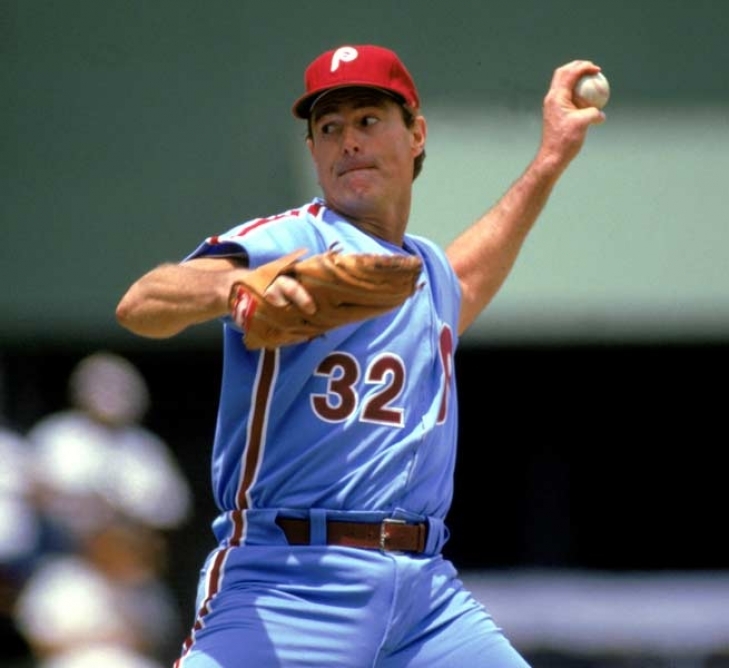
3. Steve Carlton

The arrival of Steve Carlton in Philadelphia prior to the 1972 season significantly impacted the baseball world, stemming from a contentious contract dispute with St. Louis. He was not an unproven prospect; he already held a World Series championship and had achieved a 20-win season with the Cardinals. Nevertheless, upon his debut at Veterans Stadium, his career trajectory advanced from commendable to legendary.

His initial summer wearing pinstripes remains among the most remarkable individual accomplishments in the history of sports. Representing a struggling, last-place Phillies team that secured only 59 victories throughout the season, Carlton individually recorded 27 wins—constituting an impressive 46% of the team's total wins. He led the National League with a 1.97 ERA, completed 30 games, and struck out 310 batters, earning his first Cy Young Award. This performance stands as a historic demonstration of resilience and durability, marking the last occasion on which any National League pitcher achieved the 25-win milestone.

As his tenure progressed, Carlton gained equal fame for his enigmatic demeanor and his lethal slider. He adopted a training regimen inspired by Eastern philosophies, involving twisting his left arm through buckets of rice to strengthen his wrist, and enforced a comprehensive, decade-long media blackout. Although this silence distanced him from beat writers, his pitching performance spoke volumes. He maintained his position as the undisputed ace of the rotation as the Philadelphia Phillies assembled a competitive core around Mike Schmidt and Larry Bowa, securing two additional Cy Young Awards in 1977 and 1980.

The 1980 campaign furnished the ultimate validation for his relocation to Philadelphia. Dominating the senior circuit with 24 wins and 286 strikeouts, Carlton led the pitching staff straight into October. In Game 6 of the World Series against Kansas City, he pitched seven exemplary innings to secure the decisive victory, thereby securing the franchise's inaugural world championship.

He secured a historic fourth Cy Young Award in 1982, demonstrating an unwavering dedication to striking out batters, ultimately accumulating 3,031 strikeouts while playing for the Phillies—and a total of 4,136 throughout his entire career, ranking second only to Randy Johnson among left-handed pitchers. The effects of aging gradually diminished his once exceptional arm strength in the mid-1980s, resulting in his release in June 1986 and marking the conclusion of a distinguished fifteen-year tenure with Philadelphia, during which he achieved 241 wins.

In 1988, the Phillies added Carlton to their Wall of Fame and retired his number 32 a year later.  Carlton entered the Baseball Hall of Fame in 1994.

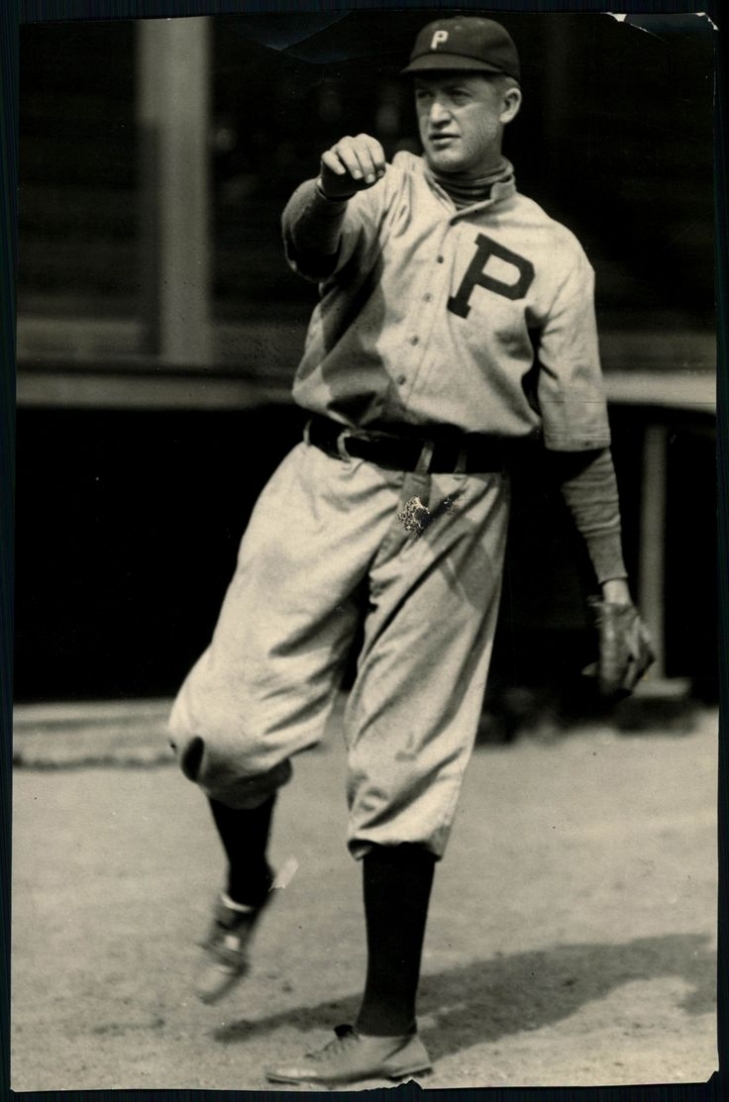
5. Pete Alexander

Inducted into the Baseball Hall of Fame in 1938, Grover Cleveland “Old Pete” Alexander might be surprising to see ranked so highly, considering he only played eight seasons for Philadelphia. In fact, we typically consider just the first seven seasons, as his eighth was his final at age 43, during which he was less effective. Still, examining Alexander’s first seven years of professional play reveals he’s a deserving top-five choice among the greatest Philadelphia Phillies of all time.

Hardly anything was expected of the tall, unassuming farm boy from Nebraska when he arrived in the spring of 1911. He went on to deliver a historic rookie masterpiece, capturing 28 victories and setting an enduring modern major-league rookie record. He paced the senior circuit in wins, shutouts (7), and innings pitched (367.0), instantly establishing himself as the primary horsepower of the Philadelphia staff.

After a series of highly successful follow-up seasons, Alexander reached an unmatched level of dominance between 1914 and 1917. He consecutively led the National League in wins for four seasons, with tallies of 27, 31, 33, and 27. Renowned for his efficiency and workload, he earned four straight strikeout titles, two ERA championships, and two WHIP titles. His peak value was crucial for the franchise, as he topped all NL pitchers in pitcher wins above replacement (bWAR) during these summers, including a remarkable 1915 season where he posted a minuscule 1.22 ERA, guiding the Phillies to their first-ever National League pennant.

The athlete's career sharply declined after 1917. Fearing the loss of their key player to the World War I draft without compensation, his team sold him to the Chicago Cubs in a quick cash-and-player deal. Alexander was drafted and served as a sergeant in France's artillery units. The intense shellfire damaged his physical health, causing partial deafness in his left ear and epilepsy, leading to a lifelong struggle with alcoholism. Despite his perseverance and winning 183 more games post-war, his peak performance was never fully realized, remaining hidden in Baker Bowl.

He concluded his primary tenure in Philadelphia with 190 victories, a stellar 2.18 ERA, and a franchise-record 61 shutouts. His status as an immortal pioneer was cemented by his induction into the National Baseball Hall of Fame in 1938.

Decades later, the organization carefully reconstructed his rightful legacy. In 1981, the team inducted Alexander into the Philadelphia Baseball Wall of Fame. Since he played before uniform numbers were standard, the Phillies devised a creative and lasting way to commemorate him: in 2001, they officially celebrated his memory by retiring a stylized, vintage 1915-style "P" logo alongside the team's other iconic numbers.

2. Robin Roberts

Robin Roberts from Michigan State first took the mound at Shibe Park in June 1948 as a highly athletic right-hander with a precise fastball and strong stamina. During an era when starters finished their work, Roberts became the gold standard of workhorse pitchers.

After two strong seasons, Roberts became dominant in the early 1950s. He anchored the pitching staff with such volume that, if the Cy Young Award had existed then, he might have won it five years in a row. Modern statistics support this, showing he led the National League in pitcher bWAR from 1950 to 1954—an impressive stretch where his performance consistently outshined his peers. Traditional voters would also have been persuaded; he led the Senior Circuit in wins for four consecutive years (1952–1955) and ranked among the top in strikeouts twice. MVP voters acknowledged this elite level of production, giving him votes for six straight years from 1950 to 1955, with finishes of seventh, thirteenth, second, sixth, seventh, and fifth.

Regarding his peak period, in 1950, Roberts exploded into superstar status by winning 20 games and leading the National League with 5 shutouts, serving as the frontline ace for the famous "Whiz Kids" squad that captured the franchise's first pennant in 35 years. He built beautifully on that foundation, rattling off a historic 28-7 record with a brilliant 2.59 ERA in 1952, a masterpiece of a summer where he completed 30 of his 37 starts and threw an astonishing 330 innings to claim The Sporting News Major League Pitcher of the Year honors.

He maintained that intense workload across three seasons, pitching an impressive 346.2 innings with 23 wins and a career-best 198 strikeouts in 1953. He followed up with another 23-win season in 1954, during which he issued only 56 walks over 336.2 innings. His peak performance came in 1955, when he won 23 games for the fourth-place Phillies, leading the league in starts (38), complete games (26), and innings pitched (305), earning his second Pitcher of the Year award.

The grueling toll of throwing over 300 innings for six consecutive seasons eventually caught up to his right arm, leading to a decline in velocity and efficiency as the late 1950s wore on.  Following the 1961 season, when, with the team deep in a rebuilding cycle, he was sold to the New York Yankees before finding a successful mid-1960s second act with the Baltimore Orioles.

Roberts was inducted into the Baseball Hall of Fame in 1976 on his fourth ballot. Two years later, in 1978, he and veteran teammate Richie Ashburn became the first two players to be honored on the Philadelphia Phillies Wall of Fame, affirming their central roles during the Whiz Kids era. The organization cemented his legacy in 1982 by retiring his No. 36 jersey, ensuring no future Phillie would wear it.

Roberts compiled a 234-199 record, a 3.46 ERA, and 272 complete games as a Phillie.

  • Published in Baseball

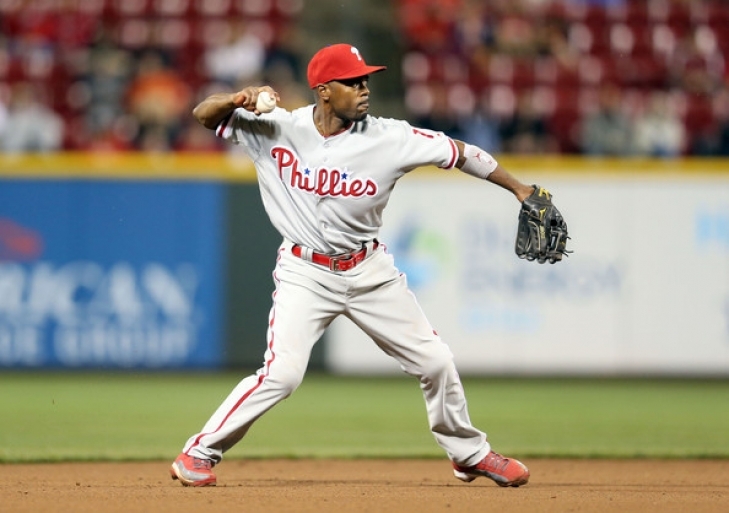
106. Jimmy Rollins

Throughout the first decade of the 2000’s, it could be argued that Jimmy Rollins was the heart of the Philadelphia Phillies…or was he the motor?

It is not widely known, but Rollins holds the Phillies’ franchise record for hits with 2,306.  Rollins did almost all of that from the leadoff position, where he batted for the Phils for over a decade.  Using his speed, he would lead the National League in Triples four times and would steal 30 or more bases ten times.  Named an All-Star three times, Rollins’ best season was actually in 2007, when he wasn’t chosen for the mid-season classic, 2007 where he won the National League MVP with a career-high 30 Home Runs.  Despite his small stature (5’ 7”), Jimmy Rollins would show decent power numbers with 231 taters, and it can not be forgotten what an asset he was defensively in the Philadelphia infield.

In 2008, Rollins would lead Philadelphia to the World Series, where the team won its first title since 1980.  He may not make the Hall of Fame, but the Philadelphia Baseball Wall of Fame should see the name of “Jimmy Rollins” etched into it one day.

42. Sherry Magee

Luckily for Sherry Magee, there was no YouTube in 1911; otherwise, all that would ever be replayed of him was the time he decked an umpire with one punch after a called third strike.  Of course, he played in the 1900s and 1910s, so there isn’t any footage of him on YouTube at all.

Magee should not be remembered for that moment; his intensity led to moments like that.  Magee was a rare star of the deadball era and, for ten years, made multiple appearances at the top of every offensive category imaginable.  Magee was also stellar in the outfield and hunted down fly balls the same way we hunted pitches with his bat.  Magee’s intensity was matched by his unwavering principles.  At the age of 34 (and still more than capable of playing in the Majors), Sherry Magee would finish out his playing career in the Minors to avoid playing for owners he despised.  His legacy and wallet would have been enriched playing in the bigs, but his principles would not allow it.

Magee might have had more impressive career numbers had he stayed in the Majors, but he had great numbers for the number of seasons he played.  He may have let his temper get the best of him often, but he always wanted to win.  Most great athletes do.

Should Sherry Magee be in the Hall of Fame?

Definitely put him in! - 71.9%
Maybe, but others deserve it first. - 19%
Probably not, but it wouldn't be the end of the world. - 4.1%
No opinion. - 0.8%
No way! - 4.1%

  • Published in Football

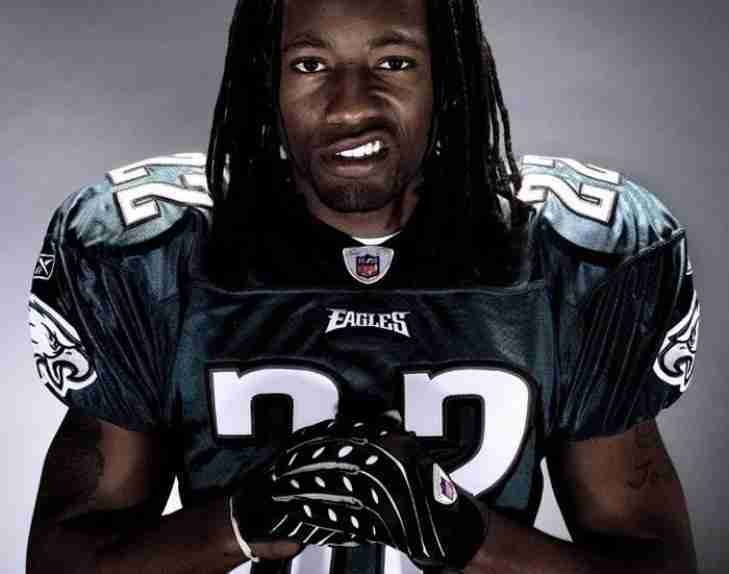
190. Asante Samuel

Making four consecutive Pro Bowls and a First Team All-Pro Selection, Asante Samuel was an integral part of a pair of Super Bowl Championships by the New England Patriots. Samuel would lead the National Football League in Interceptions twice, had 51 overall and would become one of the more recognized Defensive Backs in the NFL.

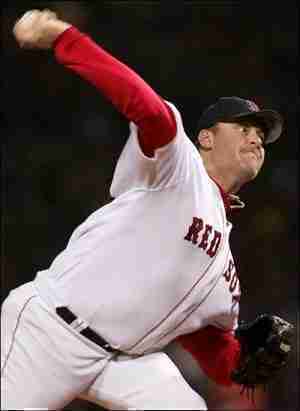
10. Curt Schilling

For the record, we love outspoken athletes. They may not always be popular with fans (and other players), but they sure make for far better sound bites than “we gotta go out there and give 100 percent” or other such statements from the “Athlete’s Guide to Dealing with the Media”. Ironically, Schilling is now part of the media, but remains as outspoken as ever.

Schilling attracted attention with his arm, too. Although he has only 216 career Major League victories, he has a career WAR of 69.7, which ranks him in the top thirty all-time for Pitchers. He was a strikeout machine who also rarely walked batters, as shown by his number two career ranking in Strikeouts to Walks Ratio.   Schilling also rose to the occasion even more in the postseason, where he posted an 11- 2 record, a World Series and NLCS MVP, three rings, and a WHIP under one. 

Curt Schilling’s famous bloody sock from the 2004 Hall of Fame is already in the Baseball Hall of Fame. Logic dictates that there is a solid chance that he will join his famous hosiery, though that would have to come from the Veterans Committee, as his political views and media feuds kept him out via the voters.


Should Curt Schilling be in the Hall of Fame?

Definitely put him in! - 51.4%
Maybe, but others deserve it first. - 4.7%
Probably not, but it wouldn't be the end of the world. - 3.5%
No opinion. - 0%
No way! - 39.9%
Subscribe to this RSS feed