Menu
A+ A A-

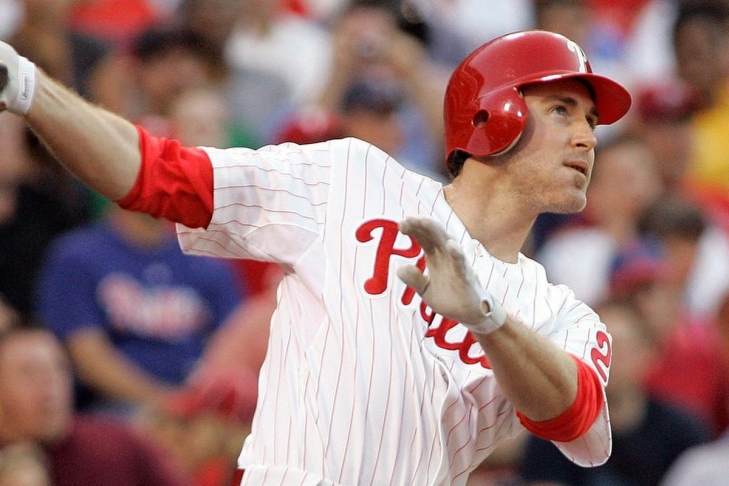
29. Chase Utley

Chase Utley came up through the Philadelphia Phillies system, and after debuting in 2003, he would quickly become the heart of a team that would win the 2008 World Series.

The Second Baseman brought a lot to the table, and from 2006 to 2010, he was a perennial All-Star.  In three of those seasons, Utley finished in the top ten in MVP voting, and he was a Silver Slugger in four of them.  From 2005 to 2009, he would have at least 22 Home Runs, with the first four of them seeing him hit the three-digit mark in Runs Batted In.  He also had two .300 years in that time frame.  Utley did not steal the most bases, but when he did, he was rarely caught.  As of this writing, he is second all-time in Stolen Base Percentage.  He also sacrificed his body to get on base.  He led the NL in Hit By Pitch three years in a row (2007-09), and he is in the top ten all-time.

Defensively, Utley never won a Gold Glove, but he certainly should have been considered for several.  He had five seasons with a Defensive bWAR over 2.0. 

Utley would go to one final All-Star in 2014, and he would finish his career with a few seasons in Los Angeles with the Dodgers, where he provided veteran leadership.  He retired in 2019 with 1,885 Hits with 259 Home Runs.

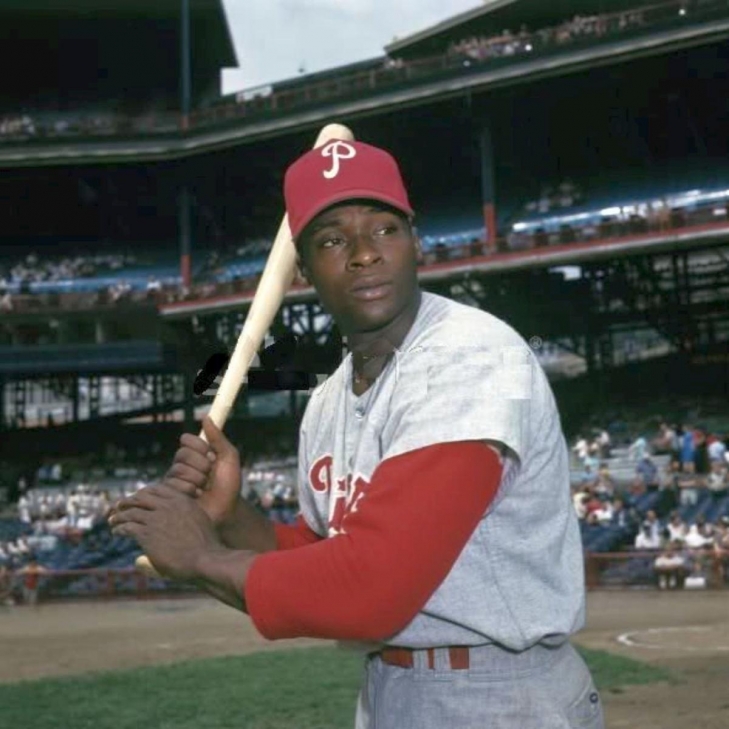
The Phillies to retire Dick Allen's number next month

Regular visitors of Notinhalloffame.com know that we are slowly working on the top 50 of every major team in the NHL, NBA, NFL and MLB. Once that is done, we intend to look at how each team honor their past players, coaches and executives.  As such, it is news to us that the Philadelphia Phillies will be retiring the number 15 of Dick Allen.

This is especially notable as the Phillies have had a policy of not retiring the numbers of players unless they have been inducted into the Baseball Hall of Fame.  Allen was on the writer’s ballot fourteen times, finishing as high as 18.9% in 1996. Since that time, he has appeared on the Veteran’s Committee Ballot, where he was one vote shy in 2014.  He is eligible on this year’s Golden Days Committee, where he is expected to be on the ballot.  This move by the Phillies could help propel Allen into Cooperstown.

Allen played nine of his fifteen years as a Phillie where he had 1,143 Hits, 204 Home Runs and had a Slash Line of .290/.371/.530.  He is currently ranked #18 on our latest list of those to consider for the Baseball Hall of Fame.

The induction is scheduled for September 3, with a ceremony planned next season when fans are (hopefully) allowed back in the ballpark.

We here at Notinhalloffame.com would like congratulate Dick Allen for this impending honor.

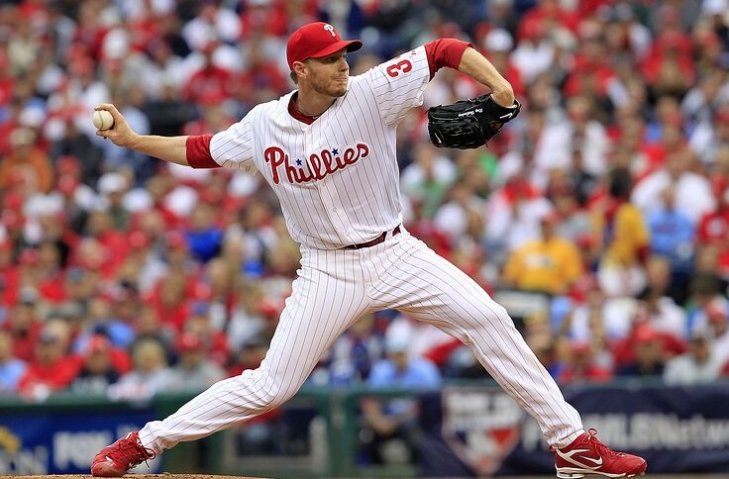
The Philadelphia Phillies will retire Roy Halladay's number

Regular visitors of Notinhalloffame.com know that we are slowly working on the top 50 of every major team in the NHL, NBA, NFL and MLB. Once that is done, we intend to look at how each team honor their past players, coaches and executives.  As such, it is news to us that the Philadelphia Phillies will be retiring the #34 of the late Roy Halladay, who died in 2017 plane crash.

The event will take place on May 29 on the tenth-year anniversary of his perfect game against the Florida Marlins.  In the four seasons that he played for the Phillies, he would win the 2010 Cy Young Award, was a two-time All-Star, and threw a no-hitter in the NLDS against Cincinnati.  Statically, with Philadelphia he had a record of 55-29 with a 3.35 ERA and 622 Strikeouts.

Halladay was inducted into the Baseball Hall of Fame in 2019. The Toronto Blue Jays have already retired his number.

In addition to the retirement of his number, a statue of Halladay will be placed in Third Base Plaza.

At present, the Phillies have retired the numbers of Richie Ashburn (#1), Jim Bunning (#14), Mike Schmidt (#20), Steve Carlton (#32), Robin Roberts (#36), and the league mandated Jackie Robinson (#42).

We here at Notinhalloffame.com would like to congratulate the family of Roy Halladay at this time.

Our All-Time Top 50 Philadelphia Phillies are now up

Yes, this is taking a while!

As many of you know, we here at Notinhalloffame.com are slowly generating the 50 of each major North American sports team.  We have a new one to unveil today, that of the Philadelphia Phillies, two time World Series Champions (1980 & 2008).

As for all of our top 50 players in basketball we look at the following: 

  1. Advanced Statistics.
  1. Traditional statistics and how they finished in the American League.
  1. Playoff accomplishments.
  1. Their overall impact on the team and other intangibles not reflected in a stat sheet.

Remember, this is ONLY based on what a player does on that particular team and not what he accomplished elsewhere and also note that we have placed an increased importance on the first two categories.

This list is updated up until the end of the 2016-17 Season.

The complete list can be found here, but as always we announce our top five in this article.  They are:

  1. Mike Schmidt
  1. Robin Roberts
  1. Steve Carlton
  1. Pete Alexander
  1. Ed Delahanty

We will continue our adjustments on our existing lists and will continue developing our new lists.

As always we thank you for your support.

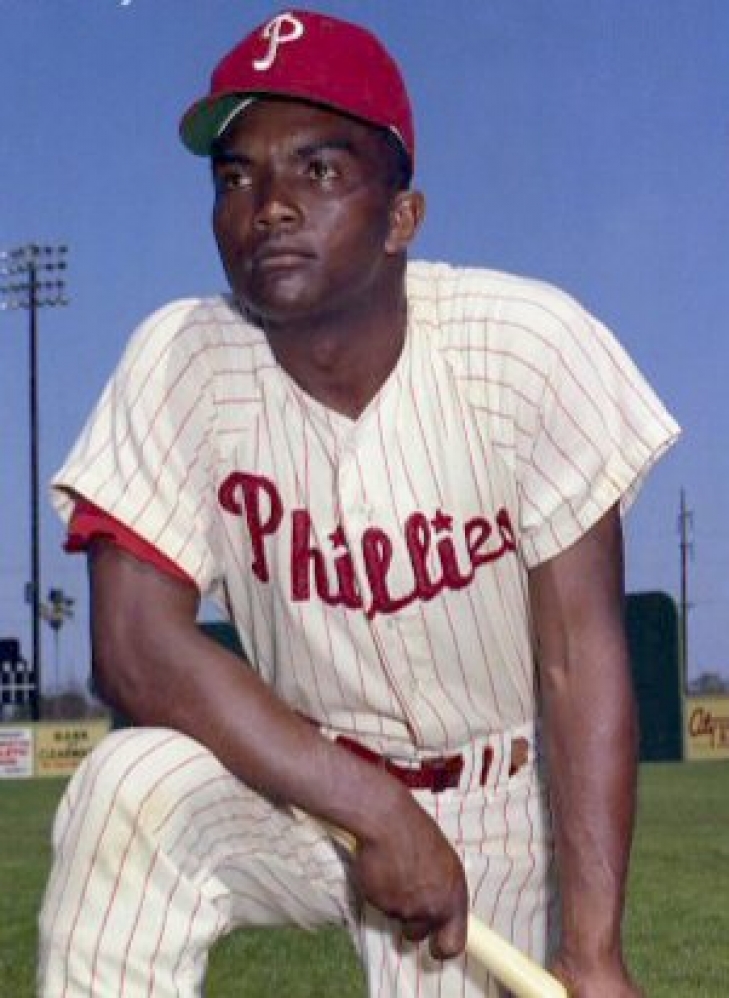
47. Tony Gonzalez

The 1960s baseball landscape was characterized by fast-paced pitching and low scores, making consistent middle-of-the-order hitters highly valuable. Tony González made this challenging environment the foundation of a disciplined career. Coming from Cuba just as political changes disrupted the island's pipeline to Major League Baseball, this calm, focused outfielder quickly became a key part of the Philadelphia Phillies’ team. Although he didn't attract national attention or major awards like more glamorous players, his smooth left-handed swing and precise defense made him an essential, reliable player for nearly ten years.

His early 1960 campaign arrival through a trade with Cincinnati provided the Phillies with a lively, everyday presence in center field. González approached hitting with pure structural efficiency, preserving a solid approach at the plate that shielded him from the period’s severe offensive decline.

He surpassed the coveted .300 batting average three times during his time in eastern Pennsylvania, highlighted by a remarkable 1963 season where he achieved a .306 average, along with a career-high 167 hits, 26 doubles, and 12 triples.

Far from being just a slap hitter, he merged a contact-focused style with subtle, highly effective gap power. He regularly surpassed 10 home runs and served as a key run scorer during the team's challenging, high-stakes 1964 pennant race.

Evaluating his legacy solely based on his 1,110 hits with the Phillies overlooks his exceptional defensive skills. On the field, González was a model of consistent efficiency. With sharp instincts and quick closing speed, he made center field a secure zone for preventing opponents' line drives. He led all National League center fielders in fielding percentage twice, notably in 1962 when he handled 321 chances without an error, becoming the first Major League center fielder to complete a season without a mistake.

He ultimately left the organization through a trade to San Diego midway through the 1968 season, ending a remarkable nine-season stint with a solid .280 batting average and 317 extra-base hits over 1,090 games.

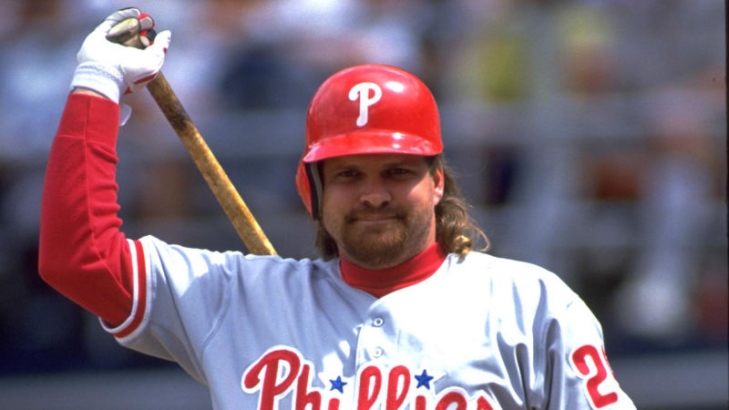
49. John Kruk

If a baseball roster typically calls for a polished, professional ambassador to represent the franchise, John Martin Kruk was the opposite of that ideal. His appearance, more resembling a guy who wandered onto the field from a local soft-pitch league than an elite athlete, along with his portly build and beer-drinking habits, made him an instant counterculture hero on Broad Street. Despite his rumpled uniform, untamed mullet, and repeated assertion that he was "not an athlete, but a ballplayer," he possessed one of the most refined, efficient left-handed swings of his era—an expert at strike-zone control who led the most colorful clubhouse in franchise history.

His arrival in June 1989 through a trade with San Diego immediately gave the Phillies a top-tier leadoff man. Kruk made reaching base an act of precise skill, using his exceptional eye to neutralize pitchers attempting to expand the strike zone.

During his five-and-a-half seasons wearing red pinstripes, he consistently challenged National League pitchers, posting an impressive .309 batting average and accumulating 790 hits along with 62 home runs across 738 games.

His peak performance and rising national profile occurred during a remarkable three-year period from 1991 to 1993, during which he earned three consecutive National League All-Star selections. In the 1992 and 1993 seasons, Kruk delivered outstanding offensive displays, consistently surpassing the .300 batting average and .400 on-base percentage benchmarks. He ranked as the runner-up in on-base percentage in the National League in those years, setting a career high with 111 walks in 1993, significantly contributing to his team's run production.

His consistent high-volume performance earned him steady recognition as a National League MVP contender, reaching a peak in 1993 when he hit .316, scored 100 runs, and drove in 85, cementing his reputation beyond doubts about his conditioning. Partnered with the legendary Mitch Williams, Kruk became the unmistakable, nationally televised figure of the beloved group of dirt-devils who surprised the baseball world by winning the 1993 National League pennant.

Tragically, at his peak across multiple dimensions, his timeline was suddenly interrupted during spring training in 1994 when he was diagnosed with testicular cancer. Despite bravely returning to play that summer following surgery, the physical strain and ongoing knee issues greatly affected his career longevity. He quietly moved to the Chicago White Sox in 1995 and then unexpectedly retired mid-game after making history by singles-hitting his way into it.

The team inducted Kruk into their Philadelphia Baseball Wall of Fame in 2011.

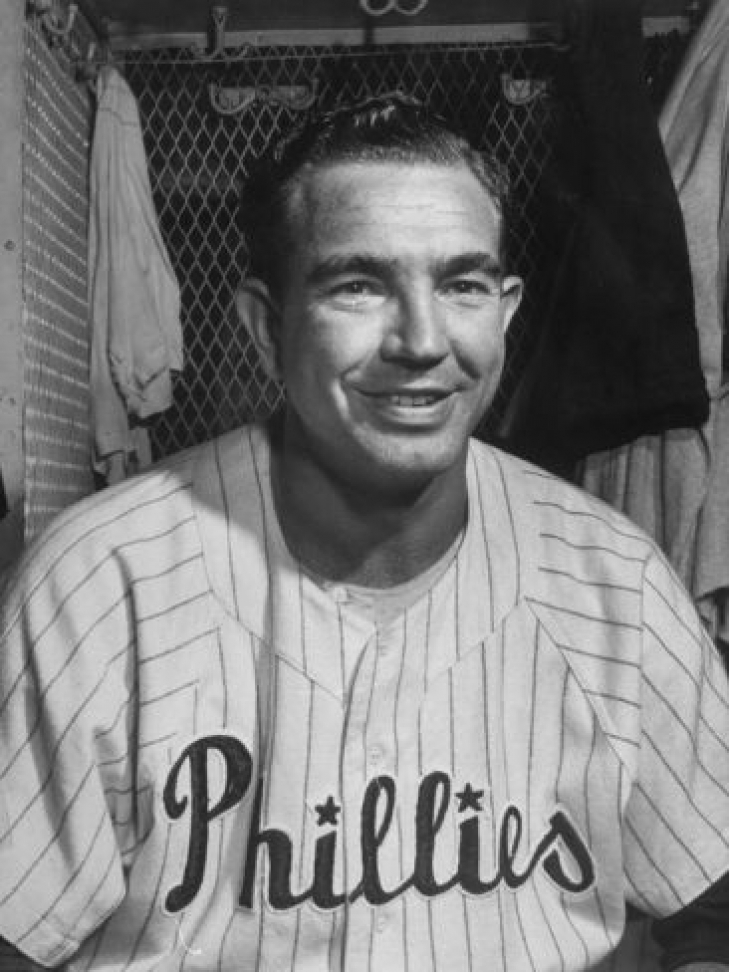
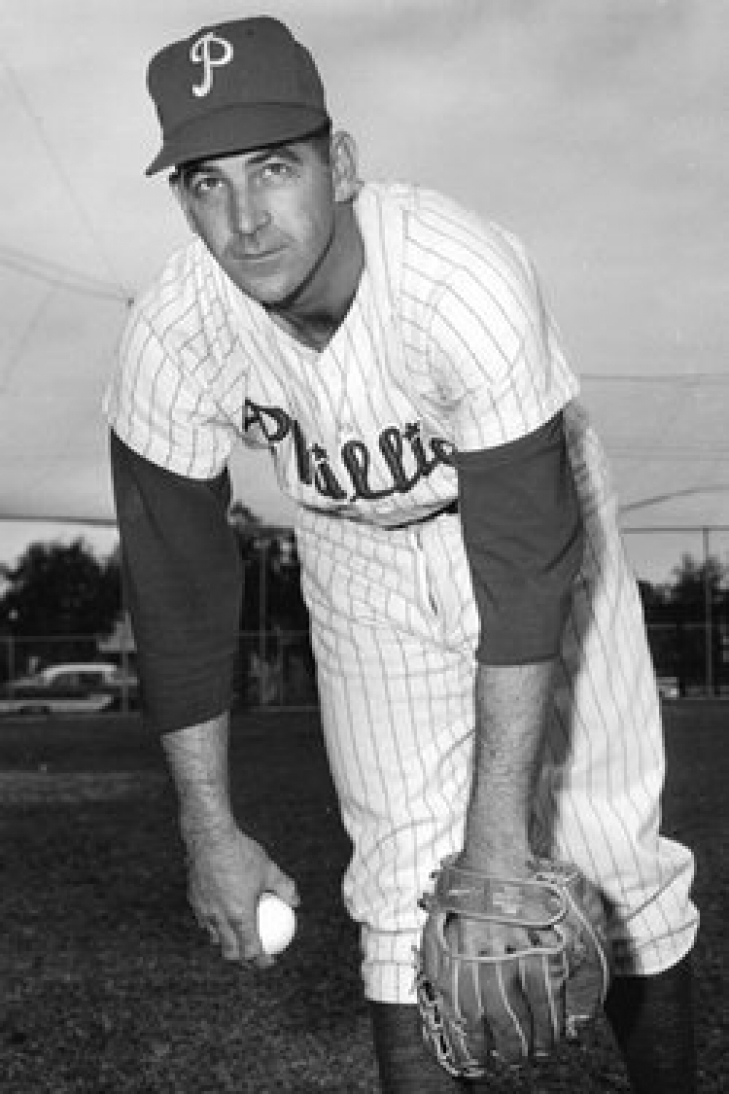
44. Willie Jones

Long before Mike Schmidt set the benchmark for third basemen in the Delaware Valley, Willie Jones was busy creating the initial model of local excellence at the position. As a key member of the famous 1950 "Whiz Kids," this robust South Carolina native anchored the hot corner during a golden age of baseball. Jones combined powerful hitting with excellent defensive skills, providing the franchise with much-needed stability and solidifying his reputation as the top National League third baseman of his time.

His ten-year tenure with the Phillies from 1947 to mid-1959 showcased remarkable durability. Jones not only amassed impressive statistics but also integrated consistent performance into the team's fabric. He achieved a commendable 1,502 hits with Philadelphia and stood out as a powerful hitter during an era when third basemen infrequently displayed such high-velocity power.

His peak regular-season performance and rising national recognition culminated in 1950 and 1951, when he was chosen for the National League All-Star team in two consecutive years.

During the 1950 pennant race, Jones delivered an outstanding offensive performance that helped the young team win the National League championship. He hit a career-high 25 home runs, drove in 88 runs, scored 100 runs, and made 163 hits, leading the Senior Circuit in games played. He also started that memorable summer with a remarkable 16-game hitting streak—a franchise record that remained unbroken for 73 seasons. In 1951, he continued his strong form, posting a career-best .285 batting average and hitting 22 home runs.

Evaluating Jones solely based on his 180 home runs misses his true significance in club history. He was a defensive powerhouse at third base, consistently leading in fielding percentage six times and in putouts for seven straight years. Although some modern metrics suggest limited lateral mobility, his low-variance, mistake-free style effectively supported his pitching staff, demonstrating his flawless positioning and glove work.

By June 1959, when traded to Cleveland, he left a notable legacy with 753 RBIs and six grand slams, second only to Schmidt and Ryan Howard on the club's all-time list.  Jones entered the Philadelphia Baseball Wall of Fame in 1994.

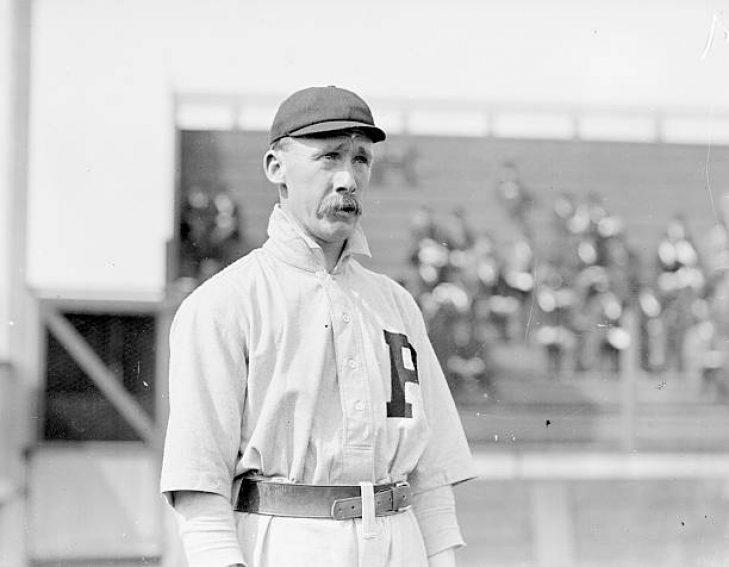
48. John Titus

The baseball scene at the dawn of the 20th century was characterized by vibrant, outspoken individuals who approached the game with theatrical flair. John Franklin Titus, notably, declined to partake in such performative elements. Consistent with his primary nickname, "Silent John,” he maintained a discreet and disciplined demeanor, which was reflected in his physical conduct; conventional Deadball Era anecdotes recount that teammate Kid Gleason once observed Titus did not produce a sound when he spat.

His secondary, significantly more vivid label—"Tight Ass"—was a direct pun on his surname and his renowned, low-variance financial practices. Titus is well known for his refusal to access his earnings during the summer, instead saving each paycheck until October, when he would cash them collectively in a single, high-volume transaction in his hometown.

Yet, beneath the quiet demeanor, the toothpick clamped firmly between his teeth, and the magnificent handlebar mustache, sat an incredibly disciplined, high-efficiency offensive machine.

His addition to the Philadelphia team during the middle of the 1903 season brought in one of the most refined eyes of the Deadball Era. Titus turned the batter's box into a masterclass in spatial awareness and pitch recognition. Hall of Fame teammate Grover Cleveland Alexander often described Titus as having one of the best pure eyes he had ever seen, admiring how effortlessly he managed the strike zone.

That patient baseline firmly places him among the top early franchise leaders. During his ten seasons with the Philadelphia team, Titus consistently dominated opposing pitchers, surpassing the .400 on-base percentage twice and ranking among the top ten in the National League for OBP six times.

Far from a passive walker, he combined elite selectivity with an impressively consistent stroke that consistently produced high seasonal volume. Titus achieved three top-ten finishes in the National League batting race, highlighted by a remarkable 1905 breakthrough. Moving between corner outfield positions to better balance the team, he demonstrated a versatile hitting approach, batting .308 with 169 hits, 36 doubles, 14 triples, and a career-high 89 RBIs, ranking among the upper tier in slugging percentage on the Senior Circuit.

His time in Philly ultimately drew to a close midway through the 1912 season when management traded the aging veteran to the Boston Braves. He walked away, leaving a slash line of .280/.368/.377, underpinned by 593 walks and 84 instances of being hit by a pitch.

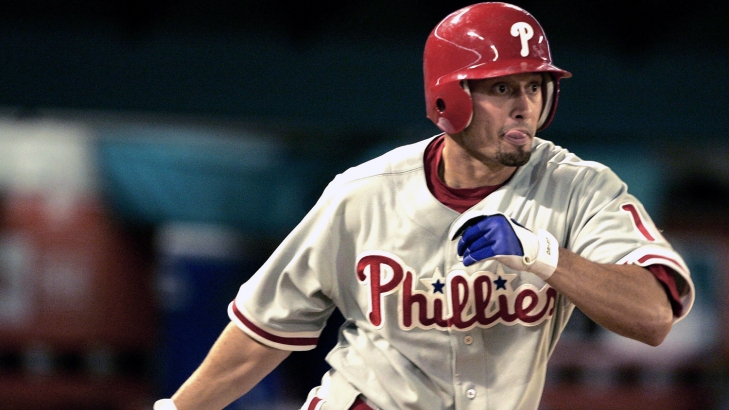
38. Shane Victorino

For a franchise established on a remarkable foundation of gritty, high-energy performances during its late-2000s prime, no individual embodied the city’s emotional core quite like Shane Victorino. Selected from relative obscurity through the Rule 5 draft, the switch-hitting outfielder, recognized for his infectious smile and relentless drive, swiftly acquired an enduring nickname among the Philadelphia supporters: "The Flyin' Hawaiian." Guarding the vast, challenging expanse at Citizens Bank Park with exceptional closing speed, Victorino transformed center field into his personal arena of athletic mastery, delivering a seamless blend of superior defensive coverage and high-stakes offensive performance.

His extensive residency in eastern Pennsylvania from 2005 until the midpoint of the 2012 campaign exemplifies a comprehensive mastery of multifaceted influence. Victorino transformed high-intensity chaos into a regular-season staple, using an exceptionally quick opening move to hinder opposing lineups' advanced base aspirations.

His advanced spatial metrics were exceptionally elite, earning him three straight National League Gold Gloves from 2008 to 2010. Along with this standout defensive skill, he maintained a highly effective, high-volume role at the top of the batting lineup, recording 997 hits, 181 doubles, 63 triples, and 179 stolen bases while playing for Philadelphia.

His peak regular-season performance and national recognition occurred during the notable 2009 and 2011 seasons, earning him two well-deserved National League All-Star titles. Victorino excelled as a top leadoff hitter, leading the Senior Circuit in triples twice and regularly surpassing 95 runs scored. In his outstanding 2011 season, he showcased his offensive skills by hitting .279, setting a personal best with 17 home runs, and scoring 95 runs, contributing to the Phillies’ historic 102-win season.

Measuring Victorino's impact solely by regular-season efficiency misses his true legacy, which is built on his remarkable October performances. He was a dominant force during the postseason, consistently creating iconic, high-pressure moments that became part of franchise history. In the unforgettable 2008 World Series run, he energized the local fans by hitting a legendary game-tying grand slam off CC Sabathia in the NLDS, and later, he hit a crucial late-inning home run in the NLCS that helped lead the franchise to its first World Series title in nearly thirty years.

By the midway point of the 2012 calendar, with the championship window slowly closing and the roster facing a structural transition, management made a highly emotional trade, sending the pending free agent to the Los Angeles Dodgers. He would later capture a secondary world title as a frontline catalyst for the 2013 Boston Red Sox, but his heart permanently belonged to the Delaware Valley. He officially signed a one-day contract to retire as a Phillie in 2018.

With Philadelphia, Victorino batted .279 with 998 Hits.

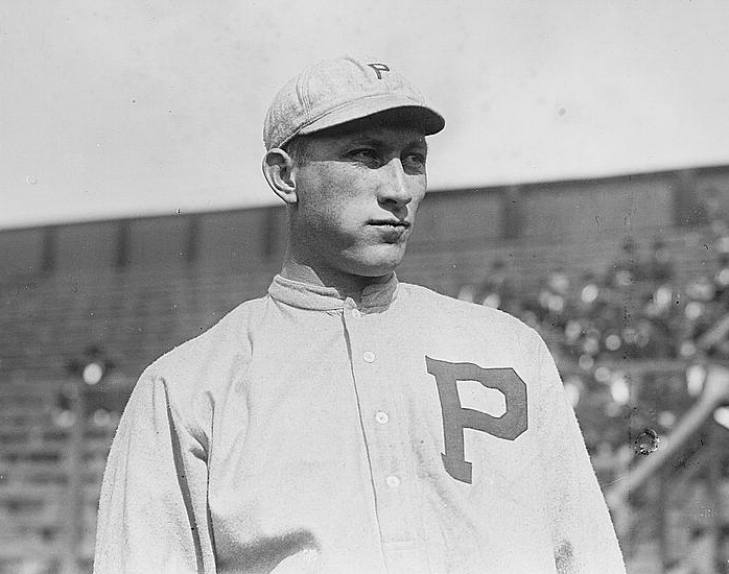
37. Fred Luderus

During the demanding Deadball Era, a position player typically required exceptional durability and a dependable hitting approach to stay relevant in the majors. For Fred Luderus, this consistent efficiency defined his career. As the primary first baseman for the Philadelphia Phillies throughout the 1910s, the unassuming Wisconsin native maintained stability at the hot corner, quietly establishing one of the most reliable, high-volume careers of his era.

Luderus wasn't a flashy headline-maker who intimidated opposing managers; instead, he made consistent contact a regular part of the game. Throughout his ten years in red pinstripes, he surpassed 130 hits in an impressive eight seasons, acting as a reliable middle-of-the-order hitter and a stabilizing force.

He showcased a remarkably refined bat during the 1911 and 1915 seasons, surpassing the .300 batting average threshold both summers. Additionally, in an era known for soft, tobacco-stained balls, Luderus demonstrated unexpectedly strong extra-base hitting. He recorded four separate seasons with a minimum of 10 home runs, modest by today's standards but considered elite power at the time, when league leaders often had only in the low teens.

The absolute pinnacle of his multi-dimensional production and historical legacy converged during the unforgettable 1915 pennant race. Luderus put on a clinical display of hitting to carry the Phillies to their very first National League championship, setting up a historic Fall Classic clash against the Boston Red Sox.

Although the team narrowly lost a five-game series, Luderus made his mark by hitting a historic home run, becoming the first in Philadelphia Phillies history to do so in the World Series. Throughout that October, he dominated Boston’s renowned pitching staff, ending the series with an impressive .438 batting average and six RBIs, almost carrying the team's offense by himself.

He ultimately departed from the organization after the 1920 season, leaving a notable localized baseline of 1,322 hits, 237 doubles, and a solid .278 batting average over 1,304 games.

46. Granny Hamner

The wartime roster shuffle of the mid-1940s prompted many organizations to fast-track prospects before they were fully physically or tactically ready. Granny Hamner serves as a compelling example. Signed from Virginia as a very raw 17-year-old talent, he was thrown into the major leagues during the 1944 season and set an unbreakable record in 1945 as the youngest player to start on Opening Day. Although these early appearances revealed his developmental gaps, Hamner worked systematically to improve, earning the regular shortstop position by 1948. He quickly matured into the gritty, vocal leader and team captain of the popular 1950 "Whiz Kids”.

His consistent presence at the middle of the field during the franchise's golden era showcased unmatched durability. Hamner made taking the field a daily habit, anchoring the infield during a remarkable period from 1949 to 1954, when he ranked among the top ten shortstops in the National League for defensive assists and double plays.

Far from a passive defender, his advanced efficiency filters were highly effective; his perfect positioning and raw arm strength earned him steady recognition among the top defensive bWAR anchors in the Senior Circuit, helping stabilize the field for elite arms like Robin Roberts and Curt Simmons.

However, measuring Hamner’s impact only by his defensive stats overlooks the highly effective middle-of-the-order power he consistently displayed at his peak. He recorded six straight seasons with at least 150 hits and was a key run-scorer, finishing with over 80 RBIs four times, a significant amount of production for an infielder in the post-war period.

His national profile and local prominence reached their peak during a remarkable three-year period from 1952 to 1954, when he was selected for the National League All-Star team three consecutive years. Notably, he secured starting positions at two different positions: shortstop in 1952 and second base in 1954.

Although his elite regular-season performance was a key factor for the team, his reputation in crucial games became legendary during the 1950 Fall Classic against the highly favored New York Yankees. Even though the young Whiz Kids were ultimately swept in four close games, Hamner delivered an outstanding offensive display, dominating the Bronx bombers with a remarkable .429 batting average and three extra-base hits.

The main reason his overall historical valuation hits a ceiling under modern analysis is his low-efficiency on-base approach. Known for his aggressive, high-velocity swing, Hamner seldom sought free passes, resulting in a lengthy 1,501-game career in red pinstripes with a modest .305 on-base percentage that significantly limited his run-creation potential.

Evaluating his extensive real estate in franchise history solely by traditional stats like on-base percentage fails to capture the powerful influence of his leadership and long career. He ultimately left via a trade to Cleveland halfway through the 1959 season, leaving an outstanding record of 1,518 hits and 103 home runs.

In 1987, he was chosen for the Philadelphia Wall of Fame.

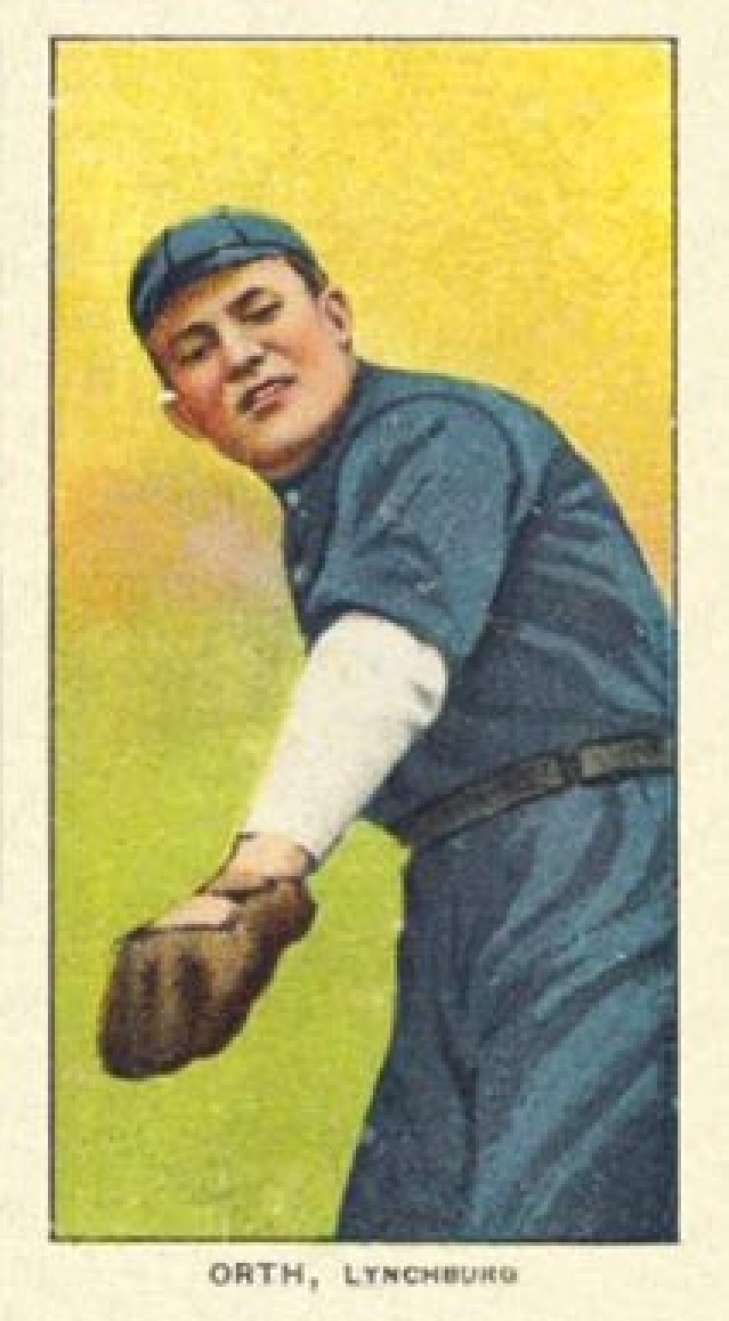
42. Al Orth

Historians often identify the early roots of the franchise as a transitional period around the 20th century. However, Albert Lewis Orth shaped that era with exceptional pitching accuracy. Known as "The Curveless Wonder," the right-handed control ace challenged typical practices of his time. Unlike competitors who relied on powerful breaking balls, Orth systematically broke down National League lineups by expertly varying pitch speeds, precisely placing his pitches, and conserving his bullpen's stamina.

Moreover, his most notable season didn't come late with the New York Giants; instead, his peak occurred with the New York Highlanders (later known as the Yankees), when he achieved a 27-win season in 1906. However, the crucial foundation of his 204-win major league career was entirely built during his time with Philadelphia's team, wearing pinstripes.

Entering the Virginia League midway through the 1895 season, Orth quickly established himself as an effective pitcher, achieving wins with apparent ease and consistency. He started strong with an impressive streak of eight straight wins, and concluded his first summer in the majors with a record of 8-1. What followed was an exceptional, high-volume display of consistency that firmly places him among the organization's top leaders. Orth then achieved six consecutive regular seasons with at least 14 wins for the Phillies, demonstrating reliability as a dependable starter who took the mound without hesitation.

The absolute pinnacle of his Phillies run converged during the historic 1901 campaign, where his advanced efficiency metrics reached a spectacular, league-wide peak. Orth cruised to a brilliant 20-12 record across 33 starts, executing a masterclass in run prevention to the tune of a career-best 2.27 ERA.

He didn't just suppress runs; he effectively shut down the free-pass market. Orth led all of Major League Baseball by posting an outstanding 1.000 WHIP and a tiny 1.0 walks per nine innings, giving up only 32 walks over 281.2 tough innings.

What truly made Orth an iconic figure of the Deadball Era was his remarkable skill with a bat. He was a formidable left-handed hitter who took great pride in his offensive contributions, often serving as a high-leverage pinch-hitter and occasionally playing in the outfield or the left side of the infield to stay active at the plate. Over his seven winters on Broad Street, he excelled against opposing pitchers, posting a superb .294 batting average, highlighted by a standout 1895 season where he hit .356.

Like many key players from that early roster, Orth moved to the fledgling American League before the 1902 season, signing with the Washington Senators. He left Philadelphia with an impressive record of 100 wins and 72 losses, supported by 140 complete games and a solid 3.47 ERA.

41. Von Hayes

The psychological impact of a trade can sometimes shape a player’s entire legacy, influencing how fans view them despite their actual performance. Von Hayes is arguably the most intriguing and divisive example of this in the modern history of the Delaware Valley. With his impressive, lanky six-foot-five build and a smooth left-handed swing reminiscent of Ted Williams, Hayes arrived from Cleveland before the 1983 season, quickly earning the nickname “Five-for-One." This was because the front office traded five players, including the popular World Series hero Manny Trillo and a young Julio Franco, to acquire him. As a result, local fans saw him more as a savior than just a young outfielder. When he didn't immediately produce at a level comparable to Mike Schmidt, the nickname was often used as a full-blown insult by the crowd at the Vet.

However, viewing Hayes solely through the lens of that transaction's structural pressure overlooks his highly productive, high-volume baseline over nearly a decade. He was a versatile, efficient player capable of switching seamlessly among five defensive positions and functioning as a consistent on-base threat at the top of the lineup.

His standout regular-season moment came in a remarkable 1986 season, during which he consistently defeated National League pitchers to top the league in runs scored (107) and doubles (46). He also posted an impressive .305 batting average, earning him eighth place in the National League MVP voting.

On June 11, 1985, he made a mark in major league history during a memorable game against the Mets by hitting two home runs in the first inning. He started with a solo shot and later hit a powerful grand slam, becoming the first player ever to accomplish this in a single inning.

Hayes proved to be more than just a one-year sensation, combining his extra-base hitting power with remarkable patience and top-tier speed on the bases. In 1987, he had an outstanding season, drawing 121 walks to achieve a high .404 on-base percentage. This was followed by his best all-around offensive performance in 1989. With Schmidt's retirement and the team undergoing major changes, Hayes became the franchise's cornerstone, hitting a career-high 26 home runs and stealing 28 bases, earning him a well-deserved spot on the National League All-Star team.

During nine seasons in red pinstripes, he amassed 1,181 hits, 124 home runs, and 202 stolen bases, outperforming most teammates in a lean era. His name is tinged with a bittersweet aura due to how his career ended—a broken wrist from a 1991 hit-by-pitch weakened his bat speed, leading to a quiet exit to the California Angels before retiring.

45. Elmer Flick

The detailed historical record of early 20th-century baseball features legendary figures deeply connected to the American League's origins. However, Elmer Flick’s greatness was built entirely during his time in Philadelphia. Although history primarily recalls "The Demon of the Stick" as a Cooperstown hero who reached his peak in Cleveland, it overlooks the exceptional and efficient debut he had in the majors during his four years with red pinstripes.

Arriving in 1898 to replace the injured Sam Thompson, the stocky, quick outfielder from Ohio not only survived but also mounted a vigorous offensive against National League pitching.

Flick turned offensive run creation into an absolute regular-season routine from the moment he arrived on Broad Street. Over his brief 537-game tenure with the Phillies, he orchestrated a breathtaking, high-volume .338/.419/.487 slash line, accumulating 683 hits, 102 doubles, and 57 triples.

The highlight of his time in Philadelphia was during a historic 1900 season, where he stood out as a top league performer. Flick delivered an outstanding offensive performance, hitting .367 with 11 home runs and a personal best of 200 hits, while leading the Senior Circuit with 110 RBIs. He paired his powerful middle-of-the-order batting with impressive speed, stealing 35 bases and successfully outpacing opponents.

Despite his impressive individual record, Flick’s time in Philadelphia was dramatically interrupted by intense political rivalry between the established National League and the emerging American League. After a stellar 1901 season where he scored 112 runs, he was drawn by the lucrative prospects of the new league and, along with teammate Napoleon Lajoie, transferred to Connie Mack’s Philadelphia Athletics before the 1902 season.

The transaction led to an immediate and historic legal upheaval. Enraged by losing his top players, Phillies owner Colonel John I. Rogers sued, leading to a case that reached the Pennsylvania Supreme Court. In April 1902, the court issued a broad injunction preventing the defecting players from playing for any team other than the Phillies within Pennsylvania.

After Flick logged a mere 11 games in an Athletics uniform, American League president Ban Johnson executed a brilliant, low-variance loophole. Recognizing that the state injunction was unenforceable beyond Pennsylvania's borders, the league abruptly assigned Flick and Lajoie to the Cleveland Bronchos (later the Naps). He would play the rest of his career in Cleveland, and in 1963, he was elected to the Baseball Hall of Fame.

36. Scott Rolen

Few entries on a historical leaderboard spark as much analytical fascination or emotional debate as Scott Bruce Rolen. For many in the wider baseball community, Rolen’s legacy is firmly associated with a bright red St. Louis Cardinals cap. This makes sense at first glance; he was a multiple-time All-Star in Missouri, finished fourth in the 2004 National League MVP race, and earned a World Series ring with the 2006 Redbirds. In contrast, during his time in eastern Pennsylvania, he received only a single, modest All-Star nod and no MVP considerations, making the narrative clear-cut.

However, when you look beyond the surface praise and examine the raw, stark reality of both traditional and advanced metrics, a clear truth comes to light: Rolen was genuinely a more prolific and consistent hitter in a Philadelphia Phillies uniform than he was anywhere else.

His debut on Broad Street midway through the 1996 season marked a major change at third base. At six-foot-four with gentle hands and a quick first step, Rolen delivered an exceptional display of third baseman skills, earning him the 1997 National League Rookie of the Year award unanimously.

Far from a mere one-year sensation, he evolved into a formidable defensive presence on the left side of the diamond. Rolen consistently dominated, intercepting everything hit his way, and earned four Gold Glove Awards with Philadelphia. He led the Senior Circuit in defensive bWAR in both 1997 and 1998. Combining this elite, era-defining glove work with a highly refined power attack, he amassed 880 hits, 150 home runs, and 559 RBIs over 844 games wearing red pinstripes. He regularly surpassed 25 home runs and 90 RBIs, earning a well-deserved Silver Slugger Award in 1999, cementing his reputation as one of the sport’s most versatile threats.

Despite his exceptional individual performance, his tenure was characterized by significant structural obstacles. Rolen became increasingly frustrated with the front office's apparent frugality and what he saw as a lack of organizational dedication to creating a sustainable, winning team.

The boiling point was reached after a series of high-profile, toxic conflicts with fiery manager Larry Bowa. Recognizing that the relationship had irreparably broken down, Rolen declined a substantial contract extension and clearly asked to be traded. Management eventually agreed, making a major deal that sent him to St. Louis halfway through the 2002 season.

His departure left local fans with a bitter taste, leading to a decade of constant booing whenever he returned to Citizens Bank Park. Because of this, his remarkable performance with the Phillies is often overlooked. In Philadelphia, Rolen averaged an impressive 5.5 bWAR per 162 games, surpassing the 4.7 bWAR average he achieved during his peak years in St. Louis.

Rolen was inducted into the Baseball Hall of Fame in 2023.

32. Roy Halladay

Before Roy Halladay donned a Philadelphia jersey, his reputation as a top-tier player in the modern game was well established. As the reliable and dominant pitcher for the Toronto Blue Jays, "Doc" had already won an American League Cy Young Award and led the league in bWAR for consecutive seasons. He exemplified the ideal old-school workhorse, thriving in an era of strict pitch counts. However, when he was traded to the Phillies before the 2010 season, Halladay managed to elevate his already stellar career into an enduring baseball legend.

His debut campaign in red pinstripes showcased exceptional athletic control. Halladay systematically dismantled National League lineups, achieving a 21-10 record with a stellar 2.44 ERA, leading the majors with nine complete games and four shutouts. On May 29, during that remarkable summer, he delivered a flawless performance by pitching a perfect game against the Florida Marlins. This historic feat secured him the unanimous National League Cy Young Award, placing him among the few to win the honor in both leagues.

Yet, it was his unforgettable introduction to the high-leverage theater of October that permanently altered the archives of the sport. Making the very first postseason appearance of his twelve-year career in Game 1 of the NLDS, Halladay stepped onto the mound at Citizens Bank Park and completely paralyzed the Cincinnati Reds. Armed with a devastating, biting cutter and immaculate spatial command, he carved his way through history to spin a no-hitter, marking only the second no-hit masterpiece in postseason history after Don Larsen’s famed 1956 World Series perfect game.

He carried his front-line dominance into the 2011 season, posting a strong regular season with a 19-6 record and a career-best 2.35 ERA, earning him a close second in the Cy Young voting. Unfortunately, the intense workload needed to maintain that level of excellence took a severe physical toll. Serious shoulder and back injuries caused him to lose much of his signature velocity and movement, diminishing his once-formidable presence to a shadow of itself during two painful, less effective seasons before he officially retired in late 2013.

Halladay would die in 2017 when he crashed his amphibious plane in the Gulf of Mexico.  The Phillies would posthumously induct him into their Baseball Wall of Fame in 2018, and the Baseball Hall of Fame chose him the next year.

27. Greg Luzinski

Few players have ever visualized their nickname quite like Gregory Michael "The Bull" Luzinski. Weighing 255 pounds on a six-foot-one frame, he appeared more like a powerful defensive lineman who accidentally wandered onto the baseball field rather than a typical outfielder. During the 1970s, Luzinski was a beloved figure in eastern Pennsylvania, teaming with Mike Schmidt to create one of the most formidable and high-powered batting duos of the post-war period. When he stepped up to the plate at Veterans Stadium, pitchers knew any mistake could send the ball soaring out of the park.

During the mid-to-late 1970s, Luzinski wasn't simply popular; he was a ruthlessly efficient, middle-of-the-order engine. He secured four consecutive National League All-Star selections from 1975 through 1978, anchoring the offense during the franchise's prominent run of three straight division titles.

Over three remarkable summers, he regularly surpassed 30 home runs and 100 RBIs, punishing pitchers with powerful extra-base hits. Far from just a pull-happy slugger, The Bull demonstrated a highly refined plate approach, hitting above .300 three times within that four-year span, showing he could control the strike zone as well as he could hit the ball hard.

His top regular-season performance and national acclaim peaked in 1975 and 1977, when he finished as a close runner-up for the National League Most Valuable Player Award. In 1975, he led the NL with a career-best 120 RBIs. Two years later, he had an outstanding 1977 season, hitting a personal best of 39 home runs and recording 130 RBIs.

Assessing Luzinski’s historical ranking without considering his defensive metrics would be incomplete. In left field, his large physique made it difficult to cover the ground. His limited range was an understatement; he was a significant defensive weakness, often forcing his center fielders to cover twice the usual area. Advanced metrics show he had six seasons with a defensive bWAR of -1.5 or worse, including three particularly poor summers dropping below -2.0. These defensive struggles significantly impact his overall career evaluation.

During the brightest moments, The Bull consistently rose to the occasion, creating legendary franchise memories. He safely hit in each postseason game during the 1976–1978 playoffs and, as a bench player in the memorable 1980 NLCS against Houston, recorded two iconic, game-winning hits. These performances helped lead the Phillies to their first World Series title.

He concluded his memorable eleven-year stay in Philadelphia with 1,299 hits, 223 home runs, and 811 RBIs before returning to his native Chicago in 1981 to close his career with the White Sox. Philadelphia chose Luzinski for the Philadelphia Baseball Wall of Fame in 1997.

31. Larry Bowa

Surviving twelve tough seasons as the Phillies' starting shortstop demands exceptional defensive skills. For Larry Bowa, this was the only way to succeed. Known for his fiery, ultra-competitive nature, which earned him the nickname "The Gnat,” he turned the shortstop role into a showcase of precise positioning and relentless coverage. Although his power at the plate was modest, his glove was a top-tier, era-defining defense that anchored the infield during the team’s golden era.

From a run prevention standpoint, Bowa was an exceptionally efficient player with low variability. He led all National League shortstops in fielding percentage five times, thanks to his quick first step and flawless glove work, which helped him reliably cover the turf at Veterans Stadium.

His advanced spatial metrics were extremely impressive, far exceeding a simple regional favorite. He ranked in the top ten in the National League for defensive bWAR five times, peaking in 1978 when he led all Senior Circuit position players with a remarkable 2.9 defensive WAR.

Evaluating Bowa solely as a defensive player overlooks his highly productive role as a table-setter in the lineup’s bottom half. Despite lacking power—hitting only 13 home runs over 1,739 games in Philadelphia, he consistently found ways to prolong innings. Bowa achieved three summers hitting over .280 and amassed 1,798 hits while with Philadelphia. His exceptional speed allowed him to disrupt catchers, securing nine straight seasons with at least 20 stolen bases.

The peak of his regular-season efforts and national acclaim occurred during the iconic 1978 year. Bowa delivered an outstanding display on both offense and defense, achieving a career-high 192 hits and posting a impressive .294 batting average, which earned him a well-deserved third place in the National League Most Valuable Player voting.

That impressive pedigree remained completely unbreakable when the spotlight was brightest during the remarkable 1980 championship run. He made the Fall Classic his personal stage, batting an impressive .375 against the Kansas City Royals and playing a key role in securing the franchise's first-ever world title.

After being traded to the Chicago Cubs before the 1982 season, he eventually became a prominent, passionate presence in the dugout. In 2001, he rejoined his true baseball home, taking charge of a rebuilding team and leading an unexpected turnaround of 86 wins, which earned him the National League Manager of the Year award, demonstrating that his emotional core was forever linked to Broad Street.

Of course, the primary reason his overall historical valuation faces stiff resistance from modern spreadsheet analysts lies in the final two-thirds of his slash line. With a career franchise on-base percentage of .301 and a slugging metric of .324, his low-efficiency approach at the plate was a persistent drag on offensive run creation.  Saying that, he was beloved in his heyday in Philly.

He was later inducted into the Philadelphia Baseball Wall of Fame in 1990.
39. Darren Daulton

The narrative of contemporary Philadelphia baseball cannot be adequately documented without considering the significant influence of Darren Daulton. During the initial phase of his career, "Dutch" was predominantly perceived as an inexperienced, injury-prone catcher possessing a resemblance to Hollywood actors and exhibiting a consistent, low-risk batting style that impeded his ability to remain on the field. Nonetheless, through steadfast perseverance and an unwavering commitment to overcoming nine separate knee surgeries, this resilient leader systematically evolved into the definitive, dominant presence and essential figure of the franchise. By the early 1990s, he not only commanded the respect of his teammates but also exerted influence across the entire National League from behind the home plate.

His statistical improvement in the early 1990s marks a remarkable, high-output peak that few catchers in the post-war period have ever achieved. Daulton elevated run production to an art form, earning three National League All-Star titles in 1992, 1993, and 1995.

His peak performance in the regular season came in 1992, when he broke typical positional norms by hitting 27 home runs and leading the league with 109 RBIs. This achievement made him one of the few catchers in Major League history to win an RBI title, earning him a Silver Slugger Award and placing sixth in the National League MVP voting. He followed that with a 1993 performance, launching 24 blasts, driving in 105 runs, and pacing the Senior Circuit with 117 walks, finishing seventh in the MVP race.

Evaluating Daulton solely based on his power as a middle-order hitter vastly underestimates his true impact. He was a strategic thinker and the moral compass of the legendary, dirt-stained group of rebels on the 1993 pennant-winning team. It's widely recognized in the local sports community that the Phillies likely wouldn't have reached the 1993 World Series without Daulton's fierce leadership and stable presence, which steered a typically unpredictable pitching staff through the intense pressure of October.

Sadly, the physical strain from crouch-induced wear and tear eventually shortened his career, turning his last summers in Philadelphia into a frustrating struggle against his own body. Acknowledging his exceptional veteran experience and dedication to the team, the front office made a compassionate trade midway through 1997, sending him to the Florida Marlins for a final chance at glory. This move created a poetic end to his career: as a clutch hitter and team leader, Dutch hit .389 in the Fall Classic, retiring as a deserved World Series Champion.

Daulton accumulated 134 home runs, 191 doubles, and 551 RBIs in Philadelphia.  In 2010, the Phillies welcomed Daulton back as an inductee to the Philadelphia Baseball Wall of Fame.

.

40. Charlie Buffinton

Although it may seem unlikely to rank a player with just three summers in red pinstripes above long-established franchise legends, advanced metrics reveal why Charlie Buffinton occupies such a notable position on the all-time leaderboard. To casual fans, his name has mainly faded into 19th-century baseball history, eclipsed by his outstanding 48-win season and 15.0 bWAR with the 1884 Boston Beaneaters. Yet, when the solidly built right-hander joined the Philadelphia Quakers from 1887 to 1889, he provided a concentrated, high-velocity burst of frontline dominance, marking one of the most efficient and productive pitching eras in the team's history.

Buffinton made winning a consistent part of his routine from the moment he joined the Philadelphia team, surpassing 20 victories in every season he played for the franchise. He managed a transitional 1887 schedule, achieving 21 wins over 35 complete games. However, it was his two-year peak afterward that established him as a leading, era-defining outlier in the sport.

During those consecutive summers, he consistently became a true workhorse, handling more than 780 demanding frames while spearheading the rotation to two identical, high-volume 28-win achievements.

The highlight of his local stay was during a remarkable 1888 regular season game. Buffinton delivered an exceptionally controlled pitching performance, finishing with a 28-17 record and maintaining an impressive 1.91 ERA over 43 complete games. Equipped with a powerful overhand curveball, commonly called a "drop pitch” in the 1880s, he dominated National League batters and achieved a career-best WHIP of 0.957.

From an accumulated value perspective, Buffinton was performing at a level that would have made him a perennial Cy Young Award contender if such awards had existed. Expert analysts note that he carried the entire team on his shoulders, posting an impressive 12.1 bWAR in 1888 and a remarkable 11.3 bWAR in 1889, ranking first and second among all National League pitchers in those years.

The reality behind his box scores is that his win-loss record could have been much better if he had received consistent run support from a generally average Quakers lineup that often wasted his best performances.

He ultimately left the organization after the 1889 season, moving to the briefly existing Players' League to end his notable major league career with 233 wins. During his 133-game stint in Philadelphia, he accumulated an impressive 27.2 total bWAR, 77 wins, and 115 complete games.

Subscribe to this RSS feed