Menu
A+ A A-

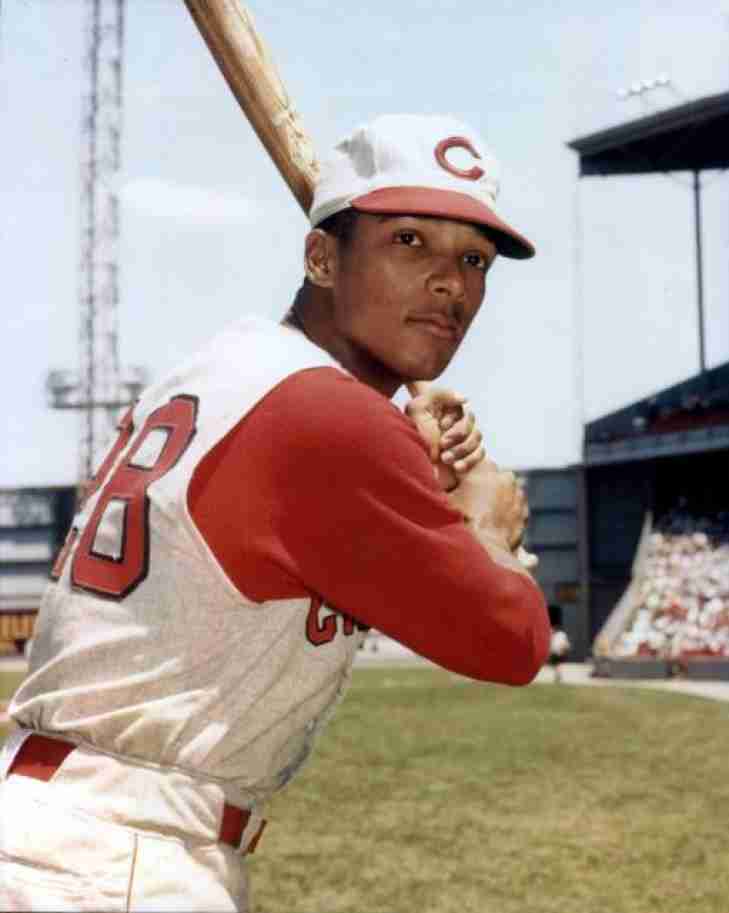
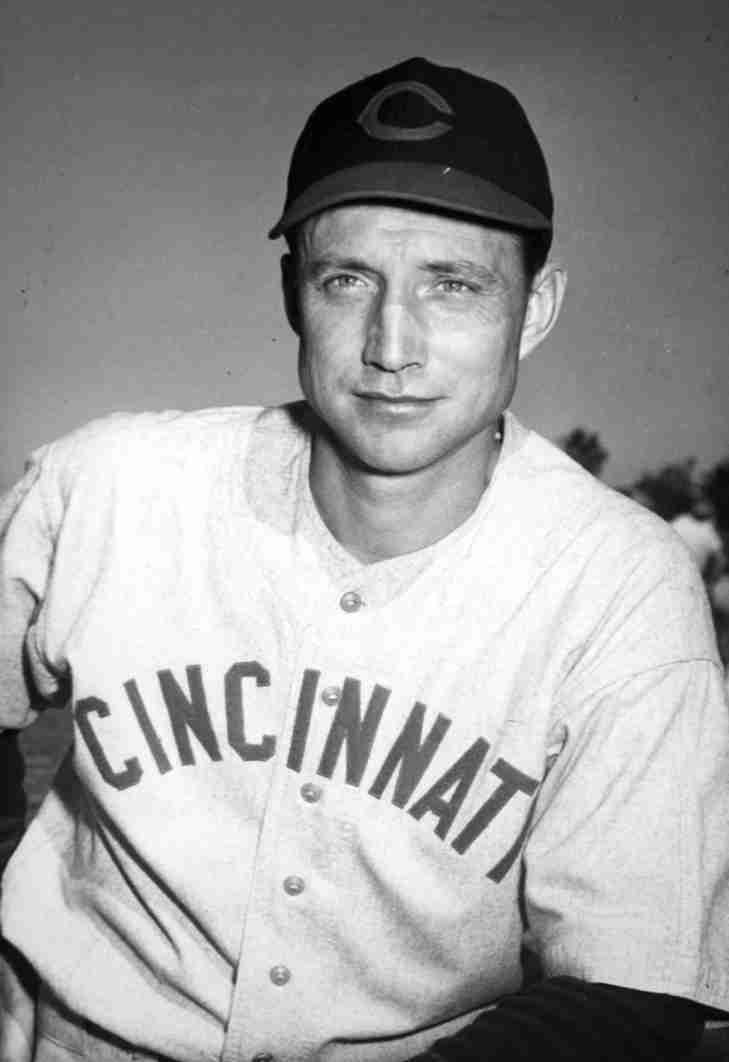
10. Vada Pinson

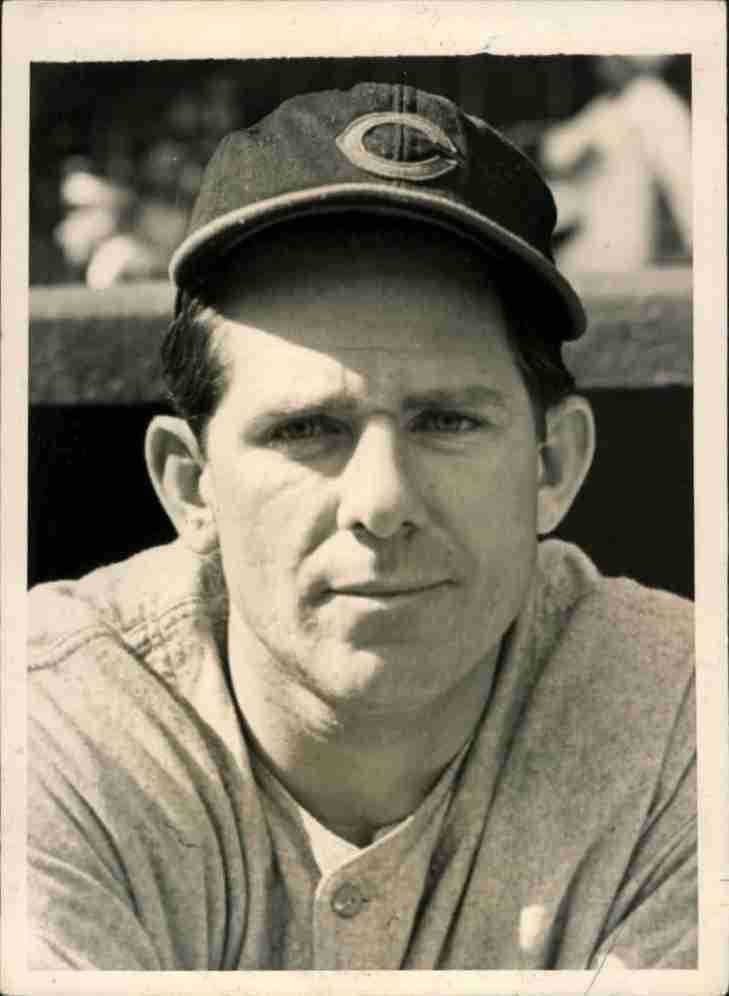
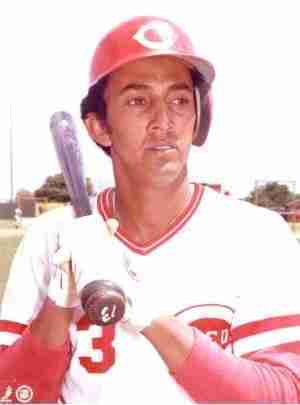
When Vada Pinson arrived in Cincinnati in 1958, he was a 19-year-old phenom who had reportedly considered a career as a trumpet player before his coach convinced him his future was on the grass.  Pinson brought an immediate impact to the plate from his very first full season in 1959, leading the National League in runs (131) and doubles (47) while batting .316. He arrived as a kid with immense speed and immediately transformed into a high-volume producer.

The peak of his residency, and the highlight of his career, arrived in 1961, as he helped lead the Reds to their first pennant in over two decades. That season, Pinson led the league with a career-high 208 hits and batted a blistering .343, finishing only behind Roberto Clemente for the batting title. That year, he finished third in the MVP voting and captured his only Gold Glove for his defensive mastery in center. In his first seven seasons, he recorded five years with at least 300 total bases, a feat matched only by legends like Willie Mays and Joe DiMaggio during similar spans.

Pinson was known for his consistency and a quiet, professional demeanor. Pinson was a metronome of production, twice leading the league in hits, doubles, and triples, respectively. He was a perennial 20/20 threat long before it became a standard metric for stardom, rattling off six seasons of at least 20 home runs for the Reds. On May 22, 1968, he collected a double that allowed him to pass Edd Roush for the most hits in franchise history at the time, a record he held until it was eventually surpassed by Pete Rose. He left the organization with 1,881 hits.

Following the 1968 season, Pinson was traded to the St. Louis Cardinals, marking the end of an eleven-year tenure in Cincinnati that saw him earn four All-Star selections. While the call from Cooperstown has remained elusive, the Reds rightfully recognized his impact by inducting him into the team Hall of Fame in 1977.
6. Joe Morgan

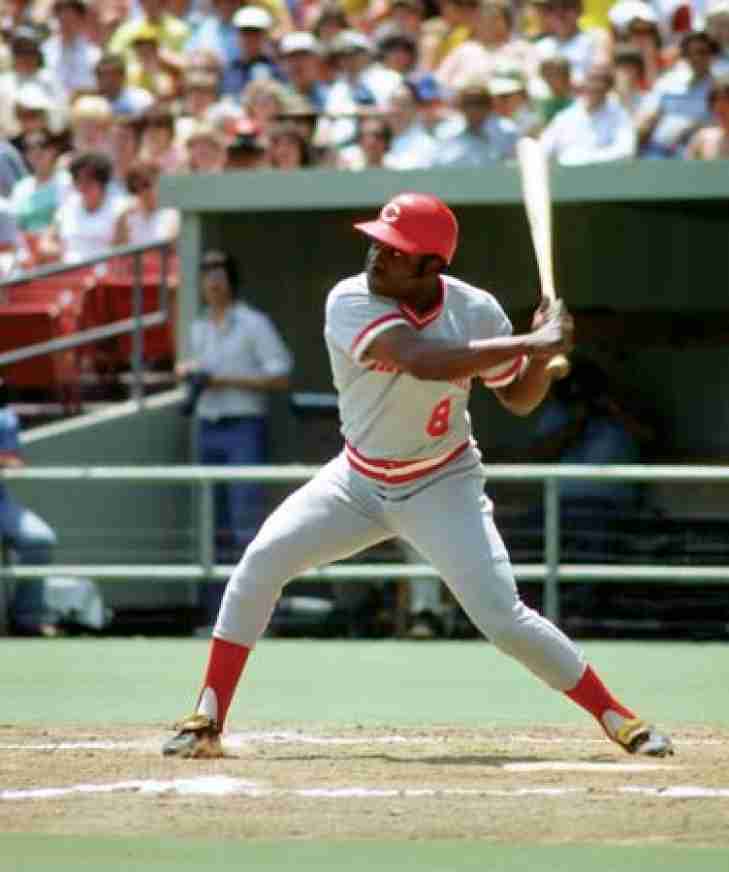
When Joe Morgan arrived in Cincinnati in 1971 as part of an eight-player blockbuster trade, many observers actually thought the Reds had lost the deal by giving up slugger Lee May. They couldn't have been more wrong. Morgan arrived with a "chicken-flap" arm waggle and a relentless focus that immediately reshaped the team's identity. He didn't just occupy second base; he patrolled it with a defensive urgency that earned him five consecutive Gold Gloves. From the moment he stepped into the clubhouse, he proved to own the soul of a winner, leading the majors in runs scored during his very first season in the Queen City.

The peak of his stay in Cincinnati, and perhaps the most dominant five-year stretch by any middle infielder in history, arrived between 1972 and 1976. During this span, "Little Joe" was playing a different game than everyone else. He was a statistical outlier who led the National League in on-base percentage four times, utilizing a legendary eye to draw over 100 walks nearly every season. In 1975 and 1976, he captured back-to-back MVP awards, a feat mirrored by the Reds' back-to-back World Series titles. He was the definitive advanced metrics player, twice leading the league in OPS and routinely pacing the league in WAR, proving that a 5-foot-7 frame could cast the longest shadow on the field.

He was electric on the basepaths, where he strung together five straight seasons of at least 50 stolen bases. Morgan treated the path from first to second as his personal property, combining elite speed with a strategic acumen that made him the most efficient base-stealer of his generation. He wasn't just a volume producer; he was a high-leverage specialist. It was Morgan’s ninth-inning bloop single in Game 7 of the 1975 World Series that drove in the winning run, cementing his status as the man who came through when the pressure was at its absolute highest.

The final walk toward the exit of his first Reds tenure came after the 1979 season, when he departed as a free agent. While he would eventually return to Houston and finish his career as a nomad of winning teams, his eight years in Cincinnati remain the heart of his legend. He left the Reds as a 10-time All-Star (counting his Houston years) and the franchise's all-time stolen base leader at the time. His impact was so profound that the Reds retired his number 8 in 1998, and a bronze statue of him now stands outside Great American Ball Park, frozen in that iconic batting stance.

3. Frank Robinson

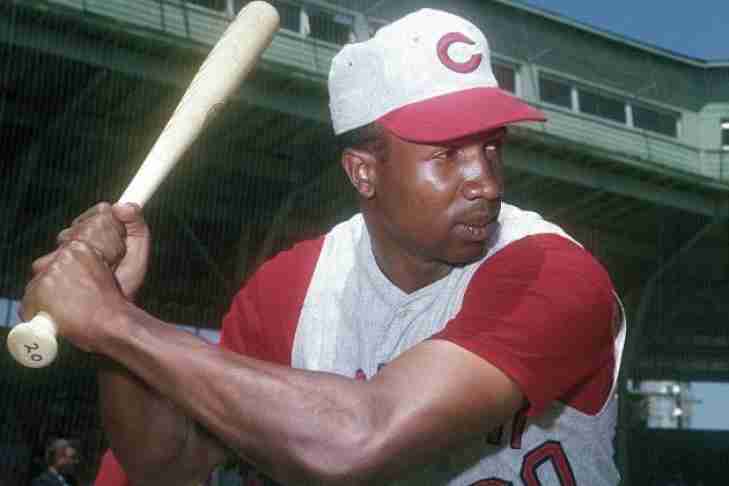
When Frank Robinson arrived in Cincinnati in 1956, he didn't just win the Rookie of the Year award; he staged a league takeover. At just 20 years old, he tied the then-record for home runs by a rookie with 38, signaling the arrival of a player who combined terrifying power with a relentless, aggressive plate presence. Robinson played with a chip on his shoulder, crowding the plate and daring pitchers to come inside—a tactical move that resulted in him leading the league in being hit by pitches seven times as a Red. He was the young, fiery engine of a franchise searching for its identity in the post-war era.

The peak of his Cincinnati tenure arrived in 1961, a season in which he claimed the National League MVP and willed the Reds to their first pennant in over twenty years. Robinson was a statistical titan during this stretch, authoring a slash line of .303/.389/.554 that stands as a masterpiece of offensive efficiency. He captured three slugging titles and was a perennial fixture in the MVP top-ten, blasting 324 home runs in a Reds uniform. He wasn't just a "solid contributor"; he was the premier outfielder in the senior circuit, a five-tool threat who played the game with a ferocious intensity that defined the era.

However, the final chapter of his story in Cincinnati remains one of the most scrutinized exits in sports history. Following the 1965 season, Reds owner Bill DeWitt famously traded Robinson to the Baltimore Orioles, labeling him an "old 30." It was a staggering miscalculation of a superstar's longevity. While the trade's returns failed to move the needle for Cincinnati, Robinson immediately captured the Triple Crown and the American League MVP, leading Baltimore to a world title. For fans in Cincinnati, it was a bitter pill to swallow, imagining how much more terrifying the "Big Red Machine" might have been had Robinson remained to bridge the gap into the 1970s.

Frank Robinson left the Reds as one of the most accomplished players to ever wear the wishbone "C." He was a first-ballot immortal whose legacy was eventually honored with the retirement of his number 20 in 1998 and his induction into the team's Hall of Fame decades earlier. He arrived as a fearless rookie and left as a statistical giant, the man who proved that age is just a number and that greatness, once ignited on the South Side of Cincinnati, could never truly be extinguished.

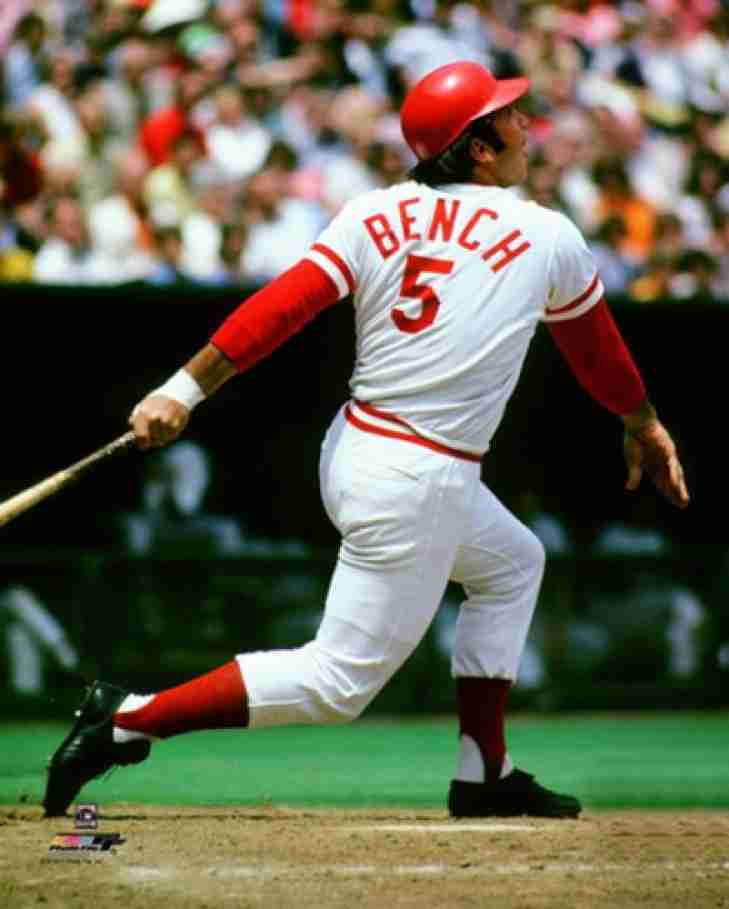
2. Johnny Bench

When Johnny Bench arrived in Cincinnati as a 19-year-old rookie in 1968, he didn't just win the Rookie of the Year award; he fundamentally changed how the position was played. Before Bench, catchers were often viewed as defensive specialists who provided little at the plate. Bench shattered that mold, wielding a bat that felt like a lightning bolt. He possessed a massive physical presence and a cannon for an arm that famously allowed him to throw out runners from a crouching position, a feat that terrified baserunners and anchored the Reds' defense for over a decade.

The peak of his residency saw him become the most-decorated catcher in the sport's history. Throughout the 1970s, Bench was the primary power source for the Big Red Machine, claiming two National League MVP awards (1970 and 1972) and leading the league in home runs twice. His 389 career home runs set a record for catchers that stood for decades, but his offensive dominance was matched by his "Cerebral" mastery of the pitching staff. Bench didn't just catch; he orchestrated, earning ten consecutive Gold Gloves and proving that he was as valuable for the runs he prevented as for the ones he drove in.

The middle of his journey was defined by a championship pedigree. Bench was the heartbeat of the back-to-back World Series titles in 1975 and 1976. In the latter, he put on a masterclass in the Fall Classic, claiming the World Series MVP after dismantling the Yankees' pitching staff. He was a 14-time All-Star who rarely took a day off, enduring the physical toll of the "tools of ignorance" with a level of durability that was almost unheard of for a catcher of his era.

However, the final walk toward the exit showed the inevitable wear and tear of a career spent behind the plate. By the early 1980s, the "Big Red Machine" was slowing down, and Bench transitioned to third base and first base to preserve his body. While his power numbers dipped, his clubhouse presence remained the gravity that held the veteran squad together. He played his final game in 1983, a career Red who never wore another professional jersey, concluding one of the most complete careers in the history of the game.

Johnny Bench left the Reds as the undisputed greatest to ever play his position. He was a first-ballot immortal who entered Cooperstown in 1989, and the Reds wasted no time honoring him, retiring his number 5 immediately after his retirement. He arrived as a kid from Oklahoma with a big arm and left as a permanent monument to excellence, the man who proved that a catcher could be both the smartest man on the field and the most dangerous man in the lineup.

18. Paul Derringer

A major star of the Cincinnati Reds staff in the late 1930s, Paul Derringer would win 161 Games for the team.  Derringer would be named to six All-Star Games (including five straight from 1938 to 1942) and would have four 20 Win seasons and was known for rarely walking batters in his prime.  Notably, he would have two straight top-five appearances in MVP voting (1939 & 1940).

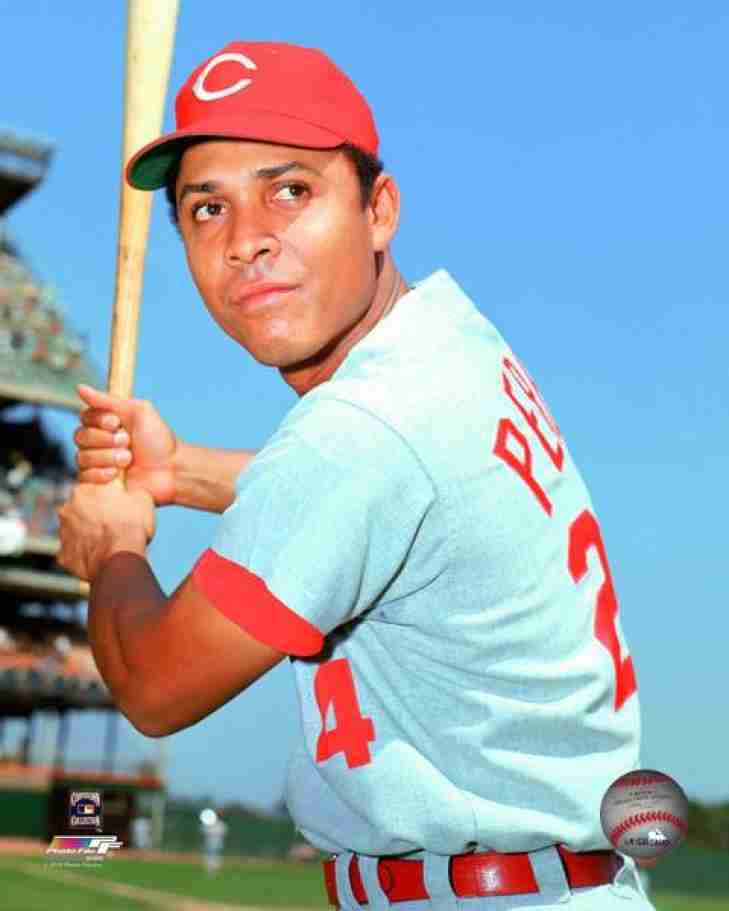
8. Tony Perez

When Tony Pérez arrived in Cincinnati in 1964, he was a young, soft-spoken infielder from Cuba who had to navigate both a new language and a new position. While he broke in as a third baseman, his residency on the South Side of Cincinnati truly took flight when he transitioned to first base, forming a terrifying corner-infield duo with Lee May before eventually becoming the permanent fixture at the bag. He arrived as a promising prospect and quickly matured into a seven-time All-Star, providing the profile of a professional who never let the pressure of the moment alter his approach.

The middle of his journey was defined by a level of dominance in the RBI column that few in the history of the game can match. Throughout the 1970s, Pérez was the premier run-producer for the Big Red Machine, driving in 100 or more runs seven different times and eclipsing the 25-home run mark on six occasions. He was the definitive "Mr. Clutch," a title bestowed upon him by teammates who watched him lead the majors in RBIs over a full decade. His peak arrived in 1970, when he blasted 40 home runs and drove in 129, finishing third in the MVP voting and signaling that the Reds were ready to conquer the National League.

The high-leverage pinnacle of his tenure came during the back-to-back championship seasons of 1975 and 1976. In Game 7 of the 1975 World Series, with the Reds trailing 3-0 and their season on the brink, Pérez launched a two-run moonshot over the Green Monster that swung the momentum and paved the way for the title. He followed that up in 1976 with a walk-off single in Game 2 against the Yankees, proving that while he might not have been the "best" player on a roster of Hall of Famers, he was arguably the most essential when the game was on the line. It was this poise that led manager Sparky Anderson to famously label him the "heart and soul" of the team.

However, the walk toward the exit in 1976 was one of the most painful in franchise history. Traded to Montreal in a move that many fans and teammates never truly forgave, Pérez spent seven seasons "in the wind" with the Expos, Red Sox, and Phillies. But the story had one final, poetic chapter; in 1984, "Doggie" returned to Cincinnati to finish his career where it began. Even as a veteran bench player, he continued to defy time, batting .328 in 1985 and becoming the oldest player at the time to hit a grand slam.

Tony Pérez concluded his career as a first-ballot immortal in the hearts of Reds fans, officially entering Cooperstown in 2000. That same year, the organization retired his number 24, a permanent tribute to the man who provided the "quiet thunder" for the greatest era in Cincinnati sports.

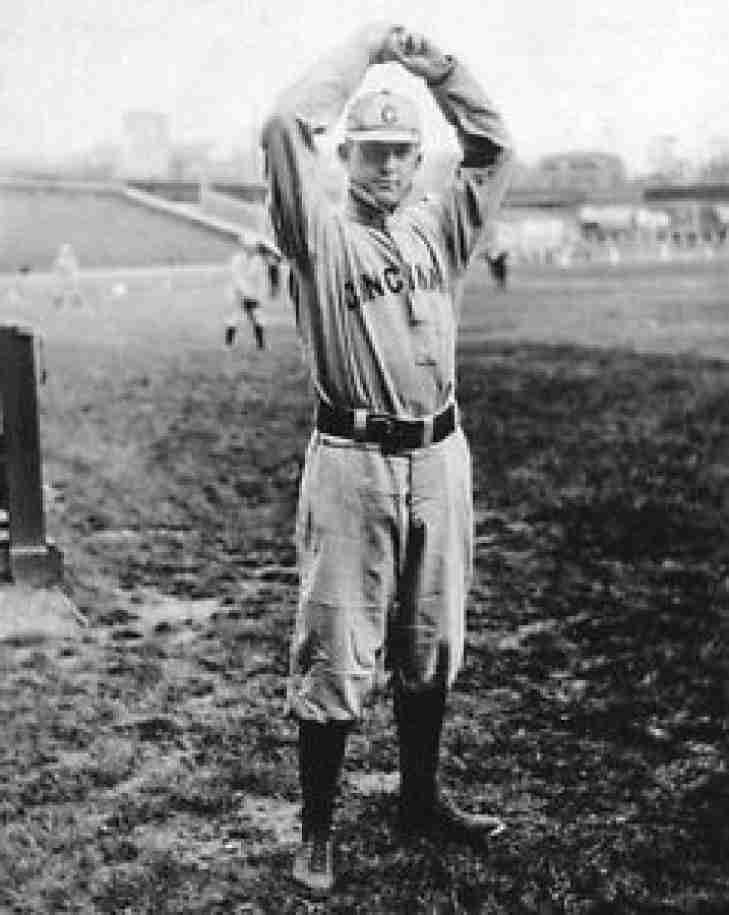
11. Noodles Hahn

Cincinnati found a statistical titan in 1899 when a young Noodles Hahn debuted and immediately matured into the most feared strikeout artist in the National League. He arrived with a deceptive delivery and a relentless competitive streak, capturing the league's strikeout title in each of his first three seasons. His "Traditional Dominance" reached an iconic crescendo in 1901 when he etched his name into the history books by hurling the very first no-hitter of the 20th century. He wasn't just a part of the staff; he phenomenon who routinely shouldered a disproportionate share of the team's success.

The true weight of his is best seen through the lens of positional scarcity and efficiency. During an era where the Reds often struggled to field a competitive roster, Hahn remained a lighthouse of quality, frequently leading the league in innings pitched and complete games while maintaining a microscopic ERA. Hahn was a perennial leader in bWAR, proving that he was effectively providing Hall of Fame-level value in a vacuum. He was the rare pitcher who could dictate the pace of a game entirely on his own terms, regardless of the supporting cast behind him.

His legacy was built on this iron-man reputation. Hahn was the definition of a workhorse, often pitching on short rest to give his team their only reliable chance at a victory. He concluded his Cincinnati tenure with a resume that many modern analysts consider the most effective in the team’s long history, a legacy built on missing bats and finishing what he started. However, the sheer volume of his early-career usage eventually led to the inevitable.

The sun began to set on his career far too soon as the relentless toll on his arm became impossible to ignore. Like so many of the great "arms of iron" from the Deadball Era, his physical ceiling was reached well before he hit the age of 30. He moved on from the game before he could accumulate the massive career totals of some of his peers, but the quality of his peak was undeniable.

Recognition for his historic brilliance arrived in 1963 when he was rightfully inducted into the Cincinnati Reds Hall of Fame.

7. Bucky Walters

Considered by some to be a significant Hall of Fame snub, Bucky Walters was a dominating Pitcher for the Reds in the late 30’s and early 40’s. 

4. Barry Larkin

When Barry Larkin arrived on the South Side of Cincinnati in 1986, the city didn’t just gain a shortstop; it gained a favorite son. Born and raised in the area, Larkin played with a level of comfort and command that suggested he had been destined for the position since childhood. He wasn't the flashy, oversized shortstop of the future; he was a surgical, five-tool technician who combined elite speed with surprising power and a gold-glove caliber vacuum at the bag. He arrived as a high-pedigree prospect and immediately began a "Lifer" journey that would see him never wear another professional jersey.

The middle chapter of his residency was defined by the magic of 1990. While the "Nasty Boys" bullpen got the headlines, Larkin was the steady hand that guided the Reds to a wire-to-wire World Series sweep of the Oakland A’s. He batted .353 in that Fall Classic, proving he was a big-game hunter on the grandest stage. As the 90s progressed, he evolved from a "solid contributor" into the undisputed MVP of the league. In 1995, he captured the NL MVP award, and a year later, he made history as the first shortstop to ever record a 30-30 season. He was the prototype for the modern shortstop—a player who could beat you with a stolen base in the first inning and a walk-off home run in the ninth.

Defensively, Larkin was the heartbeat of the infield. A three-time Gold Glove winner, he played with a cerebral intensity that allowed him to compensate for any physical toll the turf at Riverfront Stadium took on his body. He was a 12-time All-Star who led by example, eventually serving as the team's captain and the primary bridge between the championship squad of 1990 and the rebuilding years of the late 90s. His statistical footprint remains staggering for a middle infielder: 2,340 hits and a career slash line of .295/.371/.444.

The final walk toward the exit in 2004 was a bittersweet moment for Southern Ohio. After 19 seasons of unwavering loyalty, Larkin retired as a first-ballot immortal in the eyes of the fans, even if it took three years for the national voters to officially usher him into Cooperstown in 2012. The Reds rightfully hoisted his number 11 to the rafters that same year, cementing his legacy as the most complete shortstop of his generation. He arrived as a local prodigy and left as a permanent hero, the man who proved that you can go home again—and stay there until the end.

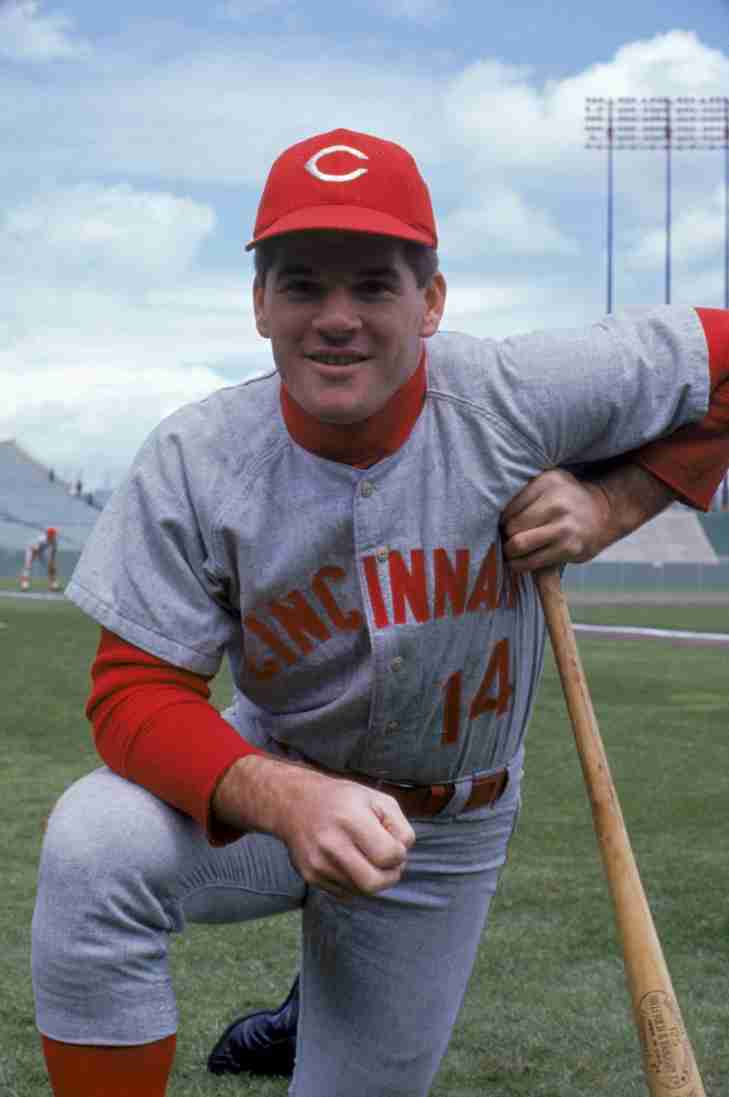
1. Pete Rose

When Pete Rose burst onto the scene in 1963, he arrived with a head-first slide and a relentless motor that earned him the "Charlie Hustle" moniker. A local kid from Cincinnati, he didn't just play for the Reds; he personified the city's blue-collar work ethic. In his debut season, he claimed the National League Rookie of the Year award, signaling the start of a legendary pursuit of history. He was a human metronome of contact hitting, a switch-hitter who treated the baseball like a personal enemy that needed to be conquered four times a day.

The middle chapter of his residency saw him become the emotional and tactical heartbeat of the "Big Red Machine." Throughout the 1970s, Rose was the spark plug for one of the most terrifying lineups in the history of the sport. He claimed three batting titles and the 1973 MVP award, but his value transcended the regular season. In the 1975 World Series, he was the driving force behind a seven-game classic, earning the World Series MVP as the Reds finally reached the summit. He would help lead them to a repeat title in 1976, cementing his status as the premier leadoff threat of his generation.

His statistical footprint in Cincinnati is staggering. Of his all-time record 4,256 career hits, 3,358 were collected in a Reds uniform. He led the National League in hits six times and runs scored four times, providing the constant traffic on the base paths that allowed teammates like Johnny Bench and Joe Morgan to drive him home. He was a 12-time All-Star as a Red, showing a defensive versatility that saw him play everywhere from second base to the outfield, eventually settling in as a vacuum at third base during the championship years.

The departure toward the exit came first in 1978, when he signed with Philadelphia as a free agent, but the story naturally circled back to Cincinnati in 1984. His return as a player-manager was a victory lap for the city, culminating in the historic night in 1985 when he eclipsed Ty Cobb’s all-time hit record. It was a moment of pure sporting transcendence, a local boy making good on the grandest stage possible.

However, the final walk toward the exit in 1989 was shadowed by the controversy that would define his legacy thereafter. Following an investigation into gambling on baseball, Rose accepted a permanent ban from the game. While this has kept him out of the National Baseball Hall of Fame in Cooperstown, the city of Cincinnati refused to let the darkness erase the brilliance of his playing days. In 2016, the Reds officially retired his number 14 and inducted him into the franchise Hall of Fame, a formal acknowledgement that while the league may have closed its doors, the Queen City would always keep a light on for its favorite son.

Rose left the Reds as the undisputed statistical king of the franchise, a man whose 1,066 career multi-hit games in Cincinnati represent a level of consistency that borders on the impossible. He arrived as a scrappy local kid and left as the most prolific hitter to ever live, a player who proved that if you play every game like it’s your last, you might just live forever in the record books.

9. George Foster

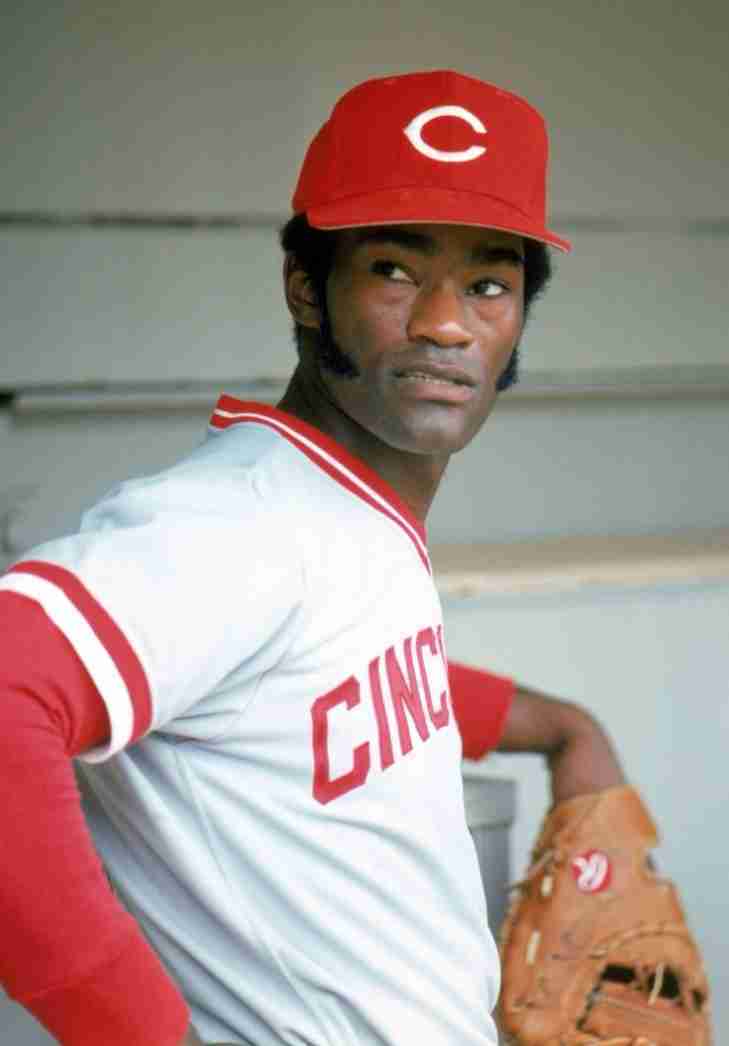
When George Foster arrived in Cincinnati via a trade from San Francisco in 1971, he was a talented outfielder searching for a permanent home on a crowded roster. It took a few seasons of refinement before he truly ignited, but once he locked down the starting job in left field, he became the ultimate deep threat. He joined the organization as a high-potential trade piece and matured into the most dangerous power hitter of the 1970s, with the guise of aquiet giant who let his black bat do all the talking.

His tenure reached a historic crescendo in 1977. In a decade where league leaders often hovered in the 30s, Foster exploded for 52 home runs, becoming the first player to eclipse the 50-mark since Willie Mays over a decade prior. It earned him the National League MVP, as he paired those home runs with 149 RBIs and a .320 batting average. He wasn't just hitting for the highlight reels; he was driving the Reds' offense with relentless efficiency, capturing three consecutive RBI titles from 1976 to 1978.

Foster served as the high-leverage cleanup hitter for the back-to-back championship teams of 1975 and 1976. While Bench, Morgan, and Rose set the table or provided the tactical edges, Foster was the hammer that finished the job. His 1976 campaign was particularly vital, as he drove in 121 runs to help secure the sweep of the Yankees in the World Series. He concluded his time in Cincinnati with a staggering .514 slugging percentage and 244 home runs, a volume of production that made him the most feared out in the National League for half a decade.

Following the 1981 season, Foster was traded to the New York Mets, marking the conclusion of a legendary era in the Queen City. He left the Reds as a beloved icon of the "Big Red Machine.” While the Hall of Fame in Cooperstown has proven elusive, the Reds recognized his impact by inducting him into the team Hall of Fame in 2003, ensuring that the man who brought the "Long Ball" back to the 70s would always have a place in Cincinnati.

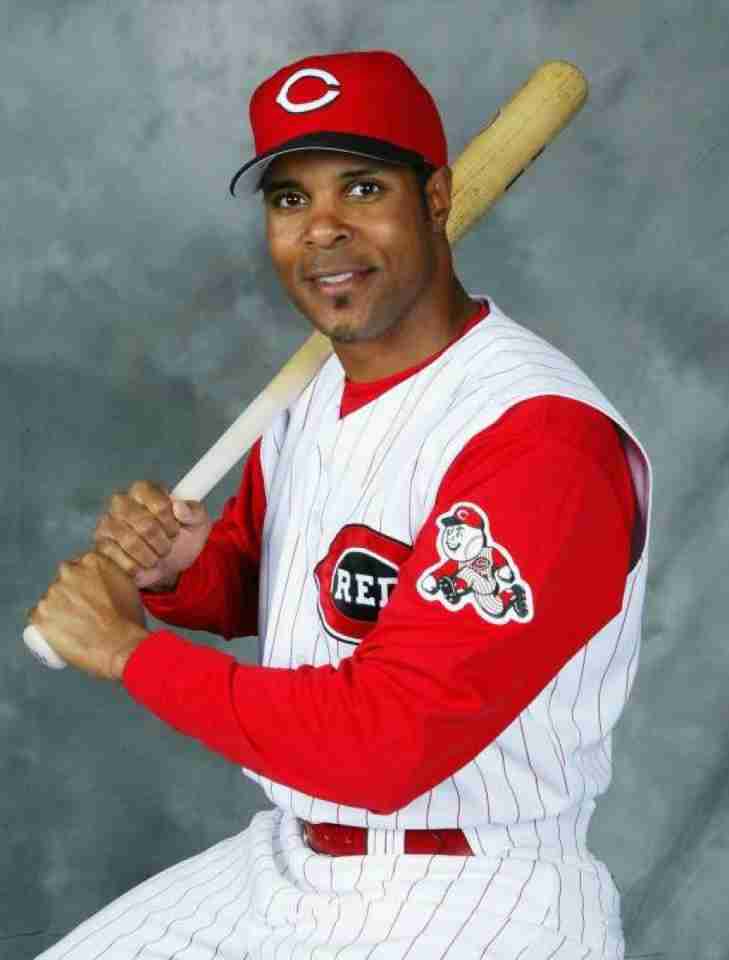
5. Joey Votto

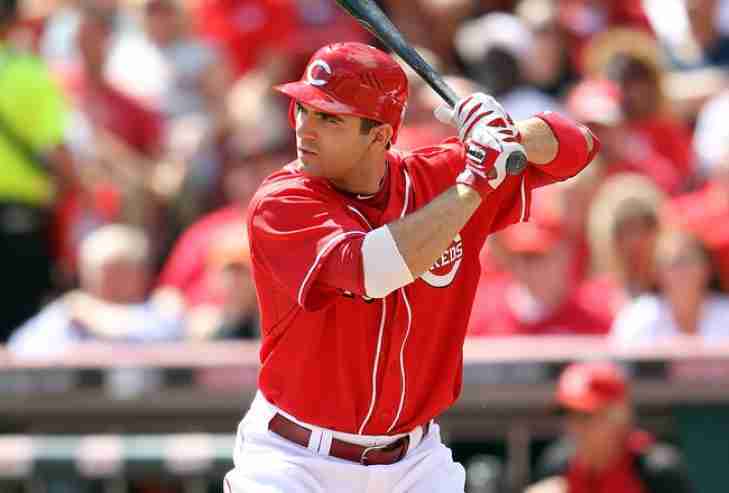
When Joey Votto arrived in Cincinnati in late 2007, he brought with him a cerebral approach to hitting that felt like a throwback to an era of pure contact, yet was powered by modern power. By 2010, he had evolved from a promising rookie into the undisputed king of the National League, capturing the MVP award and leading the Reds back to the postseason. He was a "Lifer" in the truest sense, a player who famously declared he would never want to play anywhere else, anchoring the middle of the Cincinnati order with a discipline that bordered on the obsessive.

The peak of his residency was defined by a historic mastery of the strike zone. Votto didn't just reach base; he owned it, capturing seven National League On-Base Percentage titles, including a staggering four-year stretch of dominance from 2010 to 2013. He was a hitting savant who would rather take a walk than swing at a pitch an inch off the black, a trait that occasionally drew fire from traditionalists who wanted him to be more aggressive. But the numbers called a spade a spade: he was a former slugging champion with over 300 career home runs, proving he could punish a mistake just as easily as he could wait for one.

The middle years of his journey saw Votto become the bridge between different iterations of the Reds' roster. He was an All-Star fixture who consistently hit above .300, providing a steadying presence as the team transitioned through various rebuilding phases. Even as he aged, he continued to refine his craft; in 2021, at 37, he staged a massive late-career resurgence, hitting 36 home runs and driving in 99 runs. It was a final, loud reminder that his intellectual approach to the game allowed him to outthink Father Time long after his peers had faded.

However, the final walk toward the exit arrived with the bittersweet reality of a franchise moving toward a younger core. After the 2023 season, the Reds declined their option for 2024, bringing an end to an incredible 17-year tenure. Votto left the Queen City with 2,135 hits, 356 home runs, and a staggering career on-base percentage of .408, a figure that places him among the elite in the history of the sport.

Joey Votto concluded his time in Cincinnati having climbed into the top five of the franchise’s all-time greats, surpassing legends like Barry Larkin in cumulative value. He arrived as a focused kid from Toronto and left as a permanent icon, the man who proved that the most dangerous weapon in a hitter’s arsenal is a disciplined mind. While he may have briefly looked for a final chapter elsewhere, his legacy is firmly rooted in the dirt of Great American Ball Park.

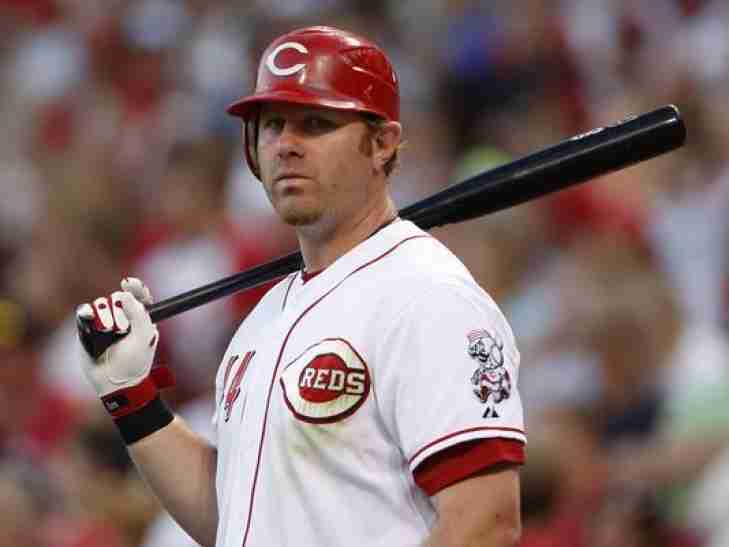
Adam Dunn to the Cincinnati Reds HOF

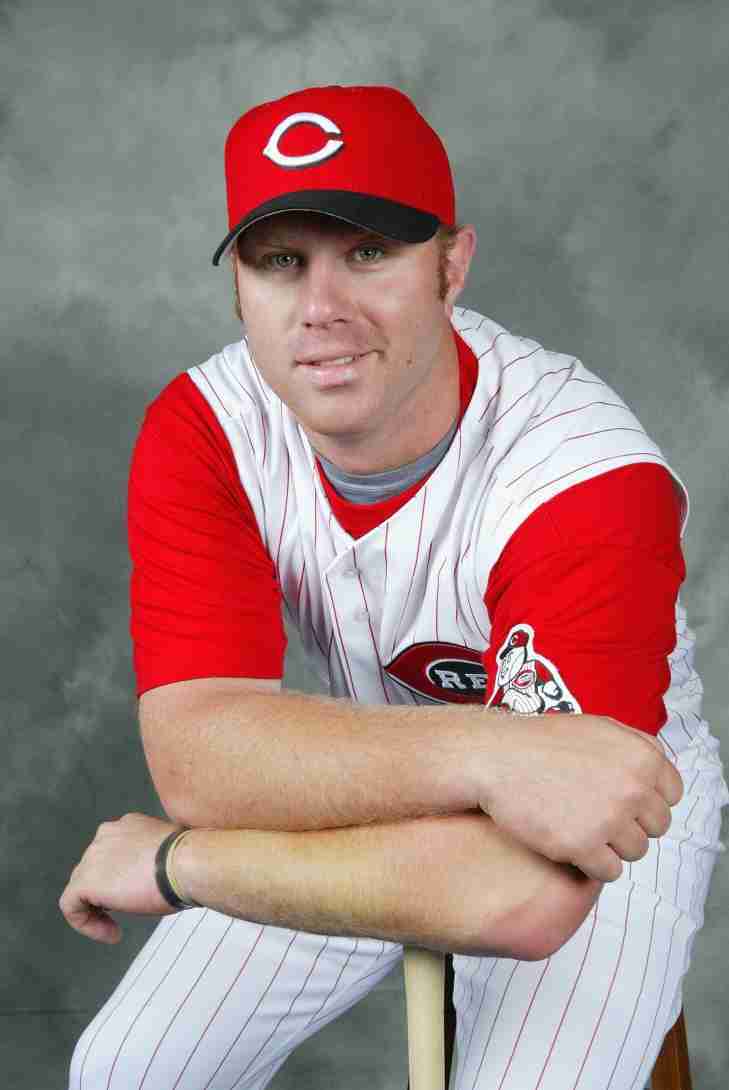
In our methodical process to present the top 50 players of all of the franchises of the big four, our next goal is to take a look at how each one of them honor their past players and/or executives. As such it is significant news to us that the Cincinnati Reds, one of the longest tenured teams in Major League Baseball has announced that Adam Dunn will become the latest member of their team’s Hall of Fame.

A second round draft pick in 1998, Dunn would make the main roster in 2001 and would become quickly known for his tape measure Home Runs. A Red for eight seasons (2001 & 2008) Dunn had five consecutive 40 Home Run years (though the last was split with Arizona) and he would go yard 270 times with Cincinnati.

While Dunn would have some detractors for his low Batting Average, high Strikeout ratio and poor defense, he did have an excellent On Base Percentage (.380) and Slugging Percentage (.520) as a Red. The Reds never had a winning season while Dunn played there but his power displays certainly gave a lot of fans to cheer for.

Dunn beat out Aaron Boone, Danny Graves, Reggie Sanders, John Franco and Scott Rolen who were also nominated. It is possible that the Cincinnati Reds Hall of Fame Veteran’s Committee will announce other inductees to join Dunn.

We here at Notinhalloffame.com would like to congratulate Adam Dunn for achieving this prestigious honor.

The Cincinnati Reds HOF announce their Modern Era Finalists

Regular visitors to Notinhalloffame.com know that we are slowly putting together the best 50 players of all time for each team from the National Hockey League, Major League Baseball, National Basketball Association and the National Football League.

Once that is complete, our next task is to tackle how each of those teams honor their former players/executives in terms of franchise halls of fames, retired numbers etc.

One of the teams that we are in the preliminary stages of selecting our top 50 is the Cincinnati Reds, who announced six former players on their modern era ballot.

The nominees are as follows:

Aaron Boone, Third Base: 1997-2003.   The son of Bob Boone and brother of Bret Boone, Aaron went to his only All Star Game in 2003 prior to being traded to the New York Yankees. He had 646 Hits, 86 Home Runs with a .271 Batting Average over his Reds career.

Adam Dunn, Outfield: 2001-2008. An All Star in 2002, Dunn went on a power tear hitting 40 dingers five years in a row from 2004 to 2008. As a Red, the power hitter tallied 270 Home Runs with a Slash Line of .247/.380/.520.

John Franco, Relief Pitcher: 1984-89. Three times an All Star as a Cincinnati Red, John Franco secured 148 Saves including 39, which led the NL in 1988.

Danny Graves, Relief Pitcher: 1997-2005. Graves would go to two All Star Games and had four seasons where he eclipsed 30, including a 41 save season in 2004. He would save 182 Games in total for Cincinnati.

Scott Rolen, Third Base: 2009-2012.   Rolen was only a Red for his last three and a half seasons of his career, though was still named an All Star twice. He had 304 Hits as a Red.

Reggie Sanders, Outfield: 1991-98. Sanders was an All Star in 1995 and finished 6th in MVP voting. As a Red he would tally 781 Hits, 125 Home Runs and 158 Stolen Bases.

To be eligible for the Reds Hall of Fame a player must have played for Cincinnati for three seasons, played in the majors in the last thirteen years and have been retired for at least three years.

In addition to the Modern Player inductee, a Veterans Player inductee will also be selected.

You can vote at Cincinnati.reds.mlb.com.

The announcement of the winner will be made in late September.

The Cincinnati Reds will induct Pete Rose into their Hall of Fame!

Pete Rose may never get into the Baseball Hall of Fame.  However the Cincinnati Reds, the team in which Rose spent the bulk of his career with, has decided to ignore the nearly three decade ban that was upheld by Major League Baseball Commissioner, Rob Manfred, as they will be inducting the Hit King into their franchise’s Baseball Hall of Fame.

Rose, who is a native of Cincinnati, is still a revered man in that city, and this was where he led the “Big Red Machine” to two World Series Championships in the 1970’s.  As a Cincinnati Red, Rose accumulated 3,358 of his 4,256 career Hits; a number that may never be broken.  Rose would also win six Hit Titles, three Batting Titles, the Rookie of the Year and an MVP Award in Cincinnati.

The Reds will not only be inducting Rose into their Hall of Fame, but they will also be retiring his number 14, in a ceremony that will take place in June.  The organization also announced that they plan to erect a statue in his honor outside Riverfront Stadium.

While we are aware that will be some who will be angry with this decision, we here at Notinhalloffame.com are thrilled with the Cincinnati Reds for this decision, and are happy for Rose and the Baseball fans of Cincinnati.


66. Heinie Groh

Considered by baseball historians to be the best Third Baseman of the Deadball Era, Heinie Groh quietly won two World Series Rings; one controversially with the Reds in 1919 and another with the Giants in 1922. It was in Cincinnati that Groh had his best seasons, where he twice led the National League in On Base Percentage and was a hit and run machine. He was also considered amongst the best defensive player at his position in his era. This has garnered Heinie Groh a second look from a lot of modern baseball pundits as though his traditional accumulative stats do not reflect a Hall of Fame baseball player, his Sabremetric ones paint a different possibility.

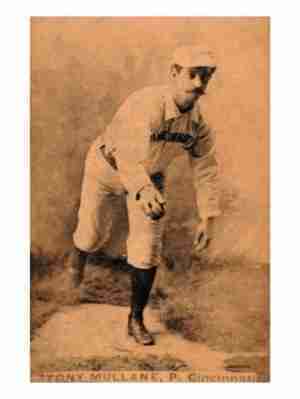
24. Tony Mullane

How many people pointed at Bert Blyleven’s 287 career wins year after year and championed his Hall of Fame cause?  We don’t know the exact number, but we are sure that it is a lot more than those who created logs extolling the virtues of Tony Mullane’s 284 Major League victories.

Maybe people should marvel at those wins.  Mullane was an ambidextrous hurler who could easily baffle batters, as back in his day, pitchers did not wear gloves, thus they had no idea which arm he would throw with.  Mullane was an innings-eater who recorded 30 wins on multiple occasions.  Like many in his day, Mullane was a very much a free spirit who challenged the reserve clause, was suspended for the 1885 season, and sat out part of the 1892 season in protest over pay cuts.  This may have cost him the magical 300-win number, and the fact that he played in the American Association (and not the National League) and had subpar seasons late in his career has made the switch-pitching Tony Mullane a distant afterthought among the folks at Cooperstown.

Should Tony Mullane be in the Hall of Fame?

Definitely put him in! - 69.6%
Maybe, but others deserve it first. - 19.6%
Probably not, but it wouldn't be the end of the world. - 5.4%
No opinion. - 1.1%
No way! - 4.3%

46. Bucky Walters

A converted third baseman, Bucky Walters took the mound later in his career but once he did he made up for the lost time.  Walters would even win the MVP for his pitching prowess and was one of the rare hurlers who could be used often as a pinch hitter.

47. Dave Concepcion

One of two things could happen when you play with a collection of superstars.  Either you get lost in the shuffle or you become incorrectly elevated among them.  Neither was the case for the Dave Concepcion who became nationally known playing alongside Pete Rose, Joe Morgan, Johnny Bench, and Tony Perez, but deserved the attention that came with it.

76. Vada Pinson

The start of Vada Pinson’s career showed promise of a Hall of Fame career as he was a five-tool baseball player.  So just how does a player who had this much promise, still compile over 2,700 hits and yet have what was considered a journeyman career?

Subscribe to this RSS feed