Menu
A+ A A-
Committee Chairman

Committee Chairman

Kirk Buchner, "The Committee Chairman", is the owner and operator of the site.  Kirk can be contacted at [email protected] .

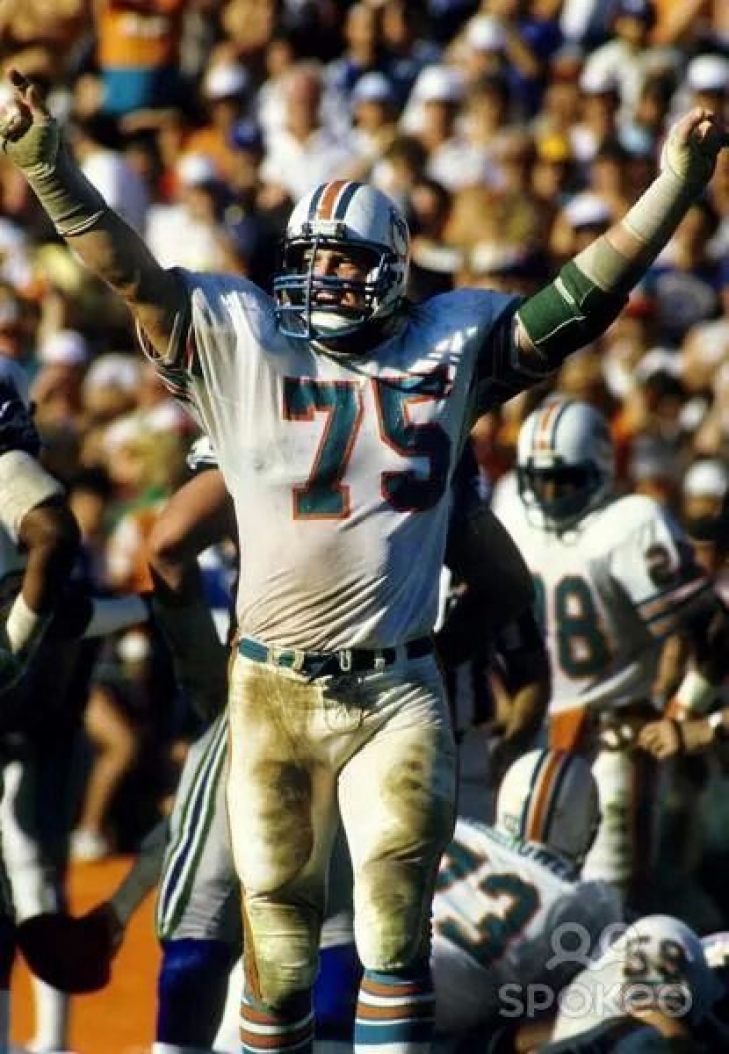
29. Doug Betters

Doug Betters took a long road to Miami. He started at Montana, earned All-Big Sky honors as a defensive lineman, then transferred to Nevada for his senior year, where he led the team with 10 sacks and earned Division II All-America recognition. The Dolphins took him in the sixth round of the 1978 draft, and he spent the next decade with the only team he ever played for.

Early on, he was a rotational piece who gradually worked his way into the starting lineup on the Killer B’s units. By 1980 and 1981, he started most games and added a handful of sacks each year as the Dolphins made the playoffs. The 1982 strike season was shortened, but he still played in every game and helped the team reach Super Bowl XVII.

The peak came in 1983. He started all 16 games and finished with 16 sacks, third in the NFL, while also recovering four fumbles. He opened the year with four sacks against the Bills in Week 1 and stayed productive through the middle of the schedule. That production earned him first-team All-Pro, a Pro Bowl nod, and the Associated Press Defensive Player of the Year award. He received 19 first-place votes, edging out Dallas’s Randy White (15) and finishing well ahead of Lawrence Taylor. His approximate value for the year was 20, easily the highest mark of his career. The Dolphins went 12-4, won the AFC East, and led the league in points allowed.

He stayed productive in 1984 with 14 sacks and another Super Bowl appearance, then dropped to 5.5 sacks in 1985 while still starting most of the season. By 1986 and 1987, the role had shrunk to mostly reserve snaps, and he retired after the latter year. With Miami, he finished with 43.5 official sacks and another 21 unofficial ones from the years before the statistic was formally tracked. The Dolphins inducted him into the Honor Roll in 2008.
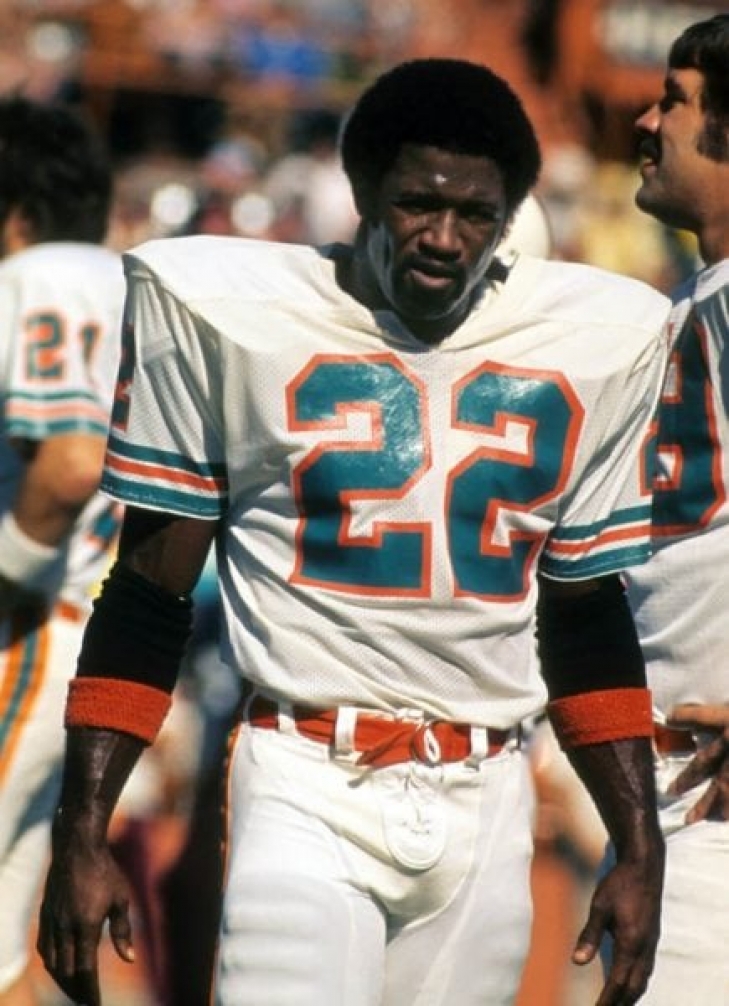

28. Mercury Morris

The Miami Dolphins were already loaded at the back position with Larry Csonka and Jim Kiick, but they had another considerable weapon in Eugene “Mercury” Morris. The product of West Texas State was used mostly as a returner early on, and as a rookie in 1969 he led the league in kick return yards (1,136) and total return yards (1,308). Those early returns showed the speed that would eventually force its way into the offense, even if the Dolphins already had two established backs.

He slowly saw more work as a running back and went to the Pro Bowl three years in a row from 1971 to 1973. In 1972, he finished with an even 1,000 rushing yards on 190 carries (5.3 yards per attempt) and led the NFL with 12 touchdowns from the ground. That was the year the Dolphins went undefeated and won their first Super Bowl. He and Csonka became the first teammates in NFL history to each clear 1,000 yards in the same season, and Morris averaged better than five yards a carry while scoring at a rate that kept defenses honest even when they keyed on Csonka. A late statistical correction from a disputed lateral earlier in the year is what pushed him exactly to the thousand-yard mark.

Morris and the Dolphins won the Super Bowl again in 1973, with the running back going for 954 yards and 10 touchdowns while leading the league in yards per attempt (6.4) and yards per touch (6.6). He was injured through most of 1974, and while he returned in 1975 with 875 yards from the ground, he was traded to the San Diego Chargers afterward.

With Miami, he finished with 3,877 rushing yards, a 5.1 career yards-per-carry average, and 7,794 all-purpose yards. The Dolphins later inducted him into the College Football Hall of Fame.

Our All-Time Top 50 Washington Football Team are now up

Yes, we know that this is taking a while!

As many of you know, we here at Notinhalloffame.com are slowly generating the 50 of each major North American sports team.  We have a new one to unveil today, that of the Washington Football Team. 

The Washington Football Team can be traced back to 1932 where they originally the Boston Braves, a nickname that existed one year, before they became the Boston Redskins.  They relocated to Washington, keeping the Redskins name in 1937, and they won the NFL Championship in both 1937 and 1942 on the strength of Sammy Baugh.

They struggled throughout the 1950s and 1960s, slowly reascending in the 1970s, and winning two Super Bowls in the 1980s (XVII & XXII) and a third in the early 90s (XXVI) on back of the Redskins Offensive Line, the famed “Hogs”.  

Prior to the 2020 season, societal pressure caused them to dismiss the Redskins nickname.

As for all of our top 50 players in football we look at the following: 

1.  Advanced Statistics.

2. Traditional statistics and how they finished in the NFL.

3. Playoff accomplishments.

4. Their overall impact on the team and other intangibles not reflected in a stat sheet.

Remember, this is ONLY based on what a player does on that particular team and not what he accomplished elsewhere and also note that we have placed an increased importance on the first two categories.

This list is updated up until the end of the 2019-20 Season.

The complete list can be found here, but as always, we announce our top five in this article.  They are:

1. Sammy Baugh

2. Darrell Green

3. Chris Hanburger

4. Charley Taylor

5. Art Monk

We will continue our adjustments on our existing lists and will continue developing our new lists.  

Look for our more material coming soon!

As always we thank you for your support.

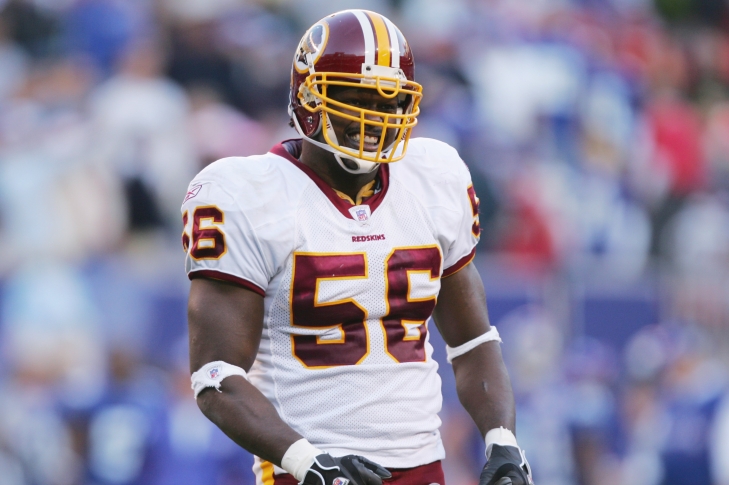
50. LaVar Arrington

LaVar Arrington was taken second Overall in 2000, and the Linebacker from Penn State was coming off one of the greatest defensive seasons by a Nittany Lion. In 1999, Arrington won the Butkus Award, Bednarik Award, and Lambert Award and was a two-time All-American.