Menu
A+ A A-

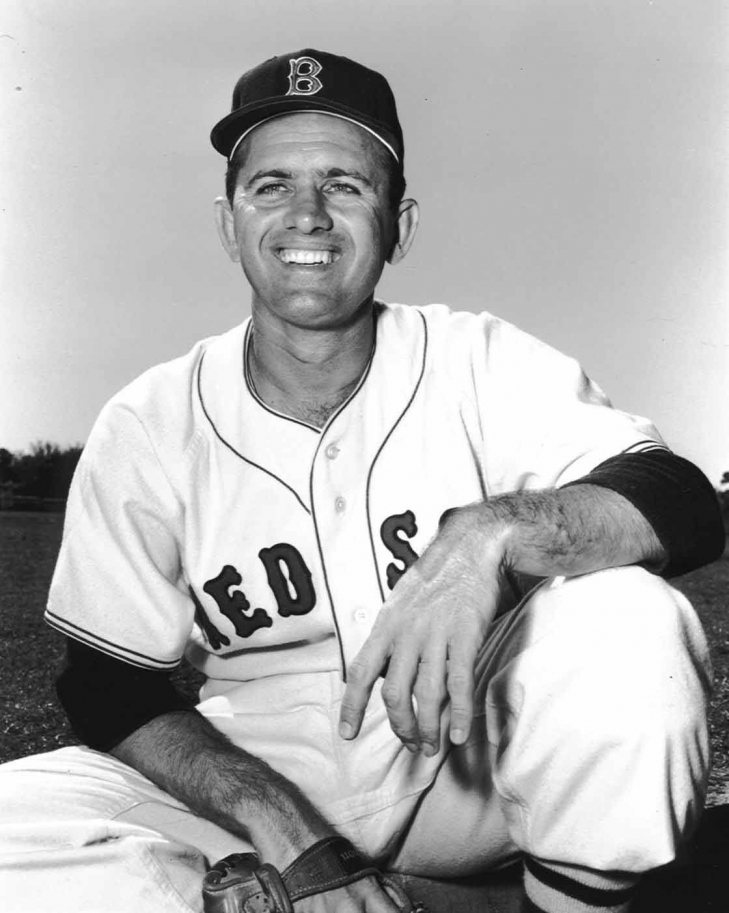
33. Mel Parnell

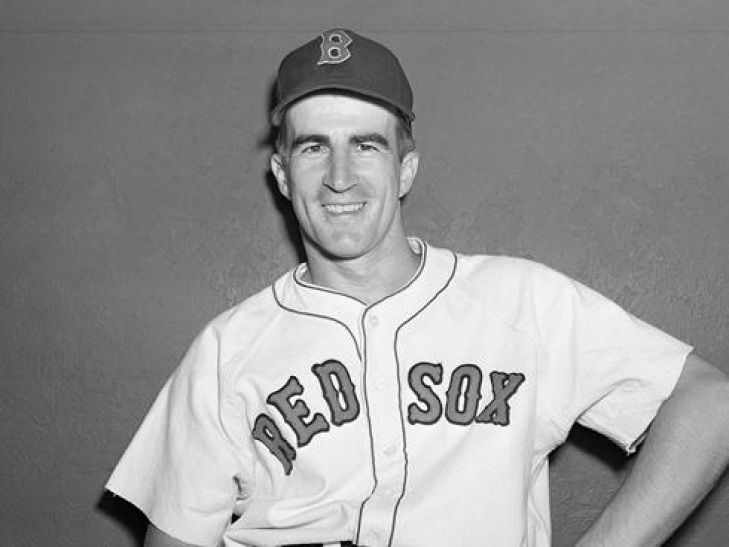
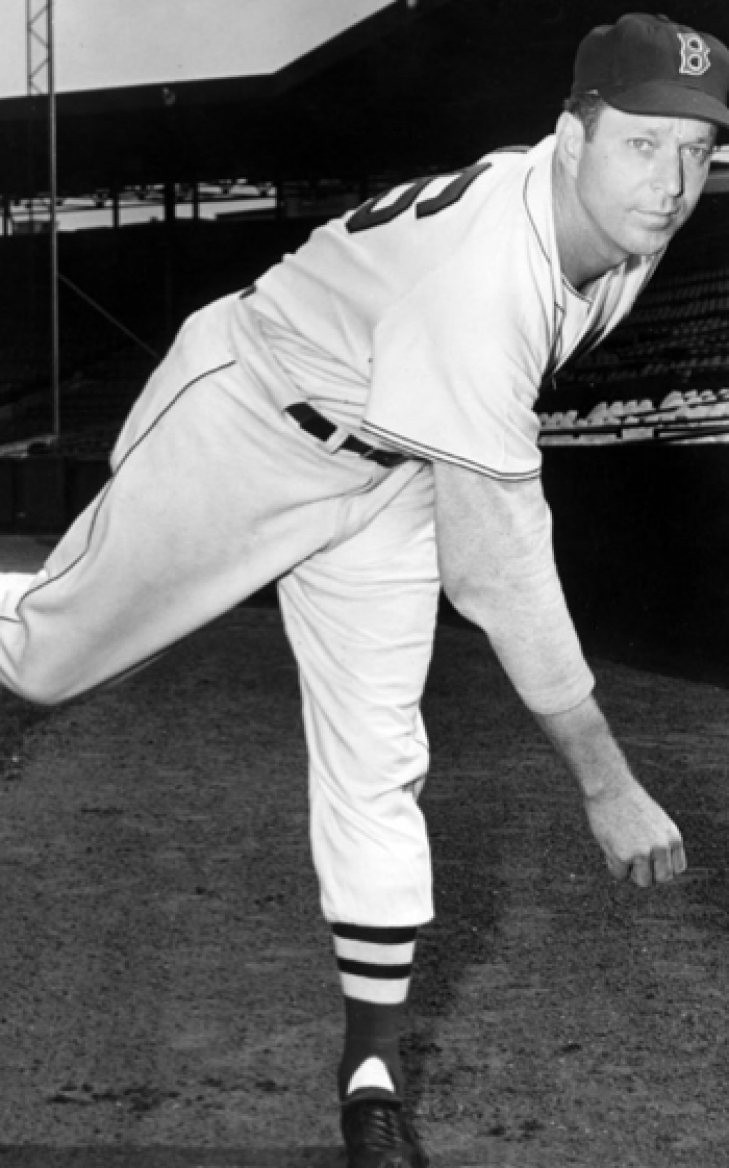
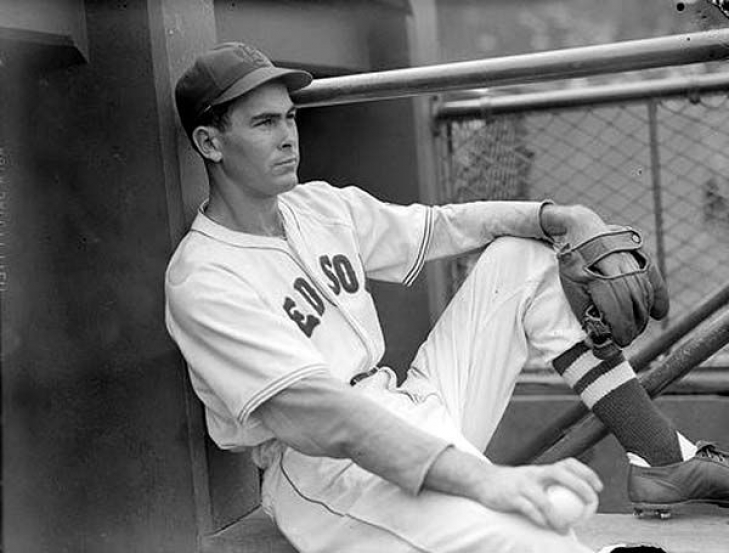
Mel Parnell debuted in 1947 and quickly proved that a left-hander could not only survive Fenway Park but dominate it.  A career Red Sox who spent his entire 10-year career in Boston, Parnell combined impeccable control with a hard-breaking slider that stifled right-handed hitters. His legacy is built on his status as the "Yankee Killer," a pitcher who consistently rose to the occasion against Boston's fiercest rival during the height of the post-war era.

The 1949 season stands as Parnell’s best year. In a year where he finished fourth in the MVP voting, he led the American League in Wins (25), ERA (2.77), Complete Games (27), and Innings Pitched (295.1). He also had a league-leading 0.2 HR/9 rate, a staggering statistic for a left-hander pitching in the shadow of the Wall. This remains the most wins ever recorded by a Red Sox southpaw in a single season, a benchmark that even icons like Jon Lester and Lefty Grove never surpassed.

Parnell’s consistency was his hallmark, recording three more seasons with at least 18 wins (1950, 1951, and 1953). His impact was vital to the Red Sox staying in the hunt during the competitive early 50s. On July 14, 1956, he provided a final signature moment by throwing a no-hitter against the White Sox, the first by a Red Sox pitcher in 33 years. Though arm and elbow injuries eventually forced his retirement after that season, he left as the franchise leader for left-handers in wins, starts, and innings.

Parnell finished his journey on the diamond with a 123–75 record and a stellar .621 winning percentage. His deep connection to the franchise continued long after his playing days as he served as a beloved broadcaster for the team. Inducted into the Red Sox Hall of Fame in 1997.

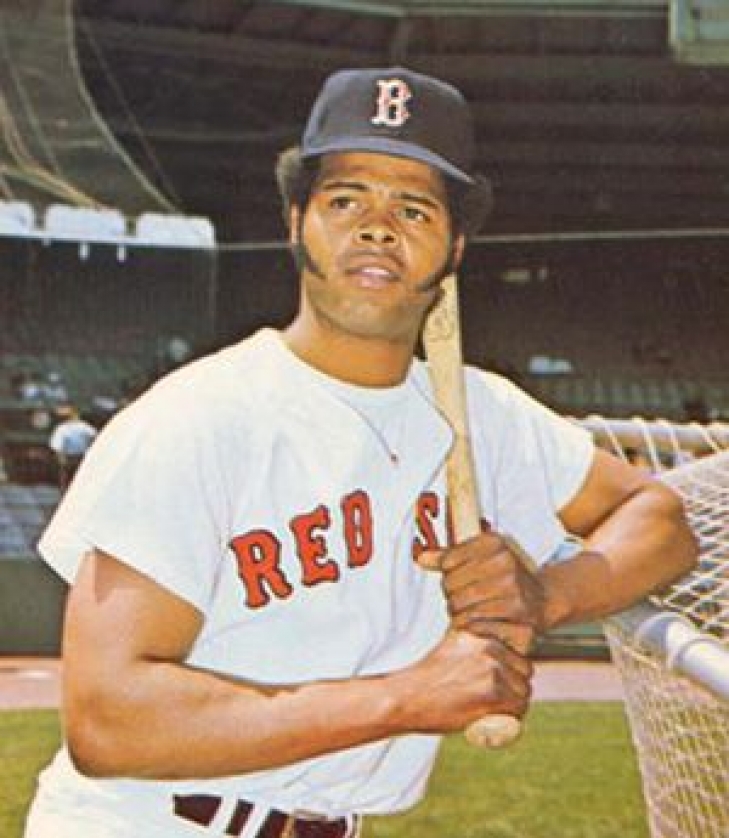
30. Reggie Smith

Reggie Smith was acquired by the Red Sox in what remains one of the shrewdest moves in franchise history. Originally signed by Minnesota, Smith debuted in Boston in 1966 and quickly became a cornerstone of the youth movement. By 1967, he was the everyday center fielder and the runner-up for the AL Rookie of the Year, serving as a vital spark for the pennant-winning squad. His ability to impact the game from both sides of the plate and all three outfield positions made him a tactical nightmare for opposing managers.

Smith’s run in Boston is noted for his five-year peak from 1969 to 1973. During this stretch, he launched at least 20 home runs every season, showcasing a rare blend of power and contact that saw him hit over .300 twice. He was a doubles machine, leading the American League in two-baggers twice (1968 and 1971). His 1971 campaign was his statistical masterpiece: he blasted 30 home runs, drove in 96, and led the league with 302 Total Bases, finishing with a career-high .841 OPS.

Defensively, Smith possessed one of the most legendary throwing arms in baseball history.  This was on full display in 1968 when he earned a Gold Glove and recorded 15 outfield assists, a "rifle" that discouraged runners from even attempting to advance. He was a seven-time All-Star who brought a scientific, analytical approach to his craft, often outthinking pitchers long before "Launch Angle" was a part of the lexicon. In the 1967 World Series, he proved his high-leverage worth by slugging two home runs against the Cardinals, including a go-ahead shot in Game 6.

Though he was traded to St. Louis after the 1973 season, a move that eventually brought back key pieces like Rick Wise and Bernie Carbo, Smith left an indelible mark on Boston. He finished his Red Sox tenure with 149 home runs, 1,064 hits, and a stellar .281 average. Recognizing his status as one of the most complete players to ever wear the uniform, the Red Sox inducted him into the Red Sox Hall of Fame in 2000.

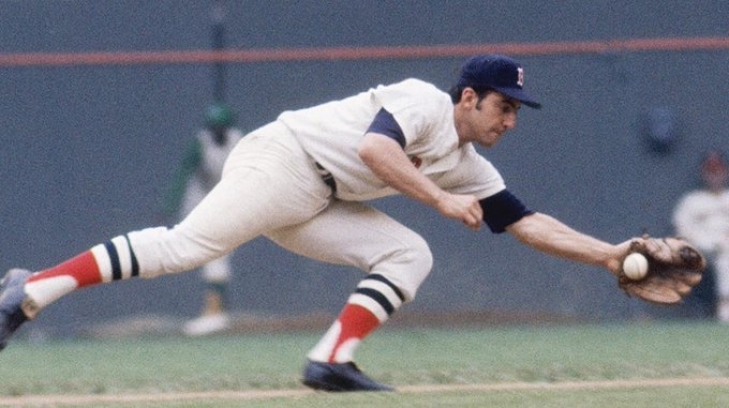
25. Rico Petrocelli

After a brief debut in 1963 and a final polish in Triple-A, he became the bedrock of the Boston infield in 1965. While he was initially known for his steady glove, Petrocelli evolved into the most dangerous offensive shortstop of his era. By the "Impossible Dream" season of 1967, he was an All-Star and a defensive wizard, finishing in the top six for defensive bWAR for four consecutive seasons (1966–1969).

The 1969 campaign stands as one of the greatest individual seasons in franchise history. Petrocelli shattered the expectations for his position, launching 40 home runs—a record for American League shortstops that would stand for decades. His batting efficiency was staggering: he batted .297 with a .403 OBP and led all Major League position players with a 10.0 bWAR. 

Petrocelli’s versatility was highlighted by his seamless transition to third base in 1971 to accommodate the arrival of Luis Aparicio. Rather than decline, Rico mastered the "hot corner," leading the league in fielding percentage and continuing to provide double-digit home run power. A Red Sox mainstay, he appeared in two World Series (1967 and 1975), notably hitting two home runs in the '67 Fall Classic. He remained a productive force until his retirement in 1976, finishing his Red Sox journey with 1,352 hits and 210 home runs.

He was Inducted into the Red Sox Hall of Fame in 1997.

26. Johnny Pesky

Johnny Pesky authored what many consider the greatest rookie season in Red Sox history. Debuting in 1942 as the starting shortstop, he immediately dismantled American League pitching, leading the league with 205 hits and batting a blistering .331. He finished third in the MVP voting, a peer comparison marker that signaled the arrival of a generational table-setter. However, like so many of his era, Pesky sacrificed his physical prime to military service, missing the next three seasons (1943–1945) due to World War II.

When Pesky returned in 1946, he picked up exactly where he left off, leading the AL in hits in both 1946 (208) and 1947 (207). This made him the first player in MLB history to record 200+ hits in each of his first three seasons.  During this stretch, he was the primary catalyst for the 1946 pennant-winning team, batting .313 and posting a massive .401 career On-Base Percentage in a Red Sox uniform.

Pesky’s identity eventually transcended his playing days. Though he was traded to Detroit in 1952 as his production began to wane, he returned to the organization to serve as a manager, coach, and goodwill ambassador for over 60 years. It is estimated that his three-year military absence likely cost him upwards of 600 hits, which would have easily pushed his Boston total past the 2,000-hit threshold. Despite the lost time, his impact was so profound that the Red Sox retired his Number 6 in 2008, an honor usually reserved for Hall of Famers.

He left Boston with 1,277 hits and a reputation as the most beloved figure in the clubhouse. Inducted into the Red Sox Hall of Fame in 1995.

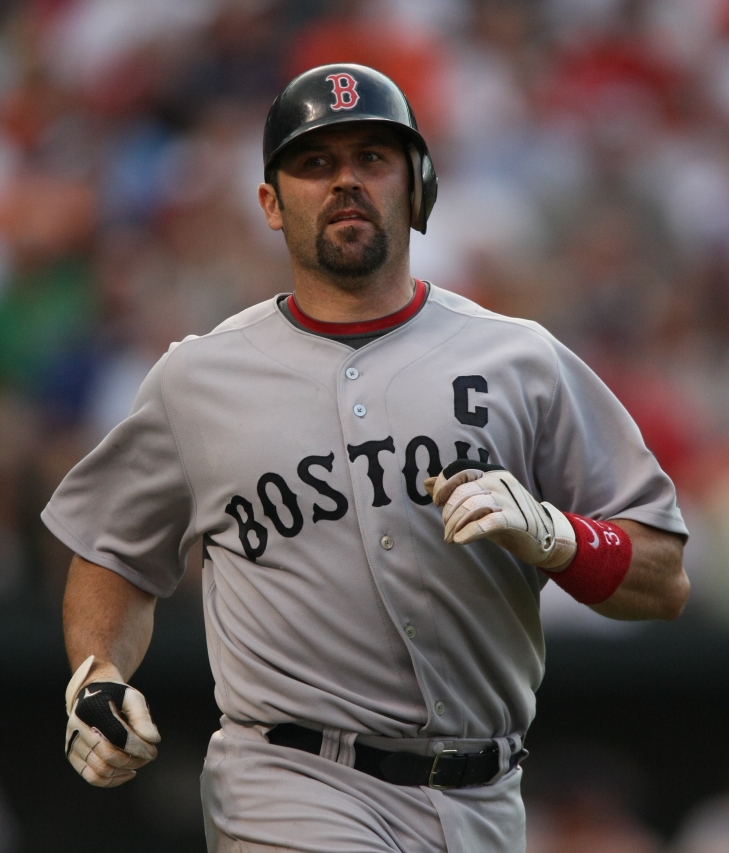
32. Kevin Youkilis

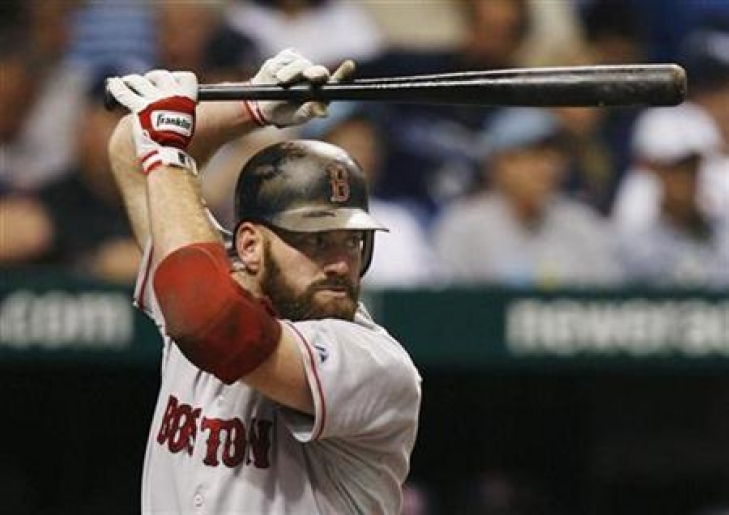
Kevin Youkilis debuted in 2004, providing a spark for the team that finally "reversed the curse." Though he spent 2005 navigating Triple-A and injuries, he became the everyday first baseman in 2006, immediately proving why he was nicknamed the "Greek God of Walks." Youkilis combined a gritty, dirt-stained style of play with a clinical approach at the plate, forcing pitchers into deep counts and punishing mistakes. By 2007, he was the heartbeat of a second championship run, proving that a high-OBP specialist could also be a Gold Glove-caliber defender.

The 2008 and 2009 seasons represent Youkilis’s peak.  In 2008, he launched 29 home runs and drove in 115 RBIs, finishing third in the MVP race. He followed it up in 2009 by leading the AL in pitches per plate appearance (4.42) while batting .305 with a career-high .413 On-Base Percentage. He recorded three consecutive .300 seasons and was a perennial threat to finish with an OPS north of .950, a mark of consistency that defined the Red Sox offense of the late 2000s.

Defensively, Youkilis was a master of the corners. In 2007, he earned a Gold Glove at first base after playing 135 consecutive errorless games. He eventually set a Major League record of 238 consecutive errorless games at the position, highlighting his concentration and footwork. His legacy is perhaps best defined by the 2007 ALCS, where he batted a celestial .500 with three home runs, nearly single-handedly willing the Red Sox past Cleveland.

Though he was traded to the White Sox in 2012, "Youk" remained a quintessential "Face of the Franchise" (Category 4). He left Boston with 133 home runs, 961 hits, and two World Series rings, having personified the "scrappy" identity that New England fans adored. He was a three-time All-Star and a winner of the 2008 Hank Aaron Award. Inducted into the Red Sox Hall of Fame in 2018, he remains the definitive proof that patience and grit are the ultimate offensive weapons.

35. Ellis Kinder

Ellis Kinder’s path to Boston was anything but conventional. Debuting as a 31-year-old rookie for the St. Louis Browns, "Old Folks" arrived at Fenway in 1948 with little fanfare. However, he quickly shattered every expectation (which wasn’t much). In 1949, Kinder led the American League with 23 Wins and a league-best 6 Shutouts. He was the league's most effective workhorse, finishing fifth in the MVP voting and earning the prestigious Sporting News Pitcher of the Year award, a hardware proxy that effectively serves as a pre-Cy Young era 10.0.

In 1951, as injuries began to mount, the Red Sox moved the 36-year-old to the bullpen. Rather than fade away, Kinder reinvented the role of the modern reliever. He led the AL in Saves (16) and Games Finished (41) that season, and he would repeat in 1953 with a staggering 27 Saves and 51 Games Finished. His 1953 campaign was a statistical takeover: he posted a 1.85 ERA over 69 appearances, proving to be the most dominant high-leverage arm in the game.

Kinder’s legacy is defined by his rugged durability and high-leverage heroics. On July 12, 1951, he provided one of the greatest relief performances in baseball history, entering in the 8th inning and throwing 10 consecutive scoreless innings of relief to secure a 17-inning win. This remains a legendary moment in franchise history, personifying the "rubber arm" that allowed him to win or save over 200 games for the Red Sox despite starting his career in his thirties.

Though he was eventually waived in 1955, Kinder left Boston with an 86–51 record, 93 saves, and a reputation as the finest hybrid pitcher of his generation. He is one of the few players in history to lead the league in Wins as a starter and saves as a reliever for the same franchise. Inducted into the Red Sox Hall of Fame in 2006.

23. Harry Hooper

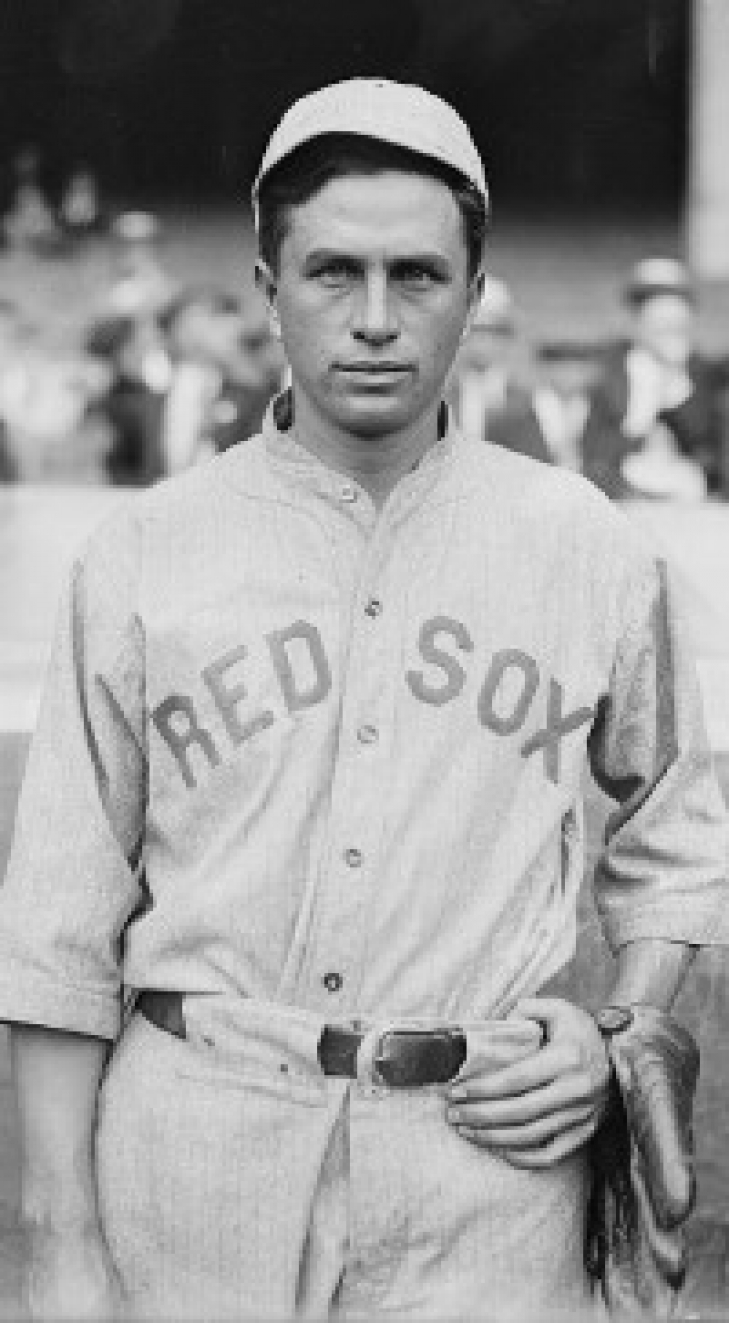
Harry Hooper debuted for the Red Sox in 1909 and quickly became the defensive heartbeat of the most legendary outfield in baseball history. Alongside Tris Speaker and Duffy Lewis, Hooper formed the "Million-Dollar Outfield," a trio whose collective range and intelligence redefined how the game was played in the early 20th century. While he was a model of consistency at the plate, it was his legendary glove and his revolutionary "rump-slide" catch that made him a centerpiece of the Red Sox dynasty.

Hooper’s value to the Red Sox was rooted in his dominance as a leadoff man and defensive specialist. Over his 12 seasons in Boston, he amassed 1,707 hits and set franchise records that still stand today, including 130 triples and 300 stolen bases. On May 30, 1913, he achieved a feat that wouldn't be matched for 80 years: hitting a leadoff home run in both games of a doubleheader. This ability to ignite the offense from the first pitch made him the ideal table-setter for the Deadball Era.

Nowhere was Hooper’s impact more apparent than in the World Series. He was a four-time World Champion with the Red Sox, consistently raising his game when the stakes were highest. In the 1915 World Series against the Phillies, Hooper became the first player in history to hit two home runs in a single World Series game (the decisive Game 5), including the game-winner that clinched the title. His .293 average over 24 World Series games proves he was a high-leverage outlier during the team’s most successful decade in its long history.

Though he was eventually traded to the Chicago White Sox in 1921, Hooper’s legacy remained firmly planted in Boston. He was the first Red Sox player to ever take an at-bat at the opening of Fenway Park in 1912, and he remains the franchise leader in many of the game's "hustle" categories. Recognizing his defensive mastery—including a major-league record for double plays and assists by a right fielder—the Veterans Committee inducted him into the Baseball Hall of Fame in 1971.

29. Tex Hughson

Cecil "Tex" Hughson arrived in Boston in 1941 and quickly established himself as the workhorse of the Red Sox rotation. By 1942, he authored a strong finish via traditional means, leading the American League in Wins (22), Complete Games (22), Innings Pitched (281), and Strikeouts (113). This rare "quadruple crown" of volume and performance earned him an All-Star nod and a sixth-place finish in the MVP voting, which confirmed his status as an elite arm.

While 1942 was his most famous year, his 1944 campaign was statistically his most efficient. Hughson posted a career-low 2.26 ERA and led the league in FIP (2.33), WHIP (1.048), and SO/BB (2.73). He was a surgical technician on the mound, utilizing a heavy sinker and impeccable control to stifle hitters. Like many of his peers, he sacrificed a year of his prime to military service in 1945, but he returned in 1946 to win 20 games and lead the Red Sox to their first pennant in nearly thirty years.

Hughson’s impact was vital to the Red Sox's post-war resurgence. He was the staff ace for the 1946 squad, pitching 14 high-leverage innings in the World Series against the Cardinals. However, the heavy workload of the early 40s—including those 22 complete games in a single season—eventually took its toll. Arm and shoulder trouble hampered his effectiveness in the late 1940s, forcing an early retirement after only eight seasons, all spent in a Boston uniform.

Hughson retired with a stellar 96–54 record and a reputation as one of the finest "Lifer" pitchers in franchise history. Despite a career shortened by injury, his peak dominance was so concentrated that the Red Sox inducted him into the Red Sox Hall of Fame in 2002.

28. Tim Wakefield

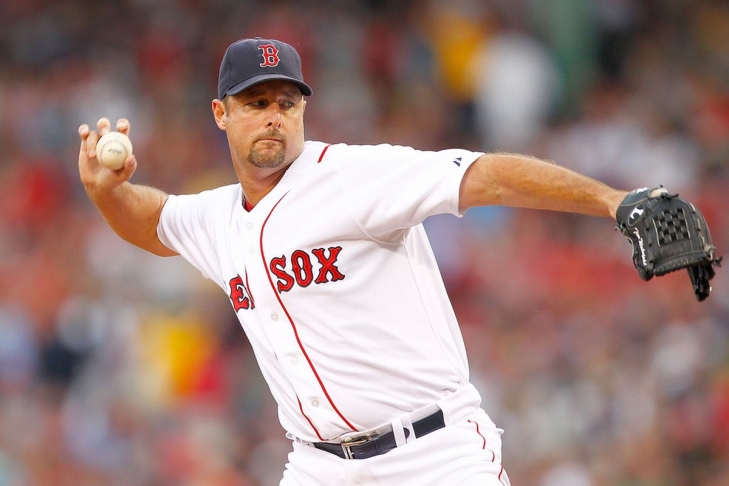
After two forgettable seasons with the Pittsburgh Pirates, Tim Wakefield will always be remembered for his knuckleball and 17 seasons as a member of the Boston Red Sox.

20. Fred Lynn

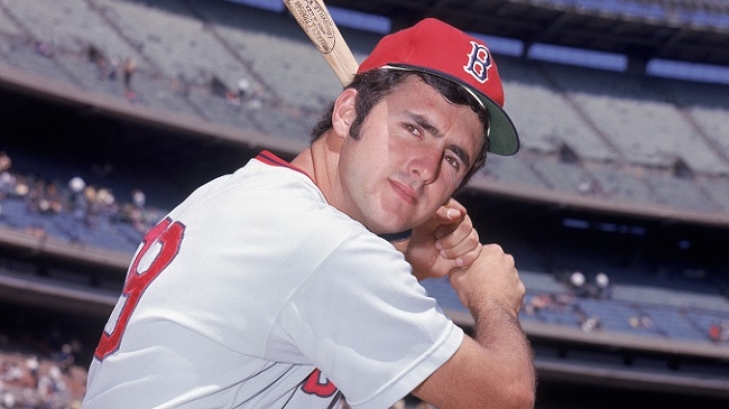
Fred Lynn arrived in Boston as a winner, having led USC to three consecutive College World Series titles before being drafted in 1973. After a brief 15-game cup of coffee in 1974, he entered 1975 ready to make history. In a feat that remained unmatched for decades, Lynn became the first player in Major League history to sweep the AL Rookie of the Year and MVP awards in the same season. As the defensive anchor in center field, he combined acrobatic catches with a bat that led the league in Runs (103), Doubles (47), Slugging (.566), and OPS (.967), propelling the Red Sox to an unforgettable World Series appearance.

Lynn’s brilliance wasn't limited to his historic debut. Over his seven seasons in a Red Sox uniform (1974–1980), he was a perennial force, being named an All-Star every single year he was in Boston. While his 1975 season is more famous, his 1979 campaign was statistically superior in nearly every significant metric. That year, he reached an untouchable offensive ceiling, winning the AL Batting Title (.333) and leading the league in OBP (.423) and Slugging (.637) while smacking a career-high 39 home runs and 122 RBIs. Despite this Triple Crown-caliber slash line, he finished a controversial fourth in MVP voting, losing to a statistically inferior Don Baylor.

Defensively, Lynn was the gold standard, earning four Gold Gloves during his Fenway tenure. His run in Boston was defined by his fearlessness; in Game 6 of the 1975 World Series, he famously crashed into the unpadded center-field wall, a moment of high-leverage sacrifice that defines his Boston legacy. Though he was traded to the California Angels after the 1980 season, he left a statistical footprint that includes 944 hits, 124 home runs, and a stellar .308/.383/.520 slash line.

18. Carlton Fisk

Carlton Fisk didn't just play catcher for the Red Sox; he commanded the field. After brief cups of coffee in '69 and '71, "Pudge" took the reins in 1972 and immediately validated the front office’s faith. He became the first player to ever win the AL Rookie of the Year by unanimous vote, pairing a .293 average and 22 home runs with a defensive maturity that earned him a Gold Glove in his first full season. 

Fisk was a perennial All-Star in seven of his nine full seasons in Boston, but his legacy is forever defined by a single swing in October 1975. In Game 6 of the World Series, Fisk launched a towering drive toward the left-field foul pole at Fenway Park. The ensuing television footage of Fisk jumping sideways and "willing" the ball fair with his arms became the most iconic visual in baseball history. Though Boston fell in Game 7, Fisk propelled the team to the brink of a title and cemented his status as the face of their Pennant.

Offensively, Fisk provided a rare blend of power and contact. In an era where catchers were often defensive specialists, Fisk was a middle-of-the-order threat, finishing in the top ten of MVP voting twice (1972 and 1978). He combined a high baseball IQ with rugged durability, allowing him to handle pitching staffs with a legendary "commander-in-chief" presence. He also posted a career .481 Slugging Percentage while playing the most physically taxing position in the game.

The "Pudge" era in Boston ended in 1981 due to a clerical error by the front office, leading him to sign with the Chicago White Sox. He left Fenway with 1,259 hits and 162 home runs (214 total career HRs by the time he left Boston's records) and a reputation as the greatest catcher in the team's history. Inducted into the Baseball Hall of Fame in 2000, the Red Sox moved quickly to retire his Number 27 and cement his place in the Red Sox Hall of Fame.

15. Mookie Betts

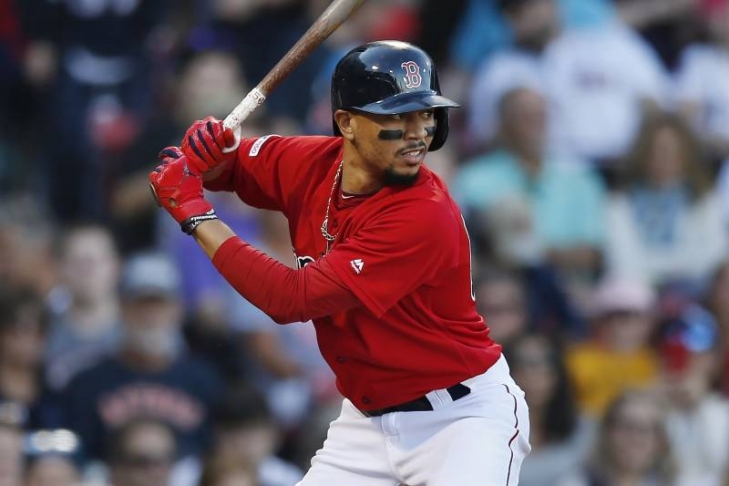
Mookie Betts didn't just play for the Red Sox; he redefined what a lead-off hitter could be. Debuting in 2014, he quickly ascended from a promising prospect to one of the most dynamic advanced quality players in the game. By 2016, Betts was a national superstar, launching 31 home runs, driving in 113 runs, and batting .318—a stat line that earned him an All-Star nod, a Silver Slugger, a Gold Glove, and a runner-up finish in the MVP race.

The 2018 season stands as Betts' masterpiece. In a year that remains the statistical benchmark for modern excellence, Mookie became the first player in MLB history to win the MVP, Silver Slugger, Gold Glove, Batting Title (.346), and a World Series Championship in the same season. He led the majors in Slugging (.640) and Runs (129), serving as the primary engine for a Red Sox team that won a franchise-record 108 games. 

Betts’ value was rooted in his "Five-Tool" efficiency. He combined elite power with elite discipline and speed, stealing 20 or more bases in four of his full seasons in Boston. Defensively, he was a vacuum in right field, winning four consecutive Gold Gloves (2016–2019). His high-leverage performance in the 2018 postseason, including a crucial home run in the World Series clincher, solidified his status as a championship anchor.

The "Mookie Era" in Boston ended abruptly following the 2019 season. In a move that remains one of the most debated in franchise history, the Red Sox traded Betts to the Los Angeles Dodgers as part of a rebuilding effort. He left Fenway with a staggering .301/.374/.519 slash line and four top-eight MVP finishes. Though he has gone on to further glory in Los Angeles—winning multiple titles and continuing his Hall of Fame trajectory—Red Sox fans view his six-year peak as a period of untouchable brilliance.

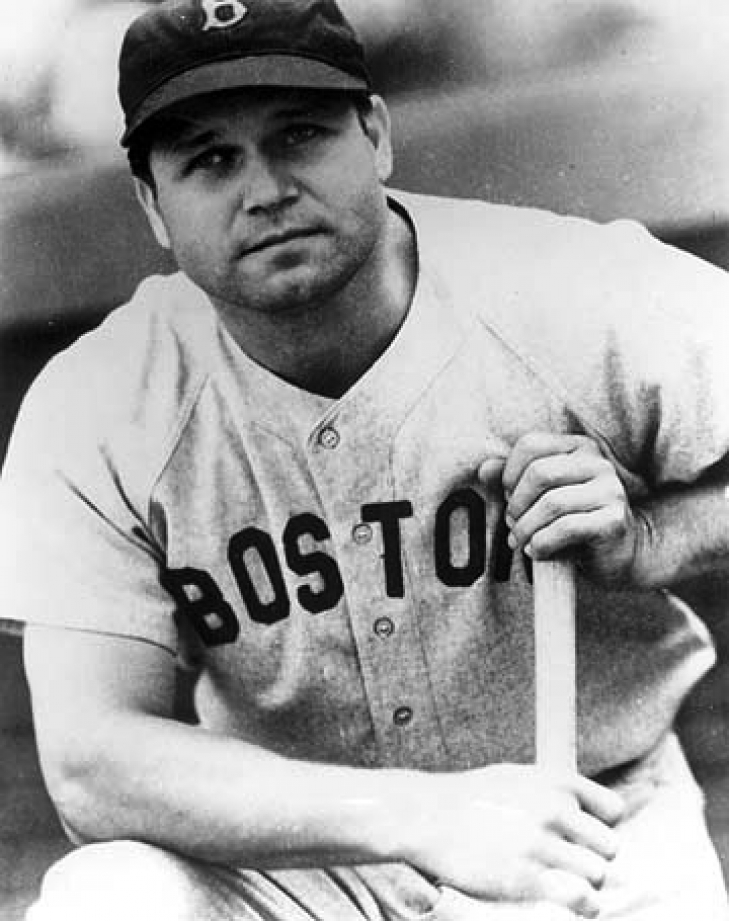
17. Jimmie Foxx

Prior to being dealt to the Red Sox, Jimmie Fox was the offensive star for the Philadelphia Athletics.  It was in Eastern Pennsylvania, where he won his first MVP and would win two World Series Titles.  With the equally cool nicknames of "Double X" and "Beast," the Depression of the 1930s hit Connie Mack's Philadelphia Athletics hard, and he was essentially sold to the Red Sox.

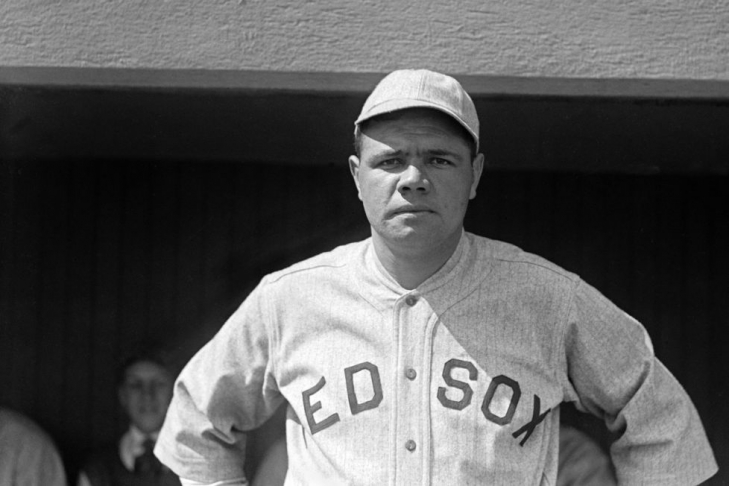
19. Babe Ruth

Yeah, this guy.

While the world remembers Babe Ruth as the quintessential Yankee, his legend was forged on the mound in Boston. Debuting in 1914, "The Bambino" first established himself as the premier left-handed pitcher in the American League. By 1915, he was an 18-game winner with a 2.44 ERA, a vital cog in a rotation that delivered a World Series title. 

The 1916 season was Ruth’s masterpiece as a hurler. Long before the Cy Young Award existed, Ruth authored a "Category 6" proxy season, going 23–12 with a league-leading 1.75 ERA. He was the undisputed ace of the 1916 World Series champions, throwing a 14-inning complete-game masterpiece in Game 2. Between 1915 and 1918, Ruth was the engine behind three World Series titles for Boston, recording a staggering 0.87 ERA across 31 postseason innings—a high-leverage performance that remains one of the greatest in October history.

By 1918, the "Two-Way Experiment" was in full flight. Ruth transitioned into the outfield while still making 20 starts on the mound, leading the league in Home Runs (11) and Slugging (.555). In 1919, he shattered the baseball world's concept of "Category 3" Era Dominance. He blasted 29 home runs—breaking a 20-year-old record—while simultaneously leading the league in Runs (103), RBIs (113), OBP (.456), and bWAR (9.1). It was a statistical takeover of a sport that had never seen a player dominate both the rubber and the batter's box with such ferocity.

The franchise's trajectory changed forever in late 1919 when owner Harry Frazee, seeking to finance his Broadway interests, sold Ruth to the New York Yankees for $100,000. This "Transaction of Infamy" birthed "The Curse of the Bambino," an 86-year championship drought that defined the Red Sox identity for nearly a century. Ruth left Boston having already achieved a Hall of Fame trajectory as a pitcher, only to become the greatest hitter in history elsewhere.

Ruth was an inaugural member of the Baseball Hall of Fame in 1936 and a charter inductee into the Red Sox Hall of Fame.

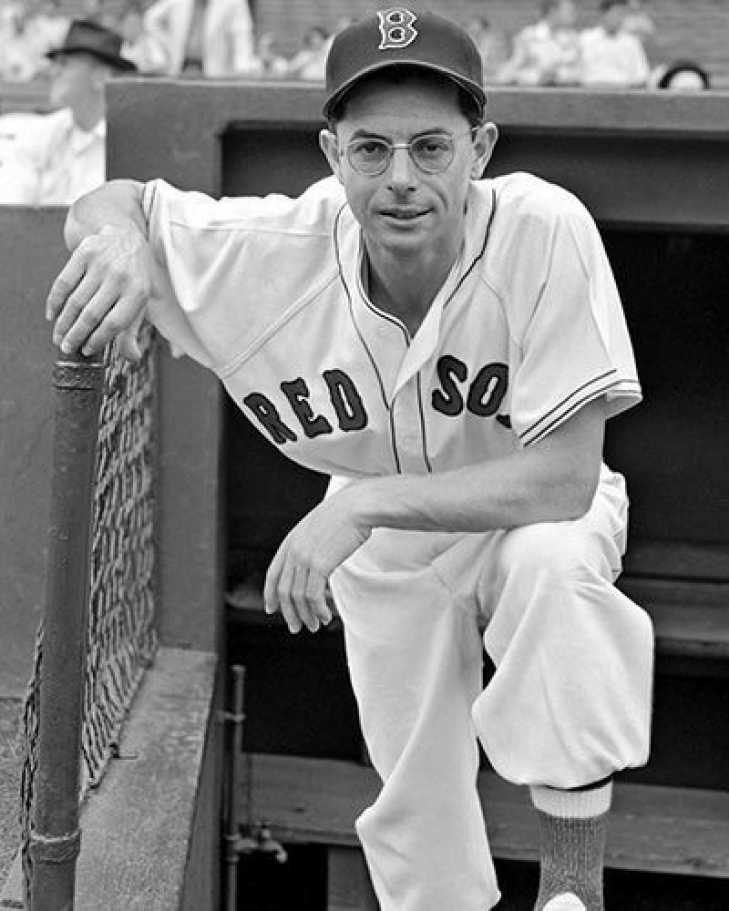
21. Dom DiMaggio

Though often introduced as the brother of Joe, Dom DiMaggio carved out a legacy in Boston that was entirely his own. Nicknamed "The Little Professor" for his spectacles and scholarly demeanor, he proved to be a clinical technician at the top of the lineup from the moment he debuted in 1940. A natural lead-off man, DiMaggio combined elite plate discipline with a high-contact bat, securing All-Star selections in each of his first two full seasons while consistently pacing the Red Sox offense with 165+ hits a year.

Like many of his teammates, DiMaggio’s career was interrupted by three years of military service during World War II. However, his return in 1946 was a masterclass in "Era Dominance" (Category 3). He batted a career-high .316 and earned his third All-Star nod, proving he hadn't missed a beat during his time away. Between 1949 and 1952, he was a perennial All-Star, showcasing a speed-and-discipline profile. His 1950 campaign was a statistical outlier; he led the American League in Runs Scored (131), Triples (11), and Stolen Bases (15), serving as the catalytic engine for the high-powered Boston offense.

Defensively, DiMaggio was considered one of the most intelligent center fielders of his era. He utilized a deep knowledge of opposing hitters to position himself with mathematical precision, often neutralizing the tricky dimensions of Fenway Park. 383 On-Base Percentage was a mark of consistency that ensured he was almost always on base for the heart of the order. He played his entire 11-season career in a Red Sox uniform, finishing with 1,680 hits and a near-.300 career average.

Though his career ended abruptly in 1953, the "Little Professor" remained one of the most beloved figures in franchise history and embodied the grit and intelligence of the post-war Red Sox. Inducted into the Red Sox Hall of Fame in 1995, his legacy is defined not by his family name but by his role as the premier table-setter for a generation of Boston greats.

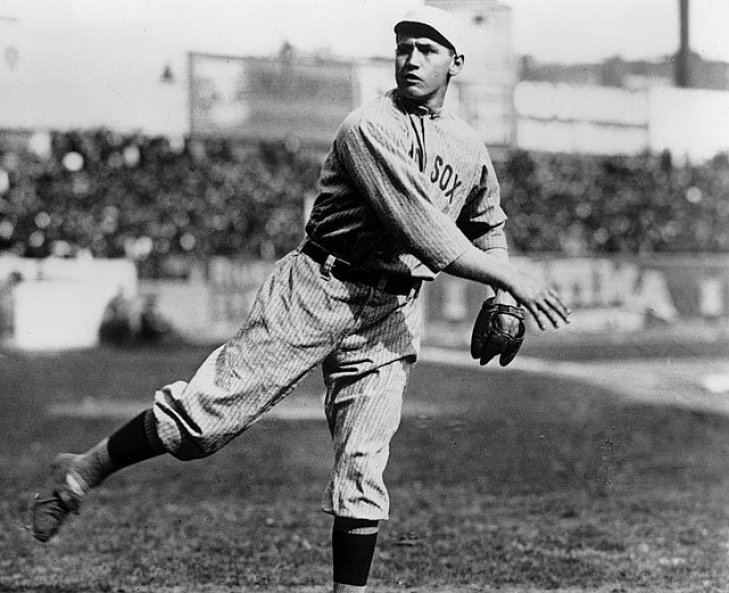
27. Smoky Joe Wood

Howard Ellsworth Wood didn't just pitch; he threw "smoke." Debuting as a teenager in 1908, he quickly established himself as the hardest thrower of the Deadball Era. By 1910, he was already an "Efficiency Outlier," posting a 1.69 ERA. In 1911, he led the American League in FIP (2.13) and Strikeouts per 9 innings (7.5), a metric that proved his dominance was no fluke of defense; he was simply missing bats at a rate his peers couldn't match.

The 1912 campaign remains a statistical monument in the Red Sox wing of the Lab. Wood authored a season for the ages, winning a league-leading 34 games against only 5 losses. He paired that massive win total with a 1.91 ERA and a career-best 1.015 WHIP. This was a statistical accomplishment that propelled the Red Sox to the 1912 World Series title. In that Fall Classic, Wood cemented his legacy by winning three games, proving he was the ultimate high-leverage weapon when the championship was on the line.

While arm fatigue eventually caught up to him, Wood’s efficiency remained elite until the very end of his Boston tenure. In 1915, he secured the AL ERA Title with a 1.49 mark, though his declining workload limited him to only 25 appearances.  Wood was an exceptional hitting pitcher who batted .244 for Boston, a skill that eventually allowed him to transition into a full-time outfielder later in his career with Cleveland.

Wood departed Boston after 1915 with a staggering 117–56 record and a career 1.99 ERA—one of the lowest marks in franchise history. Though his pitching career was cut short, his impact on the Red Sox's first golden era was undeniable. Inducted into the Red Sox Hall of Fame in 1995, he remains the definitive example of a "shooting star,” a pitcher who burned twice as bright for half as long. In the Lab, Joe Wood is the benchmark for pure, unadulterated power in the Deadball Era.

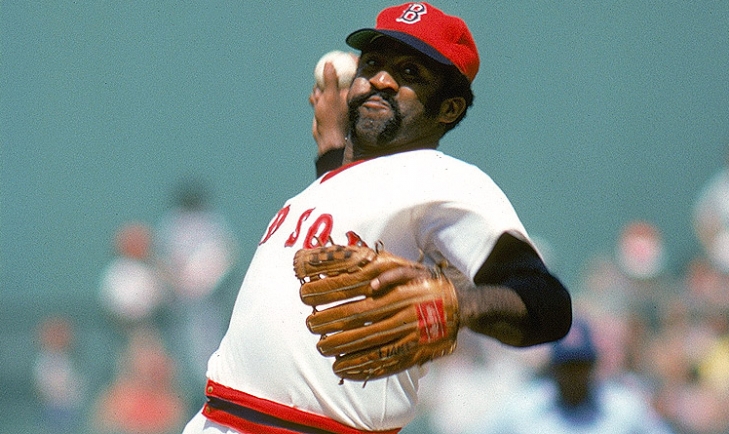
24. Luis Tiant

Luis Tiant’s journey to Boston began in 1971 on a humble minor league contract. After a dominant early career in Cleveland, injury and inconsistency had seemingly derailed the Cuban right-hander. His first year in Boston (1-7, 4.85 ERA) suggested he was finished. However, what followed in 1972 was one of the most spectacular career resurrections in baseball history. Tiant didn't just return; he reinvented himself, debuting a dizzying, corkscrew windup that left American League hitters completely baffled.

The 1972 season was a masterpiece of efficiency. Tiant secured the AL ERA Title with a 1.91 mark, going 15–6 and winning the AL Comeback Player of the Year. This was the start of a legendary run in which he became a 20-game winner in three of four seasons (1973, 1974, and 1976). Tiant was a rubber-armed workhorse who regularly threw over 250 innings a year, serving as the high-leverage heart of the Red Sox rotation.

Tiant’s Red Soximpact reached its zenith during the 1975 postseason. He was untouchable, going 3–0 in the playoffs, including a complete-game shutout of the powerhouse Oakland A's in the ALCS and two gritty wins in the World Series against Cincinnati's "Big Red Machine." His performance in Game 4,  a 163-pitch complete-game victory, remains the gold standard for competitive fire in Red Sox lore. Though the team fell in seven games, Tiant’s heroics made him a permanent folk hero.

Over his eight seasons in Boston, Tiant compiled a 122–81 record with 1,075 strikeouts. He finished in the top six of Cy Young voting three times, providing the veteran stability that kept the Red Sox in contention throughout the mid-70s. Though he eventually signed with the rival Yankees after the 1978 season, his heart remained in Boston. Inducted into the Red Sox Hall of Fame in 1997, "El Tiante" is remembered as the pitcher who proved that style and substance could combine to capture a city's soul.

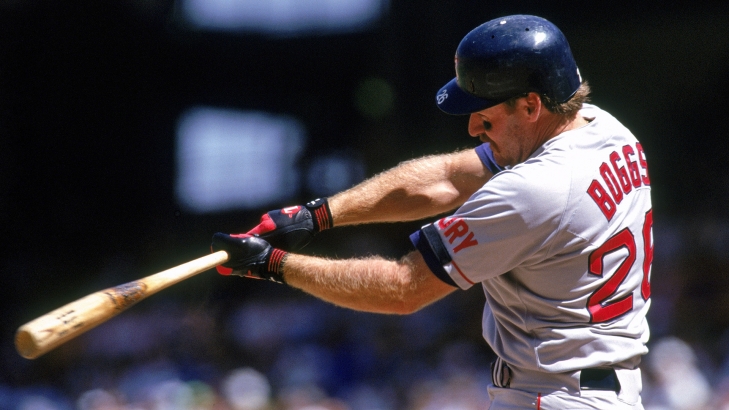
4. Wade Boggs

Wade Boggs didn't just play baseball; he orchestrated it. Arriving in Boston in 1982, Boggs immediately signaled his arrival with a remarkable rookie season, batting .349 over 104 games. It was a performance that would have secured the batting title had he reached the required plate appearances, and it served as a mere prelude to a decade of offensive dominance that saw him become the most consistent hitter in the American League.

From 1983 to 1988, Boggs authored one of the greatest peaks in the history of the sport, securing five batting titles in six seasons. During this stretch, he hit over .350 five times, with his only "off" year being a still-elite .325 campaign. Boggs was a master of the strike zone; if a pitcher didn't give him exactly what he wanted, he simply didn't swing. This discipline led to six On-Base Percentage titles and two seasons leading the AL in walks, whose efficiency at the plate was virtually unrivaled in the mid-80s.

Though his hitting acumen never quite secured him an MVP award—largely due to the power-hitting biases of the era—Boggs was a perennial contender, finishing in the top ten of the voting four times. His peers and coaches recognized his technical brilliance, rewarding him with six Silver Slugger Awards and eight All-Star selections during his time in Boston. Even as his power numbers remained modest, his ability to manipulate the bat and find the "Green Monster" at will made him the most feared contact hitter of his generation.

Boggs’ tenure in Boston concluded after the 1992 season when he signed with the rival New York Yankees, but his legacy at Fenway remained untouched. Over his twelve years with the Red Sox, he compiled 2,098 hits and maintained a staggering slash line of .338/.428/.462. He was a "Machine" in the truest sense, famously following a rigid pre-game routine involving chicken and ground balls that ensured he was the most prepared player on the field every single night.

Inducted into the Baseball Hall of Fame in 2005, Boggs was honored by the Red Sox in 2016 when they retired his Number 26, officially placing him among the immortals on the right-field facade.

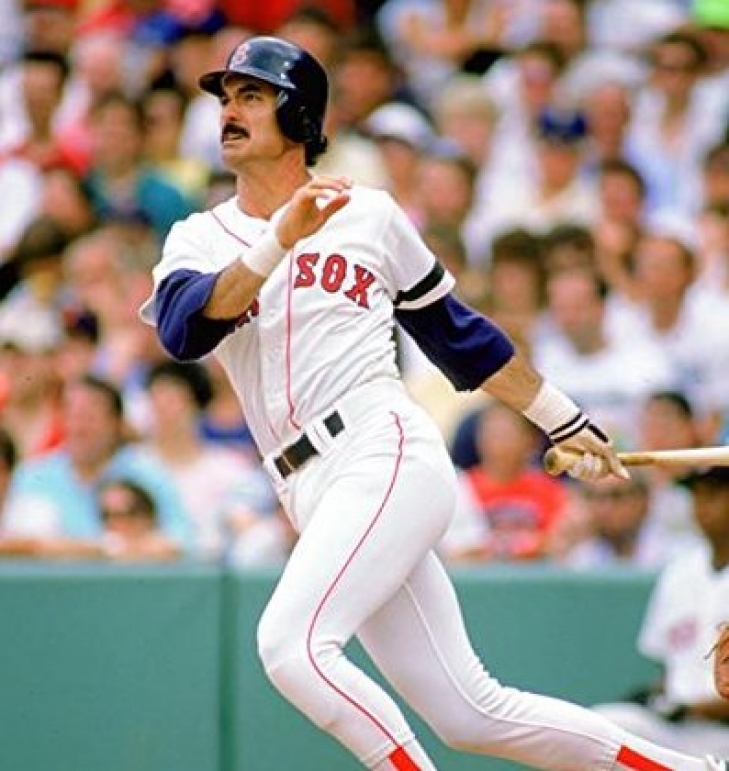
8. Dwight Evans

Dwight Evans may be one of the most underrated players in baseball history, a "Lifer" in spirit who spent 19 of his 20 seasons (1972–1990) patrolling right field at Fenway Park. Often overshadowed by Hall of Fame teammates like Carl Yastrzemski and Jim Rice, "Dewey" eventually proved to be the most well-rounded player of his era. In the Lab, Evans represents the rare "Two-Way Outlier”, a defensive vacuum who transformed himself into one of the most disciplined power hitters in the American League.

Defensively, Evans was the benchmark for a generation. Cemented as the starter in 1974, he immediately weaponized one of the greatest outfield arms in the history of the sport. His eight Gold Gloves are backed by both traditional and advanced metrics; he consistently finished atop his peers in assists and Total Zone runs.  His defensive efficiency acts as a massive floor, providing elite value even during the years his bat was still developing.

As his career progressed, Evans’ offensive game reached a new echelon.  Beginning in 1978, he reeled off eleven seasons of 20 or more home runs, including three campaigns surpassing the 30-mark. During the strike-shortened 1981 season, he proved his elite standing by sharing the AL Home Run Title (22) and leading the league in Walks. This patient approach made him an OPS pioneer; he led the American League in OPS twice (1981 & 1984) and remained a top-six fixture in that category throughout the mid-80s.

A three-time All-Star and two-time Silver Slugger, Evans was the quiet engine of the 1975 and 1986 World Series teams. His ability to combine high-volume power with league-leading patience, leading the AL in Walks three times.  He concluded his Red Sox tenure with 2,373 hits, 379 home runs, and 1,346 RBIs, totals that place him among the inner circle of franchise greats.

Though he played his final season in Baltimore, Evans’ heart remained at Fenway, where he was inducted into the Red Sox Hall of Fame in 2000.

5. Cy Young

By the time Denton True "Cy" Young joined the upstart Boston Americans for their inaugural 1901 season, he was already a legend with 267 wins to his name. Many expected the 34-year-old to be in the twilight of his career, but "The Cyclone" instead authored a second act that defined the birth of modern baseball. In his first year in Boston, he secured the American League’s first Pitching Triple Crown, leading the league in Wins (33), ERA (1.62), and Strikeouts (158).

Young’s dominance in the early 1900s was a clinic in efficiency. He followed his Triple Crown with back-to-back seasons leading the AL in Wins (32 in 1902 and 28 in 1903). His 1903 campaign was a masterpiece, as he famously threw the first pitch in modern World Series history and earned two wins to lead Boston to the inaugural championship. His control was so precise that he led the AL in WHIP and Strikeout-to-Walk ratio nearly every year, proving that velocity was nothing without his signature "cyclone" precision.

On May 5, 1904, Young achieved a feat of such advanced quality that remains one of the greatest single-game performances in history: the first perfect game in American League history. Out-dueling the eccentric Rube Waddell, Young retired all 27 Philadelphia Athletics in just 83 minutes. This was part of a staggering stretch where he didn't allow a hit for 24 consecutive innings, a record that stood as a testament to his untouchable command during the Deadball Era.

Young remained a workhorse for Boston through 1908, remarkably recording three more 20-win seasons as he pushed past the age of 40. Before being traded to Cleveland in 1909, he amassed 192 wins in a Boston uniform—a franchise record he currently shares with Roger Clemens. He finished his Boston tenure with a microscopic 2.00 ERA, 1,341 strikeouts, and a 0.970 WHIP, figures that set an impossible bar for every Red Sox pitcher who followed.

Inducted into the Baseball Hall of Fame in 1937 as part of its second class, Young was later honored as a charter member of the Boston Red Sox Hall of Fame. As for this high rank, it is a testament to how good he was, even though eight of his legendary 22 seasons were in Boston.

Subscribe to this RSS feed