Menu
A+ A A-

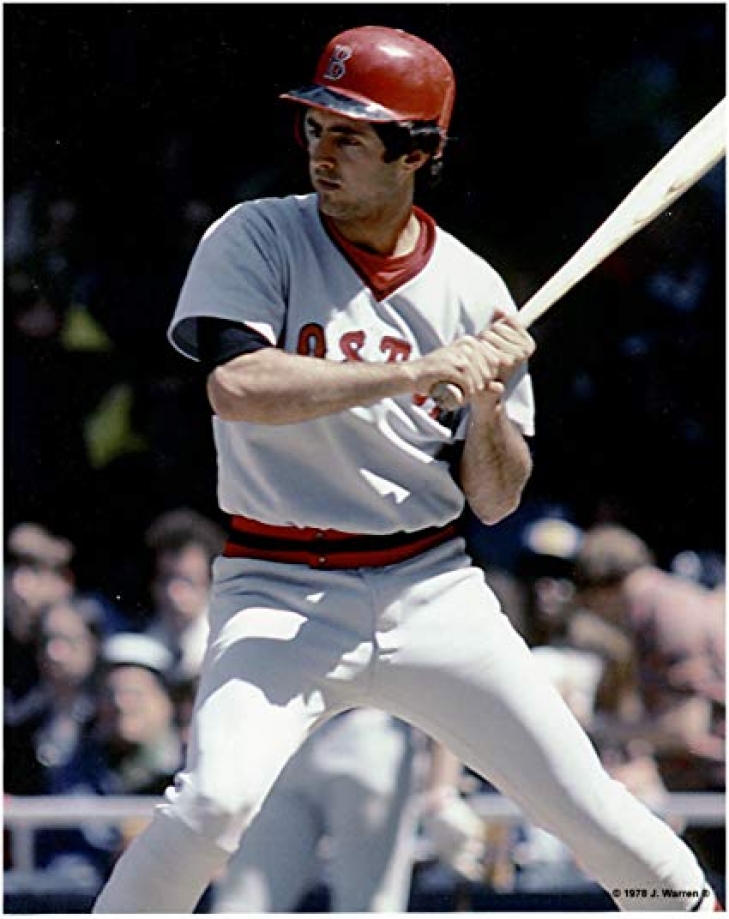
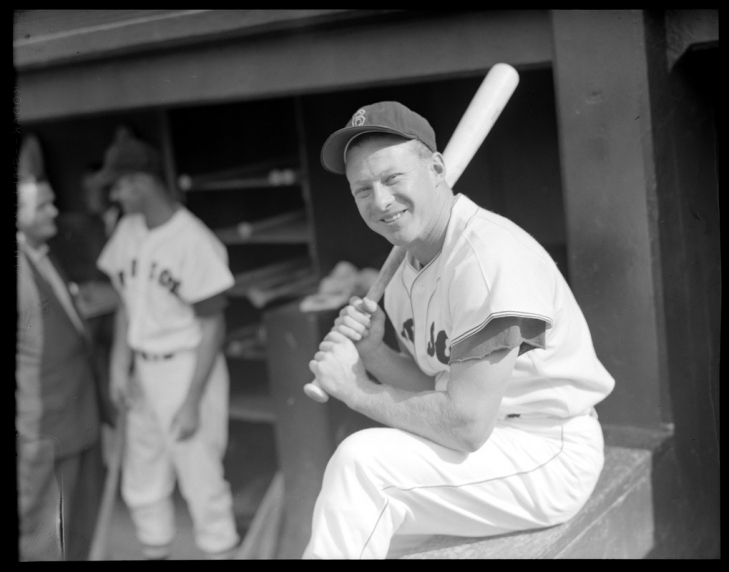
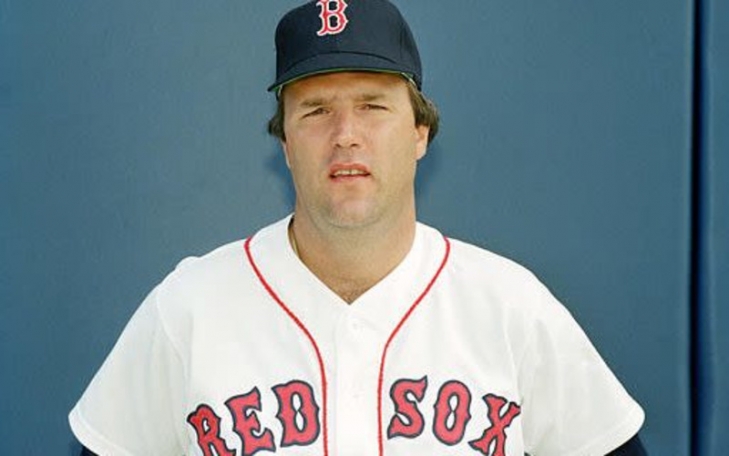
89. Fred Lynn

Nobody shot out of the gate quicker than Fred Lynn, as he made history when in 1975, he became the first player in Major League history to win the Rookie of the Year and the MVP in the same season.  As the other one who accomplished that feat was Ichiro Suzuki, who was already an established veteran of the Japanese Leagues, this is a beyond spectacular achievement.

Our All-Time Top 50 Boston Red Sox have been revised

Yes, we know that this is taking a while!

As many of you know, we here at Notinhalloffame.com are slowly generating the 50 of each major North American sports team.  That being said, we have existing Top 50 lists out and we always consistently look to update them when we can and based on necessity. As such, we are very happy to present our pre-2021 revision of our top 50 Boston Red Sox of all-time.

As for all of our top 50 players in baseball we look at the following: 

1.  Advanced Statistics.

2.  Traditional statistics and how they finished in the American League. 

3. Playoff accomplishments.

4. Their overall impact on the team and other intangibles not reflected in a stat sheet.

There was one new addition in our Top 50, though there were minor changes through the list, but nothing affecting our top five.  As always, we announce them here.

They are:

1. Ted Williams

2. Carl Yastrzemski

3. Roger Clemens

4. Wade Boggs

5. Cy Young

You can find the entire list here.

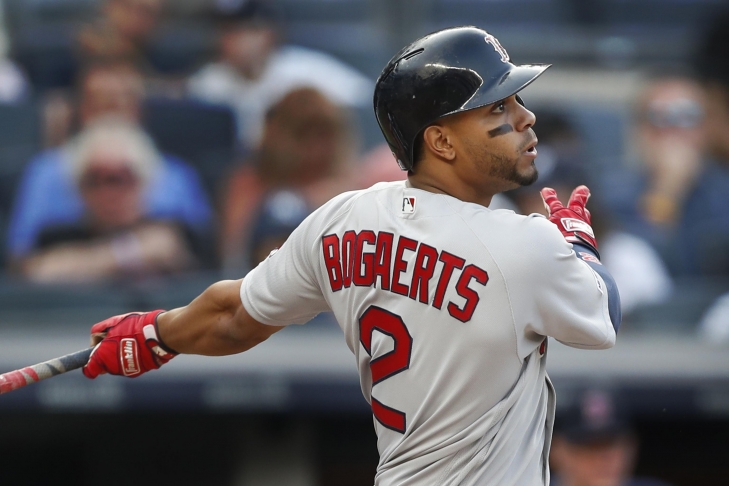
The new entry is Xander Bogaerts, who debuts at #42.

We welcome your input and commentsand as always, we thank you for your support.

22. Xander Bogaerts

Xander Bogaerts didn't just emerge from Aruba; he became the island’s greatest baseball ambassador. Signed in 2009, he ascended rapidly through the system, reaching Boston in 2013 just in time to provide high-leverage hits during the Red Sox's improbable World Series run. By 2014, he was the everyday shortstop, embarking on a decade-long stretch where he combined a smooth right-handed stroke with a steady defensive presence that anchored the Fenway infield.

A four-time All-Star and five-time Silver Slugger in Boston, Bogaerts proved to be one of the most consistent offensive threats at his position. His 2019 campaign stands as his statistical masterpiece: he launched a career-high 33 home runs, drove in 117 runs, and posted an OPS of .939. This performance earned him a fifth-place finish in the MVP voting and an All-MLB First Team selection, a hardware proxy that confirms his status as the premier shortstop in the game during that window.

His run in Boston was rooted in his durability and leadership. Bogaerts was a key cog in the record-breaking 2018 championship team, providing the veteran stability and postseason production (including a .273 average in the World Series) that defined that era. Even as the roster around him shifted, Bogaerts remained one of the faces of the franchise, batting .307 in his final season in Boston (2022) and leading all AL shortstops in fielding percentage.

The "Bogie" era in Boston came to a shocking conclusion following the 2022 season when he departed for the San Diego Padres as a free agent. It was a move that felt unthinkable to a fan base that viewed him as the next lifetime Red Sox icon. He left Fenway with 1,410 hits, 156 home runs, and a stellar .292 career average in a Red Sox uniform. Though he later plied his trade on the West Coast, his two World Series rings and his decade of excellence ensure his place in the Red Sox Hall of Fame is already a certainty.

Our All-Time Top 50 Boston Red Sox are now up

Yes, we know that this is taking a while!

As many of you know, we here at Notinhalloffame.com are slowly generating the 50 of each major North American sports team.  We have a new one to unveil today, that of the Boston Red Sox. 

The Red Sox were a charter member of the American League in 1901, first called the Boston Americans until they changed their name to the Red Sox in 1908.  Boston was the first team to win the modern World Series in 1903, and they were the dominant team of the 1910s, winning four titles in the decade. It was all sunshine and lollipops for the Red Sox, but the “Curse of the Bambino” struck when the Red Sox stupidly sold the contract of Babe Ruth to the New York Yankees, shifting the balance of power in the American League.

The Red Sox would be abysmal for years after, and they not win the World Series for the rest of the century.  They did have four shots at it, with three American League Pennants (1946, 1967, 1975 and 1986) but they fell short every time.  It would not be until 2004, where they won their sixth World Series, and they won three more after (2007, 2013 & 2018).

As for all of our top 50 players in baseball we look at the following: 

1.  Advanced Statistics.

2.  Traditional statistics and how they finished in the American League.

3.  Playoff accomplishments.

4.  Their overall impact on the team and other intangibles not reflected in a stat sheet.

Remember, this is ONLY based on what a player does on that particular team and not what he accomplished elsewhere and also note that we have placed an increased importance on the first two categories.

This list is updated up until the end of the 2019 Season.

The complete list can be found here, but as always we announce our top five in this article.  They are:

1. Ted Williams

2. Carl Yastrzemski

3. Roger Clemens

4. Wade Boggs

5. Cy Young

We will continue our adjustments on our existing lists and will continue developing our new lists.  

Look for our All-Time Top 50 Chicago White Sox coming next!

As always we thank you for your support.

47. Billy Goodman

When we talk about the Red Sox of the 1950s, we usually talk about the towering power of Ted Williams. But standing right beside him was Billy Goodman, a player who redefined what it meant to be "valuable." Goodman arrived in Boston and immediately became the ultimate insurance policy. He didn't just play a position; he played every position, sliding between the infield and the outfield with a defensive grace that made him the most versatile weapon of his decade.

While his glove was a masterpiece of utility, his true artistry was at the plate. In an era where power was becoming king, Goodman was a throwback, a contact specialist who treated the strike zone like a laboratory. The peak of this approach arrived in 1950, a season where he hit a blistering .354 to capture the American League Batting Title. He finished second in the MVP race that year, proving that you didn't need to clear the Green Monster to be the most dangerous man in the lineup.

Goodman's run with the Red Sox was defined by a quiet, metronomic consistency. He wasn't a flash in the pan; he spent nearly 1,200 games in a Boston uniform, consistently appearing in the top ten for batting average and On-Base Percentage. He was the "on-base machine" before the term was even coined.

The story reached its final chapter in 1957 when he was traded to the Baltimore Orioles, leaving behind a legacy of 1,344 hits and a career .306 average in Boston. He walked away as one of the few players in franchise history who could say they won a batting title without a true defensive home, a man who belonged everywhere on the field, but most importantly, on the basepaths.

49. Vern Stephens

In the late 1940s, shortstop was a position reserved for defensive wizards and contact hitters—men who bunted and scratched out runs. Then came Vern Stephens. Already a home run champion with the St. Louis Browns, Stephens arrived in Boston in 1948 and immediately looked like a man born to play in front of the Green Monster. He didn't just join the Red Sox; he became the thunderous second half of a one-two punch with Ted Williams that remains one of the most terrifying middle-of-the-order combinations in the history of the game.

His five-year run in Boston was a relentless assault on the record books. From 1948 to 1950, Stephens produced a three-year peak that felt more like a glitch in the era's physics. He launched 98 home runs and drove in a staggering 440 runs in that window alone, capturing back-to-back RBI titles in 1949 and 1950. His 1949 season was his masterpiece: 39 home runs and a record-shattering 159 RBIs, a total that still stands as a benchmark for what a shortstop can achieve. To Ted Williams, Stephens wasn't just a teammate; he was the most effective protection he ever had in a lineup.

As the 1950s progressed, the heavy workload and the physical demands of the position began to take their toll. By 1952, injuries had sapped some of the lightning from his bat, and he was dealt to the White Sox before the 1953 season. He left the Fens with 122 home runs and a reputation as the man who proved a shortstop could be a cleanup hitter. While the baseball world occasionally forgets how dominant he was, the Red Sox never did, officially immortalizing him in the franchise Hall of Fame in 2006. He arrived as a trade-market gamble and left as the man who redefined his position, proving that power knows no defensive boundaries.

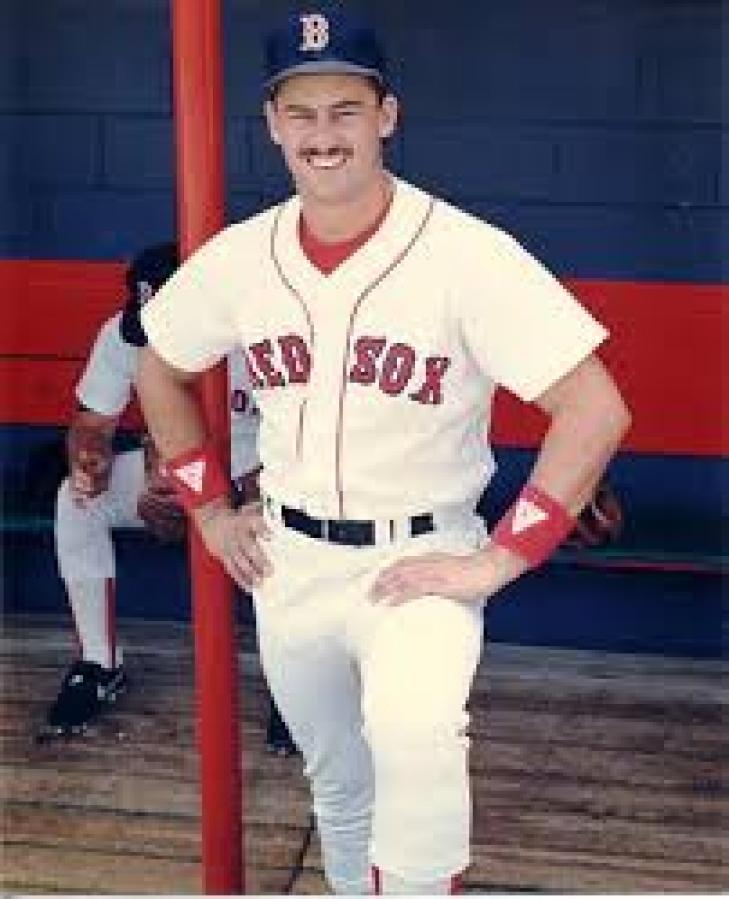
44. Mike Greenwell

When Mike Greenwell took over left field in 1987, he didn't just inherit a position; he inherited a lineage of legends. Nicknamed "The Gator" for his Florida roots and fearless intensity, he quickly proved he belonged in the conversation. After finishing fourth in the Rookie of the Year voting, he had a career-year in 1988. That season, Greenwell hit for the cycle and posted a staggering slash line of .325/.416/.531, while setting an American League record with 23 game-winning RBIs. This earned him a Silver Slugger and a second-place finish in one of the most famous MVP races in history.

The tragedy of Greenwell’s MVP year is that he finished as the runner-up to a steroid-aided Jose Canseco. Despite this, his efficiency remained elite; he was a two-time All-Star and a consistent .300 hitter who refused to be overwhelmed by the shadows of his predecessors. While he never recaptured the 20-home run power of 1988, his bat control and gap-to-gap precision were spot on. On September 2, 1996, he delivered a legendary final moment by driving in all 9 runs in a 10-inning victory over Seattle, a contest that remains a franchise record for the most RBIs, accounting for all of the team's scoring.

He spent all 12 of his Major League seasons in a Red Sox uniform, retiring with a career .303 average and 1,400 hits. He was the bridge between the 1986 pennant-winning squad and the high-powered offenses of the mid-90s, serving as a reliable engine for two division titles. Sadly, Greenwell passed away in October 2025 at the age of 62, a loss felt deeply by the Fenway faithful who remember him as the man who played with a grit that matched the city he represented.

Inducted into the Red Sox Hall of Fame in 2008.

42. Larry Gardner

Larry Gardner arrived in Boston in 1908 as a lost kid from the green hills of Vermont, but he quickly became a foundational piece of a powerhouse. By 1910, he had earned his spot as the starting second baseman, but it was his move to the hot corner in 1911 that defined his legacy. Gardner wasn't just a third baseman; he was a tactical defender whose prowess in fielding bunts drew comparisons to the legendary Jimmy Collins. In an era where small ball was king, Gardner’s glove was a high-leverage weapon that protected thin leads and stifled rallies.

The 1912 season remains Gardner's best year in a Red Sox uniform. He batted .315 and led the team with 86 RBIs, but it was his October heroics that etched his name in Fenway lore. Despite playing with a broken finger on his throwing hand, he delivered the Series-winning sacrifice fly in the 10th inning of Game 8 against the New York Giants. That moment, scoring Steve Yerkes off the great Christy Mathewson, remains one of the most clutch performances in the history of the Fall Classic.

As the decade progressed, Gardner remained the steady pulse of the "Impossible Dream" of the 1910s. He was a central figure in the 1915 and 1916 championships, proving his rare power surge in the 1916 Series. Facing the Brooklyn Robins, he launched two home runs—including a dramatic three-run inside-the-parker—matching his entire regular-season home run total in just five games. This ability to elevate his game when the stakes were highest made him an indispensable figure for the club's first golden age.

Though he was traded to Philadelphia after the 1917 season, Gardner’s impact on Boston was indelible. He left the franchise with 1,106 hits, a .282 average, and three rings. He would eventually win a fourth title with Cleveland, but his heart remained tied to the Northeast, where he eventually returned to coach at his alma mater, the University of Vermont. Inducted into the Red Sox Hall of Fame in 2000, Gardner is remembered as the "Vermont Marvel”, a player whose career was defined by winning, stability, and the ability to come through when the city of Boston needed him most.


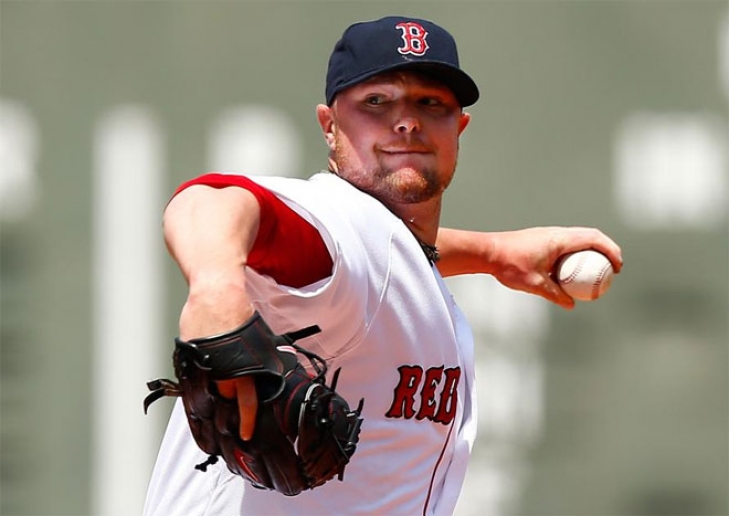
31. Jon Lester

Jon Lester’s journey to Boston greatness is defined by a level of perseverance that transcends the box score. Drafted in 2002, he debuted in 2006 but soon faced a battle far greater than any hitter: a diagnosis of Anaplastic Large Cell Lymphoma. His return to the mound in 2007 was a movie-worthy story, culminating in a high-leverage start in Game 4 of the World Series. By clinching the title against Colorado, Lester didn't just win a game; he signaled the arrival of the next great Red Sox ace.

Lester’s peak arrived in 2008 when he went 16–6 and threw a legendary no-hitter against the Royals—the first by a Red Sox lefty in over 50 years.  He was even more stellar in 2010, posting a 19–9 record with a 3.25 ERA and 225 strikeouts, finishing fourth in the Cy Young voting. He was a perennial workhorse, recording at least 200 innings and 200 strikeouts in three different seasons for Boston, earning the Hutch Award for his dedication to the game.

Where Lester became most alive was in October. He was the undisputed engine of the 2013 World Series championship, going 4–1 in the postseason with a staggering 1.56 ERA. In the Fall Classic against the Cardinals, he won both of his starts, allowing only one run over 15.1 innings. This performance cemented his reputation as one of the greatest big-game pitchers in franchise history—a lefty who thrived when the lights were brightest, and the stakes were highest.

Lester’s tenure in Boston ended abruptly in 2014 when he was traded to Oakland at the deadline, a move that left a permanent mark on the Fenway faithful. He departed with a 110–63 record and 1,386 strikeouts, ranking among the franchise leaders in nearly every major pitching category. Though he later won another title in Chicago, his legacy remains anchored in New England as the man who beat cancer and then beat the world’s best hitters to bring two trophies to Yawkey Way.

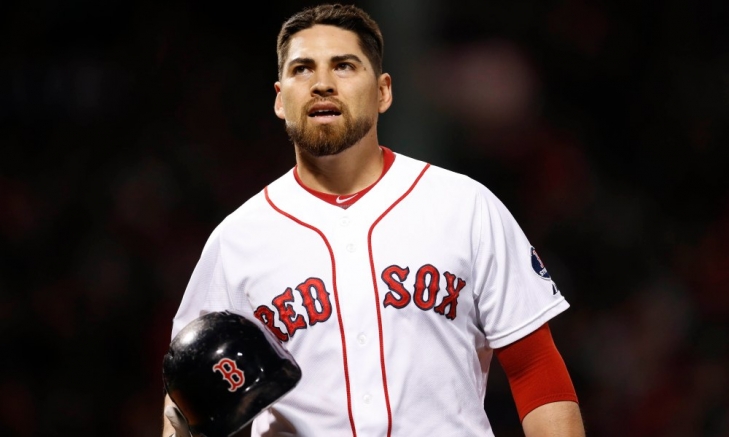
48. Jacoby Ellsbury

When Jacoby Ellsbury arrived as an August call-up in 2007, he didn't just join the Red Sox—he accelerated them. A late first-round pick with track-star speed, he played the role of the postseason's "X-factor" to perfection, batting a scorching .438 in the World Series to help hoist a trophy before his rookie eligibility had even expired. He arrived as a blur of potential, and for the next few years, he was the most disruptive force on the American League basepaths, with back-to-back stolen base titles in 2008 and 2009.

However, the defining chapter of Ellsbury’s Boston story isn't just about speed; it’s about one of the most unexpected offensive explosions in franchise history. After an injury-plagued 2010, he returned in 2011 to produce a season that defied logic. A player who had never hit more than nine home runs suddenly found a power stroke that stunned the league, launching 32 home runs with 105 RBIs. That year, he became the first member of the Red Sox 30-30 club, winning a Gold Glove and a Silver Slugger while finishing as the narrow runner-up for the AL MVP. It was an apex that felt like lightning in a bottle, a perfect fusion of his elite speed and a newfound, thumping authority at the plate.

The final act of his run saw him play the hero once more, leading the league in steals for a third time in 2013 and serving as the leadoff engine for another World Series championship team. When he departed for New York as a free agent in 2014, he left behind a legacy built on 241 stolen bases and a reputation as a player who could beat you in every facet of the game when the lights were brightest. He arrived as a rookie spark and left as a two-time champion, having authored a 2011 campaign that remains one of the greatest individual seasons ever seen at Fenway Park.

50. Pete Runnels

When Pete Runnels arrived in Boston in 1958, he was a versatile infielder who had struggled to find his offensive ceiling in the cavernous Griffith Stadium in Washington. He brought a "swing at everything" mentality to the Fens, but his arrival coincided with a life-changing apprenticeship. Under the tutelage of Ted Williams, Runnels abandoned his pull-heavy approach and began treating the Green Monster like a magnet. He didn't just find his plate discipline; he found a home for his line drives.

His five-year run in Boston was a clinic in pure hitting. Runnels didn't just flirt with the .300 mark—he lived well above it, never batting below .314 during his entire Red Sox tenure. He became a fixture at the top of the American League leaderboard, finishing in the top three for batting average in four of his five seasons. The climax of this evolution came in 1960 and 1962, when he captured two American League Batting Titles. His 1960 crown was a testament to his grit; playing through the agonizing pain of stomach ulcers, he refused to sit out the stretch run, famously telling his manager he wanted to "win this thing the right way."

Beyond the bat, Runnels provided the Red Sox with a defensive safety net. He was the rare player who could lead the league in fielding percentage at second base one year (1960) and at first base the next (1961). He was the steady hand on a team that was often searching for its identity in the post-Williams era.

The final chapter arrived after the 1962 season when, at Runnels' own request to be closer to his Texas roots, the Red Sox traded their reigning batting champion to the expansion Houston Colt .45s. It was a rare "mercy trade" by owner Tom Yawkey, and it proved to be a perfectly timed exit for Boston. Once away from the friendly confines of Fenway, Runnels’ production plummeted, and he was out of the game within two years. He left Boston with a sterling .320 average and a legacy of professional excellence that was finally immortalized in the Red Sox Hall of Fame in 2004. He arrived as a raw talent and left as a two-time champion of the box score.

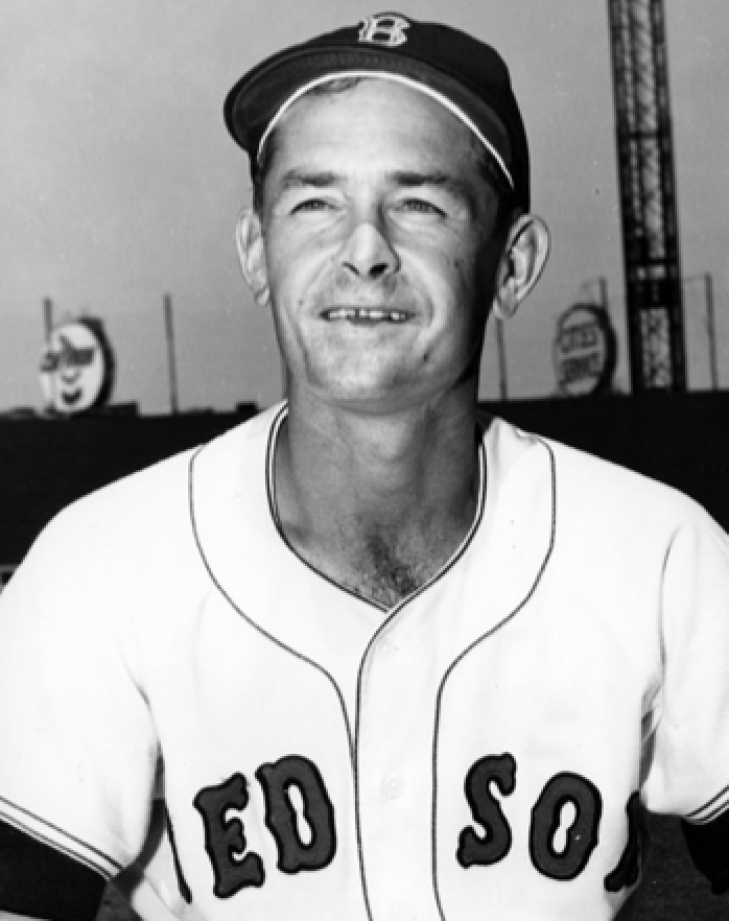
46. Jackie Jensen

Before he ever stepped into the batter’s box at Fenway Park, Jackie Jensen was already a myth. He arrived in Boston in 1954 via trade from the Senators, carrying a resume that sounded like a tall tale: the first man to play in a Rose Bowl, a World Series, and an MLB All-Star Game. But while his athleticism was legendary, it was in a Red Sox uniform that he finally channeled that raw talent into sustained, elite dominance.

From the moment he arrived, Jensen became the engine of the Boston offense. For six consecutive seasons, he was the model of run-producing consistency, never dipping below 20 home runs and driving in at least 100 runs in five of those years. He didn't just participate in the American League leaderboards; he owned them, leading the league in RBIs three separate times. The pinnacle of this "Golden Boy" era came in 1958, an MVP campaign where he reached career highs in home runs (35) and OPS (.931), proving he was the premier run-producer in the junior circuit.

However, the story of Jensen’s run with the team is also one of internal conflict. At the height of his powers in 1959, coming off another RBI title, he stunned the baseball world by walking away. Driven by a deep desire to be with his family in California and an intensifying, paralyzing fear of flying, he chose peace over the diamond.

He attempted a brief, one-year comeback in 1961, but the "Golden Boy" couldn't outrun the anxiety of the travel schedule. He retired for good that year, leaving behind a stat line—170 home runs and a .282 average—that suggested he had so much more left to give. It took decades for the franchise to fully recognize the weight of his contributions, finally inducting him into the Red Sox Hall of Fame in 2000. He remains one of the great "what-ifs" in Boston history: a man who conquered every sport he touched, only to be grounded by the very skies that carried him to greatness.

43. Josh Beckett

Josh Beckett arrived in Boston in 2006 with a reputation already carved in pinstriped stone. As a 23-year-old with the Marlins, he had famously walked into Yankee Stadium and shut out the Bronx Bombers to clinch a title, a moment of pure intimidation. When he joined the Red Sox as the centerpiece of a blockbuster trade, Boston didn't just get a pitcher; they got a firebrand who lived for the highest possible stakes. After a turbulent first year adjusting to the American League, Beckett found his rhythm in 2007, and the league had no answer for him.

That 2007 season was Beckett’s apex. He stormed through the summer to a 20–7 record, becoming the first Red Sox pitcher to reach the 20-win plateau in nearly a decade. He finished as the runner-up for the Cy Young Award, but his true value was revealed in the postseason. Faced with a 3-games-to-1 deficit against Cleveland in the ALCS, Beckett took the mound in Game 5 and delivered a cold-blooded performance, striking out 11 over eight innings to save the season. He was named the ALCS MVP, having essentially willed the Red Sox back to the World Series.

Beckett’s efficiency during that October run was legendary: he went 4–0 with a 1.20 ERA, striking out 35 batters while walking only two. He was simply unhittable when it mattered most. He would go on to earn two more All-Star nods in Boston (2009 and 2011), continuing to anchor the rotation with a blend of power and precision. Even in 2011, he posted a stellar 2.89 ERA, proving that when his mechanics were locked in, he remained one of the most difficult puzzles for hitters to solve.

Though his tenure in Boston ended with a trade to the Dodgers in 2012, Beckett’s legacy is secured by the hardware he brought to Fenway. He left the club with an 89–58 record and 1,108 strikeouts, but his impact is best measured in the silence he forced upon opposing crowds in October. He was the quintessential big-game hunter, a pitcher who didn't just participate in championship runs; he dictated them.

38. Mo Vaughn

Mo Vaughn arrived in Boston in 1991 and quickly became the "Hit Dog," a nickname that defined his aggressive, lunging presence at the plate. While his power was his calling card, Vaughnwas fueled by a surprising level of contact and plate discipline. From 1994 to 1998, he reeled off five consecutive .300 seasons, peaking with a career-best .337 in his final year in Boston. However, this peak was a masterclass in "playing through it"; despite the elite average, the agility and health that fueled his early 90s rise were already beginning to wane before he ever left New England.

The 1995 season remains the crown jewel of Vaughn’s profile. He led the Red Sox to an AL East title by leading the league in RBIs (126) and blasting 39 home runs. In a razor-thin vote, Vaughn edged out Albert Belle to win the AL MVP Award. He also posted three straight .400+ OBP seasons (1996–1998), combining brute strength with a surgical understanding of the strike zone even as lower-body injuries began to mount.

Vaughn was deeply rooted in his connection to the city. Whether it was his extensive charity work or his role as the face of the post-Clemens Red Sox, he embodied the "Boston Grinder" persona. His peak was a model of concentrated excellence: four consecutive 35-home run seasons and a .542 Slugging Percentage in a Red Sox uniform. While 1998 was statistically brilliant, it was the final act of his prime; the decline was already underway in the trainer's room before he signed with the Anaheim Angels in 1999.

Vaughn finished his Red Sox tenure with 230 home runs, 1,165 hits, and a career .304 average. Though his post-Boston years saw a rapid drop-off, his decade at Fenway represents one of the most dominant offensive stretches in franchise history. Recognizing his era-defining dominance and his role as a community icon, the Red Sox inducted him into the Red Sox Hall of Fame in 2008.

37. John Valentin

John Valentin spent a decade in Boston (1992–2001) as the stabilizing force of the Red Sox infield. While he famously lacked a Gold Glove on his mantle, the advanced metrics tell a different story. Valentin was a defensive savant, leading the American League in Total Zone Runs twice (1993 and 1995) and topping his position in that category three times across two different spots on the diamond. His 12.3 Defensive bWAR in Boston proves that he was the most efficient run-saver in the league during his prime.

Valentin’s peak arrived in the mid-90s, where he evolved into one of the premier offensive shortstops in the game. In 1995, he had a career year, batting .298 with 27 home runs and 102 RBIs, earning the Silver Slugger Award and a ninth-place finish in the MVP voting. He followed this with a historic 1996 season in which he hit for the cycle and a 1997 campaign in which he led the American League with 47 doubles. This rare blend of gap power and middle-infield efficiency makes him a 10.0 outlier for his era.

Valentin was also blessed with incredible baseball IQ. On July 8, 1994, Valentin achieved one of the rarest feats in sports by turning an unassisted triple play against the Mariners, becoming only the 10th player in history to do so. In the postseason, he remained a high-leverage threat; during the 1999 ALDS, he famously drove in seven runs in a single game against Cleveland, a performance that nearly single-handedly propelled the Red Sox toward the ALCS.

Though injuries eventually slowed his pace and led to his departure in 2002, Valentin’s impact on the franchise's transition into a modern powerhouse was undeniable. He left Boston with 1,093 hits, 124 home runs, and a stellar .279 average. For his unparalleled defensive intelligence and offensive consistency, the Red Sox inducted him into the Red Sox Hall of Fame in 2010.

41. Bob Stanley

Bob Stanley’s story in Boston is one of relentless availability. Drafted as a first-round talent in 1974, he debuted in 1977 and immediately established a pattern of being whatever the Red Sox needed on a given afternoon. He didn't just play for 13 seasons; he lived in the game, eventually setting a franchise record with 637 appearances.

The late 70s and early 80s saw Stanley authoring efficiency peaks from every imaginable angle. In 1978, he produced a statistical anomaly, going 15–2 primarily out of the bullpen and finishing seventh in the Cy Young voting. He followed that in 1979 by moving into the rotation full-time, starting 30 games and earning his first All-Star nod. However, his most historic season came in 1982, when he set an American League record by throwing 168.1 innings in relief. To put that in perspective, that is the workload of a modern starter delivered entirely from the bullpen.

By 1983, the "Steamer" had pivoted again, this time becoming the premier closer in the American League. He saved a then-franchise record 33 games and earned his second All-Star selection, finishing near the top of the Cy Young and MVP ballots. This ability to lead the team in wins one year and saves the next is a rarity that few pitchers in history have replicated. Even during the high-leverage pressure of the 1986 postseason, Stanley remained the man the manager trusted most to bridge the gap to a title.

Though he retired in 1989 as a "Lifer" with 115 wins and 132 saves, Stanley’s impact was best summarized by his nickname. He was the engine that kept the Red Sox running through three different decades. He was a pioneer for the "Most Versatile Pitcher" role, a man who would throw ten innings of relief one night and start on three days' rest the next. Inducted into the Red Sox Hall of Fame in 2000, Bob Stanley remains the definitive proof that the most valuable ability in a long career is availability.

45. Jimmy Collins

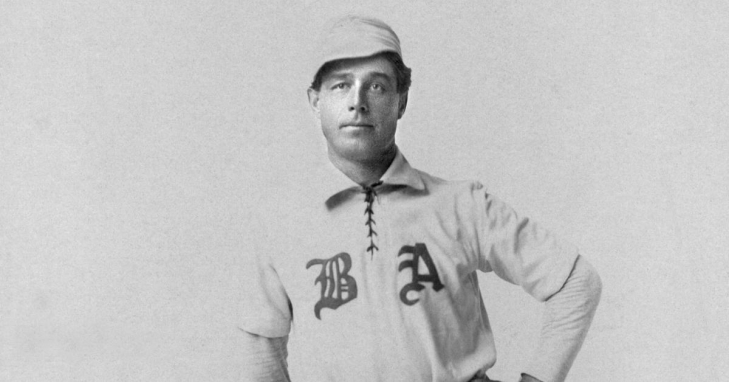
When the American League emerged as a "rebel" circuit in 1901, it needed a face to prove it was more than just an upstart hobby. They found it in Jimmy Collins. By walking away from the established Boston Beaneaters to join the brand-new Boston Americans, Collins didn't just switch uniforms; he shifted the power dynamic of baseball in New England.

He arrived not just as a player, but as a statement. Those first two years were a defensive and offensive masterclass, with Collins batting over .322 and proving that the "newer" Boston team was the one to watch. The climax of this first act came in 1903, when he led the Americans over the Pirates to claim the first-ever World Series title, cementing the American League's legitimacy forever.

While his bat was the engine, his glove was the foundation. In that inaugural 1901 season, Collins was the premier defensive force in the league, leading all players in Defensive bWAR. He remained a vacuum at third base for the next half-decade, consistently ranking among the game's elite even as the miles began to show on his legs.

By 1907, the "founding father" era of the Americans was beginning to fade. As his production dipped with age, the inevitable trade to Philadelphia signaled the end of the franchise's first great chapter. He left Boston with 881 hits and a .296 average, but his true legacy was far larger than a stat line. When the "Old Timers Committee" sent him to Cooperstown in 1945, it was a delayed acknowledgment of what Boston fans already knew: without Jimmy Collins jumping ship in 1901, the Red Sox Hall of Fame might not have a first class at all.

36. Joe Cronin

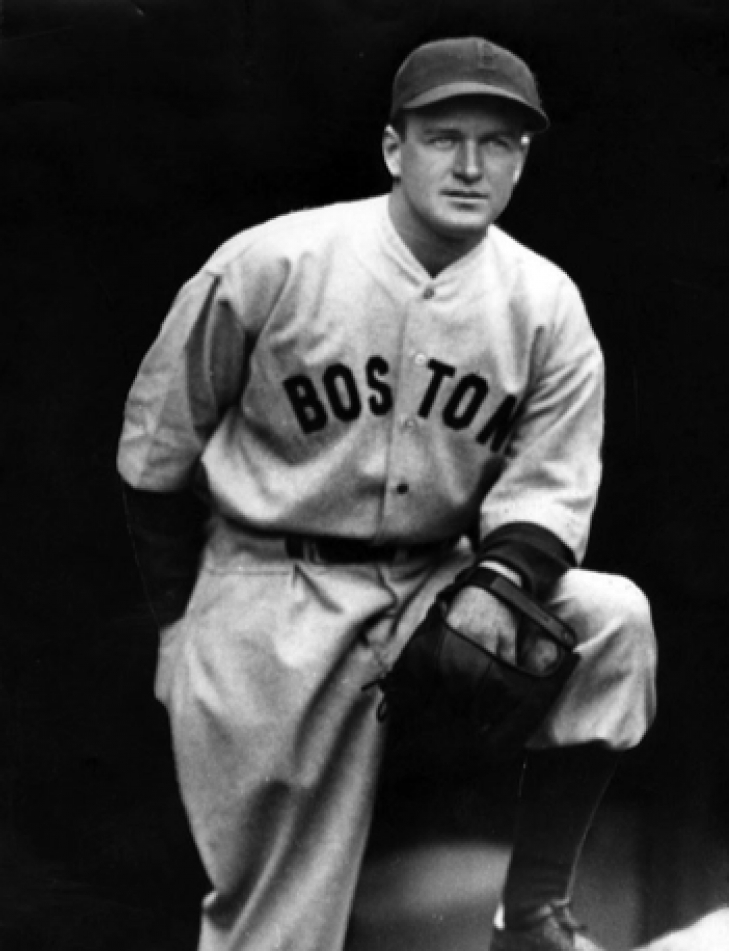
Joe Cronin arrived in Boston in 1935 not just as an elite shortstop, but as the "Field General" charged with transforming the franchise. After a runner-up MVP finish in Washington, the Red Sox traded for Cronin to lead both their defense and their dugout. Despite a leg injury that hampered his 1936 season, he authored a five-year peak (1937–1941) that redefined the offensive ceiling for his position. During this stretch, he was a metronome of productivity, never recording fewer than 155 hits, 16 home runs, or 94 RBIs in a full season.

Cronin was a five-time All-Star in Boston, consistently batting over .300 while posting a massive .394 On-Base Percentage.  He also set a franchise record on July 9, 1939, by recording an RBI in twelve consecutive games. This ability to drive in runs at a historic clip while handling the mental rigors of managing made him the most valuable "double-threat" in the American League.

While his playing career effectively ended with a broken leg in 1945, his leadership propelled the Red Sox to the 1946 American League Pennant. Even in the later stages of his career, he remained a high-leverage weapon; in 1943, he set an AL record with five pinch-hit home runs, including two in a single doubleheader. This "clutch" gene ensured that his presence was felt in every critical inning, whether he was in the field or on the top step of the dugout.

Cronin’s legacy is woven into the very fabric of Fenway Park. He served the organization for decades as a player, manager, and eventually General Manager, before becoming the President of the American League. For his unparalleled contributions, he was inducted into the Baseball Hall of Fame in 1956. In a historic ceremony on May 29, 1984, the Red Sox retired his Number 4 alongside Ted Williams’ Number 9, the first two numbers ever retired by the franchise.

34. Dutch Leonard

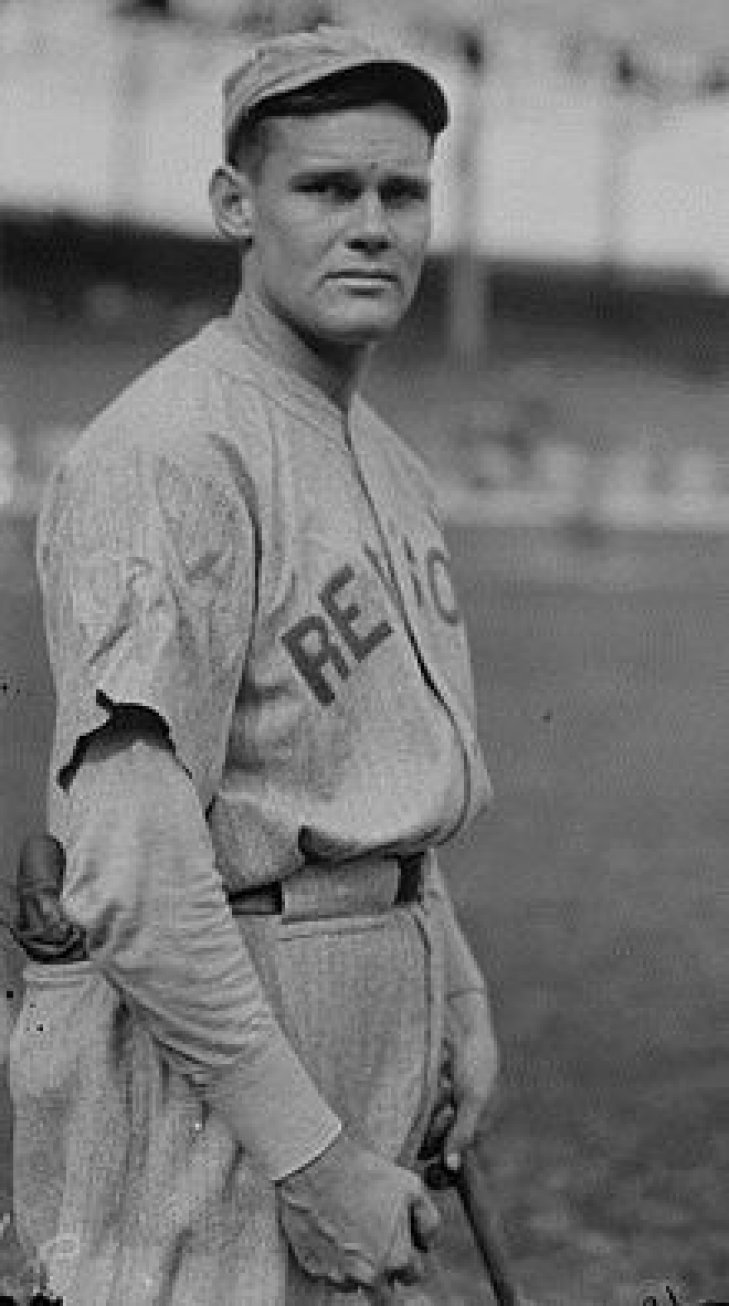
Hubert "Dutch" Leonard arrived in Boston in 1913 and immediately established himself as a left-handed force. Following a stellar rookie campaign, he authored a sophomore season in 1914 that defies modern comprehension. Leonard went 19–5 and set a Major League record with a 0.96 ERA—a mark that remains the lowest in the live-ball or deadball era for any pitcher with at least 200 innings paired that microscopic ERA with league-leading marks in FIP (1.95), WHIP (0.886), and Strikeouts per 9 (7.1).

Leonard was the engine behind the 1915 and 1916 World Series titles. While the Red Sox rotation was deep, Leonard was their postseason "Closer" before the role existed. He was a collective 2–0 with a 1.00 ERA in Fall Classic play, including a brilliant performance in 1915, where he helped dismantle the Phillies. His ability to maintain a 2.13 career ERA in Boston during a stretch when he faced some of the greatest contact hitters in history marks him as a premier talent.

His story is one of peak brilliance followed by the era's typical roster churn. Before his famous feud with Ty Cobb in Detroit or his move to the Yankees, Leonard was the left-handed anchor of Fenway Park. He threw two no-hitters in a Red Sox uniform, one in 1916 and another in 1918, joining an elite tier of "hurlers who possessed the ‘swing-and-miss' stuff necessary to dominate without the help of his defense.

Leonard left Boston with a 90–64 record and 771 strikeouts. Though his tenure was shorter than some of the "Lifers" in the Lab, his concentration of excellence was so high that he was finally inducted into the Red Sox Hall of Fame in 2012.


40. Jason Varitek

Jason Varitek’s journey to Boston began with a 1997 trade-deadline deal that is now viewed as one of the greatest heists in franchise history. Originally a 14th-round pick by Seattle, Varitek arrived in New England and quickly transformed from a promising prospect into the tactical brain of the Red Sox. By 1999, he was the starting catcher for a team hungry for a title, proving that while he wasn't always the loudest bat in the lineup, he was undoubtedly the smartest mind behind the plate.

His peak arrived in 2005, a "Career Year" that saw him earn both the Gold Glove and Silver Slugger awards. That season, he hit .281 with 22 home runs, earning his second of three All-Star nods.  He was also a master of game-calling, famously leading the American League in catcher ERA four separate times. His ability to guide a staff was historic; he stands alone as the only catcher in MLB history to be behind the plate for four separate no-hitters (Nomo, Lowe, Buchholz, and Lester).

Varitek was named the fourth captain in Red Sox history, joining the immortal ranks of Carl Yastrzemski and Jim Rice. This wasn't a symbolic gesture; it was a recognition of the grit he displayed in high-leverage moments, perhaps most iconically during a July brawl with Alex Rodriguez that many credit as the turning point for the 2004 "Curse-Breaking" season. As a "Lifer" who spent all 15 seasons in Boston, he became the face of the franchise’s defensive soul.

Varitek retired in 2011 with two World Series rings and the respect of every pitcher who ever threw to him. He left the game with 193 home runs and 1,307 hits, ranking among the franchise leaders in nearly every major category for catchers. Inducted into the Red Sox Hall of Fame in 2016, he remains the yardstick for leadership in New England.

Subscribe to this RSS feed