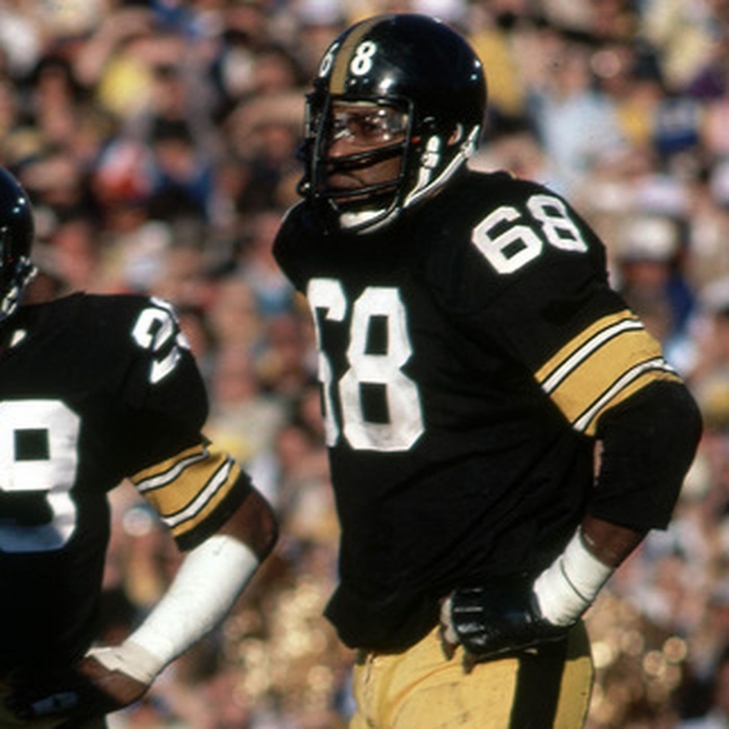
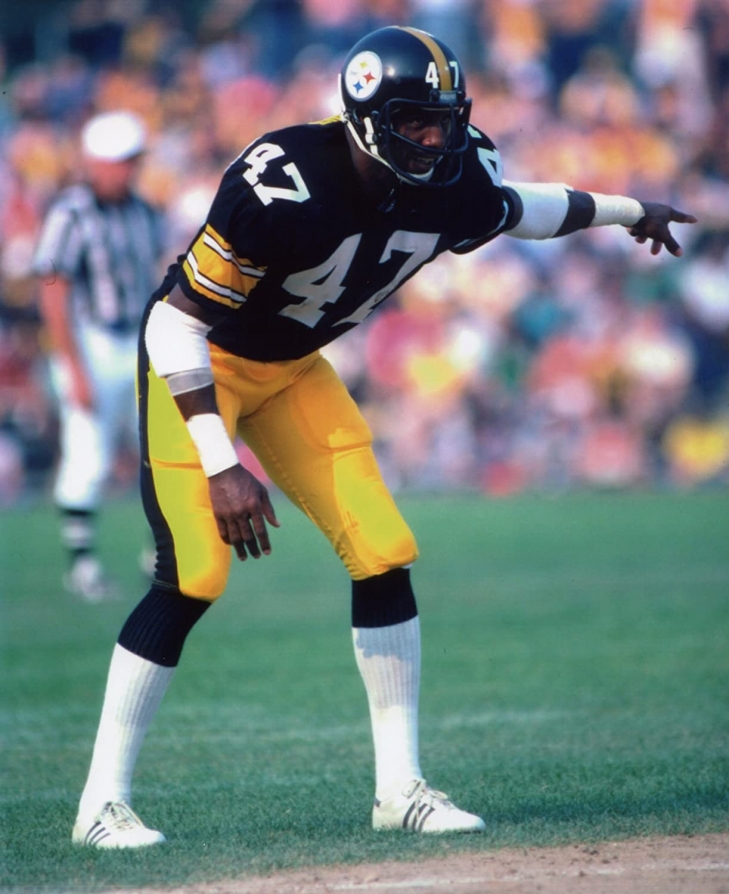
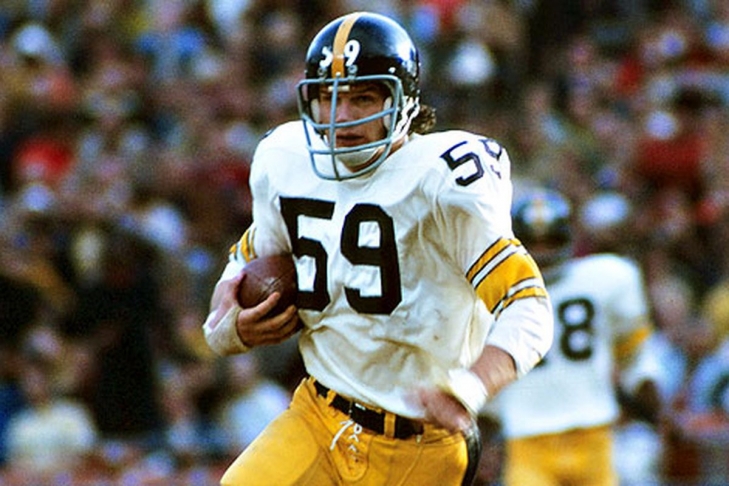
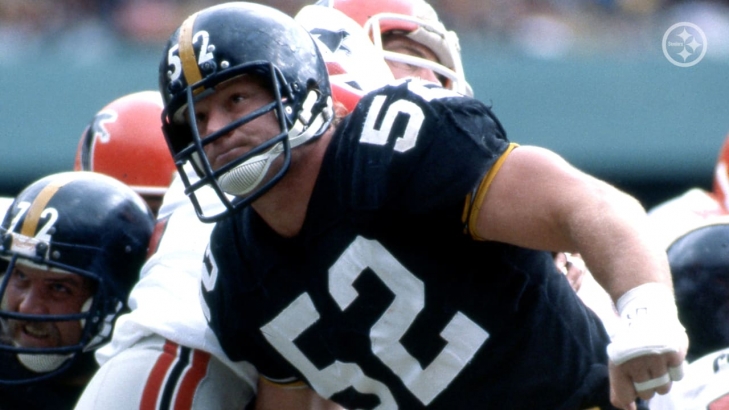
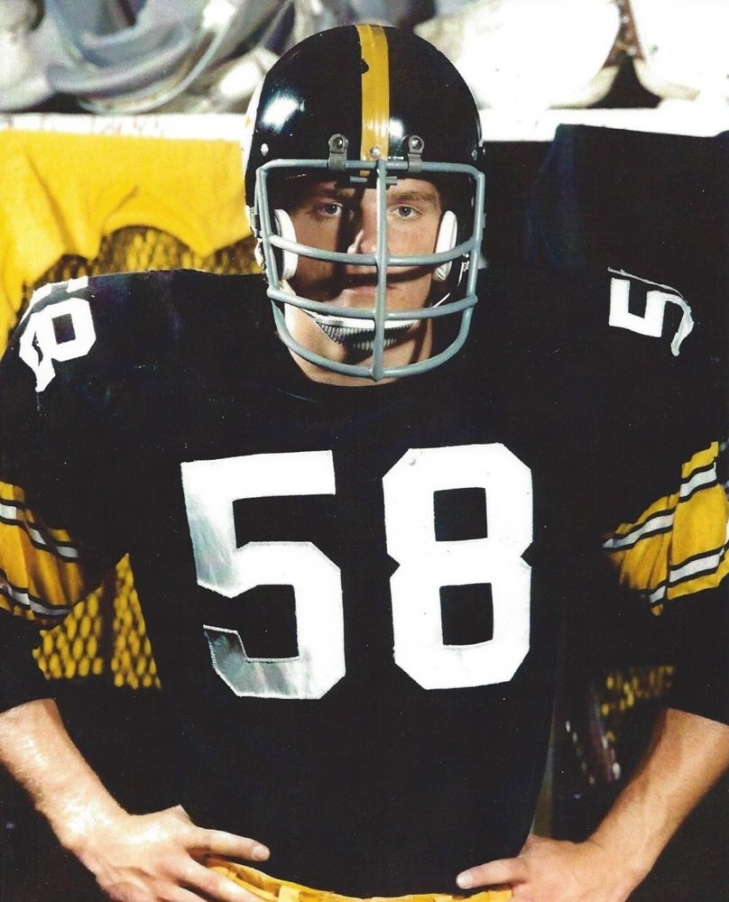
The Pittsburgh Steelers already possessed a formidable defense when they selected Jack Lambert in the second round of the 1974 draft. He had been the Mid-American Conference Defensive Player of the Year two seasons earlier at Kent State, and he arrived with the physical style and instincts the team needed at middle linebacker. Lambert became the starting middle linebacker early in his rookie season and earned Defensive Rookie of the Year recognition. The performance confirmed that the second-round pick had immediately filled a critical role on a unit that was already among the league’s best.
He proved to be the final piece of the puzzle for the Steelers’ dynasty. Alongside Joe Greene, Terry Bradshaw, and Franco Harris, Lambert helped Pittsburgh win the Super Bowl in his rookie year. That title was the first of four the franchise captured during the decade, and Lambert was at the heart of the defense in each. He diagnosed plays quickly, filled gaps against the run, and delivered hits that made ball carriers hesitate before they reached the second level. Offenses found it increasingly difficult to attack the middle of the field once he settled in as the starter.
Lambert became known as one of the hardest and most feared hitters in the league. He won the Associated Press Defensive Player of the Year award in 1976, and many observers regarded him as the top dog of the Steel Curtain by that point, even with Greene still on the roster. From 1975 through 1983, he earned Pro Bowl selections every season. He added five more first-team All-Pro honors from 1979 through 1983 on top of the one he received in 1976. The sustained recognition reflected both the individual excellence and the leadership he brought to a defense that remained among the league’s best throughout that stretch.
His style of play was built on aggression and anticipation. Lambert attacked the line of scrimmage with a ferocity that disrupted blocking schemes, and he was equally effective dropping into coverage on intermediate routes. That combination of range and physicality let him cover ground quickly and finish plays with authority. Younger teammates on the defense looked to him for direction, and his presence in the middle gave the edge rushers more freedom to attack the quarterback without as much concern about the run.
The Steelers continued to lean on him as the defense aged. Even as some of the original Steel Curtain members began to slow, Lambert remained a constant in the middle of the field. He still filled gaps, still delivered the hits, and still forced offenses to account for him on every snap. The Pro Bowl streak that ran through 1983 showed that his production and recognition had not faded, even as the supporting cast changed around him.
Severe turf toe in 1984 forced him to retire at the end of that season. It is reasonable to wonder how many more accolades he might have collected had the injury not ended his career. He left Pittsburgh after eleven seasons as one of the most accomplished middle linebackers in franchise history and as a central figure in four Super Bowl wins. The second-round pick, who won Defensive Rookie of the Year as a rookie, became the face of the Steel Curtain’s later championship teams.
In Pittsburgh, he earned nine Pro Bowl selections and six first-team All-Pro honors. He finished with an Approximate Value of 136 across 146 games, one of the better ratios of its kind. He also recorded 28 interceptions and 23.5 sacks. Those numbers, combined with his championship contributions, reflected both the individual excellence and sustained impact he brought over more than a decade in Pittsburgh.
Lambert was named to the 1970s and 1980s All-Decade Teams, the NFL 75th Anniversary Team, and the 100th Anniversary Team. He was inducted into the Pro Football Hall of Fame in 1990. The Steelers placed him in their Hall of Honor in 2017 as part of the inaugural class.