- Published in Top 50 Pittsburgh Steelers
1. Joe Greene
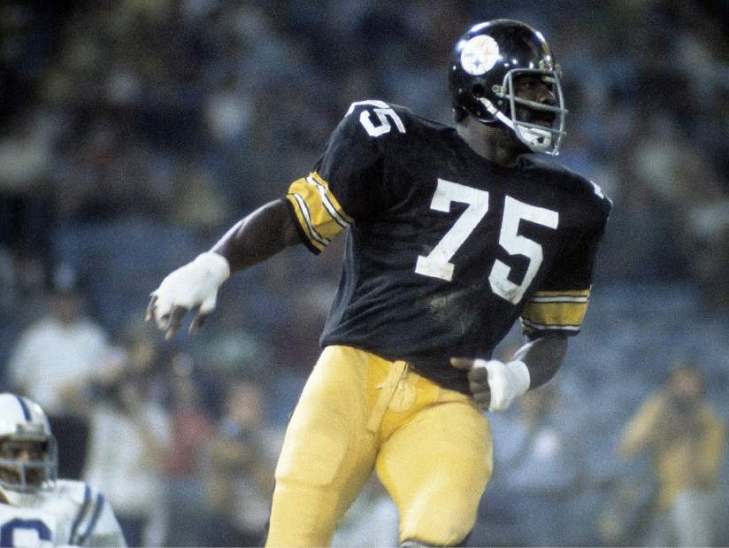
Many lists place “Mean” Joe Greene at the top of the Pittsburgh Steelers’ all-time rankings, and the choice can look automatic from a distance. The reality is more complicated. The franchise has produced a long line of Hall of Fame players, and several of them could reasonably claim the top spot. Still, when the question turns to who best embodies what a Steeler is supposed to be, Greene is difficult to top. He arrived as the fourth overall pick in 1969 out of North Texas and became the foundation of the Steel Curtain.
Everything changed when Greene and head coach Chuck Noll arrived that year. The Steelers had never won a championship despite decades in the league, and they had no winning culture. Greene later said he was not happy to have been drafted by Pittsburgh. The wins did not arrive immediately. The team finished with only one victory in his rookie season, yet Greene earned a Pro Bowl selection and was named Defensive Rookie of the Year. His individual production stood out on a roster still searching for an identity, and his presence on the interior already forced offensive lines to account for him on every snap.
The Steelers continued to add talent through the draft, and by 1972 they had assembled one of the most dominant defensive lines the league has ever seen. The Steel Curtain had arrived, and the team was suddenly a Super Bowl contender. Greene won the Defensive Player of the Year award that season. He combined size, quickness, and a violent first step that allowed him to disrupt plays before they developed. He was equally effective against the run and the pass, collapsing pockets from the inside and stuffing ball carriers at the line of scrimmage. Two years later, he won Defensive Player of the Year again, and 1974 proved to be a far more special year for the franchise.
The Steelers delivered on their promise by winning the Super Bowl, and they repeated the feat the following season. With Greene as the leader of the defense, they added two more titles before the decade ended. The unit remained the most feared in football throughout that stretch. Offenses had to double-team him or risk having the play blown up before it started, and his presence allowed the rest of the front seven to attack with more freedom. He led by example, often without saying much, and the defense played with more physicality and discipline whenever he was on the field.
Greene’s impact extended beyond the field. The famous Coca-Cola commercial that aired in 1979, in which a young fan offered him a bottle and received a jersey in return, turned him into a household name even among people who did not follow football closely. The ad reinforced the idea of the tough, intimidating Steeler who still possessed a softer side, and it remains one of the more memorable sports commercials of its era. His nickname and persona made him one of the more recognizable defensive players of the 1970s.
Injuries eventually accumulated. Greene retired after the 1981 season. He left Pittsburgh after thirteen years as the clear anchor of the defensive line and the player around whom the Steel Curtain was built. The fourth overall pick, unhappy with his destination, became the face of the franchise’s rise from perennial loser to four-time champion.
With the Steelers, he earned ten Pro Bowl selections and was credited with 78.5 unofficial sacks. Those numbers reflected both the individual excellence and the sustained impact he brought across more than a decade in Pittsburgh. He finished as one of the most decorated defensive tackles of his generation.
Greene entered the Pro Football Hall of Fame in 1987. Thirty years later, he was named to the Steelers Hall of Honor. He is one of only three players in franchise history to have his number retired. Where would Pittsburgh be without him?