Menu
A+ A A-
Site Admin

Site Admin

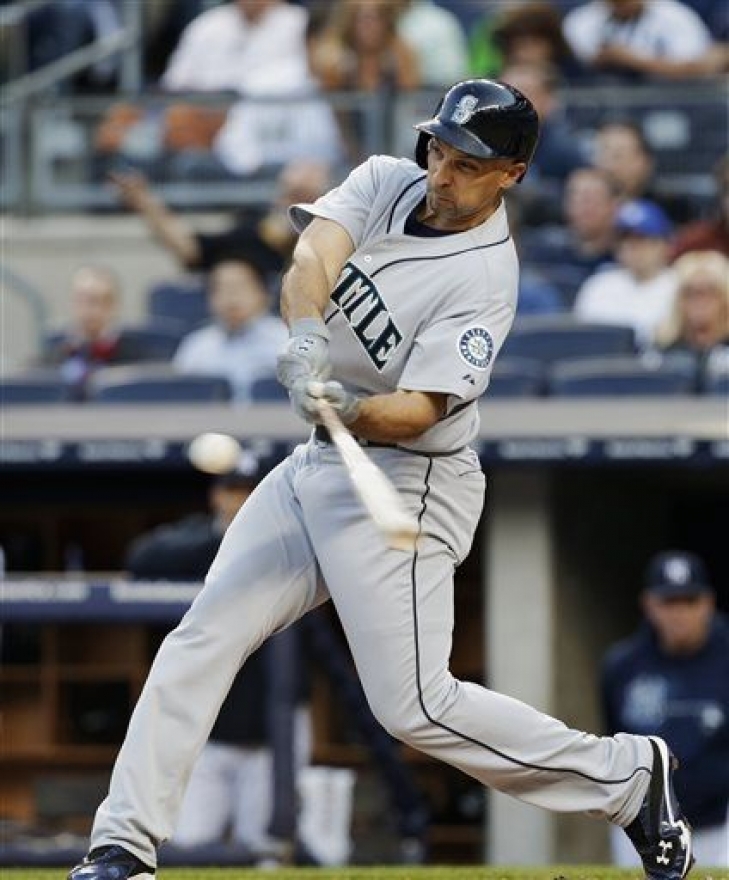
8. Kyle Seager

In an organization once known for legendary icons that mesmerized the baseball world, a quiet and remarkably consistent infielder from North Carolina demonstrated that a franchise can thrive with a humble, workmanlike mindset. Picked by the Seattle Mariners in the third round of the 2009 amateur draft, Kyle Seager spent his entire 11-season MLB career quietly fulfilling his role, avoiding the spotlight. After making his debut in summer 2011, the left-handed hitter secured the starting third baseman position the following spring, beginning a decade of reliable performance that offered vital stability during a highly transitional period in Pacific Northwest baseball history.

Seager was seldom considered a flashy, transcendent superstar, but he made offensive reliability a consistent daily habit. When he took over the starting role in 2012, he instantly hit 20 home runs, starting a remarkable streak of hitting at least 20 homers in nine of his ten full major league seasons.

His career's greatest evolutionary breakthrough occurred during an outstanding 2014 regular season. Seager dominated the middle of the Seattle lineup, hitting 25 home runs, 27 doubles, and a personal best of 96 RBIs. This impressive performance earned him his first All-Star selection, a top-20 spot in the American League MVP voting, and a seven-year, $100 million contract extension, securing his future as a Mariner.

Nevertheless, an exclusive focus on his consistent batting performance provides only a partial account of his multifaceted impact. At the hot corner, Seager established an outstanding defensive reputation through exceptional reflexes, strategic positioning, and a powerful throwing arm. He earned an American League Gold Glove Award during his remarkable summer of 2014, leading all AL third baseman in Total Zone Runs.

He was a key figure on the infield grass, leading all junior circuit third basemen in assists and double plays three times, providing a reliable presence for the entire defense. Seager carried that dependable performance into 2016, delivering his best all-around season with a career-high .278 batting average, 30 home runs, and 99 RBIs, contributing to a strong 6.9 position-player bWAR.

The final chapter of his career in 2021 provided an emotional, power-packed finale beneath the T-Mobile Park rafters. While his contact metrics experienced a natural, age-related regression, resulting in a modest .212 batting average, Seager compensated entirely by maximizing run production. He unleashed an unadulterated display of muscle during his age-33 season, hammering a career-high 35 home runs and driving in 101 runs.

Seager left baseball with 1,395 hits and 242 home runs.  

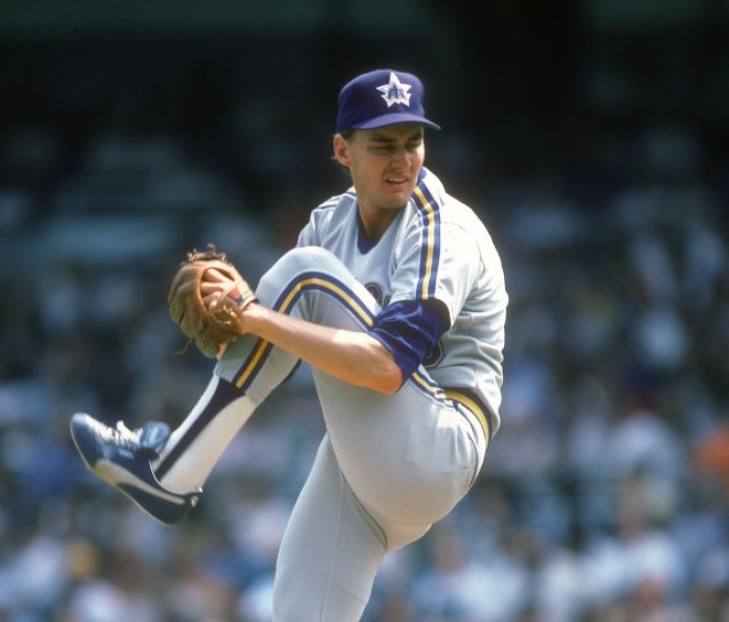
7. Jamie Moyer

While some pitchers treat the mound like a launching pad for raw velocity, a master of deception and precision proved that the art of change-of-speed can completely dismantle big-league offenses for decades. Jamie Moyer constructed an astonishing 25-year major league career, spending his first ten seasons drifting through five different organizations as a respectable but somewhat unfulfilled arm. That narrative was permanently altered during the summer of 1996, when the Seattle Mariners acquired the left-hander from the Boston Red Sox in a trade-deadline deal. Arriving in the Pacific Northwest at age 33, Moyer didn't just find a new team; he unlocked the most dominant, volume-dense chapter of his life on the diamond, orchestrating a masterful decade of pitch sequencing that left American League hitters thoroughly exasperated.

His debut in the starting rotation served as a masterclass in quick tactical adjustments. In his first full summer with the Mariners in 1997, Moyer puzzled opponents by consistently hitting the corners of the strike zone, posting an impressive 17–5 record with a 1.178 WHIP. Instead of a fleeting peak, this soft-throwing southpaw made steady performance a daily habit under the roofs of Kingdome and Safeco Field.

He consistently surpassed the 15-win mark four times for Seattle, highlighted by consecutive 20-win seasons later in his tenure. He achieved an impressive 20–6 record during the historic 2001 team's 116-win season, and in 2003, he added a remarkable 21–7 regular-season record. Moyer operated with a fastball that barely breached the low 80s, yet his profound spatial awareness and lethal changeup allowed him to miss barrels entirely, accumulating 1,239 strikeouts during his tenure in a Mariners uniform.

Naturally, his hardware-certified authority deep in the counts drew extensive national recognition. Moyer captured three top-six finishes in the American League Cy Young Award balloting during his Pacific Northwest peak, finishing fifth in 1998, fourth in 2001, and fifth in 2003. His spectacular 2003 season also earned him his first career All-Star selection, but his lasting legacy that summer was forged by his immense character off the field. He put together an unprecedented clean sweep of baseball's most prestigious humanitarian honors, capturing the Lou Gehrig Memorial Award, the Hutch Award, and the Roberto Clemente Award for his profound community service and charitable foundations. He backed up that legacy by earning the Branch Rickey Award the very next autumn.

Moyer was traded to the Philadelphia Phillies during the 2006 season, and at age 45, he would help them win the World Series.  As a Mariner, he went 145-87 in 2,093 Innings Pitched.  The M's would induct Moyer into their Hall of Fame in 2015.

6. Alex Rodriguez

Before the global name recognition, the multi-million-dollar contracts, and the heavy storms of controversy defined his national profile, a generational prodigy in the Pacific Northwest put together arguably the greatest age-indexed start to a career in the sport's history. Selected first overall by the Seattle Mariners in the 1993 amateur draft, Alex Rodriguez was such an advanced physical specimen that he reached the major leagues as an 18-year-old infielder the following summer. Recognizing his immense ceiling, the front office allowed him to refine his daily routine in the minor leagues before unleashing him completely as the everyday starting shortstop in 1996. What followed was a blinding, high-velocity introduction that fundamentally transformed the modern expectation of his position.

His first full summer in Seattle was a remarkable display of offensive power and efficiency. At only 20 years old, Rodriguez dominated American League pitching to win the 1996 batting title with a stunning .358 average, becoming the third-youngest player to earn the title. He set the pace for the entire team, scoring 141 runs, hitting 54 doubles, and hitting 36 home runs while driving in 123 RBIs. This outstanding performance earned him a Silver Slugger Award, an All-Star selection, and a narrow second-place finish in the American League MVP voting.

Although his batting average slightly declined in 1997, he still achieved a .300 average with 23 home runs, earning another All-Star nod. His most notable power boost occurred in 1998, when he combined speed and strength effectively. That year, Rodriguez led the American League with 213 hits, hit 42 home runs, and stole 46 bases—signifying a major development in his game. With these stats, he became only the third player in baseball history to join the 40-40 club, using his sharp spatial awareness to outmaneuver catchers and pitchers. Advanced analytics strongly supported his top-tier status that summer, as he topped the American League in position-player bWAR.

He maintained that frontline authority through an injury-shortened 1999 season, hitting another 42 home runs in just 129 games. His last appearance in a Seattle uniform in 2000 was another exceptional performance; he hit 41 home runs, set a personal best with 100 walks, led the league in bWAR for the second time, and finished third in MVP voting.

To maintain a realistic narrative, Rodriguez faced heavy criticism for his postseason performance, yet his October appearances in the Pacific Northwest proved to be notably clutch. During his three full playoff series with the Mariners, he consistently batted over .300 in each, offering reliable performance during the sport's most significant moments.

Following the 2000 postseason, the inevitable business exit arrived. As a 25-year-old free agent, Rodriguez departed Seattle to sign a historic, record-breaking contract with the Texas Rangers, drawing a definitive curtain on his time in the Emerald City.  With Seattle, Rodriguez compiled 966 hits, 189 home runs, and 595 RBIs alongside an exceptional .309/.374/.561 slash line in 794 games.

5. Randy Johnson

The Montreal Expos made what turned out to be a monumentally shortsighted decision when they traded a raw, erratic, 6-foot-10 left-hander to the Seattle Mariners early in the 1989 season. Randy Johnson was a literal and figurative giant on the mound, but his early years in the Pacific Northwest were defined by a frustrating paradox: an unhittable fastball paired with a complete lack of mechanical control. The "Big Unit" possessed an intimidating, low-three-quarters release point that terrified left-handed hitters, but he spent his first few seasons continuously fighting his own massive frame to find the strike zone.

His first full summer in Seattle in 1990 provided an immediate glimpse of this volatile baseline, as he earned All-Star selection and won 14 games with 194 strikeouts while leading the American League with 120 walks.

The pattern intensified over the subsequent two years. Johnson accumulated 228 strikeouts in 1991 and 241 in 1992; however, his inconsistent mechanics led to a significant number of free passes, totaling 152 and 144, respectively. Nevertheless, the 1992 season represented a pivotal moment; despite issuing walks, he secured his first American League strikeout title, beginning a formidable four-year dominance atop the leaderboard.

The legendary trajectory of his career was altered permanently in late 1992, thanks to a legendary dugout intervention by fellow power-pitcher Nolan Ryan and Mariners pitching coach Tom House. Ryan suggested a slight mechanical adjustment to Johnson’s landing foot to align his body toward home plate. The results were instantaneous and dramatic. By the spring of 1993, the Big Unit had harnessed his high-velocity arsenal. He emerged as a terrifyingly efficient frontline ace, winning 19 games and becoming the first Mariner to eclipse the 300-strikeout milestone with a spectacular 308 punchouts.

His newfound command culminated in a historic, award-winning 1995 campaign that carried the Mariners into the national spotlight. Johnson secured his first career American League Cy Young Award by orchestrating an incredible 18–2 record, pacing the league with a microscopic 2.48 ERA. His advanced efficiency metrics were entirely unrivaled; he dominated the league with a 1.045 WHIP and a 2.08 FIP, culminating in a legendary, heroic relief appearance in Game 5 of the American League Division Series against the Yankees to secure Seattle’s first postseason series victory.

While a severe back injury sidelined him for most of 1996, he rebounded with a magnificent 1997 showcase, winning 20 games with 291 strikeouts to anchor another postseason berth. However, by the summer of 1998, with free agency looming and relations with ownership souring, his performance temporarily dipped. Recognizing an impending career exit, the front office traded its iconic ace to the Houston Astros at the July deadline.

If there is a criticism of Johnson as a Mariner, it was that he was 0-6 for Seattle in the playoffs.  While it is not relevant here, he did shake his post-season demons with the Arizona Diamondbacks in 2001.

Johnson was inducted into the Baseball Hall of Fame in 2015, three years after the Mariners selected him to their Hall of Fame.