Menu
A+ A A-
Site Admin

Site Admin

14. Mark Langston

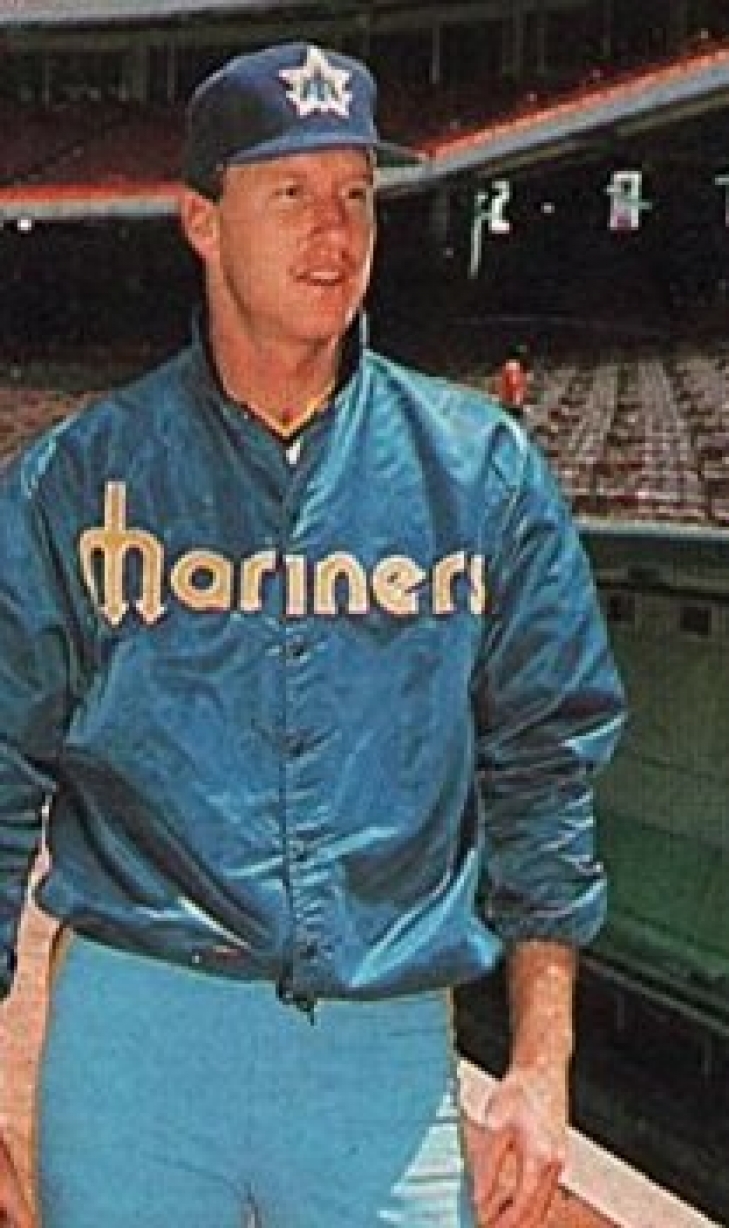
Selected in the second round of the 1981 amateur draft from San Jose State University, Mark Edward Langston did not simply ease his way onto the major league stage; he emerged prominently with a formidable, looping curveball and an exceptionally fast fastball that immediately transformed the competitive expectations of a young franchise. Throughout a concentrated, highly athletic five-and-a-half-season tenure, the dynamic southpaw served as the club's foremost strikeout artist, establishing a legacy as a formidable, reliable ace who consistently pushed his physical boundaries under the gray skies of Seattle.

His rookie debut in 1984 was truly impressive, showing right from the start that he could command the front of the card. Langston loved striking out batters and carried a strong 17–10 record with a sharp 3.40 ERA in 33 starts, impressively rallying a 74-win team behind him. Over 225 innings, he consistently challenged American League lineups, leading the circuit with 204 strikeouts and setting a modern rookie record for his franchise. Although his blazing fast pitches also led to 118 walks, his skill in working deep counts earned him a well-deserved second place for the American League Rookie of the Year award, surprisingly just behind his close teammate and roommate, Alvin Davis.

In 1985, Hampered by a minor elbow ailment, Langston struggled a bit with consistency, finishing with a 7–14 record and an ERA of 5.47. But he quickly bounced back and shined in the following years, leading the American League in strikeouts for two straight summers in 1986 and 1987. In 1986, he racked up an impressive 245 punchouts, and in 1987, he truly reached a career peak during an incredible regular season. That year, Langston demonstrated incredible stamina and durability, showcasing his hard work and resilience. He finished with a fantastic 19 wins and 13 losses, setting a franchise record by pitching 272 innings and throwing 14 complete games. His efficiency was remarkable, leading all of Major League Baseball with a career-high 262 strikeouts. This outstanding season earned him his first All-Star spot and a fifth-place finish in the American League Cy Young Award voting.

Langston was an elite, hyper-agile defender with a thunderous Arm, known for a lethal pickoff move to first base. He won consecutive American League Gold Glove Awards in 1987 and 1988 and added 235 strikeouts in 1988.

Langston leveraged his elite status for a big contract with the California Angels, earning three consecutive All-Star selections from 1991 to 1993 and building a decorated career. He left the Pacific Northwest with a strong record: 74–67, 51 complete games, and 1,078 strikeouts in 1,198.1 innings over 176 starts.

13. Freddy Garcia

When an organization determines it is appropriate to part ways with a legendary, once-in-a-generation left-handed icon, the obligation to extract maximum premium value from the market becomes paramount. The Seattle Mariners encountered precisely such a franchise-changing decision in July 1998, when they traded a discontented Randy Johnson to the Houston Astros. While the immediate concern centered on the regrettable departure of "The Big Unit," the most valuable component of the return package quickly arrived in Upper Manhattan via the Astros' minor league system. Equipped with an imposing 6-foot-4 stature and a powerful, high-velocity sinker, Freddy Antonio García did not merely fill the significant void left by a legend; the Venezuelan right-hander, universally recognized as "The Chief," evolved into the resilient, high-performance engine of the most successful regular-season team in the modern history of the sport.

His inaugural 1999 rookie season was a remarkable demonstration of immediate, frontline dominance that caused considerable and enduring seller's remorse among the Houston front office. García established a disciplined daily routine of logging significant innings, elevating the pitching staff and compiling an impressive 17–8 record over 33 starts. He systematically dismantled American League lineups over 201.1 innings, amassing 170 strikeouts and achieving a noteworthy second-place finish to Carlos Beltrán for the American League Rookie of the Year award, while also securing a prominent ninth-place position in the AL Cy Young Award voting.

The 2000 schedule was tough; he suffered a severe stress fracture in his throwing elbow, restricting him to only 21 games. Despite this setback, he displayed the legendary grit that characterized his career, finishing with a 9–5 record in the final stretch, helping the Mariners reach the October postseason.

Garcia had an unforgettable 2001 season. As the Mariners celebrated a record-breaking 116 wins, Garcia proudly stood out as the team's top pitcher, gaining well-deserved recognition everywhere. He showed incredible defensive skill and worked tirelessly, pitching an impressive 238.2 innings. Garcia regularly challenged opposing batters, winning 18 games with only six losses. He also earned the prestigious American League ERA title with a tiny 3.05 and kept a solid 1.123 WHIP, highlighting his talent and dedication. This outstanding performance earned him his first career All-Star selection, presented to him in front of his passionate home fans at Safeco Field, culminating in a fantastic third-place finish in the American League Cy Young Award voting.

García sustained that frontline authority into the 2002 campaign, using his devastating split-finger fastballs to secure a second consecutive All-Star nod. He systematically neutralized lineups across 34 assignments, forging a strong 16–10 record with a career-best 181 strikeouts over 223.2 frames, confirming his status as one of the premier right-handed workhorses in the game.

However, as the organization commenced navigating a prominent and comprehensive competitive decline over the following two summers, the unavoidable exit from the business transpired. With his contractual obligations approaching their conclusion, the front office orchestrated a significant trade in June 2004, exchanging their longstanding ace to the Chicago White Sox for a package predominantly comprising Michael Morse and Miguel Olivo. This transaction marked the definitive conclusion of his historic tenure in Seattle.

García accumulated exactly 76 victories against 50 defeats, maintaining a sharp 3.89 ERA and a 1.314 WHIP while fanning 819 batters in 1,091.2 innings of work.

12. Robinson Cano

When a brave and ambitious front office team is eager to show that their franchise is ready to move past rebuilding and start competing with the top teams, they make a bold statement in the open market. In December 2013, the Seattle Mariners did just that, surprising the baseball world by signing star second baseman Robinson José Canó with a huge 10-year, $240 million deal. Coming to the Pacific Northwest with five All-Star appearances and a 2009 World Series ring from his time with the New York Yankees, this talented player, already over 30 years old, still had plenty of top-level skills to share with the fans in Emerald City. Over five intense seasons, he became the smooth, highly effective heartbeat of the Mariners' lineup, showing off his amazing hitting skills and graceful defense.

His first season in 2014 with the Mariners was truly impressive, showcasing his immediate impact and skill. Canó turned hitting into an art, smoothly adapting to Safeco Field’s big dimensions by collecting 187 hits and 37 doubles. He skillfully dismantled American League pitchers, achieving a fantastic .314 batting average, driving in 82 runs, and using his keen zone awareness to draw 61 walks. His efficient play powered the team’s offense, earning him his sixth straight All-Star nod and a proud fifth-place finish in the American League Most Valuable Player voting.

Despite dealing with serious gastrointestinal issues and a sports hernia that affected his power during a transitional summer in 2015, Canó truly reached his peak in an unforgettable 2016 season. Fully healthy and confidently swinging his signature, effortless left-handed bat, he showcased impressive power in the middle of the lineup. Over 161 games, he consistently worked deep counts and demonstrated his strength by setting a career high with 39 home runs, along with 195 hits, 33 doubles, and 103 RBIs. His excellent slash line of .298/.350/533 resulted in a strong .883 OPS and a 138 OPS+, proving that even as an experienced second baseman, his powerful bat speed remained highly dangerous. He continued this form with another remarkable season in 2017, hitting 23 home runs and driving in 97 RBIs, highlighted by a memorable All-Star Game MVP performance where he hit a game-winning, 10th-inning home run in Miami.

The final chapter of his time in Seattle reached a highly turbulent, legacy-altering crossroads in 2018. Just as he was putting together a stellar campaign, a fractured bone in his right hand from a hit-by-pitch was immediately followed by a shocking, 80-game suspension for violating Major League Baseball's Joint Drug Prevention and Treatment Program. Though he returned later that summer to finish with a robust .303 average and 10 home runs in 80 games, the organizational fallout prompted a sudden, blockbuster roster reconstruction.

Seeking to clear future financial obligations, the front office packaged the veteran star with closer Edwin Díaz in a large trade to the Mets that December, ending his residency. Canó left Seattle with a remarkable stats record, including 821 hits, 159 doubles, 107 home runs, and 411 RBIs over 704 games, with a .296/.353/472 slash line.

9. Jay Buhner

When learning that his son (erroneously) was dead from George Steinbrenner, Frank Costanza’s first response on Seinfeld was:

“What the hell did you trade Jay Buhner for? He had 30 Home Runs, over 100 RBIs last year! He’s got a rocket for an arm! You don’t know what the hell you’re doing!”

How could we not open with this?

Frank Costanza was entirely right. The infamous July 1988 trade that sent Jay Campbell Buhner from the Bronx to the Pacific Northwest in exchange for Ken Phelps—who was out of baseball just two years later—stands as one of the most lopsided structural blunders in modern baseball history. Arriving in Seattle with a fierce, unadulterated competitive edge, the man affectionately known as "Bone" completely transformed his professional identity. Across a celebrated 14-year residency, the charismatic slugger became the raw, emotional heartbeat, the ultimate clubhouse enforcer, and the definitive power anchor of the most iconic era in franchise lore.

His initial period in Seattle did not produce immediate, rapid muscle growth, as he adapted to the demands of major league pitching on a daily basis. The pivotal breakthrough occurred in the 1991 season, when he surpassed the 20-home-run mark for the first time. Buhner consistently engaged in deep counts, turning this approach into a disciplined daily routine, and maintained or exceeded the 20-homer threshold for four consecutive summers. During this time, he established himself as an essential protective presence in the batting lineup for a young Ken Griffey Jr.

The peak of his hardware-certified legacy in evolution unfolded over an impressive three-year period from 1995 to 1997. He systematically dismantled American League pitching during the historic 1995 regular season, hitting 40 home runs and producing 121 RBIs with a commendable .566 slugging percentage, thereby securing a remarkable fifth-place position in the American League Most Valuable Player voting.

He carried that high-leverage devastation directly into the 1995 postseason, smashing another four home runs during the club's legendary "Refuse to Lose" playoff run that saved baseball in Seattle. He followed that up by unleashing even greater raw power during the 1996 schedule, hammering a career-high 44 home runs and driving in a monster 138 runs, before launching another 40 long balls with 109 RBIs in 1997.

The primary area where Buhner encountered substantial challenges under rigorous analytical scrutiny was his high-volume volatility. He was an extraordinarily effortful hitter who twice led the American League in strikeouts, returning to the dugout a remarkable 1,406 times while playing for the Mariners. Defensively, although Frank Costanza was entirely correct regarding his exceptionally strong throwing arm, Buhner displayed limited speed and lateral agility, frequently recording a defensive bWAR with negative values. Notably, during the summer of 1996, when he received his sole Gold Glove Award, he concluded that season with a -0.7 dWAR, demonstrating that his renowned throwing ability often concealed his underlying defensive metrics.

Trying to measure Buhner's legacy only through cold analysis really overlooks why he's such a beloved figure in our local culture. With his iconic shaved head and goatee—a look that was pretty unique in the sport back then—he shared a genuine, mutual love with the fans. The front office beautifully tapped into this natural fan enthusiasm by creating "Buhner Buzz Cut Night," a popular event where thousands of fans got free tickets to the Kingdome just for letting team barbers shave their heads—highlighting the strong connection between him and the community.

Following a series of severe hamstring and knee ailments late in his career, a definitive exit arrived when Buhner retired at the conclusion of the historic 104-win 2001 regular season. He departed from the field, leaving behind a formidable statistical legacy predominantly concentrated in the upper-left region of the map: a robust .494 slugging percentage, 951 hits, and exactly 307 home runs—a total that still ranks third in franchise history behind only Griffey and Edgar Martínez. Buhner retired in 2001, having amassed notable statistics including 307 home runs and a .497 slugging percentage. The Mariners honored the esteemed player by inducting him into their Hall of Fame in 2004.