Menu
A+ A A-

Our All-Time Top 50 Dallas Cowboys have been updated

Yes, we know that this is taking a while!

As many of you know, we here at Notinhalloffame.com are slowly generating the 50 of each major North American sports team.  That being said, we have existing Top 50 lists out and we always consistently look to update them when we can and based on necessity.  As such, we are very happy to present our pre-2021 revision of our top 50 Dallas Cowboys of all-time.

As for all of our top 50 players in football we look at the following: 

1.  Advanced Statistics.

2.  Traditional statistics and how they finished in the NFL. 

3.  Playoff accomplishments.

4.  Their overall impact on the team and other intangibles not reflected in a stat sheet.

This is our first revision after our inaugural unveiling, with only one slight elevation. There are no new entries.

1. Emmitt Smith

2. Bob Lilly

3. Roger Staubach

4. Randy White

5. Mel Renfro

You can find the entire list here.

The only jump was Running Back, Ezekiel Elliot, who advanced one spot to #47.

We welcome your input and commentsand as always, we thank you for your support.

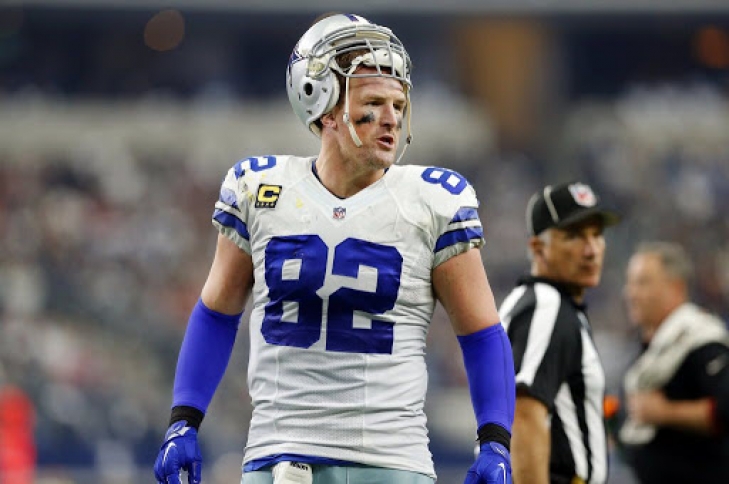
7. Jason Witten

Drafted in the 3rd Round out of Tennessee in 2003, Witten would see significant playing time in his rookie year, but in 2004 he would rise to Pro Bowl status with a 980 Yard season. This was the first of many seasons in which the Dallas Cowboys would consider him an elite Tight End.

From 2005 to 2010 he would be named to six more Pro Bowls, which would also include two First Team All Pro Selections. Four more Pro Bowls would follow (2012-14 & 2017). Four of his seasons would see Witten exceed over 90 Receptions and 1,000 Yards, incredible numbers for a Tight End.

Witten first retired after the 2017 season with 11 Pro Bowls and went into the broadcast booth for ESPN for their Monday Night Football package.  He unretired in 2019, joined the Las Vegas Raiders in 2020, and retired for good.

Witten retired as the all-time Cowboys leader in Receptions (1,215) and Receiving Yards (12,977), with 13,046 Yards and 74 Touchdowns in total, behind only Tony Gonzalez among Tight Ends.

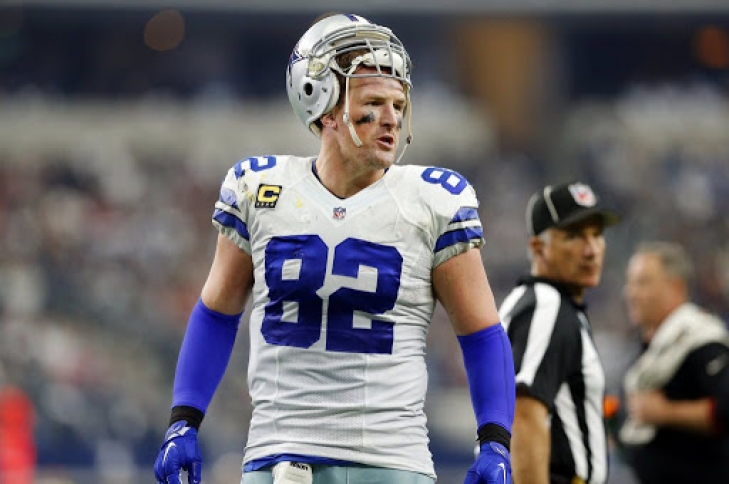
Jason Witten retires for a second time

We have another major retirement in the National Football League as Jason Witten has called it a career.

Drafted in the 3rd Round out of Tennessee in 2003, Witten would see significant playing time in his rookie year but in 2004 he would rise to Pro Bowl status with a 980 Yard season. This would be the first of many seasons where the Dallas Cowboy would be considered an elite Tight End.

From 2005 to 2010 he would be named to six more Pro Bowls, which would also include two First Team All Pro Selections. Four more Pro Bowls would follow (2012-14 & 2017). Four of his seasons would see Witten exceed over 90 Receptions and 1,000 Yards, incredible numbers for a Tight End.

Witten first retired after the 2017 season, and went into the broadcast booth for ESPN for their Monday Night Football package.  He unretired, coming back in 2019, and joined the Las Vegas Raiders last year.

Witten retires as the all-time Cowboys leader in Receptions (1,215) and Receiving Yards (12,977).  and he retires with 13,046 Yards and 74 Touchdowns in total.

With his 11 Pro Bowls and statistical accumulation he has an excellent shot at entering the Pro Football Hall of Fame in 2026. He will certainly have a prime position on our Notinhalloffame.com Football list.  In our 2020 pre-season rank of active players and their Hall of Fame credentials, Witten was placed #9 overall and #2 in Tight Ends behind Rob Gronkowski.

We will be creating his Notinhalloffame.com profile shortly in the 2026 section.

We here at Notinhalloffame.com would like to thank Jason Witten for all of the memories on the field and we wish him the best in his post-playing career.

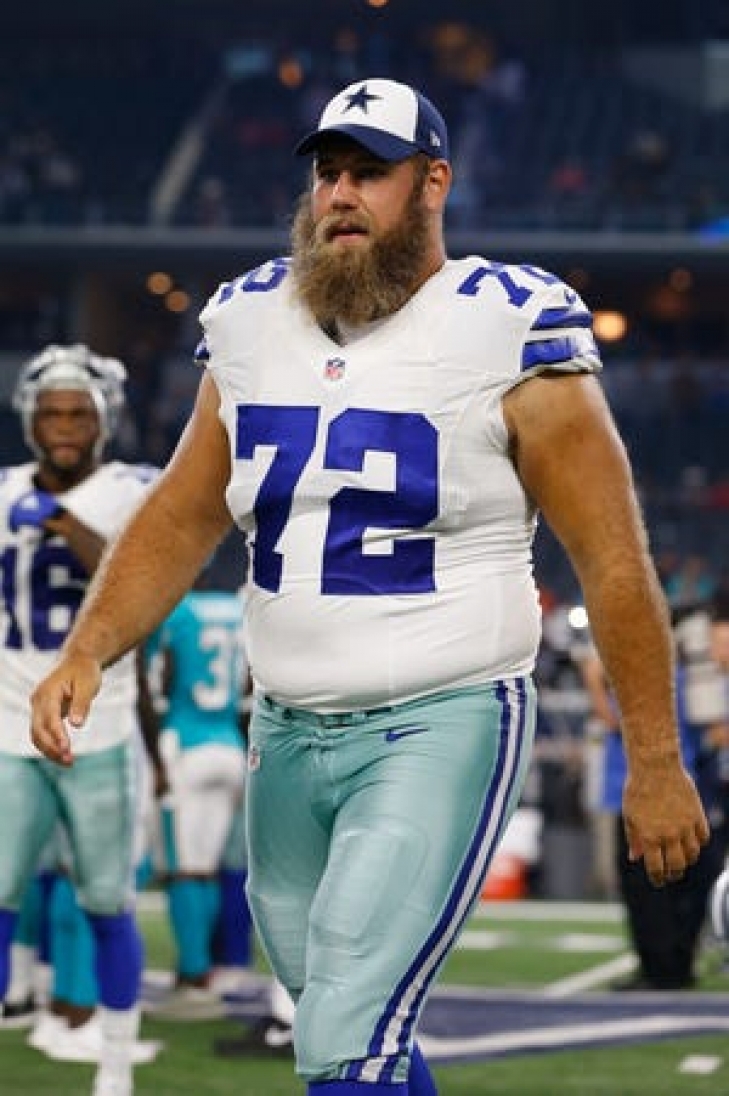
264. Travis Frederick

A late First Round pick from Wisconsin, Travis Frederick was an immediate starter for the Dallas Cowboys when he arrived in 2013.

Our All-Time Top 50 Dallas Cowboys are now up

Yes, we know that this is taking a while!

As many of you know, we here at Notinhalloffame.com are slowly generating the 50 of each major North American sports team.  We have a new one to unveil today, that of the Dallas Cowboys. 

Known to many as America’s Team, the Cowboys are one of the most recognized professional sports programs on the globe.  Formed in 1960, the Cowboys have won five Super Bowls (VI, XII, XXVII, XXVIII & XXX), and when they play, regardless of their record, NFL fans pay attention.

As for all of our top 50 players in football we look at the following: 

1.  Advanced Statistics.

2. Traditional statistics and how they finished in the NFL.

3. Playoff accomplishments.

4. Their overall impact on the team and other intangibles not reflected in a stat sheet.

Remember, this is ONLY based on what a player does on that particular team and not what he accomplished elsewhere and also note that we have placed an increased importance on the first two categories.

This list is updated up until the end of the 2019 Season.

The complete list can be found here, but as always we announce our top five in this article.  They are:

1. Emmitt Smith

2. Bob Lilly

3. Roger Staubach

4. Randy White

5. Mel Renfro

We will continue our adjustments on our existing lists and will continue developing our new lists.  Up next, will be the Seattle Seahawks.

Look for our more material coming soon!

As always we thank you for your support.

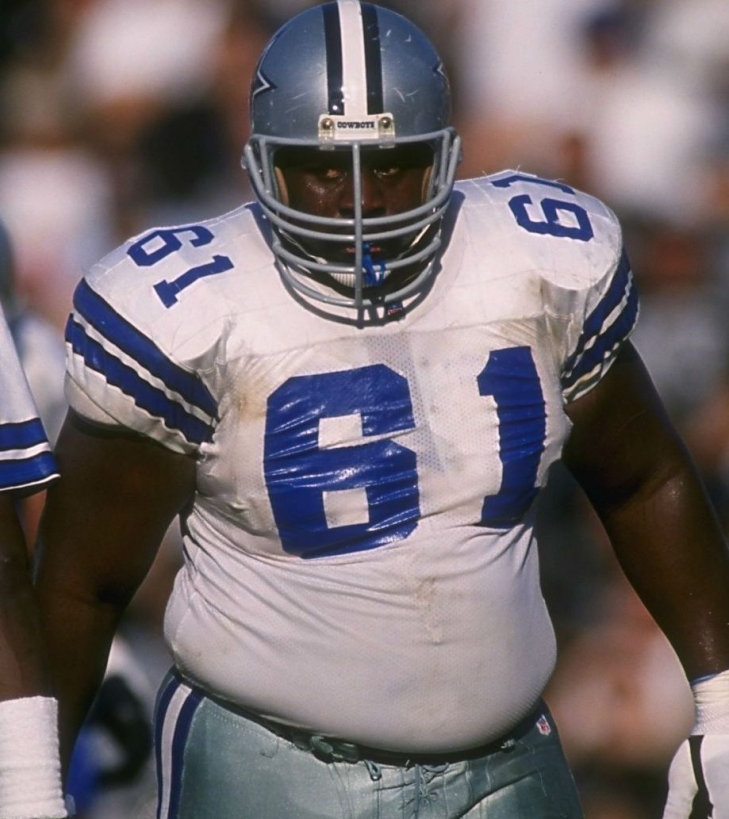
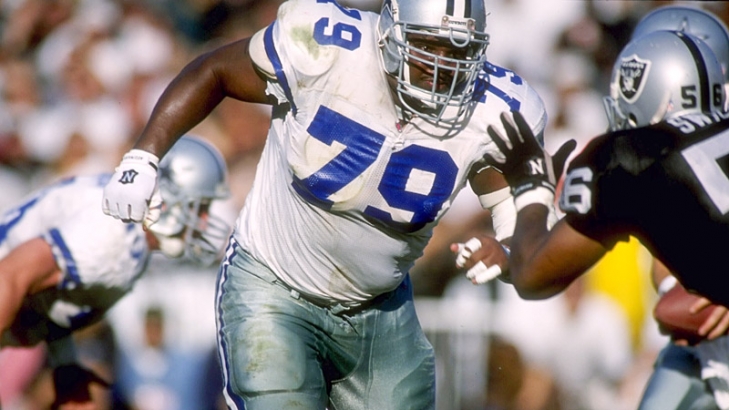
26. Nate Newton

After graduating from Florida A&M in 1983, Nate Newton was not selected in the NFL draft and was overlooked by talent scouts. He initially signed as an offseason free agent with the Washington Redskins but was released before the start of the regular season. Not willing to give up on a professional football career, Newton found another opportunity with the United States Football League, signing with Steve Spurrier's Tampa Bay Bandits. The lineman, who weighed over 300 pounds, excelled during the USFL's 1984 and 1985 seasons, earning a place on the All-Time USFL Team and gaining the nickname "The Kitchen," a fun reference to Chicago's William "The Refrigerator" Perry, because of Newton’s size.

When the USFL folded, the Dallas Cowboys signed Newton in 1986. He earned the starting left guard spot in 1987 and held the role for three seasons before Jimmy Johnson arrived and moved him to right tackle for two years. While Newton was always a massive, physical presence, his career trajectory shifted when Johnson famously challenged his conditioning. Newton trimmed down, refined his technique, and returned to left guard in 1992 to help solidify the legendary unit known as "The Great Wall of Dallas."

Working alongside Mark Tuinei, Mark Stepnoski, Erik Williams, and eventually Larry Allen, Newton became a formidable interior player. He blended powerful run-blocking with surprisingly agile pass protection, regularly creating large running lanes for Emmitt Smith and maintaining strong protection for Troy Aikman. This impactful period earned him six Pro Bowl selections (1992–1996, 1998) and consecutive First-Team All-Pro honors in 1994 and 1995, during which Dallas won three Super Bowls in four years (XXVII, XXVIII, and XXX).

Newton remained a rock on the Cowboys' front line through the 1998 season, anchoring the interior despite coaching changes and roster turnover. He spent his 14th and final NFL season in 1999 with the Carolina Panthers before injuries forced his retirement, ending a remarkable journey from an unheralded minor-league blocking prospect to a multiple-time champion.

With Dallas, Newton appeared in 191 regular-season games and started 180, plus 18 postseason contests. A six-time Pro Bowler, two-time First-Team All-Pro, three-time Super Bowl champion, and 2022 Black College Football Hall of Fame inductee, Newton stands as one of the ultimate success stories in franchise history.

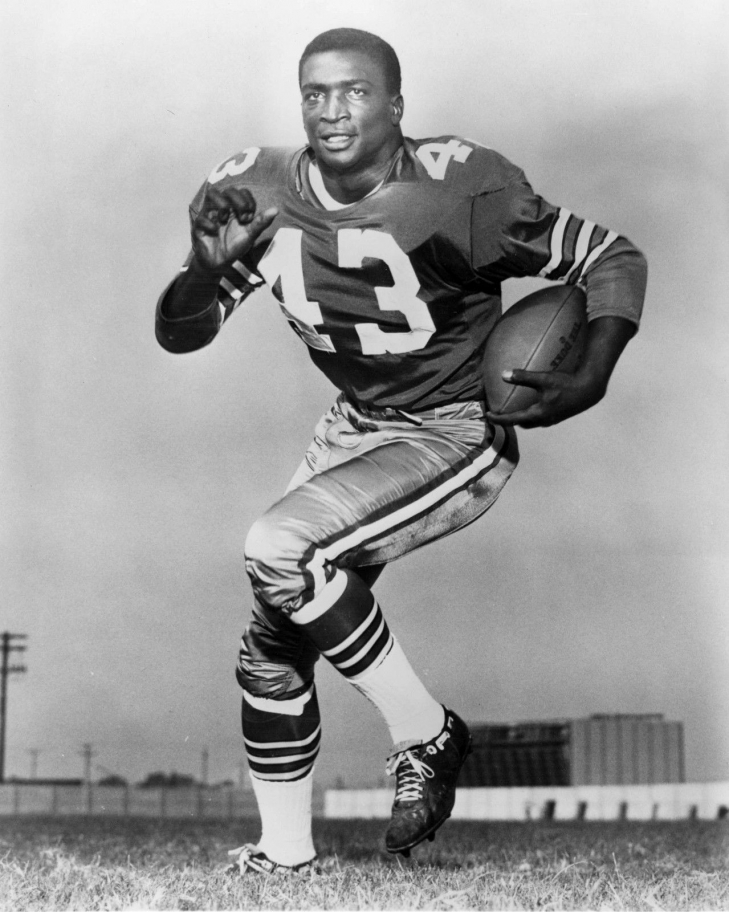
29. Don Perkins

Before the Dallas Cowboys ever played an official game, general manager Gil Brandt utilized a loophole to secure Don Perkins. Because the expansion franchise was admitted too late for the 1960 NFL Draft, Brandt signed the University of New Mexico star to a personal-services contract, paying him a $1,500 bonus on the condition that he would play for Dallas if they received a franchise. When the Baltimore Colts drafted Perkins in the ninth round anyway, the NFL upheld the contract and forced Dallas to surrender a 1962 ninth-round pick as compensation.

Perkins' debut was postponed due to a broken foot sustained during training camp, causing him to miss the Cowboys' first season in 1960. After recovering in 1961, the 5-foot-10 fullback quickly made a significant impact on Tom Landry's offense. He amassed 1,113 yards from scrimmage and scored eight touchdowns, which led to him being named NFL Rookie of the Year and earning his first Pro Bowl nod, establishing the young franchise’s first major offensive cornerstone.

The following season, Perkins confirmed his strong debut by earning First-Team All-Pro honors in 1962, exceeding 1,000 yards from scrimmage for the second year in a row and scoring seven rushing touchdowns. As the lead runner in Landry's "Multiple Offense," Perkins didn't have elite speed, but he compensated with exceptional balance, leverage, and power when engaging with defenders. Opposing defenses anticipated he would carry the ball in short-yardage situations, yet he reliably gained the needed yards thanks to his raw toughness.

Beyond his ability to run and catch, Perkins was considered one of the best blocking fullbacks of his time. He took great pride in blocking blitzers, delivering powerful lead blocks, and handling subtle tasks that gave quarterbacks Don Meredith and Craig Morton the time they needed to make plays downfield. His selfless approach established a standard of accountability, helping the franchise evolve from an expansion team into a consistent playoff contender.

Perkins achieved six Pro Bowl selections during his eight seasons with Dallas (1961–1963, 1966–1968) and earned two additional All-Pro honors. He retired quietly after the 1968 season at only 30 years old, emerging as the franchise's all-time rushing leader at that time and leaving a lasting impact on the team's early history. Perkins played eight seasons with the Dallas Cowboys (1961–1968), appearing in 107 games with 6,217 rushing yards, 42 rushing touchdowns, 146 receptions for 1,310 yards, and 7,527 total yards from scrimmage. A six-time Pro Bowler and three-time All-Pro, he joined the Cowboys Ring of Honor in 1976.

28. Everson Walls

A sluggish 4.7-second 40-yard dash at the scouting combine sent Everson Walls undrafted out of Grambling State in 1981. Talent evaluators wrote off his raw speed, but legendary Cowboys executive Gil Brandt saw what stopwatch-obsessed scouts missed: elite instincts, fluid hip mobility, and a rare knack for snatching the football out of the air. Returning home to Dallas, Walls signed as an undrafted free agent and immediately proved that closing speed matters far less when a corner reads the quarterback better than the receiver does.

Walls secured the starting left cornerback position as a rookie, delivering one of the most impressive debut seasons for a defensive back in NFL history. He led the league with a franchise-record 11 interceptions in 1981, earning his first Pro Bowl nod and cementing his reputation as Tom Landry's top ballhawk. During the strike-shortened 1982 season, he continued his excellence by grabbing seven interceptions in nine games, becoming the first NFL player to lead the league in picks in consecutive seasons.

His dominant perimeter play reached its peak during a four-year period from 1981 to 1985, During this time, he received four Pro Bowl invites and three All-Pro selections, including First-Team honors in 1983. In 1985, Walls led the NFL in interceptions for the third time, catching nine passes to strengthen the opportunistic secondary known as "Thurman's Thieves" under defensive coordinator Ernie Zampese. By leading the league three times (1981, 1982, 1985), Walls joined Ed Reed as the only players in NFL history to achieve this milestone.

Although Walls didn't possess blazing speed, he effectively eliminated receivers with better field awareness, leverage, and accurate hand technique at the catch point. Quarterbacks attempting out-breaking routes against him often faced interceptions as he anticipated and jumped the pattern. He was a consistent presence in the Dallas secondary into the late 1980s, mentoring younger defensive backs and leading the team in interceptions five times, a franchise record that remains unbroken.

When the rebuilding Cowboys left after 1989, Walls signed with division rival New York. In 1990, he had six interceptions and made a game-saving tackle on Thurman Thomas in Super Bowl XXV, earning his long-awaited championship ring.

With Dallas, Walls played 133 games, with 44 interceptions, 427 return yards, and five recoveries. Second in franchise history behind Mel Renfro (52), Walls is one of the most prolific undrafted steals in pro football history.

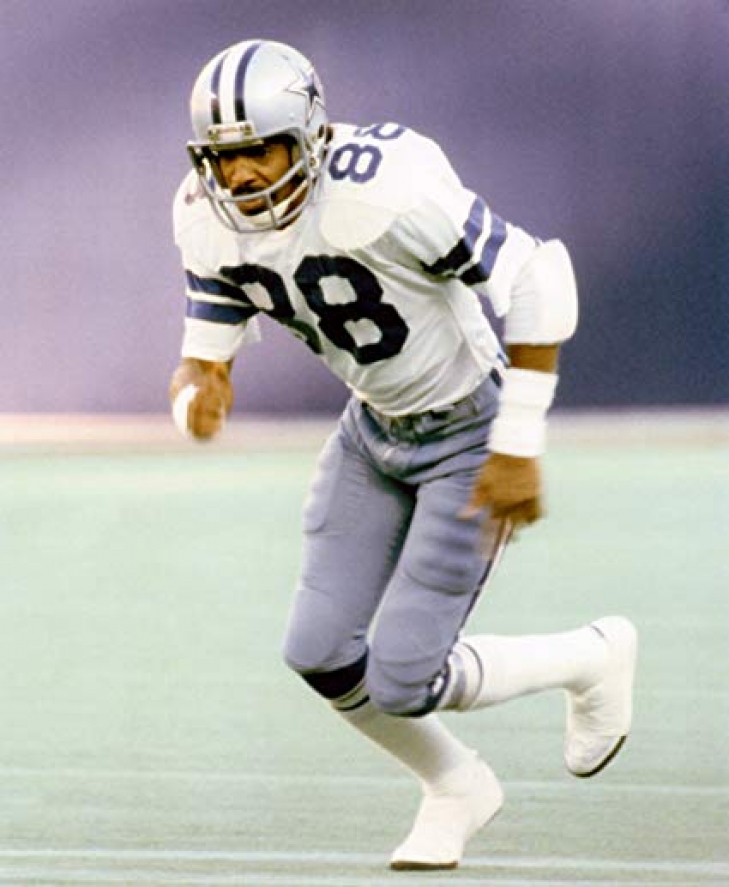
19. Drew Pearson

Signed as an undrafted free agent in 1973 out of Tulsa, Drew Pearson arrived in Dallas as a former college quarterback making a full-time conversion to wide receiver. He quietly scraped onto the roster, contributing 388 receiving yards while handling kick return duties during his debut campaign. By year two, Pearson dropped special teams entirely and exploded into Tom Landry's target of choice, breaking out for 1,087 receiving yards to earn his first Pro Bowl selection and a First-Team All-Pro nod.

Pearson quickly earned the moniker "Mr. Clutch" for his uncanny ability to make impossible, game-defining catches in high-stakes situations. None was more famous than the 1975 NFC Divisional Playoff against Minnesota, when he hauled in Roger Staubach's miraculous 50-yard touchdown pass with 24 seconds remaining—coining the phrase "Hail Mary" and forever altering football parlance. That knack for postseason heroics made him the focal point of Dallas's aerial attack throughout the 1970s.

His dominance peaked during a transcendent run from 1976 to 1977. Pearson earned back-to-back First-Team All-Pro honors, capping the 1977 season by leading the entire NFL with 870 receiving yards across a 14-game slate. That individual output helped propel the Cowboys to a 12–2 regular-season record and a dominant 27–10 victory over the Denver Broncos in Super Bowl XII, bringing a second world title to Big D.

Pearson added another 1,026-yard receiving campaign in 1979 and remained a steady perimeter weapon into the early 1980s, establishing the benchmark for the franchise's legendary No. 88 jersey—a fraternity later carried on by Michael Irvin and CeeDee Lamb. His career came to an abrupt end following the 1983 season due to injuries sustained in a serious car accident, hanging up his cleats after a decade spent exclusively in a Cowboys uniform.

Over his career, Pearson appeared in 156 regular-season games, compiling 489 receptions, 7,822 receiving yards, and 48 receiving touchdowns—retiring as the franchise's all-time leader in receptions and receiving yards. A three-time First-Team All-Pro, three-time Pro Bowler, and member of the NFL 1970s All-Decade Team, Pearson was inducted into the Dallas Cowboys Ring of Honor in 2011. After being narrowly passed over for the NFL's Centennial Class in 2020, his long-awaited call to Canton finally arrived with his induction into the Pro Football Hall of Fame in 2021.

31. Don Meredith

Long before America’s Team was a global marketing titan, it was a fledgling expansion franchise in desperate need of an identity. Enter Joseph Donald "Dandy Don" Meredith. A star at Southern Methodist University who was born and raised in Mount Vernon, Texas, Meredith was signed to a personal-services contract before the Cowboys even officially existed. When Dallas took the field for its inaugural 1960 season, the charismatic local hero instantly became the franchise’s first true face.

After splitting time early in his career, Meredith took full command of Tom Landry’s complex offense as the undisputed starter in 1963. He brought a loose, swaggering charm to the huddle that perfectly complemented Landry’s rigid, methodical demeanor. Armed with a deep-ball touch and extraordinary toughness—regularly dusting himself off after taking brutal hits behind a young offensive line—Meredith transformed Dallas from a league laughingstock into a championship contender.

His finest individual play arrived during a three-year Pro Bowl run from 1966 through 1968. In 1966, Meredith earned the Bert Bell Award as the NFL’s Most Valuable Player after throwing for a career-high 2,805 yards and 24 touchdowns. Paced by his 15.8 yards per completion—which led the entire NFL for a second consecutive year—he guided Dallas to its first-ever winning record (9–3–1) and a spot in the NFL Championship Game. Though heartbreaks against Vince Lombardi’s Green Bay Packers in the 1966 title game and the legendary 1967 "Ice Bowl" weighed heavily on him, Meredith was the engine that turned Dallas into a perennial powerhouse.

Weary of the physical toll and intense media pressure, Meredith shocked the football world by retiring after the 1968 season at just 31 years old. His magnetic personality made him a natural fit for television, where he joined Howard Cosell and Frank Gifford in 1970 as an original color commentator for Monday Night Football. His folksy wit, quick humor, and signature singing of "Turn Out the Lights, the Party's Over" whenever a game was out of reach revolutionized sports broadcasting.

Across nine active seasons spent exclusively with the Dallas Cowboys (1960–1968), Meredith played in 104 regular-season games, compiling 17,199 passing yards, 135 touchdown passes, and 1,216 rushing yards with 15 ground touchdowns. A three-time Pro Bowl selection, All-Pro, and 1966 Bert Bell Award winner, "Dandy Don" was inducted into the Dallas Cowboys Ring of Honor in 1976 alongside teammate Don Perkins, forever remembered as the Texas folk hero who put the franchise on the map.

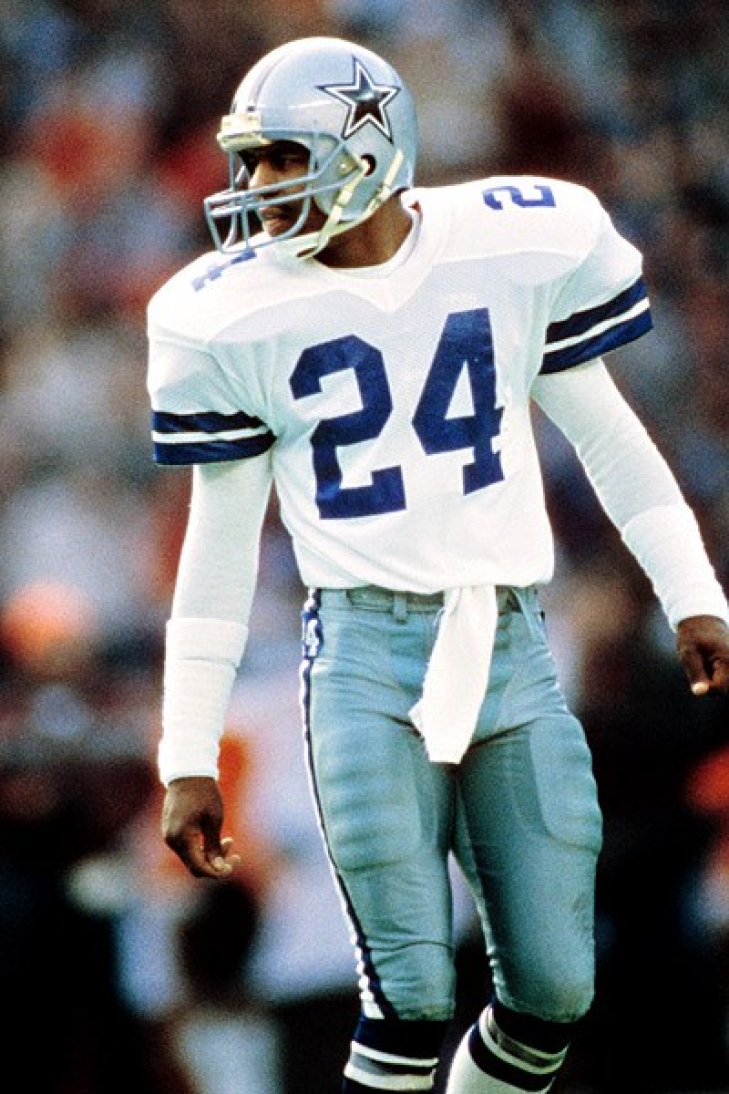
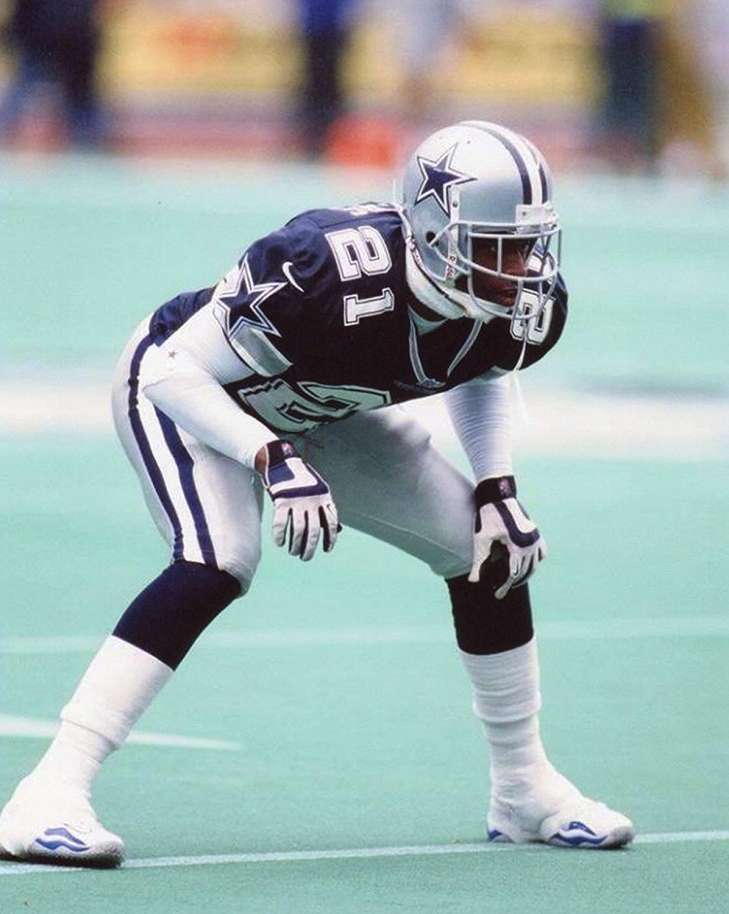
24. Deion Sanders

Before he ever set foot in Big D, "Prime Time" had already established himself as the undisputed king of gridiron swagger. Coming off a transcendent 1994 campaign in San Francisco where he captured the AP NFL Defensive Player of the Year award and led the 49ers to a world championship, Sanders became the most coveted free agent in league history. Jerry Jones won the high-stakes bidding war in September 1995, signing the ultimate mercenary to a landmark contract to ensure the Lombardi Trophy returned to Texas.

Sidelined for the first half of the 1995 season following arthroscopic ankle surgery, Sanders finally made his silver-and-blue debut in Week 9. His arrival immediately transformed the secondary and provided the missing piece for the franchise's championship puzzle. Sanders locked down one side of the field while opposing quarterbacks were forced to test Larry Brown—a dynamic that directly fueled Brown's Super Bowl XXX MVP performance. Sanders capped his abbreviated debut season by catching a 47-yard pass on offense in the NFC Championship and scoring a rushing touchdown in Super Bowl XXX to help Dallas secure its third title in four years.

Over the next four seasons, Sanders put on a weekly show in Dallas, proving why he was the premier shutdown corner of his generation. Quarterbacks routinely refused to throw to his side of the field, effectively erasing half the gridiron. His combination of world-class track speed, high-stepping flair, and instinctive ball skills earned him four consecutive Pro Bowl invitations and three First-Team All-Pro selections (1996, 1997, and 1998) in a Cowboys uniform.

Recognizing his game-breaking athletic gifts, head coach Barry Switzer fully unleashed Sanders as a two-way superstar in 1996. Lineup changes saw "Prime Time" moonlight at wide receiver, catching 36 passes for 475 yards while maintaining his full-time starting duties at cornerback. Combined with his electrifying work as a punt returner—where he routinely turned fielded punts into high-stepping house calls—Sanders was the ultimate three-phase weapon in pro football.

The high-flying marriage in Dallas eventually ended after the 1999 season, when the front office released him in a major salary-cap purge. Yet, his five-year run in Big D stands as one of the most explosive individual stretches in franchise history, proving that no matter the jersey, "Prime Time" always delivered on the main stage.

Across five seasons with the Dallas Cowboys (1995–1999), Sanders played 63 games, with 14 interceptions, two defensive and two punt return touchdowns, and 48 receptions for 526 yards and a touchdown. A four-time Pro Bowler, three-time First-Team All-Pro, and NFL 1990s All-Decade Team member, Sanders was inducted into the Hall of Fame in 2011 in his first year of eligibility.

41. Calvin Hill

Before the Ivy League became an afterthought for top-tier NFL talent evaluators, Calvin Hill proved that elite athleticism can come from anywhere. Legendary Dallas scouting director Gil Brandt spotted rare traits in the Yale standout, who spent his college years lining up at quarterback, defensive back, and linebacker. When the Cowboys picked him 24th overall in the 1969 draft, head coach Tom Landry immediately shifted the 6-foot-4, 227-pound athlete to running back during training camp—a gamble that reshaped the franchise's offense.

Hill took the league by storm in 1969, rushing for 942 yards and eight touchdowns while averaging an explosive 4.6 yards per carry. His rare blend of power, soft hands out of the backfield, and open-field stride earned him NFL Offensive Rookie of the Year honors, alongside First-Team All-Pro and Pro Bowl selections. He brought a rare physical dimension to Landry’s offense, punishing linebackers while giving Craig Morton and Roger Staubach an elite dual-threat valve.

Injuries slowed his production over the next two seasons, but Hill remained an indispensable contributor for back-to-back championship teams, helping Dallas reach Super Bowl V and win Super Bowl VI. He reclaimed full health in 1972 and made franchise history, becoming the very first Dallas Cowboy to rush for 1,000 yards in a single season when he piled up 1,036 yards and six touchdowns on the ground.

He proved that milestone was no fluke in 1973, rushing for 1,142 yards and six touchdowns while catching 30 passes for 280 yards and another score. That dominant three-year stretch from 1972 to 1974 yielded three consecutive Pro Bowl nods, solidifying Hill as one of the premier offensive focal points in professional football and establishing a benchmark for future Dallas backfield legends like Tony Dorsett and Emmitt Smith.

Lured away by a lucrative contract, Hill departed Big D following the 1974 season to join the Hawaiians of the new World Football League. Though an MCL injury and the WFL's sudden collapse shortened that venture, he later returned to the NFL with Washington and Cleveland, concluding a long, distinguished pro career.

With Dallas, he compiled 5,009 rushing yards, 39 rushing touchdowns, 1,359 receiving yards, and 11 receiving touchdowns.

40. Flozell Adams

Selected in the second round (38th overall) out of Michigan State in 1998, Flozell Adams arrived in Big D carrying an imposing 6-foot-7, 340-pound frame. Initially slotted at right guard as a rookie, Adams quickly demonstrated the elite lateral footwork and bone-crushing power needed to handle pass protection on the perimeter. By his second season, the coaching staff moved him to left tackle—a position he would lock down for the next decade as one of the most reliable edge protectors in franchise history.

Nicknamed "Hotel" for his massive physical footprint, Adams anchored the blind side through multiple quarterback transitions, shielding passers like Quincy Carter, Vinny Testaverde, and eventually Tony Romo. Despite being legally deaf in his right ear—a condition that occasionally led to pre-snap false start penalties due to hearing home-crowd snap counts—he weaponized his length and immense upper-body strength to stonewall the elite pass rushers of his era.

Adams peaked in the mid-2000s, earning his first Pro Bowl nod in 2003 after helping guide Dallas back to the postseason under Bill Parcells. After overcoming a torn ACL in 2005, he bounced back with remarkable resilience, stringing together three consecutive Pro Bowl selections from 2006 to 2008. His standout 2007 campaign earned him Second-Team All-Pro honors and helped lead a powerhouse 13–3 Cowboys team.

His durability was a hallmark of his long tenure; from 1999 through 2009, Adams started every game he played, serving as a fierce physical enforcer on the line for 12 seasons in navy and silver. Following his release in early 2010, he played one final season with the Pittsburgh Steelers, starting in Super Bowl XLV before hanging up his cleats.

In his 12 seasons, he recorded 178 starts for the franchise.

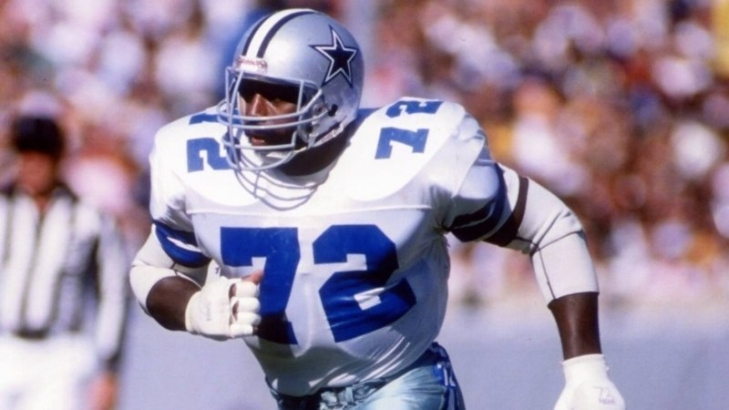
37. Erik Williams

Overcoming poor academic marks in high school, Erik Williams took a unconventional path to gridiron stardom, landing at Division II powerhouse Central State University in Ohio. There, the massive Philadelphia native helped lead the Marauders to an NAIA national title, displaying a terrifying blend of size, power, and athletic movement. When the Dallas Cowboys selected him in the third round (70th overall) of the 1991 draft, they weren't just picking an interior depth piece—they were adding the final, mean-spirited cornerstone of a dominant offensive dynasty.

Williams logged time as a backup during his rookie campaign, but his ferocious performance during 1992 training camp forced Jimmy Johnson to shuffle the starting lineup. The Cowboys shifted veteran Nate Newton inside to guard, clearing space for Williams to take over at right tackle. Standing 6-foot-6 and 320 pounds, "Big E" brought a mean, physically imposing edge to the perimeter, locking down elite pass rushers and clearing lanes for Emmitt Smith. His signature moment arrived in 1992, when he single-handedly neutralized Reggie White without tight end help, signaling his ascension as the most feared edge-blocker in the sport.

As a vital pillar of "The Great Wall of Dallas" alongside Newton, Mark Tuinei, Mark Stepnoski, and Kevin Gogan, Williams anchored the front line during Dallas's back-to-back title runs in Super Bowl XXVII and XXVIII. He earned First-Team All-Pro honors and a Pro Bowl nod in 1993, establishing a reputation so dominant that many analysts regarded him as a future first-ballot Hall of Famer.

Tragedy struck in October 1994 when Williams suffered severe, multi-ligament knee damage in a near-fatal automobile crash in Dallas, forcing him to miss the rest of the season. Though the injury permanently sapped some of his elite lateral quickness, Williams fought through agonizing rehabilitation to reclaim his starting job in 1995. Relying on sheer power, mental toughness, and a veteran edge, he helped lead Dallas to a third title in Super Bowl XXX, earning two more First-Team All-Pro selections (1995, 1996) and three additional Pro Bowl honors (1996, 1997, 1999).

Williams spent a decade in America's Team uniform before concluding his career with a brief stint in Baltimore in 2001. While the 1994 accident altered his trajectory, his peak play at right tackle remains among the highest levels of offensive line execution in Cowboys history.

Williams played in 141 regular-season games with 128 starts for the franchise, and in 2024, he was inducted into the Black College Football Hall of Fame.
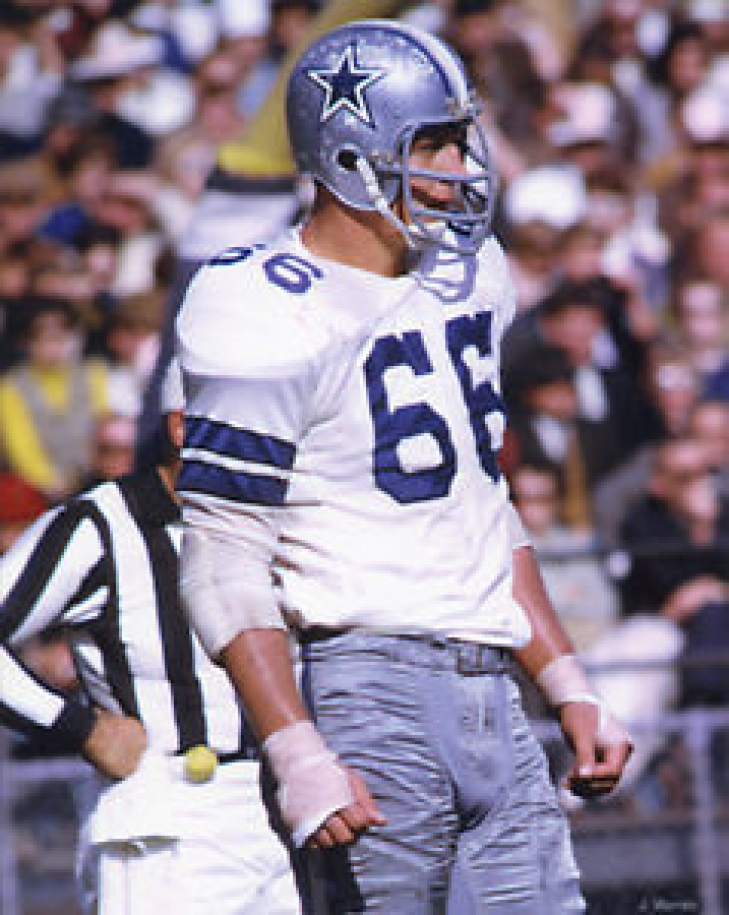
35. George Andrie

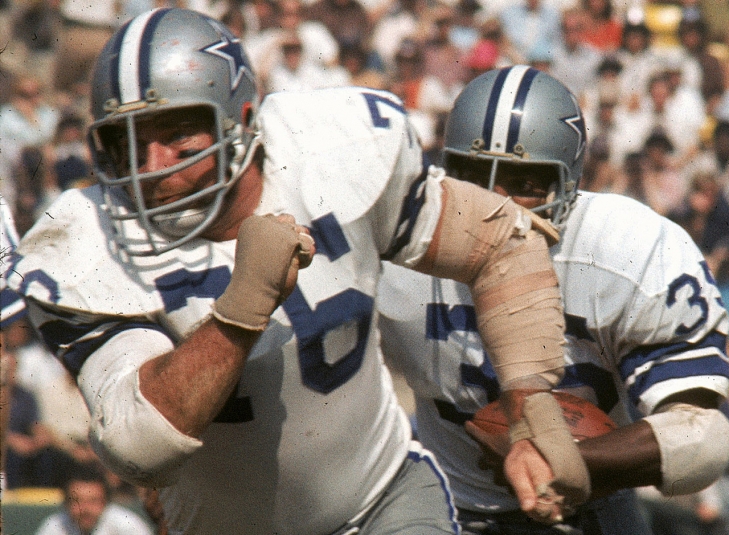
When you think of Marquette, you don’t come up with visions of football.  Perhaps that is because the program shut down in 1960, the year George Andrie was a junior.  This meant that during his senior year, he wasn’t playing football, and as such, slipped under the radar of many teams, but the Dallas Cowboys and especially, legendary Gil Brandt were not among them.  He was chosen by Dallas in the 6th Round in 1962, and he was set to begin his pro career.

Andrie made a strong debut as a rookie, securing the right defensive end position and partnering with Bob Lilly on Tom Landry's front line. This pair quickly became a key part of the original "Doomsday Defense." With quick lateral moves and long reach, Andrie disrupted passing lanes and played at a high level from 1965 to 1969, earning five straight Pro Bowl selections and a First-Team All-Pro honor in 1969. In his peak 1966 season, he caused significant problems for opposing backfields, recording 18.5 sacks in 14 games and intercepting a 6-yard touchdown return.

Beyond his skill in pass rushing, Andrie was also known for performing under pressure in crucial games. He made a key play in the historic 1967 "Ice Bowl" by recovering a fumble from Bart Starr in the end zone for a touchdown. Four years later, he played a vital role on the defense in Super Bowl VI, recording a sack and putting pressure on Miami’s Bob Griese, as Dallas limited the Dolphins to only three points and secured their first Lombardi Trophy.

An ironman for over a decade, Andrie made 112 consecutive regular-season starts, missing only two games in his career. He retired after the 1972 season as a lifelong Cowboy, leaving a legacy of defensive dominance that set the standard for generations of Dallas edge rushers.

Andrie played in 141 regular-season games with 136 starts. He had 98.5 career sacks (unofficial) with 13 fumble recoveries and two defensive touchdowns.

27. Ed "Too Tall" Jones

Standing at a towering six feet, nine inches, Edward Lee “Too Tall” Jones possessed one of the most distinctive and accurate monikers in sports history. Out of Tennessee State, he made history in the 1974 NFL Draft by becoming the first player from a Historically Black College or University (HBCU) to be selected number one overall, landing directly in Tom Landry’s Dallas locker room.

Jones’s early years involved adapting to the professional ranks, initially rotating through different roles before securing the left defensive end position. With a remarkable wingspan and exceptional lateral agility for his size, he became a key part of the "Doomsday II" defense. His reach enabled him to deflect passes frequently and disrupt quarterbacks, leading to a standout postseason that contributed to Dallas's 27–10 victory over the Denver Broncos in Super Bowl XII.

In a stunning career pivot following the 1978 season, Jones abruptly stepped away from the gridiron to test his mettle in professional boxing. He compiled an unblemished 6–0 record inside the ring during his one-year sabbatical. Rather than derailing his football trajectory, the grueling boxing conditioning sharpened his physical conditioning, allowing him to return to the Cowboys in 1980 even stronger and more explosive than before.

The post-boxing chapter marked the absolute peak of his dominance. Jones ripped off three consecutive Pro Bowl selections from 1981 to 1983, captured First-Team All-Pro honors in 1982, and defied age by setting a personal single-season high with 13 sacks in 1985 at 34 years old. He was a master of durability, rarely missing assignments and anchoring the front line through massive personnel transitions into the late 1980s.

Jones played 15 seasons with the Dallas Cowboys (1974–1978, 1980–1989), setting a franchise record with 224 regular-season games and 203 starts. Though sacks weren't officially recorded until 1982, Cowboys records credit him with 106.0, along with 19 fumble recoveries and three interceptions. A three-time Pro Bowler, All-Pro, and Super Bowl champion, he was inducted into the Black College Football Hall of Fame in 2013, cementing his legacy as a legendary athlete of Dallas football.

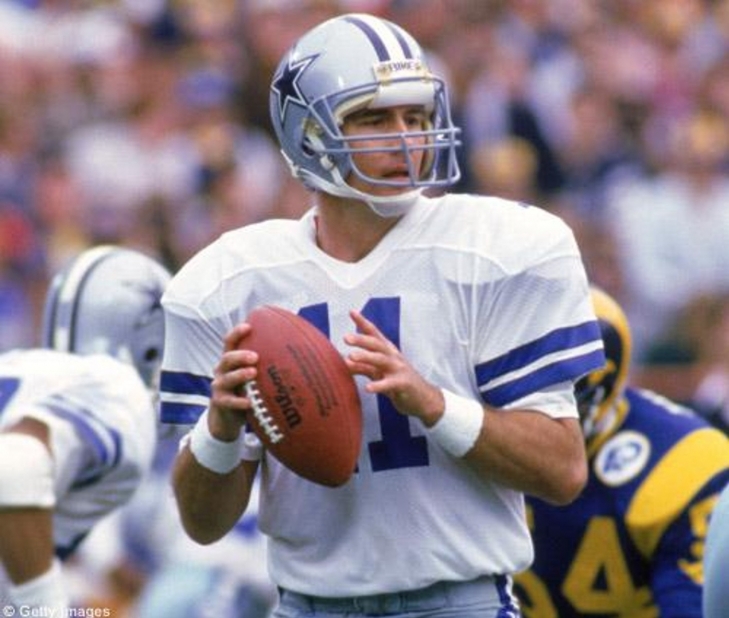
34. Danny White

Drafted in the third round of the 1974 NFL Draft out of Arizona State, Danny White found himself in a unique logjam. With Roger Staubach firmly entrenched under center in Dallas, White chose to start his professional career in the upstart World Football League, taking snaps for the Memphis Southmen to gain valuable quarterback reps. Following the WFL's collapse, White signed with the Cowboys in 1976. For four years, he embraced a grueling dual role: serving as Tom Landry's trusted holding specialist and primary punter while operating as Staubach's designated heir apparent.

When Staubach hung up his cleats after the 1979 season, White stepped out of the shadow of a franchise icon and immediately validated Landry's trust. Taking over under center in 1980, White delivered a sterling debut campaign, throwing for 3,287 yards and 28 touchdowns to lead Dallas to a 12–4 record. What followed was one of the most remarkable individual runs in modern NFL history: White continued to pull double duty as both starting quarterback and starting punter through the 1984 season, famously becoming the only player in league history to pass for over 3,000 yards and punt for over 3,000 yards in the same season (1981).

White's tenure as a QB1 was characterized by notable statistical efficiency and an unwavering record of victories. He led the Dallas Cowboys to three consecutive NFC Championship Games from 1980 to 1982, securing his sole career Pro Bowl selection during the strike-shortened 1982 season when he led the NFC with 16 touchdown passes. Equipped with a rapid release and precision in long throws, White consistently ranked among the league leaders in passer rating and yards per attempt, demonstrating his arm talent to compete effectively with any quarterback in the conference.

Despite holding a commanding 62–30 regular-season record as a starting quarterback, White faced brutal scrutiny from a fanbase spoiled by Staubach's Super Bowl rings. That pressure peaked in 1984 when Landry briefly benched him in favor of Gary Hogeboom. White quietly reclaimed the starting job through superior preparation, bouncing back in 1985 to lead Dallas to another division title. Injuries—most notably a broken wrist suffered in 1986—eventually slowed his career before his retirement following the 1988 season.

In his thirteen seasons, White amassed 21,959 passing yards, 155 touchdown passes, and 132 interceptions alongside a 62–30 record as a starter. As a punter, he added 610 career punts for 24,509 yards (40.2 average).

32. John Niland

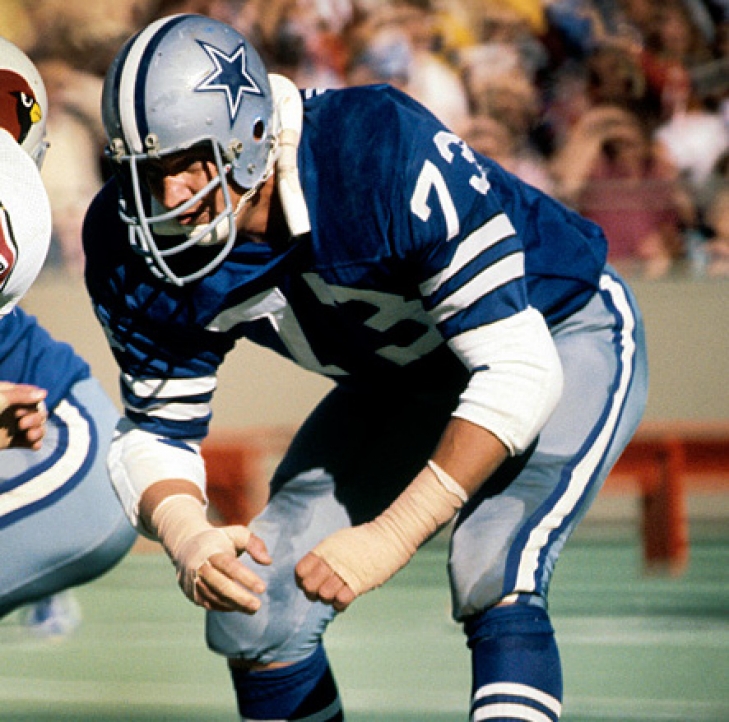
When the Dallas Cowboys selected University of Iowa consensus All-American John Niland fifth overall in the 1966 NFL Draft, they made franchise history before he ever put on a helmet. Niland became the first offensive lineman Dallas selected in the first round, establishing a blueprint for heavy-investment blocking units that would define the organization across multiple generations.

Niland spent his rookie year being baptized in fire, starting four games and squaring off daily in practice against legendary defensive tackle Bob Lilly. Iron sharpened iron; refining his technique against Lilly transformed Niland into a dominant interior force. By 1967, he had taken full ownership of the starting left guard spot, using his low-pad balance and athletic, pulling-guard agility to spearhead Tom Landry's "Multiple Offense."

Between 1968 and 1973, Niland put together a stretch of interior line play matched by few guards of his era. He earned six consecutive Pro Bowl nods and three First-Team All-Pro honors (1969, 1971, and 1972). Niland was the relentless motor on an offensive line that annually led the league in total offense and rushing yards, paving lanes for Duane Thomas, Walt Garrison, and Calvin Hill.

His finest hour arrived during the 1971 postseason, culminating in Super Bowl VI. Niland and the Dallas front wall completely neutralized the Miami Dolphins' front seven, paving the way for a then-record 252 rushing yards in a 24–3 victory that delivered the franchise's first Lombardi Trophy.

Niland's nine-year tenure in Dallas was marked by remarkable durability, missing just two games across 124 regular-season contests. After a final full season in Big D in 1974, he was traded to the division-rival Philadelphia Eagles, playing one final season before retiring after the 1975 campaign.

With Dallas, Niland played 124 regular-season games (111 starts), 15 postseason contests, and two Super Bowls. A six-time Pro Bowler, three-time First-Team All-Pro, Super Bowl VI champion, and Cowboys' All-Time Team member, he is one of six offensive linemen in franchise history with at least six Pro Bowls.

30. Ralph Neely

Selected in the second round of the 1965 NFL Draft from Oklahoma, Ralph Neely quickly established himself on the Dallas Cowboys’ line, helping to shape the team's initial era of success. As a consensus All-American for the Sooners, Neely combined agility, excellent footwork, and a fierce attitude in Tom Landry's scheme, securing the starting right tackle position as a rookie and earning recognition on the NFL All-Rookie team.

Neely quickly rose to prominence as one of the top blocking tackles in pro football, anchoring the right side during the era of the "Doomsday" defense. His prime years were from 1967 to 1969, when he earned three straight First-Team All-Pro selections and consecutive Pro Bowl appearances in 1967 and 1968. Neely had the necessary strength to push defenders back in the run game for players like Don Perkins and Calvin Hill, as well as the agility to stay lateral against edge rushers and protect quarterback Don Meredith.

When Rayfield Wright secured his position on the right side, Landry moved Neely to left tackle, where he transitioned smoothly while safeguarding the blind side for Roger Staubach and Craig Morton. Neely began at left tackle in Super Bowl VI, paving the way for Dallas's dominant 24–3 victory over the Miami Dolphins and earning the franchise's first Lombardi Trophy.

Despite breaking his leg in an off-field motorcycle crash that sidelined him during part of the 1971 season, Neely fought to stay a key part of the offense throughout the 1970s. He offered veteran leadership to a changing roster and ended his playing career by starting at left tackle in Super Bowl XII, where Dallas beat the Denver Broncos 27–10 to earn his second championship ring. He retired after the 1977 season, having spent all 13 years with the Cowboys.

Neely, who spent 13 seasons with the Dallas Cowboys (1965–1977), played 172 regular-season games, starting 168, and appeared in 21 postseason contests and four Super Bowls. A three-time First-Team All-Pro, two-time Pro Bowler, two-time Super Bowl champion, and NFL 1960s All-Decade Team member, he is one of the most decorated and durable offensive tackles in franchise history.

45. Travis Frederick

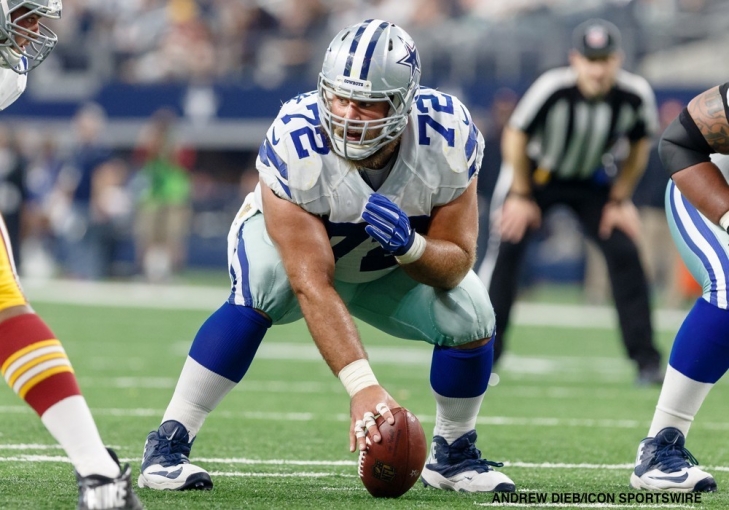
Travis Frederick arrived in Dallas surrounded by unfair skepticism from media pundits who labeled him a reach when the Cowboys took him 31st overall. He silenced those critics almost instantly, stepping onto the field as a Week 1 starter and immediately establishing himself as the intellectual brain and physical anchor of the Dallas offensive line.

Frederick served as the literal center point for what quickly became the premier offensive line in professional football alongside Tyron Smith and Zack Martin. Exceptional at diagnosing blitz packages and calling out front adjustments at the line of scrimmage, he paved highway-wide lanes for DeMarco Murray’s 2014 rushing title and Ezekiel Elliott’s dominant 2016 rookie campaign. Frederick’s rare combination of anchor strength, elite leverage, and football IQ earned him five Pro Bowl selections in his six active seasons, culminating in First-Team All-Pro honors in 2016.

Tragedy struck before the 2018 season when Frederick was diagnosed with Guillain-Barré syndrome, an autoimmune disease that forced him to miss the entire campaign. Showing incredible resilience and determination, he fought his way back to the gridiron in 2019, starting all 16 games and earning his fifth Pro Bowl selection in a triumphant comeback story.

Listening to his body, Frederick made the difficult decision to retire abruptly in March 2020 at just 29, choosing his long-term health over continued gridiron accolades. Though his career was shorter than expected, his peak performance at center remains one of the most dominant stretches at the position in modern NFL history.

Frederick started all 96 regular-season games he played in (plus three postseason starts).

Subscribe to this RSS feed