Menu
A+ A A-

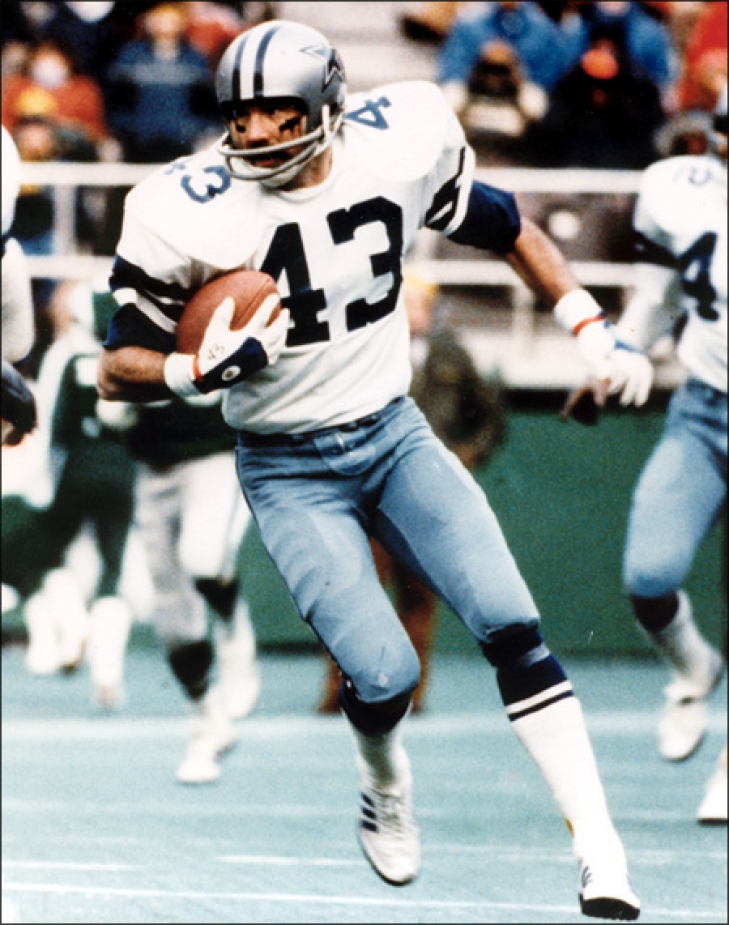
43. Tony Hill

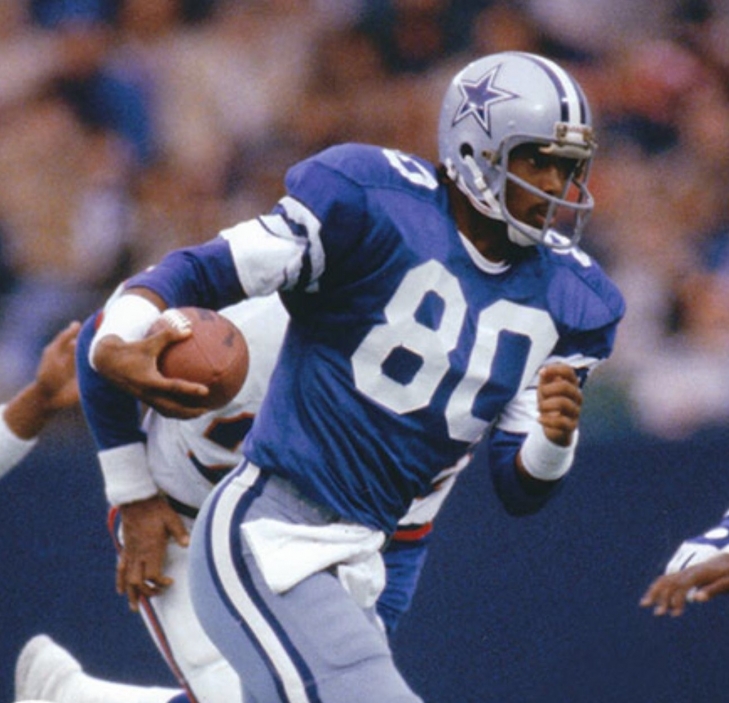
Selected in the third round out of Stanford in 1977, Tony Hill was a smooth, long-striding athlete who earned his stripes on special teams. Used primarily as a punt returner during his rookie campaign, Hill logged a minor role on offense, but he walked away with a championship ring following Dallas's victory over Denver in Super Bowl XII.

He stepped into the starting lineup the very next season and never looked back. Possessing rare deep speed and elite tracking ability, Hill quickly won over head coach Tom Landry, who dubbed him the offense's "home run hitter" for his uncanny knack for blowing top-covers off opposing secondaries. Hill validated that confidence in 1978 by pulling down 46 passes for 823 yards and six touchdowns, earning his first Pro Bowl nod and helping lead Dallas to an appearance in Super Bowl XIII.

His breakout campaign sparked a dominant era for the Dallas passing game. In 1979, Hill hauled in 60 receptions for 1,062 yards and ten touchdowns. Paired alongside Drew Pearson and Tony Dorsett, Hill helped the Cowboys make history as the first NFL offense to boast two 1,000-yard receivers and a 1,000-yard rusher in the same season. He backed that up in 1980 with another 1,055-yard, eight-touchdown showcase, cementing his status as Roger Staubach's and later Danny White's premier downfield weapon.

Hill remained the cornerstone of the receiving corps through the mid-1980s, producing high-volume output even as defenders rolled coverage heavily toward his side. His individual peak arrived in 1985, when he set career highs with 74 receptions for 1,113 yards and seven touchdowns, earning his third Pro Bowl selection. Across his decade in silver and navy, Hill recorded three 1,000-yard seasons and served as the steady big-play threat that bridged the Landry dynasty into its late era.

Hill was waived after the 1986 season. With Dallas, Hill secured 479 receptions, 7,988 receiving yards, and 51 receiving touchdowns.
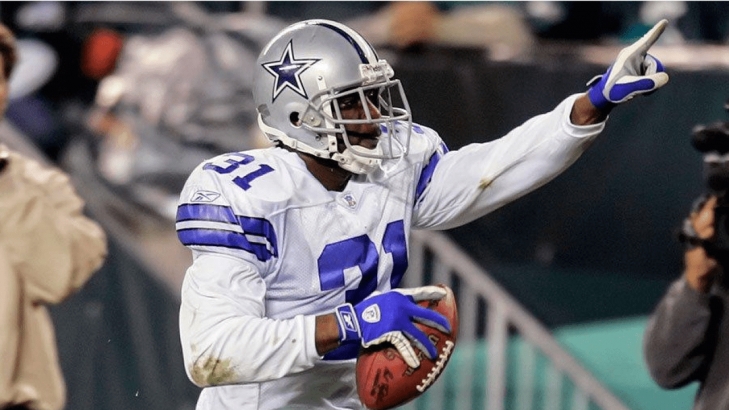
39. Charlie Waters

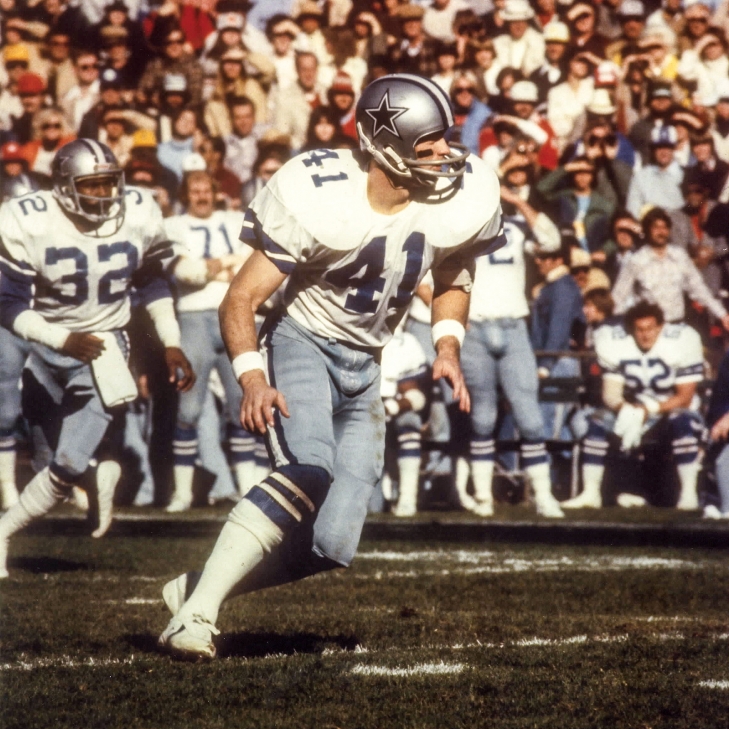
Drafted in the third round out of Clemson in 1970, Charlie Waters arrived in Big D as a versatile defensive back, but his early years were marked by a search for his permanent home in Tom Landry’s complex Flex defense. After playing every game across his first three seasons as a free safety and spending two years at cornerback, Waters struggled with consistency while adapting to Landry’s rigorous adjustments, leaving his long-term role uncertain.

Everything clicked in 1975 when Landry moved Waters permanently to strong safety, pairing him alongside free safety Cliff Harris to form "The Crash Brothers"—one of the most lethal, cerebral safety tandems in NFL history. Armed with elite football instincts and rare processing speed, Waters mastered the intricacies of Landry’s system. He was a bona fide ballhawk in coverage and a relentless, sure-tackling alley-runner who consistently disrupted opposing run designs before they could develop.

From 1976 through 1978, Waters put together a dominant three-year stretch that cemented his status as an elite defensive back, earning three consecutive Pro Bowl selections. He served as an integral anchor for the legendary "Doomsday II" defense that dominated Super Bowl XII, setting an NFL postseason record with three interceptions in a single playoff game against Chicago in 1977. His instincts under pressure made him a perpetual big-game performer when the national spotlight was brightest.

Disaster struck in the 1979 preseason when Waters suffered a torn ACL that wiped out his entire campaign. Showcasing remarkable grit and professionalism, he spent the year coaching from the sidelines before mounting an impressive comeback in 1980. Waters played two final high-level seasons, picking up 11 more interceptions over his last two years to cap off an exceptionally reliable career.

When he retired following the 1981 season, Waters hung up his cleats having never experienced a losing record in 12 NFL seasons. He appeared in five Super Bowls—winning Super Bowl VI and XII—and earned a reputation as one of the smartest safety commanders to ever wear the iconic silver helmet.

Waters compiled 41 career interceptions for 584 yards, two interception return touchdowns, 7.0 unofficial sacks, and 16 fumble recoveries as a Cowboy.

49. Charles Haley

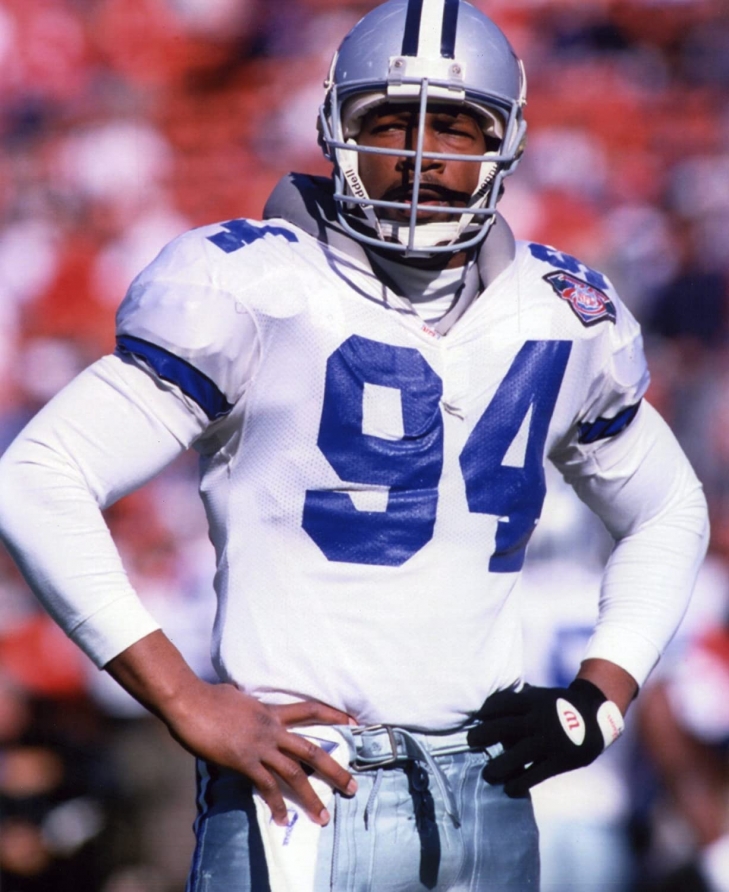
When the Dallas Cowboys acquired Charles Haley in August 1992, they were getting a proven champion still in his physical prime. Haley had already won two Super Bowls and earned three Pro Bowl nods in San Francisco, but friction with head coach George Seifert made him available via trade. Jimmy Johnson seized the opportunity, bringing in the explosive edge defender to serve as the missing, mean-spirited catalyst for a rising contender.

Haley converted seamlessly into the defensive end spot in Dallas's 4-3 scheme. Though his intense, unvarnished personality could cause friction behind closed doors, his on-field impact was immediate and transformative. He injected an unquestioned edge into the defensive front, demanding perfection from teammates and giving the Cowboys the premier pass-rushing threat they needed to get over the playoff hump.

Over his first four seasons in Big D, Haley helped usher in a golden era, capturing three Super Bowl titles (XXVII, XXVIII, XXX) and becoming the first player in NFL history to win five Super Bowl rings. He earned two Pro Bowl selections in silver and navy, pairing them with a First-Team All-Pro nod in 1994. In both of those Pro Bowl campaigns (1994 and 1995), he posted double-digit sack totals, wreaking havoc on opposing protection schemes in big-game moments.

Severe back issues and personal family matters led to brief retirements near the end of his tenure, though he returned to help secure his third ring in Texas before retiring after the 1996 season. He later mounted a brief comeback with the 49ers in 1999, but his legacy as the ultimate championship catalyst was already secure.

Haley had 34.0 sacks, 172 combined tackles, six forced fumbles, and four fumble recoveries with Dallas.

18. Bob Hayes

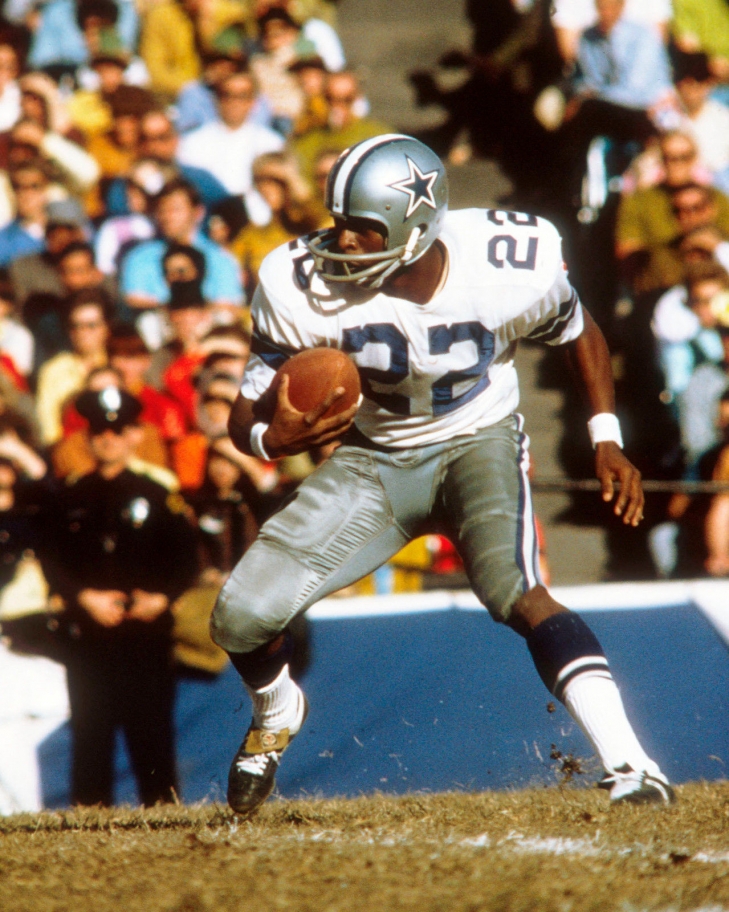
Before revolutionizing the wide receiver position in Dallas, Bob Hayes earned the title of "World's Fastest Man" at the 1964 Tokyo Olympics. The Florida A&M sprinter captured two gold medals for the United States, breaking the world record in the 100-meter dash with a time of 10.06 seconds and anchoring the 4x100-meter relay team to another world record with a legendary, come-from-behind final leg.

Selected in the seventh round of the 1964 NFL Draft, the Olympic icon made an immediate, explosive transition to professional football with the Dallas Cowboys in 1965. His raw, track-tested speed fundamentally altered NFL defense; opposing coordinators had to abandon traditional man-to-man coverage and invent zone defenses just to keep Hayes from running past their secondary. He hit the ground running with three consecutive Pro Bowl selections from 1965 to 1967 and earned First-Team All-Pro honors in 1966 and 1968.

"Bullet Bob" dominated the league right out of the gate, leading the NFL in touchdown receptions in each of his first two seasons while clearing the 1,000-yard mark in both campaigns (1,003 yards in 1965 and 1,232 in 1966). Though he never reached 1,000 yards again, he remained a potent deep threat, topping 700 receiving yards in each of the next five seasons. His ability to blow off the top of defenses was unmatched, as he led the entire NFL in yards per reception in back-to-back years—averaging an astonishing 26.1 yards per catch in 1970 and 24.0 in 1971.

Beyond his individual statistics, Hayes helped transform the Cowboys into a championship powerhouse. His vertical stretch capability created vast open space for Dallas' running game and short passing attack, culminating in the team's dominant victory over Miami in Super Bowl VI. With that ring, Hayes became the only athlete in sports history to win both an Olympic gold medal and a Super Bowl ring; that is a very unique trophy case!

He departed Dallas in 1975 following a trade to the San Francisco 49ers, playing just four games before stepping away from the game.  In Dallas, Hayes appeared in 128 regular-season games, compiling 365 receptions for 7,295 receiving yards and 71 touchdowns, while adding three punt return touchdowns. The Cowboys inducted him into the Ring of Honor in 2001, and he was later chosen for the Pro Football Hall of Fame in 2009.

38. Jay Novacek

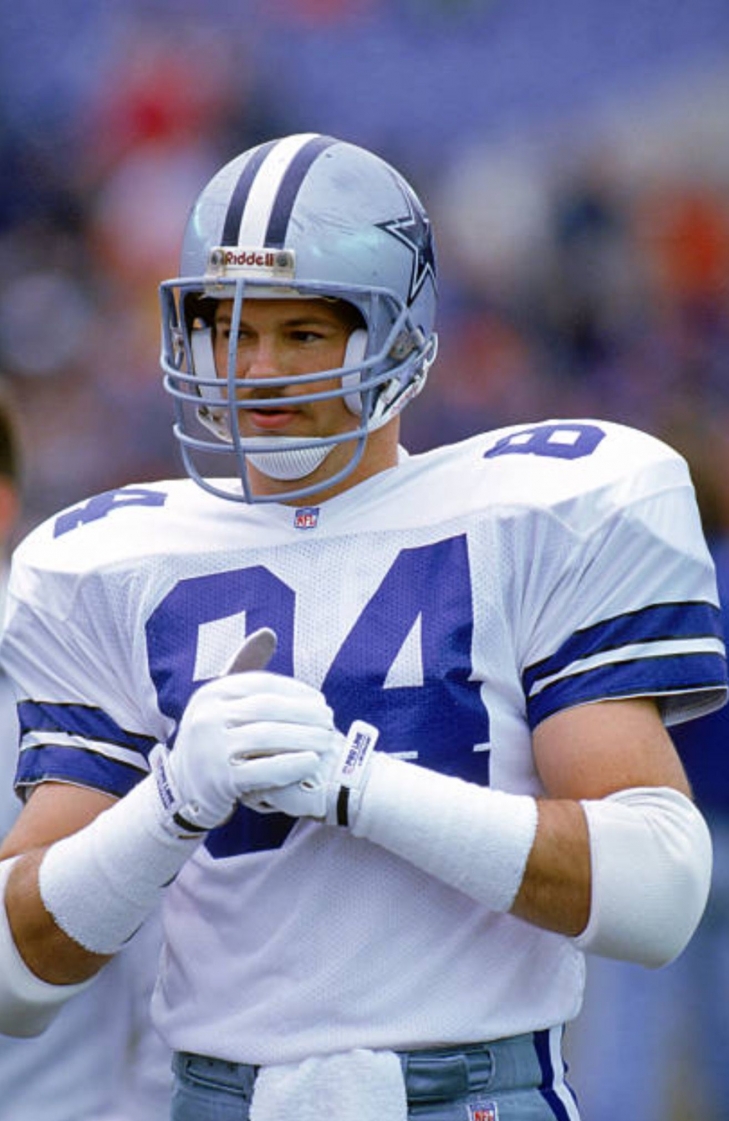
During the 1990s, when the Dallas Cowboys rose to prominence with "The Triplets"—Troy Aikman, Emmitt Smith, and Michael Irvin—tight end Jay Novacek was the team's vital security blanket. Before joining Dallas, Novacek played five quiet seasons with the Cardinals in the desert, starting only six games. When Dallas signed him as a Plan B free agent in 1990, few expected he would become a key figure in their three Super Bowl titles.

Novacek was never renowned as a devastating inline blocker, but he was masterfully functional at tangling up linebackers and sealing edges. Where he truly excelled was as an elite, dependable pass-catcher. Possessing a hurdler's fluid movement, crisp route discipline, and rare body control, Novacek had an uncanny instinct for finding soft spots in zone coverage, giving Aikman a reliable third-down valve when opposing defenses bracketed Irvin outside.

His arrival in Dallas ignited a six-year run of remarkably steady production. Between 1990 and 1995, Novacek accumulated 3,576 receiving yards and 22 touchdowns in the regular season. His individual peak arrived in 1992, when he hauled in 68 passes for 630 yards and six scores, leading all NFL tight ends in catches to earn First-Team All-Pro honors and help secure the franchise's first ring of the decade.

Novacek’s true value shone bright in January. Across 13 postseason games with the Cowboys, he grabbed 62 receptions for 645 yards and six touchdowns, making critical third-down conversions after third-down conversions. Across three Super Bowl victories (XXVII, XXVIII, and XXX), he pulled down 17 passes and two touchdowns, giving Dallas an interior weapon that opposing defensive coordinators simply could not account for.

Severe, chronic back issues forced Novacek to sit out the entire 1996 campaign before bringing his career to an abrupt end. His retirement left a massive, noticeable hole in the offense, proving how vital his subtle, clutch style was to the dynasty's engine.

As a Cowboy, Novacek played in 95 regular-season games with 88 starts for the franchise (158 career). He compiled 339 receptions, 3,576 receiving yards, and 22 receiving touchdowns.
25. Tony Romo

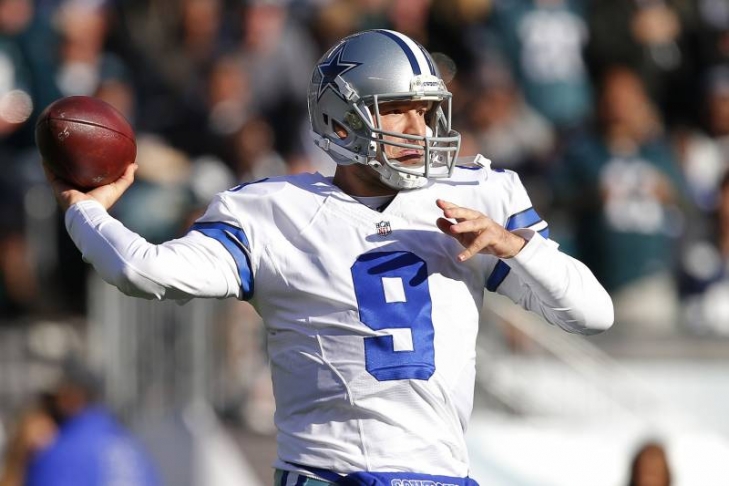
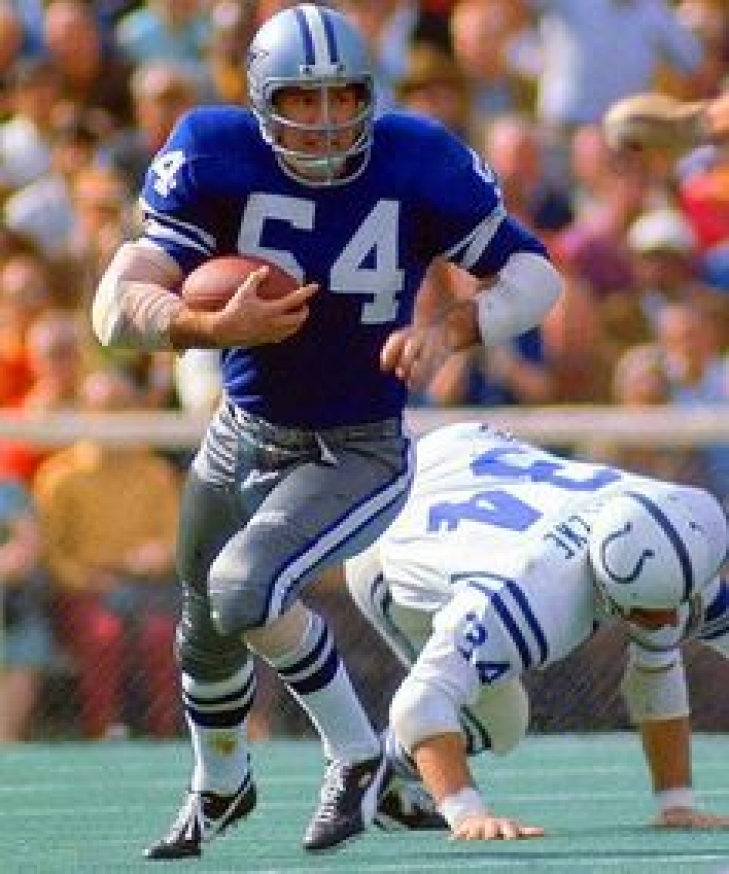
Undrafted from Division I-AA Eastern Illinois in 2003, Tony Romo joined Dallas as a backup quarterback before gradually earning the confidence of head coach Bill Parcells. After three years primarily acting as a clipboard holder, Romo was inserted into the starting role during a 2006 game against the New York Giants. He quickly became a key player for the team, throwing 19 touchdowns in ten starts, leading Dallas to the playoffs, and earning his first of four Pro Bowl selections (2006, 2007, 2009, 2014).

Romo was a naturally talented improviser whose playing style resembled a backyard gunslinger. With a lightning-fast release, he could escape sure sacks, extend plays outside the pocket, and keep his focus downfield to make accurate throws on the move. From 2006 to 2014, he ranked among the most efficient passers in football, finishing in the top eight in passer rating nine times over ten years and often handling large offensive responsibilities.

His standout individual season came in 2014, showcasing exceptional pocket awareness and decision-making skills. Operating behind a strong offensive line, Romo completed a league-leading 69.9% of his passes for 3,705 yards, 34 touchdowns, and just nine interceptions. He posted an impressive 113.2 passer rating and averaged 8.5 yards per attempt, helping Dallas achieve a 12–4 record. That year, he earned Second-Team All-Pro honors and ranked among the top three in AP NFL MVP voting.

Despite his excellent regular-season stats, Romo often stirred controversy. Playing quarterback for America's Team under intense media scrutiny, his mistakes were heavily criticized. Notable errors, like costly turnovers and the notorious botched hold during the 2006 wild-card game against Seattle, overshadowed his achievements. Statistically, he was among the most clutch quarterbacks of his era, with 24 fourth-quarter comebacks and 30 game-winning drives.

Injuries ultimately ended his playing career, with broken collarbones and back fractures restricting him to only five games in his last two seasons before Dak Prescott took over as the starter in 2016. Romo quickly moved into broadcasting, where his impressive talent for predicting plays before the snap made him a media sensation and one of the most respected analysts in sports TV.

Romo played 156 games in Dallas (2004–2016), with 34,183 yards, 248 touchdowns, 117 interceptions, and a 97.1 passer rating. A four-time Pro Bowler and Second-Team All-Pro, he retired as the Cowboys' all-time leader in yards and touchdowns, one of the greatest undrafted success stories in football history.

10. Zack Martin

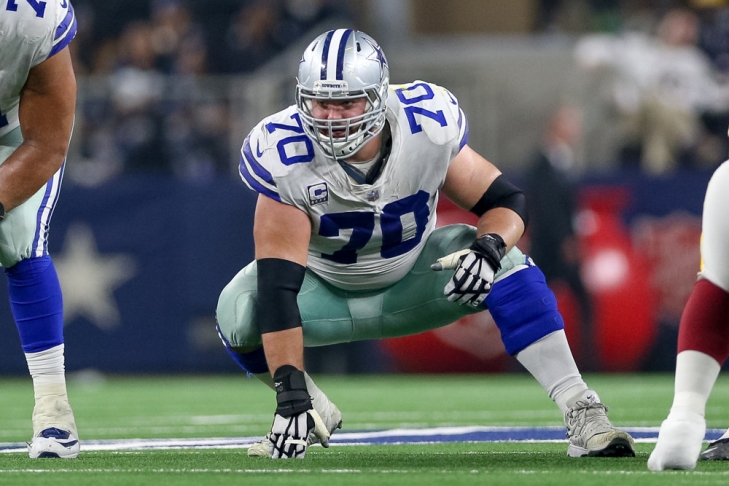
Taken 16th overall by Dallas out of Notre Dame in 2014, Zack Martin stepped straight into the starting right guard spot and immediately set the standard for offensive line excellence. His selection completed an elite front-five rebuilding effort in Big D, anchoring a line alongside Tyron Smith and Travis Frederick that would overpower defensive fronts for a decade.

Martin kicked off a historic chapter in his professional journey, earning Pro Bowl and AP All-Pro honors in each of his first six seasons (2014–2019), with four being First-Team All-Pro selections. His remarkable impact as a newcomer was so significant that he was the runner-up for the 2014 NFL Offensive Rookie of the Year award, an rare achievement for an interior lineman. With superb technical footwork and strong core stability, Martin became a virtually impenetrable pass protector, drawing only seven holding penalties throughout his 11-year career.

A consensus member of the NFL 2010s All-Decade Team, Martin carried his standard-setting play straight into the next decade. He collected three more Pro Bowl honors and three additional First-Team All-Pro selections in the 2020s, cementing his status as the premier guard of his generation. By the end of his prime, his seven career First-Team All-Pro selections tied Hall of Famers John Hannah and Randall McDaniel for the most by a guard in NFL history.

After battling through a late-season ankle injury that required surgery in 2024, Martin officially announced his retirement from the NFL following his 11th season.  Martin started all 162 regular-season games he played in. Though an elusive Super Bowl ring ultimately evaded his resume, his nine Pro Bowl invitations, nine All-Pro selections, and utter dominance at the line of scrimmage assure him a future place in both the Cowboys Ring of Honor and the Pro Football Hall of Fame.

50. Dez Bryant

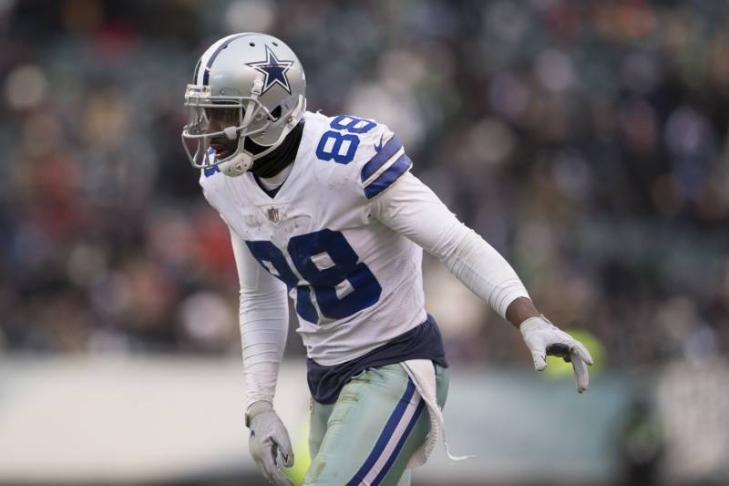
Drafted 24th overall out of Oklahoma State in 2010, Dez Bryant stepped into Big D carrying the legendary mantle of jersey No. 88. The All-American wideout announced his presence immediately, earning All-Rookie honors after compiling 561 receiving yards and six touchdowns on offense while generating another 508 yards and two scores on punt returns. Recognizing his singular aerial talent, the Cowboys quickly shifted his full focus to wide receiver—a move that unleashed one of the most physically dominant perimeter pass-catchers of his generation.

From 2012 through 2014, Bryant embarked on an absolute reign of terror against opposing secondaries, stringing together three consecutive seasons with at least 1,200 receiving yards and 12 touchdowns. Highlighting his game was a fierce, high-pointing ability that made him virtually unstoppable in tight coverage, culminating in a signature "Throw Up the X" touchdown celebration that swept through Cowboys Nation.

2014 was his best season, when he caught 88 passes for 1,320 yards and led the NFL with a franchise-record 16 touchdown receptions. That dominant run earned him First-Team All-Pro honors, his second of three Pro Bowl selections (2013, 2014, 2016), and anchored a division-winning Dallas offense.

Injuries slowed his production, and in April 2018, the Cowboys released Bryant after eight seasons. He signed with the Saints mid-2018 but tore his Achilles in his first practice, ending his year. After recovery, Bryant returned to the NFL with the Ravens in 2020, catching two touchdowns. With Dallas, he amassed 7,459 receiving yards and 73 receiving touchdowns.
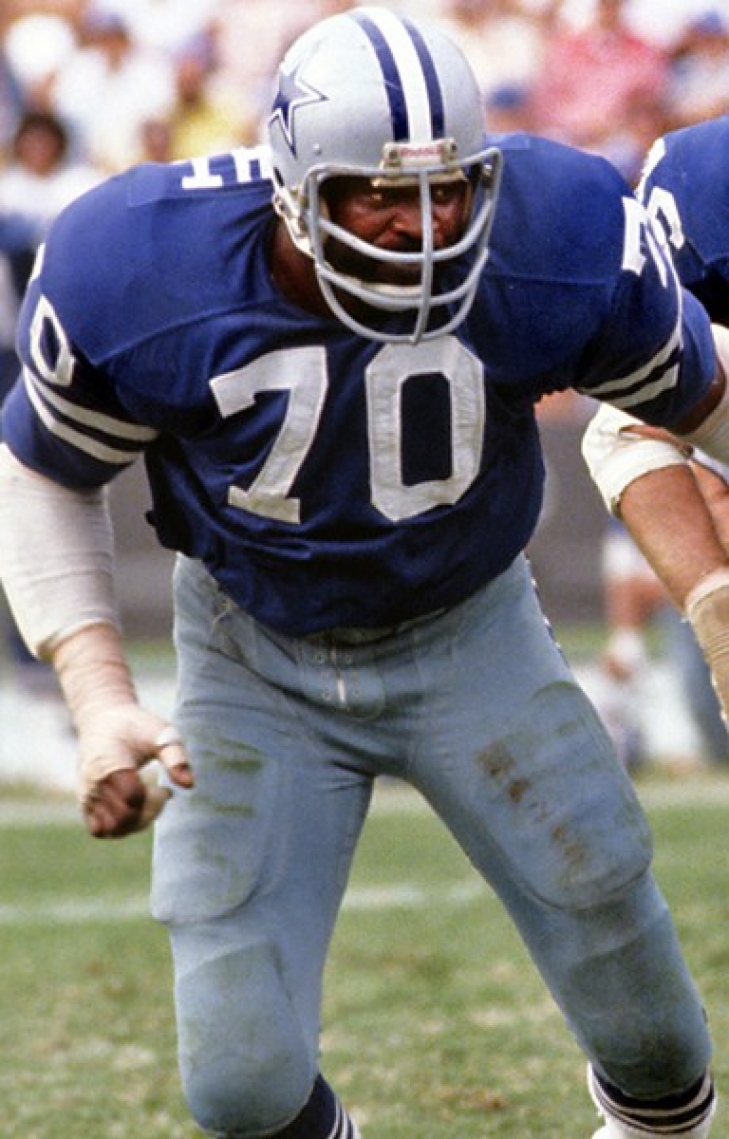
46. Daryl Johnston

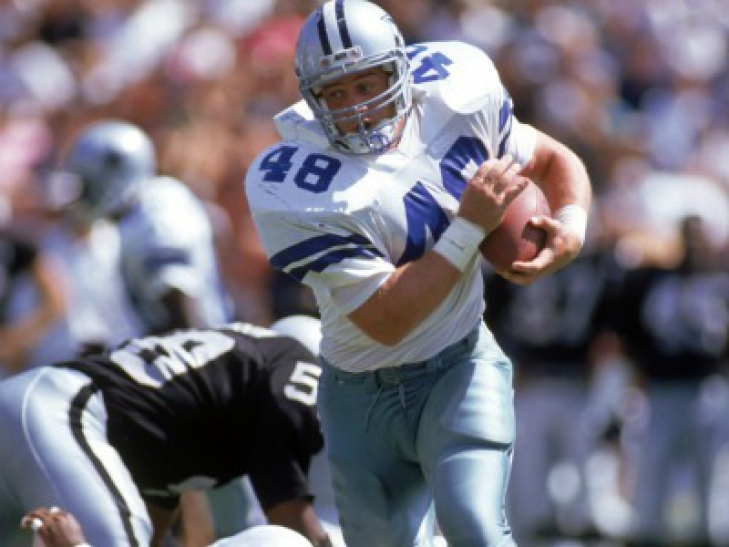
Long before the fullback position was largely erased from modern NFL playbooks, Daryl Johnston turned lead-blocking into an art form. Selected in the second round out of Syracuse in 1989, the 6-foot-2, 240-pound bruiser arrived in Big D just as Jimmy Johnson was laying the groundwork for a dynasty. It didn't take long for Texas Stadium to embrace him, as booming, deep chants of "Mooooose" echoed through the stands every time he leveled an incoming linebacker.

While Johnston was a capable runner and receiver in his own right, his true greatness lay in his selflessness as the lead blocker for Emmitt Smith. Paving highway-wide lanes through stacked defenses, Johnston served as the physical battering ram that allowed Smith to systematically dismantle opponents on his way to becoming the NFL’s all-time rushing leader. Smith frequently singled out Johnston as the unsung key to his record-breaking success, famously requesting that Moose join him on stage during his Hall of Fame induction.

Beyond his devastating lead-blocking duties, Johnston gave Troy Aikman an incredibly reliable third-down option out of the backfield. Equipped with soft hands and a high football IQ, he hauled in 294 career passes, keeping drives alive with clutch short-yardage conversions and outlet receptions under pressure.

Johnston was an indispensable pillar of the Cowboys’ 1990s glory years, capturing three Super Bowl titles (XXVII, XXVIII, XXX) while earning Pro Bowl selections in 1993 and 1994. In fact, his unique dominance at the position forced the NFL to officially create a dedicated fullback slot on the Pro Bowl ballot, ensuring true lead-blockers received proper recognition.

A persistent neck injury sidelined Johnston late in his career, ultimately forcing him to hang up his cleats following the 1999 season. As the NFL increasingly phased out traditional fullbacks in favor of spread formations and single-back sets in the years that followed, Johnston stood as one of the final, magnificent enforcers of a bygone gridiron era.

Johnston accumulated 2,227 receiving yards, 753 rushing yards, and 22 total touchdowns (14 receiving, eight rushing).

14. Tyron Smith

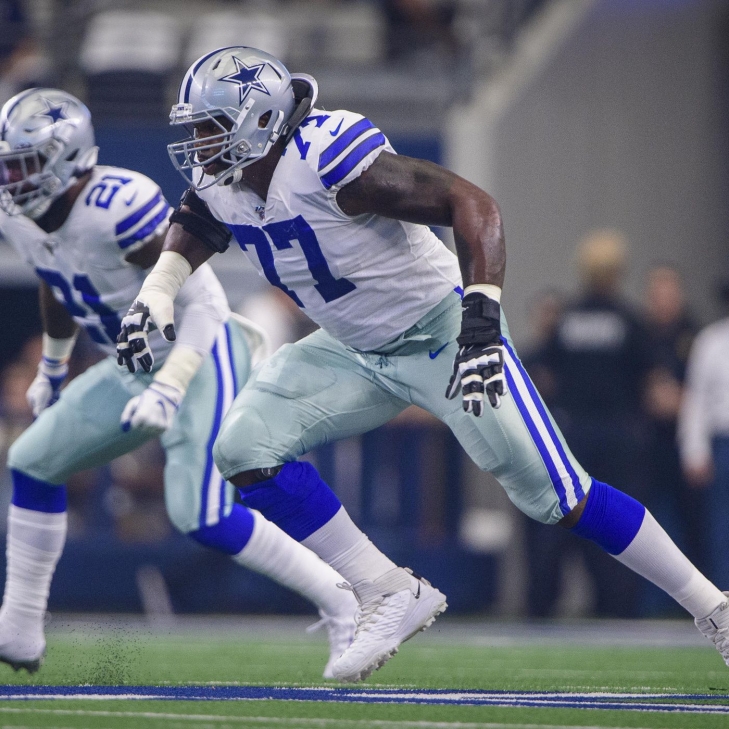
Tyron Smith stepped into Big D as a 20-year-old first-round (9th overall) phenom possessing a rare blend of length, explosive power, and quick footwork. Dallas initially placed him at right tackle, where his immediate impact earned him All-Rookie Team honors. His seamless move to left tackle in his sophomore campaign unlocked his true ceiling, providing the Cowboys with an elite edge anchor for the next decade.

That position switch catalyzed one of the most physically imposing runs by an offensive tackle in modern NFL history. From 2013 through 2019, Smith reeled off seven consecutive Pro Bowl selections, earning four AP All-Pro nods (First-Team in 2014 and 2016; Second-Team in 2013 and 2015). He formed the cornerstone of a legendary Dallas front five alongside Zack Martin and Travis Frederick, routinely neutralizing the league's most dangerous edge rushers without needing tight end assistance.

Smith’s presence transformed the entire identity of the Dallas offense, clearing massive lanes for multiple NFL rushing champions while keeping the pocket clean. His signature 2014 campaign saw him pave the way for DeMarco Murray's franchise-record 1,845 rushing yards, a performance that cemented Smith’s status as a generational pass protector. His total dominance across the era was officially recognized when he earned a spot on the NFL 2010s All-Decade Team.

Though recurring neck, back, and knee injuries limited his availability during his final four seasons in Dallas (2020–2023), Smith remained an unshakeable presence whenever he took the field. He added an eighth Pro Bowl selection in 2021 and earned Second-Team All-Pro honors in 2023 after allowing just one sack all year, serving as the trusted veteran protector through his final days in blue and silver.

Smith started all 161 regular-season games he appeared in before joining the New York Jets in 2024. His eight Pro Bowls, five All-Pro selections, and decade-plus of edge dominance assure his eventual place in the Cowboys Ring of Honor and a strong case for the Pro Football Hall of Fame.

20. Darren Woodson

Drafted in the second round of the 1992 NFL Draft from Arizona State, Darren Woodson transitioned from college linebacker to safety. He initially gained experience on special teams in his rookie year, contributing to Dallas's victory in Super Bowl XXVII and adapting to the professional game's pace. By his second year in 1993, Woodson became the starting strong safety, recording 155 tackles and leading a tough, aggressive secondary that helped the Cowboys win their second straight Super Bowl, XXVIII.

Woodson brought rare athletic versatility to defensive coordinator Butch Davis's scheme, with the size to overpower ball-carriers and agile footwork to cover top slot receivers man-to-man. In 1994, he earned his first Pro Bowl and First-Team All-Pro selection after intercepting five passes. He continued his excellence in 1995, again making First-Team All-Pro, leading all Dallas defenders with 144 tackles, and finishing the season with a victory over the Pittsburgh Steelers in Super Bowl XXX, securing his third championship ring.

The elite form persisted into 1996, with Woodson earning his third straight First-Team All-Pro accolade and recording five interceptions. Despite the aging and changing coaching staff around him, Woodson stayed the core and strategic leader of the Dallas defense. He achieved five consecutive Pro Bowl selections from 1994 to 1998 and surpassed 100 tackles in nine of his twelve seasons.

Woodson maintained his role as a top enforcer into the early 2000s, offering veteran leadership under Bill Parcells and surpassing Lee Roy Jordan's franchise tackling record in 2002. A herniated disc sustained during training camp sidelined him for the 2004 season, and he retired after a distinguished 12-year career, all with the Cowboys.

Across 12 seasons in Dallas (1992–2003), Woodson played 178 games, with 1,350 tackles, 23 interceptions, 11 sacks, and 11 fumble recoveries—retiring as the franchise's tackle leader. A three-time First-Team All-Pro and five-time Pro Bowler, he was inducted into the Dallas Cowboys Ring of Honor in 2015.

23. Harvey Martin

From East Texas State, Harvey Martin was drafted in the third round of the 1973 NFL Draft, where he lived out every Dallas kid's dream by slipping on the silver and blue. Born and raised in the city, the 6-foot-5, 260-pound pass rusher brought terrifying closing speed to Tom Landry’s "Doomsday II" defense. He spent his first two years serving as a designated pass-rush specialist—even leading the team in sacks as a rookie—before seizing the starting right defensive end job in 1975 and instantly transforming the Cowboys' front line.

Martin developed into an exceptional force over the subsequent four years, achieving four consecutive Pro Bowl selections from 1976 to 1979. His most notable accomplishment occurred during a remarkable 1977 season, when he delivered what is regarded as one of the most dominant individual performances by a defensive lineman in professional football history. Martin recorded 20.0 sacks in only 14 regular-season games—a total officially recognized by the Cowboys as 23—thereby securing the AP NFL Defensive Player of the Year award and earning First-Team All-Pro honors.

That standout player carried his exceptional skills into the postseason, where Martin dominated opposing backfields on his way to Super Bowl XII. Playing against the Denver Broncos on the biggest stage, he achieved two sacks and constant quarterback pressure, sharing Super Bowl MVP honors with teammate Randy White in the league's first co-MVP award. Every time Martin sacked a quarterback at Texas Stadium, the scoreboard displayed "MARTINIZED"—a fitting tribute to a defender known for making life difficult for offensive tackles of that era.

Although the NFL only began officially recording sacks in 1982, Pro Football Reference's retrospective film analysis shows Martin achieved 114.0 sacks over his 158 regular-season games with Dallas. He was the Cowboys’ sack leader six times during a nine-year period, setting a franchise record that lasted three decades until DeMarcus Ware surpassed it in 2013.

Martin spent 11 seasons with the Dallas Cowboys (1973–1983), playing in 158 regular games and 22 postseason contests. He recorded 114.0 career sacks (17.5 postseason), two interceptions, six fumble recoveries, and won Super Bowl XII. A four-time Pro Bowler and All-Pro (First-Team in 1977), and part of the NFL 1970s All-Decade Team, he is a key figure of the Doomsday Defense.

21. Cornell Green

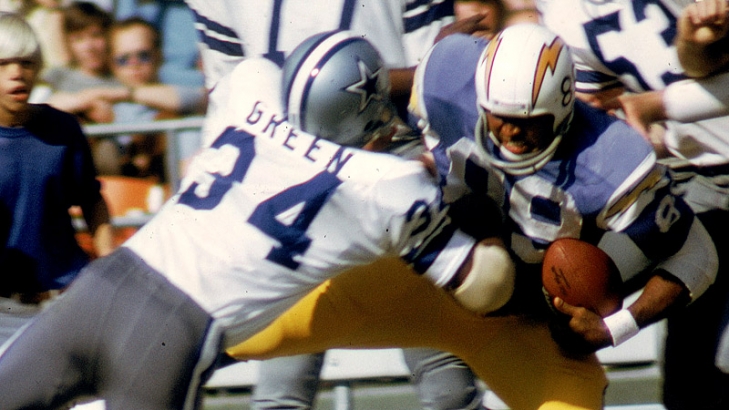
During a time when scouting departments mostly focused on well-known college football programs, the early Dallas Cowboys front office was known for discovering overlooked talent from unusual sources. One example is Cornell Green, a two-time All-American basketball player at Utah State with no prior football experience. Acting on a tip from the Aggies’ basketball coach, legendary personnel executive Gil Brandt offered Green, a 6-foot-3, 208-pound forward, a $1,000 signing bonus. Brandt and head coach Tom Landry believed Green’s height, agility, and rebounding skills would successfully transfer to football—and they were overwhelmingly correct.

Green emerged as a natural talent, joining the 1962 roster as an undrafted free agent and earning a spot on the NFL All-Rookie team. By 1963, he had become the full-time starting left cornerback, demonstrating a keen ball-hawking instinct by recording a career-high seven interceptions. Significantly taller than most cornerbacks of his era, Green used his impressive stature to disrupt pass routes at the line of scrimmage and had the raw speed to recover quickly downfield.

Tom Landry’s intricate "Flex Defense" required high discipline and intelligence from the secondary, and Green quickly became one of its most reliable anchors. He earned his first Pro Bowl in 1965, beginning a dominant period during which he led Dallas in interceptions four times in his first eight seasons. Between 1966 and 1969, Green was regarded as the NFL's top boundary defender, earning three First-Team All-Pro honors (1966, 1967, 1969) and helping transform Dallas from a new franchise into a consistent championship contender.

In 1970, Landry challenged Green to move inside to strong safety, testing his athletic versatility. Green adapted effortlessly, providing physical run support in the box and effectively covering tight ends and slot receivers. This smooth transition elevated the secondary's performance, earning him Pro Bowl selections in 1971 and 1972. Significantly, Green anchored the secondary during Super Bowl VI, leading Dallas to a 24–3 victory over the Miami Dolphins and securing the franchise's first Lombardi Trophy.

Perhaps most remarkably, the former hoopster was a true ironman throughout his 13-year career. Green played in 182 consecutive regular-season games—never missing a single contest during his entire playing run—and recorded 145 consecutive starts for the Cowboys. He also proved to be a secret weapon on special teams, using his leaping ability to record a franchise-record 10 blocked kicks, eight of which came on field goal attempts.

Green played in 182 regular-season games, compiling 34 interceptions, two defensive touchdowns, seven fumble recoveries, and one Super Bowl championship. A five-time Pro Bowler across two positions, three-time First-Team All-Pro, and member of the Cowboys’ 25th Anniversary Team, Green spent over three decades following his playing days as a scout for the organization.  Green might be one of the greatest success stories in franchise history.

36. Ezekiel Elliot

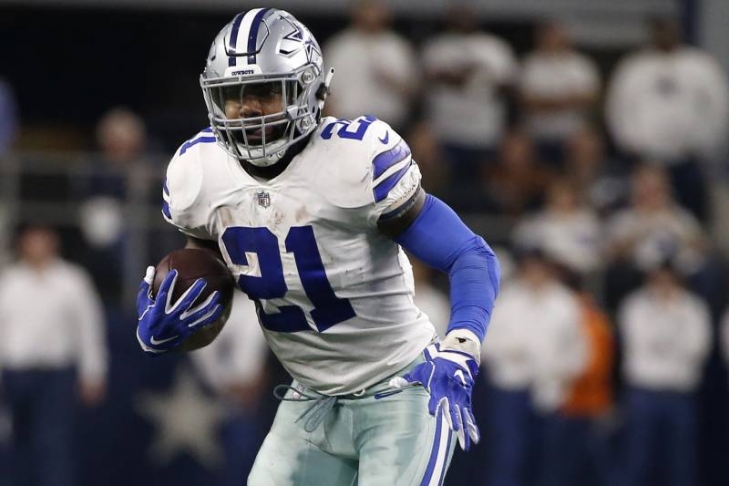
Ezekiel Elliott, selected fourth overall by Ohio State in the 2016 NFL Draft, made a powerful entry into Dallas. He quickly proved himself as one of the top feature backs of his time, running behind a talented offensive line. His debut season was remarkable, leading the NFL with 1,631 rushing yards and 15 touchdowns. These accomplishments earned him First-Team All-Pro honors, a Pro Bowl selection, and second place for AP NFL Offensive Rookie of the Year, and a fifth place MVP finish.

Elliott was the driving force behind the Dallas offense, combining a tough downhill running style with patience, top-tier pass protection, and reliable hands out of the backfield. In 2018, he earned his second league rushing title with 1,434 yards and also caught 77 passes, solidifying his role as a versatile three-down feature back. Throughout his first four seasons, Elliott consistently finished in the top-10 for rushing yards each year, demonstrating his durability and leading the NFL in touches and total scrimmage yards on a regular basis.

Beyond his rushing performance, Elliott played a key role in the passing game, surpassing 2,000 yards from scrimmage in 2018 and often ranking second in the league for all-purpose yards. Despite the increasing physical strain from his heavy workload, he continued to be a dependable goal-line and short-yardage option, surpassing 1,000 yards again in 2021 and helping Dallas secure several division titles.

After the Cowboys released him following the 2022 season for salary-cap management and a year with the New England Patriots, Elliott returned to Dallas for a second stint in 2024. Serving in a veteran rotational role, he provided short-yardage tough yards and pass-blocking leadership before moving on.

“Zeke” played in 118 regular-season games, compiling 8,488 rushing yards, 71 rushing touchdowns, 317 receptions, 2,405 receiving yards, and 10,893 yards from scrimmage alongside 83 touchdowns.

44. Jethro Pugh

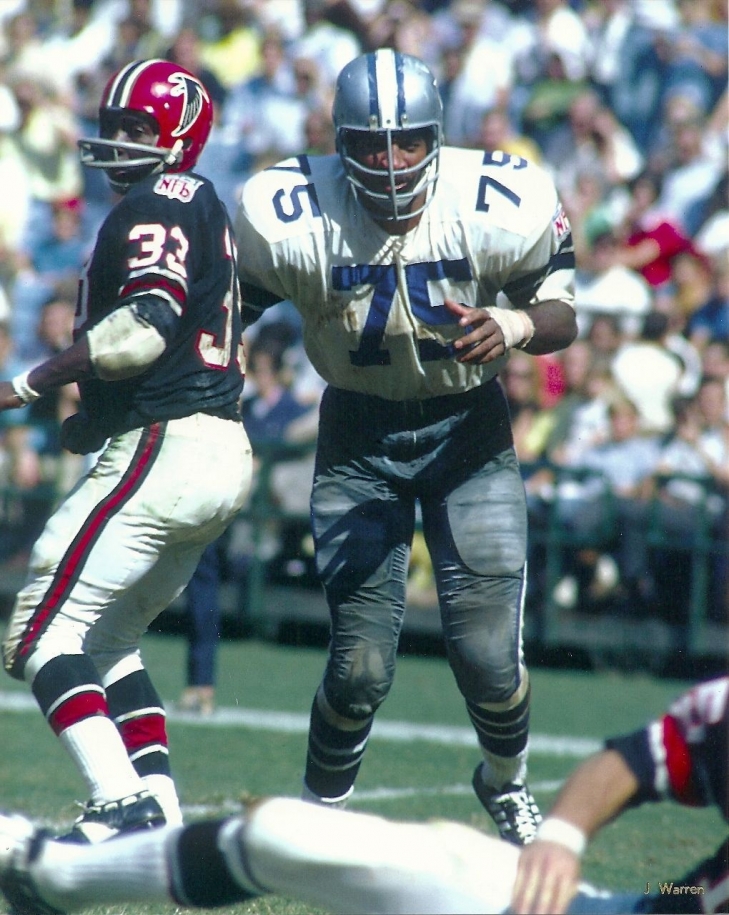
Long before small-school gems became prized commodities in modern draft rooms, Jethro Pugh put Elizabeth City State College on the national football map. Drafted in the 11th round in 1965, the 6-foot-6 North Carolina native arrived in Big D as a project with extraordinary length and explosive leverage. Tom Landry and Gil Brandt recognized those raw traits, molding Pugh into a dominant interior enforcer who anchored the legendary "Doomsday Defense" for nearly a decade and a half.

After serving as a rotational backup during his first two seasons, Pugh claimed the starting left defensive tackle spot in 1967. Lined up adjacent to Hall of Fame tackle Bob Lilly, Pugh took immediate advantage of the single-coverage schemes generated by Lilly's presence. He earned Second-Team All-Pro honors in 1967, bringing a rare blend of interior quickness and length that systematically disrupted opposing pocket mechanics.

While high-profile teammates like Lilly, Randy White, and Harvey Martin frequently captured national headlines and Pro Bowl nods, Pugh served as the unsung enforcer of Landry’s Flex system. He led the Cowboys in quarterback sacks for five consecutive seasons from 1968 through 1972, proving to be one of the most prolific interior pass rushers of his era. Though sacks did not become an official NFL statistic until 1982, internal team tracking credits Pugh with an eye-popping 95.5 career sacks.

Pugh was a constant big-game anchor during the franchise’s golden era, appearing in four Super Bowls and helping Dallas win Super Bowl VI and Super Bowl XII. His remarkable durability allowed him to log 13 consecutive postseason appearances, compiling 23 playoff games in navy and silver while anchoring an interior front that consistently dominated winter football.

When he retired after the 1978 season, Pugh departed as one of the longest-tenured and most dependable defensive contributors in franchise history. His 14 seasons in the Big D tie him for the third-longest tenure in Cowboys history, a testament to his toughness and technical mastery.

Over his career, Pugh compiled 96.5 unofficial sacks and 14 fumble recoveries.

42. Roy Williams

Following Oklahoma's victory in the 2000 national championship, Roy Williams entered the 2002 NFL Draft as the leading figure among collegiate defensive backs. The consensus All-American achieved a clean sweep of the Bronko Nagurski Trophy and Jim Thorpe Award in 2001, establishing himself as the country's most formidable enforcer. The Dallas Cowboys, aiming to make him the cornerstone of their secondary, traded up to pick the hard-hitting safety eighth overall.

Paired alongside veteran Darren Woodson as a rookie free safety in 2002, Williams wasted no time asserting his presence, earning All-Rookie honors while tying a franchise record with two interception returns for touchdowns. His true breakout arrived in 2003, when he logged 75 tackles and two picks to earn First-Team All-Pro honors, anchoring Bill Parcells' top-ranked defense and kicking off an impressive run of five consecutive Pro Bowl selections through 2007.

Williams was a throwback defensive back whose sheer physicality fundamentally changed how opposing receivers approached the middle of the field. Known for imposing, bone-jarring hits, his horse-collar tackling technique proved so punishing to ball-carriers that the NFL officially outlawed the move after the 2004 season—a mandate forever etched in league vernacular as the "Roy Williams Rule”.

Shifting permanently to strong safety in 2005, Williams continued to serve as a primary physical enforcer for Big D, putting together back-to-back five-interception campaigns in 2002 and 2006. However, as the league increasingly shifted toward high-flying passing attacks, his physical, run-support style faced mounting coverage challenges against speedier tight ends and slot receivers.

A forearm fracture derailed his 2008 season after just three games, prompting his release from Dallas the following spring. Williams spent two final seasons with the Cincinnati Bengals before hanging up his cleats.

He compiled 19 interceptions, 510 combined tackles, 6.5 sacks, 56 pass deflections, and three defensive touchdowns for Dallas.

17. Lee Roy Jordan

Lee Roy Jordan would play his entire career in pro football with the Dallas Cowboys, and he came in with high expectations as the sixth overall pick in the 1962 Draft.  Jordan played at Right Linebacker for his first three years, but it was a move to Middle Linebacker in 1966, where the former member of the Crimson Tide came into his own on the pro level.

15. Cliff Harris

Bypassed by every franchise in the 1970 NFL Draft out of NAIA school Ouachita Baptist, the unheralded safety arrived at Dallas training camp as an underdog determined to make the roster. Cliff Harris did far more than snag a roster spot; his rare closing speed, open-field tackling, and fiery demeanor blew away the coaching staff, earning him the starting free safety job as a rookie.

In his early years, Harris balanced multiple roles, delivering strong special teams play and occasionally returning punts and kickoffs while learning Tom Landry's "Flex" defense. By 1974, he had become the key center fielder for the "Doomsday Defense." That season marked the start of a remarkable period during which Harris achieved six straight Pro Bowl appearances (1974–1979) and three First-Team All-Pro selections (1976, 1977, and 1978). These accomplishments solidified his status as one of the most hard-hitting and instinctive safeties in the NFL.

His skill in reading quarterbacks and making powerful hits over the middle gave the Dallas secondary a formidable advantage. Alongside Charlie Waters, Harris became part of a legendary safety duo in football history, leading a secondary that contributed to Dallas’s five Super Bowl appearances during the decade. He was key in winning two world championships for Big D, lifting the Lombardi Trophy in both Super Bowl VI and Super Bowl XII.

Harris took the football world by surprise when he opted to retire at the top of his game after the 1979 season, at just 31, to pursue business opportunities.

Over a ten-year career spent entirely in Dallas (1970–1979), Harris recorded 29 interceptions and 18 fumble recoveries, while earning a spot on the NFL 1970s All-Decade Team. The Cowboys enshrined him in their Ring of Honor in 2004, and years later, he received long-overdue induction into the Pro Football Hall of Fame as part of the Centennial Class of 2020.

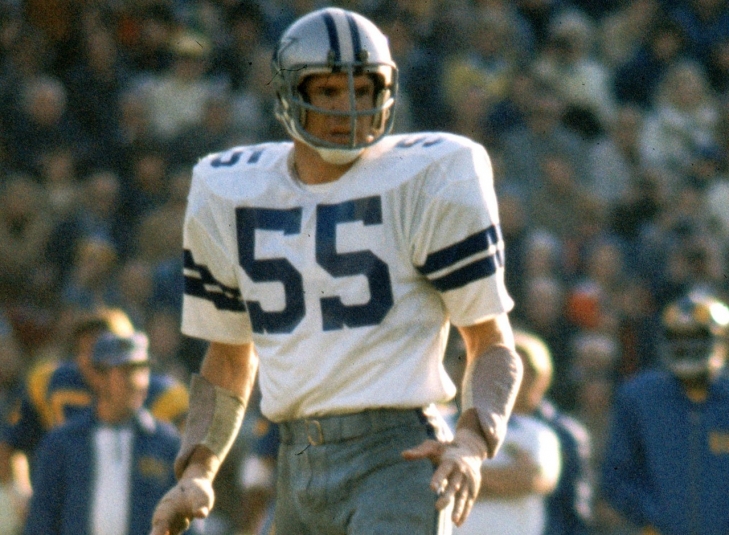
13. Chuck Howley

In 1958, Chuck Howley was selected seventh overall by Chicago out of West Virginia, but his early career was derailed by a severe knee injury that sidelined him for the entire 1960 season. Unsure whether his body would hold up, Howley considered stepping away from football altogether before a 1961 trade to Dallas offered a second chance. That move to Texas saved his career, transforming him from an injury-prone linebacker into one of the most dynamic playmakers in franchise history.

Inserted into Tom Landry's newly established "Doomsday Defense," Howley excelled after transitioning to the weakside linebacker position, where his exceptional speed, lateral agility, and coverage instincts thrived. Between 1965 and 1971, Howley received six Pro Bowl nominations over a seven-year period, notably earning five consecutive First-Team All-Pro honors from 1966 to 1970. His proficiency in dropping into coverage and discerning passing lanes contributed a significant and dangerous dimension to Landry's intricate defensive schemes, rendering him an indispensable component of the defensive front.

Apart from his personal achievements, Howley functioned as the strategic driving force behind those early Landry units during the team's evolution from an expansion team to a consistent contender. His thorough knowledge of opposing offenses enabled him to anticipate plays, often disrupting sweep plays in the backfield and applying pressure to perimeter receivers. He led a tenacious linebacking group alongside Lee Roy Jordan and Dave Edwards, setting a physical benchmark that characterized Dallas football in the late 1960s and early 1970s.

Howley's postseason exploits sealed his legacy, most notably during Super Bowl V against Baltimore. Despite the Cowboys falling in a 16–13 heartbreaker, Howley put together an iconic individual performance, picking off two passes and forcing a fumble. His effort earned him Super Bowl MVP honors—making him the first defensive player, and to this day the only player from a losing team, to capture the award. Bittersweet as that milestone was, Howley and the Doomsday Defense got their redemption the following year, smothering Miami 24–3 to claim victory in Super Bowl VI.

He remained a steady leader in Dallas through the 1973 campaign before finally hanging up his helmet after 13 years in blue and silver. In his 13 seasons with the Cowboys (1961–1973), Howley appeared in 165 games, recording 24 interceptions and 17 fumble recoveries in Big D. The franchise honored his decade-plus of defensive brilliance by adding him to the Cowboys Ring of Honor in 1977, setting the stage for his long-awaited, overdue induction into the Pro Football Hall of Fame in 2023.

16. Rayfield Wright

Drafted in the seventh round of the 1967 NFL Draft out of Fort Valley State, Rayfield Wright, the versatile athlete, spent his first three years in Dallas as a utility player—taking snaps at offensive tackle and tight end, and even filling in at defensive tackle. His career trajectory changed in 1970 when Tom Landry permanently installed him as the starting right tackle. "Big Cat" immediately blossomed, using his long arms, nimble footwork, and tight-end athleticism to redefine the standard for modern offensive tackles.

Settling in on the right side of the line, Wright established himself as an elite pass protector and a dominant run blocker. From 1971 through 1976, he earned six consecutive Pro Bowl selections, including three straight First-Team All-Pro nods from 1971 to 1973. Wright became the primary edge protector for Roger Staubach, routinely shutting down the era’s premier defensive ends and opening huge lanes for the Cowboys' multifaceted rushing attack.

His role on the offensive line was fundamental to the franchise's successful decade. Wright played in five Super Bowls, contributing to the Cowboys’ victories in Super Bowl VI and XII. His uncommon agility in open space enabled Landry to design creative sweep plays, and his strong pass-blocking gave the offense the time to execute deep, vertical routes.

Though he signed with the Philadelphia Eagles after his 1980 release, Wright never appeared in a game for them, keeping his entire playing career anchored in Dallas.

Wright played 166 games across 13 seasons in Big D (1967–1979), made the NFL 1970s All-Decade Team, was inducted into the Cowboys Ring of Honor in 2004, and entered the Pro Football Hall of Fame in 2006.

Subscribe to this RSS feed