
Menu
A+ A A-
Committee Chairman

Committee Chairman

Kirk Buchner, "The Committee Chairman", is the owner and operator of the site.  Kirk can be contacted at [email protected] .

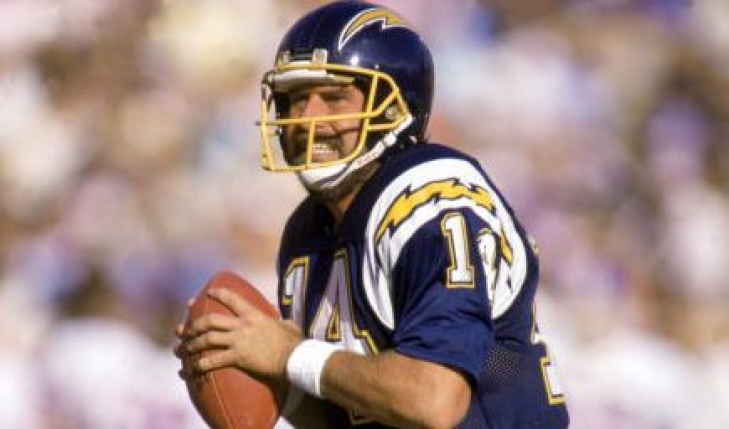
4. Dan Fouts

Selected in the third round (64th overall) out of Oregon in the 1973 NFL Draft, Dan Fouts stepped into a San Diego Chargers franchise struggling to establish a modern offensive identity. Through his first five seasons in Southern California, Fouts produced steady if unspectacular results while adjusting to the harsh realities of professional defenses. However, everything changed in 1978 when the franchise hired visionary head coach Don Coryell, setting the stage for a tactical revolution that would reshape the modern NFL passing game.

Under Coryell’s high-octane "Air Coryell" architecture, Fouts was given complete freedom to unleash his quick release, fearless pocket presence, and pinpoint downfield ball placement. Operating with weapons like Kellen Winslow, Charlie Joiner, and John Jefferson, Fouts transformed the position. Between 1979 and 1982, he embarked on the most prolific passing stretch in football history up to that point, leading the NFL in passing yards in four consecutive seasons.

Fouts shattered conventional passing limits, becoming the first player in NFL history to throw for over 4,000 yards in three consecutive seasons. In 1979, he broke the NFL single-season record with 4,082 passing yards and 24 touchdowns, carrying San Diego to its first playoff spot in 14 years. He erased his own mark the very next season in 1980 by throwing for 4,715 yards and 30 touchdowns, leading the Chargers to the AFC Championship Game.

In 1981, Fouts set the record for a third straight year with an astounding 4,802 passing yards and 33 touchdowns, driving San Diego back to the AFC Title Game after orchestrating a 41–38 overtime classic against Miami in the "Epic in Miami." His peak individual brilliance came during the strike-shortened 1982 campaign: in just nine regular-season games, Fouts threw for 2,883 yards (an incredible 320.3 yards per game) and 17 touchdowns, earning both the PFWA NFL Most Valuable Player Award and AP Offensive Player of the Year honors while posting a staggering 22 Approximate Value.

Even as age and injuries began to take their toll in the mid-1980s, Fouts remained an elite downfield distributor. He earned his sixth Pro Bowl selection in 1985 after throwing for 3,638 yards and 27 touchdowns, and he led the NFL in passing yards per game for a sixth and final time in 1986 (262.2 yards per game). Across his eight seasons operating the Air Coryell offense from 1978 through 1985, Fouts averaged over 3,800 passing yards per 16 games, establishing a standard for aerial volume that was decades ahead of its era.

Retiring following the 1987 season, Fouts spent his entire 15-year career in a San Diego uniform, setting every major franchise passing record. When he hung up his helmet, his 43,040 career passing yards ranked second in NFL history behind only Fran Tarkenton. He also threw for 254 touchdowns.
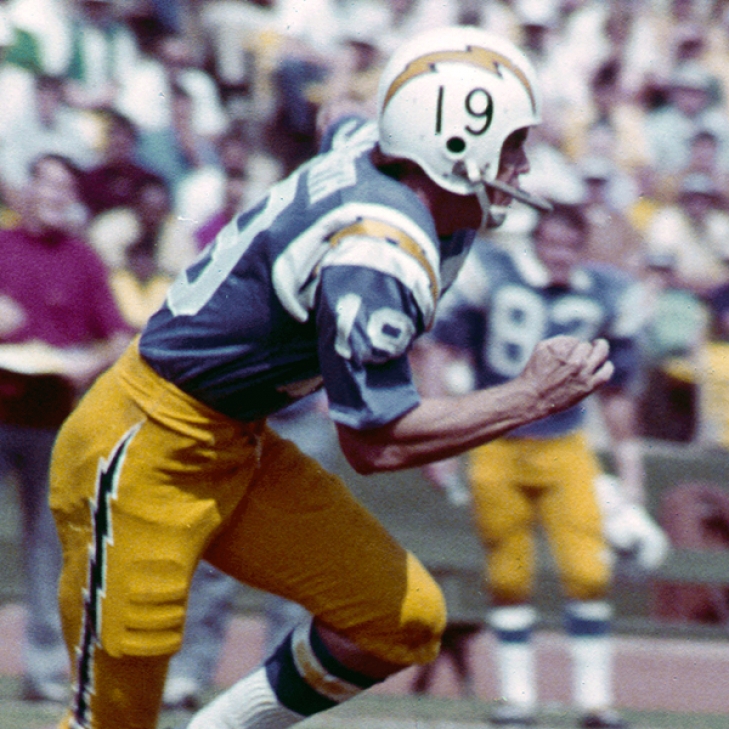
3. Lance Alworth

Selected in the first round of both the 1962 NFL Draft (8th overall by the San Francisco 49ers) and the 1962 AFL Draft (9th overall by the Oakland Raiders) out of Arkansas, Lance Alworth became the prize of a fierce cross-league bidding war. When the San Diego Chargers acquired his AFL rights in a trade that sent three players to Oakland, head coach Sid Gillman unlocked the ideal deep threat for his revolutionizing, vertical passing offense. Blessed with leap-frog verticality, smooth acceleration, and graceful body control, Alworth earned the nickname "Bambi"—a moniker that belied his lethal, game-breaking talent.

Injuries limited Alworth to just four games during his 1962 rookie campaign, but he erupted onto the national scene in 1963 as the centerpiece of Gillman's air attack. Pairing with star quarterback Tobin Rote, Alworth posted 61 receptions for 1,205 yards and 11 touchdowns, earning First-Team All-AFL honors and driving San Diego to the 1963 AFL Championship. In the title game blowout over the Boston Patriots, Alworth set the tone early with a 48-yard touchdown catch, securing the franchise's lone league championship.

That breakout season launched an extraordinary seven-year stretch (1963–1969) during which Alworth gained at least 1,000 receiving yards in every single campaign—a staggering feat in an era dominated by ground attacks. Between 1963 and 1968, he was named a First-Team All-AFL selection in six consecutive seasons. Alworth dominated league leaderboards throughout the decade, topping the AFL in receiving yards three times (1965, 1966, 1968), receiving touchdowns three times (1964, 1965, 1966), and receptions three times (1968, 1969, 1968).

Alworth's explosive downfield efficiency routinely turned short passes into long-distance scoring plays. He twice led the AFL in total yards from scrimmage (1965 and 1968), proving the most terrifying offensive skill player in the league's history. Between September 1962 and November 1969, Alworth caught a pass in 96 consecutive games, setting a professional football record at the time and laying the blueprint for modern wide receiver play.

Before the 1971 season, San Diego traded Alworth to the Dallas Cowboys in a blockbuster deal for three players. He played his final two professional seasons in Texas, providing veteran leadership and scoring a key touchdown in Dallas's Super Bowl VI victory over the Miami Dolphins. When he hung up his cleats following the 1972 season, his status as the AFL's signature aerial icon was firmly secured.  He left the Chargers with 9584 yards and 81 touchdowns. 

The Chargers legend quickly accumulated individual accolades after his career concluded. Named a consensus choice for the official AFL All-Time Team, Alworth was inducted into the Chargers Hall of Fame in 1977 as part of its second-ever class. In 1978, he made history by becoming the first player inducted into the Pro Football Hall of Fame primarily for his accomplishments in the American Football League. The franchise subsequently retired his iconic No. 19 jersey, and his enduring brilliance was recognized when he was named to both the NFL 75th Anniversary All-Time Team and the NFL 100th Anniversary All-Time Team.

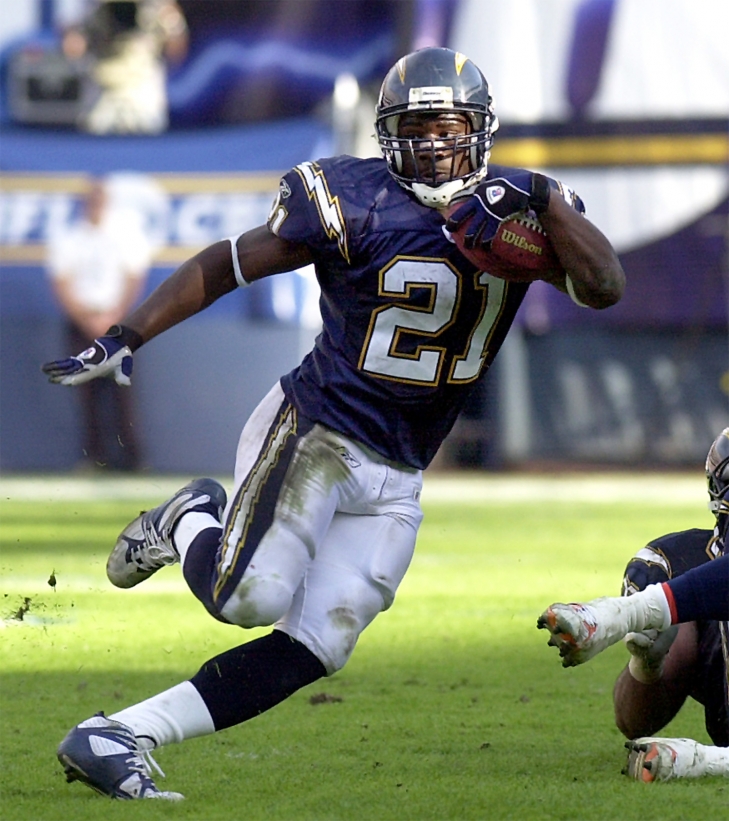
2. LaDainian Tomlinson

When the San Diego Chargers selected Texas Christian University consensus All-American LaDainian Tomlinson with the fifth overall pick in the 2001 NFL Draft, they were not merely securing a franchise running back; they were acquiring the defining face of the organization for the 21st century. Coming off a collegiate career in which he rushed for 5,263 yards and 54 touchdowns for the Horned Frogs, Tomlinson brought a rare combination of vision, stiff-arm power, lateral quickness, and pass-catching versatility to Southern California, stepping into the starting role as an immediate star.

Tomlinson's rookie campaign signaled the arrival of an elite dual-threat weapon. He finished ninth in the NFL with 1,236 rushing yards and 10 touchdowns on 339 carries, adding 59 receptions for 367 yards to earn PFWA All-Rookie Team honors. His seamless ability to contribute as both a downhill runner and a safety valve out of the backfield gave quarterback Doug Flutie and head coach Marty Schottenheimer a foundational cornerstone around which to build an offensive identity.

That impressive debut launched an unprecedented multi-year run of elite production. Tomlinson exploded for back-to-back 1,600-yard rushing seasons in 2002 and 2003, topping 2,100 yards from scrimmage in both campaigns. His 2003 season stood out as a masterclass in versatility: he rushed for 1,645 yards and 13 scores while hauling in a career-high 100 receptions for 725 yards and four touchdowns. That year, he led the NFL with 2,370 total yards from scrimmage, becoming the first player in league history to record 1,000 rushing yards and 100 catches in a single season.

As opposing defenses adjusted to his open-field threat, Tomlinson evolved into an unstoppable goal-line hammer. Although his pure rushing yardage totals dipped slightly to 1,335 in 2004 and 1,462 in 2005, his nose for the end zone surged. He led the NFL with 17 rushing touchdowns in 2004 and topped that with 18 in 2005, paired with another 1,832 yards from scrimmage. Across his first five professional seasons, Tomlinson proved impossible to neutralize, setting a floor of excellence that few backs in league history have ever matched.

The 2006 campaign elevated Tomlinson from an All-Pro contributor into the realm of single-season lore. In a year for the record books, he led the league with 1,815 rushing yards and set NFL single-season records with 28 rushing touchdowns and 31 total touchdowns from scrimmage (plus 186 total points scored). Behind his relentless scoring pace, San Diego stormed to a franchise-best 14–2 record. Tomlinson was rewarded with a sweep of the league's top individual hardware, capturing the NFL Most Valuable Player Award, AP Offensive Player of the Year, and the Bert Bell Award.

Simultaneously, Tomlinson's impact extended well beyond his stat lines and highlight-reel stiff-arms. Off the gridiron, his extensive philanthropic work through the Tomlinson's Touching Lives Foundation—supporting vulnerable families, education initiatives, and youth programs across San Diego and Texas—earned him the prestigious 2006 Walter Payton NFL Man of the Year Award (co-honored with Drew Brees). His character and athletic brilliance made him one of professional sports' most universally respected figures.

Though operating with an immense workload, Tomlinson maintained his crown as the league's top back in 2007. He captured his second consecutive NFL rushing title with 1,476 yards and once again led the league with 15 rushing touchdowns, powering San Diego to the AFC Championship Game. Over his final two seasons in navy and gold (2008–2009), he added another 1,840 rushing yards and 23 rushing touchdowns to his ledger before concluding his playing career with a two-year stint with the New York Jets.

Retiring after the 2011 season, Tomlinson was named to the NFL 2000s All-Decade Team as a top offensive player of his era. The Chargers honored him in November 2015 by inducting him into the Chargers Hall of Fame and retiring his No. 21 jersey. He was inducted into the Pro Football Hall of Fame in 2017 and later named to the NFL 100th Anniversary All-Time Team.

As a Charger, Tomlinson had 2,880 carries for 12,490 rushing yards, 138 rushing touchdowns, 530 receptions for 3,955 receiving yards, 15 receiving touchdowns, 16,445 yards from scrimmage, 153 total touchdowns, and seven passing touchdowns (on 8-of-12 passing).

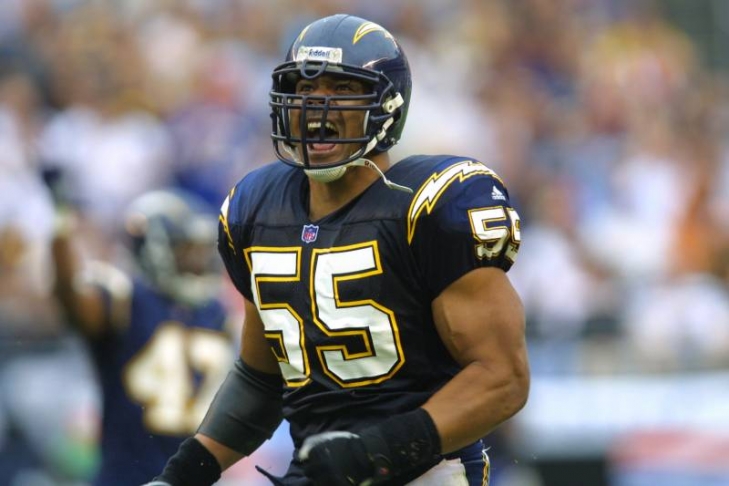
1. Junior Seau

Born and raised in nearby Oceanside before starring at USC, Tiaina Baul "Junior" Seau Jr. did not just sign with the San Diego Chargers as the fifth overall pick in the 1990 NFL Draft—he inherited a kingdom that already claimed him as its own. When the local franchise turned in his card, it forged a bond between a native son and a region that would redefine Chargers football culture for more than a decade.

Seau wasted no time establishing his presence on the field, stepping into the starting lineup as a rookie and showcasing a kinetic style of play that earned him the moniker "The Tasmanian Devil." Blessed with rare closing speed, sideline-to-sideline range, and uncannily accurate pre-snap instincts, Seau played middle linebacker with an infectious, uncontrolled intensity. He did not merely diagnose plays; he shot gaps, blew up blocking schemes, and met ball-carriers in the backfield before development could even begin.

By his second season in 1991, Seau earned his first Pro Bowl selection, beginning one of the most dominant individual runs in NFL history. He became the unquestioned emotional heartbeat and physical engine of the Chargers defense, leading San Diego to a division title in 1992 and earning NFL Defensive Player of the Year honors from the Newspaper Enterprise Association (NEA). His passionate leadership transformed the locker room culture, instilling a fierce defensive identity that defined the franchise throughout the decade.

The high-water mark of Seau's team success arrived during the magical 1994 campaign. Serving as the primary captain and leader of a gritty Chargers squad, Seau delivered an iconic postseason performance in the AFC Championship Game against the Pittsburgh Steelers. Playing through a severe pinched nerve in his neck, Seau recorded a staggering 16 tackles, single-handedly keying a goal-line stand and pulling off a dramatic 17–13 upset to propel San Diego to Super Bowl XXIX—the first and only Super Bowl appearance in franchise history.

Seau’s individual accolades during his time in San Diego place him among the elite linebackers ever to play the game. From 1991 through 2002, he was selected to 12 consecutive Pro Bowls in a Chargers uniform. He earned First-Team AP All-Pro honors six times (1992–1996, 1998) and Second-Team honors twice more, firmly establishing himself as the premier linebacking force of his era alongside contemporaries like Mike Singletary and Ray Lewis.

Off the field, Seau was equally revered in San Diego for his philanthropy and civic engagement. Through the Junior Seau Foundation, established in 1992, he raised millions of dollars to support child abuse prevention, drug and alcohol awareness, and educational programs for underprivileged youth across Southern California. His selfless community work earned him the prestigious Walter Payton NFL Man of the Year Award in 1994, cementing his status as a beloved civic icon.

After 13 glorious seasons in San Diego, the Chargers traded Seau to the Miami Dolphins in 2003, where he spent three seasons before closing his storied 20-year NFL career with four years as a respected veteran leader for the New England Patriots. Across his two decades in the league, Seau appeared in 268 regular-season games (243 starts), making two Super Bowl appearances and earning a spot on the NFL 1990s All-Decade Team.

Tragedy struck the football world in May 2012 when Seau died by suicide at age 43. Subsequent brain tissue studies revealed he suffered from Chronic Traumatic Encephalopathy (CTE), a degenerative brain disease linked to repetitive head impacts. His tragic death sparked nationwide conversations regarding player safety and long-term neurological health, while his family and foundation continued advocating for head trauma research in his memory.

The Chargers inducted Seau into their Hall of Fame in 2011 and retired his No. 55 jersey in 2012 after his passing. He was posthumously enshrined in the Pro Football Hall of Fame in 2015 and named to the NFL 100th Anniversary All-Time Team in 2019.

With the Chargers, Seau compiled 1,480 combined tackles (1,185 solo, 293 assists), 47.0 sacks, 15 interceptions, 14 forced fumbles, and 11 fumble recoveries.