Menu
A+ A A-
Site Admin

Site Admin

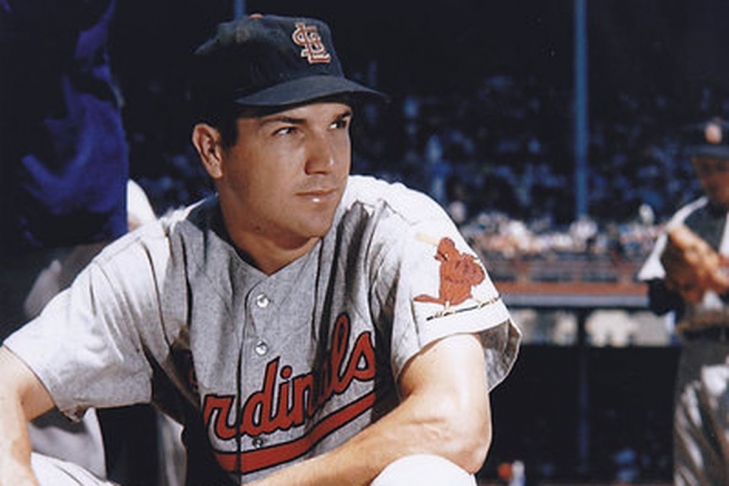
8. Ken Boyer

When establishing the definitive benchmark for excellence in the modern hot corner, esteemed baseball historians often scrutinize beyond the most flamboyant personalities to emphasize a player who epitomized durability and possessed an exceptional, middle-of-the-order power. Ken Raymond Boyer was initially signed by the St. Louis Cardinals as a pitcher; however, a swift organizational transition to third base during his second minor league season proved to be an unequivocal strategic success for both the athlete and the franchise. Making his eagerly awaited Major League debut in 1955, the highly athletic and physically commanding native of Missouri not only solidified the left side of the infield but also evolved into the silent yet authoritative cornerstone of the entire team. Throughout a distinguished decade-long tenure, the esteemed team captain set a benchmark for multidimensional consistency, ranking among the most exemplary eras in the extensive history of the St. Louis Cardinals.

His introductory summer of 1955 as a rookie demonstrated immediate front-line potential, as he achieved a robust batting average of .269, with 18 home runs and 22 stolen bases. Boyer transformed run production and defensive theft into a disciplined daily routine, showcasing such exceptional defensive mobility that the front office occasionally employed his world-class speed to patrol center field during a significant portion of the 1957 season. Upon his permanent return to his natural position at third base, he established complete dominance over the role. Over the following six seasons, he earned five National League Gold Glove Awards and led all Senior Circuit third basemen in Total Zone Runs on three separate occasions, thereby firmly establishing his reputation among the elite defensive players to have ever played the game.

Nevertheless, Boyer was far from being a one-dimensional defensive specialist; he evolved into one of the most formidable, high-efficiency right-handed sluggers of his era. He methodically dismantled National League pitching staffs, achieving five separate seasons with a batting average significantly exceeding .300, coupled with eight consecutive summers of at least 23 home runs.

His legacy truly reached its peak when he was named team captain in 1959, kicking off an amazing streak with six straight All-Star selections. Between 1958 and 1963, he regularly ranked high in the National League Most Valuable Player voting, paving the way for his standout 1964 regular-season performance.

During the remarkable 1964 championship season, Boyer demonstrated exceptional performance in high-pressure situations. Serving as the spiritual leader of an unwavering team, he hit 24 home runs and led the entire National League with a career-high 119 runs batted in. His advanced efficiency metrics were entirely unparalleled, earning him the prestigious National League Most Valuable Player Award. His authoritative presence in critical games directly contributed to historic postseason achievements; in Game 4 of the 1964 World Series against the New York Yankees, Boyer hit a legendary, game-winning grand slam off Al Downing, and concluded the championship run with an impressive 3-for-4 performance in Game 7, securing the title for St. Louis.

Just one summer later, his chronic, agonizing back ailments severely limited his torque and range. Recognizing the onset of a natural regression, the front office initiated a highly emotional business exit in October 1965, trading their legendary captain to the New York Mets in a blockbuster deal for Al Jackson and Charley Smith—drawing a definitive curtain on his peak years.

With the Cards, Boyer accumulated 1,855 hits, 281 doubles, 255 home runs, and 1,001 runs batted in, completely validated by a brilliant .293/.356/.475 career slash line. The Cardinals retired Boyer's number 14 in 1984, and he was named to St. Louis' Hall of Fame in 2014, the first year of its existence.
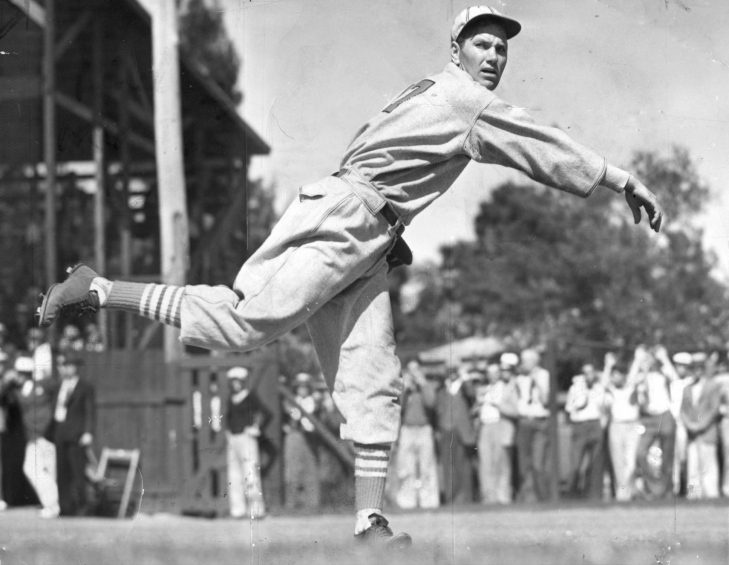
7. Dizzy Dean

When we declare that Bob Gibson was the preeminent pitcher in the history of the St. Louis Cardinals, we substantiate this assertion; however, longevity and overall career significance constitute separate considerations. If the discussion pertains to the most rapid, overwhelmingly dominant peak performance by a Redbirds pitcher, that accolade unquestionably belongs to another individual. Born Jay Hanna Dean, but widely known as “Dizzy” due to his flamboyant, assertive, and humorously self-assured demeanor, the nation’s prodigious right-hander regarded Major League Baseball as his personal domain. Following a brief debut involving one game in 1930 and a swift stint in the minor leagues for further development, he secured a permanent position in the rotation for the 1932 season. He did not merely take the mound; he became a cultural icon and a high-velocity workhorse who set the pace throughout the National League, leading an enduring multi-era peak that illuminated the sport's history with exceptional brilliance.

His introductory 1932 campaign was a remarkable display of extensive endurance. Dean transformed logging numerous innings into a disciplined daily routine, leading the Cardinals to a competitive record of 18–15 and ranking third among all National League pitchers with a bWAR during his rookie season, owing to his 191 strikeouts and four shutouts over a league-high 286 innings. Advanced analytical metrics strongly substantiate his immediate influence on the team.

He maintained that the frontline trajectory directly into the 1933 schedule, achieving his first 20-win campaign (20–18) and securing another league-leading strikeout crown, thereby paving the way for the historic pinnacle of his career on the mound.

The pinnacle of his hardware-certified legacy was reached during an exceptional 1934 regular-season performance. This period marked the summer when the Cardinals earned the affectionate nickname "Gashouse Gang”, a rugged and dirt-stained assembly of characters, with Dean serving as the unequivocal representative of the franchise. He delivered an exemplary demonstration of defensive mastery, culminating in an impressive 30–7 record, making him the last National League pitcher to achieve 30 wins in a single season. His advanced efficiency metrics dominated the era; he led Major League Baseball with seven shutouts and an outstanding 9.0 bWAR, thereby securing the National League Most Valuable Player award. His prowess in high-stakes games translated directly into world championship titles awarded in October. Dean posted a 2–1 record in the 1934 World Series against Detroit, concluding his performance with a historic, complete-game shutout in Game 7 to definitively secure the championship for St. Louis.

Far from a single-season peak, "Ol' Diz" maintained an unrivaled baseline of elite dominance over the next two summers, finishing as the runner-up for the National League MVP in both 1935 and 1936. He systemically dismantled opposing lineups to win 28 games in 1935 and 24 more in 1936, running his streak of National League strikeout crowns to four consecutive seasons. From 1932 to 1937, he never finished lower than third in pitching bWAR across the Senior Circuit, showcasing a concentrated era of dominance that left opposing managers completely helpless.

A single pitch ultimately led to a sudden, career-altering crossroads during the 1937 All-Star Game. A line drive struck by Earl Averill resulted in Dean sustaining a fractured toe; in an attempt to pitch through the injury prematurely, he modified his mechanics, leading to an immediate arm injury. The organizational departure occurred prior to the 1938 season when the front office traded their declining ace to the Chicago Cubs in exchange for a substantial package of players and cash. Chronic bursitis and a dead arm diminished his effectiveness significantly during his tenure with Chicago, marking a quiet conclusion to his peak years.

Across his 213 appearances as a Cardinal, Dean accumulated exactly 134 wins against just 75 losses, maintaining a brilliant 3.43 ERA, 120 complete games, 23 shutouts, and 924 strikeouts over 1,595.2 innings of work.

Dean would enter the Baseball Hall of Fame in 1953, and 19 years later, his #17 was retired by St. Louis.  The franchise also inducted Dean as part of their first Hall of Fame class in 2014.

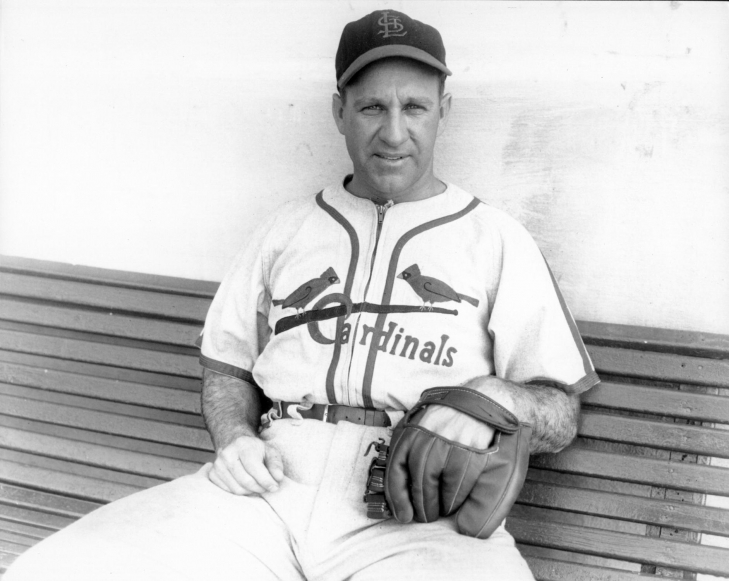
6. Enos Slaughter

If you are a regular reader of Notinhalloffame.com, you know that the editorial staff is an absolute sucker for great sports names. Enos Slaughter is a fantastic identifier all on its own, but when you inject his timeless, rustic moniker, you get Enos “Country” Slaughter—a combination of words so beautifully evocative of a bygone era that the temptation to artificially elevate him in the historical ledger was immense. We didn't do that, of course, but his performance on the grass didn't require any favoritism anyway. 

Emerging from the Redbirds' minor league talent pipeline, the broad-shouldered, highly aggressive right fielder was known for his unwavering refusal to walk, sprinting to first base even after taking a walk. Throughout his notable yet interrupted career in Missouri, he served as the competitive spark and high-energy driver for three pennant-winning teams, consistently delivering solid line-drive production that cemented his legendary status in local lore.

His 1938 debut season served as an impressive introduction, as he posted a .276 batting average over 112 games. Interestingly, this would remain his lowest single-season batting average during his main years with the Cardinals, highlighting his remarkable consistency over the next decade and a half. In 1939, he became a key player, regularly dismantling National League pitching and leading the league with 52 doubles while maintaining a .320 batting average. He sustained that upward trajectory directly into the 1940s, capturing a well-deserved runner-up finish in the 1942 National League Most Valuable Player balloting after pacing the circuit in hits (188) and triples (177) to propel St. Louis to a world championship.

Then, at the absolute evolutionary zenith of his physical peak, the broader geopolitical realities of World War II engineered a sudden, three-year competitive blackout. Slaughter completely stepped away from the sport from 1943 through 1945 to serve his country in the Army Air Forces. Had those three prime summers not been sacrificed, he would have easily compiled eleven individual .300 campaigns for the organization rather than eight.

Demonstrating the legendary grit that defined his entire identity, his 1946 return to civilian life marked a remarkable moment of athletic redemption. Slaughter dominated the Senior Circuit leaderboards by hitting 18 home runs and driving in a league-high 130 runs, finishing just behind in the NL MVP voting. The peak of his baseball achievements occurred in October during Game 7 of the 1946 World Series against the Boston Red Sox. With the game tied at 3–3 in the eighth inning, Slaughter sparked a memorable hit-and-run from first base on a line drive to left-center field by Harry Walker.  Bypassing standard strategic caution and charging through a visible stop sign from his third-base coach, he executed "Slaughter's Mad Dash"—a relentless, full-throttle sprint from first base all the way to home plate. Catching the Boston defense entirely off guard and sliding across the plate to score the world-championship-winning run, the iconic play remains one of the most celebrated, high-leverage moments in the history of global sports.

Slaughter remained a frontline fixture through the turn of the decade, recording another spectacular third-place MVP finish in 1949 by leading the league with 13 triples while batting a brilliant .336.

The inevitable business exit materialized in April 1954 when management initiated a youth movement, shocking the local community by trading the aging icon to the New York Yankees, where he would secure two more championship rings as a highly effective utility hand. Over his 1,751 games representing St. Louis, he accumulated exactly 2,064 hits, 366 doubles, 135 triples, 146 home runs, and 1,148 runs batted in, completely validated by an exceptional .305/.384/.463 franchise slash line.

He entered the Baseball Hall of Fame via the Veterans Committee in 1985.  Eleven years later, Slaughter's number 9 was retired by the team, and in 2014, he was part of the Cardinals’ inaugural Hall of Fame class.

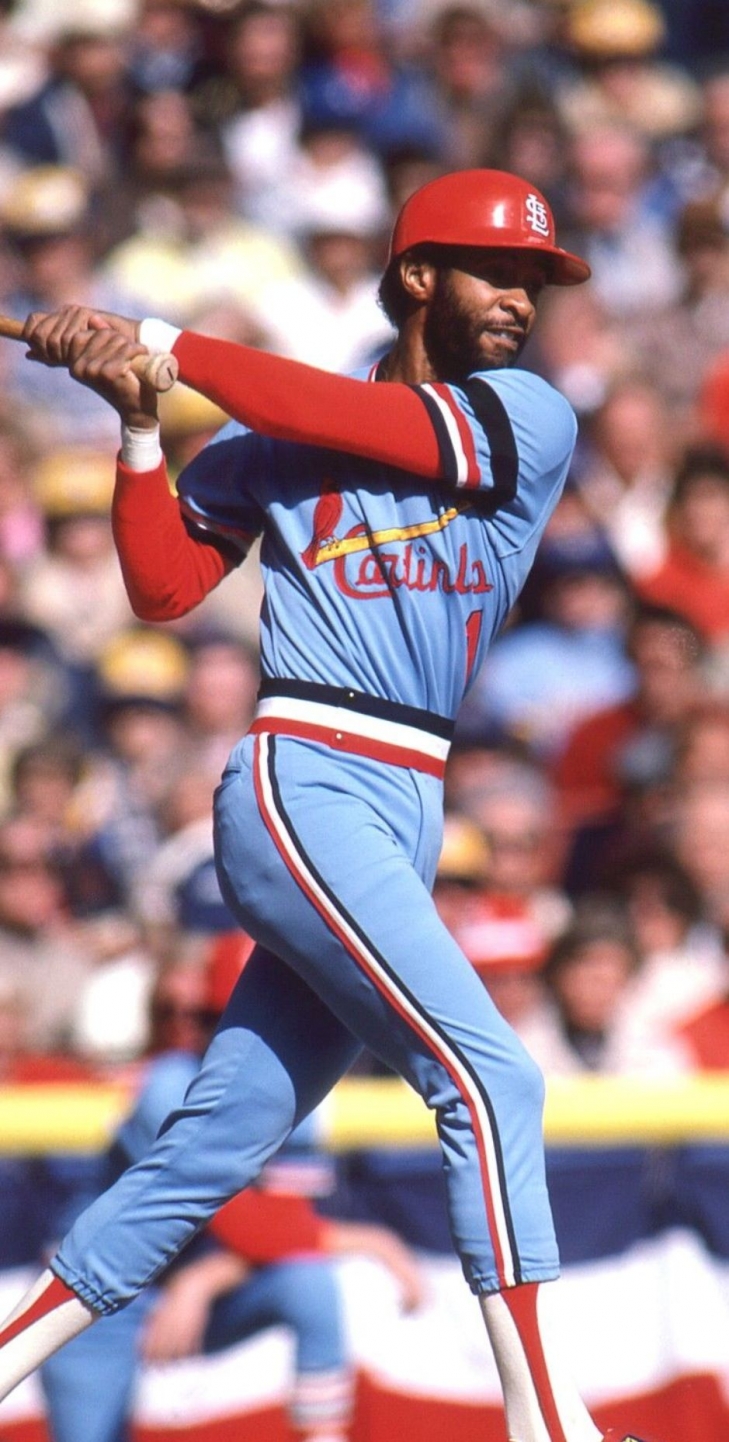
5. Ozzie Smith

When looking at the most impactful moments in the sport's history, the December 1981 trade that changed the balance of the National League really stands out as a major event. The San Diego Padres gave up their promising young shortstop, thinking he was only good at defense and would never be a strong hitter. They couldn’t have been more mistaken. Ozzie Smith was sent to Missouri in a historic trade for Garry Templeton. He didn’t just step into a spot on the infield; he became the energetic, acrobatic heart of the Redbirds’ exciting resurgence. Over an incredible 15 seasons, "The Wizard" completely transformed how his position was played on defense and gradually developed his offensive skills into a top-tier weapon at the top of the lineup.

His initial phase in St. Louis immediately confirmed Whitey Herzog's vision of emphasizing speed, aggressive defense, and generating runs. Although Smith’s compact swing never suggested a power hitter, he dedicated himself to improving his offensive game, transforming his approach under the Gateway Arch. He made consistently making high-velocity contact a daily habit, accumulating 1,944 of his 2,460 career hits while with the Cardinals. Once on the bases, he leveraged his exceptional acceleration to produce 13 consecutive seasons with at least 20 stolen bases, amassing 433 of his 580 career steals with the team and continually challenging opposing pitchers.

The pinnacle of his evolutionary development as a comprehensive, multidimensional athlete was demonstrated during a remarkable 1987 regular season. Acting as the driving force behind a pennant-winning team, Smith delivered an exceptional offensive performance that exceeded conventional expectations. He achieved a remarkable batting average of .303, his career high, supplemented by 40 doubles and 104 runs scored across 158 games. Most notably, he attained this high level of offensive output without recording a single home run throughout the summer. His exceptional discipline at the plate was unmatched; he drew 89 walks compared to only 36 strikeouts, resulting in an impressive on-base percentage of .392. This performance merited the receipt of a Silver Slugger Award and contributed to a strong second-place finish in the National League Most Valuable Player voting, surpassed only by Andre Dawson.

Nevertheless, while his offensive development solidifies his overall value, it is his extraordinary, gravity-defying defensive prowess that sustains his standing in the sport’s enduring zeitgeist. "The Wizard of Oz" did not merely play shortstop; he did so with a predatory, awe-inspiring artistic flair that transformed routine grounders into a literal human highlight reel, famously executing his iconic pre-game backflip to the utmost delight of the Busch Stadium spectators. He secured 13 of his 15 career Gold Glove Awards while solely representing St. Louis, thereby establishing a standard that remains unparalleled.

His advanced analytical filters strongly affirm his defensive dominance as the greatest to ever wear leather. He led National League shortstops in Total Zone Runs eight times—ranking first all-time at the position—and led the league in fielding percentage seven times. As a Redbird, he was the league leader in defensive bWAR five times, retiring as the sport's all-time top defensive player, conclusively establishing himself as the greatest defensive asset in baseball history.

His steady hand and unmatched instinct directly translated into historic team success, guiding the franchise to three National League pennants and the ultimate world-championship crown during a magical 1982 Fall Classic run, highlighted by his unforgettable, walk-off home run in Game 5 of the 1985 NLCS that triggered Jack Buck's immortal "Go crazy, folks!" broadcast.

Across his 1,990 games representing St. Louis, he accumulated exactly 1,944 hits, 991 runs scored, 876 bases on balls, and 433 stolen bases. Smith would enter the Baseball Hall of Fame in 2002 on his first year of eligibility, and was also named to the inaugural Cardinals Hall of Fame Class in 2014.  Smith's #1 was retired in 1996, right after he hung up the cleats.