Menu
A+ A A-
Site Admin

Site Admin

30. Lon Warneke

Chicago's rotation found its unlikely anchor in 1932 thanks to a keen observation from manager Rogers Hornsby. Noticing that Lon Warneke was staring at his own feet during his delivery rather than the hitter, Hornsby demanded a correction that transformed an ineffective "also-ran" into a league-wide phenomenon. The results were instantaneous and historic; in that breakout 1932 campaign, Warneke led the National League with 22 wins, a 2.37 ERA, and a 6.9 bWAR. He arrived as a struggling prospect and finished the season as the MVP runner-up, serving as the primary engine for a Cubs team that captured the National League pennant.

A period of sustained excellence followed that initial surge, as Warneke proved 1932 was no fluke. He rattled off three All-Star selections in four years and notched two more 20-win seasons, establishing himself as a model of durability in an era defined by high-scoring offenses. He had a rare combination of control and stamina, consistently placing him among the league leaders in innings pitched and complete games. He wasn't just a volume producer; he was a strategic master who used his newfound focus to navigate the most dangerous lineups of the decade.

The fans at Wrigley Field developed a deep connection with the humble right-hander, which made the news of his trade to the St. Louis Cardinals after the 1936 season particularly jarring. The move sparked significant backlash from the Chicago faithful, who had come to view Warneke as the face of the pitching staff. While he spent five productive seasons in Missouri, the allure of the North Side remained, and the organization eventually corrected its course by purchasing his contract back during the 1942 campaign.

Returning to the club to finish his career, Warneke provided a veteran presence that bridged the gap between two eras of Cubs baseball. He concluded his time in Chicago with 109 wins, a total that reflects both his early-career peak and his late-career resilience.
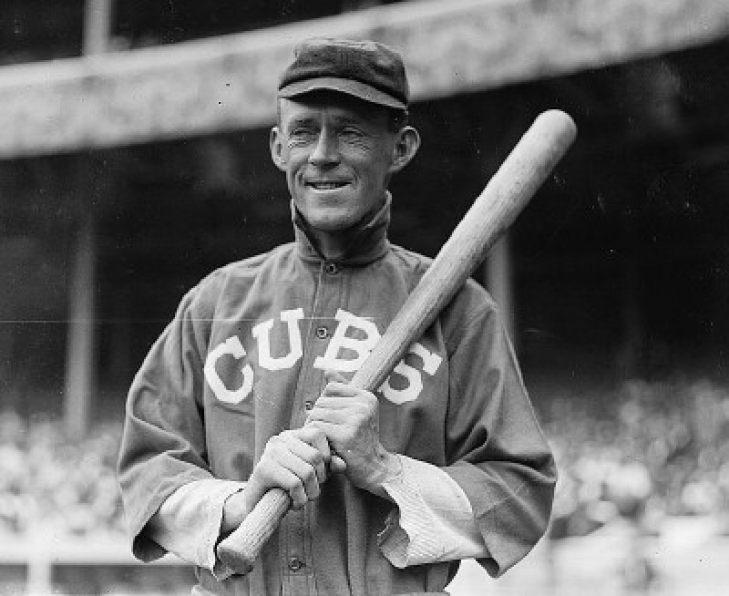
24. Johnny Evers

When Johnny Evers arrived in Chicago in 1902, he was a rail-thin teenager who reportedly weighed less than 100 pounds. Opposing fans initially thought he was a comedy act, but they quickly realized the "Trojan" was a fierce, surly competitor who treated every inch of the diamond like a battlefield. He locked down the starting second base job by 1903, forming a legendary, if personally frosty, partnership with Joe Tinker. While the two famously went years without speaking off the field, their synergy on the dirt anchored an infield that allowed the fewest runs in the league, proving that professional excellence doesn't always require personal friendship.

The peak of his Chicago residency was defined by the back-to-back World Series titles in 1907 and 1908. During those championship runs, Evers was a postseason titan, batting a blistering .350 in both Fall Classics. He wasn't a power hitter, but he possessed an elite batting eye that was decades ahead of its time. He led the National League in on-base percentage in 1912 with a staggering .431 mark and posted three seasons with an OBP over .400. He was the definitive figure for a small-ball age, a player who understood that a walk was just as lethal as a hit when it came to dismantling an opponent’s morale.

Evers had the reputation as the smartest man on the field. Evers was a master of the rulebook, most famously spotting that Fred Merkle had failed to touch second base in the heat of the 1908 pennant race, a heady play that eventually led the Cubs back to the World Series. However, his high-strung nature often led to "nervous prostration" and frequent clashes with umpires and management. In 1913, he was handed the keys to the dugout as player-manager, leading the club to a respectable 88 wins, but a bitter contract dispute with owner Charles Murphy led to a sudden and controversial exit.

The final walk toward the exit of his first Chicago tenure in 1914 led him to the Boston Braves, where he ironically won the MVP award and a third World Series ring in his first year away from the North Side. He eventually made a brief return to manage the Cubs again in 1921, but his legacy remained firmly rooted in those early championship years. He left the franchise with 1,340 hits and a reputation as the "crabbiest," most brilliant infielder to ever wear the uniform.

Johnny Evers was ushered into Cooperstown in 1946 by the Old Timers Committee, forever cementing the middle man of the famous trio. In 2021, the Cubs rightfully included him in their inaugural Hall of Fame class, a permanent nod to the man who proved that a sharp mind and a sharper tongue could build a dynasty.

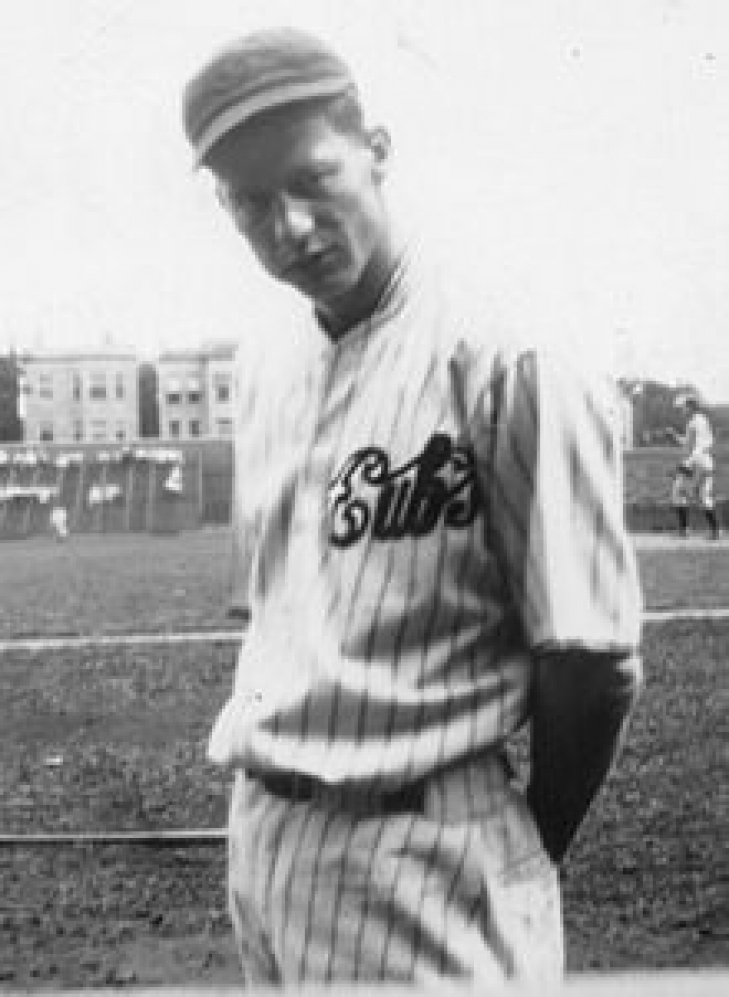
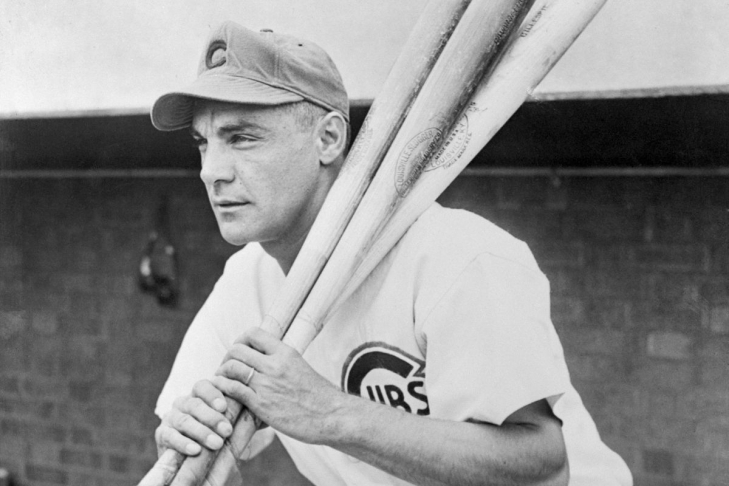
18. Phil Cavarretta

When Phil Cavarretta first stepped onto the grass at Wrigley Field in 1934, he was a mere teenager, making his debut just weeks after his 18th birthday. He arrived with the heavy burden of "future star" expectations, but for much of his early twenties, it looked like those expectations would be crushed by the training room table. Between 1936 and 1941, Cavarretta was a frequent visitor to the injury list, struggling to find the consistency or the health to stay in the lineup for a full season. He was a player in limbo, talented enough to keep, but too fragile to count on.

The arrival of the 1940s and the vacuum left by the war effort finally gave Cavarretta the opening he needed. In 1942, his body finally cooperated, and he embarked on a five-year stretch of dominance that transformed him from a "what if" into a National League icon. From 1943 to 1947, he was a fixture at the All-Star Game, providing the Cubs with a high-contact bat and a steadying presence at first base and in the outfield.

His 1945 campaign remains one of the most complete individual seasons in the organization's history. Cavarretta didn't just win the batting title; he served as the engine that drove the Cubs to the pennant, capping his MVP year with a nearly superhuman performance in the World Series. Despite the team's loss to Detroit, Cavarretta’s .423 average in the Fall Classic cemented his status as a big-game performer. He was the man who turned a wartime roster into a championship contender through sheer offensive efficiency.

The final decade of his Chicago run was characterized by a gradual transition into a "statesman" role. As his workload reduced and his legs aged, he remained a beloved figure for the Cubs faithful, eventually amassing 1,927 hits in the pinstripes. His departure was a quiet one, released after the 1953 season after twenty years in the system, but his legacy was already secured. He arrived as an 18-year-old boy and left as a 20-year veteran of the North Side wars. When the Cubs Hall of Fame opened its doors in 2021, Cavarretta’s inclusion in the inaugural class was a fitting tribute to a man who spent nearly his entire adult life representing Chicago.

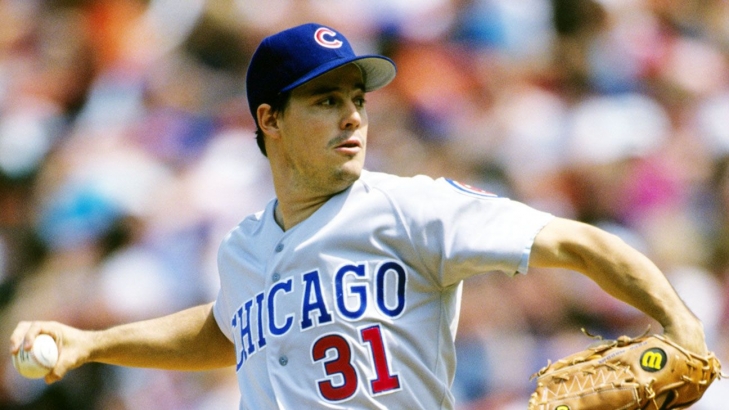
28. Greg Maddux

Chicago's North Side witnessed the slow, methodical rise of a pitcher who would eventually be defined by his surgical control. After a traditional developmental curve during his first two seasons, Maddux caught the league’s attention in 1988. At just 22 years old, he secured 18 wins and earned his first All-Star selection, signaling that the Cubs had found a rare anchor for their rotation. He matured into a model of consistency over the next several years, rattling off three consecutive seasons of at least 15 wins and establishing himself as a perennial threat to any lineup in the National League.

The statistical pinnacle of his first residency arrived in 1992, a season o that remains one of the greatest pitching performances in franchise history. Maddux led the league with 20 wins and posted a microscopic 2.18 ERA, a combination that earned him his first career Cy Young Award. This campaign was a masterclass in efficiency, further bolstered by his third consecutive Gold Glove, a trophy he would eventually collect a record-setting 18 times. He arrived as a prospect with high-end potential and left that season as the premier pitcher in the sport.

A complicated free-agency period led to a decade-long hiatus from Chicago, but the allure of Wrigley Field eventually brought him back for a second chapter in 2004. During this latter residency, he continued to showcase his legendary durability, winning his 300th career game in a Cubs uniform and leading the league in starts at the age of 39. He concluded his time in Chicago with 133 wins and 1,305 strikeouts, a volume of production that ranks him among the most significant arms to ever represent the organization.

The final chapter of his professional journey saw him enter the Baseball Hall of Fame in 2014, receiving one of the highest voting percentages in history during his first year of eligibility. In a fitting tribute to his dual-franchise legacy, he chose to have no logo on his plaque, honoring both the city that raised him and the one where he reached his peak. In 2009, he retired his number 31 and was later inducted as an inaugural member of the team Hall of Fame in 2021.