Menu
A+ A A-
Site Admin

Site Admin

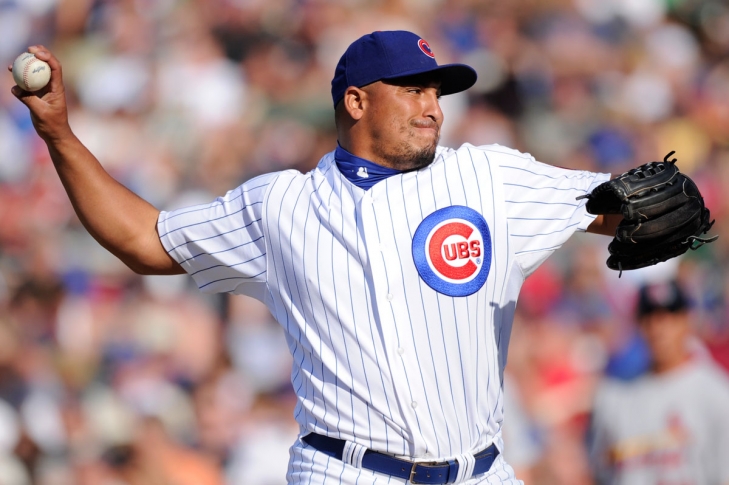
23. Carlos Zambrano

When Carlos Zambrano arrived in Chicago as an 18-year-old signee from Venezuela, he brought a physical presence and a raw intensity that the franchise hadn't seen in years. By 2003, he had locked down a spot in the rotation, helping lead the Cubs to within one win of the World Series. He emerged as a high-velocity prospect and quickly matured into the most durable starter of his era on the North Side. From 2003 to 2008, Zambrano was a model of productivity, standing as the only National League pitcher to record at least 13 wins in six consecutive seasons. He provided the stability of a workhorse for a team that leaned heavily on his arm.

The high-water mark of his residency, and a historic moment for his homeland, arrived in 2006. That season, Zambrano became the first Venezuelan pitcher to lead the National League in wins, a feat that solidified his status as a premier force of the decade. He was a perennial Cy Young contender, finishing in the top five of the voting three times in a Cubs uniform. His top-tier quality was best displayed on a September night in 2008 when, amidst the chaos of a neutral-site game in Milwaukee, he tossed the first Cubs no-hitter in 36 years. He thrived when the lights were brightest and the stakes were at their peak.

What truly separated Zambrano from his peers, however, was his prowess in the batter’s box. He was a legitimate dual-threat asset, batting .241 with 23 home runs during his time in Chicago. A three-time Silver Slugger winner, Zambrano treated his trips to the plate with the same ferocity he brought to the rubber. He holds the franchise record for home runs by a pitcher, famously switch-hitting his way into the highlight reels and often providing his own run support in low-scoring affairs. He was the rare player who could win a game with his arm in the first inning and his bat in the ninth.

To be direct about his tenure, one must acknowledge the emotional volatility that came with his performance. Zambrano played with his heart on his sleeve, a trait that led to famous dugout skirmishes and a reputation for being a challenge to manage. Yet, for the fans at Wrigley Field, that fire was exactly what defined his identity. He spent eleven of his twelve professional seasons anchored to the Cubs, accumulating 125 wins and 1,542 strikeouts before a final, brief chapter in Miami.
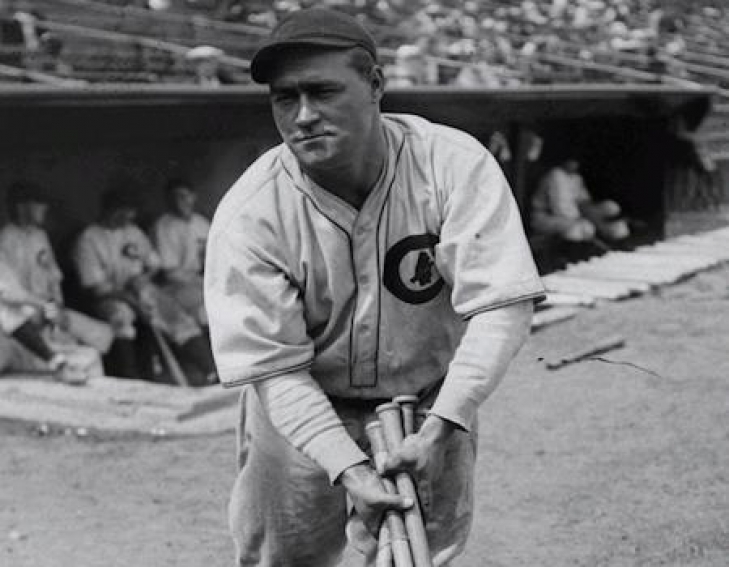
25. Hack Wilson

When Hack Wilson arrived in Chicago late in 1925, he was essentially a gift from the heavens, or more accurately, a gift from a New York Giants front-office oversight. Left unprotected in the minor league draft, the Cubs swooped in to claim him, and the move immediately altered the trajectory of the franchise. Wilson arrived as a player looking to reclaim his reputation and left his debut season as the National League Home Run king. From 1926 to 1928, he rattled off three consecutive home run titles, proving that his compact, powerful frame was perfectly engineered for the dimensions of Wrigley Field.

The peak of his tenure, and a season that remains a statistical outlier in the history of the sport, arrived in 1930. During that summer, Wilson was a force of nature, establishing a single-season RBI record of 191 that has never been seriously challenged since. He blasted 56 home runs and posted a staggering slash line of .356/.454/.723. He wasn't just a slugger in the modern sense; he possessed an elite batting eye, twice leading the league in walks. His skills during this stretch were undeniable, as he anchored a Cubs lineup that was a nightmare for opposing pitchers, leading the team to a pennant in 1929 and keeping them in the hunt throughout his stay.

However, to be direct about his journey, the intensity of his on-field performance was matched by a turbulent life off the diamond. Wilson was a heavy drinker whose conditioning eventually began to erode under the weight of his lifestyle. By 1931, the production that had seemed so effortless just a year prior began to dip, and the club made the difficult decision to ship him to the St. Louis Cardinals. He left the Cubs with an incredible franchise slash line of .322/.412/.590, a volume of production that earned him a place among the elite figures of the pre-war era.

The final walk toward the exit for Wilson came much sooner than his talent suggested it should, and he passed away in 1948 before he could see his legacy fully restored. It wasn't until 1979 that the Veterans Committee ushered him into Cooperstown, recognizing that his peak was simply too high to ignore. In 2021, the Cubs rightfully included him in their inaugural Hall of Fame class, a permanent tribute to the man who drove in runs at a pace the world had never seen before and hasn't seen since.

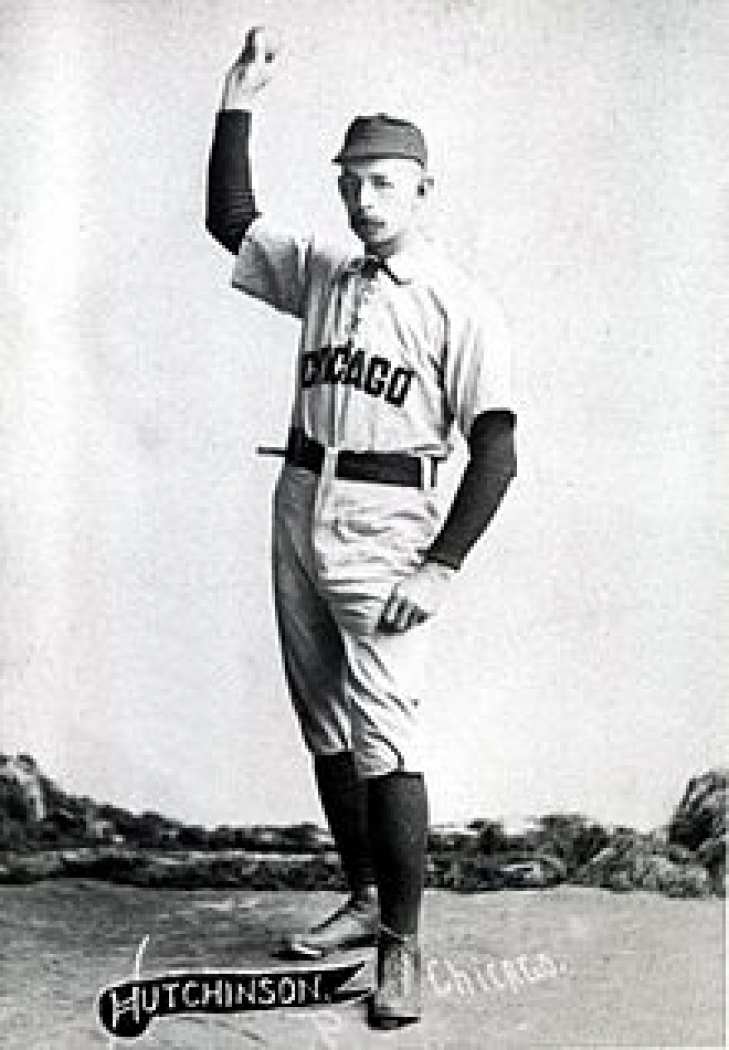
27. Bill Hutchinson

When Bill Hutchinson arrived in Chicago in 1889, the franchise, then known as the White Stockings, was transitioning into the "Colts" era. A Yale graduate with a cerebral approach to a rough-and-tumble game, his true calling card was a rubber arm that seemed immune to fatigue. His residency on the West Side began with a steady introduction, but by 1890, he shifted into a gear that few hurlers in history have ever reached. He arrived as a promising young arm and quickly matured into the most durable pitcher in the sport, leading the National League in innings pitched for three consecutive seasons.

The peak of his tenure arrived during a staggering window between 1890 and 1892. During these three years, Hutchinson was a statistical outlier of the highest order, leading the league in wins each season with totals of 42, 44, and 36, respectively. His dominance of the era was defined by a workload that remains mind-boggling; in 1892 alone, he tossed 622 innings and struck out a league-high 314 batters. He wasn't just a starter; he was a permanent fixture on the mound, providing the stamina that kept the Colts competitive in a rapidly evolving league. During this peak, he was the undisputed king of the rubber, finishing first or second in strikeouts in all three campaigns.

Acknowledging the reality of such a heavy workload, the flame that burned so brightly was destined to flicker out. The incredible stress of throwing over 1,600 innings in just three years eventually eroded his effectiveness. After 1892, Hutchinson’s traditional production began to wane, and he spent his final three seasons in Chicago as a serviceable, though no longer elite, member of the staff. While he was unable to recapture the lightning of his early 20s, the sheer accumulation of his peak years ensured his place in the franchise record books. He finished his Chicago stay with 180 wins and 1,225 strikeouts, a testament to a short, sharp burst of excellence.

The final walk toward the exit for Hutchinson came after the 1895 season, as the massive volume of the early 90s finally brought his career to a close at the age of 31. He left Chicago as a pioneer of the "iron man" era, a player who proved that a single pitcher could carry the weight of an entire organization if his will and his elbow remained strong enough.

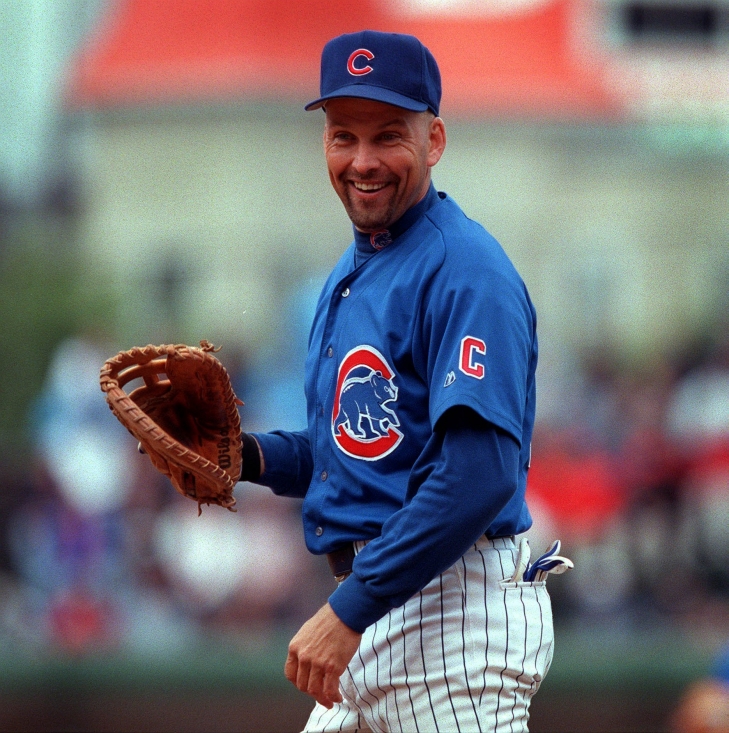
19. Mark Grace

When Mark Grace was drafted in the 24th round in 1985, he arrived with almost no fanfare. Most scouts didn't expect a kid chosen that low to ever see the Ivy at Wrigley, but Grace didn't seem to care for their projections. He cracked the roster in 1988 and immediately locked down first base, finishing second in the Rookie of the Year race. He wasn't the stereotypical "slugging" first baseman of the era; he was a pure, high-contact technician who used the entire field. He arrived as a long shot and left the rookie season as a cornerstone, proving that a refined approach could be just as lethal as a 500-foot blast.

The middle of his Chicago residency was defined by a staggering, almost robotic consistency. Throughout the 1990s, Grace collected more hits and more doubles than any other player in Major League Baseball—a feat that often gets lost in the shadow of the era's power surge. He was a perennial .300 hitter, reaching that mark nine times in a Cubs uniform and frequently appearing in the National League's top ten for batting average. He possessed a discerning eye at the plate, twice posting an on-base percentage over .400. While he wasn't a "superstar" in the home run column, his 2,201 hits and 1,004 RBIs as a Cub made him the primary engine of the North Side offense.

Defensively, Grace was the gold standard for his generation. A four-time Gold Glove winner, he played first base with a surgical grace that made difficult scoops look routine. He was a three-time All-Star who became a fan favorite not just for his glove, but for his dry wit and his status as the "professional" in a lineup that often shifted around him. He was the rare "solid contributor" who played at such a high level for so long that he elevated himself into the franchise’s elite tier, serving as the bridge between the Ryne Sandberg era and the arrival of the next generation of Cubs stars.

The final walk toward the exit came after the 2000 season, a departure that felt like the end of an era for the Wrigley faithful. Grace signed with the Arizona Diamondbacks as a free agent, and in a bittersweet twist for Chicago fans, he finally captured the World Series ring that had eluded him on the North Side in his very first year in the desert. He left the Cubs with a career .308 average and a legacy of blue-collar reliability that hasn't been matched at first base since.

Mark Grace arrived as a 24th-round afterthought and left as a North Side legend. He proved that you don't need to lead the league in home runs to lead a decade in hits, and that sometimes, the most valuable player on the field is the one who simply refuses to make an out.