Menu
A+ A A-
Committee Chairman

Committee Chairman

Kirk Buchner, "The Committee Chairman", is the owner and operator of the site.  Kirk can be contacted at [email protected] .

36. Kenny Graham

Kenny Graham became a Charger after the 1963 college season when San Diego selected the Washington State safety in the 13th round of the AFL draft. The Baltimore Colts also selected him in the NFL Draft, but in May 1964 he signed with the Chargers, joining the team the year after it won its only AFL championship. The late-round pick out of the Cougars quickly stepped into a starting role at safety and began producing turnovers right away.

At about 6-foot and 210 pounds, he was a rangy, physical safety who could cover deep and still come up and deliver hits against the run. In his first season, he picked off four passes, then followed with five interceptions in three of the next four years. He was an AFL All-Star four times (1965, 1967, 1968, and 1969) and earned First-Team All-AFL honors in 1966—ironically one of the two years he did not make the All-Star team. He returned five of his interceptions for touchdowns during his Chargers run, including a 68-yarder in 1967 and a pair of scores in 1969. He was the kind of safety who could erase a deep throw one play, then turn a short interception into a big return the next, giving San Diego a reliable playmaker in the back end throughout the mid-to-late 1960s.

After the 1969 season, Graham left for the Cincinnati Bengals, where he played one final year before wrapping up his career. Across his six seasons with the Chargers, he finished with 25 interceptions and five return touchdowns, production that still ranks among the better totals for a safety in franchise history.

He was later named to the AFL All-Time Second Team, recognition for the productive, ball-hawking safety who spent most of the 1960s locking down the back end for San Diego.
35. Ernie Ladd

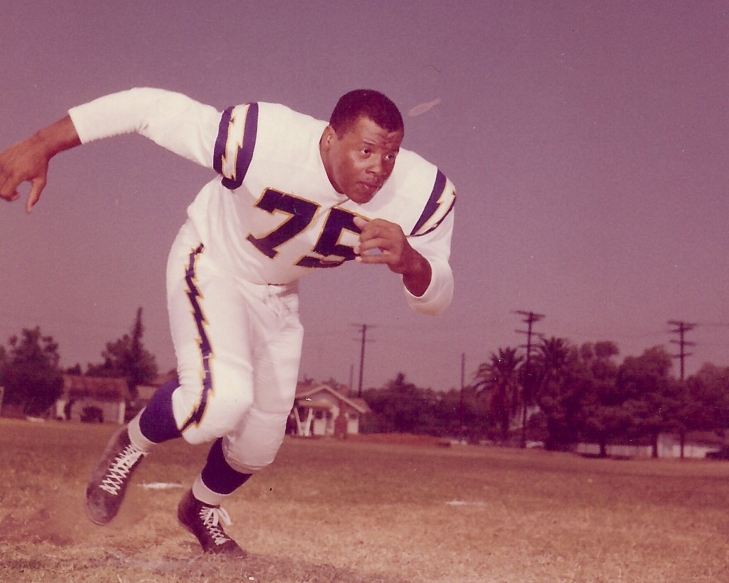
“The Big Cat” Ernie Ladd arrived in San Diego as a late-round find from Grambling in 1961, and at 6-foot-9 and around 290–315 pounds, he was one of the largest humans ever to play the game. Historically Black colleges weren’t heavily scouted by pro teams then, so the Chargers got a steal when they brought in the massive defensive tackle. As a rookie, he started every game at right defensive tackle, earned First-Team All-AFL honors, and helped the team reach the AFL Championship Game. He used that rare combination of size, strength, and surprising agility to clog the middle and disrupt both the run and the pass, quickly becoming a cornerstone of the early Chargers defense.

Over the next few seasons, Ladd stayed a consistent force. He was an AFL All-Star four straight years from 1962 to 1965 and earned First-Team All-AFL honors again in 1964 and 1965. In 1962 he led the team with 9.5 unofficial sacks, and in 1963 he was part of the original “Fearsome Foursome” defensive line (alongside Earl Faison and others) that helped the Chargers win the AFL Championship with a 51-10 rout of Boston. Even when injuries limited his starts in 1963, he still contributed on a unit that made four AFL title games in his five seasons. Opponents described him as almost impossible to block cleanly; one center said trying to handle him was like being locked in a closet.

After the 1965 season, Ladd signed with the Houston Oilers. He had already begun wrestling in the offseason, and the Chargers had been told he might eventually leave football for the ring full-time—which he did a couple of years later. Across his five seasons in San Diego, he had been a four-time AFL All-Star, a three-time First-Team All-AFL selection, and a key piece of the 1963 championship team.

In 1981, the Chargers inducted “The Big Cat” into their Hall of Fame, recognizing the imposing defensive tackle who had helped define the franchise’s early defensive identity before trading the gridiron for a long and successful second career in professional wrestling.

34. Anthony Miller

Anthony Miller arrived in San Diego as the Chargers’ first-round pick out of Tennessee in 1988, a dual-sport track-and-field guy whose speed had already shown up on the college circuit. He started as a rookie opposite fellow first-year receiver Quinn Early, catching 36 passes for 526 yards, then exploded the next season. In 1989, he led the team with 75 receptions for a career-high 1,252 yards and 10 touchdowns, earning his first Pro Bowl nod and finishing second in the NFL’s “Fastest Man” competition. At 5-foot-11 and about 190 pounds, he was a serious threat who could stretch the field, track the ball down the sideline, and turn short catches into bigger gains once he got into the open.

He stayed productive through the early 1990s. After another Pro Bowl season in 1990 (63 catches, 933 yards, seven scores), he dealt with a knee issue that slowed his start in 1992, then still finished with 72 receptions for 1,060 yards and seven touchdowns while leading the AFC in receiving yards and making the Pro Bowl again. In 1993, his final year with the Chargers, he caught 84 passes for 1,162 yards and seven touchdowns and earned another Pro Bowl selection. He led the club in receiving in four of his six seasons and finished as the team’s leading receiver scorer during that stretch with 37 touchdowns. He was the kind of receiver who forced defenses to respect the deep ball, then used his quickness to create separation underneath.

After the 1993 season, Miller signed with the Denver Broncos. In his six years in San Diego, he had piled up 374 receptions for 5,582 yards and 37 touchdowns, production that still ranks among the best for a Chargers receiver.

In 2026, the franchise inducted him into its Hall of Fame, recognizing the speedy first-round pick who had given the offense a legitimate deep threat for half a dozen seasons in the late 1980s and early 1990s.

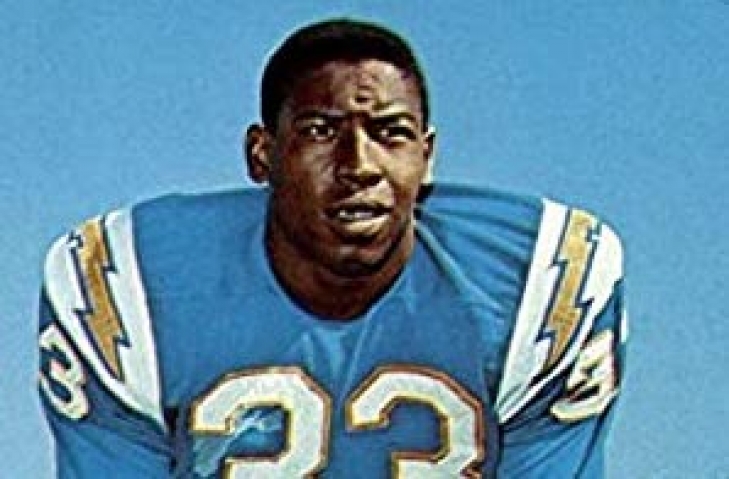
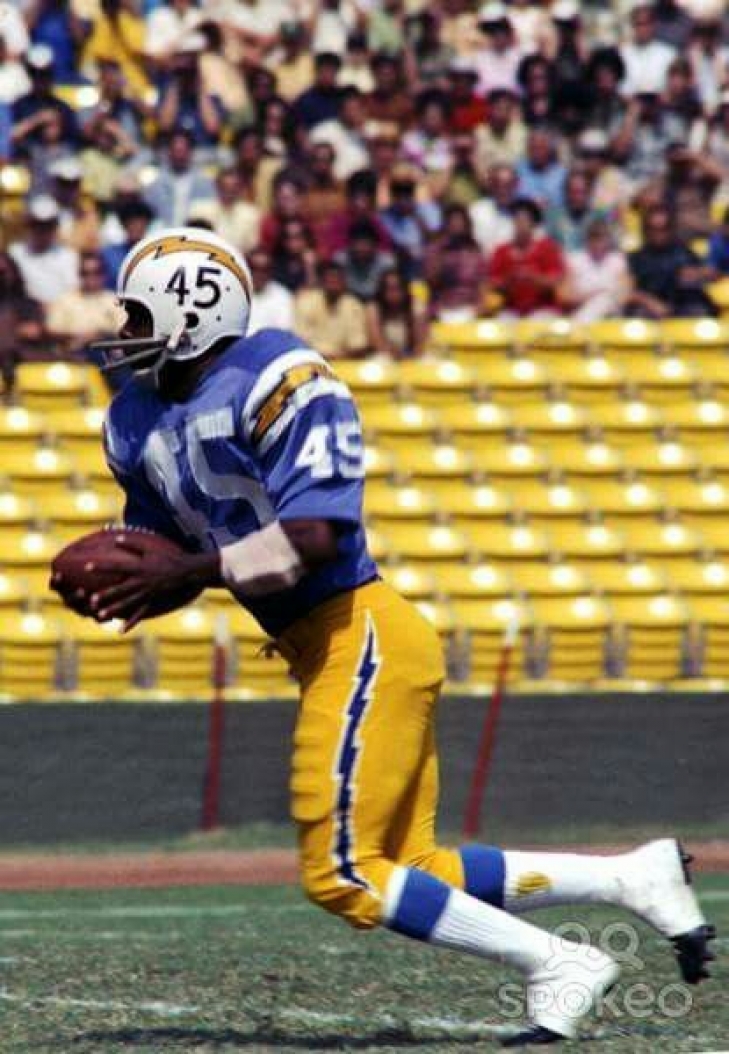
33. Speedy Duncan

When a guy carries the nickname “Speedy,” you can safely assume he wasn’t often getting caught from behind. Leslie Herbert “Speedy” Duncan went undrafted out of Jackson State in 1964 by both the NFL and the AFL, then signed with the San Diego Chargers and quickly showed why the name fit. He saw limited action as a rookie, but by 1965 he had become a starting cornerback and a dangerous return man on both punts and kicks. At 5-foot-10 and about 180 pounds, he had the speed to cover receivers and the quickness and vision to make defenders miss in the open field once he got the ball.

From 1965 through 1967, he was an AFL All-Star every year. In 1965 he led the league in both punt-return yards and yards per return (15.5 average on 30 returns, including two touchdowns), and he repeated as the yards-per-return leader the following season. In 1966, he also had his best year as a defender, picking off seven passes—including three in one game against the Raiders—and in 1967 he took one interception back 100 yards for a score, the longest in AFL history at the time. He returned four punts for touchdowns during his Chargers years and was so effective that opposing punters started aiming for height and field position instead of pure distance just to keep the ball out of his hands. He was the rare dual-threat who could shut down a receiver one play and flip the field the next.

Duncan stayed with the Chargers through the 1970 season before signing with the Washington Redskins. Across his seven years in San Diego, he finished with 21 interceptions and more than 5,300 combined return yards, production that made him one of the most explosive playmakers the early Chargers ever had.

In 1995, the franchise inducted him into its Hall of Fame, and he was later named to both the Chargers’ 40th and 50th Anniversary Teams, recognizing the speedy cornerback and return specialist who turned special teams into a weapon during the AFL years.