Menu
A+ A A-
Committee Chairman

Committee Chairman

Kirk Buchner, "The Committee Chairman", is the owner and operator of the site.  Kirk can be contacted at [email protected] .

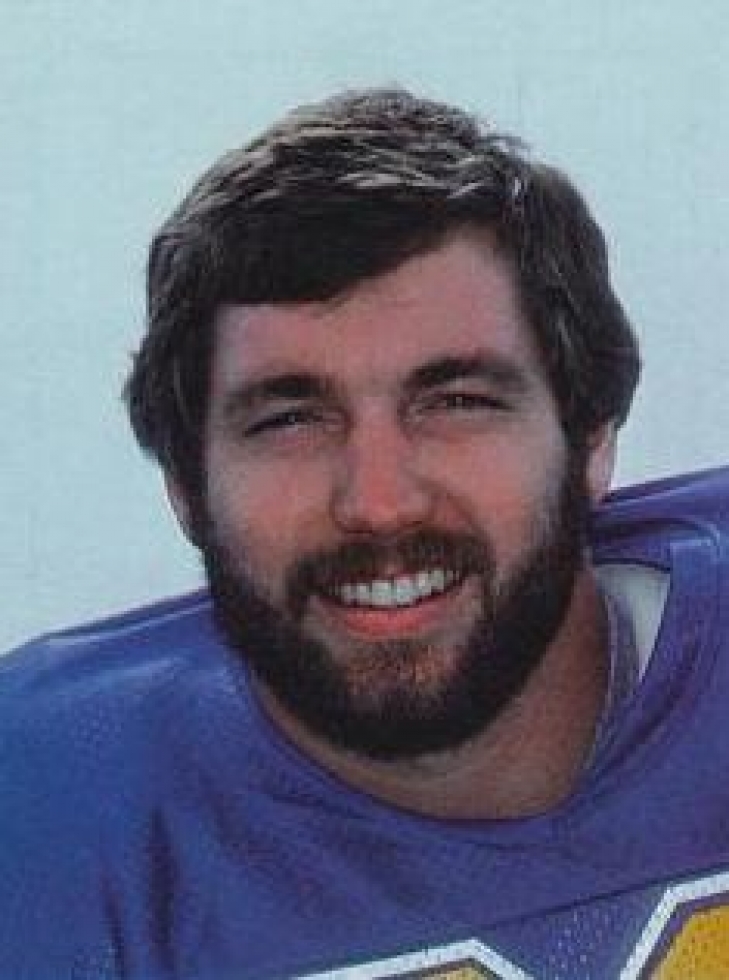
43. Billy Shields

Billy Shields spent most of his NFL career with the San Diego Chargers after they selected the Georgia Tech tackle in the sixth round of the 1975 draft. He played mostly as a backup as a rookie, then won the starting left tackle job the following year and held it through the prime of the Air Coryell era. From 1976 through 1983, he was the consistent presence on Dan Fouts’ blind side, giving the quarterback the time he needed to survey the field and launch the deep throws that defined those offenses. He never made a Pro Bowl, but he posted three seasons with an Approximate Value of at least 10 and rarely missed games, anchoring an offensive line that helped the Chargers become one of the league’s most productive passing attacks.

He was a tall, long-armed tackle who relied more on technique and positioning than pure athleticism, and he held up well enough against the pass rushers of the era to keep Fouts upright through the team’s most explosive seasons. The Chargers reached the playoffs multiple times during his run, and Shields helped protect the franchise’s signature air attack. He remained a starter through the 1983 season before a contract dispute led to his departure.

After leaving San Diego, he played brief stints with the 49ers, Chiefs, and Jets in 1984 and 1985. Over his nine years with the Chargers, he started most of his games and provided the steady left-tackle play that let Fouts and the rest of the offense operate at a high level for nearly a decade.

He was later inducted into the Georgia Tech Hall of Fame, but he never received the same recognition from the Chargers. Still, the sixth-round pick who locked down left tackle for most of the Air Coryell years remains one of the more durable and reliable offensive linemen the franchise had in that era.
41. Dick Harris

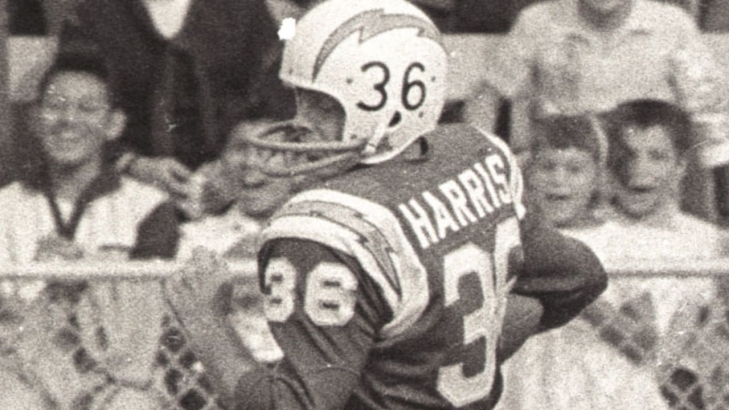
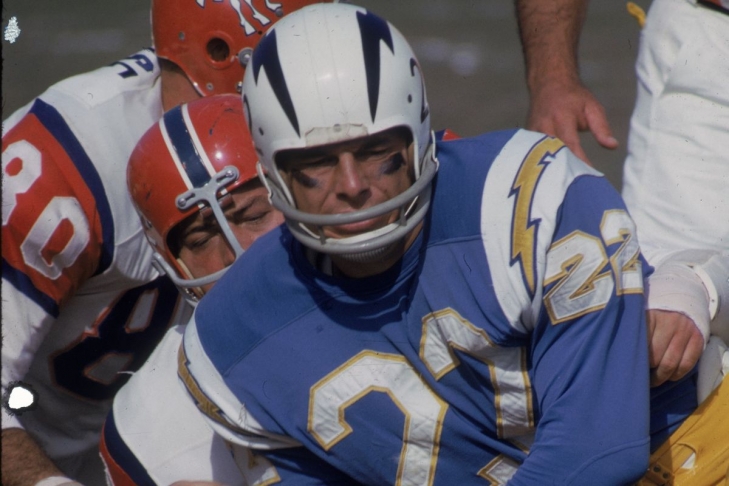
Dick Harris was one of those undrafted long shots who found a home when the AFL opened up new opportunities in 1960. Coming out of McNeese State, he made the inaugural Los Angeles Chargers roster and quickly became a cornerback starter for Sid Gillman. In that first season, he picked off five passes and earned First-Team All-AFL honors, then followed it up the next year with seven interceptions (three returned for touchdowns) and another First-Team selection. He was a ball-hawking corner who played tight man coverage, baited quarterbacks into throws, and then closed on the ball with enough speed and timing to create turnovers.

The production kept coming. He had five more interceptions in 1962 and then a career-high eight in 1963, the year the Chargers won the AFL championship. Across those first four seasons, he totaled 25 interceptions and earned Second-Team All-AFL recognition in 1963 and 1964. He was the kind of defender who could take away half the field and still jump routes when the quarterback tried to force something into his area, giving the early Chargers a reliable presence in the secondary during their most successful stretch. Injuries began to limit him after that. He appeared in only six games in 1964 and saw reduced action in 1965 before retiring following the season. 

Over his six years with the Chargers, he finished with 29 interceptions in 76 games, still ranking among the franchise’s all-time leaders in picks and among the better totals for a cornerback from the AFL era. He never earned a Chargers Hall of Fame induction, but the undrafted corner who arrived with the franchise’s first roster and helped it win its only championship remains one of the team's most productive defensive backs in its early years.

39. Keith Lincoln

Keith Lincoln came out of Washington State and chose the Chargers over the Buffalo Bills, who had also drafted him in 1961, signing with San Diego as a second-round AFL pick. He saw limited action as a rookie, then became a regular the following year and earned AFL All-Star honors for the next four seasons. He was a tough, versatile back who could run between the tackles, catch passes out of the backfield, and even throw the occasional option pass, giving Sid Gillman’s offense another weapon who could move the chains or break a big play.

His peak arrived in 1963, when he rushed for 826 yards and earned First-Team All-AFL honors. That year the Chargers won the AFL championship, and Lincoln was named the game’s MVP after a dominant performance against the Boston Patriots. He carried 13 times for 206 yards (including a 67-yard touchdown), caught seven passes for 123 yards and a score, and even completed a 20-yard pass, finishing with a then-record 329 yards from scrimmage in the 51-10 rout. He repeated as a First-Team All-AFL selection in 1964 and remained a productive dual-threat through the mid-1960s, mixing power runs with receiving production that kept defenses from focusing solely on halfback Paul Lowe or the serious threats outside.

Lincoln stayed with the Chargers until he joined the Bills in 1967. Across his primary stretch in San Diego, he accumulated roughly 7,000 all-purpose yards, making him one of the more complete offensive contributors of the early Chargers era.In 1980, the franchise enshrined him in its Hall of Fame, recognizing the multi-purpose back whose championship-game performance remains one of the most memorable individual efforts in the franchise’s history.

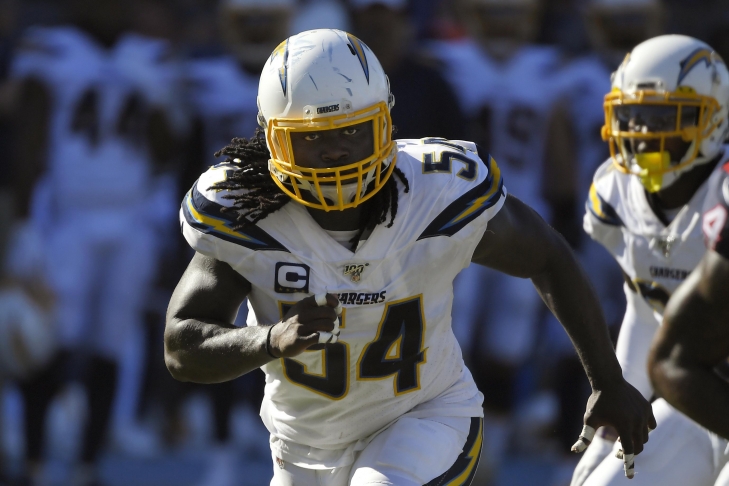
38. Melvin Ingram

Melvin Ingram arrived in San Diego as a first-round pick out of South Carolina in 2012 and spent his rookie season mostly as a backup linebacker and special-teams contributor. A torn ACL in his second training camp wiped out nearly all of 2013, but he returned late that year and helped the Chargers reach the playoffs for the first time since 2009. From there, he steadily worked his way into a starting role on the edge. He was a versatile, athletic rusher who could line up as a stand-up linebacker or with his hand in the dirt, using speed, spin moves, and quick hands to get around tackles or work inside on stunts.

His breakout came in 2015, when he posted 10.5 sacks, 19 tackles for loss, and four forced fumbles while starting every game. He matched that sack total in 2017, earned AFC Defensive Player of the Month honors for September, and made his first Pro Bowl. That started a three-year run of Pro Bowl selections from 2017 through 2019, during which he formed a productive edge tandem with Joey Bosa. He finished 2017 with another 10.5 sacks and added a 39-yard scoop-and-score touchdown, and he remained a consistent pressure generator through 2018 and 2019 even as the Chargers’ defensive line evolved. He was the kind of player who could win with pure speed off the edge one snap, then counter with a spin or bull rush the next, forcing quarterbacks to hurry throws and creating opportunities for the rest of the front. After the 2020 season, Ingram left for the Pittsburgh Steelers. 

In his nine years with the Chargers, he finished just shy of 50 sacks and ranked among the franchise's more productive edge defenders during that stretch.

He never quite reached the same individual heights after leaving San Diego, but his multi-year stretch of Pro Bowls and double-digit sack seasons with the Chargers marked him as one of the more reliable pass rushers the team has had in the modern era.