
Menu
A+ A A-
Committee Chairman

Committee Chairman

Kirk Buchner, "The Committee Chairman", is the owner and operator of the site.  Kirk can be contacted at [email protected] .

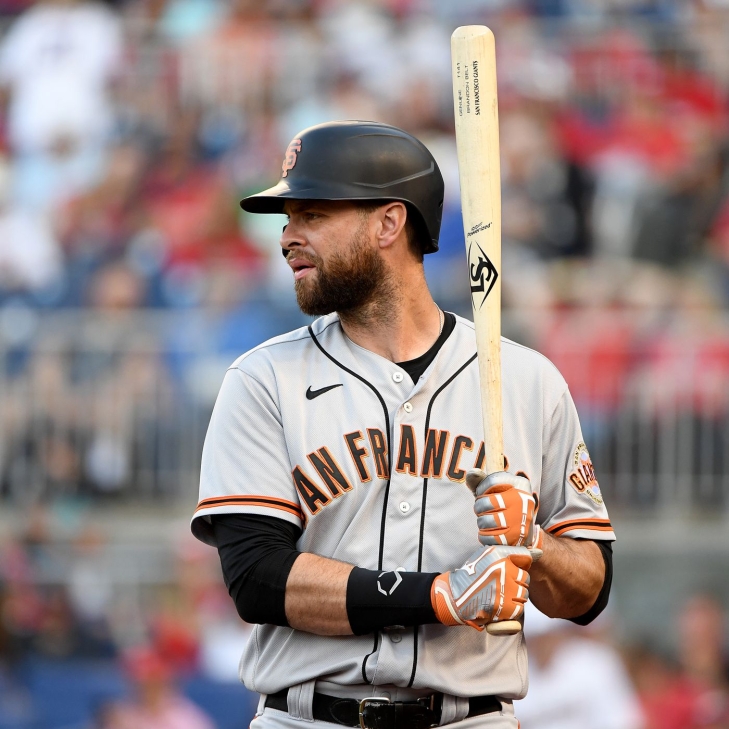
17. Madison Bumgarner

When a top-tier baseball organization aims to create a winning culture that wins multiple world championships, they often depend on a fierce, unwavering competitive spirit to lead the team. Madison Kyle Bumgarner not only played a key role on the San Francisco Giants’ starting lineup; he became the perfect symbol of October resilience—a true champion of big moments whose legendary performances have forever changed what it means to shine in the postseason. Drafted tenth overall in 2007 from North Carolina high school baseball, this sturdy, cross-throwing left-hander brought with him a clear sense of strength and durability. Over an impressive 11-season career, the man affectionately known as “MadBum” carved out a legacy as a ruthless, high-volume workhorse who historically saved his absolute finest masterpieces for the sport's grandest stage.

Madison Bumgarner's journey began with a brief intro in September 2009, but it was his big break in June 2010 that truly set the stage for greatness. His dedication to efficiency became a daily habit, helping him solidify his spot at the back of the rotation during the crucial stretch. The world saw his incredible talent unfold in Game 4 of the 2010 World Series, when, at just 21, he overcame rookie nerves to pitch eight flawless innings against the Texas Rangers, leading San Francisco to its first championship in over five decades.

He maintained a consistent and crucial role throughout the 2012 regular season and championship series, including pitching seven scoreless innings in the World Series against Detroit. His most outstanding contributions occurred during a remarkable four-year peak from 2013 to 2016. Bumgarner excelled on the National League leaderboards, setting a high standard of durability and performance by earning four consecutive All-Star selections. He consistently subdued opposing lineups, recording identical sub-three ERAs of 2.77, 2.98, 2.93, and 2.74, while regularly surpassing 200 innings pitched annually. His efficiency metrics were unmatched; he achieved 199, 219, 234, and a career-high 251 strikeouts during these four seasons, culminating in top-ten finishes in the National League Cy Young Award voting.

Bumgarner, primarily a pitcher, also became a powerful hitter, showcasing a violent right-handed swing. He hit 19 career home runs with the Giants, including five in 2015, earning consecutive Silver Slugger Awards in 2014 and 2015. His offensive skills forced managers to abandon traditional intentional walk tactics at the bottom of the order.

Nevertheless, what conclusively establishes "MadBum" as an enduring figure within the eternal zeitgeist of the sport is his extraordinary and historic individual performance during the 2014 October postseason. Following his attainment of the National League Championship Series Most Valuable Player award, he executed the most exceptional pitching display in contemporary World Series history against the Kansas City Royals. He delivered a dominant, complete-game shutout in Game 1, a remarkable victory in Game 5, and subsequently—after only two days of rest—emerged from the bullpen in Game 7 to deliver five exemplary, scoreless relief innings that secured the championship. Over the course of twenty-one innings in the World Series that autumn, he conceded a nearly unthinkable single run, thereby establishing a permanent standard for world championship performance that may remain unmatched indefinitely.

After the 2019 season, Bumgarner left San Francisco as a Free Agent for the Diamondbacks, leaving the Bay Area with a 119–92 record, maintaining a sharp 3.13 ERA, a 1.112 WHIP, and exactly 1,794 strikeouts.

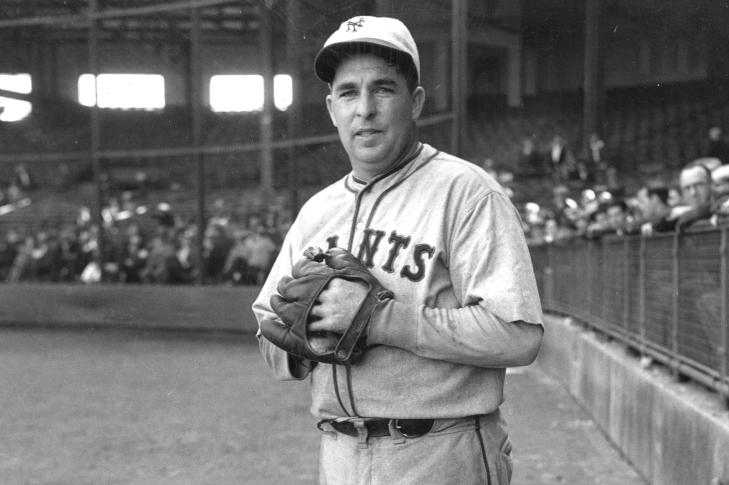
19. Travis Jackson

Evaluating the dynamic defensive architecture of the early 20th-century New York Giants necessitates immersing oneself in a historical context akin to a sensory time capsule. During this period, infielders played on rocky and unpredictable dirt surfaces, utilizing gloves that were no thicker than winter mittens. Travis Calvin Jackson not only endured this challenging environment but also excelled within it, displaying a predatory athletic instinct that fundamentally redefined the shortstop position of his era. Selected by manager John McGraw to succeed the legendary Dave Bancroft in 1924, this graceful and highly reliable native of Arkansas commenced a distinguished 15-season career, exclusively representing a single uniform. He transformed the left side of the Manhattan infield into a formidable stronghold, where opposing offensive rallies consistently proved futile.

His introduction to the everyday lineup was a real eye-opener in visual precision and formidable defense. Blessed with an incredible arm that could easily gun down runners from deep left-field, Jackson made defensive steals a regular part of his game. He patrolled the diamond with such confidence that local sports writers and opposing baserunners often called him "Stonewall"—a fitting nickname that highlights his amazing ability to completely stop and control fast ground balls. His detailed stats tell a remarkable story: he led all National League position players in defensive bWAR in three different years (1926, 1928, and 1929) and was just behind the leaders in three more, proving he was truly one of the best defenders of his time.

However, while many modern defensive specialists were known for being easier at the plate, Jackson truly changed the game by becoming a powerful offensive force in the middle of the lineup. He consistently dominated Senior Circuit pitching, shining through six seasons with a batting average well above .300.

The peak of his physical development was exemplified during an outstanding performance in the 1929 regular season. Jackson exerted complete control over the pitcher, achieving a career-high of 21 home runs, delivering 162 hits, and driving in 94 runs, all while maintaining a respectable batting average of .294. Five summers later, in the 1934 season, he demonstrated his offensive prowess by hitting 16 home runs and recording a career-high 101 runs batted in, earning a well-deserved selection to the All-Star Game.

His exceptional combination of defensive skill and offensive power earned him widespread national admiration, securing four top-ten finishes in the National League MVP voting. More crucially, his consistent performance directly contributed to historic team achievements, guiding the Giants to four National League pennants in three decades (1923, 1924, 1933, and 1936). His finest hour under the bright lights erupted during the 1933 World Series against Washington; battling through a late-career wave of knee injuries, the veteran captain hit a highly clutch .250, handled 24 errorless chances in the field, and masterfully directed the infield defense to capture the ultimate world-championship crown.

The toll of throwing himself onto hard dirt led to injury, causing a decline in performance. Illnesses like influenza, appendicitis, and knee issues reduced his range, making him slide to third base late in his career to let younger players shine. After a defense-focused role in the 1936 pennant run, he retired at age 32, ending his active career.

Jackson left a monumental career in Upper Manhattan with 1,768 hits, 291 doubles, 135 homers, 929 RBIs, and a .291 average over 1,656 games. The Veterans Committee inducted Travis "Stonewall" Jackson into the Hall of Fame in 1982.

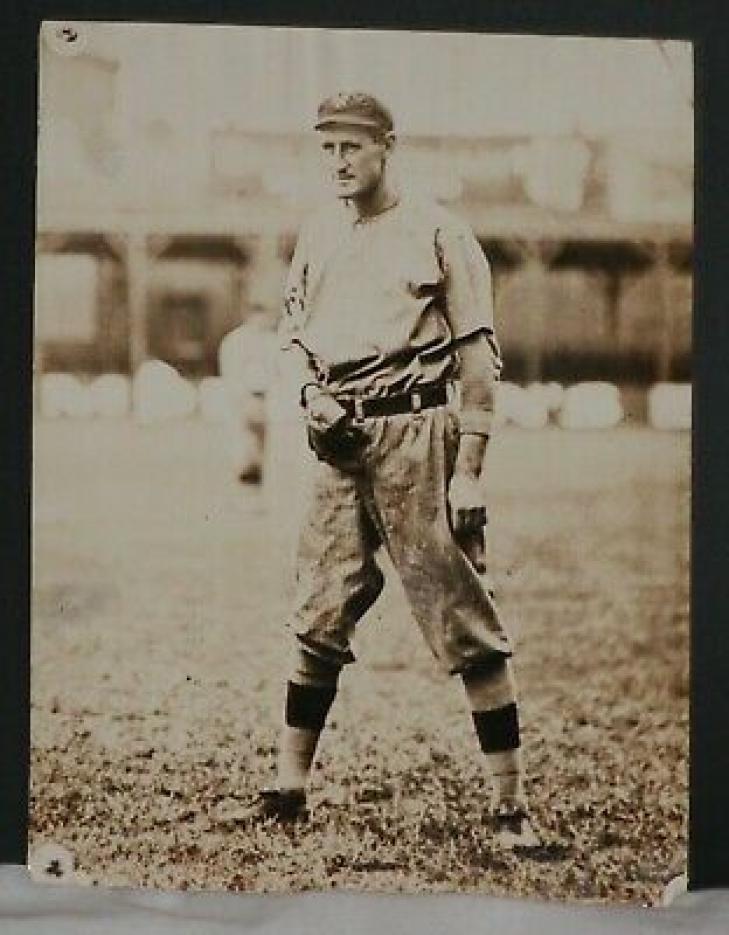
20. George Burns

In this list, stars like Willie Mays, Barry Bonds, and Bobby Bonds often took the spotlight in the outfield decades ago. Meanwhile, the quiet, steady genius behind the club's Deadball Era success has faded into relative obscurity. Originally, George Joseph Burns was a minor-league catcher, but his exceptional speed and powerful throwing arm convinced legendary manager John McGraw to convert him into an outfielder when he joined the team full-time. Known as "Silent George" for his reserved nature, this highly durable left fielder spent nearly ten years as the sport's leading leadoff hitter. He used a hefty 52-ounce bat and a sharp eye to control the game, making him a formidable offensive force.

His debut as a regular in 1913 immediately raised the offensive standard of a championship-winning team, as he charmingly amassed 173 hits, 37 doubles, and 40 stolen bases. Burns made reaching base and scoring a daily habit, setting a durability record by playing 459 consecutive games over the following seasons, a major-league record for outfielders at that time.

The distinguished individual peak of his localized, hardware-certified legacy was prominent during an era in which he dominated the senior circuit's leaderboards. He systematically dismantled National League pitchers to lead the league in runs scored five times (1914, 1916, 1917, 1919, and 1920) and also paced the circuit in walks on five occasions. This remarkable achievement places him in an extraordinarily exclusive inner-circle club: Burns is one of only four players in Major League history to lead their league in both runs and walks at least five times, joining the ranks of Babe Ruth, Ted Williams, and Mickey Mantle.

Apart from his exceptional patience, his fast wheels caused chaos on the bases. Burns won two National League stolen base titles, including a standout 62 steals in 1914 that broke the team's single-season record. He was a tactful baserunner, stealing home 28 times in his career, which remains third all-time in Major League history behind Ty Cobb and Max Carey.

His career peak with the franchise came in the memorable autumn of 1921. After his initial two appearances in the Fall Classic earlier in the decade, Burns led the team to a World Series victory over the New York Yankees. He posted a strong .333 batting average with 11 hits and scored the winning run in Game 6, securing another world championship for McGraw.

After the 1921 coronation, McGraw decided to sell high on his veteran outfielder, trading him in winter for Heinie Groh at Cincinnati Reds. Although he enjoyed several more productive summers in Ohio and Philadelphia, eventually surpassing 2,000 career hits, his prime years stayed firmly associated with the Polo Grounds.

Representing the Giants, he compiled 1,541 hits, 248 doubles, 54 triples, and 334 stolen bases—a franchise record that stood for over fifty years until Willie Mays finally surpassed it in 1972.

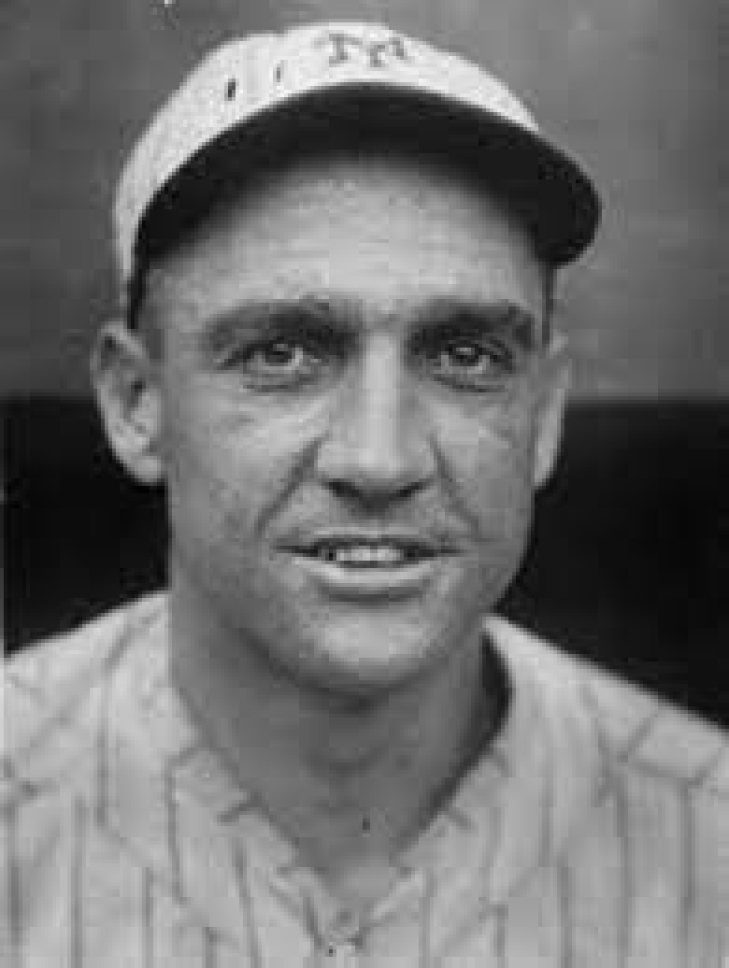
15. Will Clark

When a premier prospect enters the major leagues with a seamless, powerful, and aesthetically striking left-handed stroke, it is immediately compared to exquisite royalty. Will Clark was selected as the second overall pick in the 1985 draft from Mississippi State, bearing a substantial level of public anticipation that reached a peak when he hit a home run off future Hall of Famer Nolan Ryan during his very first major league plate appearance in 1986. Universally referred to as "The Thrill,” a nickname that encapsulated his fierce, intense competitive presence, Clark not only established a formidable presence on the field but also evolved into the quintessential high-energy focal point of a late-1980s baseball renaissance in Northern California. His career spanned multiple eras, notably contributing significantly to the San Francisco Giants' restoration to the pinnacle of the National League hierarchy.

His summer debut in 1986 was a promising beginning; however, the significant breakthrough occurred in 1987. Clark established a consistent routine of producing runs daily, hitting 35 home runs and contributing 91 RBIs with an impressive .308 batting average across 150 games. This outstanding performance contributed to securing a division title and earned him a fifth-place ranking in the National League Most Valuable Player (MVP) voting.

He maintained that upward trajectory into the 1988 schedule, setting an exemplary standard for high-volume durability by leading the entire National League with 109 runs batted in and 100 walks, while maintaining a batting average of .282 and achieving another fifth-place MVP finish.

His career reached its highest point during an incredible 1989 season, which truly defined his greatness. Clark delivered a stunning performance against National League pitchers, expertly working deep counts and earning a career-best 196 hits, along with 38 doubles, 23 home runs, and 111 RBIs in 159 games. His efficiency was unmatched, maintaining a remarkable .333 batting average and a notable .431 on-base percentage. Though he narrowly missed winning a batting title, he finished as a strong runner-up in the league's Most Valuable Player voting. His incredible skills and effort contributed directly to the team's historic success that October.

Clark delivered a legendary performance in the 1989 National League Championship Series against the Chicago Cubs, batting an impressive .650 with two home runs. Notably, he hit a dramatic, pennant-winning single off Mitch Williams in Game 5, earning the NLCS Most Valuable Player award and helping the Giants secure their first pennant in 27 years.

Far from a temporary peak, "The Thrill" maintained a spectacular baseline of elite multi-dimensional excellence over the next half-decade. He functioned as a dangerous, high-efficiency threat in the middle of the order while serving as a premier defensive hand at first base, rattling off five consecutive All-Star selections from 1988 through 1992.

He captured a second Silver Slugger Award in 1991 alongside a well-deserved Gold Glove Award, routinely hitting north of the .300 threshold with pristine mechanics that made him the absolute gold standard at his position.

Feeling that Clark’s minor statistical regression during the 1993 calendar prompted a highly emotional crossroads for the organization. With the front office navigating a massive transition toward a new ownership group and the historic arrival of Barry Bonds, the inevitable business exit materialized that winter.

Across his eight active seasons representing the franchise, Clark accumulated 1,278 hits, 241 doubles, 176 home runs, and 704 runs batted in alongside an exceptional .299/.373/.499 career slash line in 1,160 games. The Giants chose Clark for their inaugural Wall of Fame class in 2008, and in 2022, the team retired his #22.