Menu
A+ A A-
Site Admin

Site Admin

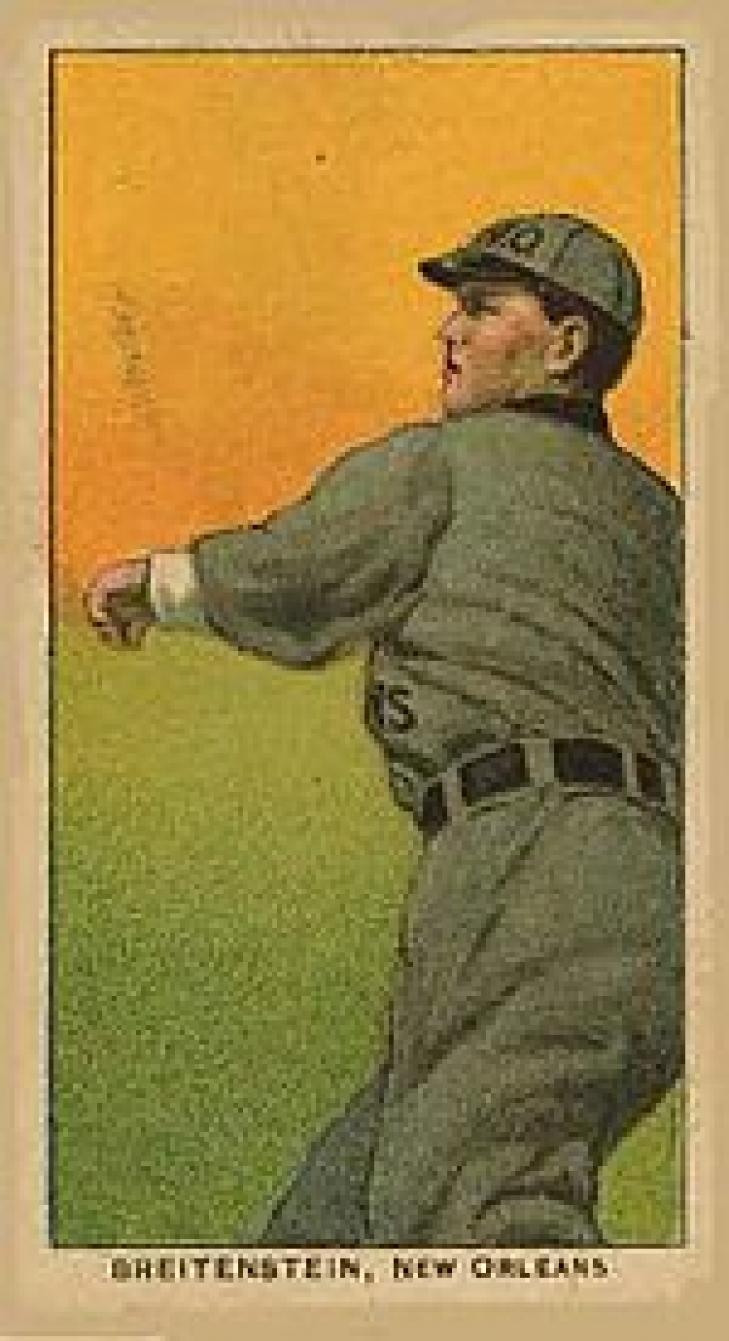
35. Theodore Breitenstein

Judging a pitcher from the pre-modern era solely by wins and losses can be misleading, a mistake modern analysts now avoid. Theodore Breitenstein exemplifies this shift in perspective. A native of St. Louis who initially made stoves before debuting for his hometown Browns in 1891, Breitenstein delivered a remarkable performance by throwing a 27-men-up, 27-men-down no-hitter in his very first major-league start. Throughout the 1890s, he pitched for a poorly performing, low-scoring franchise. While his record of 94–125 might seem problematic to the casual observer, it obscures the reality that he was an exceptionally efficient pitcher, often dominating opponents and carrying the entire pitching staff.

Breitenstein’s exceptional talent was clear during the legendary 1893 season. Although he pitched for a tenth-place team that resulted in a seemingly poor 19–24 record, this left-handed ace entirely controlled opposing National League lineups, earning the ERA championship with an impressive 3.18 over 382.2 innings.

When the National League moved the pitcher's rubber back by ten feet before the 1894 season, it sparked intense offensive shifts that changed the game significantly. Breitenstein, however, adapted seamlessly to this change, showcasing his dominance during that era by going 27–23 and leading all of baseball with 447.1 innings pitched and 46 complete games.

He replicated that mind-boggling durability during the 1895 campaign, logging another 46 complete games and a whopping 429.2 frames. While Breitenstein infamously led the National League with 30 losses in 1895, modern advanced quality analysis reveals that the total was entirely a product of historically abysmal defensive support and zero offensive run production. He still finished a stellar fifth overall among all Senior Circuit pitchers in Pitching bWAR that summer, operating with a level of nerve and equilibrium that made him highly coveted by every front office in the country.

After recognizing that Breitenstein accounted for nearly half of the team's total value, the Cincinnati Reds made a significant financial move following the 1896 season by purchasing his contract from struggling St. Louis owner Chris von der Ahe. The southpaw proved his worth in Ohio by recording back-to-back 20-win seasons and pitching a second career no-hitter before returning to St. Louis in 1901 for a brief, late-career stint.

He ended his Cardinals career with 94 wins, a sharp 4.10 ERA, and 626 strikeouts, while throwing an astonishing 197 complete games over 1,920.1 innings.
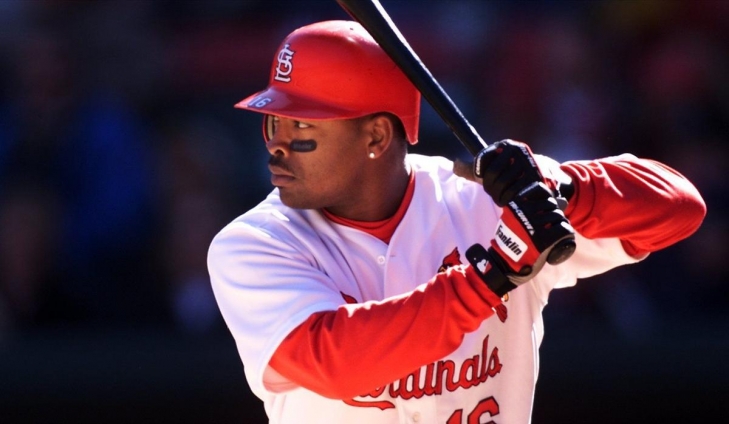
28. Ray Lankford

Following a revered world-championship icon is one of the most challenging tasks in professional sports. Yet, Ray Lankford filled the enormous gap left by Willie McGee and established his own unique, dynamic legacy. Drafted in the third round of the 1987 MLB draft by the St. Louis Cardinals, this physically strong outfielder introduced a different build to center field at Busch Memorial Stadium. Unlike his predecessor, who focused on a low-power, high-contact style, Lankford utilized a powerful, left-handed swing combined with exceptional athleticism. His arrival marked the end of the "Whiteyball" era and the beginning of a decade distinguished by a remarkable mix of raw power and exceptional speed.

Lankford established himself as a versatile, top-tier player the moment he secured the everyday center field spot. During his 1991 rookie season, he showcased his elite athleticism by leading the National League with 15 triples and stealing 44 bases. Rather than being limited to a speed-focused player, he quickly demonstrated impressive raw power from the left side of the plate. He then achieved an outstanding stretch of six seasons with at least 20 home runs and 20 stolen bases, becoming a formidable force in the National League throughout the 1990s as a consistent and dangerous middle-of-the-order hitter.

Lankford’s peak as a player was during a remarkable period in the late 1990s. In 1997, he earned a well-deserved spot on the National League All-Star team, a summer where he struck 31 home runs—his career best—and achieved a notable .585 slugging percentage. He reaffirmed this peak with an outstanding 1998 season, hitting 26 home runs, drawing 93 walks, and posting a impressive .915 OPS.

Lankford’s historical profile is marked by contrasting metrics. Traditional analysts focused on his high strikeout count—he exceeded 100 strikeouts 11 times in St. Louis, often lowering his batting average and limiting his raw rank. In contrast, modern advanced metrics regard him as an elite player. His exceptional ability to draw walks resulted in a high .364 on-base percentage, leading to three top-ten finishes in National League Offensive bWAR.

After a June 2001 trade to the Padres, Lankford returned to the Gateway to the West in 2004 for one final chapter. As a veteran off the bench, he offered depth and leadership for a Cardinals team that won the National League pennant before he retired.

Lankford's 13-year St. Louis career included 1,479 hits, 228 homers, 829 RBIs, and 250 stolen bases in 1,580 games. He is the only Cardinals player to hit over 200 home runs and steal over 200 bases. He was Inducted into the team's Hall of Fame in 2018.

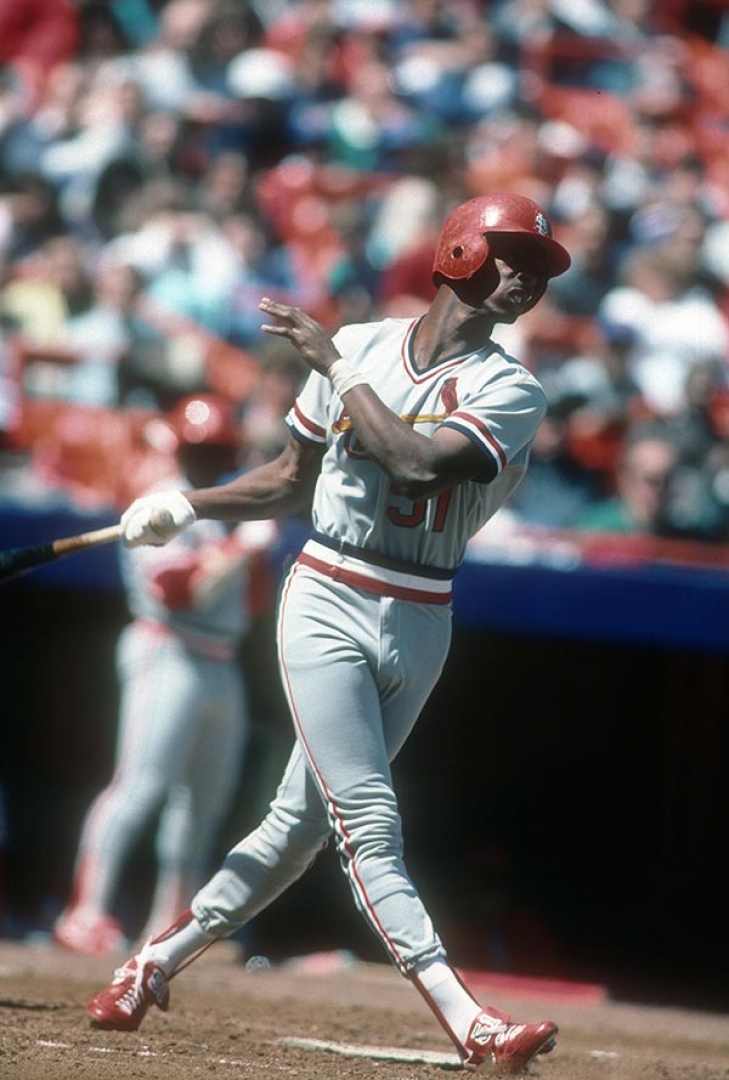
27. Willie McGee

The foundation of the 1980s "Whiteyball" era in St. Louis was built on a fierce commitment to speed, turf coverage, and putting the ball in play. No one embodied this identity more than Willie McGee. Originally a first-round pick by the New York Yankees in the 1977 January draft, the slim, soft-spoken center fielder faced obstacles in reaching the Bronx due to a crowded roster of veteran stars. Sensing an opening, St. Louis general manager Whitey Herzog executed a discreet, seemingly minor trade in October 1981, sending left-handed pitcher Bob Sykes to New York in exchange for an unproven minor leaguer. This deal turned out to be one of the most lopsided in baseball history; although a damaged Sykes never pitched in the majors again, McGee arrived in St. Louis and immediately transformed the franchise.

McGee's rise from an overlooked prospect to a postseason hero happened remarkably fast. Stepping into the starting center field position in 1982, his long, smooth strides effortlessly covered the expansive Busch Memorial Stadium. He gained national fame during Game 3 of the 1982 World Series against the Milwaukee Brewers, delivering a legendary performance by hitting two home runs and making a spectacular leaping catch at the wall to deny Gorman Thomas a crucial late-inning fly. His heroic plays helped lead the Redbirds to a world championship, establishing him as a beloved figure in eastern Missouri.

Instead of leveling off, McGee achieved a huge professional breakthrough in the 1985 season. As the key, high-speed force at the top of Herzog's lineup, he challenged National League pitchers with a league-leading .353 batting average. He also led the Senior Circuit with 216 hits and 18 triples. His dominance was clear. With a career-high 56 stolen bases and 114 runs scored, McGee used a powerful Silver Slugger season to lead the Cardinals to the Fall Classic, ultimately earning the 1985 National League Most Valuable Player Award.

McGee’s legacy presents a fascinating analytical dichotomy. While his classic counting numbers and triple-digit run production are legendary, his aggressive, free-swinging style produced a weak .329 on-base percentage that caps his overall efficiency. Furthermore, while his speed earned him a trio of Rawlings Gold Gloves, modern defensive tracking suggests his overall routes and range efficiency were closer to a steady, average baseline rather than a historic positional outlier.

Despite his analytical limits, his pure, bat-to-ball utility was an elite regular-season constant. He proved his hitting value in 1990, earning his second Senior Circuit batting title with a sharp .335 average after being traded to the Oakland Athletics in late August for pitching depth. Later chapters in San Francisco and Boston followed, and a poetic late-career reunion brought him back to St. Louis from 1996-1999, where he was a beloved reserve and clubhouse mentor.

As a Cardinal, he had 1,683 hits, 83 triples, 301 steals, and a.294 average in 1,664 games. In 2014, he was honored as part of the Cardinals' first Hall of Fame class.

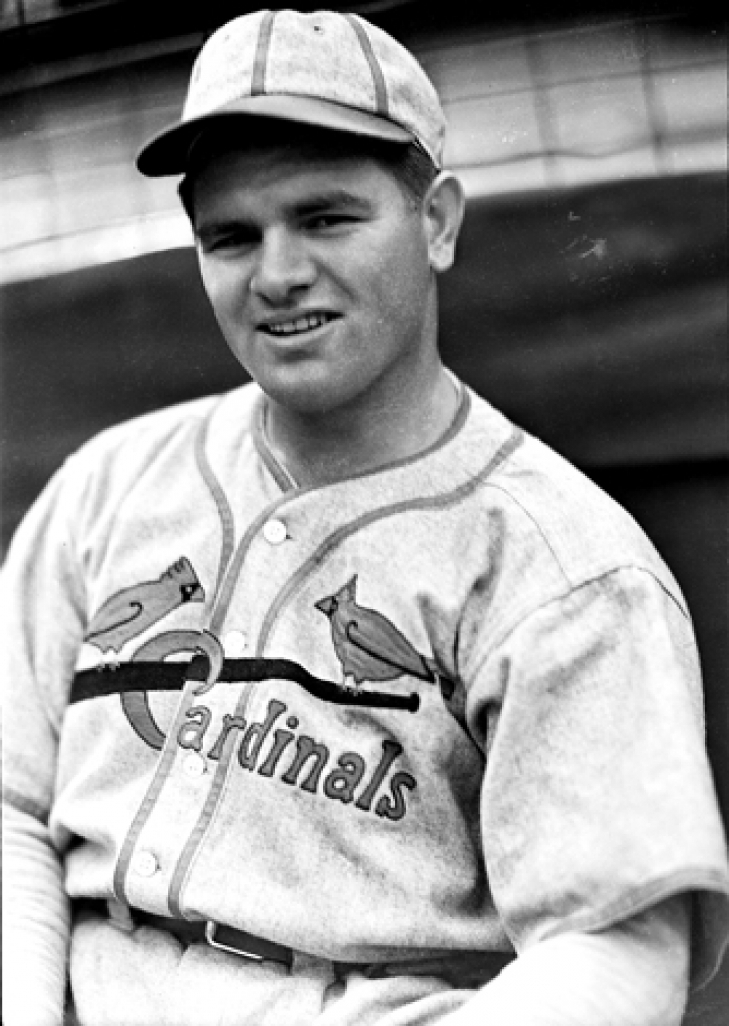
30. Max Lanier

The story of Max Lanier is one of the more interesting ones on this list, which certainly says something considering the colorful characters that have populated the St. Louis Cardinals!