Menu
A+ A A-
Site Admin

Site Admin

16. Tom Jackson

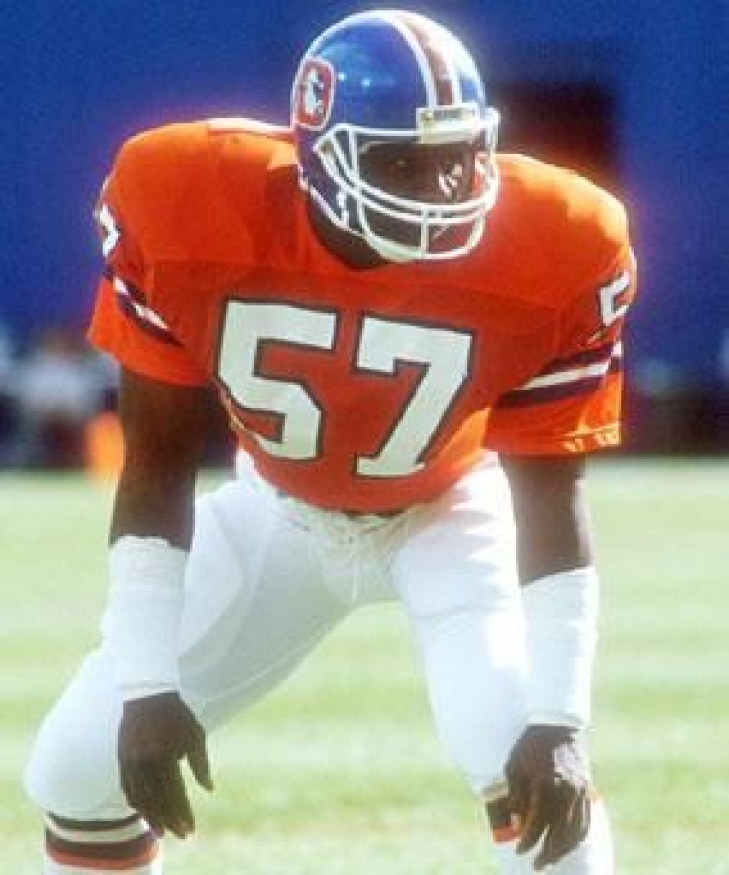
Drafted in the fourth round of the 1973 NFL Draft out of Louisville, Tom Jackson arrived in Denver as an undersized, fast-flowing weakside linebacker. He quickly claimed a starting job in Joe Collier's 3-4 front and became the emotional heartbeat and outspoken leader of the iconic "Orange Crush" defense. Jackson's range, high football IQ, and sideline-to-sideline pursuit helped transform the Broncos from a historically struggling franchise into an AFC powerhouse.

Jackson's career trajectory reached elite standing during the storybook 1977 season. Spearheading a defensive unit that carried Denver to its first AFC Championship and Super Bowl XII appearance, Jackson earned First-Team All-Pro honors and his first Pro Bowl selection. He followed that up with two more consecutive Pro Bowl trips in 1978 and 1979. Operating as an effective blitzer and intermediate coverage defender, he routinely turned opponent mistakes into points, returning three of his 20 career interceptions for touchdowns.

Remarkable longevity defined Jackson's 14-year run in Mile High. He missed minimal action across his career, starting 177 of his 191 games—a durable total that trails only John Elway and Jason Elam on the franchise's all-time games played list. Near the tail end of his playing days, Jackson provided crucial veteran leadership for the 1986 squad that captured another AFC crown, making him one of just four players to appear in both Super Bowl XII and Super Bowl XXI for the franchise.

After retiring following the 1986 season, Jackson smoothly transitioned into a second iconic career as a broadcaster. Joining ESPN in 1987, he spent nearly three decades alongside Chris Berman on NFL Primetime and Sunday NFL Countdown, becoming one of the most recognizable and revered studio analysts in sports media history until he retired from broadcasting in 2016.

Jackson spent 14 seasons with the Denver Broncos (1973–1986), playing 191 games with 177 starts. He recorded 20 interceptions for 340 yards, 3 defensive touchdowns, 40 sacks, and 8 fumble recoveries. A three-time Pro Bowler, All-Pro, two-time AFC champion, and six-time team MVP, Jackson was inducted into the Denver Broncos Ring of Fame in 1992.
13. Dennis Smith

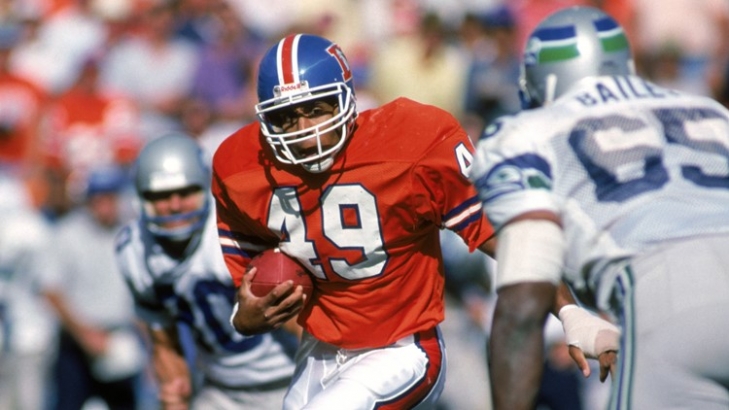
From USC, Dennis Smith was drafted 15th overall in the 1981 NFL Draft and was a decorated consensus All-American who immediately injected raw physicality into the secondary. Transitioning into the starting strong safety spot early in his career, Smith established himself as an intimidating secondary enforcer—setting the blueprint for a generation of box safeties who could crush ball-carriers in run support while holding their own in pass coverage.

Smith’s breakout arrival occurred during his third season in 1983, when he achieved a career-best total of 114 tackles, along with five sacks and four interceptions. This remarkable performance initiated a decade-long period of leadership in the secondary. Acting as the formidable enforcer of Denver’s defense, Smith exceeded 100 tackles in five distinct seasons—culminating with a career-high of 120 tackles in 1992—while consistently leading the team's defensive backs in tackles and forced fumbles.

During the late 1980s and early 1990s, his play reached elite level. Smith earned six Pro Bowl selections (1985, 1986, 1989–1991, 1993) and two All-Pro honors. As the veteran starter alongside a young Steve Atwater from 1989, they created one of the most formidable safety duos in NFL history. That defensive backfield was crucial for Dan Reeves' teams, driving Denver to the AFC playoffs and securing three Super Bowl appearances in XXI, XXII, and XXIV.

Smith was not only known for his punishing hits but also for his exceptional ball skills and field awareness. Over his 14-year career with Denver, he amassed 30 interceptions—one of which he returned for a touchdown—along with 17 fumble recoveries and 15 sacks. His versatile skill set consistently disrupted opposing offenses, and he was regarded as a revered team leader until he retired after the 1994 season.

In his 14-year career, Smith had 1,171 total tackles, 30 interceptions, 15 sacks, and 17 fumble recoveries.  In 2001, he was enshrined in the Broncos Ring of Fame.

9. Louis Wright

Louis Wright was taken 17th overall in the 1975 NFL Draft out of San Jose State, and the gifted cornerback stepped straight into Denver's starting lineup and instantly elevated the standard for perimeter defense. Standing 6-foot-1 with track-star speed, Wright brought a rare combination of length, fluidity, and physical press coverage that allowed defensive coordinator Joe Collier to unleash the legendary "Orange Crush" defense.

11. Floyd Little

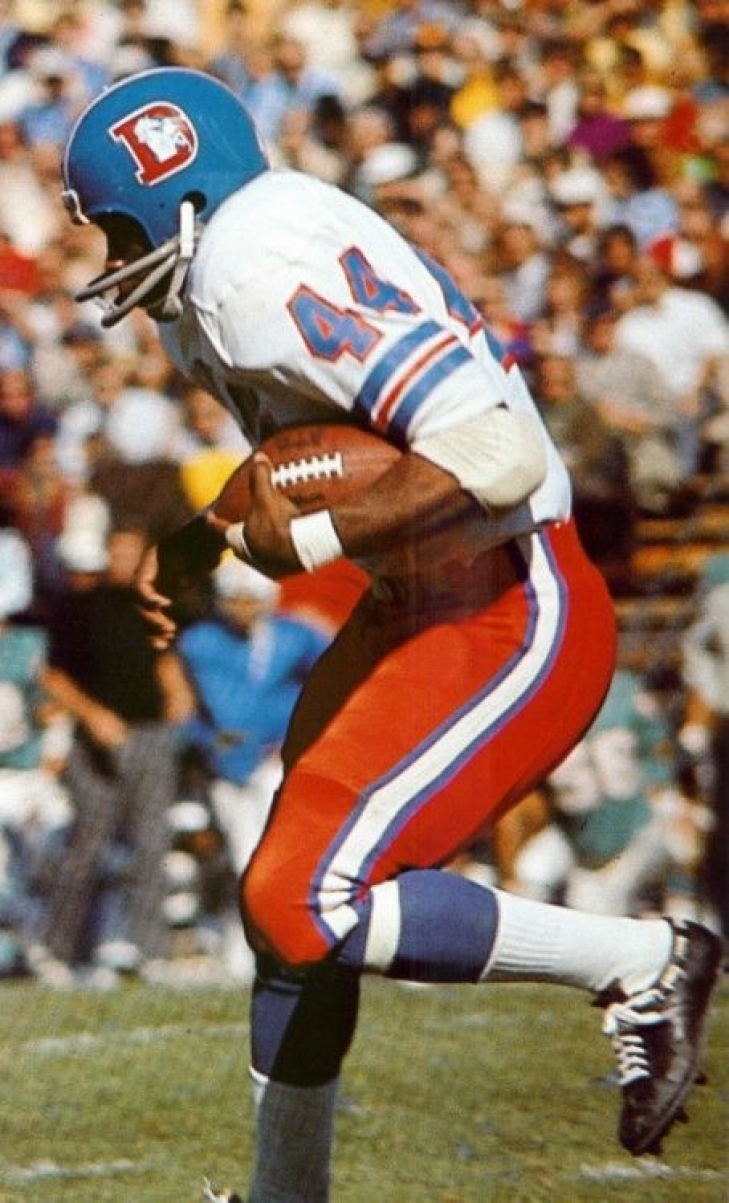
The Denver Broncos spent their first seven seasons as an AFL afterthought, operating on shoestring budgets and constantly facing relocation rumors. Everything changed in 1967 when Denver selected Syracuse star Floyd Little sixth overall. Little was the first first-round pick ever to sign with the franchise, single-handedly turning Mile High Stadium into a hot ticket and earning the immortal nickname "The Franchise" for effectively saving pro football in Denver.

Although early in his career he often served as a dangerous returner—leading the league in punt return average (16.9) in 1967 and ranking high in all-purpose yards for two consecutive years—his move to a full-time tailback marked one of the most impressive individual streaks of his time. Standing 5-foot-10 and weighing less than 200 pounds, Little may not have had imposing size, but he made up for it with exceptional vision, outstanding contact balance, and a quick, elusive running style that made it difficult for defenders to catch him.

During a six-season absolute peak from 1968 through 1973, no running back in professional football accumulated more total rushing yards or scrimmage yards than Floyd Little. He made four straight Pro Bowls starting in 1968, grabbed First-Team All-AFL honors in 1969 with a league-high 5.0 yards per carry, and led the AFC in rushing in 1970. His crown jewel season arrived in 1971, when he captured the NFL rushing title with 1,133 yards—becoming the first 1,000-yard rusher in franchise history and the first player ever to lead the league in rushing while playing for a last-place team (4–9–1). He capped off that elite run in 1973 by pacing the NFL with 12 rushing touchdowns while amassing over 1,400 yards from scrimmage.

By 1974, after years of heavy workloads, Little's physical health declined, with injuries limiting his touches as younger backs took over. Wanting to retire on his own terms, he announced 1975 would be his last season. In his home finale at Mile High Stadium, he made a final highlight—scoring a 66-yard touchdown on a screen pass and calmly handing the ball to the official. Having attended night classes at the University of Denver Law School during his career, Little earned his master's degree in 1975 and retired from football to pursue business ventures.

With the Broncos, Little accumulated 6,323 rushing yards, 43 rushing touchdowns, 215 receptions, 2,418 receiving yards, and 12,173 all-purpose yards alongside 54 total touchdowns. A five-time Pro Bowler/All-Star, 1971 NFL rushing leader, and inaugural 1984 Ring of Fame inductee, Little had his No. 44 retired by the team before earning long-overdue enshrinement into the Pro Football Hall of Fame in 2010.