
- Published in Top 50 Detroit Tigers
23. Rudy York
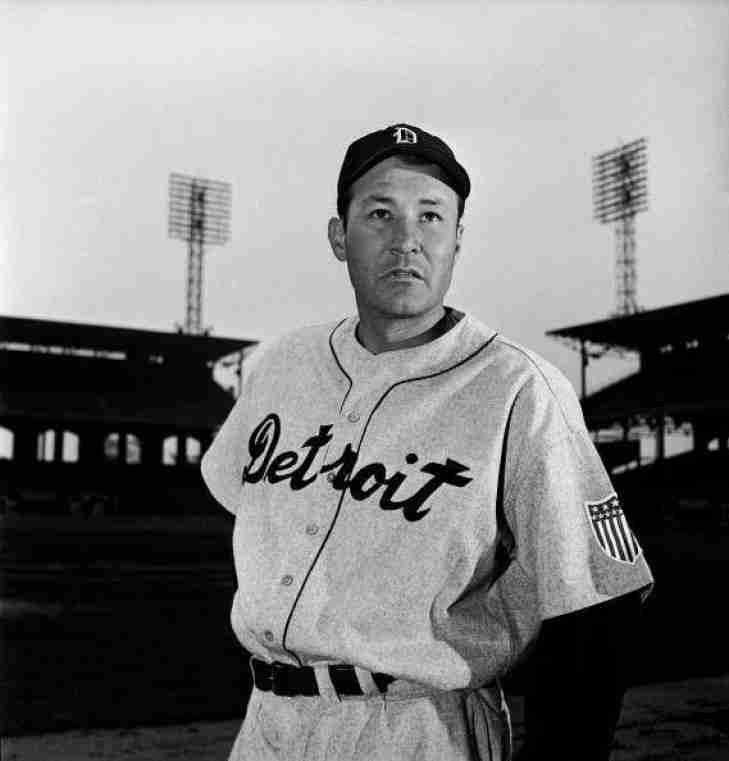
Rudy York arrived in Detroit as a defensive puzzle but an offensive powerhouse, a man whose specialized power was so undeniable the Tigers had to find a place for him on the diamond. Whether he was behind the plate or at first base, York provided a high-frequency home run threat that bridged the gap between the era of Mickey Cochrane and the post-war stars. For a decade in the Motor City, he was the middle-order muscle that kept the Tigers in the hunt, proving he could produce elite numbers regardless of whether the league's best were on the field or serving overseas.
York’s ascent in Detroit began with a historic explosion in 1937. As a rookie, he reached an unprecedented gear in August, hitting 18 home runs in a single month—a major league record that stood for eight decades. He finished his debut season with 35 homers and 101 RBIs, signaling a transition from a prospect to a franchise pillar almost instantly. He possessed a focused intensity at the plate that made him a nightmare for American League pitchers, a style that allowed him to smack at least 20 home runs in seven consecutive seasons. He wasn't just a "solid contributor"; he was a model of pure slugging who provided the run-scoring volume the Tigers built their lineup around.
In 1943, while the war had thinned some rosters, York proved his hitting was elite by leading the American League in home runs (34), RBIs (118), and slugging percentage (.527). He finished third in the MVP voting that season, an outlier who anchored a Detroit squad that remained a perennial contender. He was a seven-time All-Star, an honor that reflected how his peers regarded him as one of the era’s premier offensive forces. He showed the organization that a player could become a legend by simply being the most dangerous man in the batter's box every afternoon.
Everything culminated in the 1945 championship run. York provided a veteran-like poise for the Tigers as they chased the pennant, contributing 18 home runs and 87 RBIs during the regular season. While his individual numbers in the World Series were modest, his presence in the cleanup spot was a deterrent that helped Detroit secure the title over the Cubs. Following the 1945 season, with the war over and stars like Hank Greenberg returning to full-time action, the Tigers viewed the 32-year-old York as a trade chip whose defensive limitations outweighed his power. In January 1946, Detroit dealt him to the Boston Red Sox for shortstop Eddie Lake, a move that prioritized infield defense over York’s aging bat.
He left the club as one of the most prolific right-handed hitters to ever wear the uniform, having amassed 239 home runs and 1,317 hits.