Menu
A+ A A-

Andre Dawson will boycott the Derek Jeter's induction
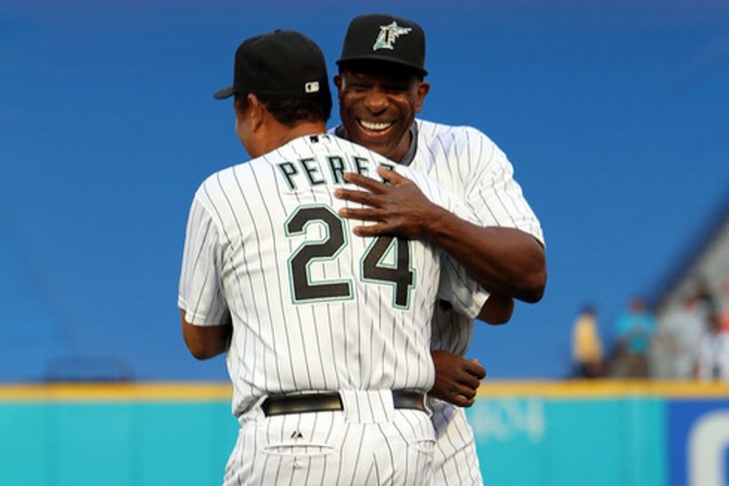
Derek Jeter is eligible for the Baseball Hall of Fame in 2020 and barring voters forgetting to submit their ballots, the induction of Jeter is a sure thing.  It also looks like there will be two former Baseball Hall of Famers who won’t be in attendance.

In an interview with Bleacher Report during the Hall of Fame weekend, Andre Dawson was asked if he would be in attendance for the 2020 ceremony.  He had this to say:

"I sincerely doubt [that I will attend] at this point.  All indications are likely not. ... I can't speak for Tony. But I don't have a sense or feeling like I want to sit on that stage to hear what [Jeter] has to say."

Dawson was employed with the Miami Marlins as a special assistant and upon Derek Jeter’s group buying the team, he was relieved of his duties.  Jeter did not do the job himself, as he had David Samson, then the President of the team do it.  Dawson wasn’t alone as fellow Hall of Famer and special assistant, Tony Perez was also let go in the same manner.

To add to the perceived insult, both Dawson and Perez were offered their jobs back at a substantially less salary ($85,000 to $25,000) and they would no longer have clubhouse access.

As for Perez, he hasn’t stated whether he will be in attendance.  He did state that if he doesn’t attend, he will be open about why, which could include boycotting because of Jeter.  

The man who swung the ax, Samson, he was let go shortly after.
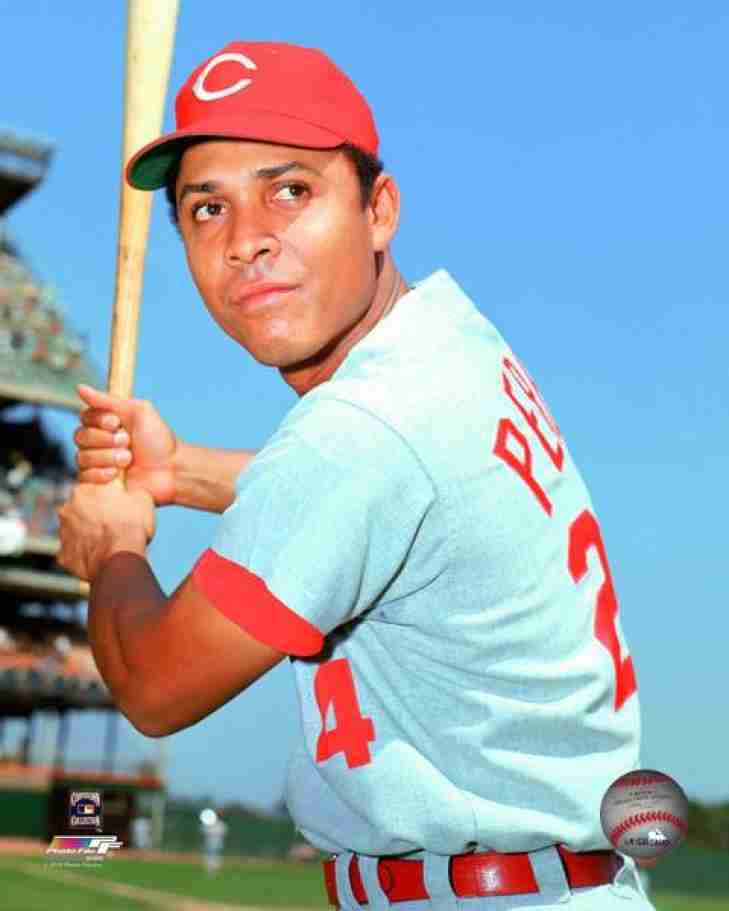
8. Tony Perez

When Tony Pérez arrived in Cincinnati in 1964, he was a young, soft-spoken infielder from Cuba who had to navigate both a new language and a new position. While he broke in as a third baseman, his residency on the South Side of Cincinnati truly took flight when he transitioned to first base, forming a terrifying corner-infield duo with Lee May before eventually becoming the permanent fixture at the bag. He arrived as a promising prospect and quickly matured into a seven-time All-Star, providing the profile of a professional who never let the pressure of the moment alter his approach.

The middle of his journey was defined by a level of dominance in the RBI column that few in the history of the game can match. Throughout the 1970s, Pérez was the premier run-producer for the Big Red Machine, driving in 100 or more runs seven different times and eclipsing the 25-home run mark on six occasions. He was the definitive "Mr. Clutch," a title bestowed upon him by teammates who watched him lead the majors in RBIs over a full decade. His peak arrived in 1970, when he blasted 40 home runs and drove in 129, finishing third in the MVP voting and signaling that the Reds were ready to conquer the National League.

The high-leverage pinnacle of his tenure came during the back-to-back championship seasons of 1975 and 1976. In Game 7 of the 1975 World Series, with the Reds trailing 3-0 and their season on the brink, Pérez launched a two-run moonshot over the Green Monster that swung the momentum and paved the way for the title. He followed that up in 1976 with a walk-off single in Game 2 against the Yankees, proving that while he might not have been the "best" player on a roster of Hall of Famers, he was arguably the most essential when the game was on the line. It was this poise that led manager Sparky Anderson to famously label him the "heart and soul" of the team.

However, the walk toward the exit in 1976 was one of the most painful in franchise history. Traded to Montreal in a move that many fans and teammates never truly forgave, Pérez spent seven seasons "in the wind" with the Expos, Red Sox, and Phillies. But the story had one final, poetic chapter; in 1984, "Doggie" returned to Cincinnati to finish his career where it began. Even as a veteran bench player, he continued to defy time, batting .328 in 1985 and becoming the oldest player at the time to hit a grand slam.

Tony Pérez concluded his career as a first-ballot immortal in the hearts of Reds fans, officially entering Cooperstown in 2000. That same year, the organization retired his number 24, a permanent tribute to the man who provided the "quiet thunder" for the greatest era in Cincinnati sports.

Subscribe to this RSS feed