Menu
A+ A A-

7. Eddie Collins

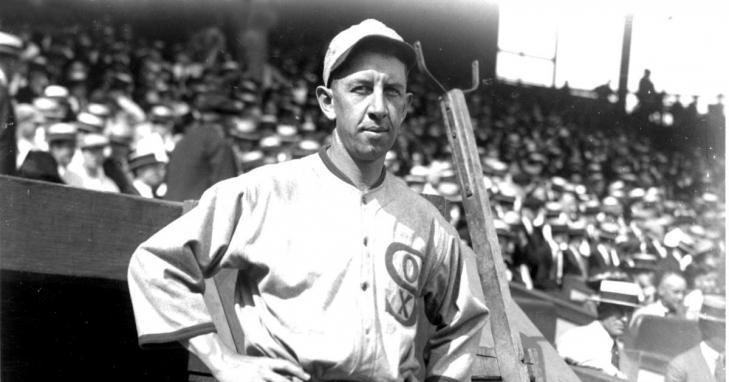
When Eddie Collins stepped off the train in Chicago in 1915, he was the most expensive piece of baseball real estate in the country. The White Sox had shelled out a staggering $50,000 to pry him away from the Philadelphia Athletics, essentially buying the reigning American League MVP to anchor their infield. Collins didn't just meet the lofty expectations; he redefined them. He arrived as a finished product—a cerebral, high-contact second baseman who played the game like a grandmaster moving chess pieces.

His early years in Chicago were defined by championship efficiency. Collins was the tactical engine of the 1917 World Series team, hitting over .300 and providing the veteran poise that helped the Sox claim the title. He was the rare player who could dominate a game without hitting a home run, using his elite speed and a preternatural ability to read a pitcher's delivery. By the time 1919 rolled around, he had helped guide the team back to the Fall Classic, but he was about to enter a nightmare he hadn't bargained for.

As the Black Sox scandal unfolded and the integrity of the franchise collapsed around him, Collins stood as a solitary island of reputational safety. He was one of the few stars completely untouched by the "fix," a fact that allowed him to serve as the bridge between a disgraced past and an uncertain future. While the team was decimated by lifetime bans, Collins responded by entering the most prolific offensive stretch of his career. Beginning in 1920, he embarked on a seven-year run where he refused to bat lower than .324, peaking with a sensational .372 campaign. He became a human metronome, turning the second base bag into his personal office and accumulating 2,007 hits in a Sox uniform.

The final chapter of his Chicago tenure saw him take on the mantle of player-manager, attempting to steer a gutted organization back toward respectability. While the teams of the mid-20s lacked the depth of his early championship squads, Collins remained an elite performer well into his late 30s. He eventually departed after the 1926 season to return to Philadelphia, leaving behind a .331 career average and a legacy of unwavering professionalism. When he was inducted into Cooperstown in 1939 as part of its fourth-ever class, it was a tribute to a man who arrived as a $50,000 gamble and left as the ultimate symbol of South Side stability.
6. Eddie Collins

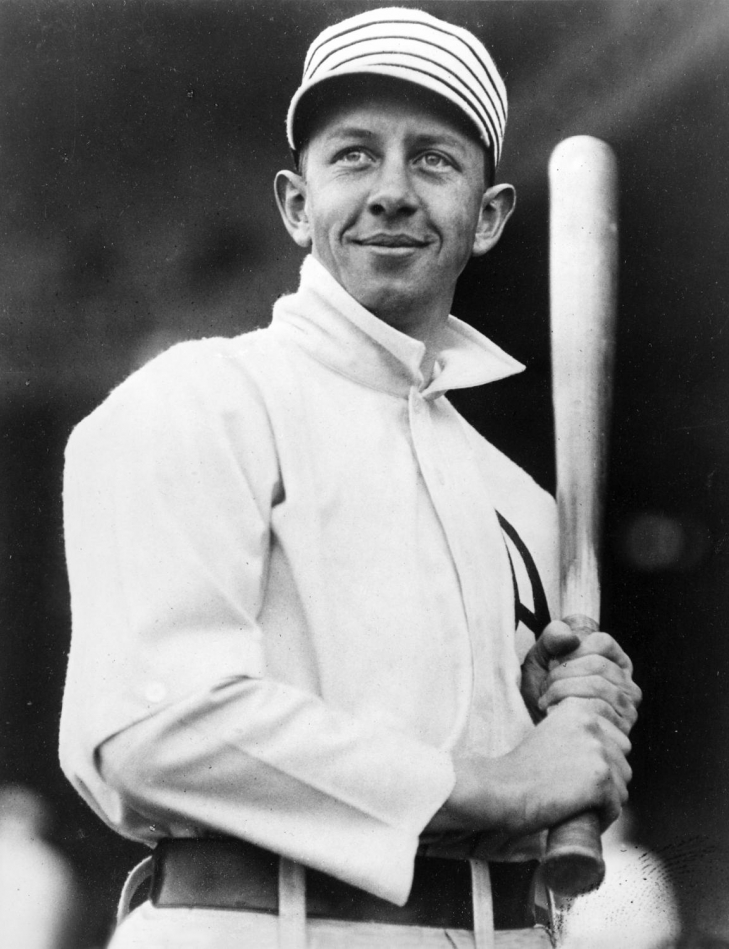
In 1906, Eddie Collins arrived in Philadelphia as a collegiate standout from Columbia University, signing under a local alias to protect his amateur eligibility.  By 1909, he had emerged as the tactical brain of Connie Mack’s "$100,000 Infield," a second baseman whose mental acuity was matched only by his physical speed.

1909 was his first full season as a professional athlete, and he made the most of it. Collins achieved a significant milestone by batting .347 and stealing 63 bases. He reached an even more exceptional level in 1910, leading the American League with a career-high 81 stolen bases, becoming the first player in the history of the sport to surpass the 80-steal threshold. He contributed the dynamic energy that propelled the Athletics to three World Series championships in four years (1910, 1911, and 1913), establishing himself as a prominent figure of the Deadball Era, capable of influencing the game's tempo from the basepaths.

In 1914, Collins achieved an extraordinary level of individual recognition by producing an exceptional season that earned him the American League Most Valuable Player (MVP) Award. He demonstrated complete mastery of the game by leading the league in runs scored (122) for the third consecutive year and batting .344, thereby guiding the Athletics to their fourth pennant in five seasons. Nevertheless, the chapter in Philadelphia approached a pivotal juncture in 1915; amidst the imminent threat posed by the Federal League’s lucrative contracts, Connie Mack executed a significant transaction, transferring Collins to the Chicago White Sox for the sum of $50,000.

This would not be the end of Collins in Philadelphia.

After spending twelve productive seasons in Chicago, Collins’ return to Philadelphia in 1927 was a localized homecoming that brought his career full circle. Despite being 40 years old, he remained a sought-after professional mainstay, and he chose to reunite with Connie Mack to serve as a veteran player-coach for a rising Athletics squad. While he operated primarily as a tactical reserve, his localized value to the clubhouse was immeasurable as he mentored the next generation of Athletics legends. He reached a historic plateau of team success by serving as a professional mainstay on the 1929 and 1930 World Series championship rosters, making him the only player in franchise history to secure five championship rings with the team. He finalized his playing career after the 1930 season, departing as the only player in MLB history to spend at least 12 seasons with two different franchises.

As an Athletic, Collins compiled 1,308 hits, 337 stolen bases, and a .331 batting average.  He was inducted into the Baseball Hall of Fame in 1939 and the Philadelphia Baseball Wall of Fame in 1987.  The Athletics would also induct Collins into their franchise Hall of Fame in 2021.

Subscribe to this RSS feed