Menu
A+ A A-

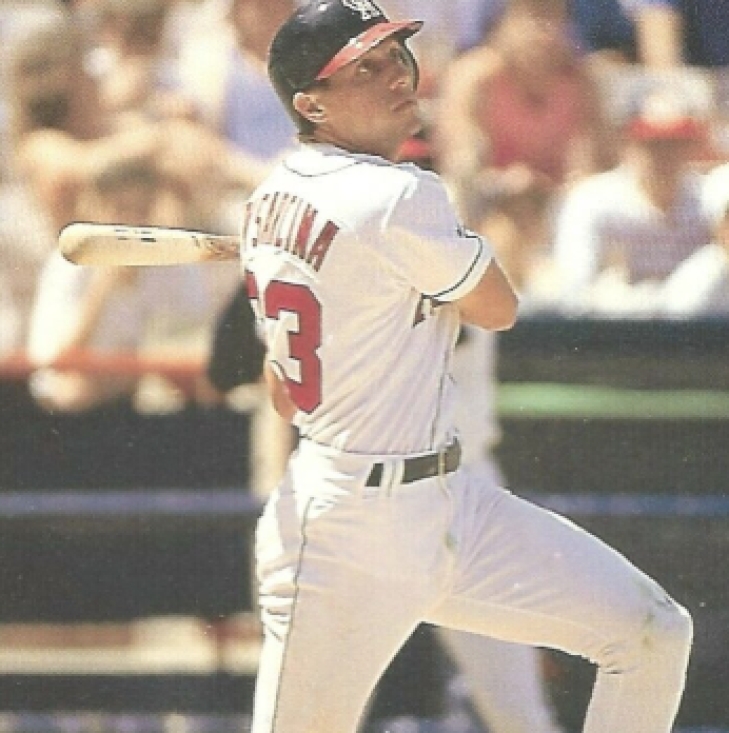
48. Gary DiSarcina

A sixth-round pick, Gary DiSarcina was labeled with a reputation for "grinding it out," a descriptor that followed him through every stage of his career. While he lacked the flashy offensive numbers of many modern shortstops, he provided the California Angels with a brand of defensive stability and quiet leadership that became the organization's heartbeat for over a decade.

Debuting for the club in 1989, DiSarcina seized the starting role in 1992. DiSarcina demonstrated a specialized ability to anchor the infield, quickly proving to be a reliable partner for the veteran staff.  Although he had no discernible power game (only 28 career home runs), he was a technical master at making contact and executing situational plays.

DiSarcina had his best year in 1995, a season that earned him his only All-Star selection. That summer, he showcased a career-best .307 batting average and provided a high-caliber offensive spark that perfectly complemented his gold-standard defense. His value to the team was never more apparent than when he missed time late in the season with a thumb injury; the Angels, who had been leading the division by double digits, famously stumbled in his absence.

He had a career-high 158 hits in 1998, earning the Angels' Team MVP despite only three home runs that year, thanks to his 39 doubles and leadership. The final years of his journey were plagued by a series of "freak" injuries that prematurely slowed his high-frequency output. In 1999, he missed significant time after a coach accidentally hit him with a ball during a pre-game drill. Subsequent shoulder issues eventually cost him the entire 2001 season. Despite the physical setbacks, he remained a high-caliber mentor in the dugout, providing the veteran presence needed as a young core began to emerge. He retired following the 2002 season as a true "one-team man.”

DiSarcina compiled 966 hits, 355 RBIs, and was inducted into the Angels Hall of Fame in 2013.
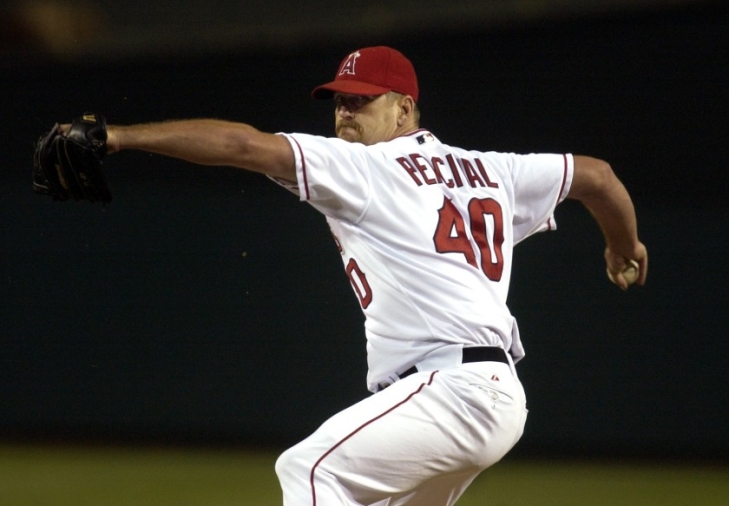
17. Troy Percival

Troy Percival arrived in the California organization as a catcher before a historic transition during his minor league tenure. After coaches noticed his return throws to the pitcher were faster than the pitches he was receiving, he moved to the mound and quickly climbed the ranks. He debuted in 1995 as a primary setup man for Lee Smith, delivering a dominant 1.95 ERA and 94 strikeouts in 74 innings, which earned him a fourth-place finish in the American League Rookie of the Year voting.

Percival took over the closer role in 1996 and immediately established a standard of high-frequency success in high-pressure situations. He recorded 36 saves and struck out 100 batters in his first year as the stopper, earning the first of four All-Star selections. For nearly a decade, he served as a foundational piece of the bullpen, recording at least 30 saves in seven of his eight full seasons as the closer. He reached a statistical peak in 1998 with a career-high 42 saves, proving that his mid-90s fastball and aggressive approach were a tactical nightmare for opposing hitters.

The 2002 postseason represented the ultimate punctuation of Percival's career in Anaheim. During the club's run to its first championship, he demonstrated a focused intensity by going a perfect 7-for-7 in save opportunities, tying a then-Major League record for saves in a single postseason. He was on the mound for the final out of the World Series, inducing a flyout from Kenny Lofton to secure the title. While he continued to produce at a high level through 2004, a degenerative hip condition began to alter his delivery and slightly sap his velocity, signaling a transition point for the Angels' bullpen.

Percival departed for Detroit in free agency, leaving behind 316 saves in an Angels uniform.

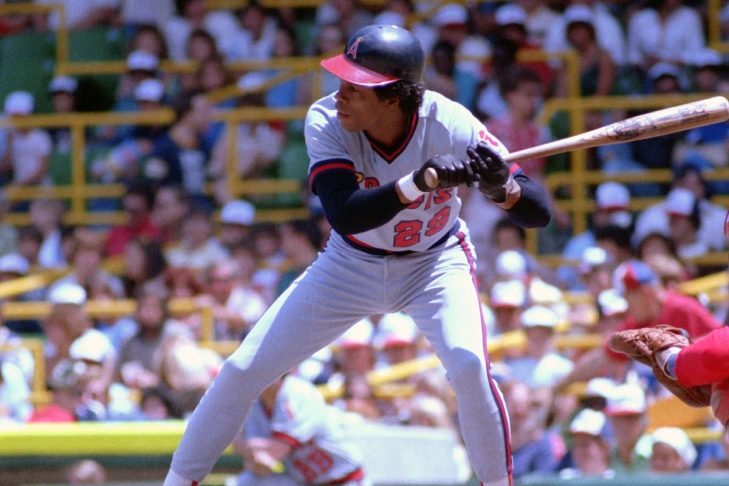
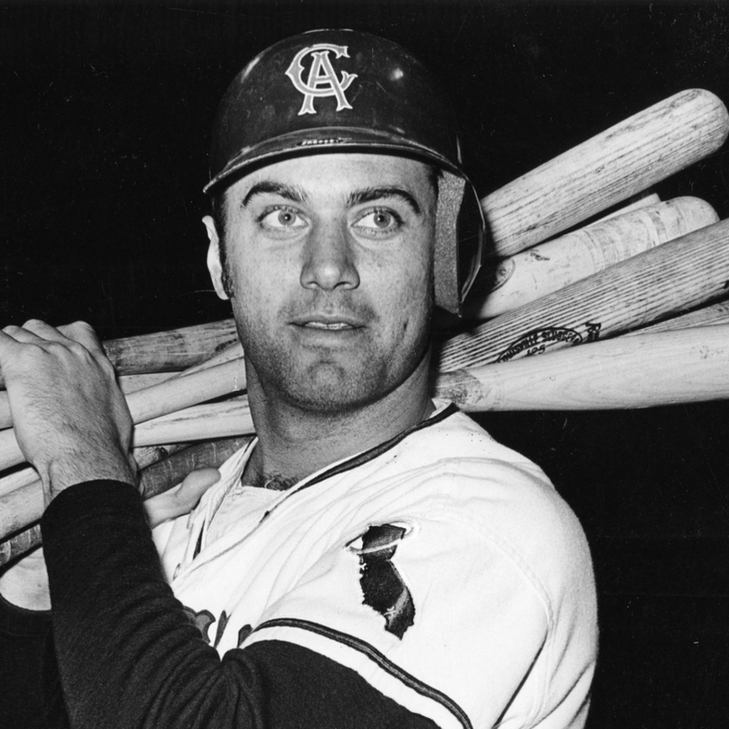
20. Rod Carew

Rod Carew arrived in the California organization via a blockbuster trade in early 1979, bringing a legendary resume that included seven batting titles and a league MVP. While he had already established himself as a generational icon in Minnesota, he proved that his scientific approach to hitting was not dependent on his surroundings.

In 1979 and 1983, he batted over .300 each season and maintained an on-base percentage north of .380. He showed the organization he was a foundational professional by earning an All-Star selection in every one of his first six seasons with the club, helping lead the Angels to their first two American League West titles in 1979 and 1982.

The 1985 campaign provided the ultimate punctuation for his historic career. On August 4th, against his former club in Minnesota, Carew recorded his 3,000th career hit, a line-drive single that cemented his status among the game's immortal hitters.  Overall, as an Angel, Carew compiled 968 hits, a .314 average, and earned six All-Star selections.

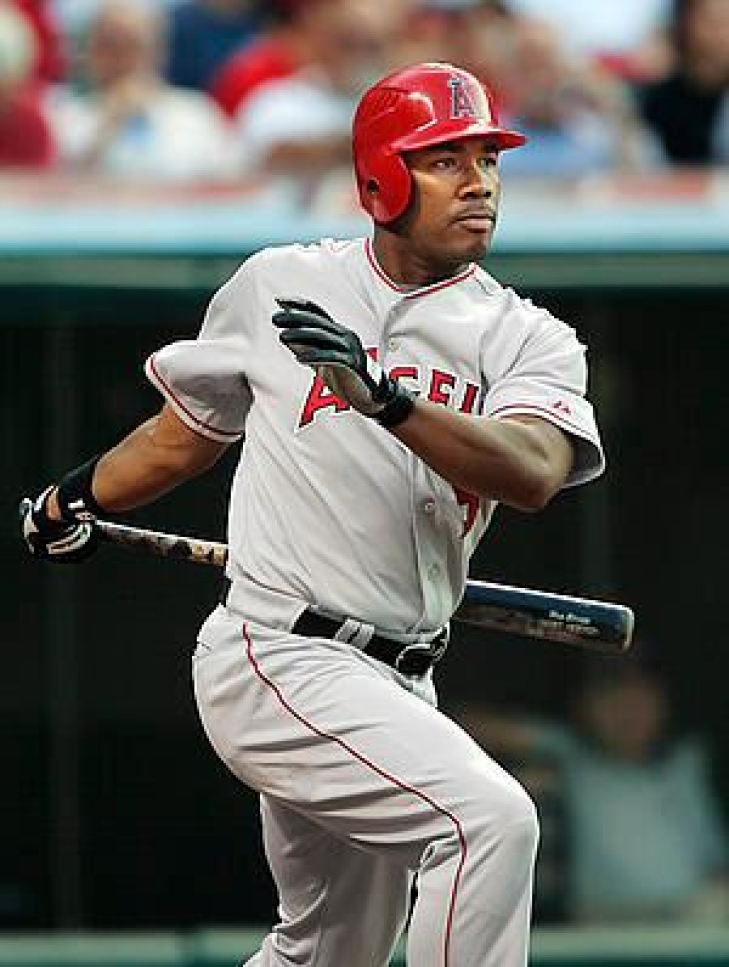
13. Garret Anderson

Garret Anderson emerged as the most durable fixture in the history of the Anaheim outfield, a 1990 draft pick who transformed from a quiet prospect into the franchise’s most prolific run-producer. After a brief introduction to the big leagues in 1994, he secured the starting role in left field and immediately proved his worth by finishing as the runner-up for the 1995 American League Rookie of the Year. For fifteen seasons, he anchored the lineup that thrived on his short, effortless left-handed stroke.

Anderson’s journey in a California uniform reached a historic peak during the 2002 and 2003 campaigns. As the club marched toward its first World Series title, he emerged as a premier American League standout, earning his first All-Star selection and a Silver Slugger Award in 2002. That summer, he demonstrated a specialized ability to drive the ball into the gaps, leading the league with 56 doubles while finishing fourth in the MVP voting. He showed the organization that he was a foundational piece of a championship core, providing the high-velocity production of 123 RBIs and 29 home runs in the heart of the "Thundersticks" order.

Between 2000 and 2003, Anderson was a constant presence at the top of the leaderboards, recording four straight seasons with at least 28 home runs and 116 RBIs. He possessed a focused intensity that allowed him to maintain a batting average over .300 for three consecutive years during that span, becoming a perennial fixture at the mid-summer classic. Despite a low-walk approach that impacted his overall efficiency, he remained a model of reliability, eventually setting franchise records for hits, runs, and RBIs.

In 2008, Anderson moved on to Atlanta as a free agent. He left behind a statistical footprint that remains unmatched in the team’s record books: 2,368 hits, 272 home runs, and 1,292 RBIs. In 2016, he was inducted into the Angels Hall of Fame.

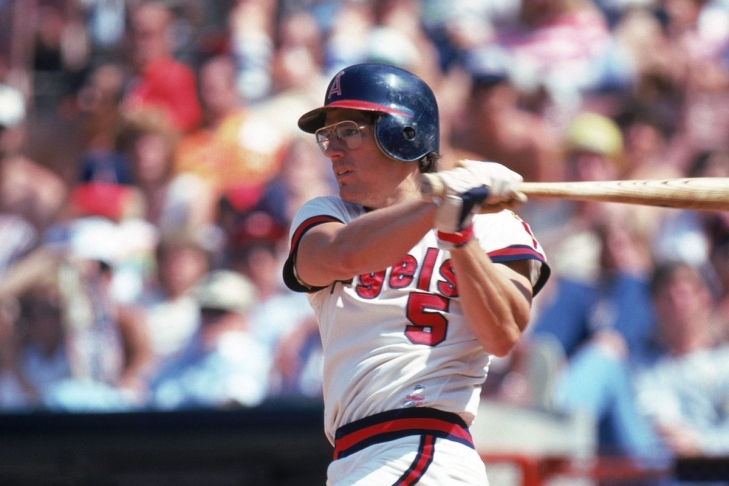
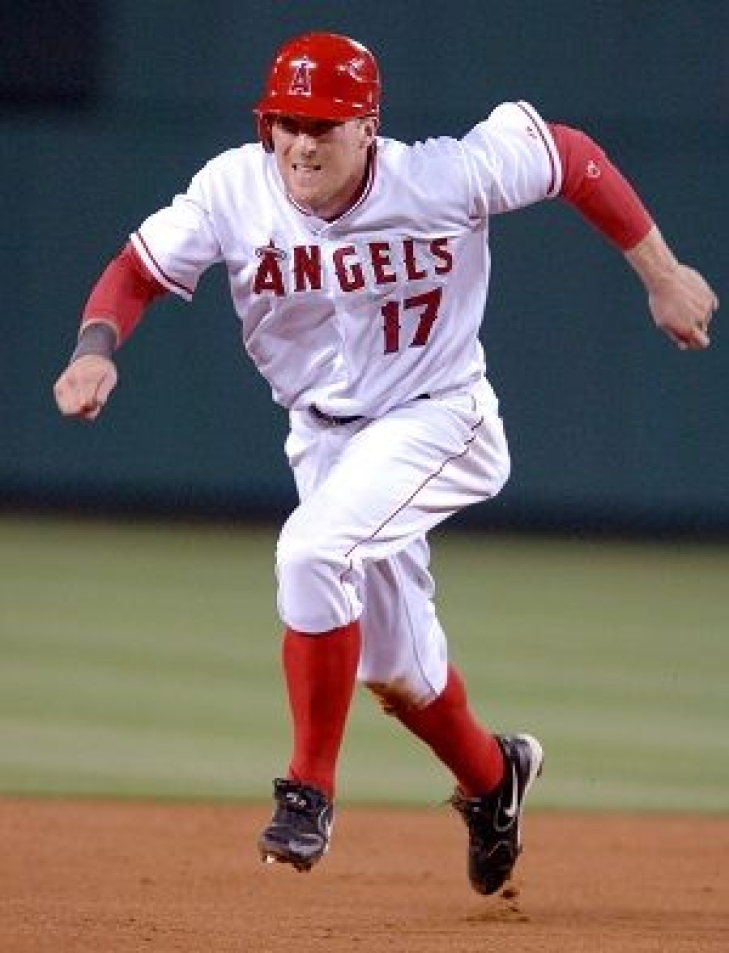
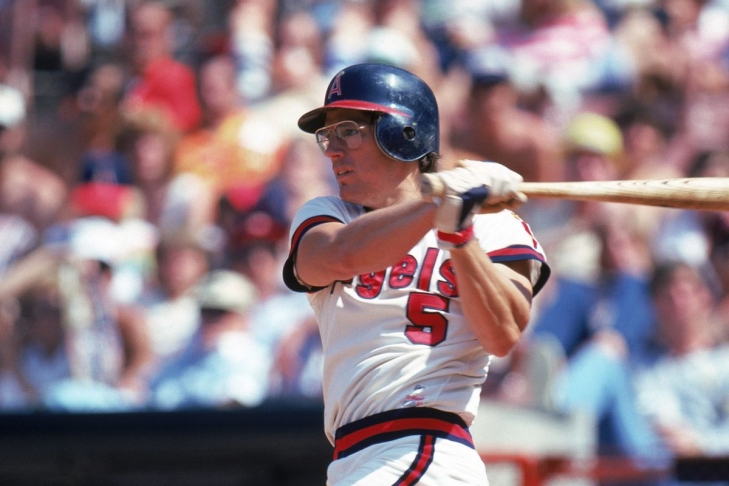
10. Brian Downing

Brian Downing became a central figure in the evolution of the Angels, transforming from a defensive-minded catcher into one of the most feared power-leadoff hitters in the American League. Acquired from the Chicago White Sox in a multi-player trade following the 1977 season, he arrived in Anaheim and immediately reimagined his career through a specialized weight-training regimen and a distinctive open batting stance. An Angel for thirteen seasons, "The Incredible Hulk" helped propel the Angels to their first three playoff appearances.

In his second year with the club, he secured his only All-Star selection by batting a career-high .326 and leading the Angels to their first-ever division title. This initial splash signaled a transition from a marginal regular to a premier league force that specialized in the art of the base hit

Following a serious ankle injury in 1980, Downing moved away from the catcher position, a change that allowed his offensive efficiency to reach a different level. Between 1982 and 1990, he was a statistical force of reliability, launching at least 14 home runs in nine consecutive seasons and twice surpassing 100 runs scored. He reached a career peak for plate discipline during the 1987 season, where he blasted 29 home runs and led the American League with 106 walks. Despite the physical toll of his high-effort style, which famously included a record-setting 105 hit-by-pitches as an Angel, he remained a model of resilience, eventually recording 1,588 hits and 22 homers in a California uniform.

In 1990, Downing signed with the Texas Rangers as a free agent, and in 2009, he was inducted into the Angels Hall of Fame.

12. Darin Erstad

Darin Erstad joined the Anaheim organization as the first overall pick in 1995, a decorated athlete from Nebraska.  Debuting just a year later, he functioned as the initial building block for a culture that would eventually define the team's greatest era. For eleven seasons, he covered the grass at Angel Stadium with a high-velocity, reckless style of play that made him the heartbeat of the roster.

Erstad’s impact in a California uniform reached a historic peak during the 2000 campaign, following an early taste of stardom with his first All-Star selection in 1998. That summer, he transitioned into a premier American League force by recording a staggering 240 hits, a franchise record and the highest total in the league that season. He demonstrated a specialized ability to handle any pitch, finishing with a .355 average, 25 home runs, and 100 RBIs. He showed the organization that he was a foundational piece of the lineup, earning his second All-Star nod and finishing eighth in the MVP voting by providing the production required of a modern leadoff threat.

The bulk of his Anaheim years were characterized by elite defensive versatility and a reputation for big-game production. Between 2000 and 2004, Erstad was a statistical force of reliability, becoming the first player in history to win Gold Gloves as both an outfielder and a first baseman. He reached a career peak for high-stakes value during the 2002 postseason, where he recorded 25 hits, including a crucial home run in Game 7 of the World Series, to help secure the first championship in team history. Despite the physical toll of his aggressive, dirt-stained style of play, he remained a model of resilience, recording 170 stolen bases and over 1,500 hits in a Halo uniform after departing for the Chicago White Sox in 2007.

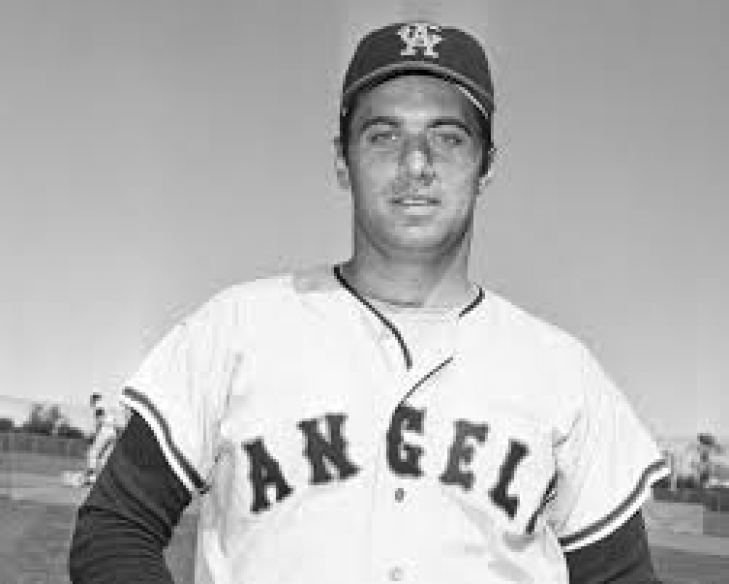
7. Jim Fregosi

Jim Fregosi arrived in the Angels system as a byproduct of expansion, a young shortstop plucked from the Red Sox who would eventually become the definitive face of the franchise’s first decade. During an era when the team struggled to find its footing in the American League, Fregosi provided a rare combination of defensive stability and offensive punch.

Fregosi’s rise in California began almost as soon as the team took the field in 1961. By 1963, he had secured his place as the everyday shortstop, proving that he could handle the rigors of the position while contributing significantly at the plate. He reached a career-defining breakout during the mid-sixties, a stretch where he became a perennial fixture in the Midsummer Classic. Between 1963 and 1970, he recorded at least 140 hits every single season, signaling his transition from an expansion draft pick to a bona fide league leader.

In 1967, Fregosi earned his fifth All-Star selection, captured a Gold Glove for his defense, and finished seventh in the American League MVP voting. With 171 hits and a .290 average, he showed the organization that a shortstop could be a primary offensive engine, often providing double-digit home run power in an era where middle infielders were expected to be defensive specialists. He earned MVP votes in eight consecutive seasons, a high-frequency recognition of his value as the team’s most reliable asset.

Following the 1971 season, the Angels traded their captain to the New York Mets in a blockbuster deal. While Fregosi struggled to regain his form in New York, the trade famously brought Nolan Ryan to California, a move that shifted the franchise's trajectory. He left Anaheim with 1,408 hits and 115 home runs, a statistical footprint that made him the club’s all-time leader in nearly every major category at the time of his departure.

Fregosi returned as the team’s manager from 1978 to 1981, guiding the club to its first-ever division title in 1979. The organization recognized his enduring legacy in 1989 by making him the second player ever inducted into the Angels Hall of Fame, eventually retiring his number 11 nearly a decade later.

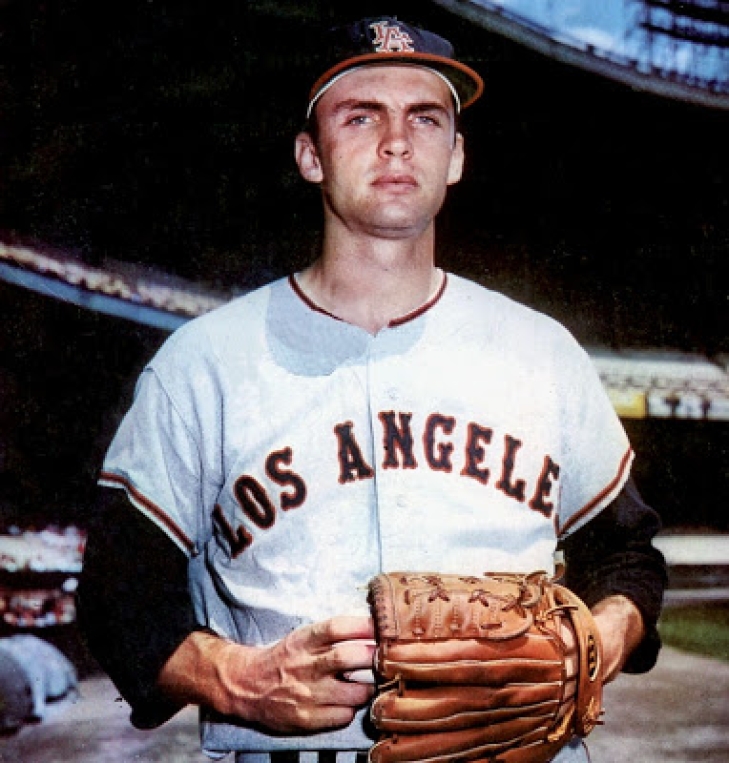
21. Dean Chance

Dean Chance arrived in the California organization as a foundational piece of the original 1961 roster, debuting as a 20-year-old with a high-ceiling repertoire. Known for a unique, back-to-the-plate delivery that baffled hitters’ timing, he quickly transitioned from a young prospect to the premier arm of the expansion era.

Chance first demonstrated his ability to handle a full workload during a historic 1962 rookie campaign. That summer, he recorded a 14-10 record with a 2.96 ERA and earned a third-place finish in the American League Rookie of the Year voting. He showed the organization he was a foundational professional by tossing over 200 innings and appearing in 50 games, providing the staff with the veteran-like poise required for a second-year team. While he faced a high-frequency of losses in 1963, his underlying efficiency remained high, serving as the essential lead-in to his record-shattering 1964 season.

In 1964, Chance was the best hurler in the game.  At just 23 years old, he won the Cy Young Award and led the American League in wins (20), ERA (1.65), and shutouts (11). He demonstrated a specialized ability to dominate elite competition, particularly the Yankees, and finished fifth in the MVP balloting. He remained a consistent winner over the next two seasons, recording 27 more victories and maintaining a sub-3.15 ERA before a 1966 trade sent him to the Minnesota Twins.

Chance compiled 74 wins and 857 strikeouts with the Angels.

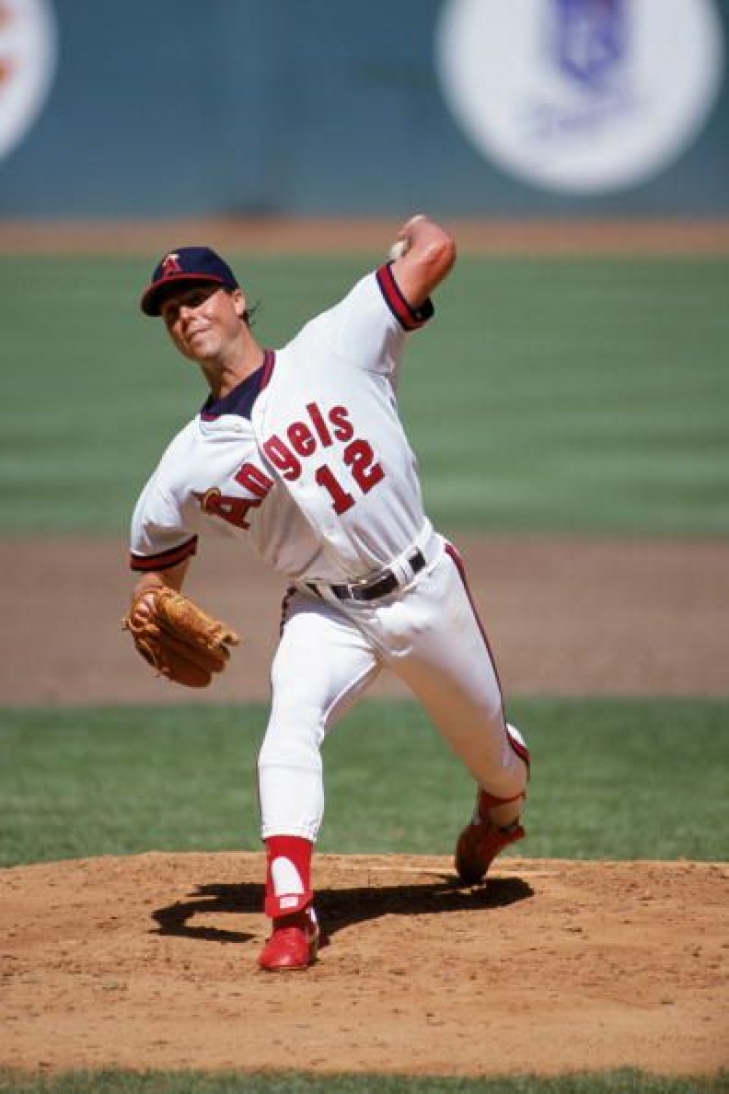
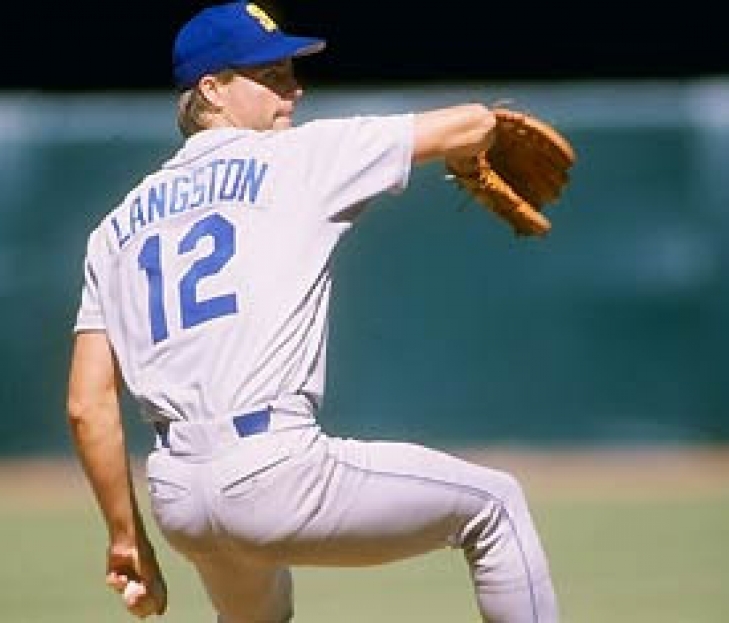
14. Mark Langston

Mark Langston landed in Anaheim as a high-profile free agent in 1990, returning to the West Coast after a whirlwind season that saw him traded from Seattle to Montreal. Known for a blistering heater and a devastating pickoff move, the left-hander arrived with the heavy expectations of a franchise looking for a front-line starter to lead them back to contention. For eight seasons, he anchored the Angels' rotation, evolving from a raw power pitcher into a refined southpaw.

Langston’s tenure in a California uniform took a massive leap forward during the 1991 season. After a rocky debut year in Orange County, he found his groove with a 19-8 record and a 3.00 ERA, earning his first All-Star nod in four years. This resurgence proved he was more than just a high-priced rental; he was a workhorse capable of silencing the best lineups in the American League. His performance that summer garnered a sixth-place finish in the Cy Young race.

Langston was defined by a rare blend of pitching prowess and defensive mastery. Between 1991 and 1995, Langston was a vacuum on the mound, capturing five consecutive Gold Gloves for his ability to shut down the opposition's bunting and running game. He remained a perennial threat in the mid-summer classic, earning All-Star honors in 1992 and 1993 while consistently racking up high inning totals. Even as the league's offensive numbers began to skyrocket, he maintained a sharp edge, eventually fanning 1,112 batters during his stay with the Halos. He provided a veteran presence that gave the club a chance to win every fifth day, regardless of the shifting roster around him.

Following the 1997 season, the veteran hurler moved on to San Diego. He left the organization with 88 wins, 1,112 strikeouts, and five consecutive Gold Glove Awards.

6. Frank Tanana

Frank Tanana arrived in Anaheim as a left-handed lightning bolt, a pitcher whose early velocity was so pure it rivaled the thunder of his teammate, Nolan Ryan. While history often places him in the shadow of the "Express," Tanana was a statistical giant in his own right, providing a specialized brand of southpaw dominance that the American League had rarely seen.

Tanana’s rise in California began with a 1973 debut, but he reached a career-defining breakout in 1975. That season, the 21-year-old left-hander led the American League with 269 strikeouts and a league-best strikeout-to-walk ratio, signaling his transition from a young prospect to an elite rotation force. He possessed a focused intensity on the mound, pairing a blistering fastball with a devastating curve that made him a nightmare for hitters across the junior circuit. He provided high-frequency power, recording over 240 strikeouts in three consecutive seasons while keeping his ERA well under the 3.00 mark.

In 1977, Tanana reached a career peak, leading the American League in ERA (2.54) and pitching bWAR (8.3). Despite these massive numbers, the traditional voting of the era overlooked his dominance, placing him ninth in the Cy Young race while favoring relievers and high-win starters. He showed the organization that a pitcher could lead the league in efficiency and workload simultaneously, as he also led the AL in shutouts (7) that year. He demonstrated craftsmanship, proving that his left-handed delivery was every bit as lethal as the right-handed heat coming from the other side of the Angels' rotation.

Everything culminated in 1979, when Tanana provided the veteran-like poise that helped California reach its first-ever postseason. However, the heavy workload of his early twenties began to take a physical toll; a bout of tendinitis forced a tactical shift, as he moved away from his power-pitching roots and began to navigate a different plateau as a finesse artist. He was eventually dealt to the Red Sox before the 1981 season, leaving Anaheim with 102 wins and 1,233 strikeouts.

3. Chuck Finley

Chuck Finley arrived in Anaheim as a high-velocity southpaw with a localized storm of a split-finger fastball. While he began his journey in the bullpen, he quickly evolved into the most durable workhorse in the history of the franchise. For fourteen seasons, Finley was the left-handed anchor of the Angels' rotation, a player whose longevity and competitive fire allowed him to surpass the win totals of every legend who preceded him in a Halo uniform.

Finley’s ascent in California began with a transition from a relief prospect to a frontline starter in the late eighties. He reached a career-defining breakout in 1989, his first full season in the rotation, where he won 16 games with a 2.57 ERA and earned his first All-Star nod. He followed this with an even more dominant 1990 campaign, winning 18 games and proving that he could maintain elite efficiency over a heavy workload. He possessed a focused intensity and a sharp splitter that made him a nightmare for right-handed hitters, signaling his transition from a young arm into a true franchise pillar.

The core of his tenure was defined by a remarkable professional resilience. After navigating a difficult plateau in 1992, Finley returned to his status as the club's undisputed ace. He reached a new level of consistency between 1993 and 1999, recording at least 10 wins every single season and returning to the All-Star Game in 1995 and 1996. He was a model of physical resilience, routinely logging over 200 innings and leading the American League in starts during the 1996 season. He showed the organization that a pitcher could become a legend through sheer, unadulterated volume, eventually amassing a franchise-record 2,675 innings pitched.

Everything culminated in the late nineties as Finley rewrote the Angels' record books. He reached a career peak for strikeouts in 1998, fanning 212 batters and proving that his stuff hadn't lost its bite even as he entered his mid-thirties. However, the reality of the era’s shifting landscape led to a departure following the 1999 season, when he signed with Cleveland as a free agent. He left Anaheim as the all-time leader in wins (165) and innings, a statistical footprint that has stood the test of time against some of the greatest pitchers in the game’s history.

The story in Anaheim reached its final chapter in 2009 when the Angels inducted him into their Hall of Fame.

2. Nolan Ryan

The arrival of Nolan Ryan in Anaheim in 1972 is often cited as the greatest trade heist in baseball history. While the Mets sought a veteran bat in Jim Fregosi, the Angels acquired a lightning bolt in a glove. Ryan didn't just find his footing in California; he transformed into the "Ryan Express," a high-velocity phenomenon that spent eight seasons redefining what was physically possible on a major league mound. While he is a legend in Texas, his years in an Angels uniform were his most explosive, marked by a relentless pursuit of strikeouts and a refusal to let anyone put the ball in play.

Ryan’s tenure in California began with an immediate major turning point for his career trajectory. After years of struggling with his control in New York, he landed in the American League and instantly became its most terrifying outlier. In his 1972 debut season with the club, he reached a new level of dominance, winning 19 games and leading the league with 329 strikeouts and a microscopic 5.3 hits per nine innings. He possessed a focused intensity that turned every start into a potential historical event, a style that reached a career peak just one year later. In 1973, Ryan fanned 383 batters, moving past Sandy Koufax to set the modern single-season strikeout record—a milestone that remains the gold standard of the live-ball era.

The middle of his run was defined by a steady-state of sheer power. Between 1972 and 1974, he averaged over 20 wins and 360 strikeouts per season, cementing his status as the premier flamethrower in the sport. He was a model of physical resilience, famously throwing 235 pitches in a single 13-inning start in 1974, only to return to the mound three days later. Even during a slight dip in his win totals in 1975, he remained a high-frequency threat, leading the American League in strikeouts nearly every year of the late seventies. He showed the organization that a pitcher could become a franchise pillar through intimidation and raw speed, eventually amassing 2,416 punchouts in just eight seasons with the club.

His time in Anaheim also saw him master the art of the no-hitter, tossing four of his record seven gems while wearing the Halo. He reached a crescendo of efficiency in 1977 and 1979, earning two more All-Star nods and proving his arm hadn't lost a tick of its specialized heat. Despite his status as a local icon and a five-time All-Star, the reality of the era’s burgeoning free agency led to his departure. Following the 1979 season, Ryan returned to his home state to sign with the Houston Astros, leaving California as the most prolific strikeout artist in the history of the franchise.

The story in Anaheim reached its closing punctuation in 1992. In a ceremony held while he was still an active player for the Rangers, the Angels retired his number 30 and inducted him into their Hall of Fame.

8. Tim Salmon

Tim Salmon arrived in Anaheim as a third-round pick who quickly proved he belonged in the heart of the order. For fourteen seasons, he anchored right field with a specialized blend of patience and power, becoming the most productive homegrown hitter in the first half-century of the franchise. While he often flew under the national radar, Salmon provided the Halo with dependability that made him the cornerstone of the lineup during the transition from the California to the Anaheim era.

Salmon’s emergence in Anaheim began with a historic 1993 campaign that set the standard for his entire career. After a brief look the previous September, he took over the starting role and responded with 31 home runs and 95 RBIs, earning the American League Rookie of the Year award in a unanimous vote. This performance signaled a transition from a promising prospect to a premier offensive threat, a style defined by his ability to pair a .283 batting average with a disciplined eye. He showed the organization that he was a foundational piece of the roster, providing a focused intensity that would define his decade-long peak as the most dangerous bat in the clubhouse.

In 1995, he reached a career peak for all-around production, batting .330 with 34 home runs and winning a Silver Slugger. He followed this with a run of consistency that saw him reach the 30-homer milestone five times and drive in at least 100 runs in two separate seasons. Even as the team cycled through different managers and rosters, Salmon remained a statistical force, finishing his career with eight seasons of a .500 slugging percentage or better. He possessed a specialized ability to drive the ball to all fields, maintaining a career on-base percentage of .385 that reflected his mastery of the strike zone.

Everything culminated in the historic 2002 postseason, where Salmon served as the emotional lead-off for the franchise’s first World Series title. In the twilight of his journey, he provided the veteran-like poise required for a championship run, famously hitting two home runs in a crucial Game 2 victory against San Francisco. He continued to contribute until his retirement following the 2006 season, leaving the game as a rare lifer who spent his entire professional life in one uniform. He exited with 299 home runs and 1,016 RBIs, a statistical footprint that made him the club's all-time leader in nearly every major offensive category at the time of his departure.

In 2015, he was inducted into the Angels Hall of Fame.

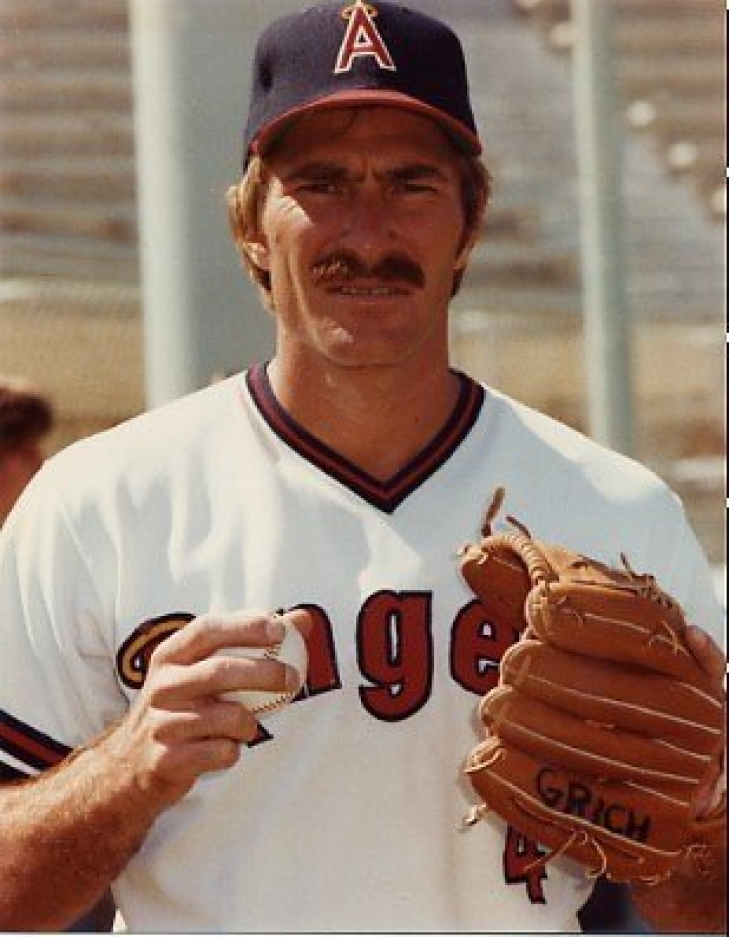
9. Bobby Grich

Bobby Grich redefined the expectations for a second baseman in Anaheim, joining the California Angels as a marquee free agent following the 1976 season. For ten years, he anchored the infield with a specialized blend of elite defensive range and a disciplined, high-impact approach at the plate. While he had already established himself as a premier American League force in Baltimore, Grich provided the Angels with a weapon that helped transform the expansion-era club into a perennial contender in the AL West.

Grich’s journey in a California uniform reached a historic peak during the 1979 and 1981 campaigns. After several seasons of steady production, he transitioned into a premier power threat, launching 30 home runs and driving in 101 runs to help lead the Angels to their first-ever division title in 1979. This performance signaled his transition from a defensive specialist to a foundational piece of the team’s core, earning him an eighth-place finish in the MVP voting. He showed the organization that a middle infielder could be a primary source of run production, a rarity in an era that prioritized small-ball at the position.

The bulk of his Anaheim years were characterized by elite efficiency and a reputation for statistical outliers. In the strike-shortened 1981 season, Grich reached a career peak for individual dominance, leading the American League in home runs, slugging percentage, and OPS+. He possessed a focused intensity that allowed him to thrive in high-leverage situations, earning his first Silver Slugger and his sixth career All-Star selection. Despite the physical toll of his aggressive style of play, he remained a model of offensive efficiency, recording 1,103 hits and 154 home runs in a California uniform. He provided the steady-state leadership and veteran-like poise that stabilized the roster through multiple postseason runs.

In 1988, he became the inaugural inductee into the Angels Hall of Fame.

299. Brian Downing

Brian Downing played his entire professional career in the American League, where he was in the lineup as either a Catcher, Outfielder, or Designated Hitter.

151. Mark Langston

Mark Langston was one of the most underrated flamethrowers in baseball history, and let’s give him a bit of due here.

The San Diego native led the American League as a Seattle Mariner in Strikeouts (204) as a rookie in 1994, and he was the runner-up for the Rookie of the Year award.  Langston led the AL in Strikeouts in 1986 and 1987, going to the All-Star Game in the latter year.  

After a brief stint in Montreal, Langston came to the California Angels, where he was a three-time All-Star.  As an Angel, Langston has four 13-win seasons and four campaigns with over 174 Strikeouts.  He would finish his career with a brief run in San Diego and Cleveland with 2,464 career Strikeouts.

176. Jim Fregosi

Jim Fregosi’s Major League debut coincided with that of the Los Angeles Angels, and it would not take long for the Shortstop to establish himself as one of the premier players at his position.

Fregosi went to his first All-Star Game in 1964 and then had a five-year streak beginning in 1966.  Fregosi was not a power hitter, but he had six 10-home-run seasons, which was good for a Shortstop of his era.  Defensively, he was very good, winning a Gold Glove in 1967, which was also the season he was seventh in MVP voting, and led the American League in Triples (13).  Fregosi also had seven other seasons where he received MVP votes.

The six-time All-Star also played for the Mets, Texas, and Pittsburgh, and he retired in 1978 with 1,726 Hits and 151 Home Runs.

Fregosi would later become a successful Manager where over reigns helming California, Chicago (AL), Philadelphia, and Toronto, he compiled a record of 1,028-1,094. 

88. Fred Lynn

Nobody shot out of the gate quicker than Fred Lynn, as he made history when in 1975, he became the first player in Major League history to win the Rookie of the Year and the MVP in the same season.  As the other one who accomplished that feat was Ichiro Suzuki, an established veteran of the Japanese Leagues, this is a beyond-spectacular achievement.

In the previous year, Lynn would not only secure the ROY and MVP, but he would also win his first of four Gold Gloves, win the Slugging Title (.566), and finish first in OPS (.967), Runs Scored (103), and Doubles (47).  That season, he would power the Red Sox into the World Series, but they went down to defeat against the Cincinnati Reds.

Lynn remained a great player for years, and while he did not win the MVP again, he probably should have in 1979, when he swept the Slash Line (.333/.423/.637) and had career-highs in Home Runs (39) and RBIs (122).  After six straight All-Star years with the Red Sox, he was traded to the California Angels, and he kept his streak alive with three more All-Star appearances.

He continued his career with Baltimore, Detroit, and San Diego, and retired in 1990 with 306 Home Runs and a .484 Slugging Percentage.

28. Bobby Grich

1,800 career hits and a lifetime .266 Batting Average sounds like a good career, but not necessarily a Hall of Fame one.  A closer look at Bobby Grich's overall body of work indicates he is much closer than you might think.

Prior to Grich, the prototypical second baseman was a smaller athlete who was a wizard with the glove, and any offense you got from him was a bonus.  There were occasional exceptions, but that was generally the rule for the position.  Grich was oversized for a Second Baseman, but had exceptional range and won four Gold Gloves.  Grich had decent power and co-led the league in homers during the strike-shortened season of 1981.  Grich may not have been dazzling with his traditional batting numbers, but he was with his On Base Percentage, which was often well over a hundred points over his Batting average.

Bobby Grich had the misfortune of making the ALCS five times, but his teams could not get to the World Series.  Grich may not have been any serious threat for a postseason award, but time is showing a new light on his contributions and his ushering in of a new wave of offensively capable second basemen.  We are still not sure if he should be in the Hall, but we do believe he deserved better than being a “one and done” for the Baseball Writers in terms of his eligibility.

Should Bobby Grich be in the Hall of Fame?

Definitely put him in! - 60%
Maybe, but others deserve it first. - 17.7%
Probably not, but it wouldn't be the end of the world. - 8.5%
No opinion. - 0.8%
No way! - 13.1%

110. Frank Tanana

Frank Tanana won 240 career games, yet never seemed to be on the tip of the tongue when you think of all-time great pitchers, or even really good ones. Yet, a closer look at the Michigan native shows a Pitcher whose career was a lot better than you may initially think.

Tanana began his career as a flame-throwing pitcher who, in the mid to late 70’s, had been a Cy Young threat and led the AL in Strikeouts in 1975. His control was solid, too, as his WHIP and ERA were among the top ten during that time frame. Like many pitchers, Frank Tanana’s arm gave out, and at the age of 25, he had to reinvent himself as a junkball pitcher. It wasn’t the quickest transformation, but he would emerge as a dependable starter for Texas and later his hometown Detroit Tigers.

The man who “threw in the 90’s in the 70’s, and threw in the 70’s in the 90’s” may not be a Hall of Fame Pitcher, but he deserved to have gotten a better total than the zero he received in his lone year of eligibility. 240 wins have never seemed so undervalued.


Should Frank Tanana be in the Hall of Fame?

Definitely put him in! - 54.6%
Maybe, but others deserve it first. - 18%
Probably not, but it wouldn't be the end of the world. - 17.5%
No opinion. - 0.5%
No way! - 9.3%

Subscribe to this RSS feed