Menu
A+ A A-
Site Admin

Site Admin

35. Jamaal Charles

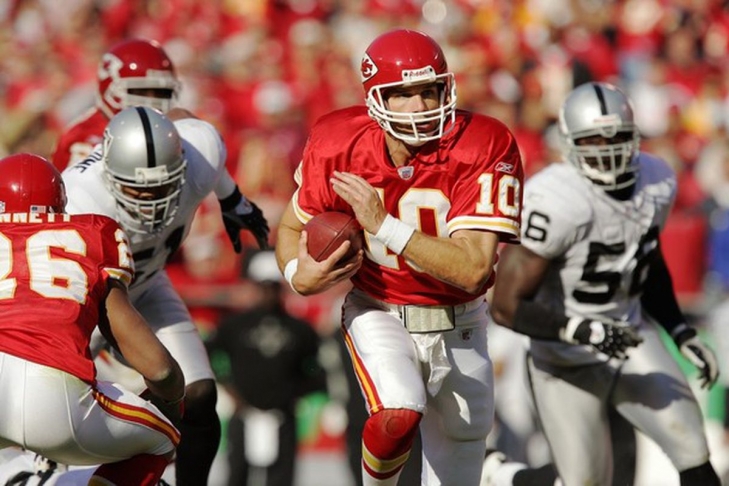
Drafted in the third round (73rd overall) of the 2008 NFL Draft out of Texas, Jamaal Charles stepped onto the field possessing game-breaking track speed. When long-time featured back Larry Johnson suffered an injury and was subsequently released midway through the 2009 campaign, Charles inherited the backfield keys and instantly made Chiefs fans forget their former star, announcing his arrival with a blistering 1,120-yard rushing breakout over the final half of his sophomore season.

That late-season surge set up a historic 2010 performance. With unmatched home-run acceleration, Charles shattered his previous high by rushing for 1,467 yards on just 230 carries—an astounding 6.4 yards per carry—to earn his first Pro Bowl selection and consensus AP First-Team All-Pro honors. A torn ACL in Week 2 of 2011 wiped out his fourth year, but his return in 2012 proved he had lost none of his signature burst, as he registered a career-high 1,509 rushing yards and five scores.

His absolute peak arrived in 2013 during Andy Reid’s inaugural season as head coach. As the focal point of the offense, Charles put together a masterclass in modern dual-threat execution: leading the NFL with 12 rushing touchdowns while amassing 1,287 rushing yards, plus career highs in receptions (70) and receiving yards (693). His 19 overall touchdowns led the league, highlighting a campaign headlined by his iconic "Jamaal-Athon" performance against Oakland—a five-touchdown explosion that sealed his second AP First-Team All-Pro nod.

Charles posted his fifth and final 1,000-yard rushing campaign in 2014, earning his fourth Pro Bowl invitation while continuing to torment defenses as both a perimeter runner and screen receiver. However, a second ACL tear in 2015 and lingering knee issues in 2016 limited his availability, ending his storied tenure in Missouri after nine seasons before he made brief late-career stops in Denver and Jacksonville.

A purely electric performer whose 5.4 yards-per-carry average ranks among the highest in modern NFL history for any qualified running back, Charles retired as Kansas City's all-time leading rusher with 7,260 franchise yards. He also had43 touchdowns on the ground, and another 20 in the air, with 2,475 yards.
34. Nick Lowery

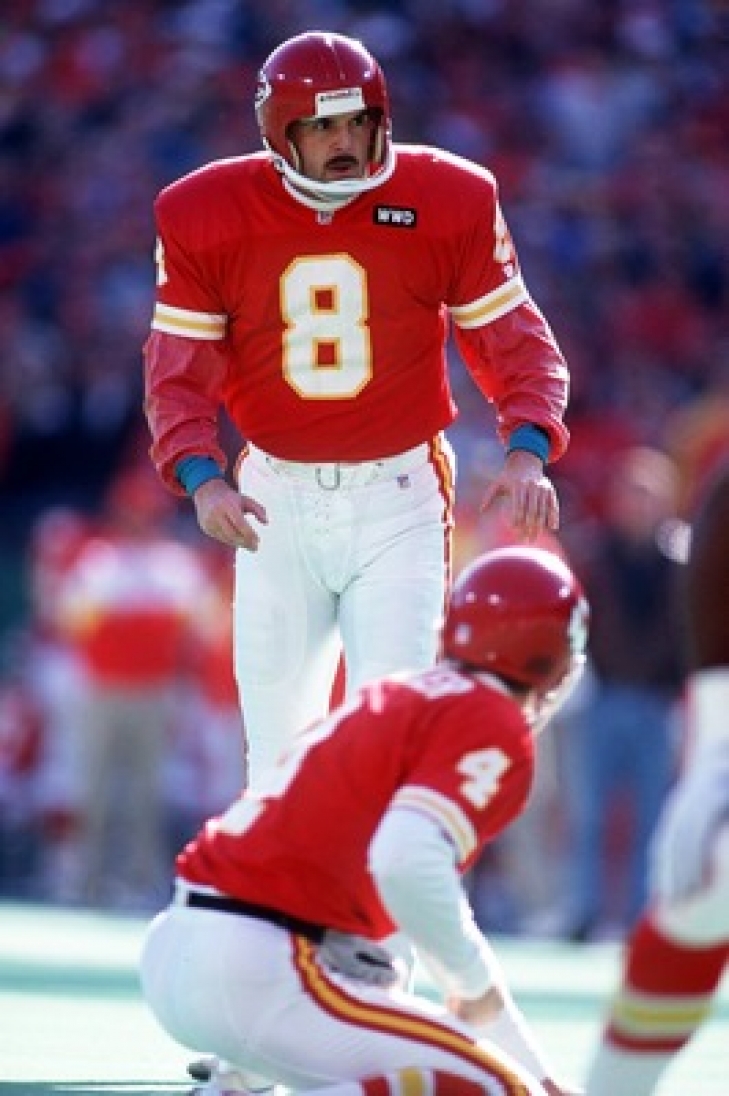
The kicking game in professional football is defined by ruthless pressure and fickle fanbases, but for 14 seasons in Kansas City, Nick Lowery provided rare, unflappable stability. Originally going undrafted out of Dartmouth in 1978 and attempting a single field goal for the New England Patriots before bouncing around multiple training camps, few expected much when the young specialist arrived in Missouri in 1980. Lowery won the starting job outright and immediately rewarded the franchise with elite leg accuracy.

Lowery announced his presence by leading the entire NFL in field goal accuracy during his debut 1980 campaign, converting 80.0% of his attempts. He followed that up in 1981 by earning his first Pro Bowl selection, drilling a 57-yard game-winner along the way and establishing himself as one of the few placekickers of the era with legitimate long-range power and touch on short attempts.

His production reached iconic status as the decade progressed. Lowery captured consensus AP First-Team All-Pro honors in 1985 after pacing the league at 85.2% accuracy, and he duplicated that First-Team All-Pro selection in 1990 by connecting on an astonishing 34 of 37 field goal attempts (91.9%). In total, he led the NFL in field goal percentage three separate times (1980, 1985, and 1990), proving to be the ultimate weapon for Marty Schottenheimer's low-scoring, possession-focused teams.

He hit 329 field goals and 498 extra points, totaling 1,486 points and becoming the all-time leading scorer in Chiefs franchise history. Lowery entered the Chiefs Hall of Fame in 2009.

33. Sherrill Headrick

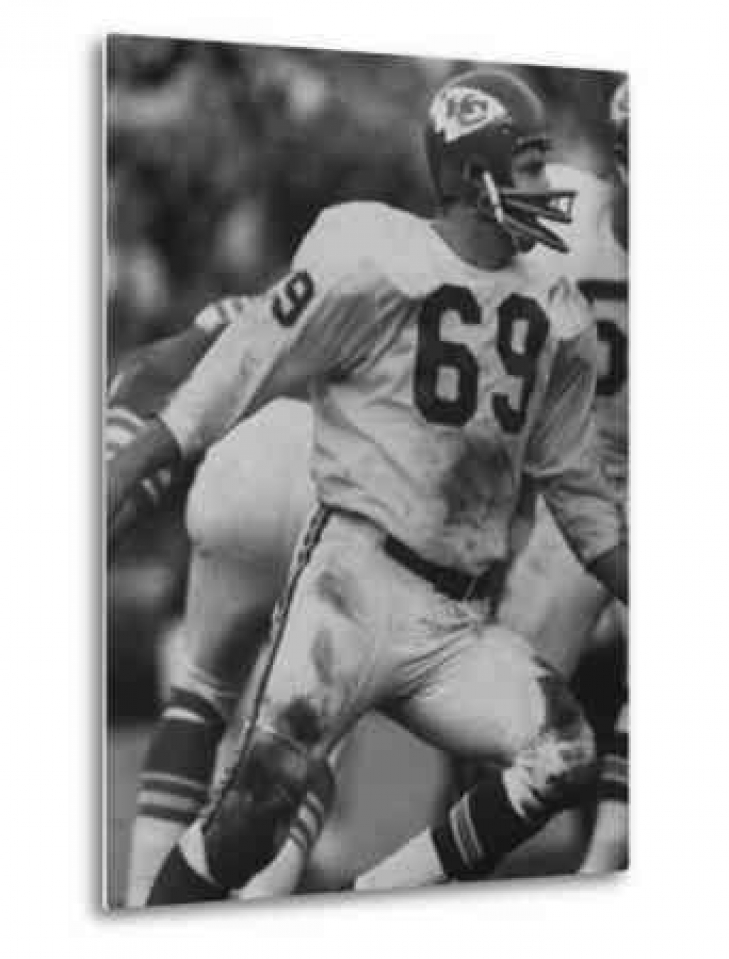
Undrafted by both the NFL and the fledgling AFL out of TCU in 1960, Sherrill Headrick signed with Lamar Hunt's Dallas Texans and quickly became one of the fiercest defensive enforcers in professional football. Earning the nickname "Psycho" for his reckless disregard for his own body and staggering tolerance for pain, Headrick anchored the center of Hank Stram's middle defense from the very first snap in franchise history.

Headrick hit the ground running with an unprecedented three-year run of dominance to open his career. He captured First-Team All-AFL honors in each of his first three professional seasons (1960, 1961, and 1962), combining brutal tackling force with keen pre-snap diagnostic skills. His signature moment of toughness came in the 1962 AFL Championship Game, where he played through a fractured vertebra suffered early in the contest to lead Dallas to a historic 20–17 double-overtime victory over the Houston Oilers in the franchise's final game in Texas.

When the organization relocated north to become the Kansas City Chiefs in 1963, Headrick remained the defensive unit's undisputed emotional leader. Though severe injuries—including broken bones, torn ligaments, and a dislocated shoulder—accumulated over the years, his standard of play rarely dipped. He earned two additional Second-Team All-AFL selections in 1964 and 1966 and collected five total AFL All-Star nods during his tenure.

In 1966, Headrick anchored the linebacking corps alongside EJ Holub and Bobby Bell, helping Kansas City win its second AFL title and reach Super Bowl I against the Green Bay Packers. His knack for creating takeaways in key moments netted 14 interceptions and 12 fumble recoveries during his eight years in red and gold before he played a final active season with the Cincinnati Bengals in 1968.

With the Chiefs, Headrick netted 14 interceptions and nine sacks over 108 games.  He entered the Chiefs Hall of Fame in 1993.

32. Trent Green

Acquired via trade from Washington in 2001, Trent Green stepped into Arrowhead Stadium as the hand-picked field general for Dick Vermeil’s high-octane offensive rebuild. His tenure in Missouri started on shaky footing, as a league-high 24 interceptions during a 6–10 inaugural campaign raised questions about his decision-making under center. However, once Vermeil's system found its stride, Green became the leader of one of the most prolific offensive units of the modern era.

Between 2003 and 2005, Green put together a relentless three-year stretch that rivaled any passer in the NFL. Directing a powerhouse offense alongside Priest Holmes, Tony Gonzalez, and a dominant offensive line, he surpassed the 4,000-yard passing threshold in three consecutive seasons—throwing for 4,037 yards in 2003, 4,591 in 2004, and 4,014 in 2005. During this golden window, only Peyton Manning threw for more aggregate yards across the entire league.

Green earned two Pro Bowl nods (2003 and 2005) while establishing himself as an exceptional distributor in deep-shot passing concepts and play-action fakes. In 2004, he tied a franchise record with 27 touchdown passes while leading the NFL in yards per pass attempt (8.6), demonstrating elite efficiency and poise in orchestrating an offense that routinely produced 500-yard games.

Though he may not have carried the household reverence reserved for first-tier Hall of Famers, Green’s steady leadership and pinpoint execution kept Kansas City in contention every single Sunday. His Chiefs’ run came to an abrupt end in 2006 when a severe concussion in Week 1 derailed his final season with the team before he was traded to Miami in 2007.

In Kansas City, Green had 21,459 passing yards, 118 touchdown passes,  andeight rushing touchdowns.