Menu
A+ A A-
Site Admin

Site Admin

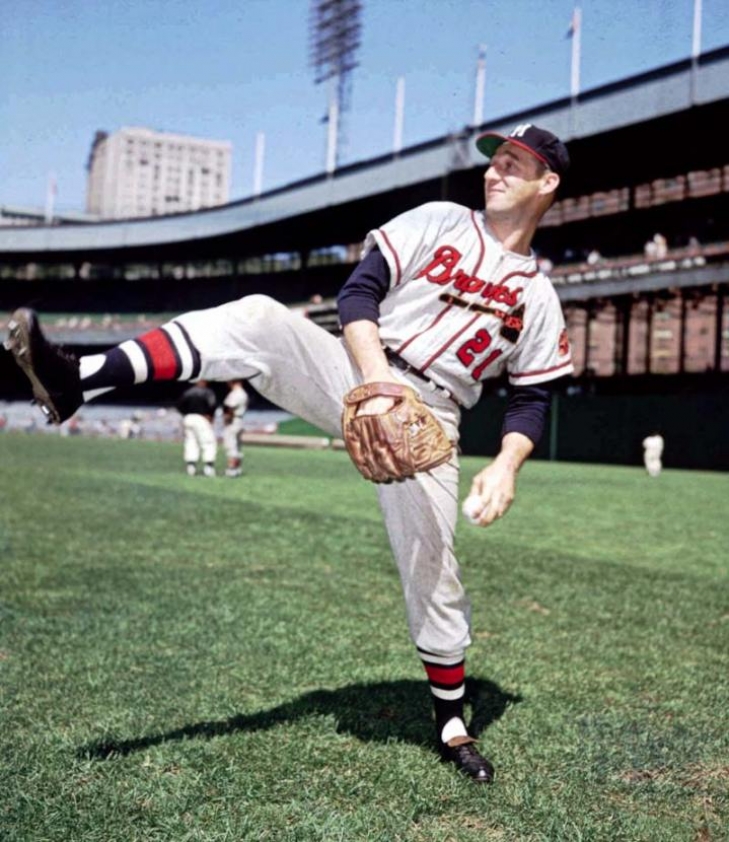
2. Warren Spahn

Not only are we comfortable saying that Warren Spahn was the greatest Pitcher in Braves history, but he is also in the top ten all-time and the greatest left-hander ever.

Calling anyone the greatest Braves Pitcher of all time is no small statement considering the legends who took the mound.  A Cy Young winner in 1957 (the inaugural winner), Spahn had a later start: he debuted for the Boston Braves in 1942 but missed the next three years due to military service.  The southpaw would emerge as an All-Star for the Boston Braves, winning 21 Games and the ERA and WHIP titles while also eating the most Innings.  This would become a pattern for the next decade and a half.

21 must have been his favorite number as he would win exactly that amount of Games seven times with two other 20 Win seasons.  Leading the NL in Wins eight times, 356 of his 363 Wins were with the Braves, and whether it was in Boston or Milwaukee (where they moved to in 1953), it could always be counted on that Spahn would win a lot, strikeout his share of batters, and keep his ERA down.  This is also a 17-time All-Star, a three-time ERA leader, and a four-time Strikeout leader.  He won the 1957 Cy Young Award when it was awarded to the best in both leagues, and he was also runner-up for it the next three years.  Let’s not forget that he was the ace of the staff that won the 1957 World Series.

Sabremetrically speaking, Warren Spahn never finished first among Pitchers but he was second four times, third twice, fourth once, and was fifth four times.  From 1949 to 1959, he never finished outside the top five!  We haven’t even mentioned that he hit 35 Home Runs over his career.

Spahn would enter the Baseball Hall of Fame in 1973, his first year on the ballot, and he will not be dislodged from this spot at #2 for decades to come.  His number 21 was inducted by the Braves in 1965, and in 1999, he was one of four former players enshrined in the Braves Hall of Fame.
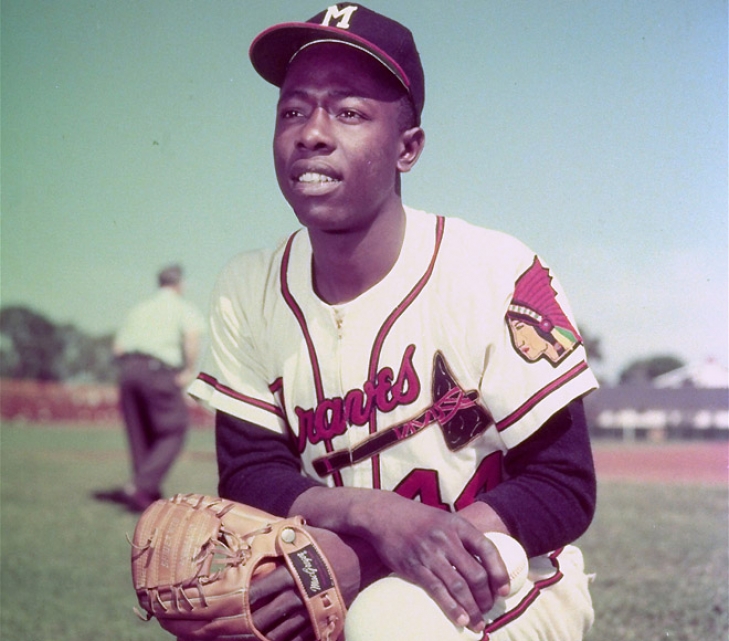
1. Hank Aaron

We need to bring this up as much as we can…

Regardless of the era Hank Aaron is one of the greatest baseball players that ever existed. 

Period. 

50. Ed Podolak

Ed Podolak arrived in Kansas City as a second-round pick in 1969 out of Iowa, where he had already shown he could play both quarterback and running back. His rookie season coincided with the Chiefs’ Super Bowl IV championship, though he saw only limited snaps and played no major role in the offense that defeated the Minnesota Vikings. Over the next couple of years, he worked his way into a larger share of the workload under Hank Stram.

By 1971, he had become a regular contributor as a dual-threat back who could run, catch, and return kicks. That December, on Christmas Day, he turned in the performance that still defines his career. In a playoff loss to the Miami Dolphins that stretched into double overtime and remains the longest game in NFL history, Podolak piled up 350 all-purpose yards—85 rushing, 110 receiving, and 155 on returns—setting a playoff record that has yet to be broken. The afternoon captured the full range of what he offered: steady production between the tackles, reliable hands out of the backfield, and the athleticism to change field position on special teams.

Over nine seasons with the Chiefs, those same skills yielded 4,451 rushing yards, 288 receptions for 2,456 yards, and 40 total touchdowns. He led the team in rushing four times, receiving three times, and punt returns three times. In 1970, he led the entire league in all-purpose yards. Tough and hard-nosed rather than explosively fast, he contributed on nearly every down and became one of the franchise’s most durable all-purpose producers.

After retiring following the 1977 season, he moved into broadcasting, calling NFL games for NBC and later Iowa Hawkeyes football. The Chiefs inducted him into their Hall of Honor in 1989, recognizing a career built on consistent versatility rather than any single highlight, even if that Christmas Day game remains the one most often remembered.

48. Dwayne Bowe

If the Kansas City Chiefs’ Top 50 list were ranked purely by the excitement a guy brought onto the field, Dwayne Bowe would be right near the top. The Chiefs took him in the first round of the 2007 draft, 23rd overall out of LSU, and he showed up with the size, speed, and hands that made you lean forward every time the ball was in the air. 

For eight seasons in Kansas City, he turned a normal afternoon into something worth remembering, even when the rest of the team was still trying to figure itself out. His peak arrived in 2010. That year Bowe caught 72 passes for 1,162 yards and led the entire NFL with 15 touchdowns. It wasn’t just the numbers—it was the way they showed up. He strung together seven straight games with a touchdown catch, a stretch that broke the old Chiefs franchise record. In Seattle he went for 13 catches, 170 yards, and three scores. Against Denver, he had 13 for 186 and two more. Late in the year, he took a short throw against the Titans and turned it into a 75-yard touchdown that essentially locked up the division. Those performances earned him a Pro Bowl spot and Second-team All-Pro honors, and for a stretch he looked like the league’s most dangerous receiver.

Across his full run with the Chiefs, he finished with 532 catches, 7,155 yards, and 44 touchdowns—solid production by any measure. He cracked the top ten in receptions twice and gave the offense a reliable deep threat and red-zone weapon for most of a decade. What set him apart, though, was the energy he brought. Bowe played with a loose, confident style that made big plays feel almost casual. He could high-point a jump ball, shrug off a defender after the catch, and turn a simple slant into a long gain without ever looking like he was forcing it. Even in the quieter later seasons, you still got the sense that one clean throw was all it took to remind everyone why he was so fun to watch in the first place.

The Chiefs eventually moved on after the 2014 season, releasing him in March 2015 as part of a salary-cap decision. He signed with the Browns for a short, quiet year, then stepped away from the game. In 2019, he came back to Kansas City on a one-day contract so he could officially retire as a Chief.