Menu
A+ A A-
Site Admin

Site Admin

15. Harry Davis

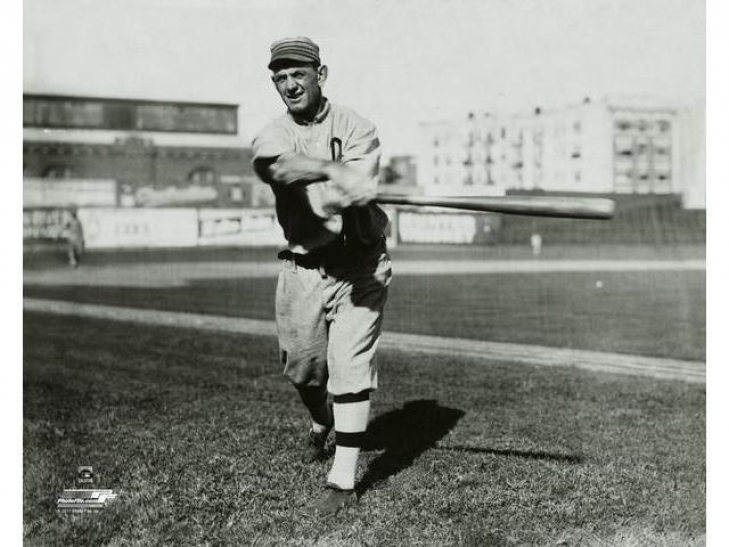
During the assembly of the original Philadelphia Athletics roster for the American League's inaugural season in 1901, Connie Mack looked to the minor leagues for a key addition. Harry Davis, aged 27 and seemingly prepared to retire after an inconsistent career across four National League clubs and a tenure with the Providence Grays, was identified as a promising talent. Mack recognized the potential in the right-handed infielder and persuaded Davis to relocate to Philadelphia. This decision catalyzed a revival, transforming Davis into one of the most formidable and enduring run producers of the dead-ball era.

Initially positioned at first base, Davis promptly emerged as the cornerstone of the early Athletics lineups. He adapted seamlessly to his new environment, achieving three consecutive summers with a batting average exceeding .300. While his patient approach did not always result in a high on-base percentage, settling at a modest .337 during his tenure, he compensated with exceptional line-drive power. He utilized his swing effectively to lead the American League in doubles on three occasions, consistently providing Philadelphia with a superior extra-base threat in the heart of the batting order.

That offensive value soared to a historic peak between 1904 and 1907. In an era characterized by deep fences and a soft, scuffed ball that made home runs extremely rare, Davis achieved an extraordinary feat by leading the American League in home runs for four consecutive seasons. His power was complemented by a precise efficiency with runners on base; he secured consecutive junior circuit RBI titles in 1905 and 1906, leading the offensive efforts for Mack’s early pennant contenders and establishing himself as the first authentic captain of the franchise.

As the decade progressed, his consistent presence within the clubhouse and leadership on the field served as a crucial bridge to the franchise's inaugural true dynasty. Although the younger and more athletic Stuffy McInnis would ultimately assume the daily responsibilities at first base, Davis continued to be an indispensable veteran. He made substantial contributions to the Athletics' consecutive World Series victories in 1910 and 1911, notably batting an impressive .353 in the 1910 Fall Classic against Chicago, thereby securing his first championship ring.

After managing Cleveland briefly in 1912, he returned as a coach and occasional defensive replacement. He played only 19 games from 1913 to 1917 but earned a third World Series ring with the 1913 team. He finished with 1,500 hits and 761 RBIs for Philadelphia, known as the foundational captain who helped modernize the Athletics.

12. Bert Campaneris

Bert Campaneris made his debut for the Kansas City Athletics in July 1964, providing an immediate boost to a team in trouble. At just 22, this Cuban shortstop announced his presence by hitting two home runs against Minnesota's Jim Kaat in his first game. While he showcased rare power early on, his main talent was in creating chaos with his speed and securing the infield with his glove.

By his first full season in 1965, "Campy" had truly harnessed his exceptional speed, leading the American League with 12 triples and 51 stolen bases. That September, owner Charlie Finley organized an exciting promotional event against the California Angels, showcasing Campaneris as the first player in modern major league history to play all nine positions in a single game, and even pitching a full inning on the mound. While this incredible feat highlighted his natural athletic talent, it was his consistent performance at shortstop that truly laid the foundation for the team's bright future.

When the franchise moved to Northern California in 1968, Campaneris became a key link between the cities and sparked the offense. That first summer in Oakland, he led the league with 177 hits and set a career high with 62 stolen bases, earning his first All-Star nod. While his focus on not walking limited his on-base percentage, his sharp baserunning skills made him incredibly dangerous once he got on base; he went on to win six American League stolen-base titles and was often among the most effective base stealers out there.

In the early 1970s, Campaneris became the key driver of the "Swingin' A's" modern dynasty. He was a top ten defender, combining range with a reliable arm to secure the left side of the infield alongside Sal Bando. His consistent performance helped Oakland secure five consecutive division titles and achieve their historic three-peat in the World Series from 1972 to 1974. Even during postseason tensions, like his infamous bat-throwing incident against Detroit in the 1972 ALCS, his situational hitting and threat on the bases remained crucial to winning those three championships.

After the 1976 season, Charlie Finley's long tenure came to an end. As free agency reshaped the league and dismantled Finley’s roster, Campaneris signed with the Texas Rangers. He left California holding franchise records for career games, hits, and at-bats, leaving a lasting legacy as the team’s key spark plug during the dynasty.

In 2019, the Athletics inducted Campeneris into their franchise Hall of Fame.

14. Home Run Baker

John Franklin Baker's arrival in Philadelphia before the 1908 season went unnoticed by most in Pennsylvania, with only quiet press mentions. He joined the Athletics as a minor league prospect to complete an earlier deal with Reading. However, everything changed in 1909 when manager Connie Mack gave the 23-year-old the starting role at third base. Baker brought a powerful, rare left-handed swing to the team, leading the American League with 19 triples as a rookie and quickly establishing himself as a distinctive talent.

In the 1910s, Baker established himself as the key member of the famed and efficient "$100,000 Infield” alongside Jack Barry, Eddie Collins, and Stuffy McInnis, forming the most renowned unit of the dead-ball era. His iconic nickname was earned during the 1911 World Series against the New York Yankees when he hit a go-ahead home run off star pitcher Christy Mathewson in Game 2, followed by a crucial, game-tying blast off Rube Marquard in Game 3. In a time when knocking the ball over the fence was uncommon, these clutch moments forever earned him the nickname "Home Run" Baker.

Modern fans might smile at the numbers that earned him four straight American League home run titles from 1911 to 1914—achieving totals of 11, 10, 12, and 9—but he was the clear power leader of his time. During this dominant four-year stretch, Baker was consistently in the MVP conversation, finishing among the top seven in balloting each summer. He was more than just a slugger; he was a disciplined, top-tier run producer who led the league in RBIs twice, with batting averages of .334, .347, .337, and .319.

That consistent performance in the regular season carried over smoothly to the sport's biggest stage. Baker was the driving force behind the Athletics' three world titles in 1910, 1911, and 1913. October was his time to shine, as he batted .409, .375, and .450 in those series, with nine hits in each to systematically break down opposing pitchers.

The powerful dynasty fell just as rapidly as it had risen. After a surprising sweep by the "Miracle Braves" in the 1914 World Series, Connie Mack launched a harsh, money-saving fire sale to stabilize the club's finances. When Baker demanded a fairer contract before the 1915 season, Mack refused to compromise. Baker then sat out the entire summer in protest, playing semi-pro baseball near his Maryland farm. Recognizing that this dispute was harming the league, AL President Ban Johnson urged Mack to resolve the deadlock, leading to Baker's contract being transferred to the New York Yankees before the 1916 season.

His numbers with the Athletics would see Baker accumulate 1,103 Hits, 48 Home Runs, and a Slash Line of .321/.375/.471.

Baker would enter the Baseball Hall of Fame in 1955 and the Philadelphia Baseball Wall of Fame in 1993.

13. Eddie Rommel

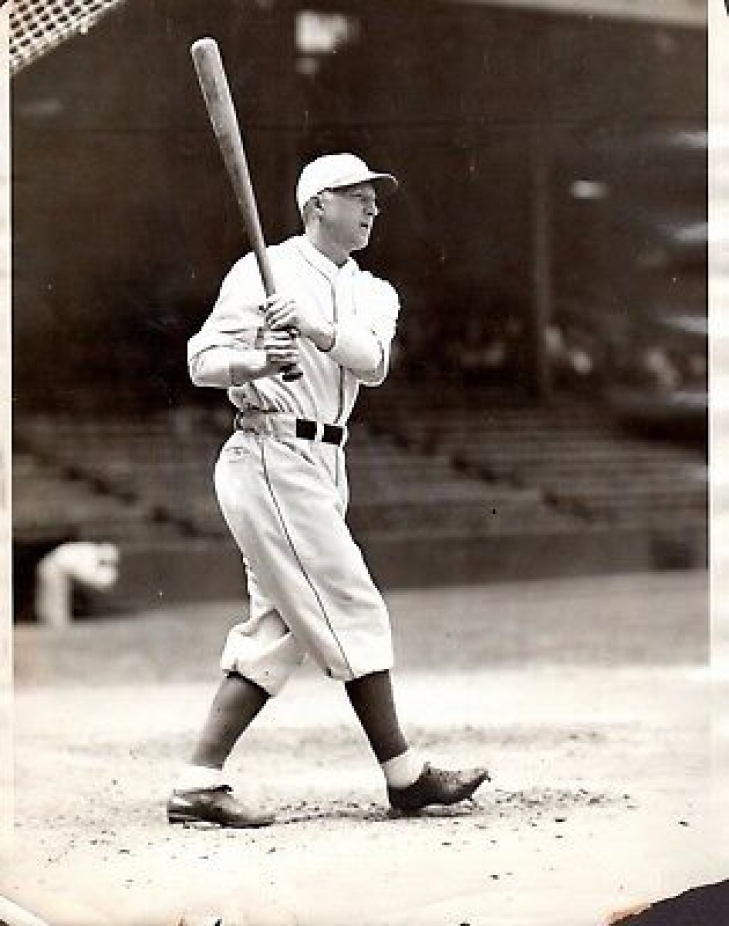
Connie Mack’s acquisition of Eddie Rommel prior to the 1920 season provided the Philadelphia Athletics with a pitcher who challenged the conventional mechanics of the period. Joining a roster still in the process of rebuilding following the disbandment of the 1910s dynasty, the right-hander brought with him an unconventional weapon: a dancing, unpredictable knuckleball. Unlike the high-velocity pitchers of the time, Rommel depended on exceptional precision and low spin, thereby introducing a style of play that transformed managerial strategies in utilizing their pitching staffs.

His breakthrough occurred in 1922, a season during which he single-handedly maintained the competitiveness of a developing Athletics team. Rommel led the American League with 27 victories and 41 complete games, pitching a substantial total of 293 innings. His capacity to confound hitters without relying on strikeouts, instead inducing weak contact and issuing very few walks, earned him a runner-up position to George Sisler in the American League Most Valuable Player voting. Later in his career, Rommel contributed to Philadelphia's victory in the 1929 World Series, where he secured a win in relief.

As the decade advanced, Rommel developed into an exceedingly adaptable asset for Connie Mack. During a period when pitchers were categorically classified as either starters or relievers, he adeptly bridged the distinction, often entering games in high-pressure relief roles prior to assuming his conventional position in the rotation on subsequent days. This dual role contributed to another league-leading season in 1925, during which he achieved 21 victories, many of which were obtained immediately from the bullpen to secure the outcomes of matches.

By the late 1920s, the Athletics had assembled a formidable roster comprising Jimmie Foxx, Al Simmons, and Lefty Grove. Although no longer the primary starting pitcher he was earlier in the decade, Rommel contributed as a seasoned veteran during the championship run. In the 1929 World Series against the Chicago Cubs, he assumed a pivotal relief role in Game 4, securing the victory on the mound as the Athletics orchestrated a historic ten-run comeback.

Rommel remained with the franchise until the conclusion of the 1932 season, retiring as a rare one-team "Lifer" during an era characterized by significant player movement. He concluded his thirteen-year career in Philadelphia with a record of 171-119 and was recognized as the first prominent practitioner of the knuckleball.

He was chosen for the Philadelphia Baseball Wall of Fame in 1996.