Menu
A+ A A-
Site Admin

Site Admin

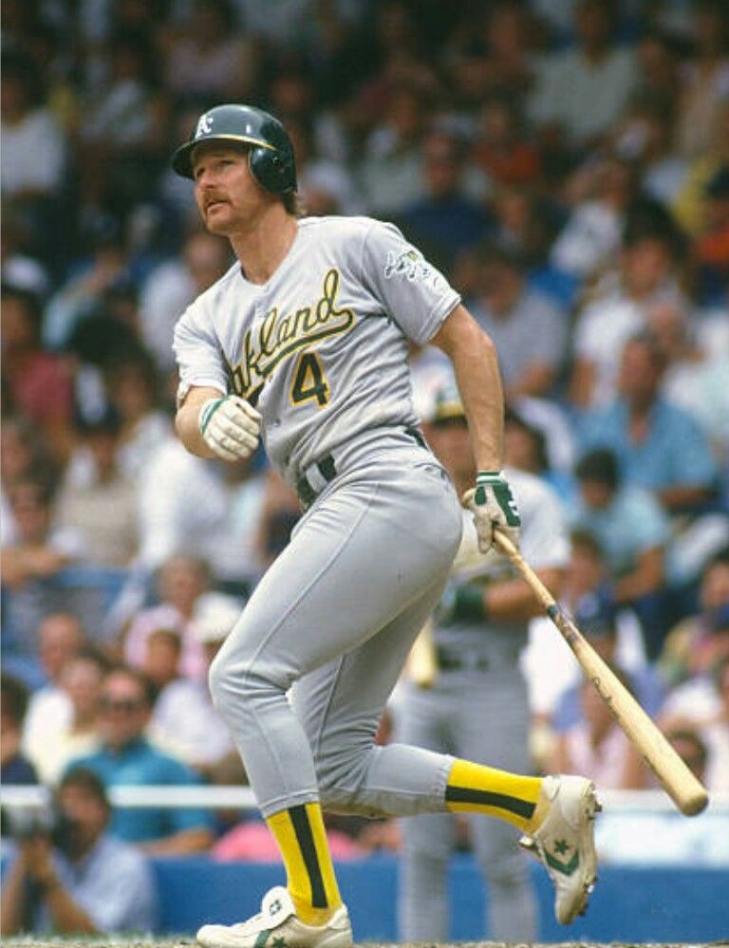
24. Jason Giambi

When contemporary fans reflect on the career of Jason Giambi, their understanding is often unjustly influenced by the lucrative, high-pressure contract he signed later in New York, as well as the subsequent injuries and controversies that impeded his progress. However, from this perspective, his entire baseball journey significantly misrepresents the actual scope of his achievements in the East Bay. During his peak years in Northern California, Giambi was not merely an outstanding player; he was arguably the most formidable and feared offensive force globally, serving as the pivotal and intimidating figure during the early "Moneyball" era.

Giambi officially entered the major leagues with Oakland midway through the 1995 season, rapidly establishing himself as a fundamental member of a burgeoning young roster. He demonstrated an exceptionally perceptive eye at the plate and a powerful, left-handed swing ideally suited for driving balls into the gaps. From 1996 through 2001, he displayed remarkable offensive consistency, achieving six consecutive seasons with no fewer than 150 hits and 20 home runs, with his performance metrics seemingly increasing in value each summer.

The pinnacle of this regular-season mastery was achieved during the historic 2000 campaign. Giambi demonstrated exceptional offensive prowess, batting an impressive .333 with 43 home runs and 137 RBIs, thereby guiding the Athletics to secure the AL West division title. His exemplary plate discipline was evident as he led the league with 137 walks and maintained an outstanding .476 on-base percentage. This remarkable performance earned him his first career All-Star selection and the prestigious 2000 American League Most Valuable Player Award.

Far from reaching a peak in his performance after one year, he managed to further enhance his abilities to an even more formidable level during the 2001 season. Giambi exceeded his previous personal bests significantly, recording an impressive 47 doubles, which led the league, and generating a remarkable slash line of .342/.477/.660. His exceptional efficiency was a notable statistical anomaly, leading Major League Baseball with a 199 OPS+, and earning him a second-place finish in the 2001 AL MVP voting as well as his second consecutive All-Star selection while representing Oakland.

With the impending approach of free agency, the limited financial resources of the front office in a small-market team necessitated an arduous transition. After the 2001 postseason performance, Giambi departed from the East Bay to agree to a substantial contract with the New York Yankees, where he subsequently earned three further All-Star selections.

When Jason Giambi's career in Oakland was said and done, he would play 1,036 Games and have the illustrious 3/4/5 in the Slash Line with .300/.406/.531.  That is an impressive feat, indeed!

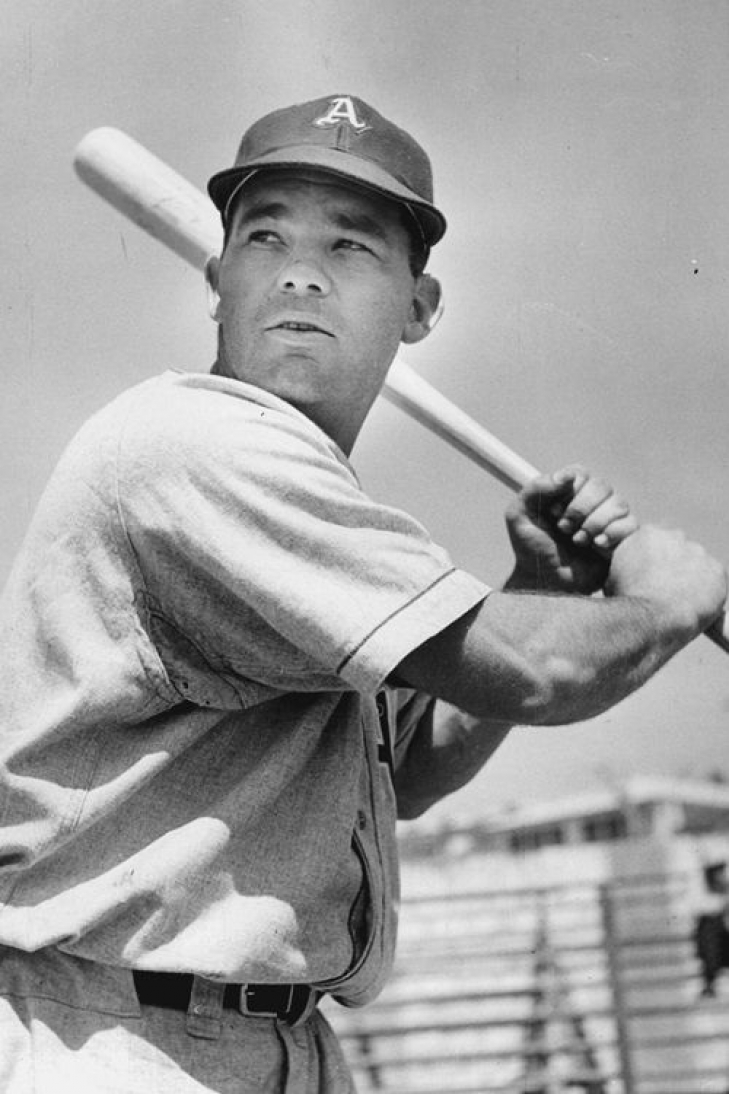
20. Mickey Cochrane

When Connie Mack surveyed the baseball landscape in late 1924, he knew his rebuilding Philadelphia Athletics required a dynamic center of gravity behind the plate to challenge the New York Yankees' emerging dominance. He found his man in the Pacific Coast League, aggressively prying Mickey Cochrane away from the Portland Beavers. Mack wasted absolutely no time, immediately thrusting the young backstop into the starting lineup for the 1925 campaign, igniting a run that permanently redefined the offensive baseline for the modern catcher.

Cochrane burst onto the major league scene with an impressive rookie summer, batting .331 and finishing tenth in the American League MVP voting. He effortlessly produced base hits as a left-handed hitter, combining excellent plate discipline with a crisp, line-drive swing.

During his nine outstanding seasons in Philadelphia, he broke the conventional expectations for a catcher by batting over .300 six times. His skill in controlling the strike zone was also renowned; he posted six seasons with an on-base percentage above .400, with his peak during his last year here when he led the entire American League with a remarkable .459 OBP.

Focusing solely on his offensive statistics overlooks the intense, motivating leadership that strengthened the team. Cochrane was a highly athletic and quick defender who neutralized base-stealers and played with a passionate, vigorous spirit. His exceptional defensive stance and relentless energy made him stand out, enabling him to lead all junior circuit catchers in Range Factor per Game for five straight seasons from 1925 to 1929.

The ultimate validation of this complete, all-around impact came during the 1928 season. Though it was a rare sub-.300 batting average (.293), his masterful handling of the pitching staff, and clutch intangibles were so deeply respected by voters that he captured the American League MVP Award.

With Cochrane as the clear emotional driving force, the historic core Mack developed around him matured completely. The Athletics demonstrated a true dynasty, winning consecutive World Series in 1929 and 1930, and securing another AL pennant in 1931.

The severe economic challenges of the Great Depression quickly affected the franchise. With attendance dropping sharply and limited funds, Mack decided to break up his star lineup. After the 1933 season, he sold Cochrane’s contract to the Detroit Tigers for a hefty $100,000. The legendary catcher demonstrated that his greatness was not tied to any one team, earning his second AL MVP award in 1934 and leading Detroit to a world championship as a player-manager in 1935.

He left Philadelphia having authored an astonishing .321/.412/.490 slash line alongside 1,317 hits and 108 home runs. The national baseball community delivered the ultimate punctuation to his historic legacy in 1947, overwhelmingly electing Cochrane into the National Baseball Hall of Fame.  He was later inducted into the Philadelphia Baseball Wall of Fame in 1982 and permanently enshrined in the Athletics Hall of Fame as part of the 2021 class.

18. Jose Canseco

Let’s forget about some of the things that made Jose Canseco famous (or infamous).  The steroid use.  The admission of steroid use.  Throwing other players under the bus by (accusing) discussing their steroid use.  The boxing.  Madonna.  The baseball that bounced off his head for a Home Run.

All true.

What is also true is that in the late 80s, Jose Canseco was among the most famous athletes in sports and an elite baseball player.

When the Oakland Athletics picked Jose Canseco in the 15th round of the 1982 draft, no one could have guessed they were discovering a powerful, pop-culture sensation who would change the game’s physical limits. He made a big impact during his first major appearance in late 1985 and truly took over the league in 1986. Canseco crushed American League pitching with 33 home runs and 117 RBIs, earning him Rookie of the Year honors. He repeated this impressive feat in 1987 with 31 home runs and 113 RBIs. These incredible power numbers were just the beginning, setting the stage for an extraordinary record-breaking career.

The 1988 campaign elevated Canseco to a nationally recognized figure and established him as the preeminent player in baseball. He crafted an MVP-caliber season that many traditionalists considered extraordinary, achieving the league’s first-ever 40-40 season by hitting 42 home runs and stealing 40 bases. This formidable combination of speed and power was complemented by a league-leading 124 RBIs and a slugging percentage of .569. Additionally, he significantly improved his batting average, increasing it by 50 points to .307. Together with his "Bash Brother" partner, Mark McGwire, Canseco acted as the driving force that propelled Oakland to secure the first of three consecutive American League pennants, ultimately winning a World Series title in 1989 despite missing a substantial portion of the regular season due to a fractured wrist.

He recovered fully in 1990, contributing significantly with a prolific 37 home runs and 101 RBIs, which were instrumental in leading the Athletics back to the postseason. His performance reached an even higher peak in 1991, a summer during which he secured his second American League home run title by hitting 44 home runs and driving in 122 runs, thus earning a fourth-place position in the MVP voting. He was a genuine icon in green and gold, combining remarkable distance on his pull-side home runs with a flamboyant style that captivated the entire fan base.

Then came the trade that shook the sport's foundation. On August 31, 1992, with Oakland sitting comfortably six games ahead in the AL West, general manager Sandy Alderson executed a midnight blockbuster, trading Canseco to the Texas Rangers while he was literally standing in the on-deck circle. Seeking starting pitching depth for the stretch run, management traded away the face of the franchise in what remains one of the most shocking transactions in baseball history.

A 1997 reunion marked the final chapter, allowing him to hit 23 more home runs for Oakland before ending his multi-stint tenure with 254 home runs, a.507 slugging percentage, five All-Star selections, and three Silver Sluggers. Decades after his powerful blasts shook the Coliseum, the franchise finally honored its superstar, inducting Canseco into the Athletics Hall of Fame in August 2024.

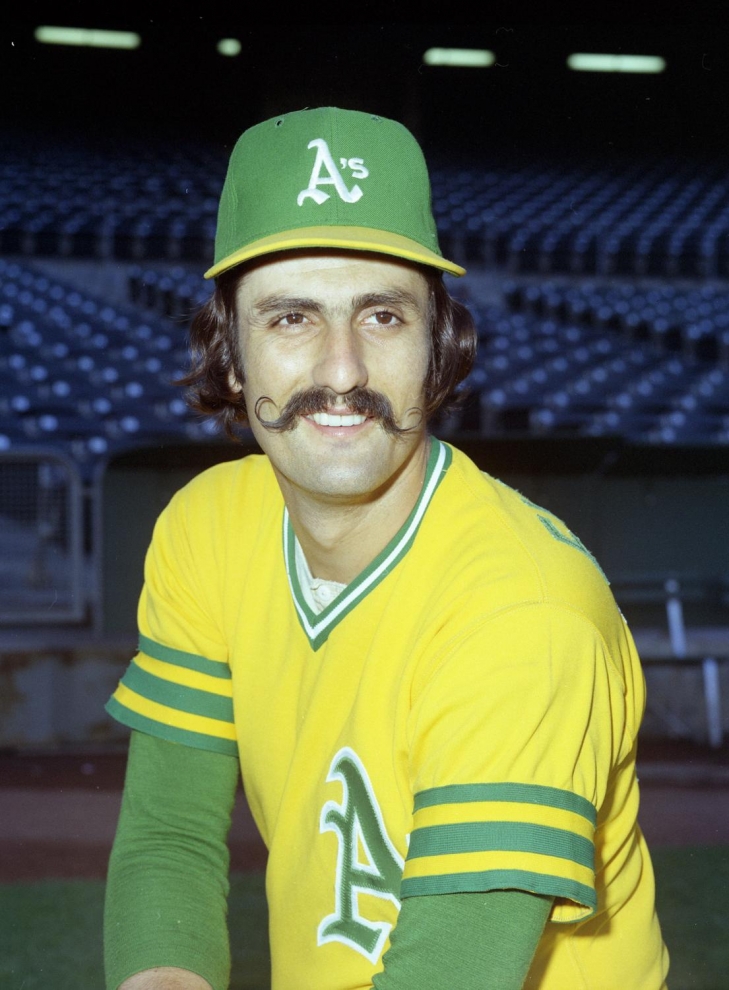
19. Vida Blue

When Vida Blue fully established himself in the Oakland rotation in 1971, he didn't just deliver an outstanding pitching season; he became a true pop culture sensation. With a blazing fastball in the high 90s that baseball fans admired as the most exciting left-handed pitch of his era, the 21-year-old pitcher captured the sports world's attention. He appeared on the covers of Time and Sports Illustrated and kept opposing batters on their toes with his energetic and swift pitching style.

His 1971 campaign remains one of the most exceptionally brilliant single-season achievements within modern baseball history. Blue dominated the American League with a record of 24-8, leading the junior circuit with a minuscule 1.82 ERA, 2.20 FIP, and a 0.952 WHIP. He recorded an impressive 301 strikeouts over 312 innings pitched and curtailed opposing offenses through eight shutouts. His outstanding performance warranted him the prestigious American League Cy Young Award and Most Valuable Player accolade simultaneously, rendering him the youngest MVP recipient of the 20th century and serving as the definitive cornerstone of Oakland's emergence as a genuine power in the league.

The subsequent seasons, however, brought a reality check characterized by intense contractual disputes with the eccentric owner Charlie O. Finley. The off-field friction distinctly affected on-field performance in 1972, a summer during which a late signing restricted him to merely six victories. Nevertheless, Blue's resilience was evident as he regained his dominant form, surpassing 20 wins again in both 1973 and 1975. Although he never quite matched the extraordinary heights of his MVP peak, he remained a top-tier pitcher, earning three additional top-ten finishes in the Cy Young Award voting — including a seventh-place finish in 1973 and consecutive sixth-place rankings in 1975 and 1976.

As the Athletics transformed into a ruthless, high-leverage juggernaut that captured three consecutive World Series titles from 1972 to 1974, Blue was the essential workhorse who helped make their success possible. Although his individual postseason statistics during that period were notably inconsistent, recording a 1-5 win-loss record and a 4.31 ERA in October, the front office and his colleagues openly acknowledged that the modern dynasty would not have achieved its success without his substantial regular-season innings.

In 1976, as Finley desperately sought to liquidate his roster before the dawn of modern free agency, he famously attempted to sell Blue's contract to the New York Yankees for $1.5 million. In a historic intervention, Baseball Commissioner Bowie Kuhn swiftly blocked the transaction under the "best interests of baseball" clause, ruling that such a cash-for-star deal would completely distort competitive balance.  Blue remained in green and gold for one more season before Finley finally engineered an acceptable intradepartmental trade, shipping him across the Bay to the San Francisco Giants prior to the 1978 campaign.

Blue’s run in Oakland concluded with a stellar 124-86 record and 1,315 strikeouts. Decades after his thunderous fastball shook the Coliseum, the organization ensured his legacy would forever remain in the East Bay, formally inducting Blue into the Athletics Hall of Fame in 2019.