

Site Admin
6. Alex Rodriguez
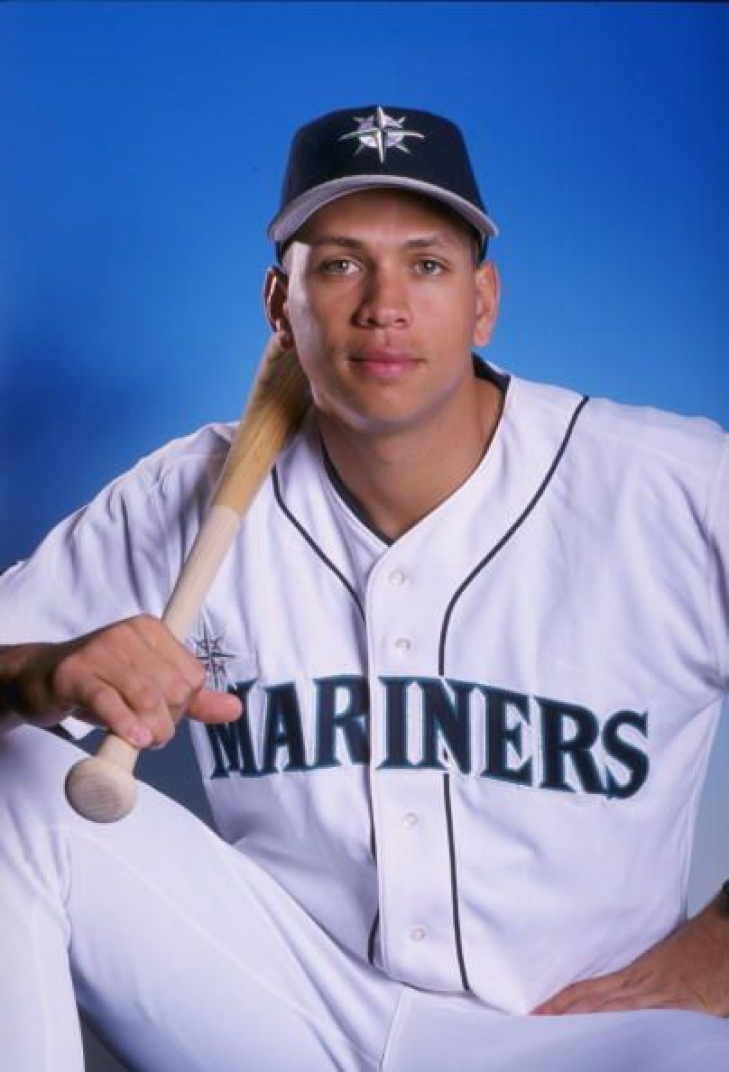
Before the global name recognition, the multi-million-dollar contracts, and the heavy storms of controversy defined his national profile, a generational prodigy in the Pacific Northwest put together arguably the greatest age-indexed start to a career in the sport's history. Selected first overall by the Seattle Mariners in the 1993 amateur draft, Alex Rodriguez was such an advanced physical specimen that he reached the major leagues as an 18-year-old infielder the following summer. Recognizing his immense ceiling, the front office allowed him to refine his daily routine in the minor leagues before unleashing him completely as the everyday starting shortstop in 1996. What followed was a blinding, high-velocity introduction that fundamentally transformed the modern expectation of his position.
His first full summer in Seattle was a remarkable display of offensive power and efficiency. At only 20 years old, Rodriguez dominated American League pitching to win the 1996 batting title with a stunning .358 average, becoming the third-youngest player to earn the title. He set the pace for the entire team, scoring 141 runs, hitting 54 doubles, and hitting 36 home runs while driving in 123 RBIs. This outstanding performance earned him a Silver Slugger Award, an All-Star selection, and a narrow second-place finish in the American League MVP voting.
Although his batting average slightly declined in 1997, he still achieved a .300 average with 23 home runs, earning another All-Star nod. His most notable power boost occurred in 1998, when he combined speed and strength effectively. That year, Rodriguez led the American League with 213 hits, hit 42 home runs, and stole 46 bases—signifying a major development in his game. With these stats, he became only the third player in baseball history to join the 40-40 club, using his sharp spatial awareness to outmaneuver catchers and pitchers. Advanced analytics strongly supported his top-tier status that summer, as he topped the American League in position-player bWAR.
He maintained that frontline authority through an injury-shortened 1999 season, hitting another 42 home runs in just 129 games. His last appearance in a Seattle uniform in 2000 was another exceptional performance; he hit 41 home runs, set a personal best with 100 walks, led the league in bWAR for the second time, and finished third in MVP voting.
To maintain a realistic narrative, Rodriguez faced heavy criticism for his postseason performance, yet his October appearances in the Pacific Northwest proved to be notably clutch. During his three full playoff series with the Mariners, he consistently batted over .300 in each, offering reliable performance during the sport's most significant moments.
Following the 2000 postseason, the inevitable business exit arrived. As a 25-year-old free agent, Rodriguez departed Seattle to sign a historic, record-breaking contract with the Texas Rangers, drawing a definitive curtain on his time in the Emerald City. With Seattle, Rodriguez compiled 966 hits, 189 home runs, and 595 RBIs alongside an exceptional .309/.374/.561 slash line in 794 games.
5. Randy Johnson
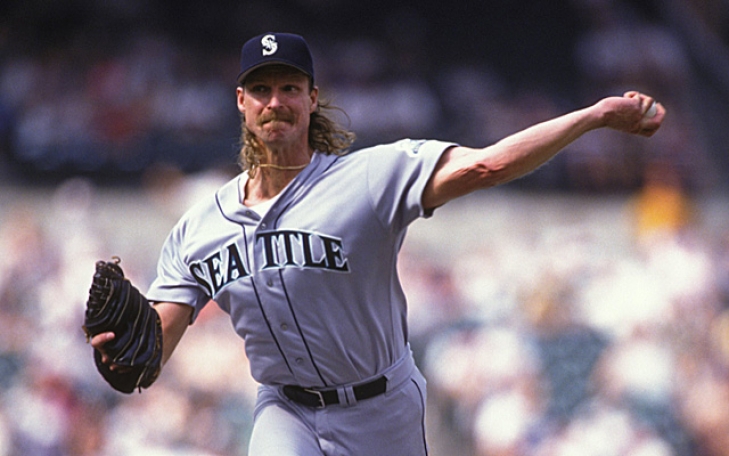
The Montreal Expos made what turned out to be a monumentally shortsighted decision when they traded a raw, erratic, 6-foot-10 left-hander to the Seattle Mariners early in the 1989 season. Randy Johnson was a literal and figurative giant on the mound, but his early years in the Pacific Northwest were defined by a frustrating paradox: an unhittable fastball paired with a complete lack of mechanical control. The "Big Unit" possessed an intimidating, low-three-quarters release point that terrified left-handed hitters, but he spent his first few seasons continuously fighting his own massive frame to find the strike zone.
His first full summer in Seattle in 1990 provided an immediate glimpse of this volatile baseline, as he earned All-Star selection and won 14 games with 194 strikeouts while leading the American League with 120 walks.
The pattern intensified over the subsequent two years. Johnson accumulated 228 strikeouts in 1991 and 241 in 1992; however, his inconsistent mechanics led to a significant number of free passes, totaling 152 and 144, respectively. Nevertheless, the 1992 season represented a pivotal moment; despite issuing walks, he secured his first American League strikeout title, beginning a formidable four-year dominance atop the leaderboard.
The legendary trajectory of his career was altered permanently in late 1992, thanks to a legendary dugout intervention by fellow power-pitcher Nolan Ryan and Mariners pitching coach Tom House. Ryan suggested a slight mechanical adjustment to Johnson’s landing foot to align his body toward home plate. The results were instantaneous and dramatic. By the spring of 1993, the Big Unit had harnessed his high-velocity arsenal. He emerged as a terrifyingly efficient frontline ace, winning 19 games and becoming the first Mariner to eclipse the 300-strikeout milestone with a spectacular 308 punchouts.
His newfound command culminated in a historic, award-winning 1995 campaign that carried the Mariners into the national spotlight. Johnson secured his first career American League Cy Young Award by orchestrating an incredible 18–2 record, pacing the league with a microscopic 2.48 ERA. His advanced efficiency metrics were entirely unrivaled; he dominated the league with a 1.045 WHIP and a 2.08 FIP, culminating in a legendary, heroic relief appearance in Game 5 of the American League Division Series against the Yankees to secure Seattle’s first postseason series victory.
While a severe back injury sidelined him for most of 1996, he rebounded with a magnificent 1997 showcase, winning 20 games with 291 strikeouts to anchor another postseason berth. However, by the summer of 1998, with free agency looming and relations with ownership souring, his performance temporarily dipped. Recognizing an impending career exit, the front office traded its iconic ace to the Houston Astros at the July deadline.
If there is a criticism of Johnson as a Mariner, it was that he was 0-6 for Seattle in the playoffs. While it is not relevant here, he did shake his post-season demons with the Arizona Diamondbacks in 2001.
Johnson was inducted into the Baseball Hall of Fame in 2015, three years after the Mariners selected him to their Hall of Fame.
4. Felix Hernandez
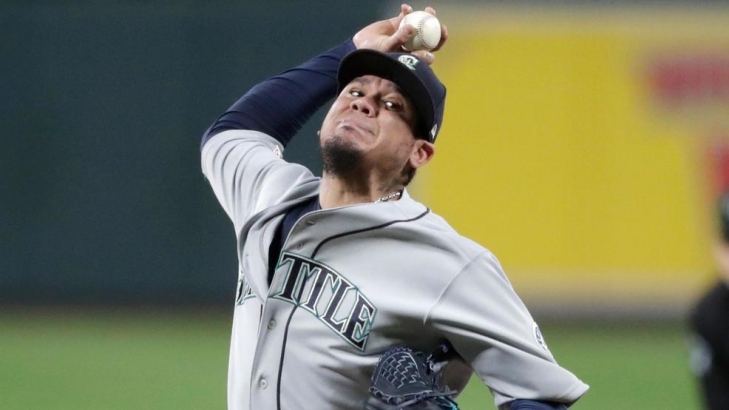
The lineage of elite pitchers in the Pacific Northwest includes many remarkable, high-velocity stars, but the undisputed leader is a once-in-a-generation right-hander from Valencia, Venezuela. Signed as a highly sought-after 16-year-old amateur free agent in 2002, Félix Abraham Hernández García came to the U.S. with the goal of emulating his childhood idol, former Mariners star Freddy García. He surpassed those expectations dramatically. Equipped with a powerful mid-90s fastball and a lethal, high-speed changeup that was unhittable at the plate, this young phenom quickly rose through the minor leagues to debut in the majors at just 19 in 2005. He struck out 77 batters in 12 electrifying starts, igniting immediate local buzz and steadily climbing toward the sport’s highest peak.
His initial campaigns offered a compelling showcase of raw, frontline potential, but Hernández engineered his national breakout as a star during a magnificent 2009 regular-season masterpiece. He systematically dismantled American League batting orders, pacing the major leagues with 19 victories and securing his first career All-Star selection alongside a brilliant runner-up finish in the Cy Young balloting. That stellar showcase ignited an unyielding six-year run of pure dominance in which "King Felix" reigned supreme over the baseball world.
Hernandez turned the 200-strikeout milestone into a strict, everyday routine, rattling off six consecutive summers with at least 200 punchouts from 2009 through 2014, while anchoring a defense that routinely leaned on his right arm to carry them through low-scoring duels.
Hernández reached the pinnacle of his career during the groundbreaking 2010 season. Back then, many voters still focused on traditional stats like pitcher wins, but he broke the mold by winning the American League Cy Young Award with a modest 13–12 record. This surprising achievement was largely due to a lack of run support from his team, Seattle, which struggled offensively. Advanced efficiency filters heavily validated his hardware-certified authority, as he led the major leagues with a microscopic 2.27 ERA and 249.2 grueling innings pitched while racking up 232 strikeouts.
Hernández remained a fixed star in the Cy Young conversation for years, rattling off four consecutive top-eight finishes from 2012 through 2015. He secured another runner-up finish in 2014, orchestrating a magnificent showcase in which he led the American League with a career-best 2.14 ERA and a sparkling personal-best 0.915 WHIP.
Beyond the hardware, he created a moment of immortality on August 15, 2012, against the Tampa Bay Athletics at Safeco Field. Using his sharp spatial awareness and a deadly pitch mix, he retired all 27 batters in order, pitching the 23rd perfect game in Major League history—and the first in Mariners franchise lore. His incredible achievement inspired the formation of "The King’s Court," a lively, yellow-shirted cheering section in the left-field line that turned his starting days into a joyful and festive cultural event.
The King would hold on until he retired after the 2019 season. Hernandez would overall post a record of 169-136 with a 3.42 ERA and 2,524 Strikeouts. He is the Mariners all-time franchise leader in Wins, Strikeouts, and Innings Pitched (2,729.2). The Mariners inducted Hernandez into their franchise Hall of Fame in 2013. We have no problem saying that King Felix is the best Seattle Mariners Pitcher of all-time.
3. Ichiro Suzuki
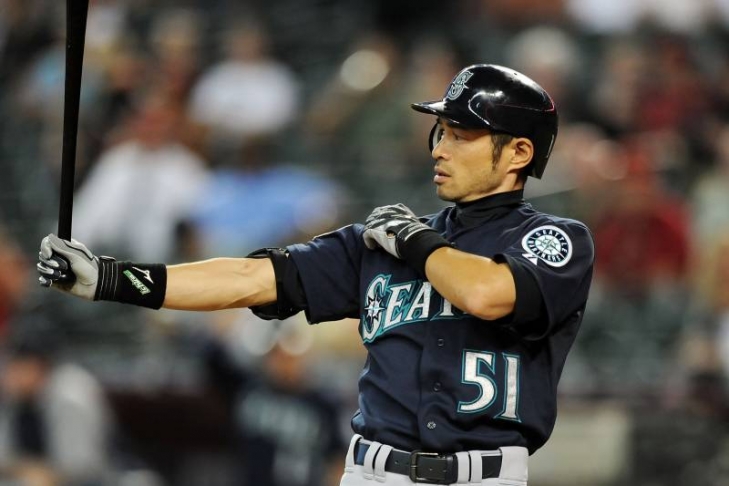
When establishing a historical hierarchy for the Seattle Mariners, the discussion at the apex of the leaderboards will invariably feature a trio of distinguished, localized deities. Whilst Ken Griffey Jr. exemplifies the utmost athletic excellence and Edgar Martinez signifies an enduring career-long presence, the right-field corner at T-Mobile Park was comprehensively dominated by a global cultural phenomenon who redefined the mechanical limits of professional hitting. Ichiro Suzuki did not merely play baseball in the Pacific Northwest; he transformed the simple act of singles into a high-velocity, highly watchable regular-season spectacle. Arriving in the United States in 2001 as a 27-year-old superstar from the Orix BlueWave, he encountered significant national skepticism from critics who openly questioned whether his slender frame and incisive style could endure Major League Baseball competition. He responded by orchestrating arguably the most explosive introductory campaign in the history of the sport.
His outstanding 2001 summer season was a remarkable demonstration of elite contact skills and exceptional speed. Ichiro systematically dismantled American League pitching staffs, leading the league with a remarkable .350 batting average, 56 stolen bases, and an impressive 242 hits. His persistent playmaking served as the primary engine driving a historic Mariners team that tied the major league record with 116 victories. Naturally, his exceptional individual performance earned him both the American League Rookie of the Year and the Most Valuable Player Award, making him only the second player in baseball history to attain both honors in the same season. Although that remained his sole MVP award, he spent the following decade amassing hits at a nearly supernatural pace.
From 2001 through 2010, Ichiro established the 200-hit milestone as a rigorous, daily routine, achieving 10 consecutive seasons with at least 200 hits and a .300 batting average, thereby setting an all-time Major League record for consecutive 200-hit seasons. In 2004, Ichiro demonstrated exceptional bat control, breaking George Sisler’s 84-year-old single-season record by accumulating an extraordinary 262 hits and securing his second career batting title with an impressive .372 average.
Opposing defenses were completely fractured by his unique, pre-swing pendulum motion and his ability to begin sprinting toward first base before the ball even left his bat. Yet, focusing entirely on his offensive volume tells only half the story. Weaponizing elite closing speed and a telepathic tracking ability, Ichiro converted the right-field grass into a strict no-fly zone, capturing 10 consecutive Gold Glove Awards from 2001 through 2010.
His throwing arm was a literal cannon, permanently frozen in Pacific Northwest lore after he unleashed a high-velocity, no-hop rocket to third base to nail Terrence Long during his rookie season—a sequence affectionately dubbed "The Throw."
A ten-time All-Star and three-time Silver Slugger in a Seattle uniform, he remained a lethal threat on the basepaths by swiping 438 bases during his first stint with the franchise; however, nothing lasts forever.
By the middle of the 2012 campaign, with his offensive metrics experiencing a natural, age-related dip and the Mariners fully committed to a youthful roster rebuild, Ichiro recognized that his presence was inadvertently blocking the development of the club's next generation. Showing immense grace, he quietly approached team executives during the All-Star break to request a trade. This was granted, and Ichiro would become a New York Yankee, but this was not the end of his story in Seattle.
He came back as a 44-year-old Free Agent in 2018, playing 15 Games while only batting .205. In May of that year, he would move to the Mariners Front Office, but made a special return in the first two games of 2019, which were held in Japan, allowing him to have the proper sendoff that a player of his stature deserved.
He left Seattle with a batting average of .321 and is the all-time franchise leader in that metric as well as hits (2,542) and stolen bases (438). In 2022, Ichiro was inducted into the Mariners Hall of Fame, and in 2025, he was chosen for the Baseball Hall of Fame.