

Site Admin
47. Mark Ellis
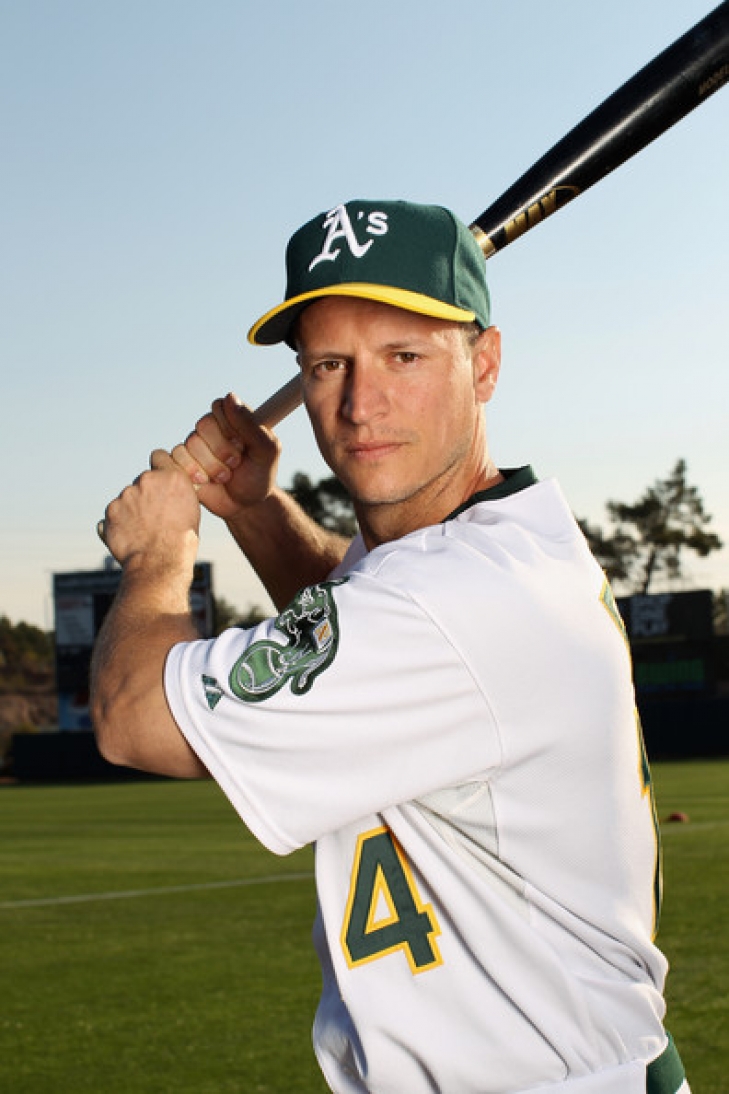
Mark Ellis is not the first name you come up with on a “best of” list, but the fact remains that he accumulated over 1,000 Hits with the team, which is an impressive feat for any franchise.
Casual baseball fans often recall the 2000s Oakland Athletics’ star pitchers and power hitters. Mark David Ellis, however, rarely made national headlines. Drafted by the Royals in 1999, a trade sent him to the East Bay before he pitched in the Midwest. By 2003, he earned the everyday second base role and compiled a steady decade of efficient play with 137 hits.
His rapid ascent encountered a significant setback in 2004 when a violent spring-training collision fractured his right shoulder, resulting in his absence from the entire regular season. Rather than allowing this debilitating injury to redirect his career path, Mr. Ellis demonstrated an exceptional resurgence during the 2005 season. He bewildered opposing pitchers with a swift, inside-out swing, achieving a remarkable career-high batting average of .316 and highlighting an offensive potential that complemented his consistent daily performance.
Although his offensive productivity exhibited some natural, low-variance fluctuations in the subsequent summers, his fundamental physical capabilities remained highly effective. In 2007, Ellis achieved a notable increase in power, hitting a career-high 19 home runs and accumulating 76 runs batted in, thereby adding significant depth to the Oakland batting lineup.
Nevertheless, evaluating his true value solely based on his offensive statistics fails to capture his genuine brilliance. Ellis transformed second base into an exemplary defensive position, showcasing exceptional fundamental footwork combined with superior internal timing. In 2006, he delivered a remarkable defensive display, establishing an American League single-season record for second basemen with an impressive .9968 fielding percentage, committing only two errors across 631 total chances.
That unwavering, flawless defensive foundation established him as an essential and reassuring security for a generation of young Oakland pitching staffs. He remained a fiercely loyal and stabilizing veteran presence through several roster overhauls until the front office formally began its subsequent rebuilding phase, trading him to the Colorado Rockies midway through the 2011 season.
With the Athletics, Ellis had 1,015 Hits.
.
46. Bing Miller
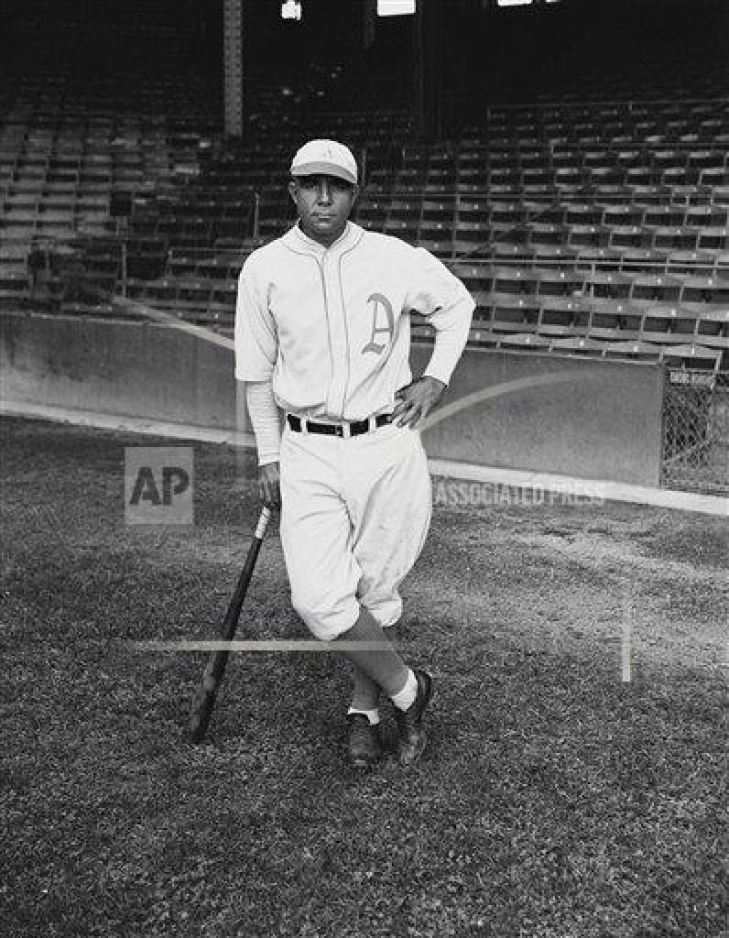
"Bing" Miller was a relatively late bloomer by baseball standards, not making his first extended major league appearance until he was a 26-year-old rookie with the Washington Senators. Seeking an injection of right-handed bat speed, Connie Mack engineered a trade to bring the Iowa native to Shibe Park ahead of the 1922 campaign.
The move proved highly fruitful. During his first four years with Philadelphia, Miller demonstrated exceptional contact-hitting skills, surpassing a .300 batting average three times. He narrowly missed a perfect four-for-four record, finishing at .299 in 1924. Despite his impressive performance, the team’s management viewed him as a tradeable asset in a competitive outfield market and sold him to the St. Louis Browns before the 1926 season.
However, his journey with the white elephant logo was not yet complete. Aware of the important veteran presence they had missing, Mack brought Miller back in 1928, placing him at the core of the franchise's most successful modern dynasty.
During his second period in Philadelphia, Miller posted three consecutive .300 seasons from 1928 to 1930, acting as a consistent line-drive hitter who regularly collected 150 hits annually for five summers in a row. Playing alongside legendary hitters Al Simmons and Mickey Cochrane, the right fielder was essential in helping the Athletics win consecutive World Series titles in 1929 and 1930.
He delivered his most crucial and impressive performance during the historic 1929 Fall Classic against the Chicago Cubs. Dominating National League pitching, Miller hit an outstanding .368 with four RBIs, including the renowned walk-off double in the bottom of the ninth inning of Game 5, which effectively secured the world championship for Philadelphia.
Advanced metric grids and modern spreadsheet purists do note that his defensive coverage in right field was a clear limitation, a reality that prevents him from climbing into the absolute top tier of all-time franchise outfielders. However, looking strictly at his defensive liabilities completely ignores his overwhelming regular-season volume and elite bat control.
Miller was released before the 1935 season, and with the Athletics, he batted .311 with 1,480 hits. He would later be chosen for the Philadelphia Baseball Wall of Fame in 1998.
42. Gene Tenace
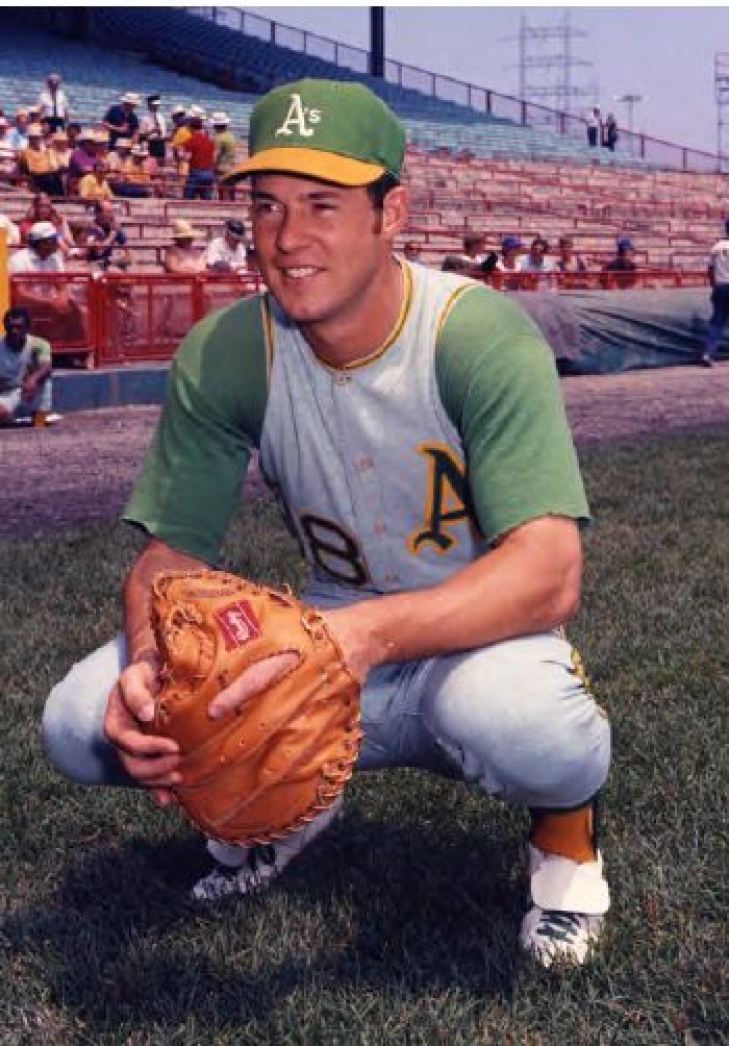
During his early years with the Oakland Athletics, Gene Tenace's distinctive offensive skills were largely neglected by conventional baseball evaluations. Selected in the second round of the 1965 draft, the resilient catcher made his debut in 1969 but initially spent several seasons in a part-time capacity, listed low on the depth chart. To contemporary observers, his modest batting averages indicated limited potential. However, Tenace possessed an exceptionally advanced and innovative approach to hitting—one that would eventually achieve national recognition on the sport's most prominent platform.
His permanent entry into baseball folklore occurred during the 1972 postseason. When manager Dick Williams included him in the starting lineup for the Fall Classic against the formidable Cincinnati Reds, Tenace delivered an exceptional display of high-pressure hitting. He single-handedly propelled the Oakland offense, becoming the first player in Major League Baseball history to hit home runs in each of his first two career World Series at-bats. He concluded that historic seven-game series with an impressive .348 batting average, four home runs, and nine RBIs, thereby earning the 1972 World Series Most Valuable Player award and securing the franchise's inaugural global championship on the West Coast.
That unforgettable October performance permanently changed his position within the organization, securing his role as the undisputed everyday backstop for the duration of the "Mustache Gang" era. Over the subsequent four individual seasons, Tenace contributed significantly to the lineup, achieving at least 22 home runs in each of these seasons.
Nevertheless, his true offensive brilliance was exemplified by his renowned, meticulous approach to the strike zone. Although conventional box scores frequently criticized his modest .240 batting average while playing for Oakland, Tenace regarded a walk as if it were a extra-base hit. Between 1973 and 1975, he demonstrated exceptional plate discipline, drawing at least 100 walks in three successive summers—including a league-leading 110 walks during the 1974 season. This unwavering capacity to generate offensive opportunities culminated in an impressive .374 on-base percentage, serving as a crucial catalyst for the consecutive World Series victories in 1973 and 1974.
His exceptional capacity to influence the game without dependence on conventional base hits earned him well-earned national recognition in 1975, when he achieved his inaugural career All-Star selection. He continued to serve as a notably resilient, low-variance asset for the small-market franchise, expertly transitioning between catcher and first base to maintain his potent batting presence in the daily lineup.
Nevertheless, the swift advent of the free-agent era ultimately necessitated an unavoidable separation. After the 1976 season, with the historic championship core disintegrating due to financial pressures, Tenace exercised his right to explore the open market, departing from the East Bay to secure a lucrative agreement with the San Diego Padres.
With the Athletics, Tenace accumulated 603 hits, 121 home runs, and a mountain of 548 walks.
43. George Earnshaw
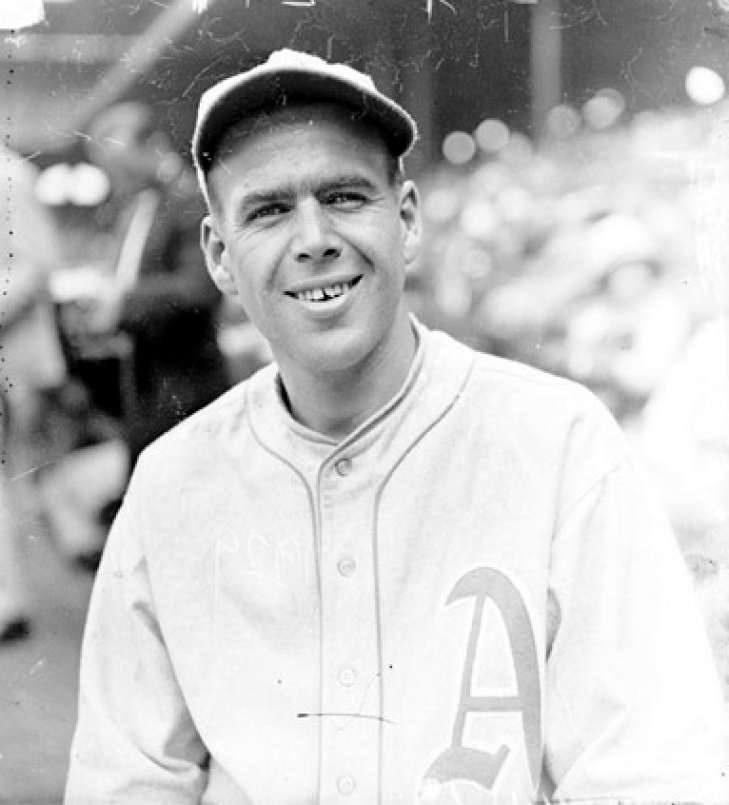
George Earnshaw took an unconventional path to major-league stardom. Because he prioritized finishing his college education and then spent several years refining his arsenal in the minor leagues, he didn't officially debut in the big leagues until he was 28 years old. But once the towering 6-foot-4 right-hander finally stepped onto a big-league mound, he wasted no time proving he belonged at the front of a rotation.
Connie Mack had personally scouted Earnshaw dominating hitters for the legendary Baltimore Orioles of the International League, and he aggressively pulled the trigger to secure his contract. Earning the nickname "Moose" due to his massive physical frame, Earnshaw joined the Philadelphia Athletics mid-season on June 1, 1928, turning in a respectable 7-7 introduction that merely hinted at the absolute dominance to come.
By the 1929 campaign, Mack had assembled an incredibly talented roster, with Earnshaw serving as its powerful, high-velocity engine. That summer, he dominated junior circuit lineups, leading the American League with an impressive 24-8 record and 21 complete games. He served as the key frontline pitcher alongside Lefty Grove, guiding the Athletics to the American League pennant and maintaining his strong performance into October, ultimately helping Philadelphia win the 1929 World Series against the Chicago Cubs.
Far from a single-season wonder, "Moose" proved to be an absolute workhorse over the next two individual campaigns, racking up 22 wins in 1930 and 21 victories in 1931 to form arguably the greatest one-two pitching punch of the era. The absolute peak of his baseball journey arrived during the 1930 postseason defense.
Earnshaw delivered an outstanding performance in the 1930 Fall Classic against the St. Louis Cardinals, participating in three games and pitching 25 impressive innings. He dominated the Cardinals' lineup, earning two complete-game wins, including a five-hit shutout in the pivotal Game 6, and achieved a remarkable 0.72 ERA to help secure consecutive world championships.
He pushed through to achieve yet another prolific 19-win season in 1932, but the heavy, continuous workload of innings eventually severely strained his right arm. Earnshaw experienced a sharp and sudden decline in 1933, finishing with a disappointing 5-10 record as his ERA rose to 5.97.
Due to the financial strain of the Great Depression, Mack had to break up his famous core team. After a tough 1933 season, Earnshaw was sold to the Chicago White Sox as a way to cut costs. As an Athletic, he had a 98-58 record and was later selected for the Philadelphia Baseball Wall of Fame in 2000.