Menu
A+ A A-
Site Admin

Site Admin

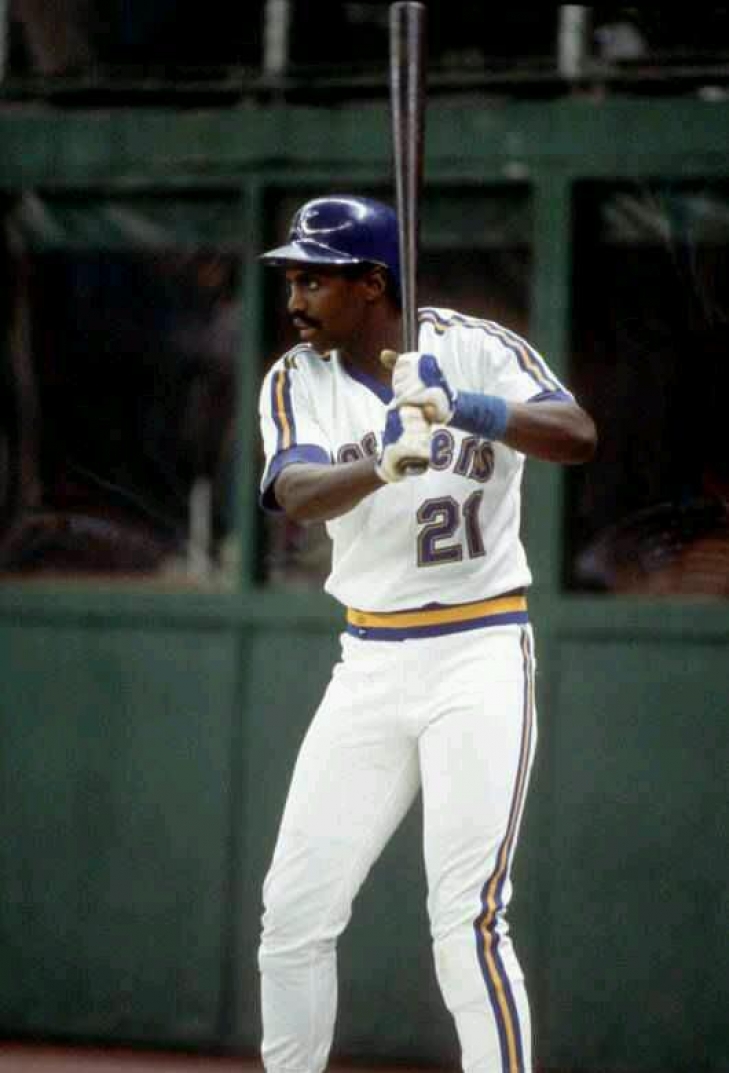
11. Alvin Davis

When one is unconditionally bestowed with the moniker "Mr. Mariner," it is inherently evident that the local footprint bears significant historical importance. Prior to the franchise's transformation into a prominent regular-season contender in the late 1980s and 1990s, the Seattle Mariners were a perpetually struggling expansion team, searching for a distinctive identity. This identity was found in the spring of 1984 in the form of a poised, left-handed hitting first baseman. Alvin Glenn Davis did not merely inherit a position in the batting order; he emerged as the unequivocal face of the franchise during a period when the club was in desperate need of a hero. He initiated a historic, multi-era residency characterized by exceptional strike-zone discipline, which laid the foundational offensive standards for the young team.

His introductory 1984 rookie showcase was an exemplary display of immediate, high-velocity run production. Davis entered the major-league scene by hitting home runs in his first two games, triggering widespread euphoria across the Pacific Northwest. He established a rigorous daily routine for reaching base, setting a major-league rookie record by safely reaching in each of the first 47 games of his career. He proceeded to earn his sole career All-Star selection, recording 34 doubles, 27 home runs, and 116 runs batted in while maintaining a strong .284 batting average. His advanced efficiency metrics dominated the landscape; he drew 97 walks, resulting in a notable .391 on-base percentage and a 147 OPS+, thereby confidently securing the American League Jackie Robinson Rookie of the Year award.

Davis wasn’t just a flash in the pan; he truly made a lasting impact over the following five years. His rookie season laid a solid foundation, and he proved incredibly dependable, maintaining a steady presence on the field. He hit back-to-back 18-homer seasons and maintained a batting average well above .270 during 1985 and 1986. His raw power reached its peak in 1987, when he completely dominated American League pitching. That year, Davis achieved personal bests in many areas, smashing 37 doubles, 29 home runs, and driving in 100 runs. He also collected a personal-high 171 hits and boasted a strong .516 slugging percentage, ensuring his place as a true star.

He backed that up with another 18 long balls in 1988, before staging a magnificent on-base clinic during the 1989 calendar. That summer, he clobbered 21 home runs, drove in 95 runs, and weaponized his elite zone awareness to draw a career-high 101 walks—fueling a brilliant, lifetime-best .424 on-base percentage that ranked second in the entire junior circuit.

To be fair, where Davis lost significant ground under modern analytical filters was his highly limited defensive footprint. He lacked range and quick lateral movement on the infield dirt, never registering a single season with a positive defensive bWAR or pacing American League first basemen in any traditional metric.

As the calendar turned to the 1990s and young star Tino Martinez progressed through the minor leagues, the coaching staff increasingly shifted the aging veteran into a permanent designated-hitter role. His production suffered a steep decline during the 1991 campaign, where he labored through mechanical inconsistency to bat a personal-low .221 with 12 home runs across 145 appearances.  He became a free agent afterward and signed with the California Angels.

Davis would collect 1,163 hits with 160 home runs and a slash line of .281/.381/.453 over his Mariners career, and in 1997, he became the first member inducted into the Mariners Hall of Fame.
16. Bret Boone

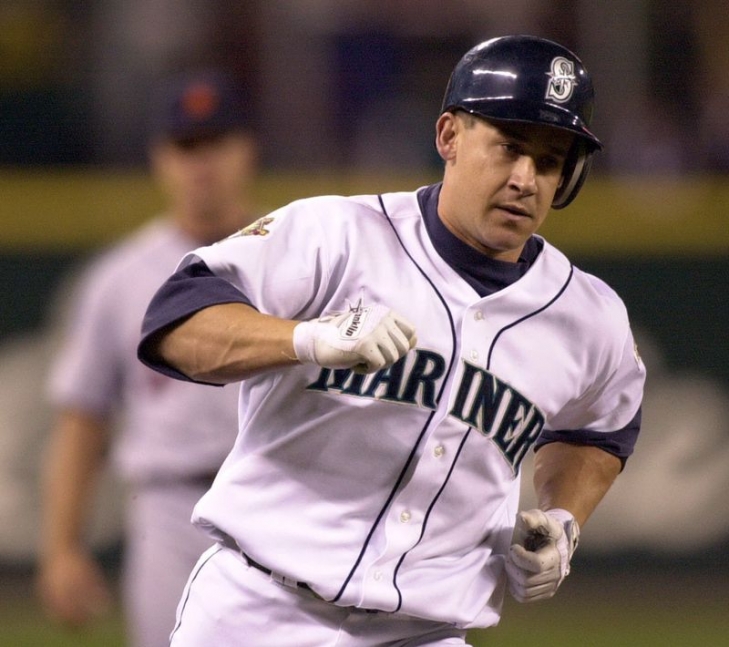
When family history is closely linked to the story of a sport, reaching the top level comes with its own special set of expectations. Bret Robert Boone didn’t just build a career in professional baseball; he made history the moment he stepped onto the field, becoming the game's first-ever third-generation Major League player after his grandfather Ray and his father Bob. Drafted by the Seattle Mariners in 1990 from USC, the passionate and intense second baseman had a strong, muscular build and a powerful right-handed swing. Although his early days in the Pacific Northwest were brief and like a short learning experience before he moved on, his return nearly a decade later sparked an incredible offensive outburst — one of the most remarkable for a middle infielder in recent times.

His 1992-1993 seasons with the Mariners showed flashes of power, with a then-record 12 home runs by a second baseman in 1993, but he lacked defensive polish and consistency to secure a regular role. The team traded him to Cincinnati, where he became a regular and a 1998 All-Star. After brief stops in Atlanta and San Diego, Boone hit the market before 2001 and made a dramatic free-agent return to Seattle, significantly impacting the junior circuit.

That unforgettable 2001 season truly marked the peak of his career on the field. With his team on the verge of tying the Major League record with 116 wins, Boone delivered an incredible offensive display that was a true joy to watch. He swept through American League pitching, setting personal bests in every category- 206 hits, 37 doubles, and 37 home runs across 158 games. Consistently driving in runs, he led the league with 141 RBIs and posted a impressive .331/.372/578 line. His outstanding performance earned him a spot in the All-Star Game in front of the cheering home crowd at Safeco Field, along with a Silver Slugger Award and a third-place finish in the AL MVP voting.

Boone proved he wasn't just a flash in the pan, sustaining his powerful presence in the middle of the lineup over the next two seasons. His strength was undeniable as he crushed 24 home runs and drove in 107 RBIs in 2002. He continued to shine in 2003, earning his third All-Star selection and his second Silver Slugger award, thanks to his impressive 35 home runs, 111 runs scored, and 117 RBIs — making him only the third second baseman in modern baseball to achieve three straight 100-RBI seasons. On the defensive side, Boone also excelled, earning three straight American League Gold Glove Awards from 2002 to 2004.

Advanced analytical filters heavily dispute those raw golden accolades—noting that his limited lateral range and poor positioning often yielded a negative defensive bWAR—but his high-profile positioning and flawless fielding percentage routinely swayed the voters.

After his power dropped to 24 home runs in the 2004 season, he experienced a severe mechanical breakdown in the first half of 2005. Struggling through a painful .221 batting average with only seven home runs over 74 games, the front office decided to move on in July, trading the veteran to the Minnesota Twins.

Boone would collect 863 hits, 152 doubles, 143 home runs, and 534 runs batted in over his Mariners career.

14. Mark Langston

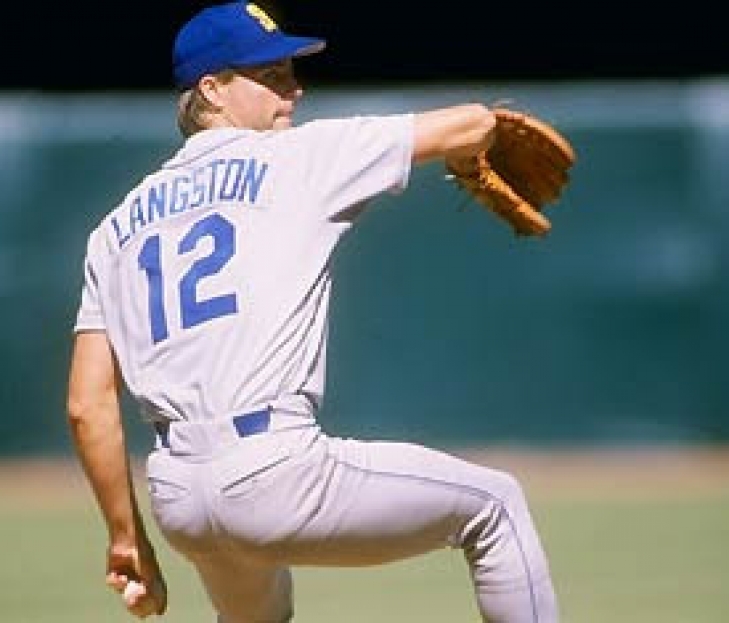
Selected in the second round of the 1981 amateur draft from San Jose State University, Mark Edward Langston did not simply ease his way onto the major league stage; he emerged prominently with a formidable, looping curveball and an exceptionally fast fastball that immediately transformed the competitive expectations of a young franchise. Throughout a concentrated, highly athletic five-and-a-half-season tenure, the dynamic southpaw served as the club's foremost strikeout artist, establishing a legacy as a formidable, reliable ace who consistently pushed his physical boundaries under the gray skies of Seattle.

His rookie debut in 1984 was truly impressive, showing right from the start that he could command the front of the card. Langston loved striking out batters and carried a strong 17–10 record with a sharp 3.40 ERA in 33 starts, impressively rallying a 74-win team behind him. Over 225 innings, he consistently challenged American League lineups, leading the circuit with 204 strikeouts and setting a modern rookie record for his franchise. Although his blazing fast pitches also led to 118 walks, his skill in working deep counts earned him a well-deserved second place for the American League Rookie of the Year award, surprisingly just behind his close teammate and roommate, Alvin Davis.

In 1985, Hampered by a minor elbow ailment, Langston struggled a bit with consistency, finishing with a 7–14 record and an ERA of 5.47. But he quickly bounced back and shined in the following years, leading the American League in strikeouts for two straight summers in 1986 and 1987. In 1986, he racked up an impressive 245 punchouts, and in 1987, he truly reached a career peak during an incredible regular season. That year, Langston demonstrated incredible stamina and durability, showcasing his hard work and resilience. He finished with a fantastic 19 wins and 13 losses, setting a franchise record by pitching 272 innings and throwing 14 complete games. His efficiency was remarkable, leading all of Major League Baseball with a career-high 262 strikeouts. This outstanding season earned him his first All-Star spot and a fifth-place finish in the American League Cy Young Award voting.

Langston was an elite, hyper-agile defender with a thunderous Arm, known for a lethal pickoff move to first base. He won consecutive American League Gold Glove Awards in 1987 and 1988 and added 235 strikeouts in 1988.

Langston leveraged his elite status for a big contract with the California Angels, earning three consecutive All-Star selections from 1991 to 1993 and building a decorated career. He left the Pacific Northwest with a strong record: 74–67, 51 complete games, and 1,078 strikeouts in 1,198.1 innings over 176 starts.

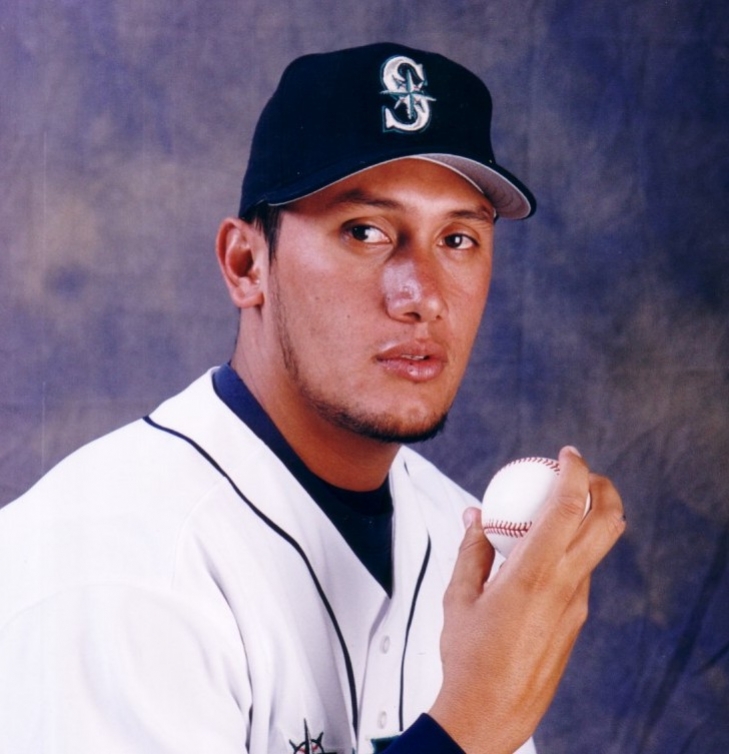
13. Freddy Garcia

When an organization determines it is appropriate to part ways with a legendary, once-in-a-generation left-handed icon, the obligation to extract maximum premium value from the market becomes paramount. The Seattle Mariners encountered precisely such a franchise-changing decision in July 1998, when they traded a discontented Randy Johnson to the Houston Astros. While the immediate concern centered on the regrettable departure of "The Big Unit," the most valuable component of the return package quickly arrived in Upper Manhattan via the Astros' minor league system. Equipped with an imposing 6-foot-4 stature and a powerful, high-velocity sinker, Freddy Antonio García did not merely fill the significant void left by a legend; the Venezuelan right-hander, universally recognized as "The Chief," evolved into the resilient, high-performance engine of the most successful regular-season team in the modern history of the sport.

His inaugural 1999 rookie season was a remarkable demonstration of immediate, frontline dominance that caused considerable and enduring seller's remorse among the Houston front office. García established a disciplined daily routine of logging significant innings, elevating the pitching staff and compiling an impressive 17–8 record over 33 starts. He systematically dismantled American League lineups over 201.1 innings, amassing 170 strikeouts and achieving a noteworthy second-place finish to Carlos Beltrán for the American League Rookie of the Year award, while also securing a prominent ninth-place position in the AL Cy Young Award voting.

The 2000 schedule was tough; he suffered a severe stress fracture in his throwing elbow, restricting him to only 21 games. Despite this setback, he displayed the legendary grit that characterized his career, finishing with a 9–5 record in the final stretch, helping the Mariners reach the October postseason.

Garcia had an unforgettable 2001 season. As the Mariners celebrated a record-breaking 116 wins, Garcia proudly stood out as the team's top pitcher, gaining well-deserved recognition everywhere. He showed incredible defensive skill and worked tirelessly, pitching an impressive 238.2 innings. Garcia regularly challenged opposing batters, winning 18 games with only six losses. He also earned the prestigious American League ERA title with a tiny 3.05 and kept a solid 1.123 WHIP, highlighting his talent and dedication. This outstanding performance earned him his first career All-Star selection, presented to him in front of his passionate home fans at Safeco Field, culminating in a fantastic third-place finish in the American League Cy Young Award voting.

García sustained that frontline authority into the 2002 campaign, using his devastating split-finger fastballs to secure a second consecutive All-Star nod. He systematically neutralized lineups across 34 assignments, forging a strong 16–10 record with a career-best 181 strikeouts over 223.2 frames, confirming his status as one of the premier right-handed workhorses in the game.

However, as the organization commenced navigating a prominent and comprehensive competitive decline over the following two summers, the unavoidable exit from the business transpired. With his contractual obligations approaching their conclusion, the front office orchestrated a significant trade in June 2004, exchanging their longstanding ace to the Chicago White Sox for a package predominantly comprising Michael Morse and Miguel Olivo. This transaction marked the definitive conclusion of his historic tenure in Seattle.

García accumulated exactly 76 victories against 50 defeats, maintaining a sharp 3.89 ERA and a 1.314 WHIP while fanning 819 batters in 1,091.2 innings of work.