Menu
A+ A A-
Site Admin

Site Admin

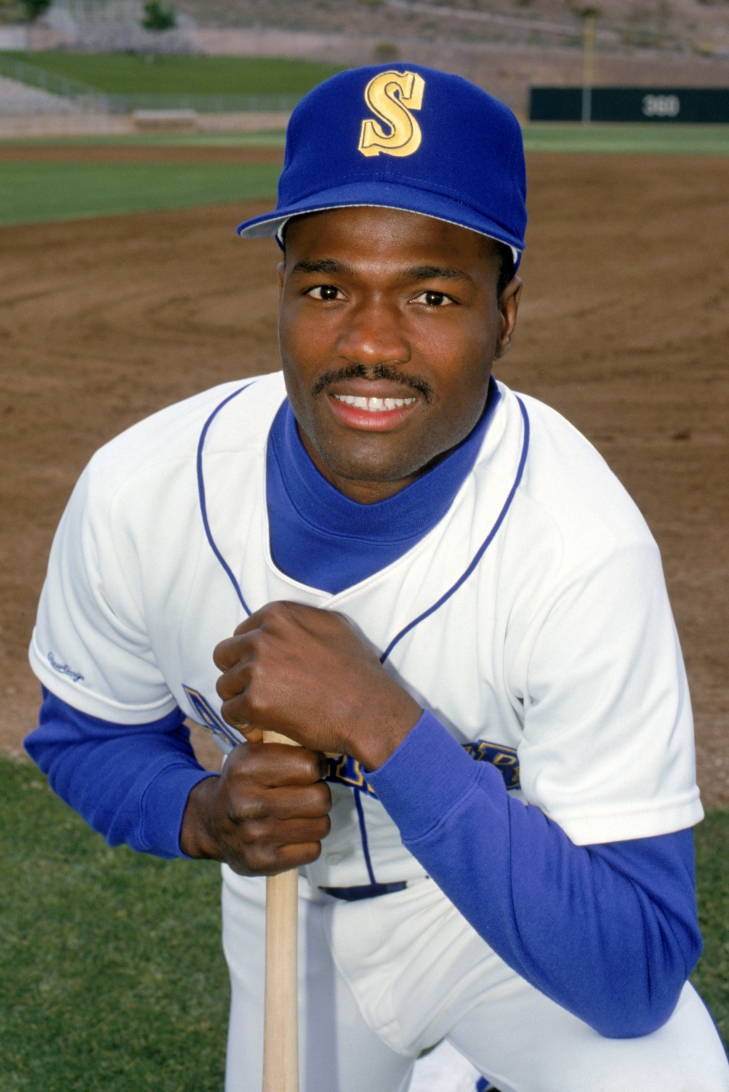
21. Harold Reynolds

Creating a historical profile of the early, pre-Pennant era of the Seattle Mariners typically highlights the fluid roster changes inside the Kingdome. However, well before the franchise became a mid-90s cultural phenomenon centered on Ken Griffey Jr. and Edgar Martinez, a charismatic and energetic second baseman had already become the team's spirited and competitive core.

The front office clearly saw great potential when they chose Harold Reynolds with the second overall pick in the secondary phase of the 1980 draft. Although his early years involved a careful, gradual development, his full-time spot in the starting lineup by 1986 truly changed the team’s speed and defensive strength. He wasn't a power hitter, but his quick reactions and smart base-stealing made him a beloved and iconic figure in the Pacific Northwest.

His genuine national breakthrough came during the 1987 campaign, marking the beginning of an era where he regularly set the pace for top-of-the-order speed. Reynolds made tracking pitches and outrunning typical infield throws look effortless. That summer, he led the American League with an impressive, career-high 60 stolen bases—becoming the only player other than Rickey Henderson to win an American League stolen base crown during the entire 1980s decade.

He exemplified this achievement in 1988 by leading the junior circuit with 11 triples, thereby earning his second consecutive selection to the All-Star Game. His offensive development culminated during the 1989 season, where he refined his technique to achieve a batting average of exactly .300 with a personal record of 184 hits.

His impressive speed constantly kept opposing catchers on their toes, but it was his outstanding defensive range at second base that truly defined his value. Reynolds combined remarkable lateral agility with exceptional hand-eye coordination, turning second base into his own fortress. He earned three straight American League Gold Glove Awards from 1988 to 1990, showing his dedication and hard work by leading all junior circuit second basemen in assists five times and putouts three times. Advanced defensive metrics strongly support the high quality of his coverage, highlighting him as a two-time league leader in Total Zone Runs among second basemen.

Beyond the lines, his pure character and unwavering dedication to public service truly left a lasting mark in the local community. Reynolds was loved and respected by his peers and fans alike, earning a glowing reputation that reached worldwide when he was proud to receive the prestigious Roberto Clemente Award in 1991.

A business departure after the 1992 campaign marked a shift to a youth movement. The veteran infielder became a free agent, played for the Orioles and Angels, then moved into a notable broadcasting career. Across ten seasons with the Mariners, he had 1,063 hits, 186 doubles, 44 triples, and 228 stolen bases.
19. Adrian Beltre

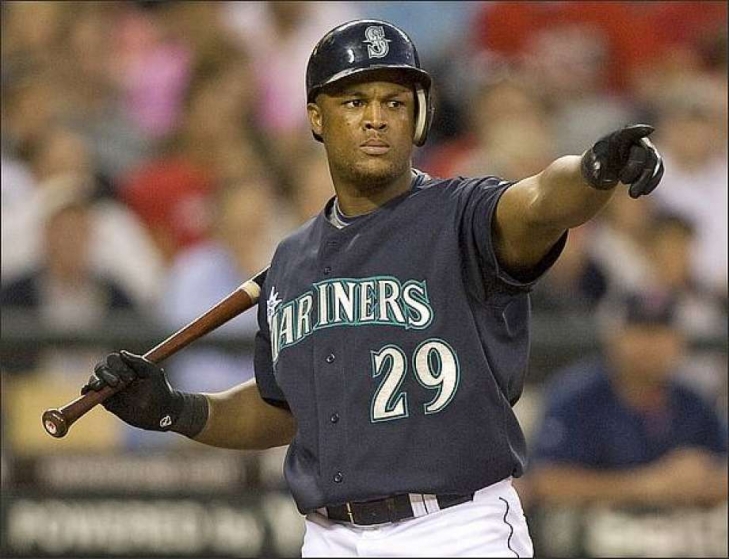
Examining the full, historical trajectory of a Cooperstown career reveals that true greatness involves overcoming significant structural challenges. When considering Adrián Beltré Pérez's legendary journey, the focus often falls on his rapid early success with the Los Angeles Dodgers, his impressive single-season hitting prowess in Boston, or the iconic status he achieved with the Texas Rangers. However, his five seasons in the Pacific Northwest form the crucial mechanical link across his career. Arriving in Seattle as the top free-agent pick of the 204–05 offseason, right after a remarkable 48-home-run season, the Dominican star faced tough, demanding conditions. Charged with stabilizing a changing lineup and coping with Safeco Field’s difficult environmental factors, Beltré proved critics wrong by demonstrating exceptional durability and elite defensive skills.

In his first year in Seattle, an undeniable reality check to fans expecting a repetition of his high-altitude Los Angeles statistics, but that was not the case as he batted .255 with 19 home runs.

Instead of letting the sudden contact leaks disrupt his overall performance, he fully focused on the dirt, transforming the hot corner into a tight barrier for opposing base runners. He improved his lower body stability before the 2006 season, beginning a steady three-year period during which he consistently produced power in the middle of the lineup.

In 2006, he hit exactly 25 home runs and had 89 RBIs. He followed this with a productive 2007 season, batting .276 with 26 home runs and 99 RBIs, and wrapped up the trilogy with another 25-homer season in 2008. Although his offensive stats never earned him an American League MVP vote while with the Mariners, his highly valuable defensive skills reached their peak during this period.

His defensive skills in the PNW were also impressive, earning him consecutive American League Gold Glove Awards in 2007 and 2008, which cemented his status as the top defensive third baseman in the junior circuit.

A series of nagging physical setbacks hampered his final summer with the organization in 2009, restricting him to just 111 appearances before a definitive business exit materialized that winter, as he chose to sign a one-year deal with the Boston Red Sox to jump-start his late-career renaissance.

Across his 715 appearances strictly representing the Mariners, he accumulated exactly 751 hits, 172 doubles, 103 home runs, and 396 runs batted in. Though his bat exploded to historic heights after his departure, culminating in his first-ballot walk into the National Baseball Hall of Fame in 2024, the golden glove work and relentless durability he showcased in the Pacific Northwest provided the essential platform for his eventual 3,000-hit immortality.

18. Hisashi Iwakuma

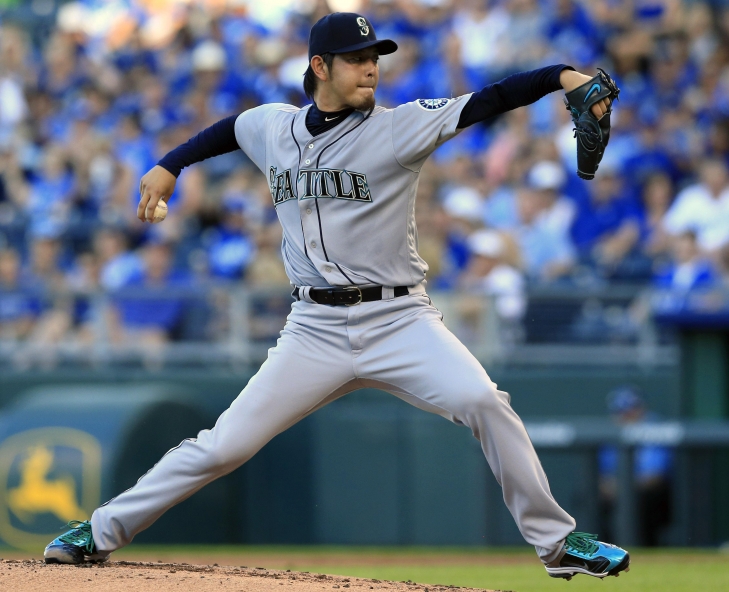
After a dozen seasons in the Japanese League, Hisashi Iwakuma made his way to the United States, specifically with the Seattle Mariners, the only team he would play for in Major League Baseball.

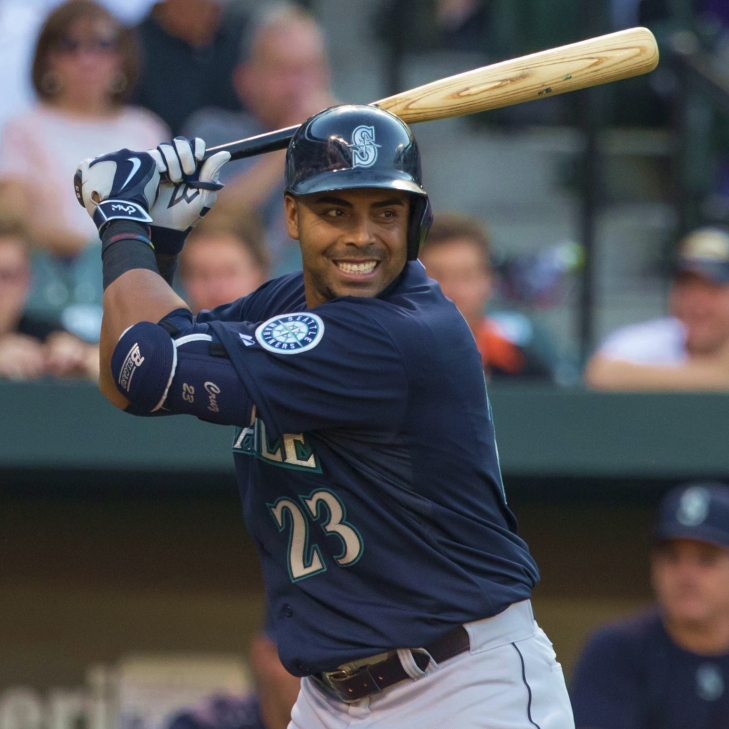
17. Nelson Cruz

When recounting the history of raw strength in the Pacific Northwest, the story often highlights the early brilliance of players like Ken Griffey Jr. or Alex Rodriguez. However, one of the most formidable displays of power in Safeco Field's history came from a veteran who arrived in Seattle in his mid-30s. After winning the 2014 American League home run title during a remarkable 40-homer season with the Baltimore Orioles, Nelson Cruz signed a lucrative free-agent deal with the Mariners. Known as "Boomstick," this powerful right-handed hitter quickly silenced critics who questioned whether Seattle's large outfield gaps would limit his distance. Instead, he delivered a four-year showcase of explosive power, earning All-Star selections in three of those four seasons.

His first season under the Pacific Northwest clouds instantly shattered expectations, as he surpassed his Baltimore tally by launching a magnificent, career-high 44 home runs while batting a blistering .302.

Cruz made hitting moonshots into a regular nightly habit, consistently sending balls into the left-field stands. He reinforced this with an impressive 2016 season, hitting 43 home runs and driving in 105 RBIs, only the second time in his career he surpassed 100 RBIs.

By 2017, management shifted the veteran primarily to the designated hitter position to safeguard his health. This strategic change enabled an even greater level of offensive efficiency. During that summer, Cruz hit 39 home runs and led the American League with a remarkable, career-high 119 RBIs, earning his second Edgar Martínez Award.

He kept his elite frontline baseline through his final year with the organization in 2018, hitting 37 home runs and driving in 97 runs, which earned him his last of three All-Star selections as a Mariners player.

Facing an organizational rebuild, the 38-year-old left the Mariners to sign with the Minnesota Twins, extending his decorated career. Over four seasons with the Mariners, he totaled 670 hits, 163 home runs, and 414 RBIs, with a .284 batting average.362 on-base, and 546 slugging percentage.