Menu
A+ A A-
Site Admin

Site Admin

4. David Price

When an organization holds the coveted first overall selection in the draft, the pressure to land a franchise-altering centerpiece is absolute. The Tampa Bay Rays faced that exact milestone in June 2007, selecting Vanderbilt University's electric left-hander to anchor their pitching pipeline. David Taylor Price did not merely arrive with immense, high-velocity hype; he stepped directly into a franchise-altering postseason script. Making his highly anticipated debut in September 2008, the towering southpaw functioned as an immediate high-leverage weapon out of the bullpen, recording the final outs of the American League Championship Series against Boston to push the Rays to their first-ever World Series appearance. That autumn cameo set the stage for an illustrious, hardware-certified residency as the undisputed ace of the rotation.

His introductory 2009 campaign as a full-time starter was a standard learning experience, as he labored through structural adjustments to post a 10–7 record with a 4.42 ERA across 23 assignments.

Following a successful summer in 2011, when he posted 12 wins and struck out 218 batters, his career reached its peak during an incredible 2012 regular season. That Year, Price delivered a remarkable display of skill and dominance, truly showcasing his talent. He consistently overwhelmed opposing lineups, leading the entire league with an impressive 20–5 record and a tiny, league-leading 2.56 ERA across 31 starts. His efficiency was exceptional- pitching 211.0 innings, striking out 205 batters in critical counts, and maintaining a fantastic 1.100 WHIP. These outstanding performances earned him the prestigious 2012 American League Cy Young Award, marking him as a true legend in the organization.

A painful triceps ailment triggered a minor statistical dip during the 2013 schedule; he engineered an absolute masterpiece of workhorse redemption during the first half of the 2014 campaign. Price recaptured his elite velocity to earn his fourth career All-Star nod, pacing all of Major League Baseball with 271 strikeouts and 248.1 innings pitched across the full summer.

However, with the small-market franchise falling out of the immediate postseason hunt and his free-agent timeline looming, the inevitable business exit arrived that July. The front office engineered a blockbuster three-team trade, shipping their long-time ace to the Detroit Tigers for a return centered on Drew Smyly and Willy Adames, drawing a definitive curtain on his historic residency in St. Petersburg. Price would later leverage his elite status to capture ultimate world-championship jewelry with the Boston Red Sox in 2018 before concluding his stellar career with the Los Angeles Dodgers. 

With Tampa Bay, Price had a brilliant 82–47 record, a sharp 3.18 ERA, and exactly 1,065 strikeouts in 1,143.2 innings of work across 170 starting assignments.
3. Ben Zobrist

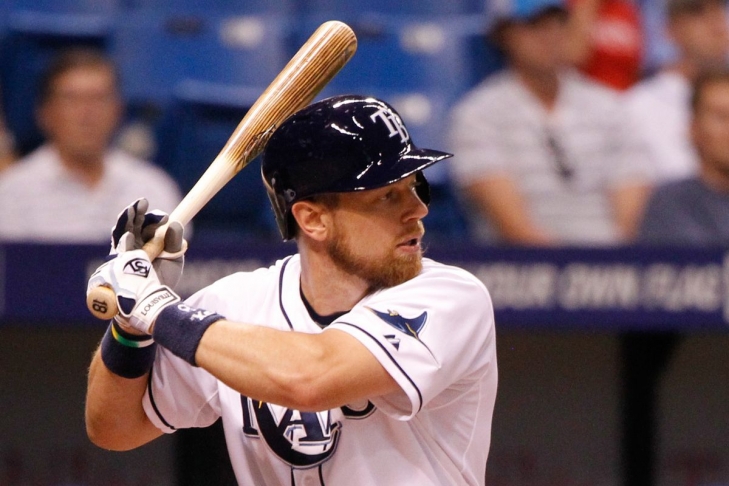
When contemporary baseball executives strategize for organizational planning and emphasize the paramount importance of defensive versatility, a particular name consistently emerges as a quintessential reference point. Ben Zobrist did not merely occupy utility roles for the Tampa Bay Rays; he fundamentally transformed the sport's perspective on positional structures. Signed during an understated trade in July 2006 that dispatched Aubrey Huff to the Houston Astros, this notably astute switch-hitter made his Major League debut later that summer. Following an instructive two-year phase as a versatile role player, the Illinois native secured regular playing time by evolving into an exceptional multi-positional Swiss Army knife, effortlessly transitioning among shortstop, second base, and all three outfield positions, thereby affording manager Joe Maddon a strategic, highly adaptable tactical advantage.

His first season in a Rays uniform involved quiet adjustments, but his 2009 breakout showcased immediate dominance. Zobrist turned working counts and shifting defense into routine. He systematically crushed American League pitching, hitting a career-high 27 home runs, drawing 91 walks, and posting a .405 on-base percentage in 152 games. His efficiency shattered league standards, earning a league-leading 8.6 bWAR, his first All-Star, and finishing eighth in AL MVP voting. His defensive awareness was unmatched; despite moving between second base and the outfield, his run suppression was so elite he likely should have won a Gold Glove.

Zobrist was a steady, high-efficiency player for the organization over five years, consistently high on-base skills. He led the American League in games twice, hit over 15 homers four times, and was key in postseason success. His peak during late residencia in 2013, when his multi-dimensional value earned a second All-Star nod after 36 doubles, 231 times on base, and a 116 OPS+.

In January 2015, they overhauled their roster, trading longtime utility icon to Oakland for John Jaso, ending his nine-season stint in St. Petersburg. He then made his mark as a top big-game player, joining the Kansas City Royals to win the 2015 World Series and later signing with the Chicago Cubs, helping them secure the 2016 championship and World Series MVP.

Over Zobrist’s 1,064 games representing Tampa Bay, he accumulated exactly 1,016 hits, 229 doubles, 114 home runs, and 511 runs batted in, completely validated by a brilliant .264/.354/.429 career slash line.

2. Carl Crawford

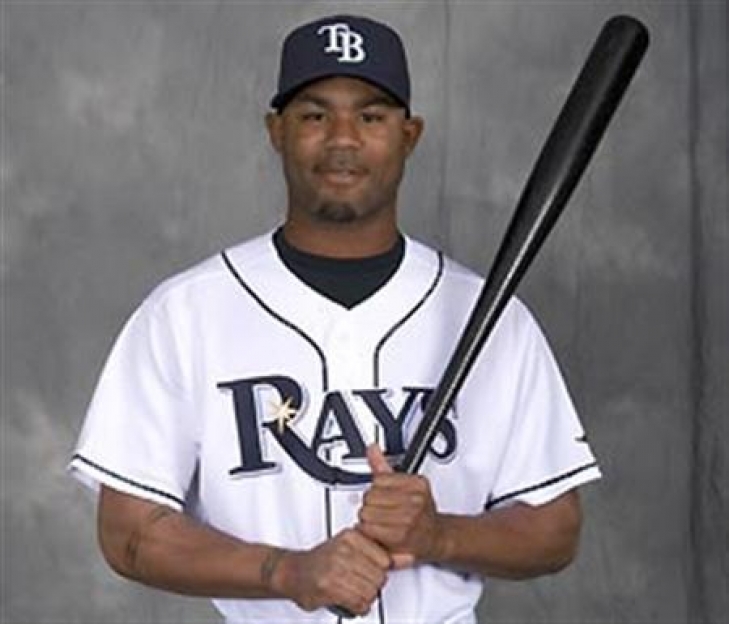
When evaluating the foundational catalyst who first injected pure, electric athleticism into the modern Tampa Bay roster, long before the club became an analytical powerhouse, you have to look directly at the turf-shredding velocity of their premier home-grown speedster. Selected in the second round of the 1999 amateur draft out of high school in Houston, Carl Crawford didn't just climb the minor league ranks; he completely redefined the offensive tempo of the young organization. Making his big-league introduction in the summer of 2002 at just 20 years old, the blazingly fast left fielder embarked on a stellar nine-season residency that fundamentally altered how opponents defended the cavernous outfield grass of St. Petersburg.

His introductory experience in Major League Baseball during 2002 was a brief 63-game period, serving as an initial exposure. However, his subsequent performance in 2003 represented a remarkable and high-velocity breakthrough. Crawford transformed stealing bases and hitting line drives into a disciplined daily routine, recording 177 hits, nine triples, and leading the entire American League with 55 stolen bases. He maintained this vigorous, frontline presence over the following summers, establishing himself as one of the premier high-volume hitters and elite base stealers in all of professional baseball.

From 2004 through 2010, Crawford turned compiling 180-plus hits into an absolute annual certainty, missing the mark only during a frustrating 2008 campaign where an injury restricted him to 109 games. Even in that truncated summer, his high-octane speed remained crucial, helping anchor the outfield during the Rays' improbable, historic run to their first-ever American League pennant and division title.

He was an absolute nightmare for opposing batteries and defensive alignments under the dome, weaponizing his world-class acceleration to lead the American League in triples four separate times (2004, 2005, 2006, and 2010) and topping the junior circuit in stolen bases in three additional campaigns following his rookie breakout.

Crawford’s standout season was in 2010, when he reached career highs with 30 doubles, 13 triples, and 19 home runs. He also drove in 90 runs, scored 110—setting a franchise record—and combined his powerful hitting with excellent defense, earning both an American League Silver Slugger and a Gold Glove. Additionally, he stole 47 bases, helping him secure a seventh-place finish in the league's MVP voting. That rare blend of blistering speed and top-of-the-order hitting earned him massive national reverence, commanding four separate American League All-Star selections—highlighted by an iconic 2009 midsummer showcase where his gravity-defying home run robbery earned him the game's MVP trophy.

This campaign landed him a monumental, $142 million free-agent contract with the Boston Red Sox ahead of the 2011 season.

The transition away from the comfortable marine environment of Florida brought a highly turbulent, painful crossroads; unable to match the skyrocketing performance pressure of New England, severe injuries and debilitating depression took a heavy toll on his mechanics, rendering him a fraction of his former self during subsequent stops in Boston and Los Angeles. While he may never anchor a top historical ranking for the Red Sox or the Dodgers, his monumental legacy with the Rays is completely unassailable. Crawford walked away from St. Petersburg, leaving behind a volume-dense statistical fortress that dominates the organization's archives: a stellar .296 batting average, 765 runs scored, 592 runs batted in, and an incredible 35.6 franchise bWAR, which ranks second behind only Evan Longoria. He remains the all-time, undisputed franchise leader in hits (1,480), triples (105), and stolen bases (409).

1. Evan Longoria

Tracing the complete evolution of the Tampa Bay franchise reveals a pivotal moment when the team shed its "Devil Rays" identity, transforming into a consistent contender. Selected third overall in the 2006 amateur draft from Cal State Long Beach, Evan Longoria took over the starting third base position in St. Petersburg just two summers later. He not only fulfilled expectations but became a star on the big stage, leading an incredible comeback from the worst to the first. During his ten-season tenure at Tropicana Field, the highly skilled third baseman became the franchise's icon, a defensive leader, and the organization’s all-time top run scorer.

His debut in 2008 was truly remarkable, showcasing his immediate impact and strong presence that changed the game for the entire region. Longoria made a habit of producing consistently every day, smashing 31 doubles and 27 home runs, and driving in 85 runs over 122 games. This impressive performance earned him the well-deserved American League Rookie of the Year award and his first All-Star selection. But more than that, his confidence and poise in high-pressure moments helped lift the young team to its first-ever American League pennant and a memorable World Series run against the Philadelphia Phillies.

Longoria established himself firmly among the elite major-league third basemen over the following five years, impressing with his powerful hitting and perfect glove work. He earned back-to-back All-Star selections in 2009 and 2010, using his formidable right-handed swing to win a Silver Slugger Award in 2009 after hitting 33 home runs and amassing a career-high 113 RBIs.

Defensively, he excelled at third-base defense, using quick reflexes and a strong arm to earn consecutive American League Gold Glove Awards. Apart from a limited 74-game season in 2012 due to injury, Longoria consistently hit over 20 home runs each summer, surpassing 30 twice, and finished sixth in AL MVP voting in both 2010 and 2013.

Local fans will forever cherish his iconic moment from the final night of the 2011 regular season—hitting a legendary walk-off home run in the 12th inning against the Yankees, sealing "Game 162" and securing a postseason spot for the Rays. He maintained that prominent presence through the 2017 season, earning his third Gold Glove that summer, before the front office made a decisive move by trading their key player to the San Francisco Giants in December to manage future financial commitments.

Longoria walked away from the Suncoast, leaving behind a monumental statistical fortress that stands as an unassailable foundation of the franchise record books. He remains the all-time, undisputed Rays franchise leader in an astonishing array of categories, including games played (1,435), doubles (338), home runs (261), runs batted in (892), and bases on balls (569).