Menu
A+ A A-
Site Admin

Site Admin

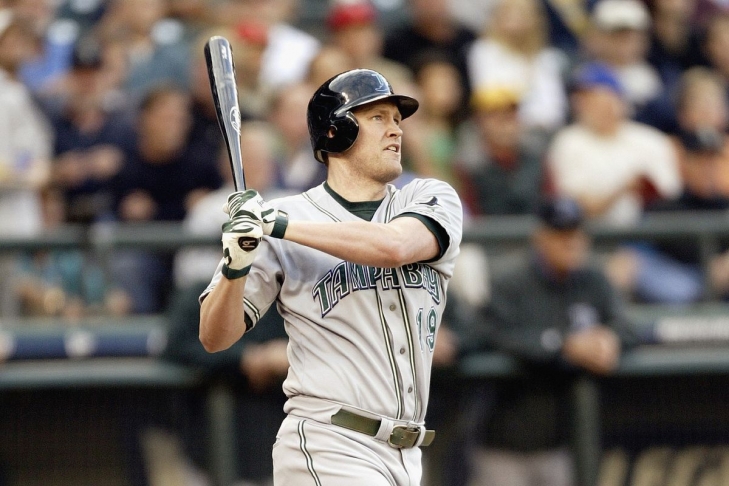
14. Aubrey Huff

In the early years, the Tampa Bay Devil Rays faced low attendance, many triple-digit loss seasons, and a struggle for a stable homegrown player core. During this challenging period, Aubrey Huff rose from the minor leagues to become the franchise’s first true middle-of-the-order hitter. Debuting in the summer of 2000, this left-handed infielder gained recognition for his smooth, natural swing, which allowed him to excel against major league pitching more effectively than most of his teammates at the time.

By 2002, Huff had emerged as the key player in the Tampa Bay offense. He had a remarkable season, hitting 23 home runs and achieving a career-best .313 batting average, demonstrating his place among top hitters. The following summer, he surpassed these achievements, delivering his most outstanding performance in a Devil Rays uniform. In the 2003 season, Huff was immensely effective at the plate, smashing 34 home runs, driving in 107 RBIs, and maintaining a superb .311 batting average—a bright spot in a year that saw the team lose 99 games.

Despite Huff’s continued offensive productivity with two consecutive 20-home run seasons over the next two years, his overall value was often diminished by his defensive shortcomings. The coaching staff frequently moved him around the field, trying him at third base, first base, and right field. However, he lacked the range, agility, and glove skills necessary to be effective at any of these positions, making him a significant defensive liability whose glove often cost him runs that his bat helped generate.

Beyond just his defensive stats, Huff’s time in St. Petersburg grew marked by a difficult and prickly attitude that began to strain the team. While his reputation as a toxic locker room presence would become more evident later, the signs of discord with teammates and management appeared during his final years in Tampa. As the franchise aimed to build a younger, more disciplined culture, Huff's leadership style and attitude increasingly conflicted with the front office’s long-term goals.

In July 2006, Huff, nearing his fifth consecutive 20-home run season and batting .283 with 128 home runs over six seasons, was traded by the Devil Rays to the Houston Astros for prospect Ben Zobrist. The deal signaled a major shift in Tampa Bay's philosophy as Huff left, leaving his mark on the franchise's early leaderboards.

After leaving the Gulf Coast, Huff would wander through several organizations as a mercenary bat before eventually finding late-career redemption as a key contributor to two World Series championships with the San Francisco Giants.
10. Blake Snell

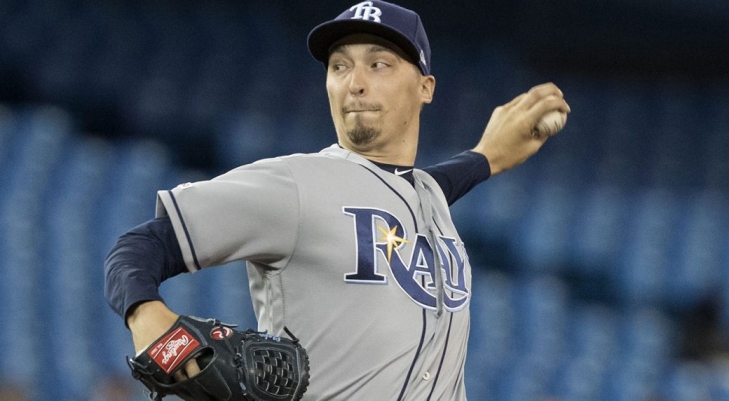
When mapping out the history of modern pitching within the American League East, it becomes evident that the Tampa Bay Rays manage frontline arms in a manner distinct from any other organization in professional baseball. For the Rays, outstanding velocity and award-winning execution are never grounds for abandoning their disciplined, data-driven roster strategy. No single career trajectory exemplifies this analytical approach more than that of left-hander Blake Snell. Selected by the front office in the first round of the 2011 draft, the Seattle-born southpaw possessed an electrifying, high-velocity pitch repertoire featuring a blazing fastball and a penetrating, sharp-breaking curveball. Over five seasons representing the franchise, "Snellzilla" established himself as one of the most exceptional and highly variable strikeout artists of his generation. He demonstrated that when his command was fully optimized, he could attain a peak level of efficiency that nearly transcended the principles of modern pitching.

His initial performances across 2016 and 2017 featured an impressive display of raw talent; however, it was during the 2018 season that everything fully converged to produce a quintessential regular-season performance. Snell consistently dominated junior circuit lineups, transforming them into a routine occurrence. That season, he demonstrated an exemplary level of pitching, leading the American League with a remarkable 21 wins against only 5 losses and an outstanding 1.89 ERA over 31 starts. Advanced analytical metrics substantiate the extraordinary caliber of this peak, as evidenced by his impressive 217 ERA+ and an exceptionally low 5.6 hits allowed per nine innings, securing his first American League Cy Young Award and a top-ten placement in the AL MVP voting.

While his 2019 follow-up campaign was hindered by minor injury-induced leaks and an elevated 4.29 ERA, his value-dense high-leverage profile reached its apex during the pandemic-shortened 2020 regular season. Snell led the pitching staff with a robust 3.24 ERA, guiding the young, ambitious Rays roster to a historic American League pennant.

Yet his entire Tampa legacy is defined by the explosive, controversial milestone that erupted on a national stage during Game 6 of the 2020 World Series against the Los Angeles Dodgers. Dominating the Dodgers' powerhouse lineup, Snell had thrown 5.1 innings of brilliant, one-hit shutout ball, striking out nine on just 73 pitches. Operating under strict, analytical organizational directives to never let a starter face a lineup for a third time, manager Kevin Cash walked to the mound and pulled his cruising ace from the game.

The Dodgers rallied against the Tampa bullpen to win the game and title, creating an emotional moment still felt in baseball. True to their cost-effective approach, the franchise’s front office traded the 28-year-old pennant hero to the Padres in a lopsided, multi-player blockbuster that December, fearing his financial leverage would rise under his contract extension.

13. B.J. Upton Jr.

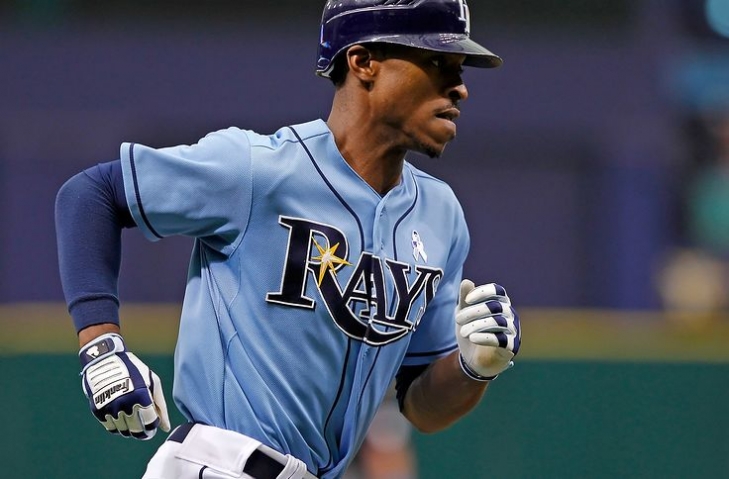
Melvin Upton Jr., widely known as B.J. during his time in St. Petersburg, stepped into the spotlight with high hopes that come with being the second overall pick. Drafted in 2002 from a Virginia high school, his rapid rise through the ranks meant he was in the big leagues by 2004 as a teenager. His debut was a challenging experience, with him switching between shortstop and third base as he tried to find his place on a team still discovering its direction.

In the summer of 2007, the organization finally moved Upton to center field, a change that truly unlocked his potential. Out in the wide-outfield of Tropicana Field, his long, smooth strides made it look easy for him to cover ground. This move helped steady his defense and let his natural batting instincts shine through, making him a key player for a team on the verge of something special.

Once integrated into the lineup, Upton leveraged a rare combination of exceptional athleticism that continually kept opposing pitchers in a state of uncertainty. He emerged as a formidable threat on the basepaths, achieving five consecutive seasons with 30 or more stolen bases, including an impressive 44 stolen bases during the 2008 season. This elite speed, complemented by a swift-wristed swing that produced unexpected leverage, provided the Rays with an extraordinarily dynamic asset at the top of the batting order.

Although his high strikeout rate and occasional passivity at the plate frustrated old-school traditionalists, his ceiling was clearly high. Upton combined his aggressive base-stealing with legitimate power, hitting 20 or more home runs in three different seasons while with Tampa Bay. His capacity to influence various parts of the game kept him a key focus on scouting reports, even when his batting average wasn't his strength.

Nothing cemented his legacy in St. Pete quite like the magical autumn of 2008. During the Rays' historic march to their first American League pennant, Upton caught absolute fire, turning October into a personal showcase. He belted 7 home runs and drove in 16 runs over the course of just 16 postseason games, carrying the offense through high-leverage moments and providing a young fan base with some of the most iconic snapshots in franchise history.

By the time he reached free agency following a career-high 28-home run season in 2012, Upton had logged nearly a thousand games with the club. He walked away with a Tampa Bay body of work featuring 910 hits, 119 home runs, and 232 stolen bases.

12. Chris Archer

Chris Archer truly stands out as one of the most exciting and dynamic players to ever lead the Rays. With his lively mid-90s four-seam fastball and a sweeping slider that kept many batters off-balance, he quickly caught everyone's eye as the energetic and charming face of the team. To clarify a little about his early career: Archer was first drafted by Cleveland, then moved to the Chicago Cubs system. Later, he was traded to Tampa Bay in January 2011, regarded as the shining star in the big trade involving Matt Garza.

Once he reached the majors in 2012, his explosive stuff transformed him into an absolute institution. He didn't offer a smooth, predictable path to victory; instead, he established a highly erratic baseline, frequently brilliant and occasionally shellacked, pitching with relentless aggression that made him one of the most coveted arms in the sport. His 2013 full-season debut instantly signaled frontline potential, as he compiled a 9–7 record with a sparkling 3.22 ERA, finishing third in the American League Rookie of the Year voting.

His peak performance of high-volume dominance was exemplified during a distinguished, award-winning 2015 regular-season performance. Archer established himself as the leader of the rotation, transforming the opening of each game into a personal demonstration of skill. That summer, he delivered an exceptional strikeout exhibition, leading the American League with a career-high 34 starts and achieving an impressive 252 strikeouts over 212.0 innings pitched, which earned him his first All-Star selection and a fifth-place ranking in the AL Cy Young Award voting.

He consistently showcased his elite, high-energy pitch profile over the next two summers. Archer dominated junior circuit lineups, recording strikeouts of 233 in 2016 and an impressive 249 in 2017, which earned him his second All-Star appearance. Throughout this intense three-year period, his high strikeout numbers consistently ranked him second, second, and third on the American League leaderboard.

To be fair, his aggressive style involved a notably risky margin for error; his demanding mechanics and frequent home-run leaks often left him vulnerable on last-place rosters, resulting in a deceptive 55–69 local record that does not accurately reflect his true dominance.

Recognizing his peak market value, the front office made a definitive business decision at the 2018 trade deadline. In a move that stands as an absolute masterclass in organizational execution, the Rays dealt their 29-year-old ace to the Pittsburgh Pirates in exchange for an astronomical, talent-dense package featuring Tyler Glasnow, Austin Meadows, and eventual top prospect Shane Baz.

While severe arm injuries and thoracic outlet syndrome later derailed his career—restricting him to a highly nostalgic, short-lived 6-game free-agent return to Tampa in 202—the legacy of that monumental 2018 transaction continues to blossom.

As the calendar rolls into 2026, the legendary "Chris Archer Trade Tree" has organically transformed into the ultimate building block of the franchise's modern depth.

With Tampa, Archer had a 55-69 record, a 3.71 ERA, and 1,167 strikeouts.