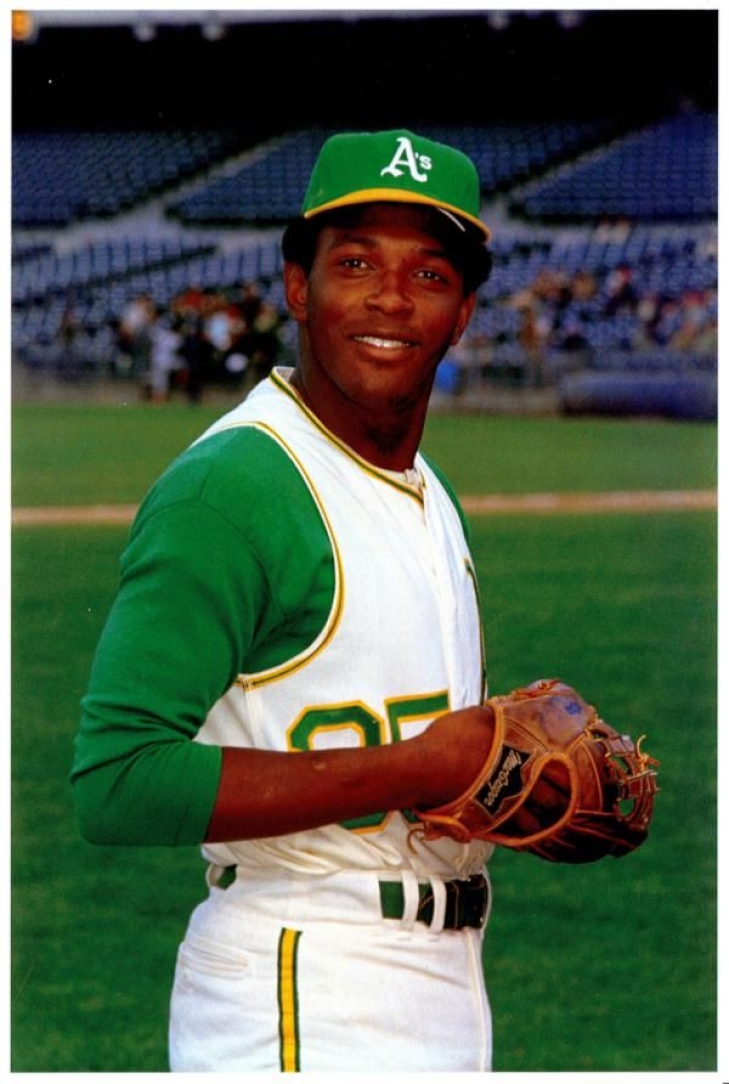
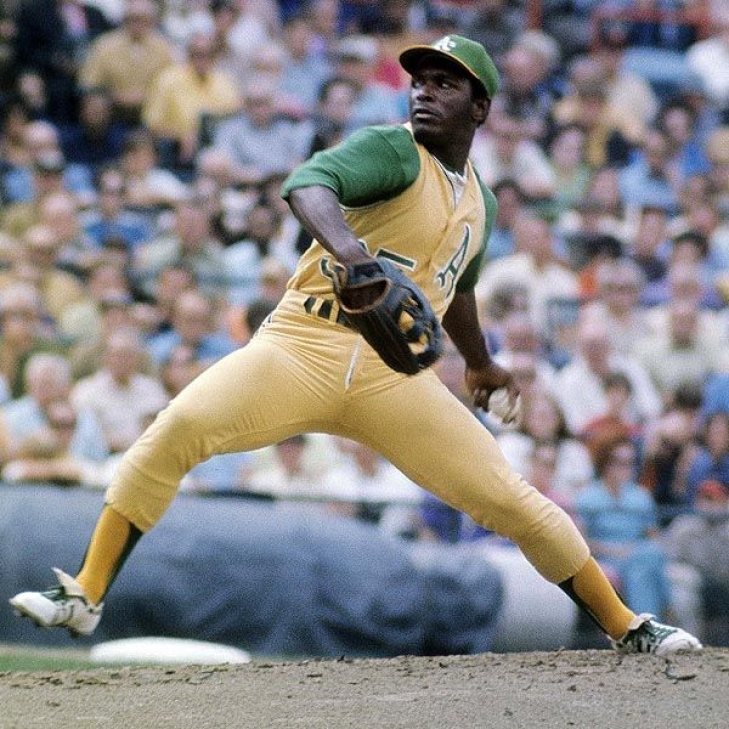
When Vida Blue fully established himself in the Oakland rotation in 1971, he didn't just deliver an outstanding pitching season; he became a true pop culture sensation. With a blazing fastball in the high 90s that baseball fans admired as the most exciting left-handed pitch of his era, the 21-year-old pitcher captured the sports world's attention. He appeared on the covers of Time and Sports Illustrated and kept opposing batters on their toes with his energetic and swift pitching style.
His 1971 campaign remains one of the most exceptionally brilliant single-season achievements within modern baseball history. Blue dominated the American League with a record of 24-8, leading the junior circuit with a minuscule 1.82 ERA, 2.20 FIP, and a 0.952 WHIP. He recorded an impressive 301 strikeouts over 312 innings pitched and curtailed opposing offenses through eight shutouts. His outstanding performance warranted him the prestigious American League Cy Young Award and Most Valuable Player accolade simultaneously, rendering him the youngest MVP recipient of the 20th century and serving as the definitive cornerstone of Oakland's emergence as a genuine power in the league.
The subsequent seasons, however, brought a reality check characterized by intense contractual disputes with the eccentric owner Charlie O. Finley. The off-field friction distinctly affected on-field performance in 1972, a summer during which a late signing restricted him to merely six victories. Nevertheless, Blue's resilience was evident as he regained his dominant form, surpassing 20 wins again in both 1973 and 1975. Although he never quite matched the extraordinary heights of his MVP peak, he remained a top-tier pitcher, earning three additional top-ten finishes in the Cy Young Award voting — including a seventh-place finish in 1973 and consecutive sixth-place rankings in 1975 and 1976.
As the Athletics transformed into a ruthless, high-leverage juggernaut that captured three consecutive World Series titles from 1972 to 1974, Blue was the essential workhorse who helped make their success possible. Although his individual postseason statistics during that period were notably inconsistent, recording a 1-5 win-loss record and a 4.31 ERA in October, the front office and his colleagues openly acknowledged that the modern dynasty would not have achieved its success without his substantial regular-season innings.
In 1976, as Finley desperately sought to liquidate his roster before the dawn of modern free agency, he famously attempted to sell Blue's contract to the New York Yankees for $1.5 million. In a historic intervention, Baseball Commissioner Bowie Kuhn swiftly blocked the transaction under the "best interests of baseball" clause, ruling that such a cash-for-star deal would completely distort competitive balance. Blue remained in green and gold for one more season before Finley finally engineered an acceptable intradepartmental trade, shipping him across the Bay to the San Francisco Giants prior to the 1978 campaign.
Blue’s run in Oakland concluded with a stellar 124-86 record and 1,315 strikeouts. Decades after his thunderous fastball shook the Coliseum, the organization ensured his legacy would forever remain in the East Bay, formally inducting Blue into the Athletics Hall of Fame in 2019.