- Published in Top 50 Washington Nationals
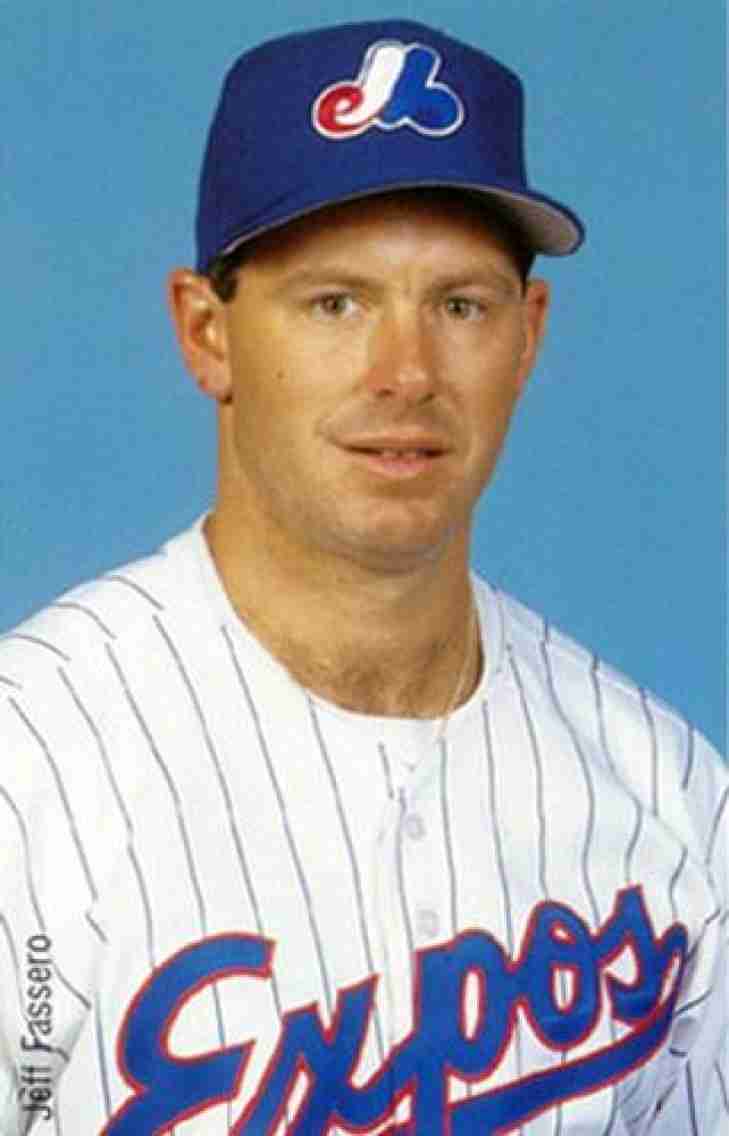
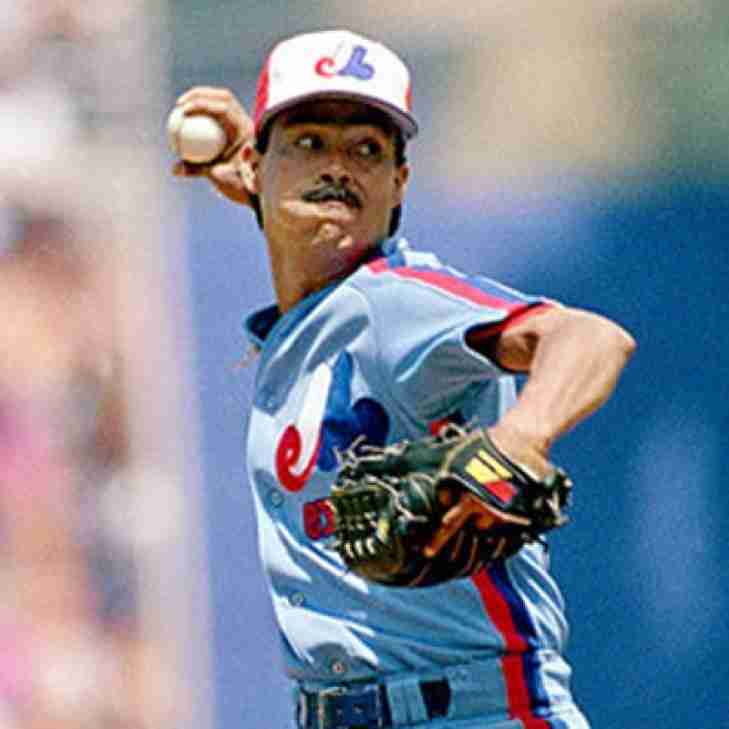
Livan Hernandez was already renowned as a Cuban defector who earned both the NLCS and World Series MVP awards as a 22-year-old rookie with the 1997 Florida Marlins. He joined Montreal before the 2003 season following a trade from San Francisco. While many saw the move as a salary dump, Hernández viewed it as an opportunity for a remarkable, career-changing resurgence. Over the next four years, he became both literally and metaphorically the bridge that helped the franchise transition from Montreal to Washington.
His 2003 campaign for the Expos was a standout example of old-school volume pitching. During a time when modern baseball was quickly pulling starters earlier, Hernández ignored the trend and relied solely on his stamina. He overwhelmed opposing lineups by leading the National League with 233.0 innings pitched and eight complete games, finishing with a 15–10 record and a 3.21 ERA. In 2004, during the Expos' final summer in Quebec, he elevated his durability by pitching 255.0 innings, leading the league in nine complete games and 35 starts. This remarkable workload earned him his first All-Star selection and a Silver Slugger Award at the plate.
When the franchise officially relocated to the nation's capital ahead of the 2005 schedule, it was entirely fitting that the deathless right-hander threw the historic first pitch in Washington Nationals history. Hernández served as the face of the inaugural District squad, putting together a brilliant 15-win tour and leading the major leagues yet again with 246.1 grueling innings across 35 starts, securing a consecutive All-Star nod.
After a 2006 trade to Arizona and a short stint across multiple teams, Hernández made a notable return to Washington in late 2009 for a dramatic, late-stage career homecoming. He pitched with seasoned, soft-tossing accuracy, relying heavily on a nearly untouchable, changing-speed looping curveball and a low-80s sinking fastball, effectively defying aging norms. In 2010, he pitched 211 innings with a solid 3.67 ERA, serving as the main high-pressure reliever for the rebuilding Nationals before ending his storied chapter with the franchise in late 2011.
With Montreal/Washington, Hernandez compiled a 70–72 record, a 4.01 ERA, and a 1.35 WHIP. He threw 1,177.1 innings, recording 27 complete games, 5 shutouts, and 840 strikeouts.
The trade that brought Pedro Martínez to Montreal before the 1994 season is a landmark moment in Expos history. Acquired from the Los Angeles Dodgers for second baseman Delino DeShields, this slender right-hander with an explosive, whip-like delivery quickly defied the idea that he was too slight to handle the physical demands of a major league starter. Over four remarkable summers in Quebec, Martínez evolved his raw, high-velocity pitches into a dominant force in the major leagues.
His debut before the Olympic Stadium crowd was immediately memorable. In the challenging 1994 season, Martínez served as a crucial yet overlooked driver for the remarkable Expos team, which led Major League Baseball with a 74–40 record before the players' strike unexpectedly ended their championship hopes. That summer, he posted an 11–5 record, demonstrating that his powerful fastball and developing changeup could consistently deceive top major league hitters.
As the organization was gradually compelled to dismantle its core due to increasing financial constraints, Martínez individually took on the burden of carrying the franchise. He achieved his first career All-Star selection in 1996 with 222 strikeouts, but this was just a preview of the extraordinary, record-breaking performance he delivered in 1997.
That 1997 campaign remains one of the most exceptional single-season pitching performances ever observed on a Major League mound. Martínez entirely incapacitated National League batters, transforming the strike zone into his personal domain. He achieved a remarkable 17–8 record while leading the major leagues with a microscopic, modern-era 1.90 ERA and delivering an extraordinary league-high of 13 complete games. He employed precise, high-pressure command to record an impressive 305 strikeouts over 241.1 innings, becoming the first right-handed pitcher since Walter Johnson in 1912 to reach the 300-strikeout threshold with an ERA below 2.00. This outstanding, elite performance designated him as the first—and only—pitcher in Montreal Expos history to be awarded the National League Cy Young Award.
Just as he established himself as a global superstar, the harsh realities of Montreal's small-market economics forced a change. Recognizing they lacked the financial means to offer their young star a market-value contract extension, the front office traded their key player to the Boston Red Sox in November 1997. Martínez would go on to achieve immortal status in baseball in New England, but the foundation of his legendary peak was laid during his time with the Expos.
Martínez was inducted into the Baseball Hall of Fame in 2015. As an Expo, he played 118 games (117 starts), with a 55–33 record, 3.06 ERA, and 1.09 WHIP. He pitched 797.1 innings, with 20 complete games, eight shutouts, 843 strikeouts, and a 135 ERA+.
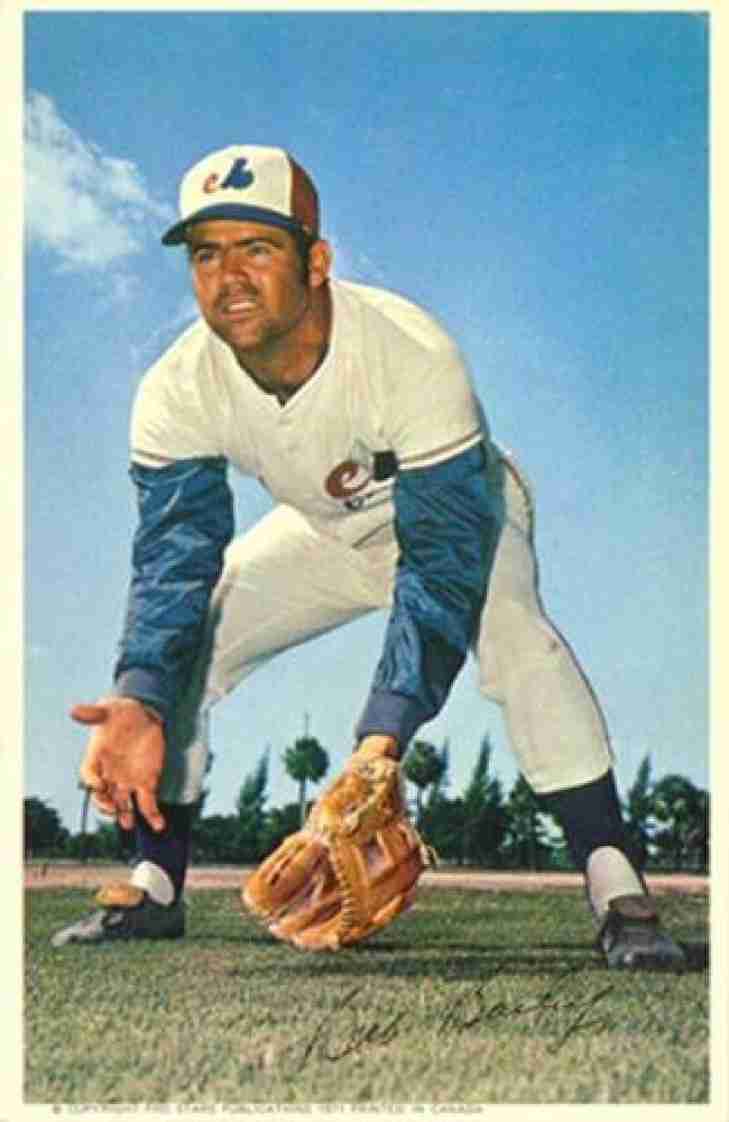
Jose Vidro, a proud Mayagüez native from Puerto Rico, was a switch-hitting second baseman who became one of the most challenging batters in the National League around the turn of the century. Although he didn't draw as much national attention as some of his more flamboyant, power-hitting peers, Vidro’s exceptional wrists and outstanding hand-eye coordination made the batter's box his domain of precise line-drive hitting.
His progression from a minor role to a key player peaked during an outstanding 2000 season. Vidro overwhelmed National League pitchers with a smooth, level swing from both sides of the plate, hitting an impressive 200 times and leading the league with 51 doubles. He also added a career-best 24 home runs and 97 RBIs, maintaining a hot .330 batting average. These achievements earned him his first All-Star appearance and cemented his status as a vital part of the organization.
Vidro consistently upheld an elite offensive level well beyond a single summer, demonstrating notable reliability. He showcased a series of high-average seasons, earning back-to-back All-Star selections in 2002 and 2003. His outstanding 2003 season—batting .310 with 36 doubles and a.397 on-base percentage—earned him the National League Silver Slugger Award as the league's top offensive second baseman. When the franchise moved to Washington before the 2005 season, Vidro played a vital role as a cultural link, anchoring the middle of the lineup during the Nationals' first season.
However, when considering the overall historical record, Vidro’s highest potential can sometimes be viewed with nuance. His bat was undeniably exceptional, yet his all-time franchise ranking is hampered by his weaker defensive stats. His bulky physique and ongoing lower-body injuries, such as chronic knee and ankle issues, notably restricted his lateral movement, making it difficult to reliably execute impressive double plays or make defensive plays that save runs.
Following the 2006 season, the front office traded the veteran infielder to the Seattle Mariners for Chris Snelling and Emiliano Fruto. Vidro hit 1,280 times with the Expos/Nationals, including 293 doubles, 115 home runs, and 549 RBIs, with a .301/.364/459 slash line (113 OPS+).
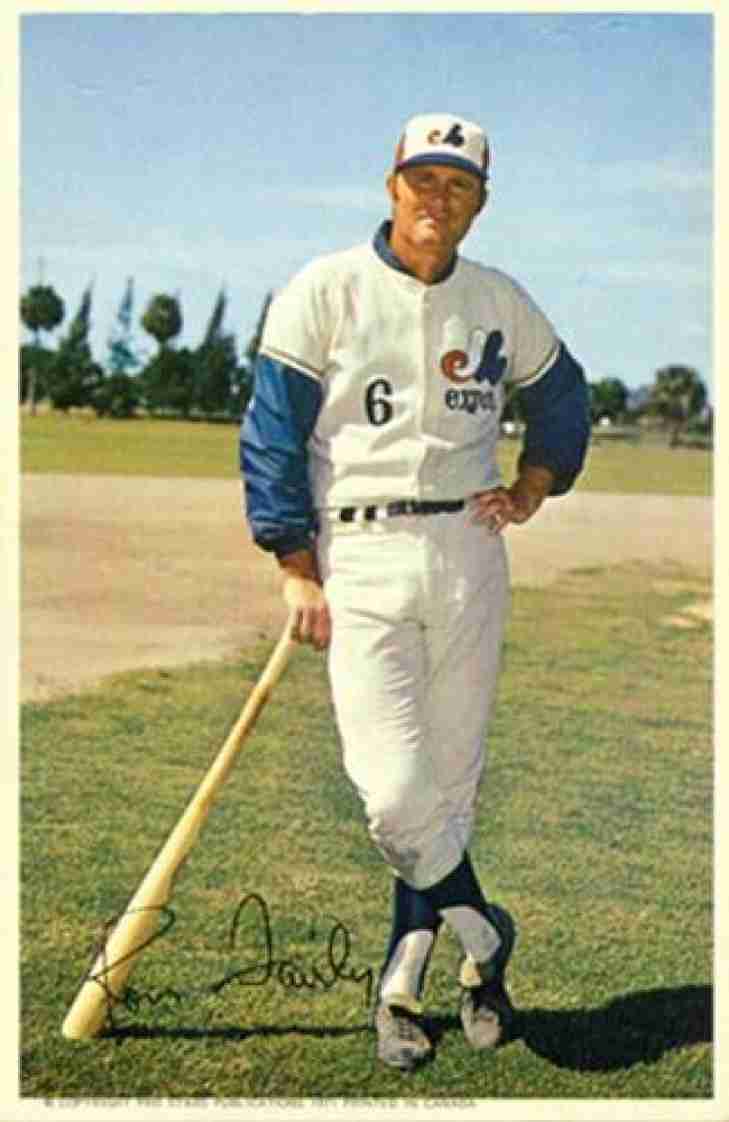
The story of 1980s baseball often overlooks the steady, hardworking players like Tim Wallach, who didn't seek the spotlight but played with quiet excellence. While many casual fans cheered for the more flashy stars in bigger markets, those who truly understood the game—like National League managers—knew Wallach’s value. It’s inspiring to see that those overlooked by the mainstream still recognized his importance, selecting him five times to represent the Montreal Expos in the All-Star Games and appreciating him as the solid foundation of a competitive team.
Drafted tenth overall in Montreal in 1979 from Cal State Fullerton, "Eli" shifted from an outfield position to establish himself as the greatest third baseman in Expos history. He consistently delivered elite run production, combining powerful extra-base hits with remarkable durability. As a key middle-of-the-order hitter, Wallach was known for his ability to crush National League pitching, hitting 204 home runs and driving in 905 runs during his impressive 13 seasons in Quebec.
His offensive performance peaked dramatically during a celebrated 1987 season. Wallach used his right-handed swing to lead the senior circuit with 42 doubles, while also hitting a career-high 26 home runs and an impressive league-leading 123 RBIs, earning himself a fourth-place finish in the NL MVP race. That summer, he received his second Silver Slugger Award, having previously won his first in a strong 1985 season when he hit 36 doubles and 22 home runs.
While his offensive stats are notable, Wallach's outstanding defensive abilities truly distinguish him from his peers. His quick reflexes, sharp lateral coverage, and perfect timing allowed him to excel at third base at Stade Olympique. These defensive skills earned him three Gold Glove Awards (1985, 1988, and 1990), and he regularly led National League third basemen in assists, double plays, and chances, offering crucial support to the Montreal pitchers.
By the end of his lengthy career in Canada, culminating in a December 1992 trade to the Los Angeles Dodgers, Wallach had established himself as a key figure in the organization's history. He left as the Expos' all-time leader in games played (1,767), hits (1,694), doubles (360), and total bases (2,728). During his time with Montreal, he also hit 204 home runs and drove in 905 RBIs, recording a .259/.317/418 slash line. In 2013, he was inducted into the Canadian Baseball Hall of Fame.
Marquis Grissom's rise in Montreal exemplifies dynamic outfield play. Drafted by the Expos in 1988 from Florida A&M, he debuted in late 1989 after minimal minor league time. With an explosive first step and great instincts, he made the leadoff spot at Stade Olympique a catalyst for chaos, establishing himself as a top two-way threat in the early 1990s.
His transformation into an elite table-setter was clearly demonstrated during consecutive league-leading seasons on the basepaths. Grissom overwhelmed National League pitchers by stealing an amazing 76 bases in 1991, and then set a career high with 78 stolen bases in 1992. His skill at generating runs out of nowhere provided manager Felipe Alou with a powerful offensive force that helped guide a talented, youthful Expos team, which was quickly learning how to dominate the Senior Circuit.
However, Grissom was much more than just a speed-focused player. His exceptional athleticism and precise route-running in center field made the large gaps in Olympic Stadium nearly impossible for opponents to exploit. His outstanding defensive skills earned him consecutive National League Gold Glove Awards in 1993 and 1994, and he reinforced his status with back-to-back All-Star appearances, establishing himself as an internationally recognized superstar. In the challenging 1994 season, he achieved 137 hits and 36 steals in 110 games, serving as a crucial leader for the Montreal team, which boasted baseball's best record before the strike.
Soon after the game resumed, the small-market franchise faced immediate financial constraints. Knowing they couldn't secure a long-term deal with their star outfielder, the front office made a blockbuster trade just before the 1995 season, sending Grissom to the Atlanta Braves. He quickly became a crucial part of his hometown team, famously catching the final out of the 1995 World Series to clinch the championship. Over his 17-year major league career, he accumulated numerous honors, including an ALCS MVP award in Cleveland, before retiring.
In Montreal, Grisson had 747 hits, 105 doubles, 23 triples, 48 home runs, and 238 RBIs. He posted a .273/.325/381 slash line and stole 266 bases.
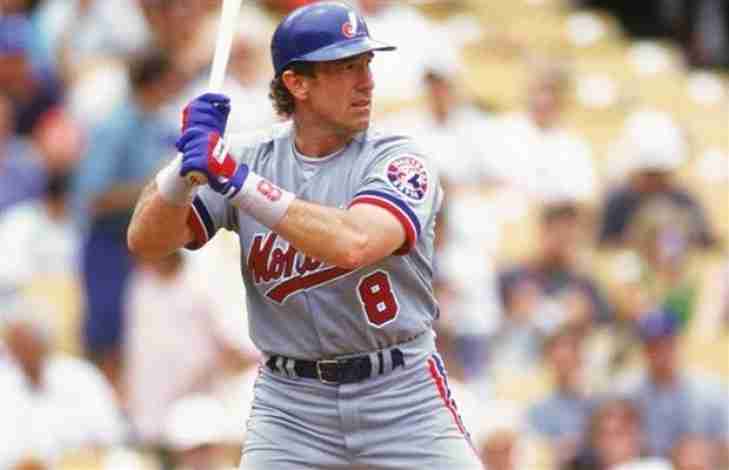
When thinking about the highest standards for defensive skill, durability, and passion behind the plate, you come across a player who truly embodied the competitive spirit of baseball in Canada. Gary Carter didn’t just lead the Montreal Expos into their first successful era; he was the lively heart and soul of a young team. With his warm, infectious smile and a powerful, aggressive swing, the player known as “The Kid” made the demanding role of catcher look like a nightly display of strong leadership. During his remarkable eleven seasons with Nos Amours, he became perhaps the most loved athlete in Canadian sports history and the clear top performer in the franchise's record books.
Making his primary arrival as a full-time regular during the 1975 campaign, the front office utilized his supreme athleticism across the outfield grass and behind the dish. Carter turned flashing his defensive tools into a strict daily routine, lashing 17 home runs and driving in 68 runs to secure The Sporting News Rookie of the Year honors, while finishing as a close runner-up for the official BBWAA National League Rookie of the Year trophy.
After a group of emerging talented players took over the outfield positions before the 1977 season, the management decided to move Carter behind the plate permanently. This change sparked a decade of exceptional defensive skill, significantly impacting how base runners in the National League approached their paths. Carter earned three straight Gold Glove Awards from 1980 to 1982, led the league in caught-stealing percentage three times, and topped all catchers in Total Zone Runs five times.
What truly made him a legendary figure in the inner circle was how his exceptional defensive skills kept a top-tier middle-of-the-order batter well protected. The peak of his amazing career in an Expos uniform shone brightly during a memorable 1982 season. That summer, Carter demonstrated incredible hitting prowess, setting a personal best with 29 home runs, 163 hits, and 97 RBIs, all while maintaining a solid .293 batting average and an impressive .381 on-base percentage. He led the team with an outstanding 8.6 bWAR — the highest single-season mark of his 19-year career — earning a well-deserved Silver Slugger award and finishing among the top five in the National League Most Valuable Player voting.
He matched that thunderous production with a league-leading 106 RBIs in 1984, commanding consecutive All-Star Game MVP trophies in 1981 and 1984 to cement his status as a national icon.
After the 1984 campaign, the small-market Expos faced huge stadium debt and tighter corporate budgets. With Carter entering the peak of a lucrative, long-term contract and management looking to pivot toward a total roster reconstruction, the front office initiated a highly jarring business exit that December. They orchestrated a blockbuster four-player trade that shipped their iconic centerpiece to the New York Mets for a package including Hubie Brooks and Floyd Youmans—a transaction that immediately allowed Carter to anchor the legendary 1986 Mets to a World Series crown.
While he famously returned to Montreal in 1992 for a nostalgic 95-game retirement tour—capping his career with a memorable game-winning RBI double in his final at-bat—his peak chapters belonged to the previous decade.
Carter played 1,503 total games representing the franchise; he accumulated exactly 1,427 hits, 274 doubles, 220 home runs, and 823 runs batted in, completely validated by a stellar 121 career wRC+ in La Belle Provence.
The BBWAA officially welcomed Gary "The Kid" Carter into the National Baseball Hall of Fame in 2003, and he proudly chose to enter Cooperstown wearing an Expos cap on his plaque. The organization beautifully matched that coronation by officially retiring his iconic number 8 that same summer, followed by a classy, highly respectful induction into the Washington Nationals Ring of Honor inside the nation's capital in 2010
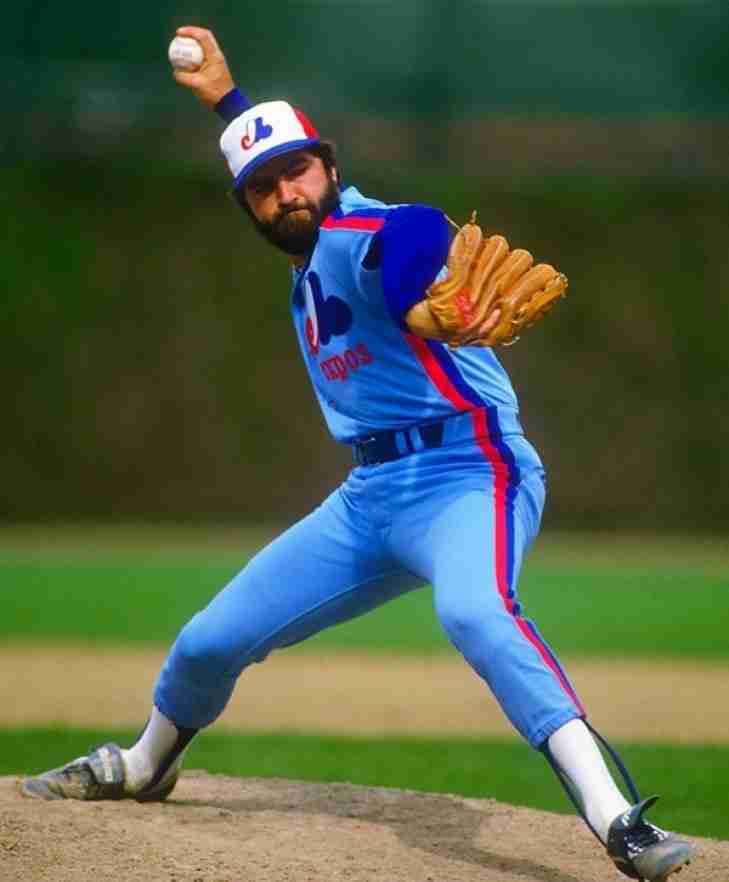
When Dennis Martínez arrived in Montreal mid-way through the 1986 season, he was a deeply respected veteran who had spent his career anchoring the Baltimore Orioles but was looking for a completely fresh start. The slender right-hander from Granada—the very first Nicaraguan-born player to ever reach the major leagues—instantly found a second home in Quebec. Over a spectacular late-career resurgence, "El Presidente" didn't just rebuild his trajectory; he orchestrated the finest, most elite pitching chapter of his 23-year big-league journey.
With a fantastic combination of sharp breaking balls, perfect control, and a passionate competitive spirit, Martínez became the dependable backbone of a young, lively Expos team. He consistently delivered an impressive streak of performances at Stade Olympique, earning three straight National League All-Star selections from 1990 to 1992. During this time, he regularly took on large workloads of over 200 innings, proudly serving as the steady anchor of the starting rotation.
Martínez’s late-career resurgence reached a truly memorable peak with a stunning 1991 performance. At 37, he dominated National League lineups, winning the NL ERA Title with a fantastic, career-best 2.39. He also led the league in complete games (9) and shutouts (5), finishing just outside the top spot in the NL Cy Young Award voting. This season truly highlighted his exceptional skill and resilience. The defining moment of that historic summer took place on July 28 at Dodger Stadium. In front of a stunned crowd in Los Angeles, Martínez authored the ultimate masterpiece of franchise history, retiring all 27 batters he faced to throw a flawless, 2–0 perfect game—a crowning theatrical achievement that permanently solidified his status as an absolute national hero in his homeland and a legend in Montreal.
Martínez maintained high-leverage performance during the 1993 season, concluding his lengthy tenure in Canada with precisely 100 wins and 973 strikeouts while playing for the Expos. After that season, he became a free agent and helped lead the Cleveland Indians to an American League pennant, surpassing 240 career wins.
In Montreal, he made 241 appearances (233 starts) with a 100–72 record, a microscopic 3.06 ERA, and a premium 1.15 WHIP. He threw 1,617.2 innings, recording 41 complete games, 18 shutouts, and 973 strikeouts. Martínez was inducted into the Canadian Baseball Hall of Fame in 2016.
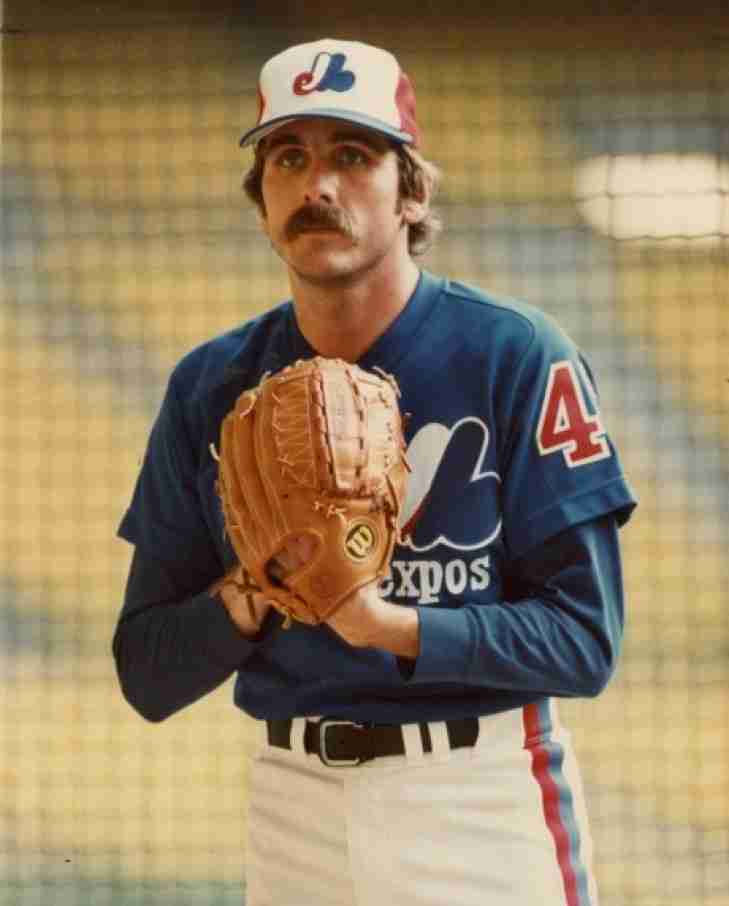
When Steve Rogers debuted in the major leagues in July 1973, he quickly provided the young Montreal Expos with something they had lacked since the team started: a true, homegrown ace. Coming from the University of Tulsa, this right-handed pitcher had an outstanding rookie season, going 10–5 with a mere 1.54 ERA in 17 starts. His immediate dominance over big-league batters pushed the Expos into an exciting late-season pennant race and earned him second place for the National League Rookie of the Year Award, marking the emergence of a remarkable talent.
After his initial surge, Rogers became the Nationals’ most dependable pitcher, renowned for his durability and precise control. Each season, he willingly took the mound, stabilizing a fluctuating Montreal rotation and often surpassing 200 innings. His peak physical endurance came in 1977, when he set franchise records by starting 40 games and pitching 301.1 innings. Rogers excelled at inducing ground balls, reducing setbacks, and consistently resisting opposing hitters.
The late 1970s and early 1980s represented his peak years, during which he consistently earned national recognition as a five-time National League All-Star. Rogers secured top-five finishes in Cy Young Award voting three times, utilizing a refined mix of heavy sinkers and consistent mechanics. In 1980, he led the league with 14 complete games and achieved two shutouts, with five in both 1979 and 1983, cementing his reputation as a pitcher who finishes what he starts.
Nothing captured the emotional peaks and valleys of his Montreal stay quite like the shortened 1981 postseason. Rogers was outstanding in the National League Division Series, posting a 2–0 record with an impressive 0.51 ERA, highlighted by a six-hit shutout against Steve Carlton and the defending World Series champions, the Philadelphia Phillies, in the decisive Game 5. Yet, just days later in the NLCS versus the Los Angeles Dodgers, he was brought in from the bullpen in the ninth inning of a tied Game 5, yielding a heartbreaking, pennant-winning home run to Rick Monday—an moment that tragically overshadowed his otherwise stellar October.
Undeterred by his October heartbreak, Rogers rebounded strongly in the 1982 season with his best campaign. Playing with a fierce determination, he finished with a 19–8 record, set a personal best with a 44.7 bWAR, and won the National League ERA title with a stellar 2.40. That summer, he highlighted his season by starting the 1982 All-Star Game in front of his enthusiastic home crowd at Olympic Stadium, finished second in the Cy Young voting, and became an enduring legend in Canadian baseball history.
Rogers retired in May 1985 due to shoulder injuries, ending his 13-year MLB career entirely with the Montreal Expos. He was the franchise’s career leader in wins (158), starts (393), innings pitched (2,837.2), complete games (129), and shutouts (37)—records still standing today. In the history of the franchise, Rogers symbolizes peak positional longevity and era efficiency, a fact confirmed by his induction into the Canadian Baseball Hall of Fame in 2005.
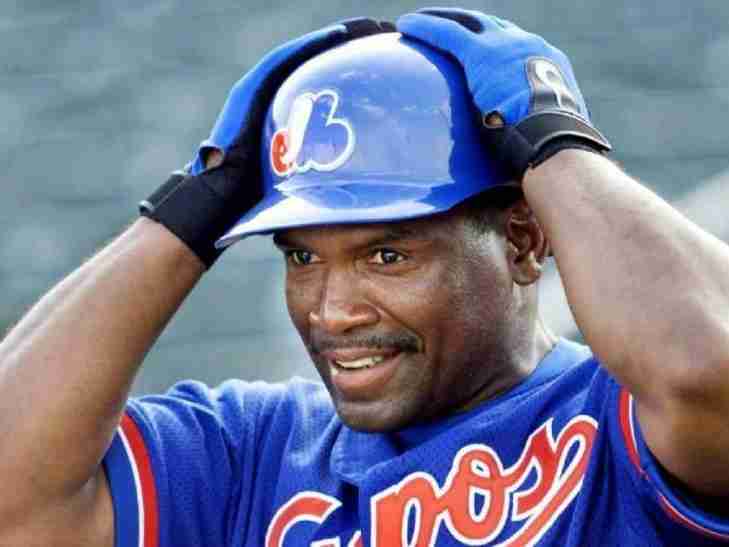
Had it not been for the parallel existence of Rickey Henderson in the junior circuit, a swift, switch-hitting left fielder from Florida would have spent the entire decade of the 1980s completely unchallenged as the premier leadoff weapon in the sport. Drafted by the Montreal Expos as an amateur infielder, Tim Raines did not merely adapt to the artificial turf of Olympic Stadium; he harnessed his exceptional footwork to neutralize National League catchers and energize the team of Nos Amours. During an exceptional initial 12-season career representing Quebec, the speedster appropriately nicknamed “The Rock” combined elite, high-efficiency base-stealing with impeccable zone discipline to establish himself as one of the most exciting and dominant figures of his era.
His debut in the senior circuit quickly changed how opposing managers organized their defenses. Raines made drawing walks and creating chaos on the bases a consistent part of his daily routine, leading the National League in stolen bases for four straight summers from 1981 to 1984—especially impressive with 90 steals in 1983 alone. While his blazing speed kept infielders on edge, it was his remarkable growth as a high-efficiency contact hitter that truly elevated him to baseball stardom. He earned seven consecutive National League All-Star selections from 1981 to 1987 and finished among the top ten in NL Most Valuable Player voting three times.
His standout moment in the 1986 season truly showcased his incredible talent, as he delivered a spectacular performance marked by outstanding hitting. That summer, Raines confidently dominated National League pitchers, winning the batting title with a remarkable .334 average. He also led the league with a fantastic .413 on-base percentage, achieved 194 hits, and stole 70 bases, earning him the well-deserved Silver Slugger Award.
After a 1990 summer highlighting 49 stolen bases, the Expos faced a financial crossroads and aimed to cut costs by shifting to a younger, cheaper payroll under GM Dave Dombrowski. With Raines nearing the end of his contract and seeking a long-term deal, the front office chose to maximize his value before losing him for nothing. In December 1990, they executed a blockbuster trade, sending Raines to the White Sox for Ivan Calderon and Barry Jones. He turned that departure into another productive decade in sports, earning two world-championship rings as a veteran and coach with the Yankees and White Sox, though his numbers never matched his peak output under the northern sky. Raines would, however, have a brief 47-game return in 2001, before retiring after the 2002 season.
Across his two stints totaling 13 seasons representing the club, he compiled 1,622 hits, 257 doubles, and 931 runs scored, entirely validated by an exceptional .301 batting average and a brilliant .391 on-base percentage. He remains the all-time, undisputed Expos/Nationals franchise leader in both triples (82) and stolen bases (635)—a total that includes a historic 84.7 percent success rate that stands as the gold standard for high-volume base runners
After initially stalling on the BBWAA ballot due to an early-career battle with substance abuse that he had beautifully overcome, his advanced efficiency numbers eventually sparked a massive analytical revolution among voters. It finally arrived in 2017 when, on his tenth and final year of eligibility, the writers overwhelmingly righted the historical ledger by triumphantly electing Tim "The Rock" Raines into the National Baseball Hall of Fame. He proudly chose to enter Cooperstown wearing an Expos cap on his plaque, a coronation beautifully matched that same summer when the organization officially retired his iconic number 30 alongside a classy, highly respectful induction into the Washington Nationals Ring of Honor.
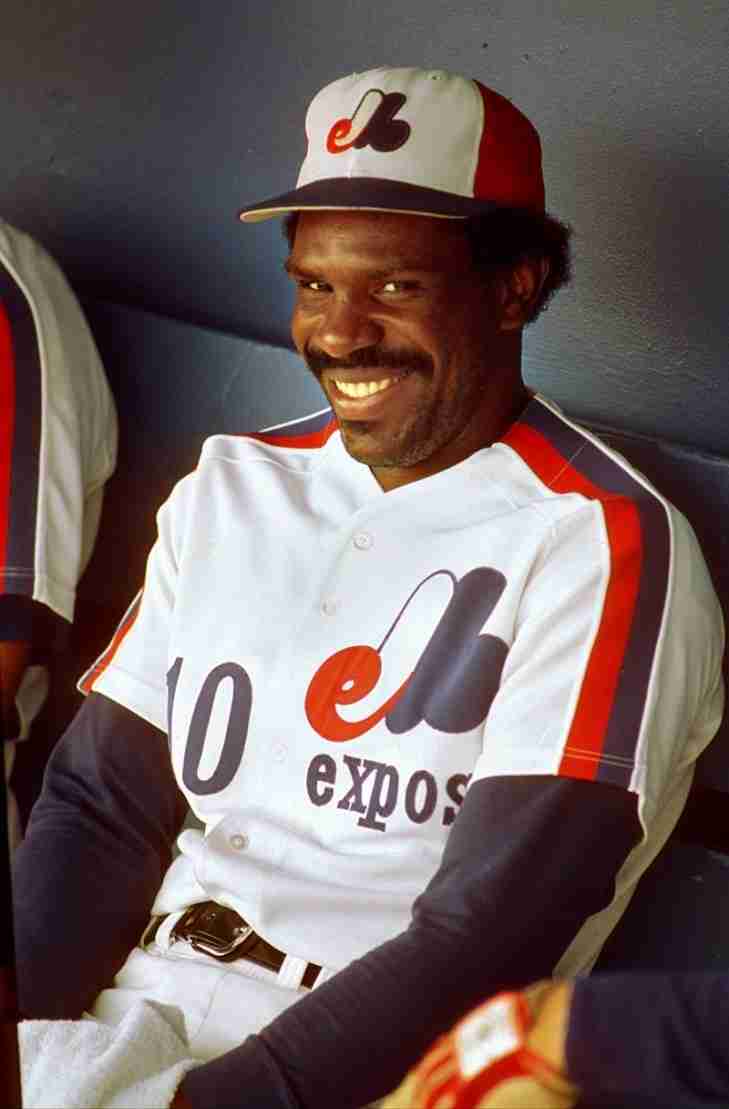
Arriving in Montreal as an unheralded 11th-round draft pick in 1975, Andre Dawson wasted little time transforming into the premier physical specimen of the Expos organization. Officially breaking into the everyday lineup in 1977, his rare combination of explosive bat speed and fluid athleticism earned him the National League Rookie of the Year honors. Dawson immediately anchored a young, ascending Montreal outfield, providing a dynamic blend of high-end run production and aggressive base-stealing that signaled the arrival of a generational cornerstone.
Throughout his eleven seasons in Quebec, Dawson established a benchmark of elite individual performance that frequently placed the Expos in the national spotlight. He was a consistent threat at the plate, intimidating National League pitching with 225 home runs, 838 RBIs, and a strong .802 OPS. Although he twice finished as the unfortunate runner-up for the National League MVP Award in 1981 and 1983, his offensive statistics consistently supported a low-protection Montreal lineup during the franchise's most competitive early periods.
Although catcher Gary Carter frequently garnered the majority of media attention and fan admiration in Montreal, the underlying data indicates that Dawson was the actual pivotal force behind the team's offensive productivity. He consistently outperformed Carter in major slugging categories, utilizing his rapid wrists to produce significant extra-base hits despite the expansive, pitcher-friendly confines of his home stadium. His role at the heart of the batting lineup provided the Expos with a vital identity, thereby maintaining their status as a formidable adversary within the National League East.
Defensively, Dawson was an exceptional outfielder, demonstrating mastery in his field. He patrolled the center and right fields with impressive agility and determination, utilizing his renowned closing speed and impeccably executed route-running to convert potential extra-base hits into straightforward outs. Equipped with an extraordinarily powerful throwing arm that effectively deterred opposing baserunners, Dawson earned six consecutive Gold Glove Awards from 1980 to 1985, thereby solidifying his reputation as one of the most comprehensive and highly efficient defensive outfielders of his era.
The inevitable departure occurred following the 1986 campaign, when the incessant impact of the Olympic Stadium's artificial turf compelled the impending free agent to seek a more forgiving, natural grass playing surface in order to preserve his deteriorating knees. Dawson famously signed a blank contract with the Chicago Cubs, initiating a second chapter that would immediately result in the attainment of the elusive 1987 Most Valuable Player award, which he had long deserved. He departed Montreal as a franchise legend, holding the club's unique record as the sole player to surpass both 200 home runs and 200 stolen bases while playing for the Expos.
Decades after the team's move south, Dawson's legacy remains preserved across franchise eras. He’s a true icon of Canadian baseball, confirmed when the Expos retired his No. 10 jersey before their departure. His immortal status was cemented in 2010, when he was inducted into the National Baseball Hall of Fame and the Washington Nationals Ring of Honor, securing his place at the top of the organization's history.
Vladimir Guerrero was signed for only $2,000 from the Dominican Republic as an unknown teenager in 1993. He dominated the minor leagues so completely that his debut in Montreal felt less like a typical call-up and more like witnessing a natural talent emerge. Without batting gloves and with his helmet covered in pine tar, he stepped into the batter's box at Stade Olympique with a fierce, aggressive style. Not only did he meet his high expectations, but he surpassed them, reaching an explosive peak that left a lasting mark on the franchise’s record books.
Vlad the Impaler challenged conventional hitting by making the entire batter's box—and the dirt around it—his personal strike zone. Relying on exceptional hand-eye coordination and a powerful right-handed swing, he gradually reached his peak. After debuting in 1997, Guerrero surged in 1998 with 38 home runs, followed by 42 in 1999 and a remarkable 31-game hitting streak. By 2000 and 2001, he had become a national icon in Quebec, hitting 44 and 34 home runs respectively, while maintaining batting averages above .300.
This consistent upward trajectory laid the foundation for an exceptional 2002 campaign. Guerrero, demonstrating his all-around talent, secured the National League hit title with 206 hits, led the senior circuit with 364 total bases, and scored 108 runs. He hit 39 home runs and stole 40 bases—his career best—just one home run short of joining the rare 40-40 club in major league history.
Opposing managers were so paralyzed by his bat that summer that they handed him a league-leading 32 intentional walks. Yet he paired that heavy-handed power with remarkable contact skills, striking out just 70 times all year. Beyond his offensive wizardry, he possessed an absolute rifle of an arm in right field, routinely turning overly aggressive base runners into easy outfield assists.
Sadly for Montreal fans, his spectacular solo performance occurred while the financially struggling franchise was collapsing under tight budget limits, with Major League Baseball taking over control and contraction on the horizon. After a remarkable, injury-affected 2003 season during which he still hit .330 and achieved a cycle, the front office lacked the financial resources to keep a player of his legendary stature.
Guerrero hit the open market that winter and signed a lucrative free-agent contract with the Anaheim Angels. In a bittersweet twist that deeply stung the remaining fan base in Montreal, he immediately captured the American League MVP award in his first season away from Canada, serving as the final, agonizing emblem of the generational superstars the cash-strapped Expos were forced to watch walk away.
Over eight exciting seasons in Montreal (1996–2003), Guerrero showcased his incredible talent by playing 1,004 games. He achieved an impressive 1,215 hits, hit 234 home runs, drove in 702 RBIs, and stole 123 bases. His remarkable performance is reflected in his outstanding .323/.390/588 slash line (148 OPS+), making these years truly memorable.