
- Published in Top 50 Oakland Athletics
13. Eddie Rommel
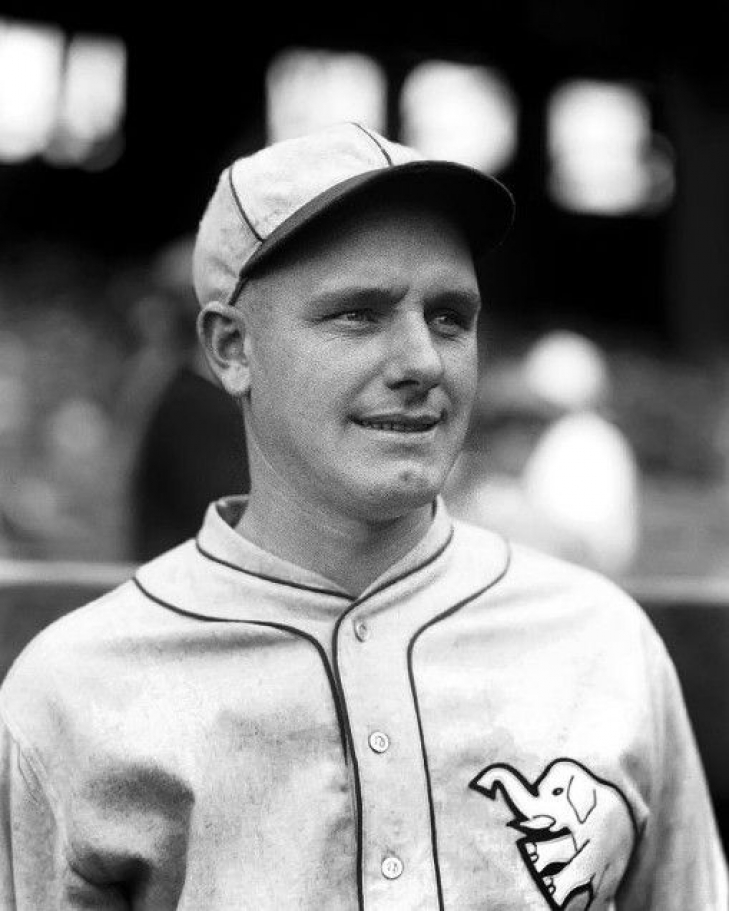
Connie Mack’s acquisition of Eddie Rommel prior to the 1920 season provided the Philadelphia Athletics with a pitcher who challenged the conventional mechanics of the period. Joining a roster still in the process of rebuilding following the disbandment of the 1910s dynasty, the right-hander brought with him an unconventional weapon: a dancing, unpredictable knuckleball. Unlike the high-velocity pitchers of the time, Rommel depended on exceptional precision and low spin, thereby introducing a style of play that transformed managerial strategies in utilizing their pitching staffs.
His breakthrough occurred in 1922, a season during which he single-handedly maintained the competitiveness of a developing Athletics team. Rommel led the American League with 27 victories and 41 complete games, pitching a substantial total of 293 innings. His capacity to confound hitters without relying on strikeouts, instead inducing weak contact and issuing very few walks, earned him a runner-up position to George Sisler in the American League Most Valuable Player voting. Later in his career, Rommel contributed to Philadelphia's victory in the 1929 World Series, where he secured a win in relief.
As the decade advanced, Rommel developed into an exceedingly adaptable asset for Connie Mack. During a period when pitchers were categorically classified as either starters or relievers, he adeptly bridged the distinction, often entering games in high-pressure relief roles prior to assuming his conventional position in the rotation on subsequent days. This dual role contributed to another league-leading season in 1925, during which he achieved 21 victories, many of which were obtained immediately from the bullpen to secure the outcomes of matches.
By the late 1920s, the Athletics had assembled a formidable roster comprising Jimmie Foxx, Al Simmons, and Lefty Grove. Although no longer the primary starting pitcher he was earlier in the decade, Rommel contributed as a seasoned veteran during the championship run. In the 1929 World Series against the Chicago Cubs, he assumed a pivotal relief role in Game 4, securing the victory on the mound as the Athletics orchestrated a historic ten-run comeback.
Rommel remained with the franchise until the conclusion of the 1932 season, retiring as a rare one-team "Lifer" during an era characterized by significant player movement. He concluded his thirteen-year career in Philadelphia with a record of 171-119 and was recognized as the first prominent practitioner of the knuckleball.
He was chosen for the Philadelphia Baseball Wall of Fame in 1996.