
- Published in Top 50 Cleveland Browns
32. Bernie Kosar
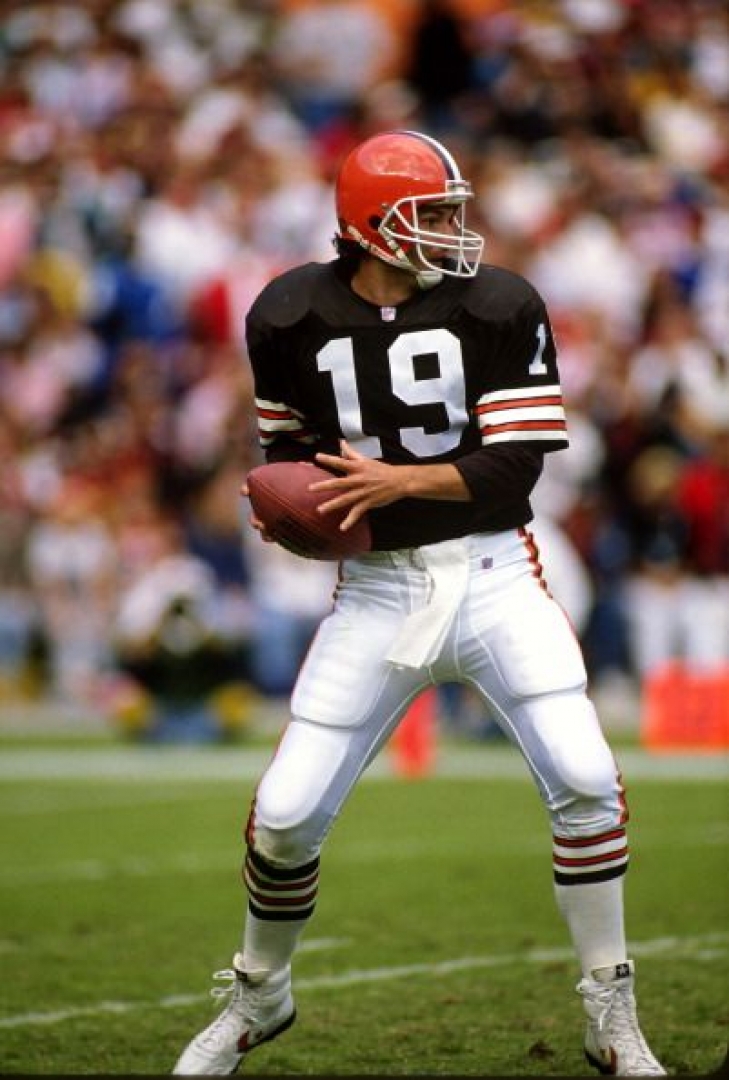
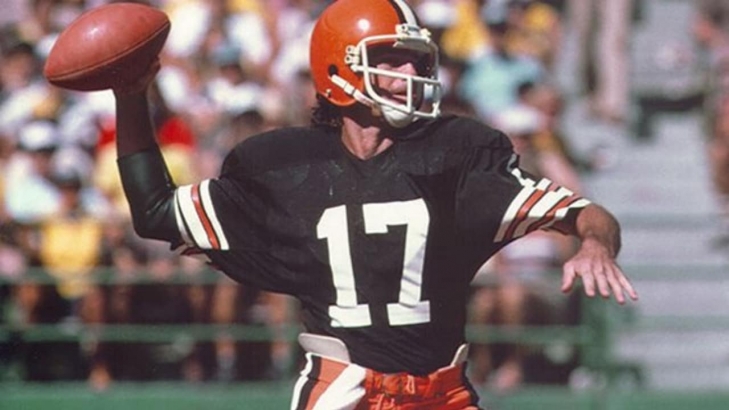
His arrival in 1985 wasn't just a football transaction; it was a cultural event in Northeast Ohio. By bypassing the traditional NFL draft to force his way home to Cleveland, the local kid from Boardman High School instantly became a symbol of hometown pride. Kosar’s mastery of the pre-snap line-of-scrimmage check—dubbed "Bernie-ball"—gave the Browns a cerebral edge that compensated for his lack of foot speed. He dissected defenses with an unorthodox sidearm delivery, throwing receivers open before they even broke. Under his stewardship, Municipal Stadium transformed into an electric venue, and Kosar’s signature No. 19 jersey became the undisputed uniform of the region.
Drafted out of Miami via the 1985 Supplemental Draft, Bernie Kosar arrived in Cleveland as the savior-in-waiting for his boyhood team. He sat behind veteran Gary Danielson for the first month of his rookie season, but an injury to Danielson in Week 5 thrust the 21-year-old into the starting spot. Despite a rigid pocket presence and awkward mechanics, Kosar processed coverage packages at lightning speed, steering the Browns to an 8-8 record and a playoff berth while establishing himself as the undisputed leader of the offense.
With Kosar at the helm, Cleveland transitioned into a pass-oriented power during the peak of the Marty Schottenheimer era. His finest individual campaign came in 1987, when he threw for 3,030 yards and a career-best 22 touchdowns in only 12 games during a strike-shortened season, earning his lone Pro Bowl selection and leading Cleveland back to the AFC Title Game. He posted two more 3,000-yard passing seasons in 1989 and 1991, cementing his reputation as one of the most intelligent field generals in football.
The emotional intensity of those late-1980s playoff games only strengthened the special bond between Kosar and the city. Fans fondly remember his thrilling matchups against John Elway’s Denver Broncos in the 1986, 1987, and 1989 AFC Championship Games. Even during tough losses—like the memorable 1986 "Drive" game, where Kosar threw for 259 yards, and the 1987 "Fumble" game, where he amazed everyone with 356 yards and three touchdowns—Kosar always played with remarkable composure and determination under huge pressure. He wasn’t just a quarterback managing the game; he was like an on-field coach, carrying the hopes of a city eager for a championship, in a time when quarterbacks didn’t often have that kind of influence.
His tenure in Cleveland ended abruptly and emotionally. Tensions flared after Bill Belichick took over as head coach in 1991, as Belichick's rigid, control-oriented system collided with Kosar's audibling style. After benching Kosar for Vinny Testaverde midway through the 1993 season, Belichick cut the veteran quarterback outright in November—a move that shocked the fan base. Kosar quickly caught on with the Dallas Cowboys, stepping in to win a crucial game in relief of an injured Troy Aikman and earning a Super Bowl XXVIII ring before closing out his career in Miami as Dan Marino's backup.
As a Brown, Kosar started 105 games, compiling 21,904 passing yards, 116 touchdowns, and 87 interceptions while bringing the franchise to five consecutive postseason appearances. The team inducted him into the inaugural class of the Cleveland Browns Legends in 2001.