Menu
A+ A A-
Site Admin

Site Admin

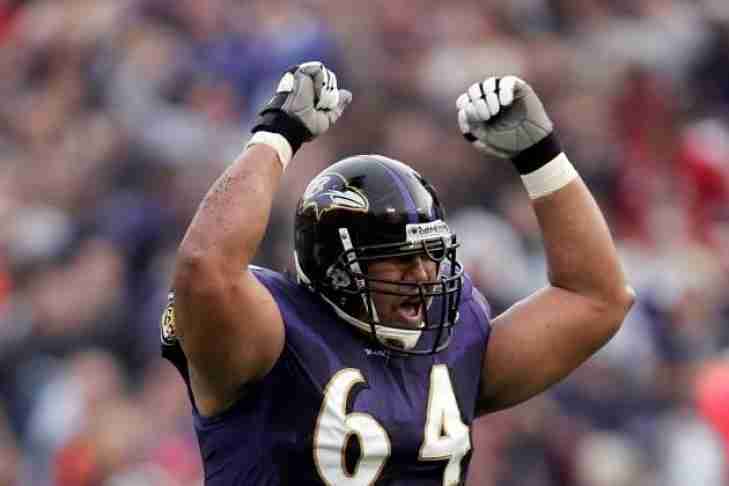
3. Jonathan Ogden

When the Baltimore Ravens selected UCLA offensive tackle Jonathan Ogden fourth overall in the 1996 NFL Draft, general manager Ozzie Newsome made a decision that generated debate among local fans. Although running back Lawrence Phillips was still available, high drafting of offensive linemen was uncommon in the mid-90s. Newsome adhered to his "best player available" strategy and chose Ogden, making him the first-ever pick in franchise history. This selection became one of the most significant in sports franchise development.

Standing at 6 feet 9 inches and weighing 345 pounds, Ogden's rare combination of size, athleticism, and quick feet is extraordinary for a left tackle. Instead of relying solely on his size, he effectively counters edge pass rushers with his long reach, lateral quickness, and stability. In pass protection, he creates a deep, secure pocket that provides quarterbacks with extra time, making elite edge rushers almost invisible. As a run blocker, his size helps him engulf opponents, effortlessly opening B-gap lanes to support Baltimore's powerful ground game.

In his 1996 rookie season, Ogden started at left guard with veteran Tony Jones, allowing only one sack and earning All-Rookie honors. In 1997, he moved to his natural left tackle position, received his first Pro Bowl and First-Team All-Pro selections, beginning an impressive streak of 11 consecutive Pro Bowl nominations from 1997 to 2007.

In the 2000 season, Ogden led an offense that supported the team's formidable defense, resulting in a win in Super Bowl XXXV. His run-blocking peaked in 2003 as the main blocker for Jamal Lewis, who gained 2,066 yards, including a then-NFL record 295-yard game against Cleveland where Ogden consistently created large running lanes.

Throughout his 12 seasons with Baltimore, Ogden played 176 of 177 regular-season games. He earned four First-Team All-Pro honors (1997, 2000, 2002, 2003) and five Second-Team selections. Ogden retired in 2008 as a lifelong Raven. That same year, he was inducted into the Ravens Ring of Honor, and in 2013, he became the first franchise draftee to be inducted into the Pro Football Hall of Fame. Additionally, he was named to the NFL 2000s All-Decade Team.

2. Ed Reed

Drafted 24th overall in the 2002 NFL Draft from the University of Miami, Ed Reed quickly established himself in Baltimore by elevating defensive back play into an artful psychological strategy. Partnering with middle linebacker Ray Lewis, Reed became a key part of one of the most formidable defensive units in modern football, redefining the free safety role from a primarily deep covering position to a versatile, game-changing threat.

Reed wasn’t the biggest safety on the field, but his processing speed far surpassed everyone else’s. He was a legendary film watcher, known for studying quarterback eye discipline and shoulder tilts, often baiting top quarterbacks like Peyton Manning and Tom Brady into throwing where he wasn't. Reed had the spatial instincts to cover two-thirds of the field from single-high alignments, baiting quarterbacks and then using his explosive speed to break on the ball. When the ball entered his range, Reed shifted from a defensive back to an agile open-field runner. Instead of just going down, he saw every turnover as a scoring chance, pioneering a lateral-heavy, cross-field return style that overwhelmed opposing coverage teams.

His peak performance came in 2004 when he was named Defensive Player of the Year. Reed led the NFL with nine interceptions, including a remarkable 358 return yards and a then-record 106-yard interception return touchdown against Cleveland. He continued his excellence in 2008 by setting another league record with a 107-yard touchdown return against Philadelphia, once again leading with nine interceptions. In 2010, despite missing six games due to hip surgery recovery, he still led the league with 8 interceptions in only 10 games.

Reed was an all-around playmaking force. Over his career, he became the first player in NFL history to score touchdowns off an interception, a fumble recovery, a punt return, and a blocked punt.

After serving as the secondary anchor during Baltimore's Super Bowl XLVII victory in 2012, Reed played briefly for Houston and the New York Jets before retiring. Over 11 seasons with Baltimore, he established franchise records with 61 interceptions, 1,541 return yards, and seven defensive touchdowns. He still holds the NFL record for career interception return yards at 1,590.

Reed entered the Pro Football Hall of Fame in 2019 and was also named to the 2000s All-Decade and 100th Anniversary Teams. The Ravens also inducted Reed into their Ring of Honor in 2015.

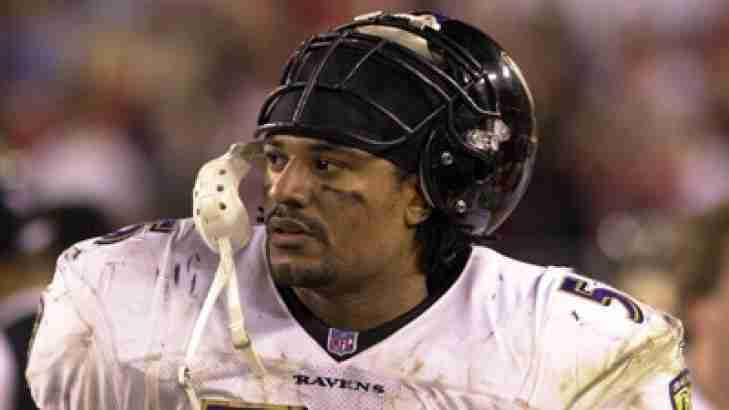
1. Ray Lewis

Who else could be number one?

Ray Lewis, selected 26th overall in the 1996 NFL Draft—the second pick in Ravens history after Jonathan Ogden—did more than just play for the team; he defined it. Coming out of Miami as an undersized middle linebacker, Lewis brought exceptional sideline-to-sideline speed, sharp instincts, and a contagious, fierce energy that shaped Baltimore's defensive reputation for almost twenty years.

Lewis revolutionized his role with an unmatched mix of sideline-to-sideline coverage, aggressive leverage, and pre-snap intelligence. Instead of relying only on brute strength against offensive linemen, he used elite footwork to slip past isolation blocks and cut off running lanes early, preventing plays from developing. A passionate film student, Lewis often decoded opposing formations and pre-snap calls, alerting teammates to the intended play before the snap. During his prime, he had the fluid hips and top-end speed to cover deep routes, running stride-for-stride with boundary receivers on vertical passes. Up front, enormous defensive tackles like Tony Siragusa, Sam Adams, and Haloti Ngata kept guards and centers away from him, giving Lewis the freedom to pursue plays downhill, analyze angles, and deliver powerful hits in open space.

His influence was immediate. As a rookie in 1996, Lewis led Baltimore with 110 tackles. In 1997, he surpassed all NFL players with 184 tackles, including a league-record 156 solo stops, earning his first Pro Bowl. By 1999, after recording 165 combined tackles, he received his first First-Team All-Pro honor.

His masterclass took place during the historic 2000 season. As the key figure in a defense that set the NFL record for fewest points allowed in 16 games (165), Lewis earned his first AP NFL Defensive Player of the Year award. He concluded that season by being named Super Bowl XXXV MVP after dominating the New York Giants in a 34–7 victory, making him only the second defensive player in league history to win both awards in a single season.

As his career advanced, Lewis transitioned smoothly. Working under defensive coordinators Marvin Lewis, Rex Ryan, and Dean Pees, he served as a defensive coach on the field. As his sideline speed diminished with age, he gained weight to become a powerful downhill B-gap defender, increasingly depending on his pre-snap reads to anticipate plays.

In 2003, Lewis secured his second Defensive Player of the Year award, recording six interceptions and 163 tackles. He earned First-Team All-Pro honors again in 2008 and 2009, surpassing 110 tackles each season while mentoring rising stars such as Terrell Suggs and Ed Reed. His career culminated in 2012 when he returned from a torn triceps for what he called his "Last Ride" playoff run, leading all defenders in tackles during the postseason and winning Super Bowl XLVII.

Lewis stands as the only player in NFL history to record at least 40 sacks and 30 interceptions in a career, finishing with 41.5 sacks and 31 interceptions.

Lewis retired after the 2012 championship, having played all 228 regular-season games with the Ravens. He is the NFL's all-time leader in combined tackles (2,059). Inducted into the Ravens Ring of Honor in 2013 and honored with a bronze statue outside M&T Bank Stadium, he was elected to the Pro Football Hall of Fame in 2018 on his first ballot. He also earned spots on both the NFL 2000s All-Decade Team and the NFL 100th Anniversary All-Time Team.

27. Melanie Adams

There is something so sexy when a hot woman competes in the pole vault. The preparation and gentle caressing of the pole gets the good doctor every time. Is Australia’s Melanie Adams the best at pole vaulting? I have no idea, but she looks really good doing it!