Menu
A+ A A-
Site Admin

Site Admin

11. Fred Smerlas

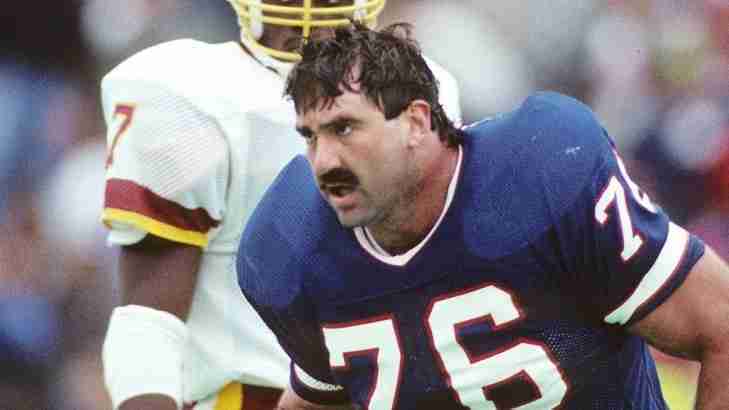
Drafted in the second round (32nd overall) of the 1979 NFL Draft out of Boston College, Fred Smerlas arrived in Western New York as a relentless, physical force. Tipping the scales at 6 feet 3 inches and 275 pounds, he redefined nose tackle play in Chuck Knox’s 3-4 defense, anchoring the center of Buffalo's front line during an era of massive franchise transition.

Smerlas operated with a low center of gravity, aggressive hand techniques, and relentless energy. Positioned centrally, he excelled at breaking double-teams and absorbing hits in the interior, enabling linebackers like Shane Conlan and Darryl Talley to make tackles. Unlike typical nose tackles of his time, Smerlas was noteworthy for his lateral agility—he often shed blocks to disrupt running lanes or collapse the pocket during passing plays.

Smerlas became the starting nose tackle full-time in 1980 during his sophomore year, earning his first Pro Bowl selection as he led a defense that helped Buffalo win its first AFC East title in four years. He reaffirmed his status in 1981 with another Pro Bowl appearance, cementing his reputation as one of the top interior defensive linemen in the league.

His peak performance came in the limited 1982 season. As the key threat on a defense that helped Buffalo stay competitive, Smerlas had a standout run that earned him his only First-Team All-Pro honor and his third straight Pro Bowl selection.

Despite the Bills experiencing several tough losing seasons in the mid-1980s, Smerlas remained a fan favorite and a standout player in Western New York. He earned two more Pro Bowl selections in 1983 and 1988, playing a key role on the defense as young stars like Bruce Smith, Cornelius Bennett, and Jim Kelly helped turn Buffalo into a powerhouse. By the late 1980s, Smerlas's efforts paid off as the team became a consistent contender, winning back-to-back AFC East titles in 1988 and 1989.

After 11 seasons in Buffalo, Smerlas departed after the 1989 campaign as the Bills transitioned to younger defensive linemen. He played one season for San Francisco in 1990 and finished his career with New England in 1991 before retiring.

With the Bills, Smerlas played in 162 regular-season games, accumulating 29 official sacks and recovering 11 fumbles. In recognition of his stellar play and lasting popularity, Smerlas was inducted into the Buffalo Bills Wall of Fame in 2001.
14. Darryl Talley

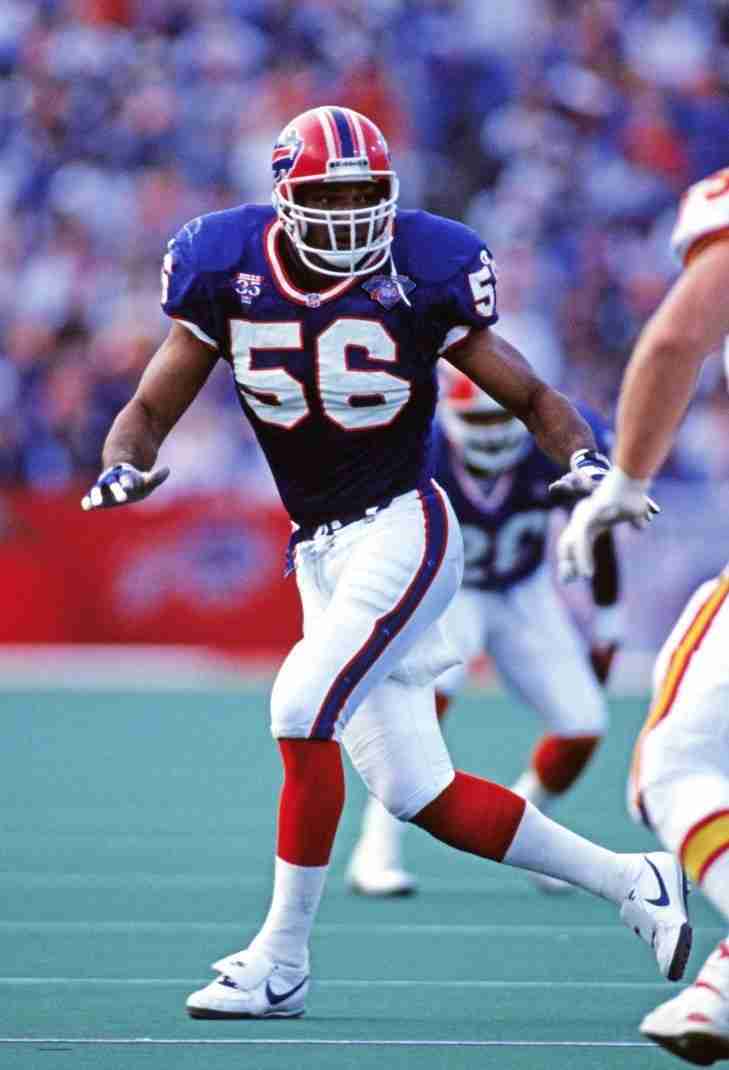
Chosen in the second round (39th overall) of the 1983 NFL Draft by Buffalo from West Virginia—where he earned unanimous All-American honors—Darryl Talley joined Western New York as an energetic and formidable defender. Throughout his twelve-season tenure with Buffalo, "Spider-Man" established himself as an essential defensive pillar, exhibiting exceptional durability and extensive sideline-to-sideline coverage during the franchise's most illustrious period.

Talley was a standout outside linebacker who combined the quickness of a defensive back with the powerful hits of a down lineman. Playing on Buffalo's right side in the 3-4 defense, he lined up right next to Bruce Smith, giving him plenty of space to rush the passer, stop the run, or cover receivers. Known for his distinct arms-extended "Spider-Man" stance at the pre-snap line, Talley used his keen sense of space and relentless energy to make tackles before plays could easily go outside.

Talley fulfilled his role as a key rotational player and pass rusher before becoming a full-time starter in 1984. During the Bills’ championship team formation in the late 1980s, Talley became the defensive unit's central figure and outspoken leader.

His peak performance period aligned with Buffalo's four consecutive AFC Championship appearances from 1990 to 1993. In 1990, Talley was selected for his first Pro Bowl and received First-Team All-Pro recognition for leading a formidable linebacker group to Super Bowl XXV. He repeated his individual achievements in 1991, earning a second consecutive Pro Bowl selection while anchoring a defense that successfully contained top offenses in the AFC.

He added another First-Team All-Pro selection in 1993, capping off a golden four-year stretch in which he started all four Super Bowl appearances for Western New York. 

Salary-cap constraints led to Talley's emotional departure after the 1994 season. In 1995, he joined Atlanta via free agency, then moved to Minnesota in 1996 before retiring after 14 NFL seasons. Throughout his time in Buffalo, Talley played in every game, with a streak of 188 consecutive regular-season appearances. He totaled 1,137 tackles—an all-time franchise record—along with 38.5 sacks, 12 interceptions, and 14 fumble recoveries. The Bills inducted him into their Wall of Fame in 2003.

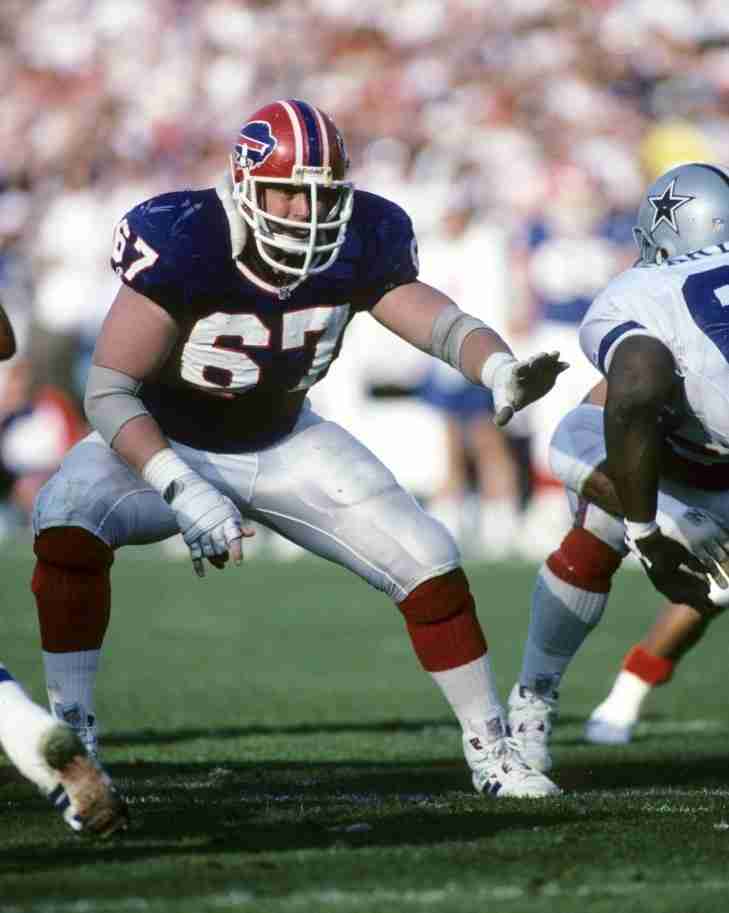
7. Kent Hull

With the stars that the Buffalo Bills had in the late ’80s and early ’90s, you needed a capable leader of the Offensive Line, which they had in Mississippi State alumni, Kent Hull.

3. O. J. Simpson

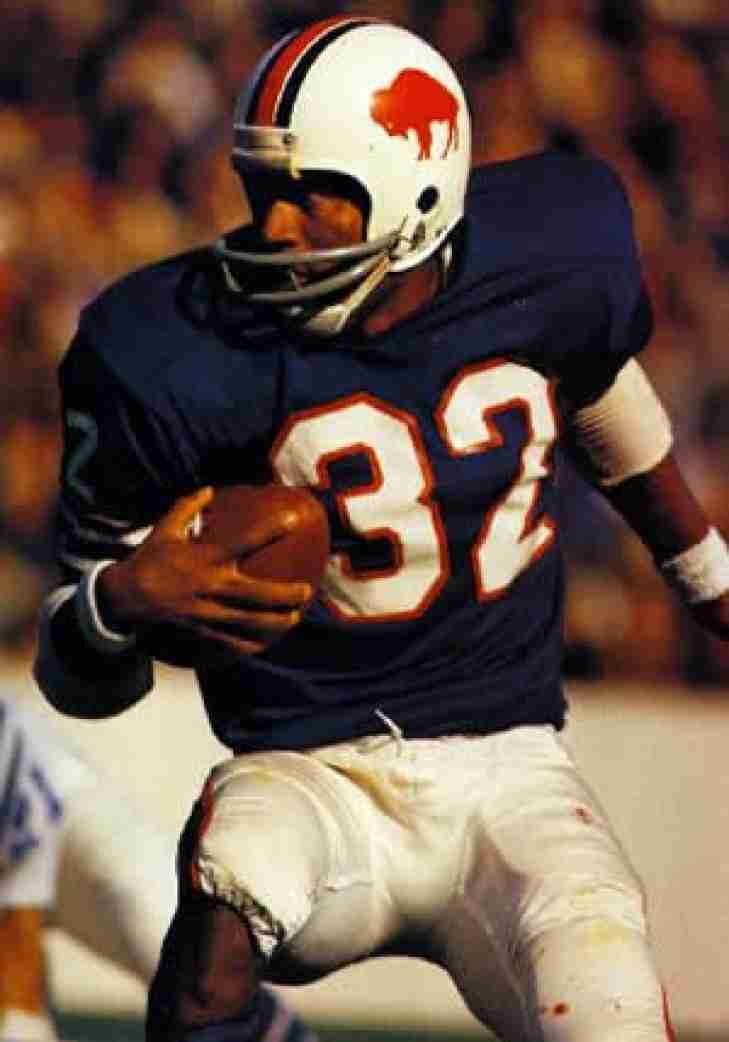
Drafted first overall in the 1969 AFL-NFL Draft from USC after winning the Heisman Trophy, Orenthal James Simpson joined Buffalo amid huge expectations as one of the most highly touted college prospects in football history. His early career was limited by head coach John Rauch's mismanagement of his skills, resulting in modest stats during his first three seasons. Everything changed in 1972 with the arrival of head coach Lou Saban and the formation of the "Electric Company,” a powerful offensive line featuring guards Joe DeLamielleure and Reggie McKenzie. With a strong blocking unit, Simpson was able to run freely, leading to five seasons of remarkable individual rushing success.

Simpson blended exceptional track sprinting speed with impressive lateral agility. From deep I-formation formations, he used sharp vision to analyze blocking schemes at the line, reaching top speed in just two strides. After turning the corner, Simpson was nearly impossible to catch in open space, often employing a stiff-arm to fend off defenders while sprinting down the sideline.

His legendary 1973 season marked his greatest achievement. In only 14 games, Simpson made history as the first NFL player to surpass 2,000 rushing yards, tallying 2,003 yards and 12 touchdowns with an impressive average of 143.1 yards per game. This single-season league record remains unbroken. He also claimed all major awards, including AP NFL MVP, Offensive Player of the Year, and the Bert Bell Award.  It remains one of the most impressive offensive campaigns in NFL history.

"The Juice" maintained his reputation as the premier running back over the next three seasons. In 1975, he led the league with 1,817 rushing yards and scored 23 total touchdowns (16 rushing, 7 receiving). The following year, he secured his fourth rushing title with 1,503 yards, highlighted by a famous 273-yard game against Detroit on Thanksgiving Day. From 1972 to 1976, Simpson earned five straight First-Team All-Pro selections and appeared in five Pro Bowls, despite leading a struggling Buffalo team.

After a shoulder injury ended his 1977 season early, Simpson was traded to the San Francisco 49ers, where he played two more seasons before retiring in 1979. During nine seasons with Buffalo, he rushed for 10,183 yards and scored 57 touchdowns, accumulating a total of 12,425 yards from scrimmage. He was honored as a member of the NFL 1970s All-Decade Team and the NFL 100th Anniversary All-Time Team. In 1980, Simpson became the inaugural member of the Buffalo Bills Wall of Fame, becoming the first individual enshrined on the stadium's ring. Five years later, he entered the Pro Football Hall of Fame in 1985.

Simpson’s legacy is complex. In June 1994, his ex-wife Nicole Brown Simpson and her friend Ronald Goldman were tragically murdered outside her Los Angeles residence. Simpson was later arrested after a televised low-speed chase in his white Ford Bronco, an event that became known as the "Trial of the Century.”

The Bills did not remove Simpson from the Wall of Fame, but when the team relocated to Highmark Stadium, they announced that he would no longer be included in the display.