Menu
A+ A A-
Site Admin

Site Admin

48. Lee Evans

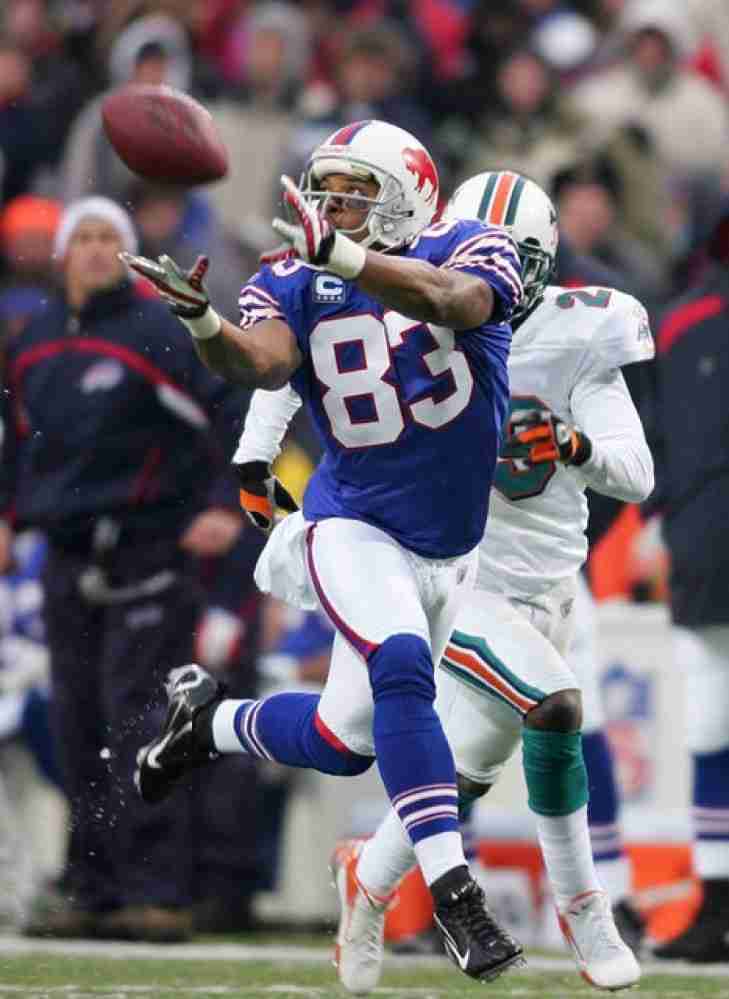
With the 13th overall pick in the first round of the 2004 NFL Draft, the Bills targeted Lee Evans out of Wisconsin with the hope of him becoming an explosive, pure deep threat. Operating as the primary perimeter target for a carousel of starting quarterbacks across seven seasons in Buffalo, Evans specialized in blowing past single-coverage and tracking deep passes over his shoulder.

Evans used his elite speed and quick gear-shifts to outrun defensive backs downfield. Mainly working along the boundary as a deep threat, his key skill was easily outrunning press coverage on go routes and deep posts. This made him a perfect target for deep-ball passers like J.P. Losman.

Evans’ career took a memorable turn on November 19, 2006, during a game against the Houston Texans. In just the first quarter, he made history by becoming the first NFL player to catch two touchdown passes over 80 yards in a single quarter—two nearly identical 83-yard scores! That quarter alone saw him rack up 205 receiving yards, setting a franchise record, and he finished the game with an impressive 265 yards, breaking the Bills' single-game receiving record. This remarkable performance showcased what a standout season 2006 was for Evans, when he caught 82 passes for 1,292 yards and eight touchdowns. He proved his consistency again in 2008 with a second 1,000-yard season, catching 63 passes for 1,013 yards and seven touchdowns, averaging an incredible 16.1 yards per catch.

Despite participating in run-focused offenses and facing frequent quarterback turnovers, Evans showed impressive durability, appearing in 109 straight games for Buffalo at the start of his career. After seven seasons with the Bills from 2004 to 2010, he was traded to Baltimore in 2011, where he played his last NFL season before retiring.

As a Bill, Evans played 112 games (104 starts), with 377 receptions, 5,987 yards, and 43 touchdowns.
47. Fred Jackson

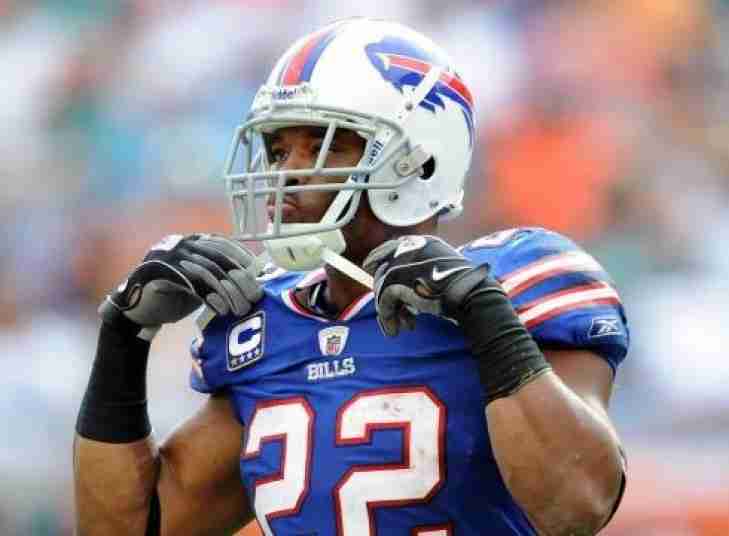
Unsigned out of Division III Coe College in 2003, Fred Jackson took the hardest possible road to the NFL, starring in indoor football and grinding through NFL Europe with the Rhein Fire before finally catching on with the Buffalo Bills' practice squad. Making his NFL debut as a 26-year-old rookie in 2007, Jackson defied conventional career arcs to become one of the most productive and beloved running backs in modern franchise history.

Jackson exhibited a composed running style, superior vision, and remarkable resilience in pass protection. Predominantly operating from single-back and I-formation formations, his paramount characteristic was his versatility; he maneuvered with a low center-of-gravity advantage between the tackles while functioning as a natural, highly dependable receiver and an assertive contributor on special teams.

Jackson solidified his legacy within the NFL during the 2009 season. Establishing himself as Buffalo's primary offensive contributor, he accumulated 1,062 rushing yards and undertook kick-return responsibilities, amassing 1,014 kickoff return yards. Consequently, he became the inaugural player in NFL history to achieve 1,000 rushing yards and 1,000 kickoff return yards within a single season. He concluded the year as the NFL's leading all-purpose yardage holder with an impressive total of 2,516 yards, thus earning the team's Most Valuable Player award.

Despite sharing backfields with players such as Marshawn Lynch and C.J. Spiller throughout his career, Jackson consistently exceeded expectations. He surpassed 1,000 yards from scrimmage on five occasions in Buffalo (2008, 2009, 2011, 2013, 2014). His most productive rushing period occurred in 2011, when he averaged 5.5 yards per carry and accumulated 934 rushing yards over just 10 games before a leg injury prematurely ended what was on track to be an All-Pro season.

After eight seasons with the Bills (2007–2014) and a final year in Seattle, Jackson retired, having played 122 games (61 starts) with 5,746 rushing yards, 2,897 receiving yards, 1,014 return yards, and 39 touchdowns.

32. Jim Dunaway

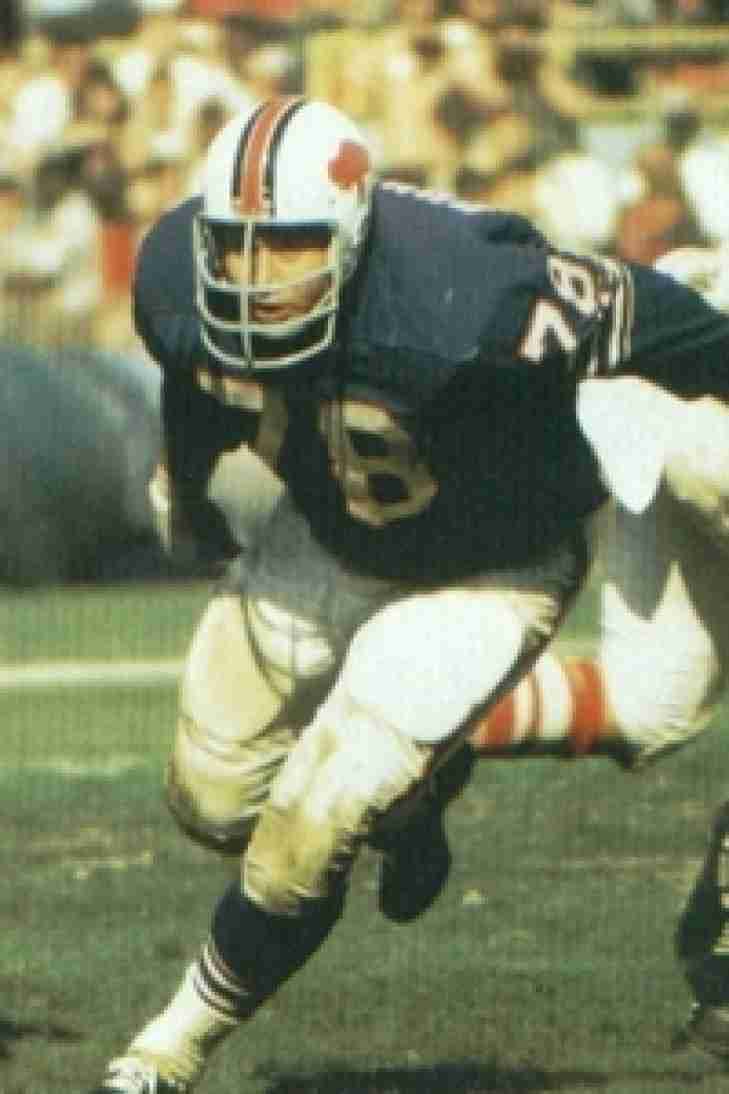
Jim Dunaway, selected ninth overall in the second round of the 1963 AFL Draft from Ole Miss—where he was a consensus All-American and national champion—joined Western New York as a highly regarded interior lineman. Playing next to Tom Sestak, Dunaway quickly proved himself to be a powerful, relentless tackle who contributed to one of the most formidable defensive fronts in professional football history.

Dunaway had remarkable strength and lateral agility for his time. Playing as a left defensive tackle, he was adept at filling A-gaps, overpowering offensive guards, and disrupting running plays early. His skill in resetting the line made it hard for opponents to set up an inside run, and his strength in collapsing the pocket often pressured quarterbacks into hurried throws.

Dunaway was a central force behind Buffalo's dominance in the mid-1960s, helping lead the franchise to consecutive AFL Championships in 1964 and 1965. He was a core member of the legendary Bills front seven, which set an All-Pro football record by holding opposing ball-carriers to zero rushing touchdowns for 17 consecutive games across the 1964 and 1965 seasons.

During his peak, Dunaway received four consecutive AFL All-Star selections (1965–1968) and was honored as a First-Team All-AFL selection in 1966. His interior presence enabled Buffalo's defense to maintain a consistently leading position in the league concerning points and yards allowed during the AFL's prosperous years.

Following nine seasons in Western New York (1963–1971) and accumulating 126 regular-season appearances with the Bills, Dunaway's tenure concluded prior to the 1972 season when he was released by Buffalo. He was promptly acquired by division rival Miami, where he spent his final NFL season as a primary rotational tackle on the undefeated 1972 Dolphins team that secured victory in Super Bowl VII.

With the Bills, Dunaway played 126 regular-season games (114 starts), won 2 AFL Championships, earned 4 AFL All-Star selections, 1 First-Team All-AFL honor, and recorded 22.5 unofficial sacks along with 12 fumble recoveries.