Menu
A+ A A-
Site Admin

Site Admin

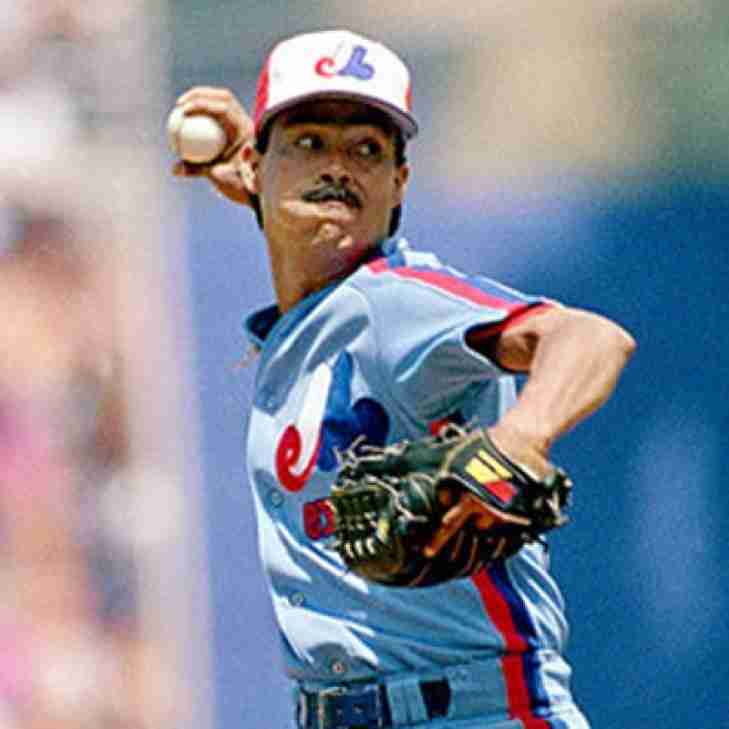
32. Andres Galarraga

Long before he was launching tape-measure home runs into the thin air of Mile High Stadium, Andrés Galarraga was captivating fans in French Canada with a completely different brand of baseball. Signed out of Venezuela as an amateur free agent in 1979, the man globally known as "The Big Cat" initially made his mark not with jaw-dropping power, but with an impossibly agile glove. For a man of his imposing physical stature, Galarraga patrolled the first base bag with the grace of a shortstop, executing diving stops and picking low throws out of the Stade Olympique dirt with mesmerizing ease.

Once his offensive game caught up to his elite defensive instincts, he transformed into one of the most complete and feared first basemen in the National League.

The 1988 season is considered Galarraga’s peak with the Expos. He excelled against National League pitchers, delivering a breakout year that earned him his first All-Star nod, a Silver Slugger, and his first of two Gold Gloves in a row. The Big Cat led the Senior Circuit with 184 hits and 42 doubles, also hitting 29 home runs while maintaining a strong .302 batting average. Galarraga ranked seventh in MVP voting that year. His performance boosted Montreal’s offense and proved to the baseball world that he was more than just a great defender.

Despite his immense talent, Galarraga’s style of play also came with a significant amount of swing-and-miss. While he brought elite run-producing power to the middle of the lineup, he also led the National League in strikeouts for three consecutive seasons (1988–1990).

As his strikeout totals grew and a knee injury limited his 1991 performance, the struggling Expos faced a harsh reality. They couldn't afford to keep their star first baseman once he became a free agent, so they traded Galarraga to the St. Louis Cardinals for pitcher Ken Hill after 1991. Though he struggled there, reuniting with former Expos manager Don Baylor in Colorado sparked a legendary, MVP-level second half of his career.  He would make a brief return in 2002 as an elder statesman before winding down his career after the 2004 season.

With Montreal, Galarraga had 906 hits, 171 doubles, 115 home runs, and 456 RBIs, along with a .269/.327/447 slash line (118 OPS+).

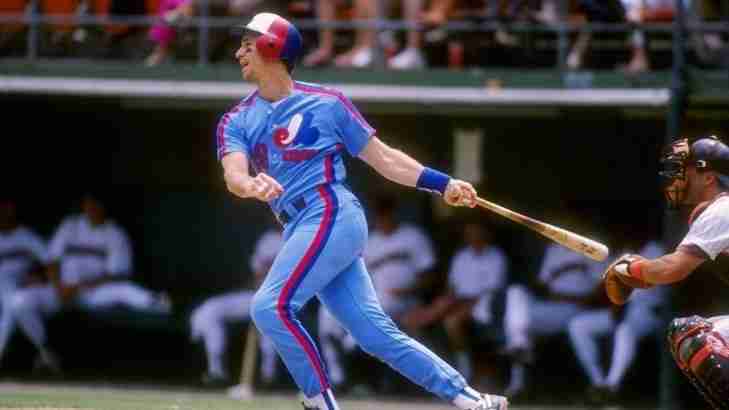
25. Rondell White

Rondell White spent the 1990’s with the Montreal Expos organization and was a productive Outfielder who nearly accumulated 20 for his Expos bWAR.  White would have two seasons where he eclipsed the .300 Batting Average in Montreal and had over 100 Home Runs there.

20. Livan Hernandez

Livan Hernandez was already renowned as a Cuban defector who earned both the NLCS and World Series MVP awards as a 22-year-old rookie with the 1997 Florida Marlins. He joined Montreal before the 2003 season following a trade from San Francisco. While many saw the move as a salary dump, Hernández viewed it as an opportunity for a remarkable, career-changing resurgence. Over the next four years, he became both literally and metaphorically the bridge that helped the franchise transition from Montreal to Washington.

His 2003 campaign for the Expos was a standout example of old-school volume pitching. During a time when modern baseball was quickly pulling starters earlier, Hernández ignored the trend and relied solely on his stamina. He overwhelmed opposing lineups by leading the National League with 233.0 innings pitched and eight complete games, finishing with a 15–10 record and a 3.21 ERA. In 2004, during the Expos' final summer in Quebec, he elevated his durability by pitching 255.0 innings, leading the league in nine complete games and 35 starts. This remarkable workload earned him his first All-Star selection and a Silver Slugger Award at the plate.

When the franchise officially relocated to the nation's capital ahead of the 2005 schedule, it was entirely fitting that the deathless right-hander threw the historic first pitch in Washington Nationals history. Hernández served as the face of the inaugural District squad, putting together a brilliant 15-win tour and leading the major leagues yet again with 246.1 grueling innings across 35 starts, securing a consecutive All-Star nod.

After a 2006 trade to Arizona and a short stint across multiple teams, Hernández made a notable return to Washington in late 2009 for a dramatic, late-stage career homecoming. He pitched with seasoned, soft-tossing accuracy, relying heavily on a nearly untouchable, changing-speed looping curveball and a low-80s sinking fastball, effectively defying aging norms. In 2010, he pitched 211 innings with a solid 3.67 ERA, serving as the main high-pressure reliever for the rebuilding Nationals before ending his storied chapter with the franchise in late 2011.

With Montreal/Washington, Hernandez compiled a 70–72 record, a 4.01 ERA, and a 1.35 WHIP. He threw 1,177.1 innings, recording 27 complete games, 5 shutouts, and 840 strikeouts.

210. Corey Cogdell

The good doctor is realizing that I have used the term “girl next door” a lot, and while a of that is accurate for more many more women on this list than I have used the term for, with American shooter, Corey Cogdell, is it is true; providing that the girl next door can you use for target practice from two hundred yards away.