- Published in Dr. Johnny Pervert
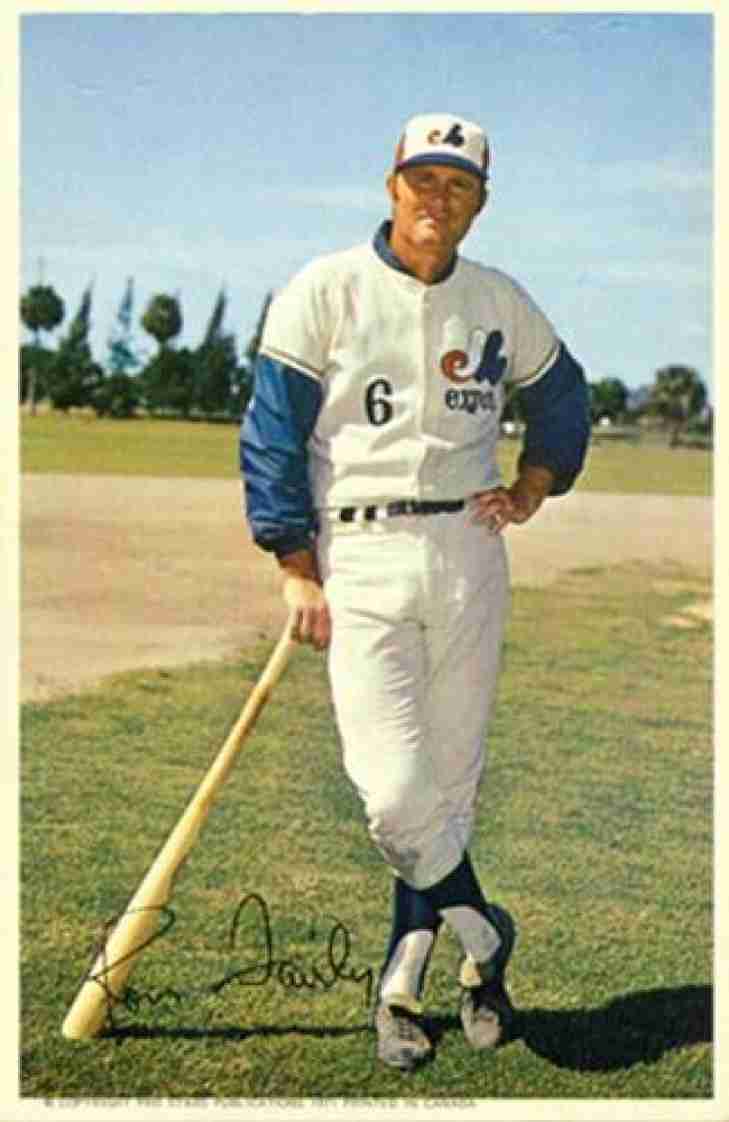
When the Montreal Expos traded for Ron Fairly in June of their inaugural 1969 season, they gained more than just a reliable hitter—they gained immediate credibility. With over ten years on the Los Angeles Dodgers, where he secured three World Series titles, the experienced first baseman and outfielder brought playoff experience and a steady presence to an expansion team navigating the tough National League.
While some aging veterans find it difficult to shift from being perennial winners to leading a young expansion team, Fairly welcomed the challenge and made Jarry Park his personal launching pad. His elite, highly disciplined batting approach kept him a tough opponent, as he excelled at working through deep counts and maintaining the offensive flow, often walking more frequently than striking out.
His first season in Canada established a strong foundation, but he reached an elite offensive peak in 1973. At 34, Fairly delivered a remarkable performance, hitting .298, with 17 home runs, and drawing 86 walks, resulting in a .422 on-base percentage. His clutch, high-pressure performance earned him his first career All-Star selection, demonstrating that his left-handed swing remained highly effective.
During his five-and-a-half seasons with Montreal, Fairly demonstrated remarkable consistency, hitting over 15 home runs twice and regularly achieving on-base percentages near or above .400. By the time he was traded to the St. Louis Cardinals late in the 1974 season, he had cemented his reputation as one of the best pure hitters in the franchise's early history.
With Montreal, Fairly amassed 623 hits, 94 doubles, 86 home runs, and 331 RBIs, with 430 walks and 257 strikeouts, posting a .276/.381/431 line—131 OPS+.
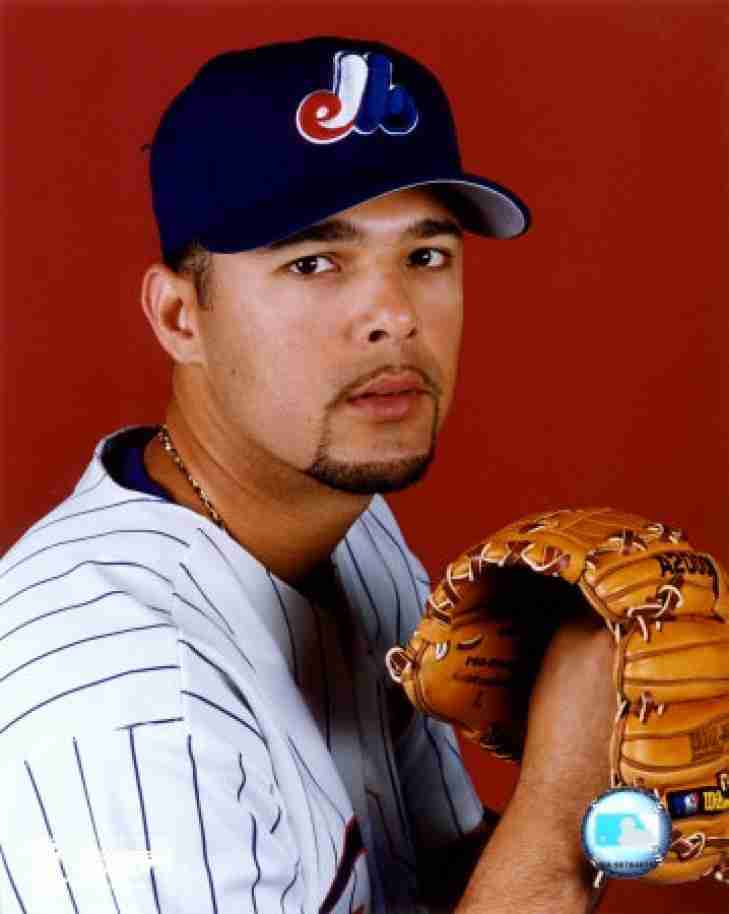
Javier Vázquez was picked by the Expos in the fifth round of the 1994 amateur draft from Puerto Rico and made his big-league debut as a 21-year-old rookie in 1998. With a consistent, smooth delivery, an explosive four-seam fastball, and a powerful slider, Vázquez quickly became a key frontline pitcher for a franchise that often faced challenges due to low payrolls and an unstable future in Quebec.
His early years with the Expos were a tough mix of developmental challenges and significant promise. After enduring a difficult, high-pressure 5–15 start in his 1998 rookie season, Vázquez changed his career path by improving his control around 2000. That year, he demonstrated impressive efficiency as a starter, pitching 217.2 innings in the regular season, securing 11 wins and striking out 196 batters.
Vázquez's consistent upward trajectory hit a peak during a remarkable 2001 breakthrough. He overwhelmed National League hitters with a standout season, finishing 16–11 with a sharp 3.42 ERA. He led the Senior Circuit with three complete-game shutouts and surpassed 200 strikeouts for the first time, striking out 208 batters. The following year, he continued with a career-high 230.1 innings pitched and followed up with another strong season in 2003. In his last summer with Montreal, Vázquez excelled with a 3.24 ERA and a franchise-best 241 strikeouts, ranking third in the National League, helping the high-performing, 83-win Expos team.
His historic legacy was sometimes affected by a key vulnerability in his pitching style—his susceptibility to contact. Vázquez had an aggressive approach, willing to pitch in the strike zone, which often led to him giving up many hits when his location was slightly off. This was evident in 2002, when, despite pitching over 230 innings, he allowed 243 hits, the most in the National League. Because he often pitched for small-market Montreal teams that lacked strong run support and bullpen help, this weakness resulted in a misleading 64–68 record, which doesn't fully reflect his dominance during his era.
With free agency pending and the franchise owned by Major League Baseball, the front office took advantage of his high market value. In December 2003, Montreal traded its ace to the Yankees for Nick Johnson and Randy Vazquez. Vázquez pitched across five more major league teams, surpassing 2,500 career strikeouts and becoming one of the most prolific Puerto Rican-born pitchers in history.
Vázquez appeared in 193 games for the Expos and posted a 64–68 record, a 3.99 ERA, and a 1.28 WHIP. He swallowed up a towering 1,229.1 innings, recording 1,076 strikeouts.

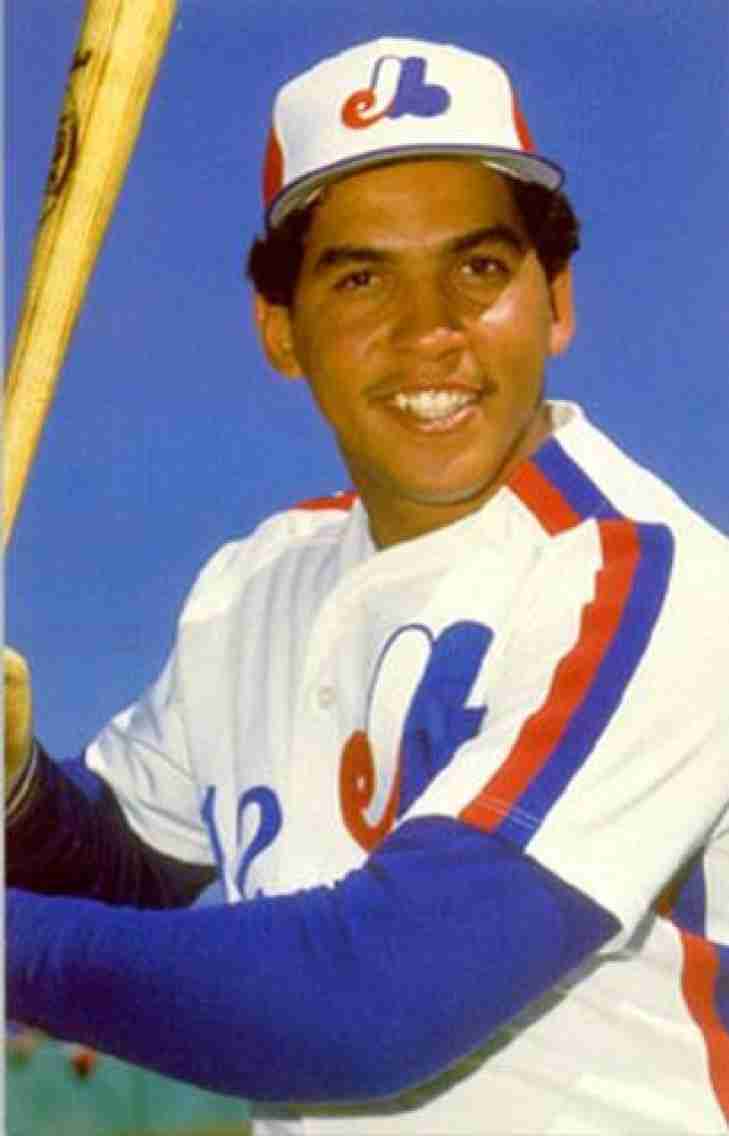
Long before he was launching tape-measure home runs into the thin air of Mile High Stadium, Andrés Galarraga was captivating fans in French Canada with a completely different brand of baseball. Signed out of Venezuela as an amateur free agent in 1979, the man globally known as "The Big Cat" initially made his mark not with jaw-dropping power, but with an impossibly agile glove. For a man of his imposing physical stature, Galarraga patrolled the first base bag with the grace of a shortstop, executing diving stops and picking low throws out of the Stade Olympique dirt with mesmerizing ease.
Once his offensive game caught up to his elite defensive instincts, he transformed into one of the most complete and feared first basemen in the National League.
The 1988 season is considered Galarraga’s peak with the Expos. He excelled against National League pitchers, delivering a breakout year that earned him his first All-Star nod, a Silver Slugger, and his first of two Gold Gloves in a row. The Big Cat led the Senior Circuit with 184 hits and 42 doubles, also hitting 29 home runs while maintaining a strong .302 batting average. Galarraga ranked seventh in MVP voting that year. His performance boosted Montreal’s offense and proved to the baseball world that he was more than just a great defender.
Despite his immense talent, Galarraga’s style of play also came with a significant amount of swing-and-miss. While he brought elite run-producing power to the middle of the lineup, he also led the National League in strikeouts for three consecutive seasons (1988–1990).
As his strikeout totals grew and a knee injury limited his 1991 performance, the struggling Expos faced a harsh reality. They couldn't afford to keep their star first baseman once he became a free agent, so they traded Galarraga to the St. Louis Cardinals for pitcher Ken Hill after 1991. Though he struggled there, reuniting with former Expos manager Don Baylor in Colorado sparked a legendary, MVP-level second half of his career. He would make a brief return in 2002 as an elder statesman before winding down his career after the 2004 season.
With Montreal, Galarraga had 906 hits, 171 doubles, 115 home runs, and 456 RBIs, along with a .269/.327/447 slash line (118 OPS+).