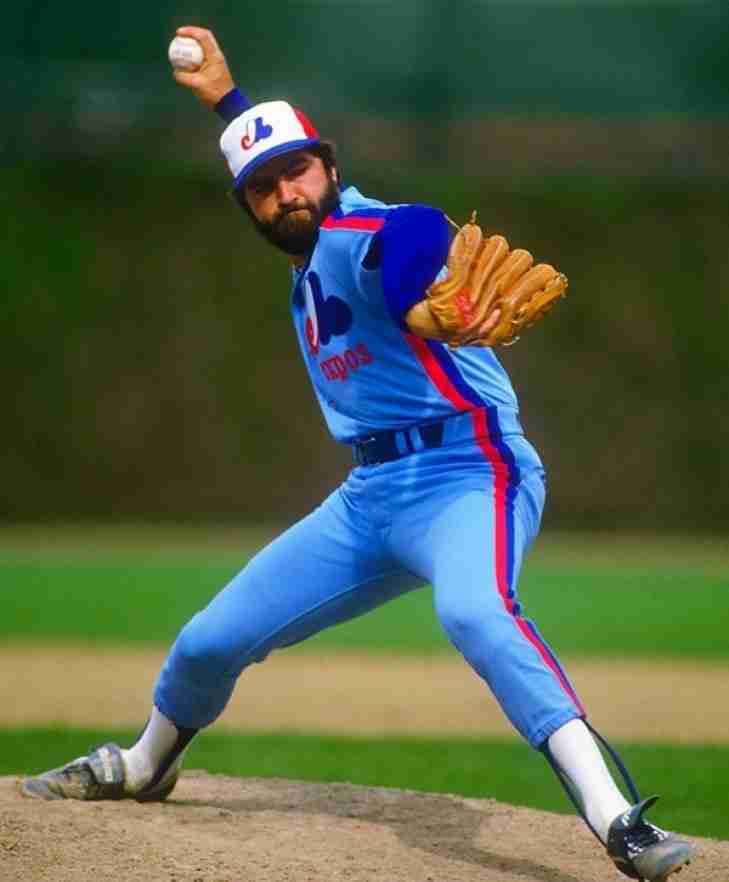
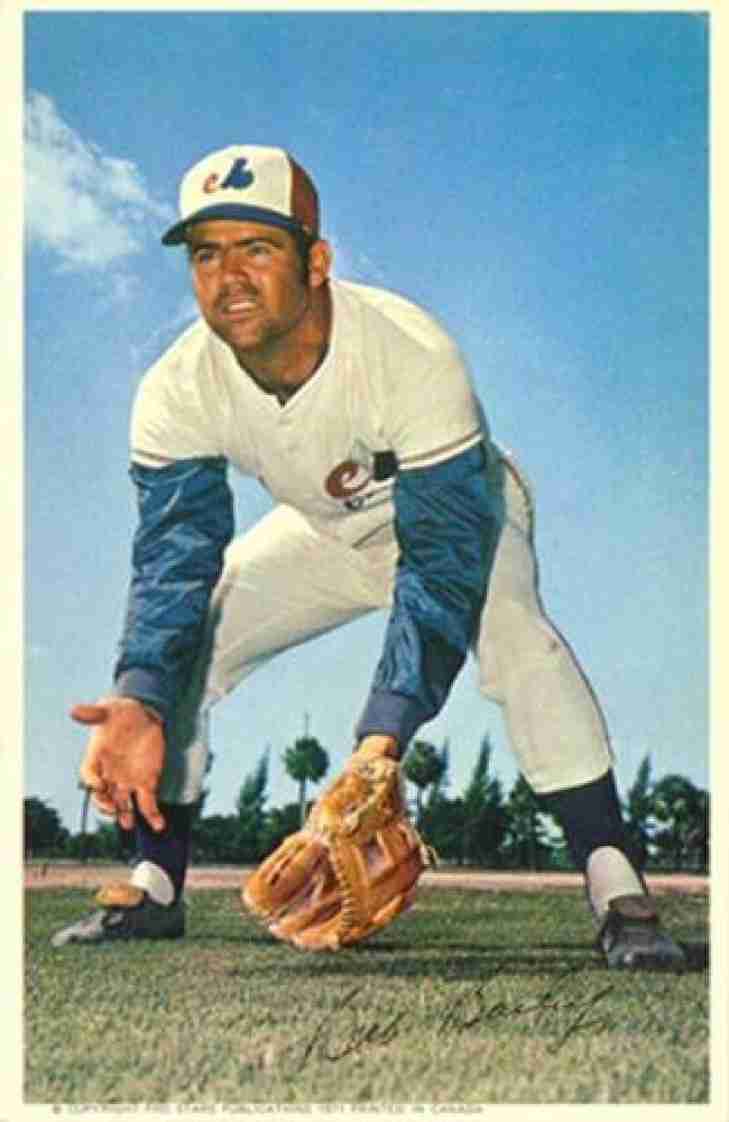
In 1961, the Pittsburgh Pirates signed high school star Bob Bailey from Woodrow Wilson High in Long Beach, California, with a hefty $175,000 "bonus baby" contract. This large sum set high expectations that the teenage Bailey struggled to meet in Pittsburgh. After seven years, split between Pittsburgh and the Dodgers, he was seen as a promising prospect whose power never translated to the major leagues. However, everything shifted when the expansion Montreal Expos purchased his contract from the Dodgers in late October 1968.
In Montreal, Bailey didn't just rebuild his career—he became a foundational, historic pillar of the young franchise. Batting fifth in the team’s inaugural regular-season game on April 8, 1969, at Shea Stadium, he etched his name into baseball lore by driving a Tom Seaver pitch into the gap for a two-run double, recording the first base hit and the first runs batted in in Montreal Expos history.
His first year in Canada was a solid baseline campaign (.265 BA, 9 HR), but his 1970 sophomore season was an offensive elevation. Initially a utility player with no clear defensive position, Bailey forced his way into a full-time role by completely dominating National League pitching. He hit a career-high 28 home runs and drove in 84 runs in just 352 at-bats, adding 72 walks to achieve a remarkable .287/.407/597 slash line. His 1.004 OPS was a historic, era-adjusted achievement—an outstanding 167 OPS+ that would've ranked third in the National League behind Willie McCovey and Rico Carty if he had had enough plate appearances to qualify.
Bailey was a key run-producer for the Expos over five years, not just a one-season success. He surpassed 20 home runs three times, with 26 in 1973—driving in 86 RBIs—and 20 again in 1974. As a disciplined and patient hitter, he often worked deep counts and drew 100 walks in 1974, helping to keep Montreal’s early lineups moving. Additionally, he became the first player in franchise history to reach 100 home runs while with the Expos.
Although his defensive skills at third base became more limited over the years—drawing regular criticism from teammates and management—his offensive output continued to be highly regarded. When Montreal shifted to "Phase II" of their development in 1975, emphasizing a younger, speed-oriented team, Bailey spent one last summer as a veteran reserve before being traded to Cincinnati that winter. He retired as the franchise’s all-time leader in nearly every major offensive statistical category.
With Montreal, Bailey had 791 hits, 116 doubles, 23 triples, 118 home runs, and 466 RBIs. He drew 502 walks versus 607 strikeouts, posting a .264/.368/437 slash line and a strong 127 OPS+.