Menu
A+ A A-
Site Admin

Site Admin

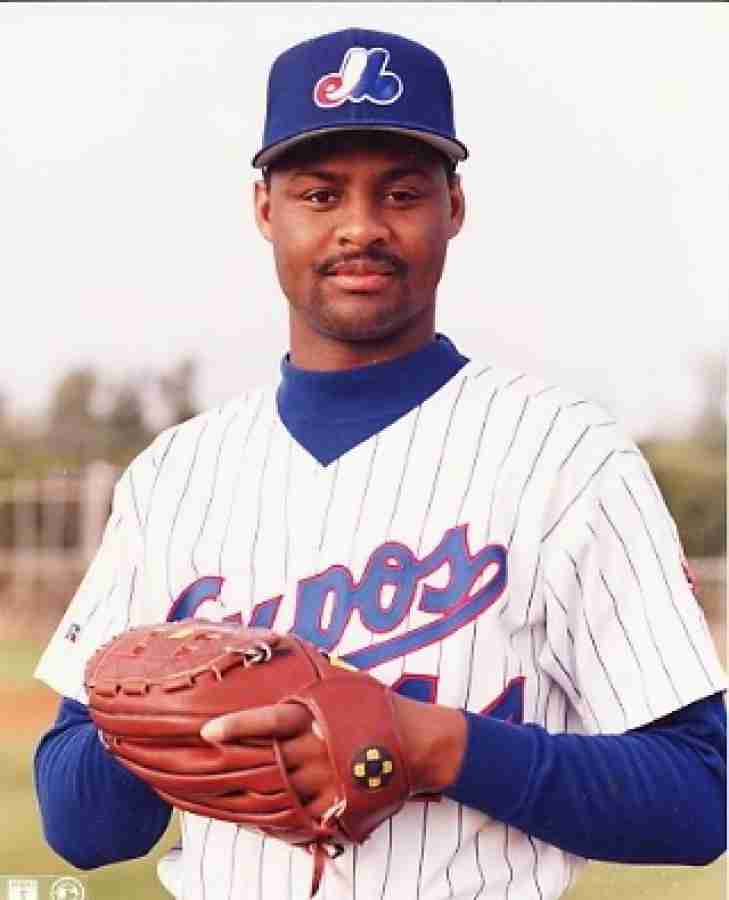
44. Ken Hill

To understand the sheer dominance of the Montreal Expos in the early 1990s, one need only look at the trade that brought Ken Hill to Quebec. In November 1991, the Expos sent budding star Andrés Galarraga to St. Louis in exchange for Hill. While losing "The Big Cat" was a tough pill for local fans to swallow, Hill immediately sweetened the deal by transforming into the unquestioned, high-velocity ace of a pitching staff that would soon capture the imagination of the baseball world.

His arrival in Montreal in 1992 represented an exemplary demonstration of leadership in frontline rotation. Equipped with a powerful, sinking fastball and an assertive approach, Hill effectively dominated National League hitters during his debut season, recording a 16–9 win-loss record, an impressive 2.68 ERA, and pitching 218 innings. He provided the Expos with a genuine top-of-the-rotation pitcher capable of outperforming any ace in the Senior Circuit, thereby immediately substantiating Montreal's claim for NL East dominance.

Despite some challenges with run support in his 1993 campaign, Hill delivered his greatest career achievement during the notable 1994 season. Playing with relentless intensity and high-leverage pitching, he led the league with a 16–5 record and maintained a 3.32 ERA across 154.2 innings. He topped the National League in wins, earned his first All-Star selection, and finished second to Greg Maddux for the NL Cy Young Award. His consistent mound presence was key to Montreal's impressive 74–40 record before a strike interrupted their pursuit of a world championship.

Sadly, the financial fallout of that strike meant the small-market Expos had to let Hill go, trading him back to the St. Louis Cardinals in April 1995 just as the season resumed. Hill would later be traded to Cleveland that summer, helping guide them to the 1995 World Series, and enjoyed a highly successful 14-year major league odyssey.

Hill appeared in 91 games (all starts), with a 41–21 record, 3.04 ERA, 1.20 WHIP over 581.1 innings. He had eight complete games, four shutouts, 377 strikeouts, and a 127 ERA+.
48. Pascual Perez

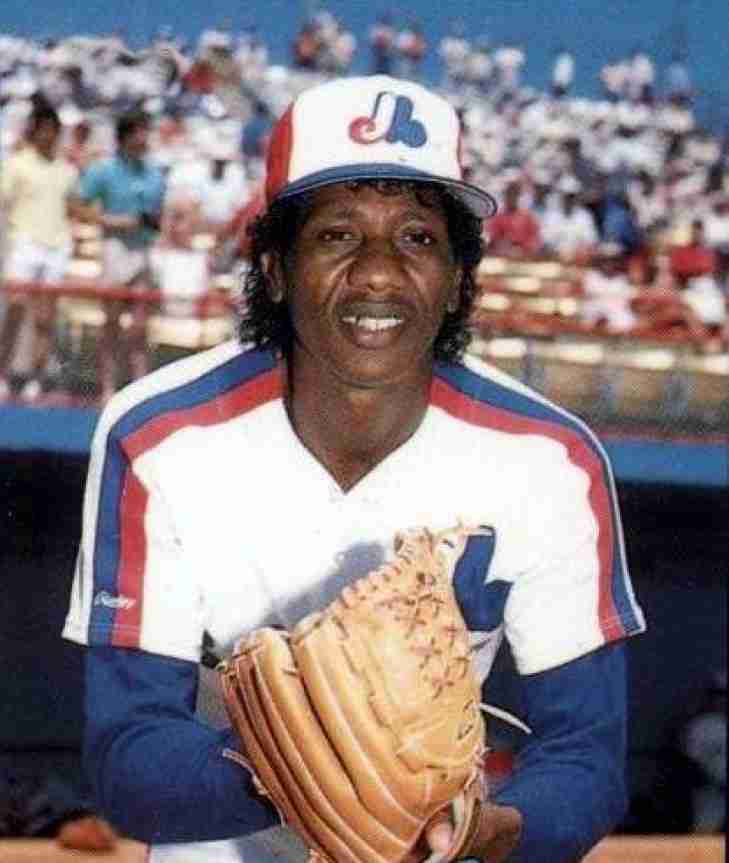
Few players in baseball history have ever matched the pure, theatrical charisma of Pascual Pérez, but underneath the eccentric mannerisms lay a profoundly sharp pitching mind. Signed by Montreal in August 1987 after a drug suspension and release by Atlanta had nearly derailed his career, the Dominican right-hander found a second home in Canada. Known to fans as "I-285" and famous for his flamboyant antics—including peeking through his legs to check runners, sprinting off the mound after strikeouts, and throwing a legendary "pascual ball" eephus pitch—Pérez completely reinvented his approach at Stade Olympique, morphing from a wild thrower into a command-oriented artist.

His late 1987 entrance was a crucial boost for the Expos during their intense pennant race. Over his last ten starts, he dominated Senior Circuit batters, going 7–0 with a tiny 2.30 ERA. His unwavering confidence on the mound captivated Toronto, showing that his time off hadn’t cooled his competitive spirit at all.

Pérez built on his remarkable introduction by crafting a standout season in 1988. Demonstrating exceptional control and mastery in run prevention, he finished with a 12–8 record and an impressive 2.44 ERA across 28 starts. That summer, he pitched four shutouts, including a rain-shortened five-inning no-hitter, but his most defining trait was his extraordinary efficiency, leading the National League with a tiny 0.941 WHIP.

He maintained this exceptional performance into the 1989 season. Despite the Expos' often limited run support, Pérez continued to be a top starter, using his deceptive pitching to overpower batters. He ended the year with a 9–13 record but a strong 3.31 ERA, and led the National League with an outstanding 4.13 strikeouts per walk ratio, issuing only 31 walks over 198.1 innings.

As his contract ended after the 1989 season, the veteran right-hander took advantage of his strong performance in Montreal by securing a lucrative free-agent contract with the New York Yankees. Despite shoulder problems and later suspensions that greatly reduced his playing opportunities in the American League, his three summers wearing the tri-color cap represented the pinnacle of his career.

With the Expos, Pérez appeared in 66 games (all starts), posting a 28–21 record, 2.80 ERA, 1.05 WHIP over 469.1 innings. He had 13 complete games, four shutouts, and 335 strikeouts with 93 walks, resulting in a 131 ERA+.

40. Hubie Brooks

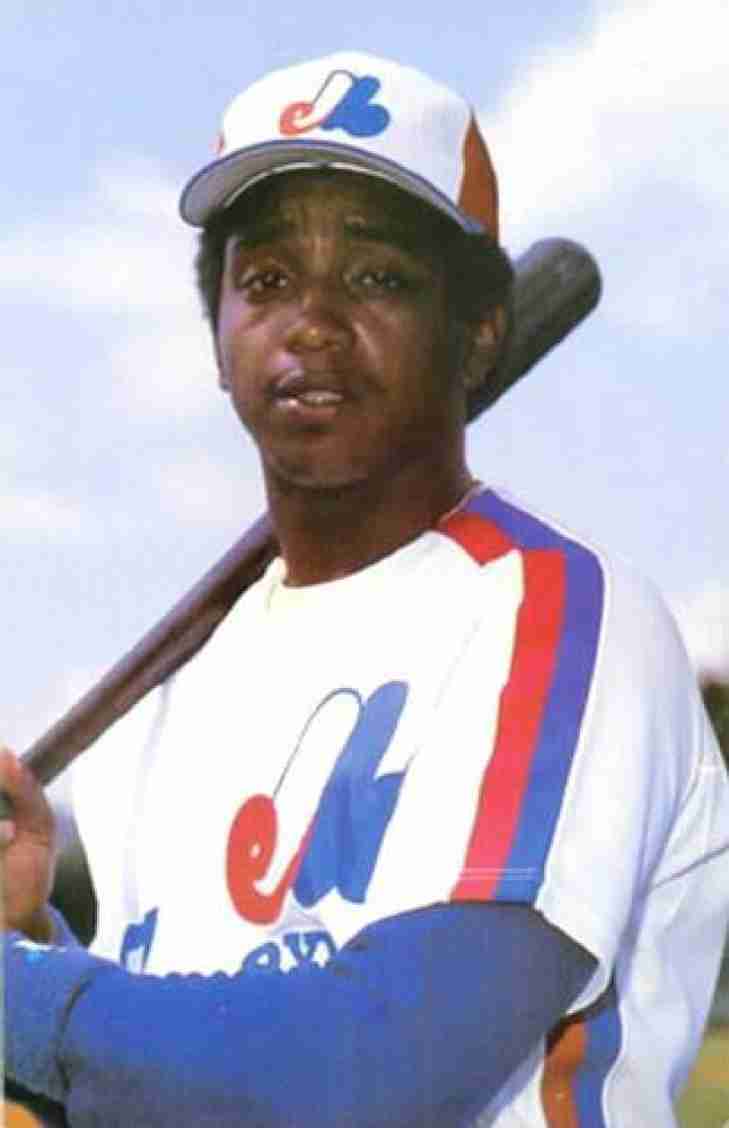
When the Montreal Expos traded franchise icon Gary Carter to the New York Mets in December 1984, it caused a significant public relations setback. To soothe an angry fan base, new players had to make an immediate impact. Although no player could replace "The Kid," Hubie Brooks arrived in Quebec and quickly became the offensive catalyst for the post-Carter era. Originally a natural third baseman with the Mets, Brooks generously moved to shortstop in Montreal, developing into one of the top middle infielders for producing runs in the league.

His debut before the Stade Olympique crowd showcased exceptional offensive versatility. Brooks dominated National League pitchers in his first 1985 season, hitting .269 with 34 doubles, 13 home runs, and a career-best 100 RBIs. His clutch performance at the plate earned him his first Silver Slugger Award, demonstrating his ability to perform under the pressure of stepping into a legendary player's role in the middle of the lineup.

He maintained his elite offensive gear through that summer. In 1986, Brooks elevated his performance, hitting a career-high .340 with 14 home runs and 58 RBIs in just 80 games before a torn thumb ligament ended his season early. Despite the injury, his outstanding performance earned him his first All-Star selection and a second Silver Slugger Award in a row. Recovered and healthy in 1987, he made another All-Star appearance and drove in 72 runs, helping Montreal stay competitive in the exciting NL East race.

As years went by, playing shortstop on Montreal's tough turf took a toll, leading him to move to right field and third base. His defensive range was often limited and criticized, but his consistent, respected bat remained strong. After 1989, as the Expos focused on youth, Brooks left in free agency to rejoin the Mets, leaving a legacy of powerful middle-infield performance.

As an Expo, Brooks compiled 689 hits, 128 doubles, 75 home runs, and 390 RBIs. While generating a solid .272/.314/.418 slash line.

270. Kosovare Asllani

The good doctor loves this name.  Guess what else I love?  The look of Swedish soccer player, Kosovare Asllani, who has this natural look that is nothing short of spectacular!