Menu
A+ A A-
Site Admin

Site Admin

37. Joe Torre

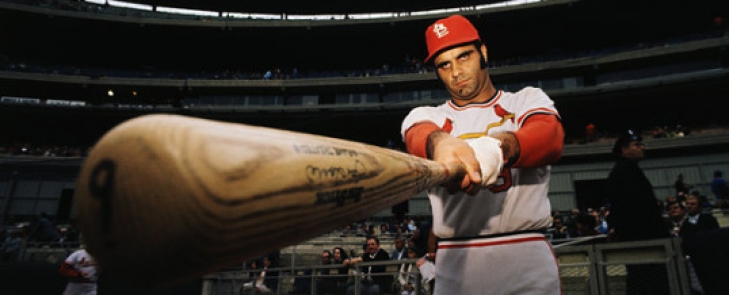
Joe Torre's legacy is forever tied to his role as the calm, stoic manager of the late 1990s Bronx dynasty, leading the Yankees to four world titles from the dugout. However, this iconic chapter often clouds just how formidable he was when wielding a bat himself. Long before he crafted lineups, Torre was a top-tier threat in the National League. As a five-time All-Star catcher with the Braves, a significant March 1969 trade sent him to the St. Louis Cardinals in exchange for Orlando Cepeda. In St. Louis, his exceptional versatility became a key asset for the team. To keep his powerful bat active, he was moved to first base, then to behind the plate after a Tim McCarver trade, and finally across the field to third base—all while maintaining his effective offensive output.

Torre consistently stayed a prominent figure on the national stage, earning All-Star honors in four of his six summers in Missouri. He combined reliable contact with a powerful swing, nearly reaching elite levels in 1970 with 203 hits and a .325 batting average.

Where Torre truly shone was his unforgettable 1971 season. Playing at third base, he challenged and conquered opposing National League pitchers, winning the batting title with a fantastic .363 average, while also topping all of baseball with 230 hits and driving in 137 RBIs. His relentless era dominance in 1971 made him an absolute lock for postseason accolades. Registering a massive .421 on-base percentage and a heavy .552 slugging mark, Torre easily captured the 1971 National League Most Valuable Player Award, cementing his status as the premier offensive engine in the country.

Although his offensive numbers gradually declined to more typical levels in his later summers with St. Louis, his reliable contact-hitting ability stayed an essential constant. Following the 1974 season, the front office traded the veteran star to the New York Mets, where he became a player-manager and embarked on the legendary coaching career that shaped his later years.

In St. Louis, Torre accumulated 1,087 hits, 98 home runs, and 558 RBIs alongside a superb .308 batting average across 920 games.  In 2014, he was inducted into the Baseball Hall of Fame for his contributions as a Manager.
40. Whitey Kurowski

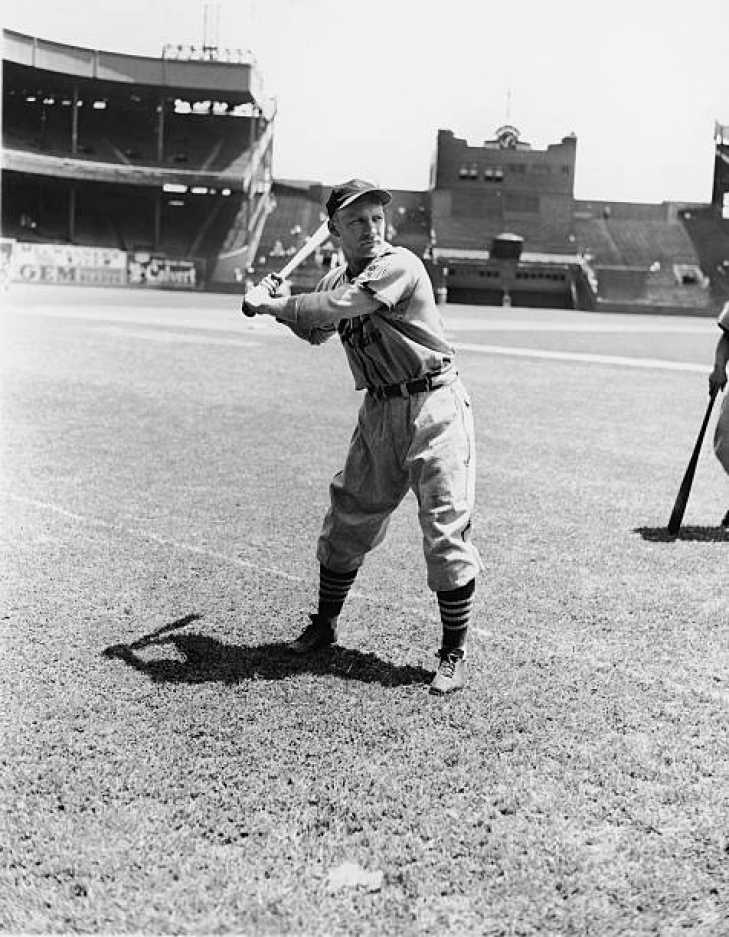
When Whitey Kurowski became the regular third baseman for St. Louis in 1942, he entered a lineup aimed at building a dynasty. Although many note his rise coincided with the talent loss during World War II, Kurowski was more than just a temporary substitute. He played a key role on three pennant-winning teams and was selected as an All-Star five years in a row from 1943 to 1947, thanks to his consistent defense and unexpected power at the plate.

His rise paralleled the swift progression of the "St. Louis Swifties" under Billy Southworth's leadership. Kurowski was not a top-ranked prospect when he joined, but he quickly established himself as a key player on a team that won 106 games in 1942 and surprised the Yankees in the World Series. As a rookie, he capped that memorable season with a dramatic moment by hitting a breaking ball from Red Ruffing over the left-field roof at Yankee Stadium in the ninth inning of Game 5. This game-winning hit secured the title for the Cardinals and made him a favorite among St. Louis fans.

During his prime five-year period, Kurowski demonstrated remarkable consistency, accumulating over 150 hits each summer. Unlike the typical slap hitter of his time, he hit more than 20 home runs three times and posted a batting average above .300 in three seasons. His standout season was in 1945, when he led the offense with 21 homers and a .323 batting average, finishing fifth in the National League MVP voting.

Beyond his hitting, Kurowski’s glove provided the Cardinals with a top-tier defensive presence at third base. He twice led all National League third basemen in fielding percentage and ranked among the top four four other times, anchoring an infield that had to handle the expansive and challenging terrain of Sportsman's Park. What makes this defensive consistency even more impressive is that Kurowski played his entire career with part of his right elbow bone missing due to childhood osteomyelitis. Despite this physical limitation, his arm remained a powerful weapon across the diamond.

Just as he was establishing himself as a top third baseman of the 1940s, shoulder problems hampered his performance. The injury led to an early retirement after 1949, ending his nine-year career. Playing his whole career with the Cardinals, Kurowski amassed 925 hits, a .286 average, and three World Series titles.

29. Jesse Haines

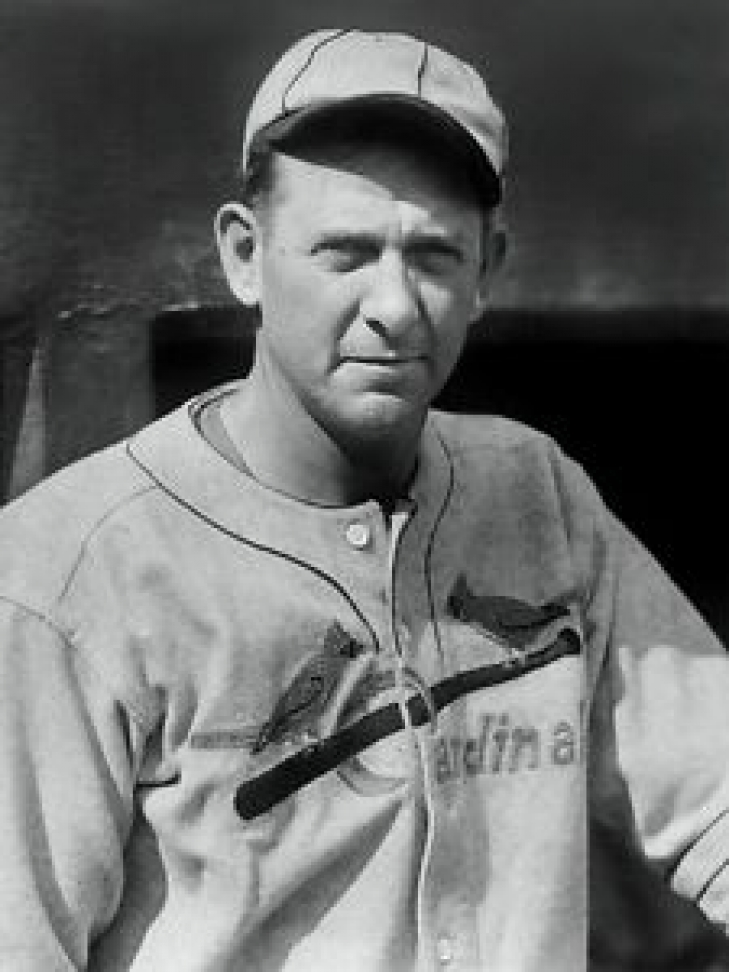
Before the St. Louis Cardinals became a consistent Powerhouse of the National League, they needed a strong, determined leader to elevate their pitching staff from obscurity. Jesse "Pop" Haines offered exactly that endurance as a foundation. Acquired from Kansas City of the American Association in 1920 for $10,000—almost draining the young franchise's funds—the durable right-hander joined the starting rotation. Over 18 seasons, Haines was the organization's reliable workhorse, helping them rise from a struggling second-division team to World Series champions.

Haines’ rise to historical prominence was largely due to his elite, powerful knuckleball, which he threw with much higher velocity than today's versions. Instead of employing it as a slow, fluttering pitch, he grasped it firmly with his knuckles, producing a sharp, downward movement that frequently shattered bats of his era.

His personal breakthrough happened swiftly, but his first major professional masterpiece came on July 17, 1924. Playing against the Boston Braves at Sportsman's Park, Haines completely shut down the opposition to throw a historic 5–0 no-hitter—the first solo no-hit game in the franchise's modern era.

Haines attained his peak as the key player of the "Gashouse Gang" predecessors in the late 1920s. In the notable 1927 season, he delivered an outstanding performance, pitching 300.2 innings and achieving a 24–10 record with a 2.72 ERA and 25 complete games.

Haines didn't merely amass regular-season stats; he excelled on the biggest stages. He was instrumental in leading St. Louis to its first modern world championship in 1926, notably defeating the New York Yankees with two complete-game wins in the Fall Classic, including a vital shutout in Game 3—even while dealing with badly blistered fingers. He later earned two more World Series rings with the team in 1931 and 1934.

As the physical toll of compiling nearly 1,000 career innings caught up to his arm, his availability decreased to a valuable long-relief and spot-starting role in the mid-1930s. He endured his final MLB appearances at age 43 in 1937, ending a nearly two-decade career in a single uniform.

He finished his St. Louis residency with a 210–158 record, 3.64 ERA, and 981 strikeouts in 555 appearances, ranking high on franchise leaderboards with 209 complete games and 24 shutouts. His contributions were validated in 1970 when the Veterans Committee inducted him into the Baseball Hall of Fame, and posthumously in 2014 as part of the Cardinals' first Hall of Fame class.

38. Mark McGwire

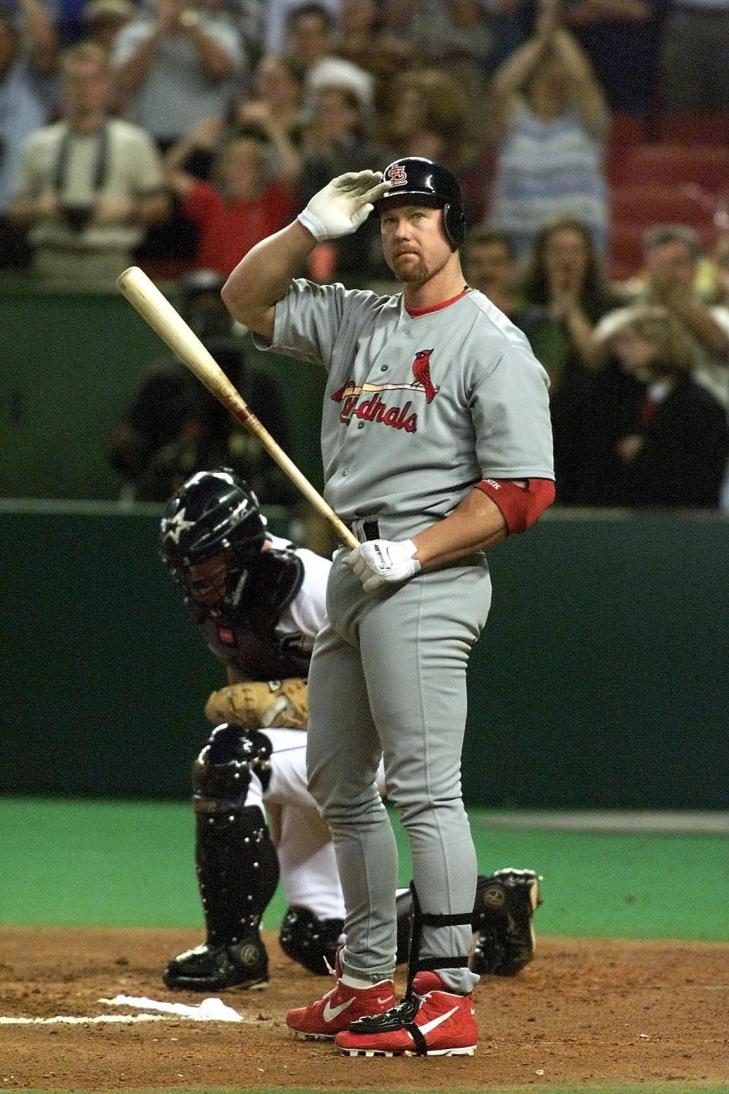
The arrival of Mark McGwire in downtown St. Louis midway through the 1997 season completely shifted the franchise's gravity. Coming over in a trade from Oakland, he brought a cartoonish brand of power that instantly made Busch Stadium a nightly destination. For baseball fans who didn't live through the era, it is difficult to overstate the monoculture McGwire created. In a sport still recovering from the wounds of the 1994 strike, he forced everyone—from diehards to casual evening news viewers—to tune in every time he stepped into the batter's box. He single-handedly made baseball central to the cultural conversation again.

That cultural wave peaked in 1998. In a summer-long chase that captivated the sports world, McGwire shattered Roger Maris’ single-season record by launching an unfathomable 70 home runs. He didn't just clear fences; he paired that historic power with a staggering .299/.470/752 slash line and 147 RBIs. Although he finished as the runner-up for the National League MVP, the season remains a monumental moment in modern sports history. He proved it wasn't a fluke the following year, backing it up with a 1999 campaign in which he bashed another 65 home runs and posted a .278/.424/697 line, earning a fifth-place finish in the MVP voting.

The final two years of his tenure saw a sharp decline as severe knee injuries and age finally caught up to his massive frame, limiting his playing time and efficiency. Yet across his four and a half seasons wearing the birds on the bat, the sheer concentration of his impact was staggering: 220 home runs and a massive .683 slugging percentage.

Evaluating a tenure like McGwire's requires looking beyond traditional longevity templates. For those arguing that performance-enhancing drugs should disqualify him, that is outside the scope of this project; he played in an era of rampant, tacitly permitted use, with leadership looking the other way. Conversely, for those who feel his raw home run totals should elevate him even higher in the franchise ranks, the reality of his overall game serves as a tether. His St. Louis years offered virtually nothing defensively, and the brevity of his peak naturally caps his volume-based value compared to multi-decade franchise icons. He was a short, blinding burst of pure offense—an unforgettable chapter of unmatched peak impact.

The permanent stamp on his legacy in Missouri came later. In 2017, the organization recognized the indelible mark he left on the city by inducting McGwire into the St. Louis Cardinals Hall of Fame.