Menu
A+ A A-
Site Admin

Site Admin

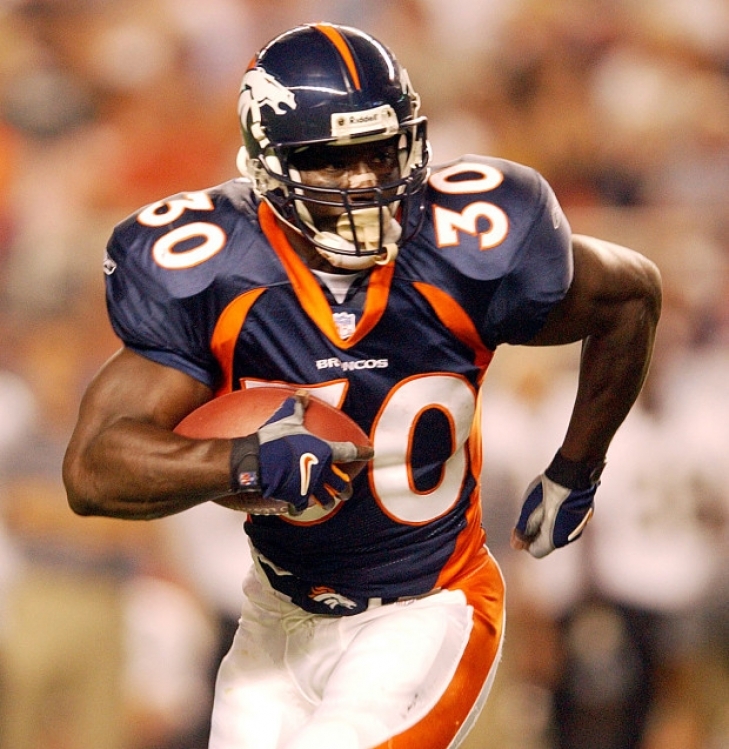
6. Terrell Davis

Selected in the sixth round of the 1995 NFL Draft out of Georgia, Terrell Davis arrived in training camp as a longshot before a ferocious special teams tackle on kickoff coverage in preseason action caught head coach Mike Shanahan’s eye. Davis quickly seized the starting job, making history as the lowest-drafted rookie running back to eclipse 1,000 rushing yards when he compiled 1,117 yards and seven touchdowns in his debut campaign.

That incredible start set the stage for what many consider the greatest three-year peak by any running back in NFL history. From 1996 to 1998, "T.D." was a powerhouse in Alex Gibbs' zone-blocking scheme, rushing for an amazing 5,296 yards, gaining 6,125 total yards from scrimmage, and scoring 53 touchdowns in the regular season alone. In 1996, he truly broke through with 1,538 rushing yards and 15 total touchdowns, earning his first First-Team All-Pro honor. He raised the bar even higher in 1997, leading the NFL with 15 rushing touchdowns, while rushing for 1,750 yards and adding another 287 yards through the air. Playing a key role alongside John Elway, Davis helped lead Denver to a win in Super Bowl XXXII, earning MVP honors after rushing for 157 yards and three touchdowns against Green Bay, even while battling a severe migraine that temporarily affected his vision.

His legendary run reached its peak in 1998, a truly standout year when Davis made history by breaking the 2,000-yard mark. Winning the NFL MVP and Offensive Player of the Year awards, he rushed for an impressive 2,008 yards and scored 21 touchdowns. Averaging an incredible 5.3 yards per carry, he wrapped up his incredible season by earning a second straight championship ring in Super Bowl XXXIII. Over this remarkable three-year period, Davis was a unanimous First-Team All-Pro choice every year, setting the benchmark for excellence in the backfield.

Beyond his regular-season excellence, Davis stepped up even more during crucial moments. He is arguably the most dominant postseason running back in football history, with an impressive 1,140 rushing yards and 12 touchdowns in just eight playoff games—an average of 142.5 yards per game. He has won all eight games and recorded seven straight 100-yard rushing performances.

It was an incredible run, but fate had other plans.

Early in the 1999 season, he sustained a torn ACL and MCL while attempting to make a tackle following an interception, shattering his knee. Severe injuries hampered him over his final three seasons, holding him to only 17 games from 1999 to 2001. The pain was too much, forcing a premature retirement in 2001 at just 29 years old.

In his time at Mile High, Davis accumulated 7,607 rushing yards and 60 rushing touchdowns, alongside 1,280 receiving yards and five touchdown catches for 8,887 total yards from scrimmage. The Broncos inducted him into the Ring of Fame in 2007, and his legendary peak was immortalized when he was enshrined in the Pro Football Hall of Fame in 2017. 
2. Von Miller

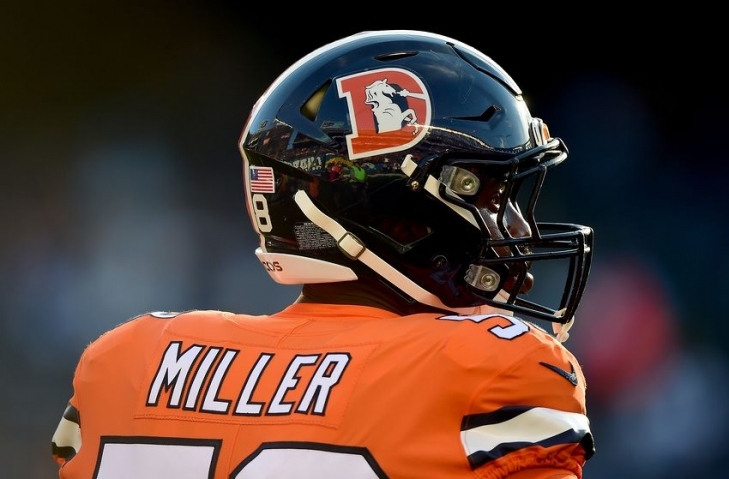
The Denver Broncos selected Von Miller with the second overall pick in the 2011 NFL Draft from Texas A&M. Miller's arrival in Denver marked the signature draft choice of John Elway's executive tenure. Elway famously described Miller as a "once-in-a-decade" talent, a statement that Miller promptly confirmed. Over nine and a half seasons with the Broncos, he revitalized Mile High Stadium as a formidable defensive stronghold and emerged as the most formidable edge rusher in the franchise's history.

Miller boasted an iconic first-step explosion, remarkable ankle flexion ("bend"), and elite closing speed around the edge. In Wade Phillips' aggressive 3-4 scheme, he routinely beat offensive tackles off the snap before they could establish their pass sets. Beyond taking down quarterbacks, Miller excelled at active-hand strip-sacks, converting pass-rush wins into immediate turnovers.

What distinguished Miller from other edge rushers of his era was his exceptional "get-off" at the snap—a reaction time that was remarkably swift, often giving the appearance of him jumping the count. By combining this raw speed with extraordinary ankle flexibility, Miller was able to dip his shoulder and maneuver around offensive tackles at nearly impossible angles, successfully turning the corner while sustaining full momentum toward the pocket. Opposing tackles were compelled to overcommit to his outside rush, thus rendering them vulnerable to his effective spin move or a powerful bull-rush that forced them back into the quarterback's pocket.

Miller made a significant impact on the league in 2011, receiving the AP Defensive Rookie of the Year award following his achievement of 11.5 sacks. He subsequently achieved an 18.5-sack season in 2012, culminating as the runner-up for the AP Defensive Player of the Year and securing his inaugural First-Team All-Pro recognition. Miller demonstrated remarkable consistency in disrupting opposing offenses, recording seven seasons with double-digit sacks while with Denver. This comprehensive skill set led to his unanimous selection for the NFL 2010s All-Decade Team.

His peak years in Mile High were characterized by an exceptional ability to elevate his performance during the most critical moments. In the 2015 AFC Championship Game against New England, he achieved 2.5 sacks and an interception against Tom Brady, thereby setting the stage for his renowned performance in Super Bowl 50 two weeks later against the Carolina Panthers.

Miller recorded six tackles, 2.5 sacks, two forced fumbles, and two quarterback hits in the big game. Both forced fumbles directly produced Denver touchdowns—including a late strip-sack that sealed the victory—earning him Super Bowl MVP honors and securing the franchise's third championship trophy. That postseason run (5.0 sacks in three games) remains one of the most dominant playoff stretches by a defensive player in NFL history.

Miller remained an elite defensive engine through the late 2010s, earning seven total Pro Bowl selections and seven All-Pro honors (3 First-Team, 4 Second-Team) in Denver. His time with the franchise came to an emotional end midway through the 2021 season when he was traded to the Los Angeles Rams, where he helped secure his second Super Bowl ring before joining the Buffalo Bills.

Miller left Denver as the franchise's all-time official sack leader with 110.5 sacks, alongside 142 tackles for loss, 225 quarterback hits, and 25 forced fumbles across 135 regular-season games.

4. Champ Bailey

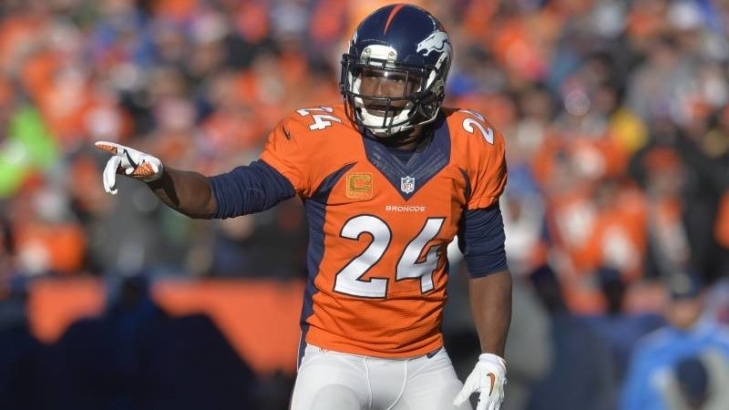
Acquired in a blockbuster 2004 trade with the Washington Redskins for running back Clinton Portis, Champ Bailey arrived in Denver already established as a premier defensive back. Across ten seasons in Mile High, Bailey elevated his play to immortal levels, transforming his side of the field into "Champ Island" and cementing his standing as one of the greatest shutdown cornerbacks in football history.

Bailey combined top-tier speed, exceptional hip fluidity, and superior tackling skills on the edge. His standout trait was his capacity to play aggressive press-man coverage independently, consistently neutralizing the opponent's main receiver each snap. Additionally, Bailey was arguably the best run-stopper among cornerbacks of his era, easily shedding blocks on perimeter runs to make powerful tackles in open space.

Bailey made an immediate impact when he arrived in Denver, earning First-Team All-Pro honors and Pro Bowl selections in his first three seasons (2004–2006). His 2006 season is considered one of the best in history for a defensive back: even though quarterbacks rarely targeted him, Bailey led the NFL with 10 interceptions for 162 return yards, while also recording 85 tackles and surrendering no touchdown catches in coverage.

His defining moment that season was in the 2005–06 AFC Divisional Playoff against the New England Patriots, when he intercepted Tom Brady in the end zone and returned it 100 yards. This game-changing play ended New England's playoff winning streak and propelled Denver to the AFC Title Game.

Bailey stayed a key part of Denver's secondary into his mid-30s, earning eight Pro Bowl selections as a Bronco and totaling 12 for his career—the highest for any NFL cornerback. Over ten years in Denver, he intercepted 34 passes, defensed over 100, and led a secondary that saw several defensive coordinators. After contributing to Denver's Super Bowl XLVIII appearance in the 2013 season, Bailey finished his remarkable playing career.

In 2019, in his first year of eligibility, Bailey was enshrined in the Pro Football Hall of Fame. That same year, the franchise permanently honored his career by inducting him into the Denver Broncos Ring of Fame.

7. Rod Smith

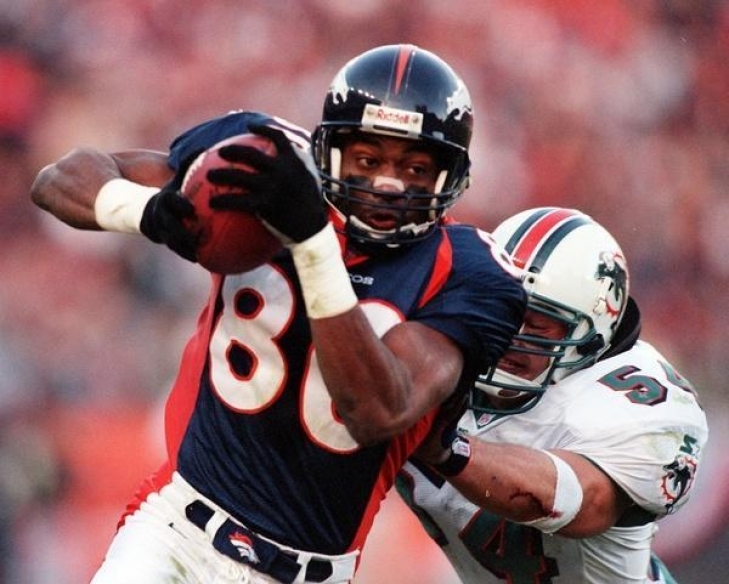
Going unselected in the 1994 NFL Draft despite shattering records at Division II Missouri Southern State, Rod Smith entered the league as a complete longshot. He spent his entire rookie year on the practice squad and operated strictly as a depth option for his first two active seasons in Denver, but he quietly refined his route running while waiting for his moment.

His breakthrough arrived in 1997, when he earned a starting role and became a favorite target for John Elway. Smith delivered a huge campaign with 70 receptions for 1,180 yards and 12 touchdowns, helping drive Denver to its first world championship in Super Bowl XXXII. He backed it up in 1998 with another 1,222 receiving yards, saving his defining moment for Super Bowl XXXIII, where he hauled in an iconic 80-yard touchdown strike from Elway en route to a 152-yard performance that sealed back-to-back titles.

After Elway retired, Smith seamlessly became the veteran anchor of the offense, serving as the go-to target through quarterback transitions to Brian Griese and Jake Plummer. From 1997 through 2002, he logged six consecutive 1,000-yard receiving seasons. His individual dominance peaked with consecutive Second-Team All-Pro selections in 2000 and 2001; he set a franchise record with 1,602 receiving yards in 2000 alongside Ed McCaffrey, then led the entire NFL with 113 catches in 2001.

Smith hit the 1,000-yard mark twice more in 2004 and 2005, earning his third career Pro Bowl selection in 2005 while becoming the first undrafted wide receiver in NFL history to break the 10,000-yard barrier. His precise footwork, relentless run-blocking, and incredible consistency helped him record 70 or more catches in nine consecutive seasons.

A severe hip injury sustained in 2006 eventually ended his playing days after the 2007 offseason. As a Bronco, Smith played in 183 games, leaving as the organization's all-time leader in receptions (849), receiving yards (11,389), and touchdown catches (68), while adding 860 receiving yards and six touchdowns in the postseason. The Broncos inducted their self-made star into the Ring of Fame in 2012.