Menu
A+ A A-
Site Admin

Site Admin

29. Dave Stewart

When the front office quietly signed Dave Stewart in May 1986, the transaction did not attract significant notice within the local community. He was regarded as an underperforming journeyman, having been discarded by a struggling Philadelphia Phillies organization that had explicitly released him. Nevertheless, nobody in the East Bay would overlook his potential for long. By reviving a forgotten forkball at the behest of pitching coach Dave Duncan, Stewart achieved an immediate 9-5 record during the latter part of the season, setting the stage for one of the most relentless and industrious periods in modern American League history.

What followed was a relentless four-year period of terror. From 1987 to 1990, Stewart became the team's core, achieving four straight 20-win seasons and leading the league in innings pitched twice. With a fiery fastball and a tumbling forkball, he led the rotation as the team's primary ace, effectively shutting down opposing offenses while Oakland's potent offense provided the support.

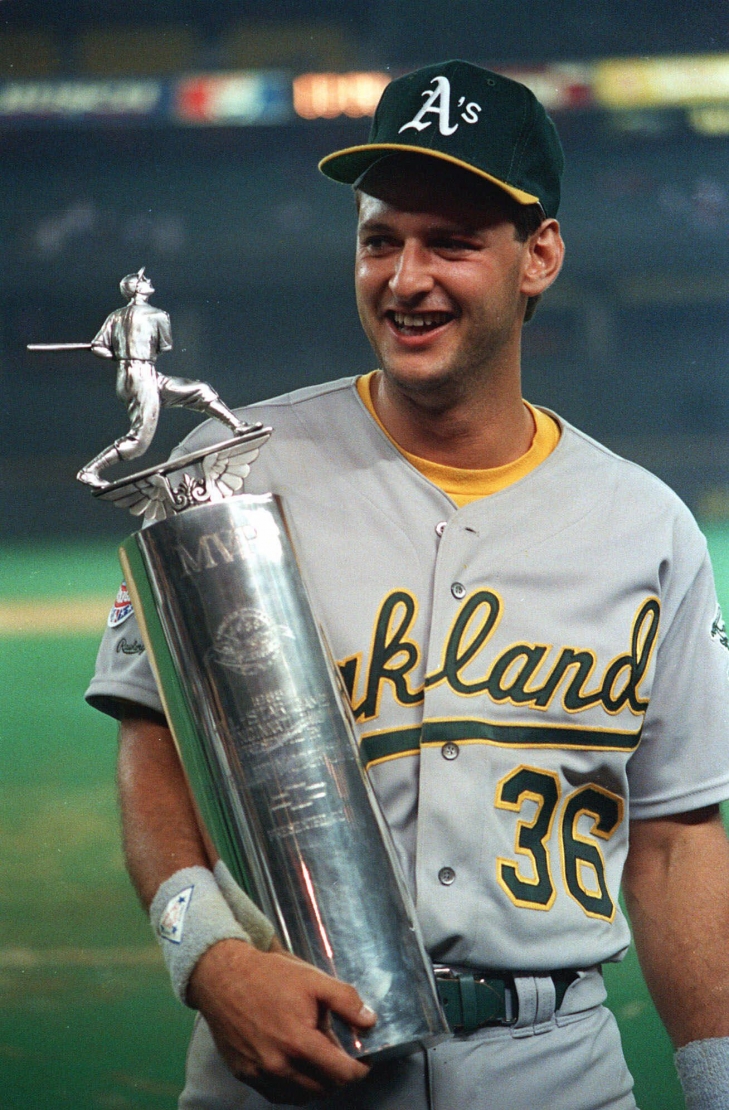
His intimidating, hyper-focused "Death Stare" from the rubber became renowned across the nation and contributed significantly to the Athletics securing three consecutive AL pennants. When the regular-season schedule concluded, Stewart elevated his performance to a legendary, high-stakes level. He demonstrated exceptional skill as the definitive clutch performer during the historic 1989 World Series against the San Francisco Giants, dominating the cross-bay rivals to earn the World Series Most Valuable Player (MVP) award and secure the world championship. Throughout that remarkable peak from 1987 to 1990, he consistently received substantial national recognition, achieving four consecutive top-four finishes in the American League Cy Young Award voting.

His iconic Northern California run ended when he signed with the Toronto Blue Jays in 1993, winning a second ALCS MVP and third championship ring, then returned to the East Bay for a final season in 1995 to finish his career.

Assessing Stewart’s position within the franchise history prompts a compelling discussion between conventional standards and contemporary evaluations. For advocates of sabermetrics, his ranking continues to be a matter of debate; advanced statistical models indicate a career-high bWAR finish of only sixth and a single top-ten ranking in seasonal WHIP, excluding him entirely from the top fifty in franchise bWAR. However, using only regular-season spreadsheets doesn't fully capture his true worth. His enormous volume of plays, key victories over top rivals, and unmatched playoff success firmly establish him as one of the franchise's greatest legends.

As an Athletic, Stewart went 119-78 with 1,152 strikeouts and was named to the first class of the Athletics Hall of Fame in 2018.  The team would retire his number 34 in 2022.

30. Rube Walberg

Rube Walberg holds the dubious distinction of serving up the most home runs to Babe Ruth with 17.  That might seem like a strange way to open, but remember the Athletics thought enough of him to keep putting him on the mound.

26. Eric Chavez

When the Oakland Athletics selected Eric Chavez tenth overall in the 1996 draft, they gained a player whose career would stand out as one of the most unique and unpredictable of his time. For more than ten years, Chavez served as the quiet, reliable anchor for the "Moneyball" teams. He is still recognized by many historians as one of the best players who never made an All-Star Game, despite being a top two-way performer during his physical prime.

Chavez officially debuted in the major leagues late in the 1998 season. By the 2000 campaign, he had firmly secured the hot corner in the East Bay. Offensively, he contributed significant power to the lineup, maintaining a highly productive seven-year period from 2000 to 2006, during which he consistently exceeded 22 home runs. He exceeded the 30-homer mark on two occasions, most notably with a career-high of 34 home runs in 2002, and utilized his formidable batting to achieve membership in the exclusive 100-RBI club four times.

Although he never fully achieved a .300 batting average over a summer, his exceptional ability to accumulate extra-base hits was outstanding. Chavez achieved four straight seasons from 2001 to 2004 with a slugging percentage exceeding .500, a remarkable streak that peaked offensively when he won the 2002 American League Silver Slugger Award.

Nonetheless, despite the potency of his left-handed swing, his principal achievements were realized in defensive play. Chavez was an exemplary defensive specialist, combining exceptional lateral mobility with a rapid-throwing arm to establish third base as an area of superior defense. He initiated a historic sequence of defensive excellence, earning six consecutive Rawlings Gold Glove Awards from 2001 to 2006. His spatial awareness and defensive motivation were unparalleled; he led all American League third basemen in Range Factor per Game for three consecutive seasons (2002 to 2004) and twice ranked first among his peers in overall fielding percentage.

Chronic back and shoulder injuries after 2006 significantly disrupted his career, leading to surgeries that limited his playing and reduced his power. Despite this, he stayed loyal, with the longest tenure on the roster of his era. He left the East Bay after 2010 to reinvent himself as a reliable veteran bench player for the Yankees and Diamondbacks before retiring.

In Northern California, Chavez accumulated 1,276 hits, 230 home runs, and would join the Athletics Hall of Fame in 2022.

21. Dennis Eckersley

When the Chicago Cubs traded Dennis Lee Eckersley to the Oakland Athletics in April 1987, it seemed like a clear demotion—a subtle, final opportunity for a declining veteran. "Eck" had been a major league starting pitcher since 1975, earning two All-Star selections, but serious alcoholism was actively endangering both his career and his life.

Upon his arrival, Oakland manager Tony La Russa envisioned the right-hander as a high-leverage setup weapon. Eckersley accepted the role until an injury to incumbent closer Jay Howell necessitated a tactical adjustment. Thrust into the ninth-inning vacancy, he initiated a career transformation that would fundamentally redraft the blueprint for the modern closer and secure his place in Cooperstown.

Who would have thought?

Eckersley established himself as the foremost bullpen force in the game during the 1988 season. Achieving his inaugural of four All-Star selections as an Oakland reliever, he dominated American League hitters by winning the AL saves title with 45 saves, accompanied by an exceptional 0.867 WHIP. His dominant performance contributed significantly to the Athletics securing the junior circuit pennant and earned him a commendable second-place finish in the AL Cy Young Award voting.

The momentum carried directly into 1989, where the Athletics secured the World Series championship. Although his total number of saves decreased slightly to 33, Eckersley was arguably more lethal, confining opposing lineups to a 1.56 ERA and an astonishing 0.607 WHIP. The historic baseline reached an almost comical peak during the 1990 pennant-winning season. Although Oakland ultimately lost to Cincinnati in the Fall Classic, Eckersley demonstrated exceptional effectiveness in the bullpen, achieving a remarkable 0.61 ERA and a corresponding 0.614 WHIP. However, an unexpectedly lower number of saves resulted in a lower placement on the Cy Young Award ballot compared to previous summers.

Following an exceptionally successful campaign in 1991, his career reached its zenith during the 1992 season. Reclaiming the American League saves title with an impressive total of 51 saves, he complemented this achievement with a 1.91 ERA and a 0.913 WHIP. The national baseball community provided the highest recognition of this remarkable outlier performance, overwhelmingly voting Eckersley as both the 1992 AL Cy Young Award recipient and the American League Most Valuable Player.

He provided three more productive seasons in the East Bay before the inevitable toll of age and mileage caught up to his signature, sidearm delivery. Following the 1995 season, he reunited with La Russa by signing with the St. Louis Cardinals, eventually concluding his 24-year major league journey back where it started as a member of the Boston Red Sox.

With the Athletics, Dennis Eckersley had 330 Saves, won 41 Games with a WHIP of 0.953, and was inducted into the Baseball Hall of Fame in 2004. In Oakland, he was inducted into the inaugural franchise Hall of Fame Class in 2018.